
Preventing Surgery Cancellation Due to Infection Risk
What if the biggest threat to your upcoming surgery isn’t the procedure itself, but a silent passenger you don’t even know you’re carrying? It’s a distressing reality for many patients who arrive at the hospital ready for their recovery to begin, only to be sent home. A surgery cancellation due to infection risk often feels like a bureaucratic hurdle, but for clinicians, it’s a vital safety measure. If you’ve spent weeks or months waiting for your date, a sudden postponement can feel like a setback you didn’t see coming.
We understand the anxiety that comes with a delayed recovery and the frustration of dealing with complex hospital protocols. You deserve to feel supported by experts through a simple, well-managed process. This article will help you understand why hospitals postpone procedures for infection risks and how you can secure your surgery date with proactive screening. We’ll explain the clinical terminology used by surgeons and provide a clear path to fast-tracking your screening results so you can proceed with confidence and peace of mind.
Key Takeaways
- Learn why hospitals prioritise patient safety over scheduling to prevent life-threatening Surgical Site Infections (SSIs).
- Identify why MRSA is a primary factor in surgical delays and how antibiotic resistance complicates post-operative recovery.
- Discover proactive steps for skin care and preparation to avoid a surgery cancellation due to infection risk on the day of your procedure.
- Understand the differences between standard culture tests and Rapid PCR screening to find the fastest way to confirm your status.
- Find out how private, at-home screening can provide the clinical accuracy you need to secure your surgery date with confidence.
Understanding Why Surgery is Cancelled Due to Infection Risk
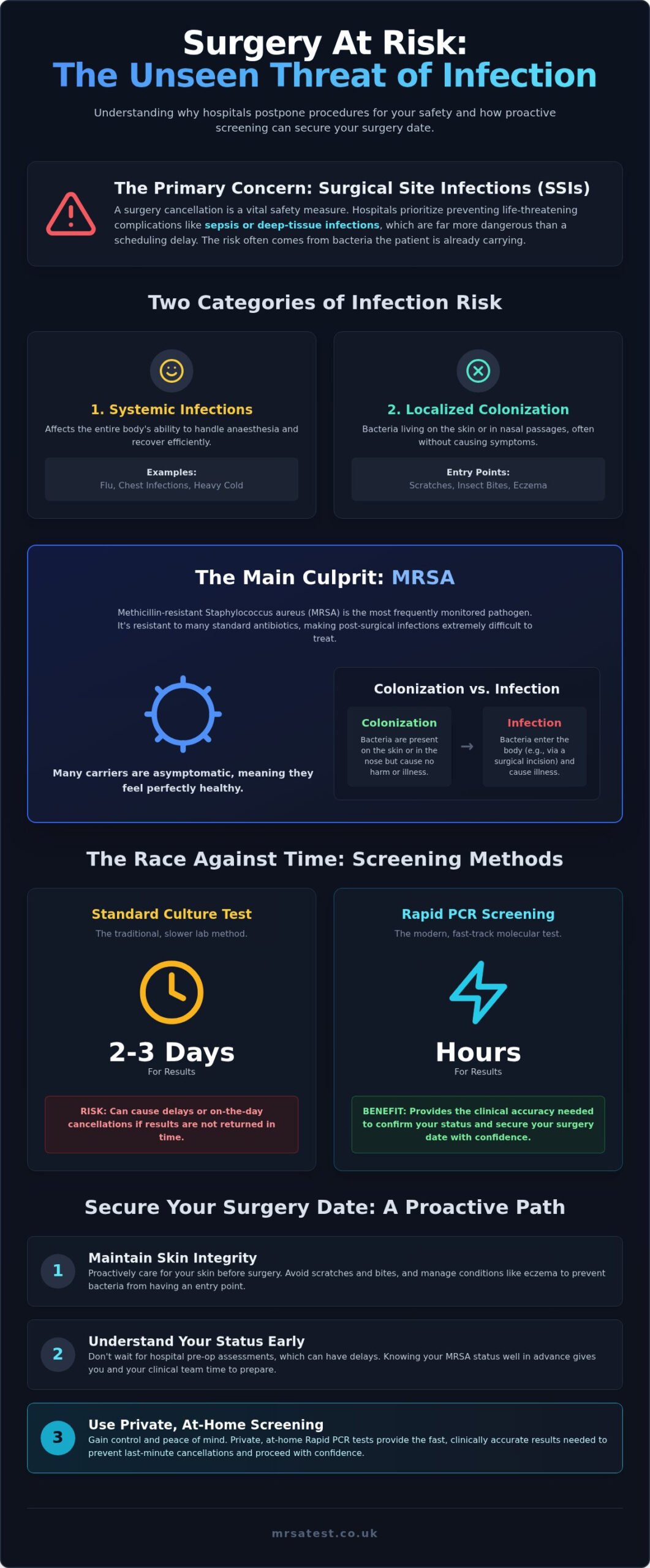
In a clinical setting, an “infection risk” refers to any biological or environmental factor that increases the likelihood of a Surgical Site Infection (SSI). While a postponed procedure is undeniably frustrating, hospitals must prioritise your long-term safety over strict schedule adherence. A surgery cancellation due to infection risk is a calculated decision made to prevent life-threatening complications, such as sepsis or deep-tissue failure, which are far more difficult to manage than a simple scheduling delay.
Clinical teams categorise these risks into two distinct groups. Systemic infections include illnesses like the flu, chest infections, or even a heavy cold. These affect your body’s overall ability to handle anaesthesia and recover efficiently. Localised colonisation, on the other hand, involves specific bacteria living on your skin or in your nasal passages. Even minor skin damage, such as a small scratch, an insect bite, or a patch of eczema, can compromise your natural defences. These small breaks in the skin provide a direct gateway for bacteria to enter the sterile surgical field once an incision is made.
The Hidden Danger of Asymptomatic Colonisation
Many patients are surprised to learn they can carry potentially harmful bacteria without feeling unwell or showing any visible symptoms. This state is known as being “colonised.” Being a carrier of bacteria like MRSA is a significant concern for surgical teams. Research indicates that hospital-acquired infections often start with the patient’s own skin flora rather than the hospital environment itself. When the skin barrier is breached during an operation, these usually dormant bacteria can move into deep tissues or the bloodstream, where they become dangerous. Identifying this colonisation before you enter the operating theatre is the only way to mitigate the risk effectively.
Hospital Protocols and Pre-Op Assessments
The pre-admission clinic serves as a vital screening phase designed to catch these issues early. During this assessment, nurses and doctors look for signs of active infection or skin conditions that might harbour bacteria. However, on-the-day cancellations frequently occur if a new risk is identified during final checks. This might be a fresh skin tear or a delayed screening result that has finally flagged a concern. Properly preparing for surgery involves a comprehensive approach that goes beyond simply fasting. It requires a proactive focus on maintaining skin integrity and ensuring all bacterial screenings are completed well in advance of your arrival at the ward.
Common Pathogens: The Role of MRSA in Surgical Delays
While visible skin damage is a clear indicator of risk, microscopic threats are often the primary cause of a surgery cancellation due to infection risk. In the UK, Methicillin-resistant Staphylococcus aureus (MRSA) is the pathogen most frequently monitored by surgical teams. This bacterium is a common resident on human skin, but it becomes a significant hazard when it enters a clinical environment. Because it has developed resistance to many standard antibiotics, it’s much harder to treat than typical infections if it reaches a surgical wound.
Hospitals have made MRSA screening a standard safety protocol for almost all elective procedures. This isn’t because the hospital is “dirty,” but because patients often bring these bacteria with them from the community. If a patient is carrying MRSA, the risk of developing Surgical Site Infections increases dramatically. While other pathogens like MSSA (Methicillin-sensitive Staphylococcus aureus) also pose risks, they are generally easier to manage with standard perioperative antibiotics. MRSA requires specific, more aggressive interventions that must be started before the first incision is made.
What is MRSA and Why Does it Matter?
MRSA is a resilient strain of staph bacteria that resists common antibiotics. It’s helpful to understand the clinical distinction between “colonisation” and “infection.” Colonisation means the bacteria are living harmlessly on your skin or inside your nose without making you feel ill. An infection occurs only when those bacteria enter your bloodstream or a deep tissue wound. Learning what MRSA is and how it behaves can alleviate much of the anxiety surrounding a positive test result. Being a carrier doesn’t mean you’re sick; it simply means you need extra preparation before surgery.
The Consequences of a Positive MRSA Screen
If your pre-operative assessment flags a positive result, your elective procedure will likely be postponed. This delay is necessary to complete a “decolonisation” protocol. This typically involves using specialised antiseptic body washes and antibiotic nasal ointments for five days. The goal is to suppress the bacteria so they don’t migrate into the surgical site during or after the operation.
Following this treatment, you’ll usually need a clear re-test before the hospital will confirm a new surgery date. This timeline can add weeks to your recovery journey if it isn’t managed proactively. To ensure your schedule remains on track, many patients find it helpful to arrange a private MRSA screening well in advance of their hospital appointment. Knowing your status early allows you to complete any necessary decolonisation without the stress of an eleventh-hour cancellation.
The Clinical Necessity: Why Hospitals Cannot Take the Risk
Your skin is your body’s most effective shield. It works 24 hours a day to block billions of pathogens from entering your internal systems. Surgery, by its very nature, bypasses this primary defence. When a surgeon makes an incision, they create a direct pathway for bacteria to enter tissues and organs that are usually sterile. This is why a surgery cancellation due to infection risk is never a matter of hospital bureaucracy; it’s a fundamental clinical necessity to protect your life.
Beyond individual patient safety, the financial and operational burden of infections is immense. Treating a post-operative infection requires additional theatre time, expensive specialist antibiotics, and extended nursing care. For both the NHS and private providers, these complications drain vital resources. Surgeons also work under strict legal and ethical obligations to minimise avoidable risks. Proceeding with a known infection risk could be seen as a breach of their professional duty of care, making the decision to postpone the safest path forward.
There’s also the factor of ward safety. Hospitals are shared environments where cross-contamination is a constant threat. If one patient develops an antibiotic-resistant infection, it potentially compromises the safety of every other person on that ward. By strictly managing who enters the operating theatre, hospitals maintain a controlled, safe environment for all patients.
Understanding Surgical Site Infections (SSIs)
A Surgical Site Infection (SSI) occurs when pathogens multiply at the site of an incision. These infections typically present with symptoms such as redness, heat, discharge, or a persistent fever. While some stay on the surface, others can lead to deep-tissue damage or the complete failure of the procedure. The impact is particularly severe for surgeries involving implants, such as hip replacements, knee reconstructions, or pacemakers. Bacteria have a high affinity for prosthetic materials, often forming “biofilms” that are nearly impossible to clear without surgically removing the implant entirely.
The “Zero Tolerance” Approach to MRSA
UK hospitals operate under a “zero tolerance” policy regarding MRSA bloodstream infections. This isn’t just a local goal; it’s a national mandate. Mandatory reporting means every case is scrutinised to ensure hospital protocols are working effectively. Screening protocols are designed to identify carriers before they even step onto the ward. These measures protect you from a potentially devastating surgery cancellation due to infection risk by ensuring that any necessary treatment happens well before your scheduled date. This rigorous approach ensures the hospital remains a place of healing rather than a source of new health challenges.
How to Prevent Cancellations and Prepare Your Skin
While surgeons manage the sterile environment of the operating theatre, you play a vital role in maintaining your body’s readiness. A surgery cancellation due to infection risk is often preventable with a few simple lifestyle adjustments in the two weeks leading up to your procedure. Taking proactive steps ensures your skin remains an intact barrier, reducing the chance of bacteria entering your system during the operation.
If you live with chronic skin conditions like eczema or psoriasis, ensure these are well-managed and stable. Flare-ups can harbour higher concentrations of bacteria, which may lead to a postponement if the skin near the surgical site is inflamed. It’s also essential to communicate openly with your surgical team. If you notice a new rash, an insect bite, or even if you start feeling unwell, notify the pre-assessment clinic immediately. Early transparency allows the team to provide guidance or adjust your care plan well before your scheduled date.
A Pre-Op Skin Protection Checklist
Maintaining skin integrity is a simple but powerful way to protect your surgery date. Follow these steps to minimise bacterial risks:
- Avoid high-risk activities: In the 14 days before surgery, pause activities like gardening, contact sports, or intensive DIY projects. These can cause minor scratches or skin breaks that serve as entry points for pathogens.
- Do not shave the surgical area: Shaving at home can cause micro-tears that are invisible to the eye but easily colonised by bacteria. Your surgical team will handle any necessary hair removal using sterile clippers on the day.
- Follow antiseptic protocols: If you are prescribed antiseptic washes, such as Chlorhexidine, use them exactly as instructed. These washes are designed to reduce the bacterial load on your skin significantly.
Proactive Screening: Taking Control of the Timeline
Waiting for hospital screening results can be a source of significant anxiety, especially if your surgery date is only days away. If a positive result is returned late, it leaves very little time to complete a decolonisation protocol, often resulting in a surgery cancellation due to infection risk. Knowing your status early gives you the peace of mind to proceed or the time to treat any colonisation discreetly at home.
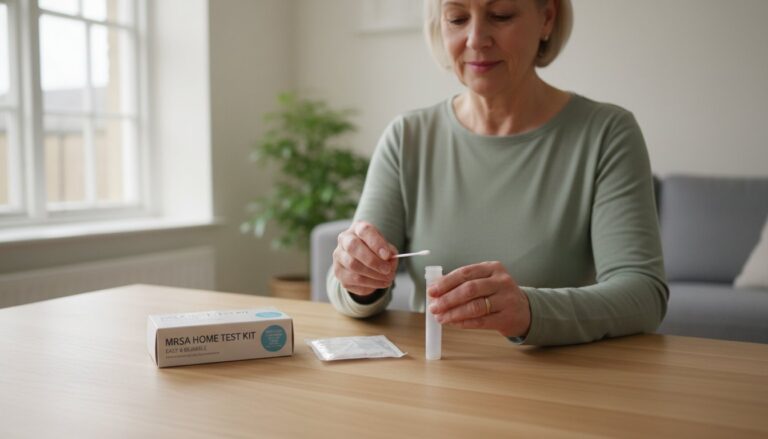
Using at-home test kits is a convenient way to manage this process without extra hospital trips. These kits allow you to collect samples in a private setting and receive results from an accredited laboratory. Taking this step early ensures you are fully prepared for your hospital assessment. To secure your surgery date with confidence, you can view our range of private MRSA tests and receive your results quickly.
Securing Your Surgery Date with Private MRSA Screening
Wait times for hospital screening results can be unpredictable. If your procedure is fast approaching, relying solely on the pre-admission clinic’s timeline might leave you vulnerable to a surgery cancellation due to infection risk. mrsatest.co.uk provides a dependable alternative, offering professional-grade screening kits that you can use in the comfort and privacy of your own home. This proactive approach ensures you have the data you need well before you arrive at the hospital.
Understanding the technical options available is the first step in taking control of your surgical timeline. We provide two primary types of testing: MRSA Culture and Rapid PCR. Both are processed in accredited UK laboratories, ensuring you receive the same level of clinical accuracy as a hospital-led test, but with the added benefits of speed and convenience.
Culture vs. PCR: Which Test is Right for You?
Culture testing is the traditional standard method. It involves placing your sample in a growth medium to see if MRSA colonies develop over time. This process typically takes 48 to 72 hours to complete. It’s a reliable and cost-effective choice if you’re in the early stages of preparing for surgery and have several weeks before your scheduled date.
For patients with an imminent surgery date, the Rapid PCR MRSA test is the ideal solution. This method uses molecular detection to identify the presence of the bacteria. PCR testing identifies bacterial DNA, making it the fastest screening method available. Because it doesn’t require the time-consuming growth phase of a culture, our laboratory can deliver results within 24 hours of sample receipt. This rapid turnaround can be a lifesaver if you’re trying to secure a surgery date that is only days away.
How the mrsatest.co.uk Process Works
The process is designed to be straightforward and discreet. Once you place an order online, your kit is delivered to any UK address in plain packaging to protect your privacy. Each kit contains easy-to-follow instructions for collecting swabs from the nose and groin. Depending on your specific requirements, optional axilla (underarm) swabs are also available.
After you’ve collected your samples, you simply place them in the provided prepaid Tracked 24 return envelope. Your swabs are sent directly to our verified laboratory partners for analysis. Once the results are ready, they are delivered confidentially via email or a secure portal. This streamlined system eliminates the need for extra hospital visits and provides the peace of mind that comes from knowing your status. By managing your screening early, you can complete any required decolonisation on your own terms, effectively preventing a surgery cancellation due to infection risk.
Protect Your Procedure with Proactive Preparation
Navigating the weeks before an operation is often overwhelming, but understanding the clinical logic behind hospital protocols provides much-needed clarity. A surgery cancellation due to infection risk is a vital safety measure, but it doesn’t have to be a surprise that disrupts your life. By focusing on skin health and identifying silent bacterial colonisation early, you take an active role in ensuring your procedure goes ahead as planned.
Taking control of your screening timeline is a simple way to alleviate pre-op anxiety. Our service connects you with UK-accredited laboratory partners to provide a confidential and secure diagnostic process. With results delivered within 24 hours of lab receipt, you can address any concerns well before your hospital assessment. This professional screening path ensures you have the reliable data needed to proceed with confidence.
Order your Rapid PCR MRSA Test Kit today for fast, pre-surgery peace of mind.
You’ve waited long enough for your recovery to begin. With the right preparation and professional screening, you can walk into the hospital with confidence, knowing you’ve done everything possible to secure your surgery date and focus on your health.
Frequently Asked Questions
Can I have surgery if I have a cold or a cough?
It depends on the severity of your symptoms and the type of anaesthesia required. While a very minor sniffle might be acceptable, a fever or a chesty cough usually triggers a delay. Anaesthesia can irritate the airways, increasing the risk of respiratory complications during and after the procedure. It’s always best to call the hospital as soon as symptoms appear to avoid a last-minute surgery cancellation due to infection risk.
How long after an infection can I have surgery?
Most surgeons recommend waiting at least two weeks after your symptoms have fully resolved. This recovery period ensures your immune system is no longer under stress and your body can handle the physical demands of surgery and healing. For more serious infections, the wait might be longer. Your consultant will provide a specific timeline based on your procedure and overall health status once you are symptom-free.
What happens if I test positive for MRSA before my operation?
If you test positive for MRSA, your elective surgery will likely be postponed so you can undergo a decolonisation protocol. This is a standard safety measure designed to prevent the bacteria from entering your surgical wound. You’ll be prescribed a five-day course of antiseptic body wash and nasal ointment. After finishing the treatment, you’ll usually need a clear re-test before the hospital confirms your new operation date.
Will a small scratch really cause my surgery to be cancelled?
Yes, a small scratch or insect bite can lead to a surgery cancellation due to infection risk if it’s near the surgical site. Any break in the skin serves as a potential entry point for bacteria like MRSA. If the skin is red, inflamed, or broken, the risk of a post-operative infection increases significantly. It’s vital to protect your skin and avoid high-risk activities in the two weeks before your procedure.
Can I use my private MRSA test results for my NHS surgery?
Most NHS trusts and private hospitals accept results from UK-accredited laboratories. However, you should always check with your specific surgical team first to confirm their requirements. Providing a formal report from a verified lab can often speed up your pre-operative assessment. Our results are processed by accredited partners and delivered in a professional format that is suitable for clinical review by your surgeon or pre-admission nurse.
How far in advance of surgery should I be screened for MRSA?
Screening usually occurs during your pre-operative assessment, typically two to four weeks before surgery. However, official UK guidance suggests a screen can be valid for three to six months depending on the procedure. Screening early is beneficial because it allows ample time for decolonisation if you test positive. If you wait until the last minute, a positive result will almost certainly cause a stressful delay to your recovery.
What is MRSA decolonisation and how long does it take?
Decolonisation is a simple treatment designed to reduce or remove bacteria like MRSA from your skin and nasal passages. It involves using a specialised antiseptic body wash and a nasal antibiotic ointment. This process typically takes five consecutive days to complete. It’s not a treatment for an active illness; rather, it’s a preventative measure to ensure your own skin flora doesn’t cause a surgical site infection during recovery.
Does a cancellation due to infection risk mean I go to the back of the waiting list?
No, you generally don’t go to the very back of the list. Hospitals understand that infection risks are often temporary and beyond your control. Once you are medically cleared or have successfully completed your decolonisation protocol, you are usually prioritised for the next available theatre slot. However, the exact timing depends on the hospital’s current backlog and availability. Proactive screening helps you avoid this logistical frustration and stay on schedule.