
Post-Operative Infection Symptoms: A Patient’s Guide to Early Detection
Did you know that an estimated 60% of surgical site infections are preventable? It’s completely normal to feel a sense of unease as you monitor your wound during recovery. You might find yourself questioning whether a bit of swelling is part of the body’s natural response or a cause for concern. Learning how to prevent infection after surgery in the UK involves both vigilant home care and professional preparation, such as screening for meticillin-resistant Staphylococcus aureus (MRSA) before your procedure.
This guide provides the clarity you need to recover with confidence. You’ll learn to identify the early warning signs of infection and understand why proactive screening is a vital safety measure. We’ll walk through a practical checklist of symptoms and explain exactly when it’s time to contact your clinical team for support.
Key Takeaways
- Learn to recognise the “Five Pillars” of inflammation-heat, redness, swelling, pain, and loss of function-to catch potential infections before they progress.
- Discover practical steps for how to prevent infection after surgery uk, including the “Clean and Dry” rule for safe at-home dressing changes.
- Understand why the first 30 days after your procedure are the most critical window for vigilant wound monitoring and professional support.
- Identify the specific risks associated with MRSA and how these resistant bacteria differ from common surgical site pathogens.
- Explore how pre-operative screening and decolonisation can help you manage health risks discreetly before your operation begins.
Understanding Surgical Site Infections (SSI) and Post-Op Risks
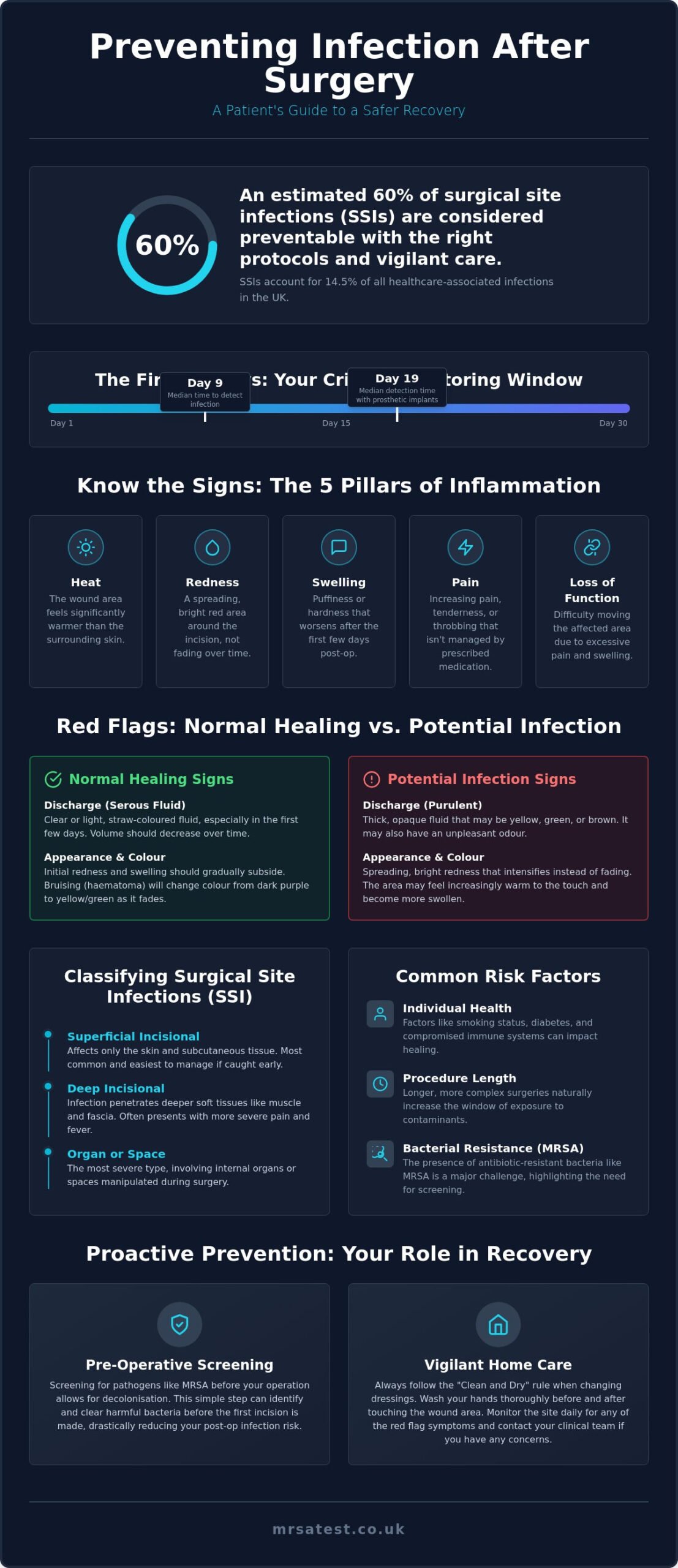
A Surgical site infection (SSI) occurs when harmful pathogens colonise the incision site following a medical procedure. In the United Kingdom, these infections are a significant focus for the NHS and private healthcare providers alike. According to a 2023 report from Health Innovation West of England, SSIs account for 14.5% of all healthcare-associated infections. Understanding how to prevent infection after surgery in the UK is vital, as a substantial number of these cases are considered preventable with the right protocols. While clinical teams take extensive precautions during your stay, the first 30 days after you leave the hospital are the most critical for monitoring your recovery.
Pathogens like Staphylococcus aureus are often the primary culprits. These bacteria can live on the skin or in the nasal passages without causing issues until a surgical break in the skin provides an entry point. Once inside, they can multiply rapidly, leading to complications that range from minor skin irritation to serious systemic issues. Data from the 2024/2025 UKHSA surveillance period shows that the median time to detect an infection is 9 days for most surgeries, though this timeline nearly doubles to 19 days if a prosthetic implant is involved. This delay highlights why consistent, daily checks of the wound site are so necessary during your first weeks at home.
Classifying SSIs: Superficial vs. Deep Infections
Clinicians categorise infections based on the depth of the tissue involved, which determines the necessary treatment path. It’s helpful to understand these levels so you can describe your symptoms accurately to a healthcare professional.
- Superficial incisional SSI: This type affects only the skin and the subcutaneous tissue immediately beneath it. While common, these are usually the easiest to manage if they’re caught early.
- Deep incisional SSI: These occur when the infection penetrates the deeper soft tissues, such as muscle and fascia layers. These often present with more significant pain and systemic symptoms like a fever.
- Organ or Space SSI: This is the most severe classification. It involves any part of the anatomy, other than the incision, that was opened or manipulated during the operation, such as internal organs or the spaces between them.
Common Risk Factors for Post-Op Infections
Your personal health profile and the nature of the surgery itself play major roles in your infection risk. Recognising these factors helps you stay proactive during your recovery.
- Individual Health Markers: Factors such as your smoking status, immune system strength, and whether you have diabetes can significantly impact wound healing and your body’s ability to fight off bacteria.
- Procedure Length: Complex surgeries that require more time in the operating theatre naturally increase the window of exposure to potential contaminants.
- Bacterial Resistance: The presence of antibiotic-resistant strains, particularly MRSA, remains a challenge in surgical wards. This is why pre-operative screening is such a powerful tool; it allows you to identify and clear these bacteria before the first incision is made, significantly reducing the risk of a post-op complication.
Identifying Post-Operative Infection Symptoms: Red Flags at Home
Monitoring your recovery at home requires a balance of patience and vigilance. While clinical teams provide initial care, knowing how to prevent infection after surgery in the UK often comes down to your ability to spot subtle changes in your wound. The inflammatory response is a natural part of healing, but it follows a specific timeline. By day 3, you might see some bruising and slight swelling, which is typical. However, by day 10, the median time for most infections to appear, these symptoms should be receding rather than intensifying. Understanding the “Five Pillars” of inflammation-heat, redness, swelling, pain, and loss of function-helps you distinguish between expected healing and a potential complication.
Purulent discharge is a primary indicator of bacterial presence, characterised by thick, opaque fluid that may be yellow, green, or brown. Distinguishing this from serous fluid, which is clear or straw-coloured and common in early healing, is essential for early detection. If you notice a haematoma or bruising, remember that these typically change from dark purple to yellow or green as they fade. In contrast, an infection often presents as a spreading, bright red area that feels increasingly warm to the touch. For more detailed visual examples, you can refer to this NHS patient guide to preventing surgical infections, which provides clear instructions for home monitoring.
Localised Signs at the Incision Site
- Changes in wound colour: Be alert for spreading redness, known as cellulitis, or darkening, dusky edges. If the redness moves further away from the incision line over time, it’s a significant red flag.
- Abnormal discharge: While some clear leaking is normal, thick fluid with a foul odour indicates an active bacterial colony.
- Wound dehiscence: This occurs when the edges of the incision begin to pull apart. It can happen due to internal pressure from an infection or poor tissue healing.
Systemic Symptoms: When the Infection Spreads
Sometimes the body’s response to a pathogen isn’t just localised to the wound. Systemic symptoms suggest that the infection may be entering the bloodstream or affecting your overall health. One effective way to manage these risks is by ensuring you are clear of resistant bacteria before your procedure through private pre-operative screening.
- Pyrexia (fever): A persistent body temperature over 38°C is a clear sign that your immune system is fighting an invader.
- Malaise and fatigue: Feeling unusually weak, shivery, or “flu-like” after the initial anaesthetic has worn off can indicate a systemic immune response.
- Tachycardia and confusion: A rapid heart rate or feeling suddenly disoriented are early warning signs of sepsis, a medical emergency that requires immediate NHS intervention.
MRSA vs. Common Bacteria: Why Pathogen Identity Matters
Identifying the specific pathogen responsible for a surgical site infection is just as important as spotting the symptoms. While many bacteria can cause post-operative complications, Methicillin-resistant Staphylococcus aureus, or MRSA, presents a unique challenge in UK clinical settings. If you’re researching what is MRSA, you’ll find it’s often called a “superbug” because it has evolved to resist the antibiotics most commonly used in hospitals. This resistance significantly complicates recovery. A standard, sensitive Staph infection might respond quickly to routine medication, but MRSA requires more intensive, specialised treatment. This difference often results in longer hospital stays and a much slower return to your normal routine.
The danger often begins before you even enter the operating theatre. MRSA can live harmlessly on your skin or in your nose, a state known as colonisation. However, once an incision is made, these bacteria can migrate from the surface into deeper tissues. This transition from external colonisation to internal infection is a major hurdle in understanding how to prevent infection after surgery in the UK. According to a scientific review of postoperative infection prevention, identifying these risks early is a cornerstone of modern surgical safety.
The Dangers of Antibiotic Resistance in Recovery
When an infection is caused by resistant bacteria, the standard “first-line” antibiotics often fail. This delay in effective treatment increases the risk of the infection spreading to the bloodstream, potentially leading to sepsis. MRSA is particularly deceptive because it can remain dormant on the skin for weeks. You might feel perfectly healthy, only for the bacteria to cause a severe deep-tissue infection once your body is stressed by surgery. Preventing this often requires a different approach to screening and decolonisation before the procedure takes place.
Identifying MRSA-Specific Symptom Patterns
While many infections look similar, MRSA sometimes produces distinct patterns. You should be particularly cautious if you notice small, red bumps that resemble spider bites near your incision. These can rapidly progress into painful, swollen abscesses that feel hard to the touch. These sores often don’t respond to common over-the-counter antiseptic ointments and may require professional drainage. For a better understanding of these visual cues, you can explore our common skin infections guide to help you identify when a surface issue needs urgent medical attention.
Home Monitoring and Actionable Steps for Wound Care
Effective recovery relies on a partnership between you and your clinical team. While the hospital provides the initial surgical environment, your daily routine at home is where the healing process is truly managed. Understanding how to prevent infection after surgery in the UK requires a structured approach to wound care. The “Clean and Dry” rule is your foundational principle. You should avoid disturbing your dressing unless specifically instructed by your surgeon. If a change is required, ensuring the area remains moisture-free is essential, as damp environments can encourage bacterial growth. This proactive mindset is a key part of preparing for surgery and managing your post-op health logistics.
Hand hygiene is your most effective defence against introducing new pathogens to the site. Before you or a carer touches the area near your dressing, you must wash your hands thoroughly with soap and warm water for at least 20 seconds. This simple step prevents the transfer of bacteria from household surfaces to your vulnerable incision. Performing a daily visual inspection is equally important, but it should be done without removing the dressing or touching the wound directly. Look for changes in the skin surrounding the bandage and monitor your overall comfort levels. If you’re concerned about your risk level, an at-home MRSA screening kit can provide peace of mind by confirming your status before or after your procedure.
The Wound Diary Method
Tracking your progress objectively helps remove the guesswork from recovery. Using a structured diary ensures you have clear evidence to share with health professionals if symptoms arise.
- Step 1: Take a photograph of the wound or dressing every 24 hours. Use the same room and lighting each time to ensure the images are comparable.
- Step 2: Record your pain level on a scale of 1 to 10 every morning. A gradual decrease is expected; a sudden spike is a reason for a clinical review.
- Step 3: If you notice a red area, gently mark the boundary with a skin-safe pen. This allows you to see if the redness is spreading over the next few hours.
When to Contact Your Surgical Team or GP
Knowing when to seek help is just as important as knowing how to prevent infection after surgery in the UK. We recommend the 24-hour rule: if a symptom like mild redness or slight oozing doesn’t improve within a day, call your GP or the hospital’s post-op helpline. However, if you experience a fever over 38°C or severe pain, contact them immediately. Have your diary ready so you can provide your exact temperature, pain history, and a description of any discharge. Never start taking leftover antibiotics from a previous illness. Using the wrong medication can mask symptoms of a serious infection and contribute to the very antibiotic resistance we aim to avoid.
Prevention and the Critical Role of Pre-Operative Screening
Many UK hospitals mandate screening for MRSA before elective procedures to reduce the incidence of hospital acquired infections. This isn’t just a administrative requirement; it’s a vital part of how to prevent infection after surgery in the UK. By identifying if you carry resistant bacteria on your skin, your clinical team can implement a decolonisation protocol. Decolonisation involves using specialised treatments to clear harmful bacteria from your body before the first incision is made. This significantly lowers the chance of surface pathogens entering the surgical wound during theatre, where the body is most vulnerable.
While many trusts offer this screening as part of their pre-op assessment, at-home testing provides a discreet and convenient alternative. It allows you to manage your health requirements without making extra trips to a clinical setting or sitting in busy waiting rooms. Taking control of this process early gives you the peace of mind that you’re entering the hospital in the best possible condition for a smooth, complication-free recovery.
Reducing Risks Before You Enter the Theatre
Pre-operative preparation often includes the use of antibacterial body washes or nasal ointments. These tools are most effective when your MRSA status is known. It’s a practical step in learning how to prevent infection after surgery in the UK, especially for those with a history of recurring skin issues. In some cases, screening other household members may also be recommended, as bacteria can easily pass between family members through shared surfaces or close contact.
Crucially, knowing your status allows your surgeon to select the correct prophylactic antibiotics. As we’ve discussed, standard antibiotics often fail against resistant strains. Having this data available before you enter the operating room ensures the medical team can tailor your care to the specific pathogens you may carry, providing a stronger shield against post-op complications.
Confidential At-Home Testing in the UK
Modern diagnostic technology has made it simple to integrate screening into your at home test kits uk plan. You can choose between a Rapid PCR test, which provides results within 24 hours of the sample reaching our accredited laboratory, or a standard Culture test. The PCR method is particularly useful for those on a tight surgical schedule who need fast, reliable answers.
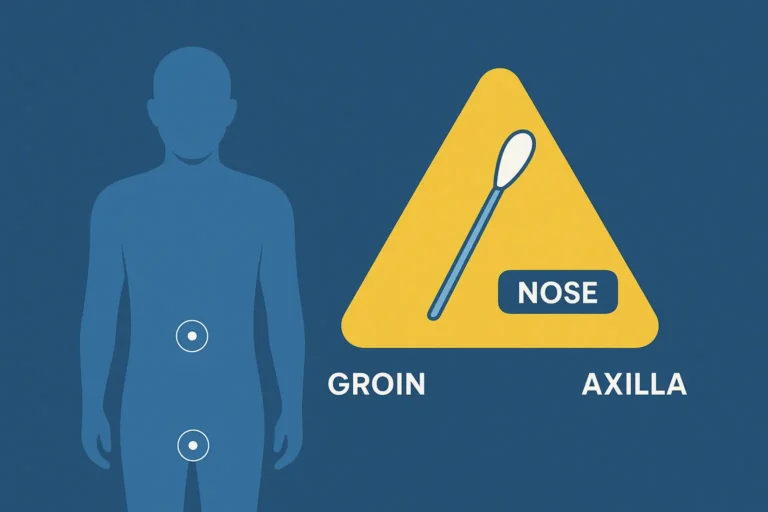
The self-collection process is designed to be straightforward and manageable. It involves using a sterile swab for the nose and groin areas, which are common sites for bacterial colonisation. Once you’ve collected the samples, you simply post them back in the provided packaging. This professional service ensures you receive clinical-grade accuracy with the privacy and speed that modern healthcare demands, allowing you to focus entirely on your recovery.
Taking Control of Your Post-Operative Journey
Recovery is a process that requires both patience and precision. By monitoring your wound daily and understanding the difference between normal healing and bacterial red flags, you play an active role in your own safety. We’ve explored how the first 30 days are vital for detecting surgical site infections and why identifying specific pathogens like MRSA can fundamentally change your treatment path. Early detection combined with professional preparation ensures that your body has the best environment to heal effectively.
Proactive health management is the most effective way to understand how to prevent infection after surgery uk. Our service provides fast 24-hour results with our Rapid PCR MRSA kits; these offer accredited laboratory analysis from the privacy of your home. You can Order a Confidential MRSA Test Kit for Pre-Surgery Peace of Mind to ensure you’re fully prepared before entering the hospital. We provide discreet UK-wide delivery, making it a trusted choice for private pre-operative screening.
You don’t have to manage your post-operative health in a state of uncertainty. With the right information and professional screening tools at your disposal, you can approach your procedure with quiet competence. Focus on your recovery and look forward to a safe return to your daily routine.
Frequently Asked Questions
How soon after surgery do infection symptoms usually appear?
Symptoms typically appear between 5 and 10 days after your procedure. While some infections manifest as early as 48 hours, the median time for detection in the UK is 9 days for standard operations. If your surgery involved a prosthetic implant, this window often extends to approximately 19 days. It’s vital to monitor the site for at least 30 days to ensure a safe recovery.
Is it normal for a surgical wound to be red and itchy?
Mild redness and itching are common during the early stages of healing as the body releases histamines and tissue begins to knit together. However, this should remain localised to the immediate incision line. If the redness begins to spread, feels hot to the touch, or is accompanied by swelling, it may indicate a complication. Understanding how to prevent infection after surgery in the UK involves distinguishing these normal sensations from active infection.
What does an MRSA infection look like after surgery?
An MRSA infection often presents as small, red, painful bumps that can quickly resemble deep abscesses or spider bites. Unlike common skin irritations, these sores are often filled with pus and feel firm or “woody” to the touch. Because MRSA is resistant to many standard treatments, these symptoms may progress rapidly despite the use of over-the-counter antiseptic creams, requiring specialised clinical intervention.
Can I treat a minor surgical site infection at home?
You should never attempt to treat a suspected surgical site infection at home without professional guidance. While you can manage basic wound hygiene by keeping the area clean and dry, any signs of infection require a review by your GP or surgical team. Early clinical intervention is the most effective way to prevent a minor issue from developing into a serious systemic complication like sepsis.
Why is MRSA screening mandatory for some surgeries in the UK?
Mandatory screening exists because identifying colonisation before an incision is made significantly reduces the risk of post-operative complications. In the UK, this has been a requirement for orthopaedic procedures since 2004. Knowing your status allows surgeons to adjust your care plan, ensuring that the antibiotics used during theatre are effective against the specific bacteria present on your skin.
What happens if I test positive for MRSA before my operation?
If you test positive, your clinical team will typically prescribe a decolonisation treatment. This usually involves a five-day course of antibacterial body wash and a specific nasal ointment to clear the bacteria. In most cases, your surgery will proceed as planned once the decolonisation is complete. This proactive step is a cornerstone of how to prevent infection after surgery in the UK and ensures a safer environment for your procedure.
Will a post-operative infection affect my surgical results?
A serious infection can potentially impact your final results by causing excessive scarring or wound dehiscence. In procedures involving implants or prosthetics, an infection may even necessitate the removal of the device to clear the pathogen. Catching symptoms early through vigilant home monitoring is the best way to protect both your health and the success of your surgical outcome.
How can I tell the difference between a normal scab and an infection?
A normal scab should be dry, dark, and firmly attached to the skin as it protects the healing tissue underneath. In contrast, an infected wound often produces a “soft” scab or crust that is accompanied by oozing pus or a foul odour. If the skin surrounding the scab is becoming increasingly red, swollen, or painful, it’s a sign that the wound needs a professional assessment.