Is MRSA Contagious? Understanding Transmission, Risks, and Prevention
Did you know that approximately 2% of the global population carries MRSA on their skin or in their nose without showing a single symptom? This invisible presence often leads to the urgent question: is mrsa contagious? The short answer is yes, but the way it moves through a community is more complex than most people realize. Whether you’ve heard it described as a “hospital bug” or seen reports of it spreading in local gyms, the uncertainty around transmission can cause significant anxiety. It’s perfectly normal to worry about the safety of your family when faced with a bacteria that doesn’t respond to common antibiotics.
We’re here to provide the clinical clarity you need to replace fear with a proactive plan. You’ll learn exactly how MRSA spreads, the vital difference between being a carrier and being infected, and how to protect yourself and those around you. We will cover the most common transmission routes, explain the decolonization process, and highlight a fast way to check your MRSA status privately from home. By understanding the science of screening and hygiene, you can manage your health with confidence and quiet competence.
Key Takeaways
- Understand exactly why is mrsa contagious and how this resilient “superbug” spreads through both direct skin contact and contaminated surfaces.
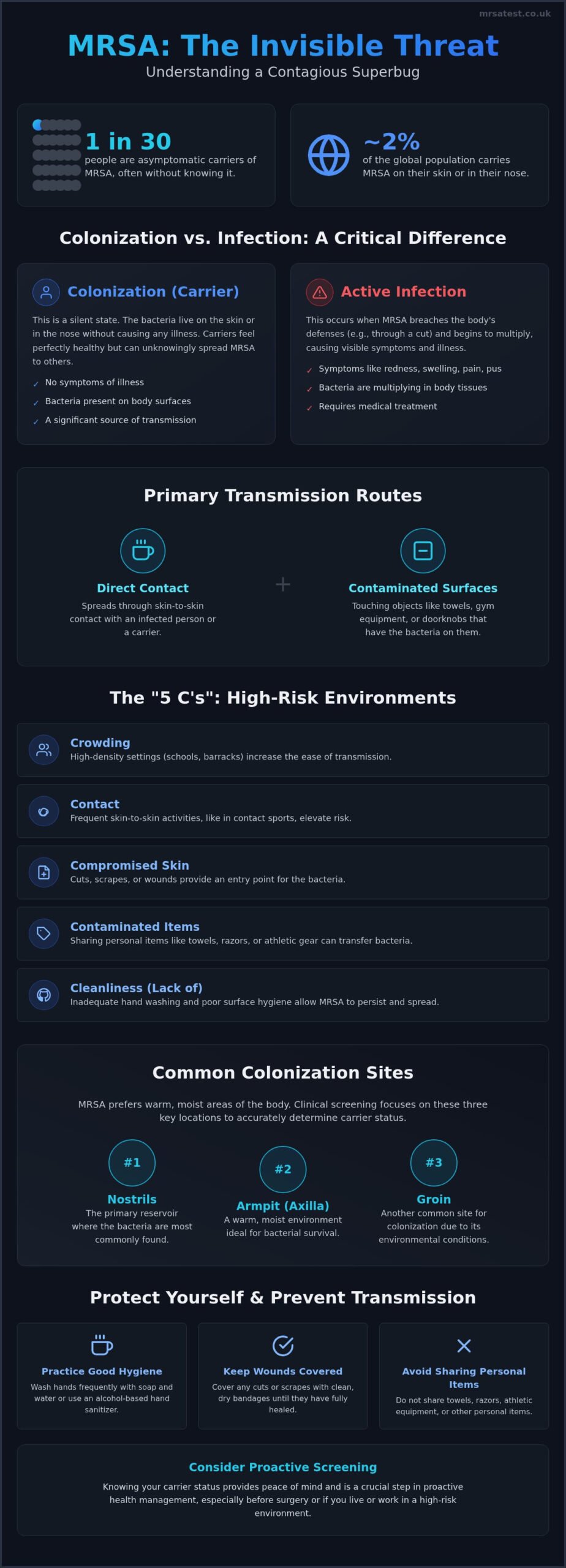
- Learn the clinical distinction between asymptomatic colonization and active infection, including why roughly 1 in 30 people are unaware they are carriers.
- Identify the early physical warning signs of a MRSA skin infection, such as redness and swelling, to ensure you can take prompt, informed action.
- Discover practical hygiene strategies and personal item management techniques to effectively protect your household and break the chain of transmission.
- Understand the role of proactive screening in providing peace of mind, particularly for those preparing for surgery or living in high-risk environments.
Understanding How MRSA Spreads: Is It Contagious?
The straightforward answer is yes; MRSA is highly contagious. It primarily spreads through direct skin-to-skin contact or by touching surfaces that have been contaminated with the bacteria. Scientifically referred to as Methicillin-resistant Staphylococcus aureus, it’s a specific “superbug” variant of the common staph bacteria. While staph is found on the skin of many healthy individuals, MRSA is significantly more challenging to manage because it has developed resistance to the antibiotics typically used to treat such infections.
One of the most deceptive aspects of this bacteria is that you can catch it from someone who looks perfectly healthy. Many people are “carriers,” meaning they are colonized with the bacteria but don’t feel ill. The bacteria often enter the body through microscopic breaks in the skin. Even a tiny cut, a shaving nick, or a surgical site can act as an entry point, allowing the bacteria to move from the surface into deeper tissues where they can cause an active infection.
The 5 C’s of MRSA Transmission
To help the public understand risk factors, health experts often use the “5 C’s” to identify environments where the bacteria thrives. These factors explain why certain settings are more prone to outbreaks than others:
- Crowding: High-density environments like schools, military barracks, and prisons make it easier for bacteria to move between people.
- Contact: Frequent skin-to-skin interaction, such as that found in contact sports like rugby or wrestling, increases transmission rates.
- Compromised Skin: Wounds, scrapes, or skin conditions like eczema provide the necessary “open door” for the bacteria.
- Contaminated Items: Sharing personal items such as towels, razors, or gym equipment can transfer the bacteria from one person to another.
- Cleanliness: Poor hand hygiene or inadequate cleaning of shared surfaces allows the bacteria to linger and spread.
Hospital vs. Community Transmission
In the past, MRSA was primarily associated with medical facilities. This is known as Healthcare-Associated MRSA (HA-MRSA). It typically affects vulnerable patients during surgery or those using invasive medical devices like catheters or intravenous drips. In these settings, the bacteria can lead to serious bloodstream infections or pneumonia if not strictly managed through clinical protocols.
However, Community-Associated MRSA (CA-MRSA) is increasingly common across the UK. This strain affects healthy individuals in the general public who haven’t been hospitalized recently. With the diagnosed incidence of MRSA infections in major markets expected to reach 98 cases per 100,000 by 2033, the community spread is a growing concern. This shift highlights why understanding your own carrier status is becoming a vital part of proactive health management, especially before undergoing private surgery or returning to high-contact environments.
Colonization vs. Infection: The Invisible Threat
Understanding the difference between being a carrier and having an active infection is crucial when asking is mrsa contagious. Colonization is a state of carrying bacteria without active disease. Most people assume that if they don’t have a painful skin boil or a fever, they don’t have MRSA. However, current data suggests that approximately 1 in 30 people in the UK are colonized with the bacteria. These individuals are often referred to as “carriers.” While they feel perfectly healthy, they act as a “Trojan Horse,” unknowingly bringing the bacteria into their homes, workplaces, or hospitals.
An active infection occurs when the bacteria bypass the skin’s defenses and begin to multiply, causing symptoms like pain, swelling, and pus. In contrast, colonization is silent. The bacteria simply live on the surface of the skin or inside the nostrils. Because carriers don’t show symptoms, they often skip the hygiene precautions that someone with an obvious wound might take, which ironically makes them a significant source of spread. When considering how is mrsa contagious, it’s vital to remember that the bacteria don’t need a visible wound to move from one person to another.
Where Does MRSA Hide on the Body?
MRSA prefers environments that are warm and moist. The primary reservoir for staph bacteria is the lining of the nose. Beyond the nostrils, the bacteria frequently colonize the groin and the axilla, or armpit. These areas provide the ideal conditions for the bacteria to survive and replicate. This is exactly why clinical screening for carrier status focuses on these three specific sites. Swabbing just one area might miss the bacteria, which is why a comprehensive screen is essential for diagnostic accuracy.
Can a Carrier Infect Others?
The risk a carrier poses to others is substantial, particularly to vulnerable family members like the elderly or those with weakened immune systems. According to Lafayette College MRSA information, the bacteria can be transmitted through both direct contact and contaminated objects. Carriers constantly “shed” bacteria from their skin onto everyday items. Bedsheets, towels, and even TV remotes can become contaminated. If a family member with a small scratch or dry skin touches these surfaces, they can easily contract the bacteria.
Because the bacteria are invisible, many people choose to undergo a private MRSA screening to confirm their status before visiting high-risk relatives or undergoing surgery. Taking this step provides the peace of mind that you aren’t unintentionally putting others at risk. It’s a simple way to ensure that your home remains a safe environment for everyone.
Identifying Symptoms: When Contagion Becomes Infection
When the bacteria move from the skin surface into the tissue, the question of is mrsa contagious shifts from a theoretical risk to an active medical concern. Early signs of an infection often mimic minor skin issues. You might notice what looks like a small pimple, an insect bite, or a painful boil. Unlike a typical blemish, these sores are often intensely painful and can develop with surprising speed. Because the bacteria are already present on the skin of carriers, any minor break in the surface can trigger this transition from colonization to infection.
Recognizing the early warning signs is the first step in managing the condition effectively. Clinical indicators that an active infection is present include:
- Persistent redness and swelling that spreads beyond the initial site.
- Skin that feels noticeably warm or hot to the touch.
- A central point that becomes filled with pus or other drainage.
- The area becoming increasingly tender, firm, or “woody” to the feel.
For a clearer comparison of these physical signs, you can refer to A Visual Guide to Common Skin Infections. If the bacteria penetrate deeper into the body, systemic symptoms may emerge. Fever and chills are significant warning signs that the infection might have entered the bloodstream, a state that requires immediate professional intervention. In these cases, the speed of diagnosis is critical to prevent the bacteria from affecting internal organs.
MRSA vs. Regular Staph: How to Tell
It’s a common misconception that MRSA has a unique or “angry” appearance compared to other bacteria. In reality, you cannot distinguish MRSA from a standard staph infection just by looking at it. This is why clinical testing is so important. The most telling clue is often the failure of standard antibiotics. If a skin infection doesn’t improve after a course of common penicillin-based treatments, it’s a strong indicator that you’re dealing with a resistant strain. For more detail on why these strains behave differently, see What Is MRSA? Your Complete Guide.
When to Seek Urgent Medical Help
While many skin infections are manageable with the right care, certain symptoms require immediate clinical attention. Watch for red streaks leading away from the wound. This is a sign that the infection is moving through the lymph system and could lead to sepsis. High fever, rapid heartbeat, or sudden confusion accompanying a skin sore are medical emergencies. When speaking with a GP or attending A&E, clearly mention if you’ve recently been in a hospital or have reason to suspect MRSA. This transparency helps medical staff choose the correct diagnostic tests and start the appropriate antibiotic regimen without delay.
How to Prevent MRSA Transmission at Home
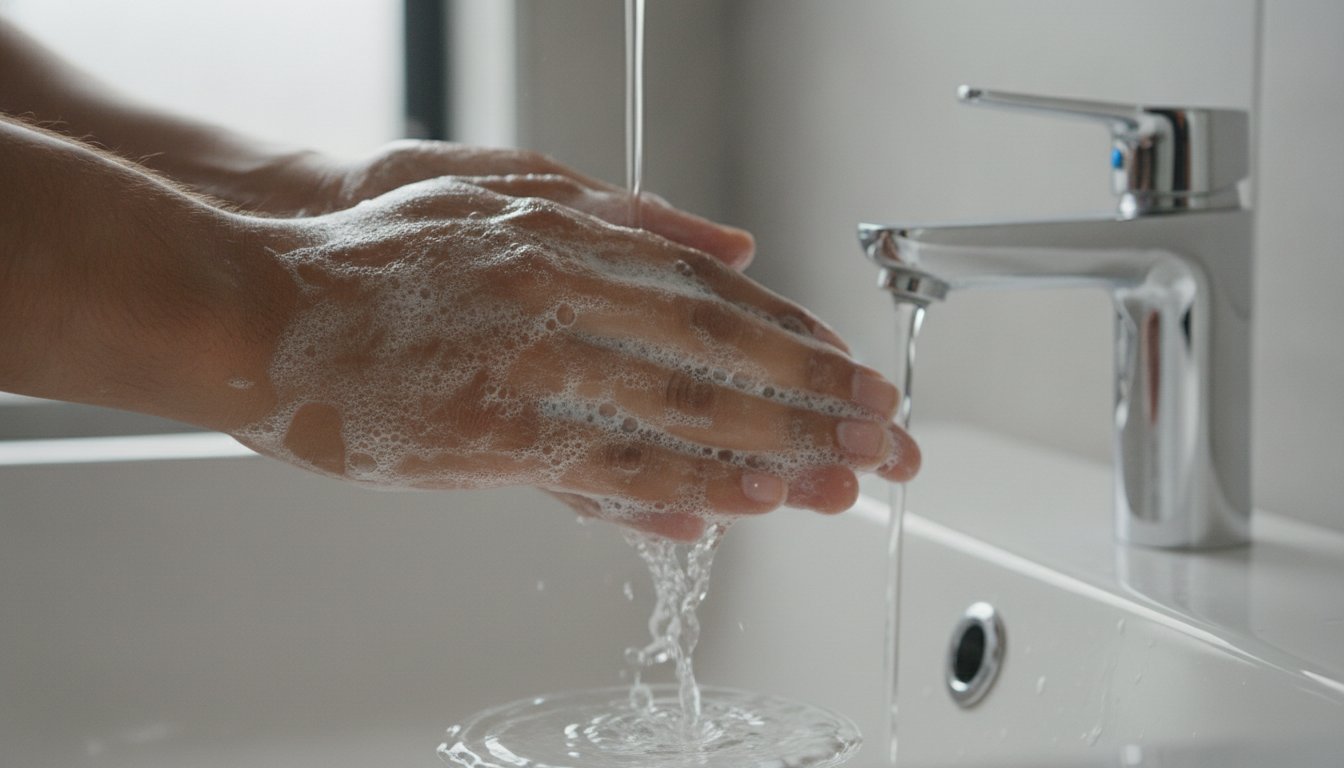
While knowing is mrsa contagious helps you stay alert, practical steps are what truly break the cycle of transmission. The gold standard for prevention remains rigorous hand hygiene. Washing your hands with soap and water for at least 20 seconds is highly effective, but you should also use alcohol-based sanitizers when a sink isn’t immediately available. These simple actions remove the bacteria before they can be transferred to surfaces or other people.
Managing personal items is equally important. In a household with a potential carrier, “sharing is not caring” applies to anything that touches the skin. You should never share towels, razors, or athletic equipment. These items can trap bacteria in their fibers or on their surfaces, providing a direct route for the bacteria to move between family members. Similarly, keeping all cuts, scrapes, and minor wounds covered with clean, dry bandages is a vital barrier. This prevents the bacteria from “shedding” into the environment and protects the wound from further contamination.
Environmental cleaning should focus on “high-touch” surfaces. Bacteria can survive for weeks on hard materials. Regularly disinfecting doorknobs, light switches, and bathroom taps with a bleach-based cleaner or an appropriate antimicrobial spray significantly reduces the bacterial load in your home. This proactive approach ensures that common areas remain safe for everyone.
Laundry and Bedding Protocols
Standard washing cycles aren’t always enough to eliminate resilient bacteria. To ensure your home is protected, you should wash towels, bed linens, and any clothes worn by a known carrier at high temperatures, ideally 60°C or above. Heat is a powerful disinfectant that breaks down the bacterial cell walls. Using a tumble dryer on a high heat setting further reduces any remaining bacterial load. When handling “dirty” laundry, avoid hugging the items against your own clothes to prevent transferring the bacteria to yourself. Instead, use a dedicated laundry basket that can be easily cleaned.
Protecting Vulnerable Household Members
Extra precautions are necessary if you live with elderly relatives, newborn babies, or anyone with a weakened immune system. These individuals are at a higher risk of developing a serious infection if they come into contact with the bacteria. For more context on managing these risks in a medical setting, you may find our Hospital-Acquired Infections: A Patient’s Guide helpful. In many cases, a medical professional may recommend a decolonization treatment, which typically involves using prescribed antimicrobial body washes and nasal ointments for a specific period. These treatments are designed to reduce the amount of bacteria on the skin and in the nose, making it less likely that you’ll pass the bacteria to others.
If you’re concerned about the safety of your family, taking a proactive step is the best way to regain peace of mind. You can order a private MRSA screening kit today to confirm your status discreetly and receive your results within 24 to 72 hours.
Screening and Testing: Confirming Your Status
Because carriers show no physical symptoms, clinical screening is the only definitive way to determine if you are carrying the bacteria. Understanding that is mrsa contagious even when you feel perfectly healthy is the first step toward responsible health management. Screening acts as a diagnostic bridge, moving you from uncertainty to a clear, actionable status. This is particularly important for those who have recently been in a healthcare environment or work in high-contact professions where the risk of transmission is higher.
For many, the most critical time to test is before a medical procedure. Pre-surgery screening is a vital safety step for private patients, as it helps prevent serious post-operative complications that occur if the bacteria enter a surgical wound. Identifying colonization beforehand allows for a decolonization protocol to be completed, significantly reducing the risk of an active infection during recovery. To help you manage your surgical preparations, we’ve created a Preparing for Surgery: Pre-Op Checklist to ensure no safety step is overlooked.
The at-home testing process is designed to be straightforward and non-invasive. To ensure maximum accuracy, the process involves taking swabs from three primary sites: the nose, the groin, and the axilla (armpit). These warm, moist areas are the most common reservoirs for the bacteria. By sampling all three locations, the laboratory can provide a comprehensive assessment of your carrier status, ensuring that a colonization in one area isn’t missed by only testing another.
PCR vs. Culture Testing: Speed and Accuracy
When selecting a test, you should consider your specific timeline and needs. The MRSA Rapid PCR Test utilizes molecular detection to identify the bacteria’s DNA. This method is highly efficient, providing results within 24 hours of the sample reaching our accredited laboratory. It’s the ideal choice for those facing urgent surgery or requiring immediate peace of mind. Alternatively, the MRSA Culture Test is the traditional diagnostic method. While it’s equally reliable, the process involves growing the bacteria in a controlled environment, which typically takes 48 to 72 hours for a final result.
The Benefits of Private At-Home Screening
Choosing a private at-home screening offers a level of discretion and convenience that clinical appointments often lack. There’s no need to wait for a GP referral or spend time in a public waiting room. Our process is managed entirely through the post, with prepaid return shipping included in every kit. This streamlined approach allows you to take control of your health screening from the comfort of your home, ensuring your privacy is maintained at every stage.
Knowing your status provides the confidence needed when visiting high-risk settings or protecting vulnerable loved ones. It replaces anxiety with factual certainty, allowing you to implement the hygiene protocols discussed earlier with precision. If you’re ready to confirm your status, you can order your private MRSA test kit today for fast, reliable results from our UK-based laboratory partners.
Take Control of Your Health with Proactive Screening
We have explored how MRSA moves through communities and why asymptomatic colonization represents a silent risk for many UK households. Understanding that is mrsa contagious even when you feel perfectly healthy allows you to implement the hygiene and laundry protocols necessary to break the chain of transmission. By recognizing the subtle difference between being a carrier and having an active infection, you can better protect vulnerable family members and ensure your home remains a safe environment. Knowledge is the most effective tool in managing resistant bacteria and reducing the anxiety often associated with “superbugs.”
Gaining clinical clarity doesn’t have to be a complex or stressful process. You can Order Your Private MRSA Test Kit Online to receive reliable answers from a verified UK Accredited Laboratory. Our service provides 24-hour PCR results in a strictly confidential and discreet manner, allowing you to bypass long wait times for results. This proactive approach ensures you’re supported by experts through a simple, well-managed diagnostic journey. You deserve the peace of mind that comes with knowing your status and protecting your loved ones with quiet competence.
Frequently Asked Questions
Is MRSA contagious through the air or just touch?
MRSA is primarily transmitted through physical contact rather than through the air. You’re most likely to catch it by touching the skin of an infected person or a carrier. It also spreads via contaminated objects like towels or gym equipment. While some respiratory infections can involve MRSA, the standard community transmission happens when the bacteria move from one surface to another through direct touch or shared personal items.
How long does MRSA stay contagious on surfaces?
MRSA is remarkably resilient and can survive on hard surfaces for several days to several months. Bacteria thrive on non-porous materials like stainless steel, plastic, and laminate, which are common in kitchens and bathrooms. This longevity explains why regular disinfection of high-touch areas is a vital part of prevention. Because the bacteria persist so long, it’s easy to unknowingly pick them up from doorknobs or shared electronic devices long after a carrier has left.
Can I catch MRSA from my pet?
You can catch MRSA from a pet, though it is more common for humans to pass the bacteria to their animals. Pets like dogs and cats can become carriers if they live with a colonized person. If your pet has a skin infection or carries the bacteria in their nose, they can transmit it back to you through close contact. If you are concerned about your pet’s health, consulting a professional practice like londonvets.co.uk can help ensure they receive the right care. Maintaining good hand hygiene after petting or cleaning up after animals helps minimize this cross-species transmission risk.
If you test positive before a procedure, your surgical team will likely start a decolonization protocol to reduce the risk of post-op infection. This typically involves using a specialized antimicrobial body wash and a nasal ointment for about five days. In some cases, elective surgery might be delayed until the bacteria are cleared. Identifying your status early through a private screen allows you to complete this process without rushing or facing last-minute hospital cancellations.
Can you get rid of MRSA once you are a carrier?
Yes, you can clear MRSA from your body through a process called decolonization. This involves using prescribed clinical washes and nasal creams to eliminate the bacteria from their primary reservoirs. However, it’s possible to become recolonized later if you’re exposed to the bacteria again in your environment or through close contact with another carrier. Regular screening is often recommended for those in high-risk settings to ensure the bacteria haven’t returned after successful treatment.
Is it safe to go to work or school if I have MRSA?
It’s generally safe to attend work or school as long as your wounds are completely covered by clean, dry bandages. You shouldn’t participate in contact sports or share personal items like towels while an active infection is present. Since the question of is mrsa contagious depends heavily on physical contact, maintaining strict hand hygiene and keeping sores contained prevents the bacteria from spreading to colleagues or classmates in a typical office or classroom setting.
How long does it take for MRSA symptoms to appear after exposure?
The timeline for symptoms varies significantly between individuals. Some people develop a visible skin infection within a few days of exposure, while others may become colonized and show no symptoms for months or even years. If the bacteria enter a cut or scrape, the infection can escalate quickly, often appearing as a painful boil or spider bite lookalike within 24 to 72 hours. Because of this unpredictability, testing is the only way to know if you’re carrying the bacteria.
Can MRSA come back after it has been treated?
MRSA can return after treatment, either because the initial decolonization didn’t fully eliminate the bacteria or because of new exposure. If the bacteria remain in deep skin folds or the nostrils, they can multiply again once treatment stops. Additionally, if your home environment or personal items aren’t thoroughly cleaned, you can easily pick up the bacteria again. This is why following all clinical instructions for laundry and environmental cleaning is just as important as the medical treatment itself.