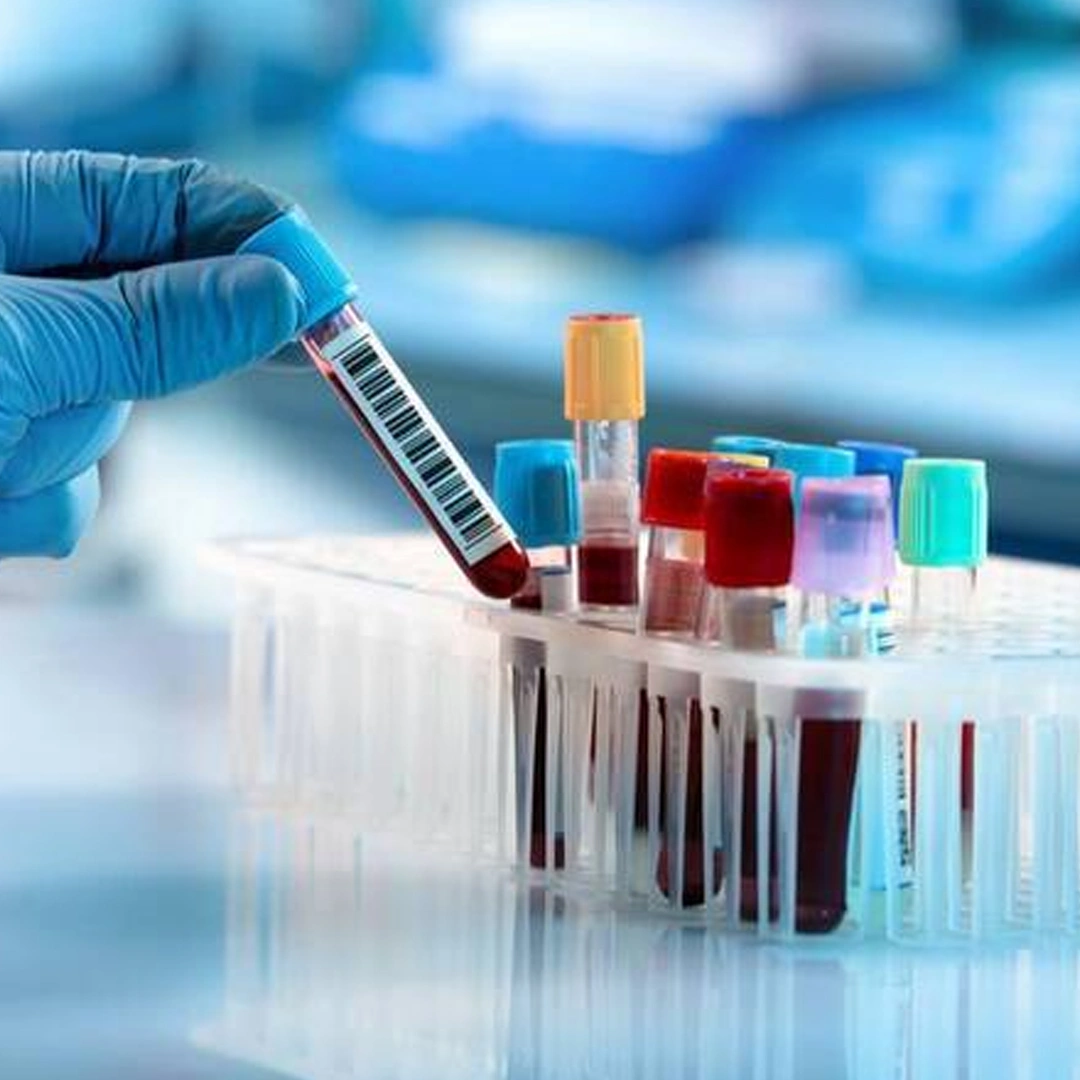
H. pylori antigen Home Test
Test for Helicobacter pylori From the Comfort of Your Home
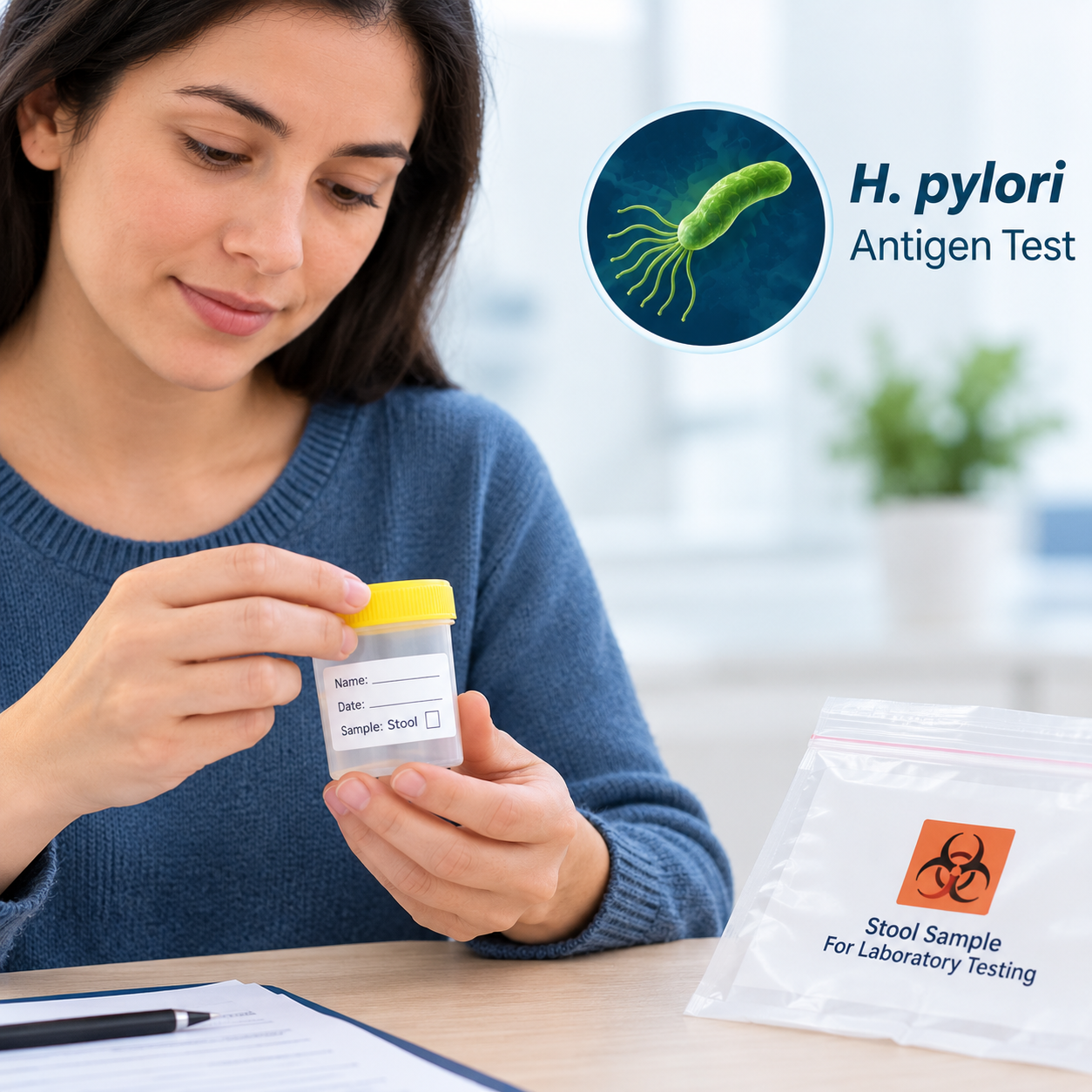
The H. pylori Home Test Kit offers a convenient method of testing for infection by Helicobacter pylori by having a stool sample collected at home.
H. pylori is a kind of bacterium which can exist in the stomach and is linked to various conditions such as gastritis and peptic ulcer disease; in some cases people have no symptoms but in others they may suffer from indigestion, discomfort in the upper abdomen, bloating or nausea.
With our home testing service you can give a stool sample in private and have it examined by a professional laboratory.
What advantages does our H. pylori test have?
✓ Convenient home sample collection
✓ Stool antigen testing
✓ Professional laboratory analysis
✓ No initial clinic appointment required
✓ Confidential online results
✓ Clear, easy-to-understand reporting
✓ UK delivery and sample return
Get your H. pylori home test now and find out if H. pylori may be there.
What is H. pylori?
H. pylori, which is commonly known as Helicobacter pylori, is a kind of bacterium capable of colonising the stomach.
A large number of people who have H. pylori do not exhibit any obvious symptoms. The infection may, nevertheless, be linked to conditions such as:
- Gastritis
- Peptic ulcers
- Indigestion
- Upper abdominal discomfort
- Nausea
- Bloating
H. pylori infection is also a major risk factor for some stomach disorders, including a greater long-term risk of stomach cancer.
Testing can be used to find out if H. pylori is present and whether or not further medical evaluation or treatment would be suitable.
What does the H. pylori home test detect?
The test involves using stool antigen testing to find evidence of H. pylori in a stool sample.
The test detects the antigens of H. pylori, which are substances linked to the bacterium.
Stool antigen testing, in contrast to antibody blood tests, is capable of detecting a current infection and is therefore used in clinical situations for the assessment of H. pylori.
The result being positive shows that the H. pylori antigen has been found in the sample.
A negative result indicates that the H. pylori antigen was not found at the time of the test, even though no test is able to completely rule out infection.
Who should consider getting tested for H. pylori?
If you have symptoms such as:
- Persistent indigestion
- Recurring upper abdominal discomfort
- Bloating
- Nausea
- Feeling unusually full after eating
- Recurrent stomach discomfort
- Symptoms associated with gastritis
- A history of peptic ulcer disease
In some cases people who have H. pylori experience no symptoms and therefore testing might be suitable in certain clinical situations after consulting with a healthcare professional.
H2: Might my digestive symptoms be caused by H. pylori?
The bacterium H. pylori may be linked to a number of symptoms in the upper digestive system, but conditions like heartburn, reflux, bloating and abdominal discomfort can be due to a variety of different causes.
For instance, it is possible to have acid reflux even if you are not infected with H. pylori.
It therefore cannot be determined by an H. pylori test whether H. pylori is the cause of all the digestive symptoms.
If you are experiencing persistent reflux, abdominal pain, unexplained weight loss, vomiting, difficulty in swallowing or any other worrying symptoms, you should go for medical advice instead of just using an at-home test.
What is contained in your H. pylori test kit?
The home testing kit comes with all the materials you need to collect and send back your sample.
Your kit includes:
- Stool sample collection materials
- Detailed sample collection instructions
- Secure sample packaging
- Sample return materials
The process is meant to be simple, quiet, and convenient.
How does the H. pylori home test function?
1. Order Your Test
Order the H. pylori Home Test Kit online and have the kit delivered directly to your home.
2. Gather your stool sample.
Collect the sample by following the instructions that come with your kit.
3. Return Your Sample
Pack the sample using the packaging that is provided and send it back to the laboratory as instructed.
4. Laboratory Testing
The sample is tested for H. pylori using the stool antigen method.
5. Receive Your Results
The results are given in a confidential manner, together with some information to help you to understand the result that has been reported.
Test for H. pylori using a stool antigen
The stool antigen test is a well-established method for detecting infection by H. pylori.
The presence of the bacterium can be determined by testing the stool for H. pylori antigen.
A major benefit of carrying out stool antigen testing is that it can be used as a means of checking whether H. pylori has been successfully eradicated after treatment, provided that it is done at the right time and under appropriate testing conditions.
Important: Medicines Can Affect H. pylori Test Results
Some medications are able to decrease the amount of H. pylori in the stomach and may thus lead to a false-negative result.
This is particularly important with:
Proton Pump Inhibitors (PPIs)
Medicines such as:
- Omeprazole
- Lansoprazole
- Esomeprazole
- Pantoprazole
The use of PPIs may have an impact on testing for H. pylori. Present clinical guidelines usually advise stopping the PPIs for two weeks before the test when it is medically appropriate.
Antibiotics
The accuracy of H. pylori testing can also be influenced by recent antibiotic treatment.
It is generally advised to carry out testing at least four weeks following the completion of antibiotic treatment.
Bismuth-containing medicines
Products containing bismuth may also have an effect on the results of the test and may therefore have to be stopped before the test is carried out.
You should not stop taking your prescribed medication without first talking to your doctor or another qualified healthcare professional.
If you’re on a medication which might influence the result of your test, then you should check the instructions that came with your kit or get some clinical advice before carrying out the test.
The test carried out after treatment for H. pylori
It’s important that you do not get tested too soon after having had previous treatment for H. pylori.
If testing is done too early after treatment, it might give a false-negative result since the treatment could temporarily suppress the bacteria.
For post-treatment testing, clinical guidance generally recommends:
- Waiting at least 4 weeks after completing antibiotic treatment
- Avoiding PPIs for approximately 2 weeks before testing, where medically appropriate
If you are carrying out a test to confirm that the treatment has been successful, you should follow the instructions given by your healthcare professional.
What could cause a false H. pylori test result?
Several factors have an effect on H. pylori testing.
These include:
- Recent antibiotic treatment
- Taking proton pump inhibitors
- Bismuth-containing medicines
- Testing too soon after eradication treatment
- Incorrect sample collection
- Insufficient sample
- Sample handling or transport issues
To get the most reliable result, you should carefully adhere to the sample collection and return instructions that come with your test.
Interpreting Your H. pylori Test Results
Negative Result
A negative result indicates that the H. pylori antigen was not found in your sample.
If you are still having symptoms even though the test has come back negative, you should consult your GP or another healthcare professional since there are many possible causes of digestive symptoms.
Positive Result
A positive result indicates that the H. pylori antigen was detected.
The fact is that you may have a hypersensitivity to H. pylori and you should talk to a healthcare professional about the result.
Treatment is generally prescribed by a healthcare professional and might include a combination of medications.
Invalid or Inconclusive Result
In certain situations the sample might not yield a valid result.
In that case, refer to the instructions together with your results about carrying out further testing or getting in touch with the laboratory.
What happens if my H. pylori test comes back as positive?
You should discuss a positive result with your general practitioner or with another qualified healthcare professional.
Once H. pylori infection has been confirmed, your healthcare professional will be able to decide if treatment is suitable and which treatment programme is most appropriate.
Treatment usually consists of taking medication which suppresses acid together with antibiotics, but the specific drugs used and the length of treatment can differ depending on the individual’s circumstances and the latest clinical guidelines.
It is not advisable to treat H. pylori with antibiotics on your own.
It may be advisable to have further testing carried out after treatment to make sure that the infection has been successfully got rid of.
Heading 2: The Reason for Selecting Repose Healthcare?
Convenient Home Testing
You can collect your sample in private without first visiting a clinic.
Professional Laboratory Analysis
The laboratory-based H. pylori test is used to process your sample.
Simple Sample Collection
It’s easy to collect and return your sample if you have clear instructions.
Confidential Results
You can get your results privately using our reporting system.
UK-Based Service
You can order it online and have the testing kit delivered to your home in plain packaging.
Clear Reporting
The results are given in a clear way so that you can see what your test has found.
The H. pylori test compared with the blood antibody test
Various tests are available for investigating H. pylori.
A test for blood antibodies is able to identify the antibodies produced in response to H. pylori, but the antibodies can still be present after the infection has been treated.
The stool antigen test searches for signs of the bacterium and is therefore useful when evaluating a current infection.
Which test is the most suitable will depend on your particular situation and on whether you are having the test because you have been infected for the first time or to find out if the treatment has been successful.
Frequently Asked Questions
What counts as an H. pylori test?
A test for H. pylori looks for signs of Helicobacter pylori, a bacterium capable of residing in the stomach and which is linked to various conditions such as gastritis and peptic ulcer disease.
Is it possible for me to get an H. pylori test done at home?
Yes, this H. pylori home test enables you to obtain a stool sample at home and then send it to a laboratory for analysis.
What does the test for H. pylori in the stool show
The stool antigen test looks for H. pylori antigens in the stool sample and indicates whether the bacterium is present at the time of the test.
What are the symptoms associated with an H. pylori infection?
There are some people who do not experience any symptoms; when symptoms do occur they may consist of indigestion, discomfort in the upper abdomen, a feeling of bloating, nausea and symptoms related to gastritis or peptic ulcer disease.
Can H. pylori cause acid reflux?
Although H. pylori can be linked to disorders of the upper gastrointestinal tract, acid reflux has a number of possible causes and an H. pylori test cannot prove that H. pylori is the cause of reflux symptoms.
Do I need to stop taking omeprazole before an H. pylori test?
Since omeprazole and similar proton pump inhibitors can influence H. pylori tests, there is a possibility that they may cause a false-negative result. Clinical guidelines usually advise discontinuing the PPIs for about two weeks before the test if it is appropriate to do so medically. However, you should not stop taking medication that has been prescribed without first consulting your healthcare professional.al.
Can antibiotics affect my H. pylori test
Certainly yes. Antibiotics can suppress H. pylori and may cause a false-negative result, so it is generally advised to test at least four weeks after finishing antibiotic treatment
When can I get tested after having undergone treatment for H. pylori?
For reliable post-treatment testing, clinical guidance generally recommends waiting at least four weeks after completing antibiotics and avoiding PPIs for approximately two weeks before testing, where medically appropriate.
What will occur if my H. pylori test comes out as positive?
A positive result should be discussed with your GP or another healthcare professional. If H. pylori infection is confirmed, they can advise whether treatment is appropriate and which treatment is suitable for you
Is H. pylori treatable?
Yes. H. pylori infection can usually be treated with a combination of medicines, commonly including antibiotics and acid-suppressing medication. The exact treatment depends on individual circumstances and current clinical guidance.
Is it possible to have a test for H. pylori after undergoing treatment?
Yes, stool antigen testing may be used to determine whether H. pylori has been eradicated, but the test should be carried out after the suitable interval following treatment in order to minimise the risk of a false-negative result.lt.
How long do H. pylori test results take?
Results are typically available within 3–5 working days after the laboratory receives your sample, subject to the current laboratory turnaround time.
Order Your H. pylori Home Test Kit Today
Take a simple step towards understanding your digestive health.
Our H. pylori Home Test Kit allows you to collect a stool sample at home and have it analysed by a professional laboratory.
H. pylori Home Test Kit
Home stool sample • H. pylori antigen testing • Professional laboratory analysis • Confidential results
Order your H. pylori test now!
Important Medical Information
This test provides laboratory information about H. pylori and does not replace a consultation with a qualified healthcare professional.
A negative result does not exclude every possible cause of digestive symptoms. If symptoms persist or worsen, seek medical advice.
Seek prompt medical attention if you experience symptoms such as unexplained weight loss, persistent vomiting, difficulty swallowing, vomiting blood, black/tarry stools, severe abdominal pain or significant gastrointestinal bleeding.
Do not stop prescribed medication before testing without discussing this with your GP or another qualified healthcare professional.