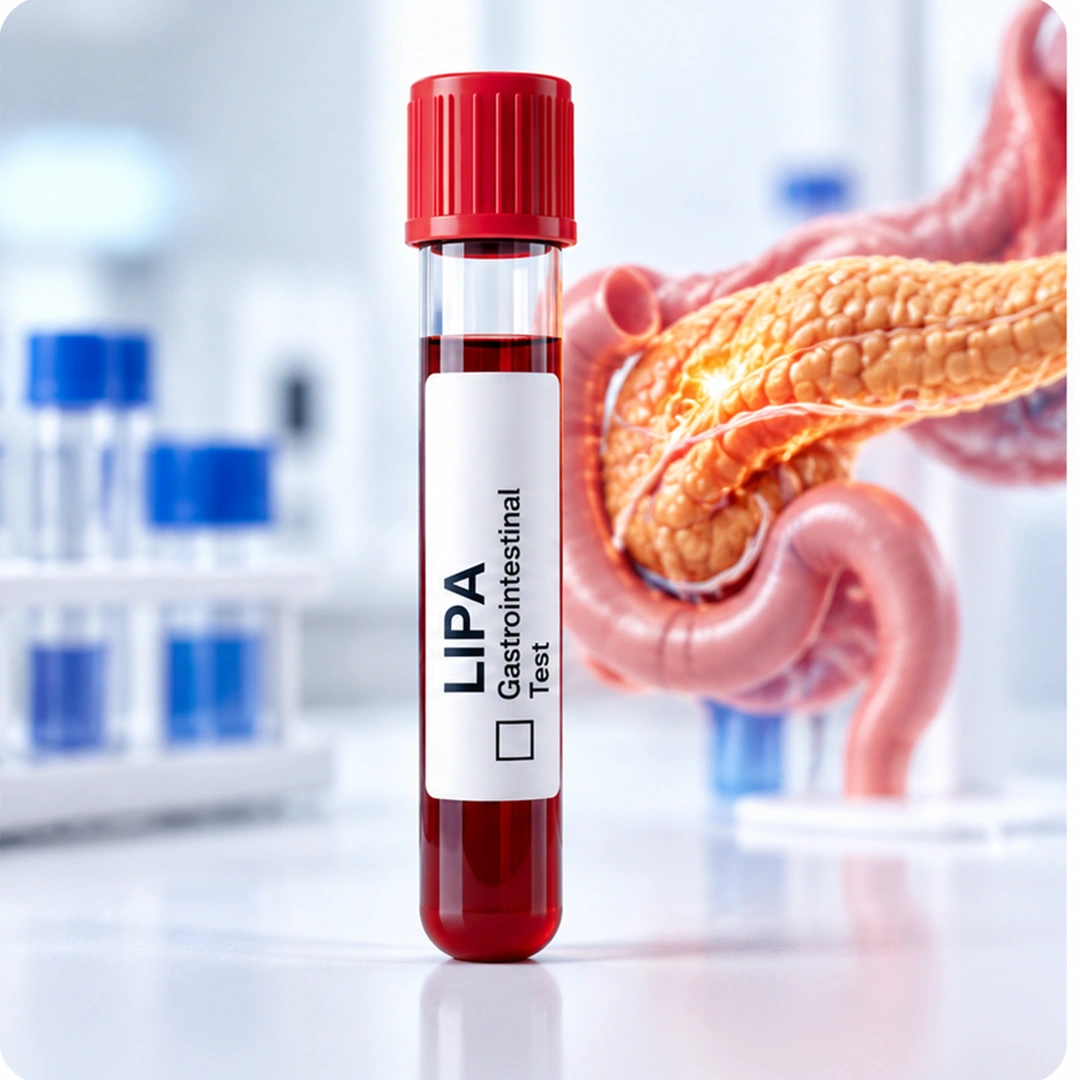
Amylase Blood Test – At-Home Pancreatic & Digestive Health Check
Check Your Amylase Level from the Comfort of Home
The Amylase Blood Test from Repose Healthcare lets you check your amylase level, a digestive enzyme made mostly by your pancreas and salivary glands, with a simple lab test you can do at home.
Amylase helps your body break down carbohydrates during digestion. Checking your blood amylase level can help find out more about some pancreatic, salivary gland, or digestive issues.
Doctors often use amylase tests when they think there might be pancreatic inflammation, such as acute pancreatitis. Still, an amylase result alone cannot show the exact cause of a problem or diagnose a specific condition.
You can collect your blood sample at home and send it to the lab for analysis. Your results will be shared with you securely.
What Is Amylase?
Amylase is a digestive enzyme that helps break down starch and other carbohydrates into smaller sugars that can be absorbed during digestion.
Amylase is produced primarily by:
- The pancreas
- The salivary glands
The enzyme is released into the digestive tract, while a small amount is also present in the bloodstream.
Many things can change your blood amylase levels. So, if your result is not normal, it should be looked at together with your symptoms, medical history, and other test results.
Why Take an Amylase Blood Test?
An amylase test can help if your doctor is concerned about possible pancreatic or digestive problems.
Testing may be considered if you experience symptoms such as:
- Persistent or significant abdominal pain
- Upper abdominal discomfort
- Nausea or vomiting
- Loss of appetite
- Abdominal tenderness or swelling
- Fever associated with abdominal symptoms
- Digestive symptoms where pancreatic disease is being considered
Doctors may also order an amylase test when they are checking for or keeping track of certain pancreatic conditions, especially if they think you might have pancreatitis.
If you have had gallstones or pancreatic problems before, this may be important when deciding if an amylase test is right for you.
What Can Cause an Abnormal Amylase Result?
Many different conditions and situations can affect your amylase levels.
Raised Amylase
Higher-than-expected amylase levels may occur in association with:
- Acute pancreatitis
- Other pancreatic disorders
- Gallstones or problems affecting the pancreatic or bile ducts
- Salivary gland conditions
- Some gastrointestinal conditions
- Reduced kidney function
- Certain medications or other medical conditions
A high amylase result does not always mean you have pancreatitis.
Low Amylase
Lower-than-expected amylase levels may occur in association with some conditions affecting pancreatic function, including certain forms of chronic pancreatic disease.
Lowamylase results canhappen for other reasons too, so they need to be considered along with your overall health and other test results.e.
Amylase and Pancreatic Health
Amylase is just one of several lab markers doctors use to look into pancreatic problems.
When pancreatitis is suspected, healthcare professionals may consider amylase alongside lipase, symptoms, medical history and other investigations.
Imaging or additional blood tests may also be required depending on the individual’s circumstances.
That’s why an amylase blood test is only one part of a bigger health check, not a complete test for pancreatic health by itself.
Amylase vs Lipase
Both amylase and lipase are digestive enzymes associated with pancreatic function, but they perform different roles.
Amylase helps break down carbohydrates, while lipase helps break down fats.
Doctors may check both amylase and lipase when looking for pancreatic disease. Lipase is often seen as a more specific sign of pancreatic inflammation, so both tests might be used together depending on your situation.
If you have serious abdominal symptoms, talk to a healthcare professional about which tests you need instead of relying on just one result.
Understanding Your Amylase Results
Your result will be shown in standard lab units and compared to the normal range given by the testing lab.
Reference ranges can vary beNormal ranges can be different from one lab to another, so use the range on your own report to understand your result.ithin the laboratory’s reference range generally indicates that your amylase level is not elevated at the time of testing.
But a normal result does not rule out every pancreatic, digestive, or salivary gland problem.
Raised Amylase
A high result may mean more amylase is being released into your blood.
This can happen with pancreatic inflammation, but there are other possible reasons too.
Low Amylase
A low result can happen if your pancreas makes fewer enzymes or with some long-term pancreatic conditions, but there can be other reasons as well.
Any result that is not normal should be looked at together with your symptoms, medical history, and other tests.
How the Amylase Test Works
1. Order Your Test
Order your Amylase Blood Test online and get the collection kit sent discreetly to your address.
2. Collect Your Blood Sample
Use the instructions in your kit to collect your blood sample at home.
Depending on your test, you might use a finger-prick or another approved way to collect your sample.
3. Return Your Sample
Pack your sample as the instructions say and send it back to the lab using the return packaging provided.
4. Laboratory Analysis
The lab will test your sample for amylase.
5. Receive Your Results
After testing, you’ll get your lab report securely, based on the service you chose.
Always follow the instructions in your kit for collecting, storing, and returning your sample.
Do I Need to Fast Before an Amylase Test?
How you prepare may depend on your specific test and if you’re having other blood tests at the same time.
Follow the instructions provided with your test kit.
If you take prescription medicine or have a pancreatic or digestive condition, ask your healthcare professional if you’re not sure about any preparation you need.
Do not stop prescribed medication unless advised to do so by a qualified healthcare professional.
Benefits of an At-Home Amylase Test
Convenient Home Collection
You can give your sample at home, so you don’t need to book a clinic appointment.
Simple Sample Collection
Collect your blood sample at home by following the method and instructions in your test kit.
Laboratory Analysis
A laboratory will test your sample and send you a report with your results.
Useful Pancreatic Marker
Amylase testing can give helpful information if you’re being checked for pancreatic or digestive problems.
Private and Discreet
You can order, collect, and send back your sample from home using the packaging and instructions provided.
Who Might Consider an Amylase Blood Test?
An amylase test may be relevant to adults who:
- Have persistent or unexplained abdominal symptoms
- Have symptoms that may indicate pancreatic inflammation
- Have a history of pancreatic disease
- Have previously experienced pancreatitis
- Have a history of gallstones or conditions affecting the bile or pancreatic ducts
- Have been advised by a healthcare professional to have amylase testing
- Require monitoring as part of an existing pancreatic or digestive condition
This test is not meant to be a general screening tool to find out if you have a hidden pancreatic disease.
When Should You Seek Medical Advice?
Doing a home amylase test should not delay seeing a doctor, especially if you have serious abdominal symptoms.
Seek urgent medical attention if you develop:
- Severe or worsening abdominal pain
- Severe upper abdominal pain that may spread to the back
- Persistent or repeated vomiting
- Fever with significant abdominal pain
- Fainting or severe weakness
- Difficulty breathing
- Yellowing of the skin or eyes
- A rapid deterioration in your condition
These symptoms can have different causes and may need urgent medical attention.
Why Choose Repose Healthcare?
At Repose Healthcare, we make lab testing easier by offering home sample collection and secure lab analysis.
Our Amylase Blood Test offers:
- Convenient home sample collection
- Laboratory analysis
- Secure access to results
- Clear testing instructions
- Discreet and confidential service
- Accessible health information from home
- UK-based customer support
We want to make lab testing simple and make sure your results are explained clearly and responsibly.
Test Summary
| Feature |
Details |
|
Test |
Amylase Blood Test |
|
Sample type |
Blood |
|
Marker measured |
Amylase |
|
Primary role |
Assessment of amylase levels when pancreatic or digestive problems are being investigated |
|
Collection |
Home collection where available |
|
Laboratory analysis |
Yes |
|
Fasting |
Follow the instructions supplied with your test kit |
|
Results |
Laboratory report |
|
Suitable for |
Adults where amylase testing is appropriate |
|
Clinical use |
May support investigation or monitoring of pancreatic and digestive conditions |
Frequently Asked Questions
What does an amylase blood test measure?
An amylase blood test measures the level of amylase enzyme in your bloodstream.
Amylase is produced mainly by the pancreas and salivary glands and helps break down carbohydrates during digestion.
What does a high amylase result mean?
A raised amylase result can occur when increased amounts of amylase enter the bloodstream.
One possible cause is pancreatic inflammation, including acute pancreatitis, but there are several other possible causes.
A high result does not diagnose pancreatitis on its own.
What does a low amylase result mean?
Low amylase can occur in some people with reduced pancreatic enzyme production or certain chronic pancreatic conditions.
However, the result should always be interpreted alongside your medical history and other relevant investigations.
Can an amylase test diagnose pancreatitis?
No.
Amylase testing can provide useful information when pancreatitis is suspected, but the result alone cannot establish a diagnosis.
A healthcare professional may consider your symptoms, examination findings, lipase levels and other blood tests or imaging when assessing possible pancreatitis.
Is amylase the same as lipase?
No.
Both are digestive enzymes, but they have different functions.
Amylase helps break down carbohydrates, while lipase helps break down fats. Both may be measured when investigating pancreatic problems.
Can amylase diagnose pancreatic cancer?
No.
An amylase blood test cannot diagnose or rule out pancreatic cancer.
If you have persistent or unexplained symptoms, seek medical advice so that an appropriate clinical assessment can be carried out.
Can gallstones affect amylase?
Gallstones can sometimes contribute to problems affecting the bile or pancreatic ducts and may be associated with raised amylase, particularly when pancreatic inflammation occurs.
However, an amylase result cannot determine whether gallstones are present.
Do I need to stop medication before testing?
Do not stop prescribed medication unless specifically advised to do so by your healthcare professional.
Follow the preparation instructions supplied with your test kit and discuss any concerns about medication before testing.
Important Medical Disclaimer
The Amylase Blood Test provides information about the level of amylase in your blood. It is not intended to diagnose or exclude pancreatitis, pancreatic cancer, pancreatic insufficiency, gallstones, salivary gland disease, digestive disease or any other medical condition.
Amylase is a non-specific marker and abnormal levels can have several possible causes. A raised or low result does not, by itself, establish the presence or cause of disease.
A result within the laboratory reference range also does not guarantee that there is no pancreatic, digestive or other medical condition.
Results should be interpreted alongside your symptoms, medical history, medications and other relevant investigations. If you receive an abnormal or unexpected result, discuss it with your GP or another qualified healthcare professional.
Do not start, stop or change medication or treatment based solely on the result of this test.
This test should not be used to delay medical assessment. If you have severe or worsening abdominal pain, repeated vomiting, fever, jaundice, fainting, difficulty breathing or feel seriously unwell, seek urgent medical attention.
This test is intended to provide additional health information and is not a substitute for professional medical advice, diagnosis or treatment.