Preventing MRSA in Surgical Wounds: A Patient’s Guide to Safer Surgery (2026)
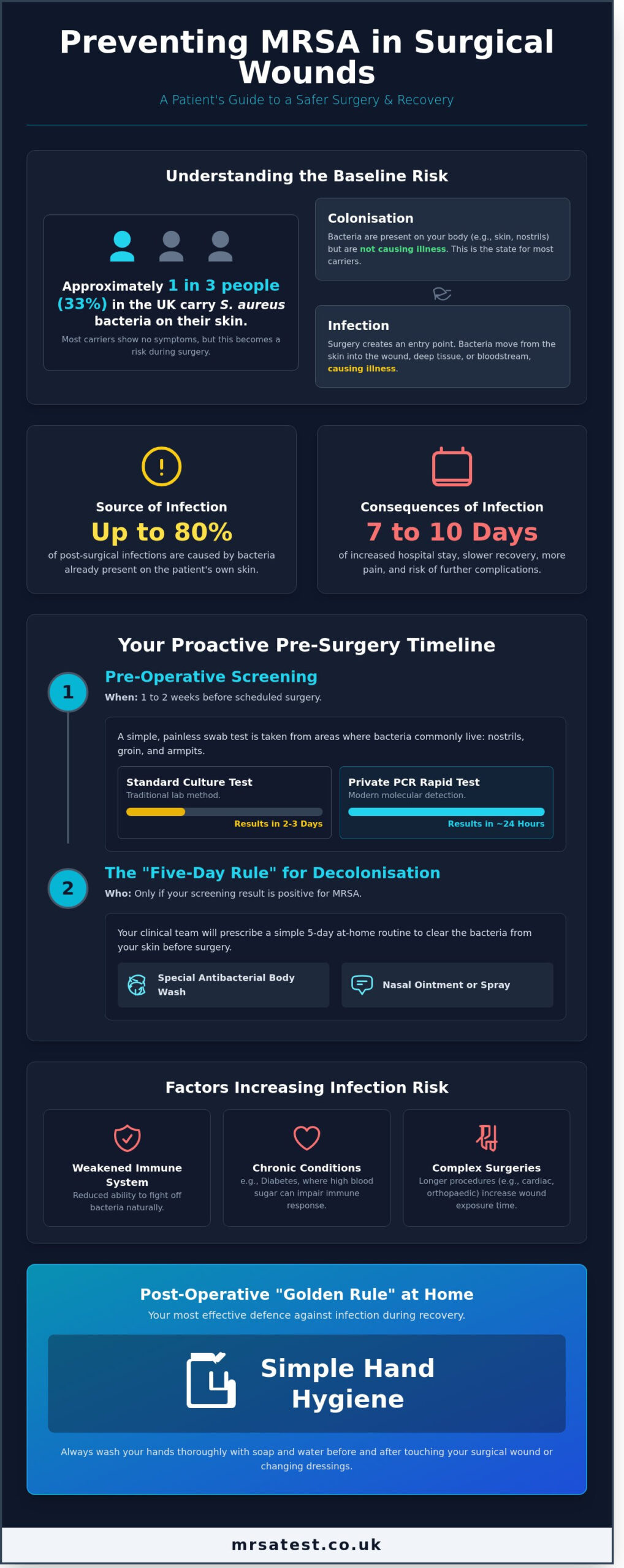
Did you know that approximately 33% of the UK population carries Staphylococcus aureus bacteria on their skin without ever showing symptoms? While usually harmless, this state of colonisation becomes a significant risk factor the moment you’re scheduled for an operation. It’s completely natural to feel anxious about post-operative complications, particularly when antibiotic-resistant bacteria are mentioned in the news. You deserve a recovery that’s focused on healing rather than worrying about avoidable infections.
This guide empowers you with the knowledge needed for preventing mrsa in surgical wounds through proactive clinical screening and effective at-home hygiene routines. By taking a few simple steps before your procedure, you can significantly reduce your risk and gain much-needed peace of mind. We’ll explain the crucial difference between colonisation and infection, detail how a UKAS-accredited PCR test provides rapid 24-hour results, and provide a practical pre-surgery checklist to ensure you’re fully prepared for a safe and successful outcome.
Key Takeaways
- Understand the vital distinction between MRSA colonisation and active infection to better manage your personal surgical risks.
- Learn how to follow the clinical “Five-Day Rule” for preventing mrsa in surgical wounds using specialised skin decolonisation routines.
- Discover the “Golden Rule” of post-operative care and why simple hand hygiene remains your most effective defence against infection at home.
- Find out how private PCR screening can offer rapid, confidential results within 24 hours to ensure your surgery proceeds without unnecessary delays.
Understanding the Risk of MRSA in Surgical Sites
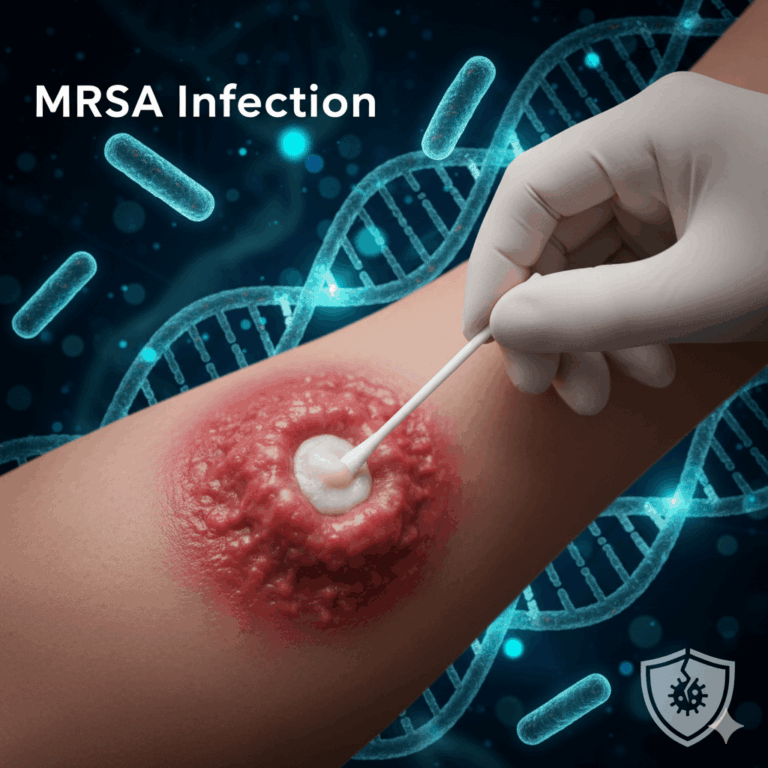
Methicillin-resistant Staphylococcus aureus (MRSA) is a strain of bacteria that has developed resistance to several widely used antibiotics. While it sounds intimidating, it’s a common and manageable presence in clinical settings when handled with professional care. Many people carry these bacteria without ever knowing it, as they often live harmlessly on the skin or inside the nostrils.
There’s a crucial difference between being “colonised” and having an active infection. Colonisation means the bacteria are present on your body but aren’t currently causing illness. However, surgery changes this dynamic. When a surgeon makes an incision, they create a direct gateway for these bacteria to move from the skin’s surface into deep tissue or the bloodstream. Your focus on preventing mrsa in surgical wounds starts with acknowledging that your own body is often the primary source of the bacteria.
A surgical site infection (SSI) isn’t just a minor setback. In the UK, SSIs can increase a patient’s hospital stay by an average of 7 to 10 days. These infections lead to slower recovery times, increased pain, and heightened anxiety for the patient. Implementing clear strategies for preventing mrsa in surgical wounds is vital to avoid long-term health complications or the need for secondary corrective operations.
How MRSA Spreads in a Healthcare Setting
Bacteria often spread through direct contact. This might occur via the hands of healthcare workers or contaminated surfaces like bed rails and door handles. Surprisingly, your own skin flora plays a major role. Up to 80% of surgical site infections are caused by bacteria already present on the patient’s skin before the procedure. Hospitals are higher-risk environments because they house many vulnerable people and provide a space where resistant bacteria can persist on shared equipment or in the air.
Who is at Higher Risk of MRSA Complications?
Certain factors make it harder for the body to fight off a potential infection. Patients with weakened immune systems or chronic conditions like diabetes face a higher risk. High blood sugar can impair white blood cell function, making it easier for bacteria to take hold. The complexity of the procedure also matters. Orthopaedic and cardiac surgeries often take longer, increasing the time a wound is exposed to the environment. Taking the time for understanding your risks before you enter the operating theatre is a vital step in your surgical preparation.
The Importance of Pre-Operative MRSA Screening
Pre-operative screening is a proactive clinical protocol designed to identify patients carrying Methicillin-resistant Staphylococcus aureus (MRSA) before they enter the operating theatre. This process involves taking simple swabs from specific areas of the body where the bacteria commonly live, such as the nostrils, groin, and axilla (armpit). By identifying “colonisation” (the presence of bacteria without active infection) early, healthcare providers can take decisive steps toward preventing mrsa in surgical wounds before the first incision is ever made.
The National Institute for Health and Care Excellence (NICE) provides clear guidelines on this practice. NICE recommends screening for all patients undergoing high-risk procedures, including orthopaedic surgery and cardiothoracic operations, to reduce the incidence of Surgical Site Infections (SSIs). These infections can lead to prolonged hospital stays and additional treatments, so identifying the risk early is a vital safety measure. Clinical evidence shows that a standardised screening programme significantly lowers the chances of post-operative complications.
Timing is a critical factor in the success of this safety net. The clinical gold standard is to conduct screening 1 to 2 weeks before your scheduled surgery. This window is essential because it allows enough time for “targeted decolonisation” if the results come back positive. Decolonisation typically involves a five-day course of special antibacterial body washes and nasal ointments. Starting this process well in advance ensures the skin is clear of MRSA by the day of the procedure, providing the highest level of protection for the patient.
What to Expect During a Swab Test
The screening process is entirely non-invasive and painless. It involves using sterile cotton swabs to gently wipe the skin folds and the inside of the nostrils. Hospitals usually offer a standard culture test, which takes a few days to process in a lab. However, many patients now opt for an MRSA PCR rapid test, a molecular detection method that can provide results in as little as 24 hours. Ensuring you have completed your MRSA screening for surgery is a standard UK safety protocol that helps keep surgical environments sterile and safe for everyone.
Interpreting Your Screening Results
Receiving a positive result can feel daunting, but it’s important to remember that being colonised isn’t the same as being ill. It simply means the bacteria are present on your skin. If you test positive, the NHS response is typically to provide a decolonisation kit and, for non-urgent cases, delay the surgery until the treatment is complete. Conversely, a negative result confirms you’re in a “safety window,” meaning no MRSA was detected at the time of testing. This gives both you and your surgical team peace of mind. If you’re looking for a fast and private way to check your status, you can order a discreet home test kit to manage your health logistics with confidence.
Step-by-Step: How to Decolonise Your Skin Before Surgery
Decolonisation is the temporary removal of bacteria from the body to lower infection risk.
Most hospitals in the UK follow a standardised protocol known as the “Five-Day Rule.” This timeframe is the clinical gold standard for a decolonisation routine, as it provides enough time to significantly reduce the bacterial load on your skin surface before you enter the operating theatre. By starting this process exactly five days before your procedure, you ensure the antiseptic has the maximum impact. This routine is a fundamental part of preventing mrsa in surgical wounds, as it targets the bacteria while they are still on the outside of your body, well before a surgeon makes an incision.
During these five days, your environment must remain as sterile as possible. You should use a fresh, clean towel for every wash and change into clean clothing and bedsheets every single day. MRSA bacteria are resilient and can survive on fabrics for long periods; using a towel or shirt from the previous day can immediately re-colonise your skin, effectively undoing the work of your antiseptic wash. Maintaining this strict hygiene loop is essential for the protocol to succeed.
Using Antiseptic Body Washes Correctly
Chlorhexidine (CHG) body wash is the primary tool used to clear bacteria from the skin. When you shower, you should apply the wash from the neck down, covering your entire body. Pay close attention to areas where bacteria thrive, such as the armpits, groin, and navel. However, you must avoid sensitive areas like your eyes, the inside of your ears, and deep internal surfaces. It’s vital to leave the wash on your skin for at least one full minute before rinsing it off. This 60-second contact time allows the CHG to bind to your skin cells, creating a protective layer that continues to kill bacteria for several hours. During this five-day window, don’t use standard soaps, shampoos, or body lotions. These products often contain ingredients that deactivate the antiseptic, which compromises its ability to assist in preventing mrsa in surgical wounds.
Nasal Treatment Protocols
The nose is the primary reservoir for MRSA, meaning it’s the place where the bacteria are most likely to live and multiply. To clear this reservoir, you’ll be prescribed a nasal antibiotic ointment, often Mupirocin. You should apply a small, pea-sized amount of the cream to the inner part of each nostril using a clean cotton bud or your little finger. After application, press your nostrils together and massage them gently to ensure the ointment covers the entire internal surface. This process is usually performed twice daily, once in the morning and once in the evening. You must complete the full five-day course as prescribed by your consultant. Stopping the treatment early, even if you feel your hygiene is perfect, allows any remaining bacteria to rebound quickly, which increases the risk of carrying the bacteria back into the hospital environment.
Post-Operative Care: Protecting Your Wound at Home
Once you leave the hospital, the responsibility for preventing mrsa in surgical wounds shifts to your daily routine. The most critical instruction, often called the “Golden Rule” by UK nursing staff, is simple: don’t touch your dressing. Your surgical team applied that barrier in a sterile environment to protect the underlying tissue. Every time you lift the edge or adjust the tape, you risk introducing bacteria like Staphylococcus aureus directly into the healing incision.
Hand hygiene remains your most effective defence. Research from the World Health Organization suggests that proper handwashing can reduce healthcare-associated infections by up to 50%. Always wash your hands with soap and warm water for at least 20 seconds before performing any wound care or touching the skin near the site. If you have visitors, it’s perfectly acceptable to ask them to use hand sanitiser before they sit near you or touch your belongings.
Managing Your Surgical Dressing
Keep the area dry and clean according to your specific discharge instructions. This usually involves avoiding showers for the first 48 hours to allow the wound edges to seal. If your dressing becomes loose, damp from sweat, or soiled with blood, don’t attempt a DIY fix with household bandages. Contact your GP surgery or the hospital’s discharge ward immediately for advice. Learning how to identify warning signs early can prevent a minor irritation from becoming a major clinical complication.
Spotting Symptoms of an MRSA Infection
MRSA can be aggressive, so you should monitor the wound site at least twice a day. Look for the “big three” local symptoms: increased redness that spreads away from the incision, significant swelling, and a sensation of heat when you hover your hand over the area. While some clear fluid drainage is common in the first few days, the presence of yellow or green pus is a clear sign of infection that requires medical intervention.
Systemic signs are equally important to track. A fever above 38°C, sudden chills, or a general feeling of being unwell can indicate that an infection is no longer localised. In the UK, surgical site infections affect approximately 1 in 20 patients, making vigilant observation your best tool for preventing mrsa in surgical wounds. If you notice these changes, contact your surgical team or call NHS 111 for guidance without delay.
Taking Control: How Private MRSA Testing Enhances Your Safety
Waiting for hospital-led screenings can often be a source of pre-operative anxiety. Many patients now choose private screening to avoid potential delays in the NHS system or simply to gain personal peace of mind. Taking a proactive approach is a vital part of preventing mrsa in surgical wounds, as it allows you to identify and treat any bacterial colonisation before your procedure begins. By managing your own screening, you ensure that your surgical timeline remains on track without the risk of last-minute cancellations.
The primary advantage of private testing is speed. Traditional laboratory cultures often require 3 to 5 days to produce a result. In contrast, an MRSA PCR rapid test uses advanced molecular detection to provide answers within 24 hours of the sample reaching the lab. This 48-hour time saving can be the difference between a smooth admission and a stressful delay. For those with limited mobility or those living far from their surgical centre, at-home kits remove the logistical burden of travelling to a clinic while you’re already preparing for a major operation.
Once you receive your results, you can share the laboratory certificate directly with your surgical team. This transparency helps streamline your admission process, as the hospital has documented proof of your status, allowing them to follow the correct infection control protocols from the moment you arrive.
The mrsatest.co.uk Advantage
We provide professional-grade testing kits that utilise UKAS-accredited laboratory facilities. This ensures your results meet the same high standards used by the NHS. Our service is entirely discreet and confidential, giving you full control over your personal health data. You can choose between our standard culture tests or our rapid PCR options depending on how close you are to your scheduled surgery date. Every test is processed by a 100% UK-based partner laboratory to ensure total accuracy and reliability.
Preparing for Your Home Test
Taking your own swabs is a simple, painless process that you can complete in the comfort of your home. Each kit includes clear, step-by-step instructions on how to swab the required areas, such as the nose and throat. We provide free and discreet shipping, including a pre-paid envelope for trackable return to our lab. This ensures your samples are handled efficiently and reach the scientists without delay. It’s the most straightforward way to stay informed about your health while preventing mrsa in surgical wounds during your recovery period.
Order your pre-surgery MRSA test kit today for a safer recovery and total peace of mind.
Take Control of Your Surgical Recovery Today
Our service provides a professional solution with testing conducted in a UKAS-accredited laboratory. We offer a rapid PCR testing option that delivers results within 24 hours of your sample reaching the lab, allowing you to proceed with your procedure on schedule. Every kit is designed for discreet at-home collection, ensuring your medical privacy is maintained while providing the clinical accuracy you need. It’s a simple step that offers significant protection for your health and well-being.
Secure your peace of mind with a private MRSA test kit before your surgery.
You deserve to go into your operation feeling confident and fully prepared for a healthy outcome.
Frequently Asked Questions
Can I prevent MRSA by taking antibiotics before my surgery?
You can’t rely on standard antibiotics to prevent MRSA because this bacteria is resistant to common treatments like methicillin. If you’re a known carrier, your surgical team will prescribe specific “prophylactic” antibiotics, such as vancomycin or teicoplanin, usually administered intravenously 60 minutes before your first incision. These targeted drugs are a critical part of preventing mrsa in surgical wounds when a patient is colonised, ensuring the bacteria doesn’t enter the incision site during the procedure.
Is it possible to get MRSA even if I follow all the hygiene steps?
It’s still possible to develop an infection even if you follow every hygiene protocol perfectly. While strict adherence to washing routines reduces risk, clinical data shows that surgical site infections occur in roughly 1% to 10% of operations depending on the complexity of the procedure. Factors like your underlying health, the length of the surgery, and the hospital environment all play a role in the final outcome, so vigilance remains necessary throughout your entire recovery.
What happens if my pre-op MRSA test comes back positive?
If your pre-operative test is positive, your surgery might be rescheduled to allow for a decolonisation treatment. This standard NHS protocol typically lasts 5 days and involves using a special nasal ointment, such as mupirocin, and a chlorhexidine body wash. Clearing the bacteria from your skin and nose before you enter the operating theatre is a proven method for preventing mrsa in surgical wounds and protecting your recovery from serious post-operative complications.
How long does MRSA stay on skin or surfaces at home?
MRSA is incredibly hardy and can survive on household surfaces for much longer than you’d expect. Research indicates that these bacteria can live on hard surfaces like bedside tables or door handles for up to 38 weeks if they aren’t properly disinfected. On human skin, the bacteria can persist indefinitely if you’re a “colonised” carrier, making regular hand hygiene and environmental cleaning essential for your safety and the safety of those living with you.
Can I use regular antibacterial soap instead of chlorhexidine wash?
You shouldn’t swap your prescribed chlorhexidine wash for regular antibacterial soap. Standard soaps aren’t formulated to kill MRSA and won’t provide the “residual” protective layer on the skin that chlorhexidine gluconate (CHG) 4% offers. This specific clinical wash is required to significantly lower the bacterial load on your skin. It’s a vital step in ensuring your surgical site remains as sterile as possible during the critical hours following your operation.
Is MRSA screening mandatory for all NHS surgeries in the UK?
Screening isn’t mandatory for every single NHS procedure, but it’s required for all high-risk elective surgeries. Following Department of Health guidelines updated in 2014, hospitals prioritise screening for patients undergoing orthopaedic, cardiothoracic, or neurosurgery. If you’re having a minor procedure under local anaesthetic, you might not be screened automatically. In these cases, it’s often wise to arrange a private, at-home test for your own peace of mind before your hospital date.
What should I do if I think my surgical wound is infected after I get home?
You must contact your surgical team or GP immediately if you suspect an infection. Don’t wait for your scheduled follow-up if you notice redness spreading more than 2 centimetres from the wound edge, or if you develop a fever over 38°C. Prompt medical intervention is necessary to prevent a minor surface issue from developing into a serious deep-tissue infection. Quick action could prevent the need for hospital readmission or further surgical procedures.