

Can I Get an MRSA Test From My GP? NHS Criteria and Private Options Explained
Have you ever spent weeks treating a persistent skin blemish, only to find it keeps returning despite your best efforts? You aren’t alone in feeling frustrated by the ambiguity of recurring infections or the anxiety of potentially carrying a resistant bacteria strain around your loved ones. Naturally, your first thought is likely: can i get an mrsa test from my gp to finally get some answers? While the NHS provides vital care, their screening protocols are often strictly reserved for specific high-risk scenarios, which can leave many patients feeling stuck in a cycle of waiting and worrying.
We believe that peace of mind shouldn’t be a waiting game. This guide explains the current NHS criteria for MRSA testing, the specific reasons why your local surgery might decline a preventative screen, and how you can access professional, private alternatives. You’ll gain a clear understanding of the protocols for elective surgeries and learn how a discreet, UKAS-accredited home test kit can provide laboratory-confirmed results in as little as 24 hours. Whether you’re preparing for a procedure or seeking to protect your household, we’ll help you find the fastest path to clinical certainty.
Key Takeaways
- Learn the clinical difference between screening for bacterial colonisation and diagnostic testing for an active MRSA infection.
- Understand the strict criteria used to determine “can i get an mrsa test from my gp”, including why requests for routine screenings are often declined.
- Discover why mandatory pre-surgery screening is standard in NHS hospitals but rarely accessible through a local GP surgery.
- Explore how private home test kits provide a fast, confidential alternative that bypasses the need for clinical symptoms or GP appointments.
- Find out how to access reliable results from a UKAS-accredited laboratory while maintaining your privacy and testing from the comfort of home.
Understanding the NHS Approach to MRSA Testing
If you suspect you’ve been exposed to resistant bacteria, your first question is likely: can i get an mrsa test from my gp? In the UK, the General Practitioner serves as the primary gateway for all non-emergency infection concerns. An MRSA test is a straightforward procedure involving a sterile swab of the skin or nostrils to identify the presence of Methicillin-resistant Staphylococcus aureus (MRSA). This specific strain of bacteria has developed resistance to several widely used antibiotics, making it harder to treat than standard staph infections.
The NHS doesn’t provide universal screening for the general public. This policy exists because the bacteria often live harmlessly on healthy people without causing issues. Instead, the health service focuses resources on high-risk environments, such as surgical wards, or individuals showing clear clinical symptoms. Testing is typically reserved for those who are about to undergo major surgery or patients displaying signs of a persistent skin infection that hasn’t responded to initial treatments. If you’re worried about symptoms, asking can i get an mrsa test from my gp is the right starting point for a clinical assessment.
Colonisation vs. Active Infection
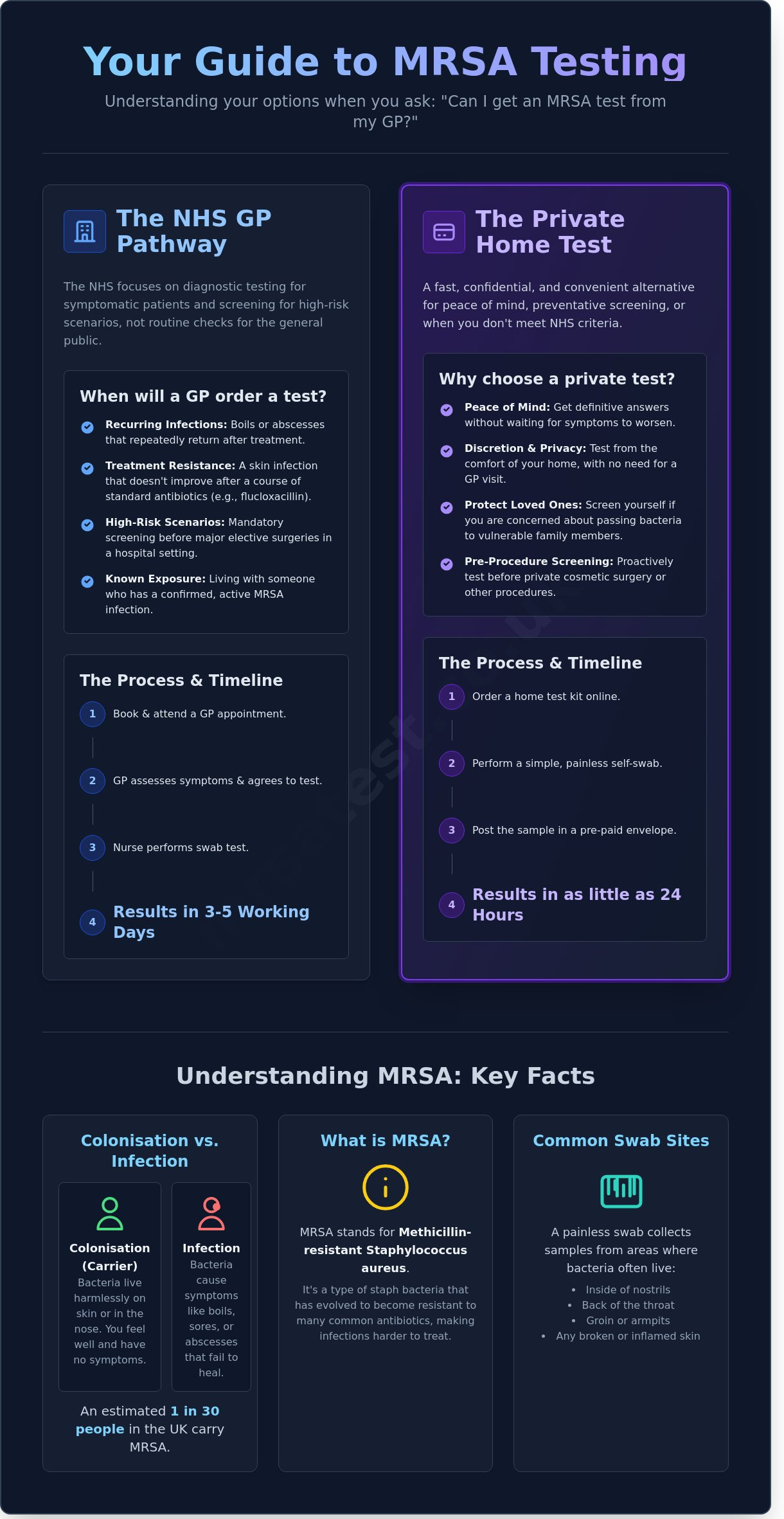
It’s estimated that 1 in 30 people in the UK carry MRSA on their skin or in their nose without knowing it. This state is called colonisation. You won’t feel ill, and you don’t have an active infection. The NHS prioritises diagnostic testing for patients with visible symptoms, such as “weeping” sores, boils, or abscesses that fail to heal. If you’re a carrier, the GP might not recommend treatment unless you’re entering a hospital environment where you could pass it to vulnerable patients.
The Standard NHS Swab Procedure
The testing process is quick and painless. A healthcare assistant or nurse will use a soft swab to collect samples from common carriage sites:
- The inside of both nostrils
- The back of the throat
- The groin or armpits
- Any areas of broken, red, or inflamed skin
These samples are sent to regional NHS laboratories for culture testing. This traditional method involves growing the bacteria in a controlled environment to see if they resist specific antibiotics. You’ll usually receive your results through your GP surgery within 3 to 5 working days. While this process is reliable, it requires a physical appointment and a clinical justification before the GP will authorise the laboratory costs.
When Will a GP Order an MRSA Swab Test?
In the UK, GPs follow specific diagnostic pathways before ordering a swab. Most skin infections are caused by standard bacteria that respond well to common treatments. However, if you’re wondering, “can i get an mrsa test from my gp”, you should know that doctors usually reserve these tests for specific clinical triggers. This approach ensures that resources are targeted toward those most at risk of resistant strains. When asking yourself “can i get an mrsa test from my gp”, remember that clinical necessity is the primary driver for NHS testing rather than routine screening.
GPs typically look for four main indicators during a consultation:
- Recurring infections: Boils or abscesses that return shortly after clearing up.
- Treatment resistance: Symptoms that persist despite a full course of standard antibiotics.
- Personal history: A record of a positive MRSA result within the last 12 months.
- Household exposure: Living with someone who has a confirmed, active MRSA infection.
Persistent Skin Issues and MRSA
Doctors look for “atypical” healing patterns, such as wounds that stay red, swollen, or painful for more than 5 days without improvement. It’s helpful to track your symptoms daily, noting the size of the redness or the presence of pus, to give your doctor a clear timeline. A skin infection becomes a clinical priority for MRSA testing when it recurs three times in a single year or shows signs of rapid spreading despite initial care. Following NHS guidelines on MRSA, GPs may also consider your recent hospital visits, as 1 in 30 hospital patients carry the bacteria on their skin.
Failed Antibiotic Cycles
If a first-line antibiotic like flucloxacillin fails to work after 48 to 72 hours, your GP will likely escalate to a “culture and sensitivity” test. This involves taking a swab and sending it to a UKAS-accredited lab where scientists attempt to grow the bacteria. Once grown, they expose it to various antibiotics to see which ones are effective. This process is the gold standard for identifying MRSA and ensures you aren’t prescribed ineffective medication. GPs avoid immediate swabbing for every minor scratch to prevent unnecessary laboratory backlog, but they’ll act quickly if a 7-day course of treatment shows zero progress. If you need faster answers without waiting for a GP appointment, you might consider a private screening kit for peace of mind.
NHS Hospital Screening vs. GP Appointments
If you’re asking “can i get an mrsa test from my gp” because you have an upcoming surgery, the answer is usually a referral back to the hospital. Since 2010, the NHS has maintained a mandatory screening policy for all elective admissions. This means the hospital, not your local clinic, takes responsibility for identifying MRSA carriage. GPs rarely perform these tests because they don’t manage the sterile environment of an operating theatre. If your test returns a positive result, you’ll undergo a decolonisation process. This typically involves using a 4% chlorhexidine body wash and a 2% mupirocin nasal ointment for five consecutive days. You can find more detailed NHS information on MRSA regarding these specific treatments and how they reduce infection risks.
Pre-Operative Assessment Clinics
Hospitals operate their own pre-operative assessment clinics to ensure every patient is fit for surgery. Your GP will likely advise you to wait for this appointment rather than testing you themselves. These screenings usually happen between 14 and 28 days before your scheduled procedure. This timeframe is deliberate; it allows exactly enough time for a five-day decolonisation course and a follow-up swab if the first one shows colonisation. It’s a logistical system designed to keep hospital wards safe without putting extra pressure on primary care resources. When patients wonder “can i get an mrsa test from my gp” for a private procedure, they often find that private consultants also prefer to use their own in-house laboratory results for consistency.
Why Hospital Screening is Strict
The stakes are high when MRSA enters a surgical setting. While the bacteria often live harmlessly on the skin, an invasive procedure provides a direct path into the bloodstream. This can lead to serious complications like endocarditis or osteomyelitis. Hospitals use these tests to group patients effectively, sometimes placing those with MRSA in side rooms to prevent ward-wide outbreaks. If you test positive, your surgery date might be postponed by 7 to 10 days. This delay ensures the decolonisation treatment has been completed, reducing your risk of post-operative infection to the lowest possible level. This structured approach includes:
- Swabbing multiple sites: Usually the nose, throat, and groin.
- Risk-based isolation: Placing colonised patients in single rooms.
- Mandatory cleaning: Enhanced disinfection of bed spaces after a positive patient is discharged.
Why Your GP Might Decline an MRSA Test
While you might feel anxious about a potential infection, your doctor follows strict clinical pathways set by the NHS and NICE. If you ask, “can i get an mrsa test from my gp?” the answer often depends on your physical symptoms rather than your desire for peace of mind. GPs must manage limited resources and laboratory capacity, meaning they rarely test without clear medical necessity.
NHS laboratories process millions of microbiological samples every year. A single culture test involves administrative time, courier costs, and laboratory technician hours. Because of these factors, primary care practitioners often adopt a “watchful waiting” approach. They look for specific red flags before ordering a diagnostic swab. If your skin looks healthy and you feel well, a test is usually deemed unnecessary by the state system.
The ‘No Symptoms, No Test’ Rule
The NHS focuses on treating active illness rather than identifying “carriage.” Statistics from Public Health England show that approximately 3% of the UK population carries MRSA on their skin or in their nose without any ill effects. This is known as colonisation. Because these individuals aren’t sick, the NHS does not routinely screen them.
You might find your request for a swab declined if you don’t have:
- Open, weeping wounds or sores that won’t heal.
- Signs of a localized skin infection like redness, swelling, or heat.
- A fever or other systemic signs of a spreading infection.
- An upcoming elective surgery that requires pre-admission screening.
For many, this policy creates a “diagnostic gap” where anxiety remains high but clinical support is unavailable. GPs often explain that treating asymptomatic carriage with antibiotic creams can lead to further bacterial resistance, which is why they avoid testing “just to know.”
Navigating the Request Process
If you still believe a test is necessary, you must present a clear clinical case. Mention if you’ve recently visited a hospital or if you provide care for a vulnerable person. These details change your risk profile. When asking “can i get an mrsa test from my gp?” be specific about any symptoms you’ve noticed, even if they seem minor.
If you feel your concerns are being dismissed, ask the doctor to explain their reasoning against the current local Integrated Care Board (ICB) guidelines. You can also ask for the refusal to be noted in your medical records. If the NHS route remains closed and your anxiety persists, seeking a private solution is a common alternative for proactive health management.
Fast and Discreet: The Benefits of a Private Home MRSA Test
While the first thought for many is “can i get an mrsa test from my gp”, the logistical hurdles of the NHS can often delay your results. Choosing a private home test kit offers a streamlined alternative that prioritises your time and privacy. You don’t need to book an appointment or justify your request to a healthcare provider. Instead, you manage the entire process from your own home, avoiding the risk and inconvenience of a busy GP waiting room.
Clinical accuracy is never sacrificed for convenience. Every sample is analysed in a UKAS-accredited UK laboratory, ensuring the same high standards used by the NHS. We use discreet, plain packaging with no mention of MRSA or testing on the outside. This guarantees that your health concerns remain entirely confidential from the moment the kit arrives at your door.
Home Testing vs. GP Waiting Times
The timeline for obtaining a test through public health channels can be unpredictable. You might wait 7 to 10 days just for an initial consultation, followed by another week for lab processing. When asking “can i get an mrsa test from my gp”, you must also factor in the travel and time off work required for multiple visits. Our private service cuts this window down to 24-72 hours total. We provide a simple self-swab kit sent via first-class post. At mrsatest.co.uk, we include free and discreet shipping and return collection, so you can post your sample back the same day you receive it.
Choosing Between Culture and PCR Tests
We offer two distinct paths for your screening depending on your urgency. The standard MRSA Culture Test takes 48 to 72 hours for the lab to grow and identify the bacteria. It’s an excellent, cost-effective choice for general health screenings or routine monitoring. However, if you’re facing a fast-approaching surgery date, our PCR rapid test is the superior option. It uses molecular detection to identify MRSA DNA within just 24 hours of the lab receiving your swab, providing vital peace of mind before a hospital admission.
If your result shows colonisation, don’t worry. You’ll receive a clear, professional report that you can take to your doctor or pharmacist to begin a decolonisation programme. This usually involves simple antiseptic washes and nasal creams. You can Order your MRSA Culture Test kit here to start the process today. Whether you’re seeking reassurance before an operation or simply checking your status, our 100% UK-based service ensures a professional, rapid, and secure experience.
Secure Your Health with Clear MRSA Screening Options
While the NHS provides vital services, the criteria for screening are often limited to hospital admissions or specific clinical risks. If you’ve been wondering can i get an mrsa test from my gp, you’ll likely find that tests aren’t routinely offered for simple peace of mind or pre-emptive screening. Waiting for a GP appointment can take days, and a refusal can leave you feeling anxious about your health status.
Choosing a private route removes these hurdles. Our service uses a UKAS-accredited laboratory to ensure clinical accuracy. You’ll receive your results in as little as 24 hours after your sample reaches our 100% UK-based facility. This professional approach provides the clarity you need without the wait times or restrictive criteria of a standard surgery visit. It’s a simple, reliable way to manage your health from the comfort of your own home.
Order your fast, confidential MRSA home test kit today to take control of your health with confidence and discretion. You deserve the certainty that comes from expert, clinical testing.
Frequently Asked Questions
Can I get an MRSA test on the NHS for free?
Yes, you can get an MRSA test for free on the NHS if your doctor determines it’s clinically necessary or if you’re preparing for a hospital admission. Under NHS England’s universal screening policy, all elective surgery patients must be screened before their procedure. If you’re asking can i get an mrsa test from my gp without a scheduled surgery, it’s usually only offered if you show symptoms of a persistent skin infection.
How long does it take for an MRSA test result from a GP?
Standard MRSA culture results from a GP surgery typically take 3 to 5 working days to process. The laboratory requires this time to allow any bacteria present on the swabs to grow in a controlled environment for accurate identification. While some hospitals use rapid PCR tests that provide results in 24 hours, these aren’t always available through local GP clinics, where traditional culture methods remain the standard diagnostic tool.
Is an MRSA test painful?
An MRSA test is entirely painless and non-invasive. The clinician uses a sterile cotton swab, which looks like a long cotton bud, to gently wipe the inside of your nostrils, your throat, and sometimes your groin or armpit. The entire process is over in less than 60 seconds. It doesn’t involve any needles or physical discomfort, making it a safe and simple procedure for both adults and children.
Can I buy an MRSA test kit over the counter in the UK?
You can’t typically buy MRSA test kits over the counter in high-street pharmacies like Boots or Superdrug. Instead, you can purchase professional-grade kits online from UKAS-accredited laboratories for home use. These private kits usually cost between £45 and £85. They offer a confidential alternative if you’ve wondered can i get an mrsa test from my gp but prefer the discretion and speed of testing from the comfort of your own home.
What happens if my MRSA test is positive?
If your test is positive, it means you’re colonised with the bacteria and your GP will prescribe a decolonisation treatment. This normally involves a 5-day regime using mupirocin nasal ointment three times daily and an antiseptic body wash like Hibiscrub. This simple process is highly effective, successfully clearing the bacteria in over 90% of cases. It’s a vital step to prevent the bacteria from causing an active infection or spreading to others.
Do I need an MRSA test before minor surgery?
Most NHS trusts require an MRSA screen before any surgery that involves an overnight stay or a high-risk procedure. While some very minor “see and treat” skin procedures might skip this step, Department of Health guidelines recommend screening for all elective admissions. This precaution significantly reduces the risk of post-operative infections, which can increase a patient’s hospital stay by an average of 11 days if complications arise.
Can a GP test for MRSA with a blood sample?
A GP doesn’t use a blood sample to screen for MRSA colonisation. Screening relies on surface swabs of the skin and mucous membranes where the bacteria naturally reside. Blood tests are only used if a doctor suspects the MRSA has entered your bloodstream, causing a serious systemic infection. For standard screening purposes, the laboratory focuses on samples from the nose and throat to identify if you’re a carrier of the bacteria.
Can I go to work while waiting for MRSA test results?
You can usually continue going to work while waiting for your results unless you have active, weeping wounds or work in a high-risk healthcare setting. Since approximately 3% of the UK population carries MRSA on their skin without any symptoms, being a carrier doesn’t mean you’re unwell. If you work in a nursing home or a surgical ward, your employer’s specific infection control policy will determine if you need to stay home.