Antiseptic Body Wash for MRSA in the UK: A Complete Guide to Decolonisation (2026)
Could a simple five-day washing routine be the only thing standing between you and your scheduled surgery date? It’s entirely natural to feel a sense of worry if a pre-operative swab returns a positive result for MRSA, a situation faced by approximately 3% of patients screened in UK hospitals. Choosing the correct antiseptic body wash for mrsa uk protocols is the first step toward clearing the bacteria. You might feel overwhelmed by the choice between brands like Hibiscrub or Octenisan, or perhaps you’re anxious about passing the bacteria to your loved ones. We understand that you simply want clear, clinical guidance so you can move forward with your hospital treatment.
This guide explains how to select the most effective antimicrobial cleansers based on the latest 2026 clinical protocols. You’ll learn the exact decolonisation steps required to clear the bacteria from your skin and ensure your upcoming procedure stays on track. We’ll walk you through the differences between chlorhexidine and octenidine products, providing a straightforward roadmap to a clear result and total peace of mind.
Key Takeaways
- Understand the clinical process of decolonisation and why standard antibacterial soaps fail to penetrate the protective biofilms used by MRSA.
- Compare the leading hospital-grade active ingredients used in the UK, such as Chlorhexidine and Octenidine, found in trusted brands like Hibiscrub and Octenisan.
- Learn the step-by-step 5-day NHS protocol for using an antiseptic body wash for mrsa uk to ensure you are properly prepared for surgery or post-infection recovery.
- Identify the essential hygiene measures, including daily linen and towel changes, required to prevent re-colonisation from your home environment.
- Discover why follow-up clinical testing is the only definitive way to verify that the decolonisation process has been successful and that the bacteria is no longer present.
Understanding Antiseptic Body Washes for MRSA Decolonisation in the UK
Decolonisation is a clinical process designed to remove or significantly reduce the presence of Methicillin-resistant Staphylococcus aureus (MRSA) from a person’s skin and mucous membranes. It isn’t just a standard bath. It’s a targeted antimicrobial strategy. When you’re colonised, the bacteria live on your body without causing immediate harm. However, if these bacteria enter the bloodstream through a wound or surgical incision, they can cause life-threatening infections. Effective decolonisation uses a specialised antiseptic body wash for mrsa uk to eliminate these “hitchhiking” bacteria before they cause trouble.
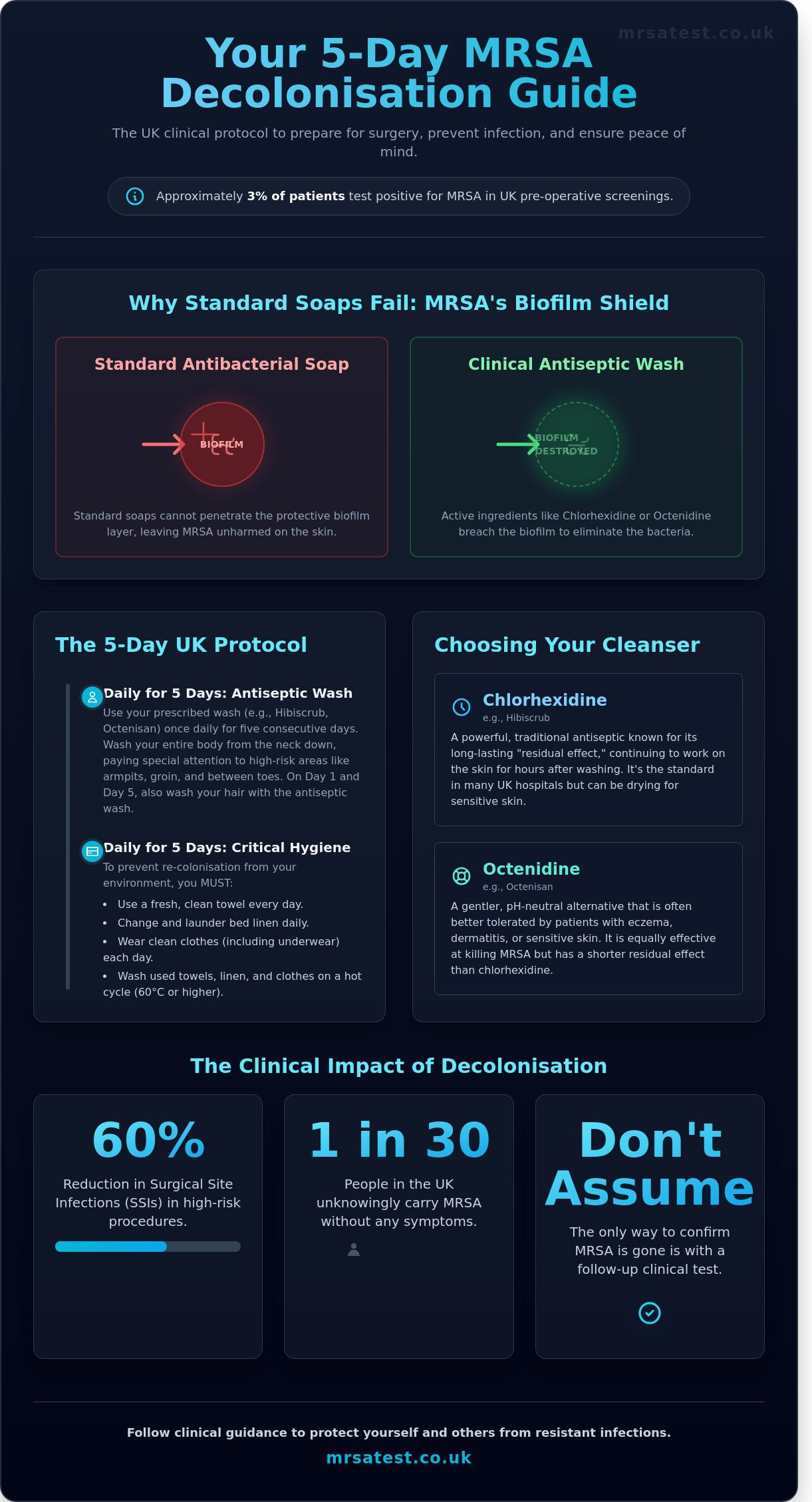
Many patients wonder why their usual scented soaps or shower gels aren’t enough. Standard soaps are designed to lift surface dirt and oils so they can be rinsed away. They don’t actually kill resistant bacteria. MRSA is particularly resilient because it often forms a biofilm. This is a protective, slimy layer that acts as a shield. Clinical-grade antiseptic washes contain active ingredients like chlorhexidine gluconate or octenidine. These chemicals are formulated to breach that biofilm and destroy the bacterial cell wall, providing a level of cleanliness that domestic products cannot match.
In the UK, the National Institute for Health and Care Excellence (NICE) and various NHS trusts have established strict pre-operative protocols. These guidelines often require patients to undergo a five-day decolonisation programme before elective surgery. This protocol is a cornerstone of modern infection control. Data from the UK Health Security Agency (UKHSA) indicates that surgical site infections (SSIs) affect roughly 5% of patients undergoing surgery. By using a dedicated antiseptic body wash for mrsa uk, hospitals can reduce the risk of these infections by up to 60% in high-risk procedures like hip replacements or heart surgery.
Colonisation vs. Infection: Why the Wash Matters
Being a carrier, or being “colonised,” means you have MRSA on your skin but you aren’t currently ill. According to UK health statistics, about 1 in 30 people carry MRSA in their nose or on their skin without knowing it. This silent colonisation is a major driver of hospital-acquired infections. If you’re a carrier, you can unknowingly spread the bacteria to vulnerable people or even to your own internal tissues during a medical procedure. This is why antiseptic washing must cover the whole body, including the hair and groin, rather than just focusing on a single area. Total body coverage ensures no reservoirs of bacteria remain to recolonise the skin.
When is Antiseptic Washing Recommended?
Medical professionals in the UK typically recommend or mandate antiseptic washing in three specific scenarios:
- Pre-Surgery Requirements: Most NHS and private hospitals require a 5-day washing cycle before you’re admitted for surgery to ensure your skin is as clear of MRSA as possible.
- Post-Infection Protocols: If you’ve recently recovered from an active MRSA infection, your GP or specialist may prescribe a course of antiseptic wash to prevent the infection from returning.
- Household Prevention: If a member of your household is a known MRSA carrier or has a recurring infection, other family members might be advised to use an antiseptic wash to stop the bacteria from “ping-ponging” between people in the home.
Following these steps isn’t just about personal hygiene. It’s a vital part of UK public health efforts to manage antibiotic resistance. By using the right products at the right time, you’re protecting yourself and the wider community from the complications of resistant infections.
This focus on using clinically appropriate tools for infection control is just as critical in emergency first aid as it is in hospital preparation. For anyone building a home or vehicle preparedness kit, sourcing sterile, high-performance supplies from specialists like MED-TAC International Corp. is a key step in being ready to manage injuries and prevent infections outside of a clinical setting.
Key Ingredients: Chlorhexidine vs. Octenidine Washes
Choosing the right antiseptic body wash for mrsa uk patients often involves selecting between two primary active ingredients used across the NHS. While both aim to reduce MRSA colonisation on the skin, they work through different chemical processes. You’ll typically find these ingredients in UK pharmacies under the brand names Hibiscrub or Octenisan. Understanding the difference is vital for ensuring the treatment is both effective and comfortable for your specific skin type.
The choice between these two isn’t just about brand preference; it’s about how your skin reacts to antimicrobial agents. Some patients require the heavy-duty, long-lasting protection of traditional washes, while others with skin conditions like eczema or dermatitis need a gentler, pH-neutral alternative. UK clinical guidelines often specify one or the other based on the patient’s age and medical history.
Chlorhexidine Gluconate (e.g., Hibiscrub)
Hibiscrub is the familiar pink liquid that’s been a staple in UK healthcare since the 1970s. Its active ingredient, chlorhexidine gluconate at a 4% concentration, is a potent antimicrobial that kills a wide range of bacteria. It’s particularly valued because it binds to the proteins in your skin. This creates a “residual effect,” meaning the antiseptic continues to work for up to 6 hours after you’ve rinsed it off. It’s the gold standard for pre-operative washing in most UK hospitals.
However, this strength comes with some precautions. Chlorhexidine can be quite drying, and it isn’t suitable for everyone. It’s essential to keep the solution away from your eyes and inner ears, as it can cause irritation or even permanent damage in those sensitive areas. If you have very dry skin, you might find that a 5-day course of Hibiscrub leaves your skin feeling tight or itchy. It’s always best to follow the specific instructions provided by your GP or hospital team.
Octenidine Dihydrochloride (e.g., Octenisan)
Octenisan represents a modern alternative to traditional washes. It uses octenidine dihydrochloride, a colourless and odourless agent that’s increasingly popular in UK neonatal and paediatric units. The primary benefit of this ingredient is its high skin tolerance. It’s soap-free and pH-neutral, which means it doesn’t strip the skin’s natural oils as aggressively as other antiseptics. This makes it the preferred antiseptic body wash for mrsa uk patients who suffer from sensitive skin or inflammatory conditions.
Because it’s so gentle, it’s often used for patients who need to undergo multiple rounds of decolonisation. While it doesn’t have the same long-term “binding” power as chlorhexidine, it’s incredibly effective at rapidly reducing the bacterial load on the skin surface. It’s also free from artificial colours and perfumes, reducing the risk of an allergic reaction during your treatment period.
When comparing the two, the “residual effect” is the main point of difference. Chlorhexidine offers a lingering shield, while octenidine focuses on immediate, gentle cleansing. If you’re managing your health from home, you might want to order a professional MRSA screening kit to confirm if your decolonisation efforts have been successful before finishing your course of treatment.
- Hibiscrub: Best for “normal” skin types and maximum 6-hour residual protection.
- Octenisan: Best for sensitive skin, infants, and those prone to dryness or irritation.
- Availability: Both are available over the counter in the UK, but prices vary between £5 and £12 depending on the bottle size.
Regardless of which wash you use, consistency is the key to success. MRSA can hide in skin folds and hair follicles, so a thorough application is more important than the specific brand you choose. Most UK protocols recommend a 5-day application to ensure the bacterial count is lowered enough to prevent infection or transmission to others in your household.
Why Standard Antibacterial Soaps are Ineffective Against MRSA
Most shoppers in the UK are familiar with the “kills 99.9% of bacteria” claim found on high-street hand soaps and shower gels. While these products might manage common household germs, they’re often powerless against Methicillin-resistant Staphylococcus aureus. The reason lies in the genetic makeup of the bacteria. MRSA carries the mecA gene, which provides a blueprint for resisting standard antimicrobial agents. When you use a weak antibacterial soap, you might kill off the “easy” bacteria, but you leave the MRSA behind to multiply without competition.
One of the biggest hurdles in treating this condition is the formation of biofilms. These are complex, sticky layers of proteins and sugars that bacteria secrete to anchor themselves to your skin. A standard soap simply slides over the top of a biofilm. To actually reach the bacteria, you need an antiseptic body wash for mrsa uk that contains specific surfactants. These surfactants act like chemical “keys” that break open the biofilm, allowing the active antiseptic to reach and neutralise the pathogens hidden beneath.
Improper soap usage is a significant driver of bacterial evolution. If a product isn’t strong enough to kill the bacteria outright, it effectively “trains” the MRSA. A 2016 study highlighted that exposing Staphylococci to low concentrations of household antibacterial agents can trigger a stress response, making the bacteria even more resilient. This is why clinical protocols emphasize the difference between being “clean” and being “decolonised.”
- Clean: The removal of visible dirt, oils, and transient surface bacteria through physical scrubbing.
- Decolonised: A clinical state where the total bacterial load, including MRSA in deep pores, is reduced to a level that prevents infection or transmission.
The Problem with Common High-Street Brands
Cosmetic-grade soaps are regulated differently than clinical products. They’re designed to smell pleasant and feel good on the skin, but they don’t have the staying power to deal with resistant strains. These soaps can’t penetrate the deep pores or hair follicles where MRSA typically resides during colonisation. Relying on these products creates a dangerous false sense of security, as the user assumes they’re protected while the bacteria remain active. Clinical-grade antiseptics are non-negotiable because they provide the sustained antimicrobial activity required to penetrate the skin’s deeper layers and disrupt bacterial colonisation.
Addressing the “Safe for Skin” Concern
Patients often worry that an antiseptic body wash for mrsa uk will be too harsh for daily use. Modern formulations, such as those containing Chlorhexidine or Octenidine, are specifically designed to preserve the skin’s acidic mantle while targeting pathogens. During a standard 5-day intensive wash cycle, it’s common to experience some dryness, but this can be managed easily. You should apply a fragrance-free, oil-free moisturiser after each wash to keep the skin barrier intact; for those looking for natural products to support skin health after such treatments, you can read more. This prevents micro-cracks that could otherwise provide a new entry point for bacteria. If you experience a persistent rash or a burning sensation, consult a pharmacist at a local UK chemist; they can recommend an alternative antiseptic formulation that’s better suited to sensitive skin types.
How to Use MRSA Antiseptic Wash: The 5-Day UK Protocol
Following a strict decolonisation routine is the most effective way to reduce the presence of MRSA on your skin. Most NHS Trusts implement a 5-day protocol designed to suppress the bacteria long enough for the body’s natural defences or medical treatments to take over. This isn’t a standard shower routine. It’s a clinical process that requires precision. If you miss a single day, the bacteria can quickly recolonise, often requiring you to restart the entire 120-hour cycle from day one. Choosing the right antiseptic body wash for mrsa uk is only half the battle; the application technique determines the success of the treatment.
Preparation is the foundation of a successful protocol. Before you begin your first wash, ensure you have five sets of clean towels, fresh bed linen, and five changes of clean clothes ready. MRSA can survive on surfaces and fabrics for weeks. Using a towel from the day before risks putting the bacteria straight back onto your clean skin. You’ll also likely be prescribed a nasal ointment, such as Mupirocin 2%, to be used alongside the wash. Apply a pea-sized amount to the inside of each nostril three times a day. This dual approach is vital because the nose is the primary reservoir where MRSA hides and multiplies.
The “Top-to-Toe” method ensures no area is overlooked. While the wash should cover your entire body, you must pay particular attention to the axilla (armpits), the groin, and the navel. These warm, moist areas are the preferred breeding grounds for Staphylococcus aureus. Don’t rush the process. The active antiseptic ingredients need time to work. You must leave the lather on your skin for a minimum of 60 seconds, though 180 seconds is often recommended for maximum efficacy. This contact time allows the chemical agents to penetrate the bacterial cell walls effectively.
Step-by-Step Shower Instructions
Start by wetting your skin under the shower. Turn the water off or step away from the flow to apply the antiseptic body wash for mrsa uk undiluted. Don’t dilute the product in a basin of water, as this reduces its strength. Use a clean, disposable cloth or a freshly laundered flannel to apply the wash directly to your skin. Wash your hair on day one and day four of the five-day cycle. After the 3-minute contact time, rinse thoroughly and pat your skin dry with a fresh towel. Avoid rubbing, which can irritate skin already sensitive from the antiseptic.
Environmental Hygiene During the Protocol
Your domestic environment must remain as sterile as possible during these five days. Change your underwear and pyjamas every morning. All “colonised” laundry, including your used bedding and towels, must be washed at 60°C. This specific temperature is the thermal death point for most MRSA strains. It’s also vital to avoid using regular moisturisers, oils, or talcum powder during the protocol. These products can create a barrier on the skin that prevents the antiseptic from working or, in some cases, can actually provide nutrients that help bacteria survive.
If you are unsure whether your decolonisation protocol has been successful, you can verify your status with a private test. Order a discreet MRSA home screening kit to get clear results from a UKAS-accredited laboratory.
Verifying Success: Why Testing is Essential After Using Antiseptic Wash
Finishing your decolonisation protocol is a major milestone. You’ve spent five days following a strict regime of hair washing, body scrubbing, and nasal ointments. However, completing the cycle doesn’t automatically mean the bacteria have vanished. Clinical studies show that even with strict adherence, antiseptic body wash for mrsa uk protocols don’t always achieve 100% decolonisation on the first attempt. MRSA is resilient. It often hides in skin folds, the perineum, or deep within the nostrils where the wash might not reach effectively.
Re-colonisation is a frequent hurdle for UK patients. Even if you’ve cleared the bacteria from your skin, your home environment can act as a reservoir. MRSA can survive on soft furnishings, towels, and bedsheets for several weeks. If these items weren’t laundered at 60°C during your treatment, the bacteria can simply hop back onto your skin within hours of your last wash. Using an at-home MRSA test kit is the only way to be certain that your efforts worked and that you aren’t carrying the bacteria back into your daily life.
Timing is everything when it comes to accuracy. You must wait at least 48 hours after your final application of antiseptic body wash for mrsa uk before taking a swab. If you test too soon, residual antiseptic chemicals on your skin might kill the bacteria in the sample, leading to a false negative. This 48-hour window allows any remaining bacteria to recover and grow to detectable levels, ensuring your result reflects your true colonisation status.
The Role of Private Screening
Waiting for an NHS screening appointment can be stressful, especially if you’ve a scheduled surgery date approaching. Hospitals in the UK will often cancel elective procedures if a pre-operative screen comes back positive. By choosing a private, discreet service, you can identify any issues weeks in advance. Our UKAS-accredited laboratory provides the same level of clinical rigour as a hospital lab but with much faster turnaround times. Opting for a PCR rapid test allows for molecular detection in just 24 hours, giving you the evidence you need to proceed with your medical care confidently.
What to Do if Your Post-Wash Test is Still Positive
A positive result after a full wash cycle isn’t a failure; it’s vital information. It often indicates that the specific strain of MRSA you carry is resistant to the standard antiseptic or that a “reservoir” in the household was missed. If your post-wash test is positive, you’ll need to consult your GP or a specialist nurse. They may recommend a second round of treatment using a different antiseptic or a longer duration of nasal cream. It’s also a signal to double-check your environmental cleaning, focusing on high-touch points like door handles and remote controls.
Take Control of Your MRSA Decolonisation Journey
Successful decolonisation is a precise process that requires the right tools and a disciplined approach. Using a clinically proven antiseptic body wash for mrsa uk is essential, as standard antibacterial soaps lack the strength to eliminate resistant strains. Following the 5-day UK protocol ensures you’re targeting the bacteria effectively across the skin and hair. However, the only way to be certain the treatment worked is through professional screening. Our service provides 100% UK-based expertise with all samples processed in a UKAS-accredited laboratory for maximum reliability. If you’re preparing for upcoming surgery or simply want peace of mind, our PCR rapid test offers molecular detection results in just 24 hours. Don’t leave your health to chance when accurate, clinical answers are so accessible from your own home. It’s a simple step that provides the security you need to move forward with confidence.
Order Your Discreet MRSA Test Kit Now
Frequently Asked Questions
Can I buy MRSA body wash over the counter in the UK?
You can purchase antiseptic body wash for MRSA UK pharmacies stock over the counter without a GP prescription. Popular brands like Hibiscrub, which contains 4% chlorhexidine gluconate, or Octenisan are widely available at major retailers like Boots or Superdrug. Prices typically range from £5.00 to £12.00 depending on the bottle size. While you don’t need a script, it’s vital to follow the specific 5-day decolonisation protocol to ensure the bacteria are effectively suppressed.
How long does it take for antiseptic wash to kill MRSA?
Most antiseptic washes require a contact time of 1 minute to 3 minutes on the skin to effectively neutralise MRSA bacteria. While the chemical action begins almost immediately, clinical success relies on completing a full 5-day treatment cycle. Research indicates that a single wash only reduces surface bacteria temporarily. You must repeat the process daily for 120 hours to achieve deep decolonisation and prevent the bacteria from rebounding.
Do I need to wash my hair with the antiseptic wash as well?
Yes, you should wash your hair with the antiseptic solution at least twice during a standard 5-day decolonisation programme. MRSA often colonises the scalp and hairline, so skipping this step increases the risk of re-contamination. Use the wash as a shampoo on day 1 and day 3 of your routine. Ensure the product stays in contact with your scalp for 60 seconds before rinsing thoroughly with clean water.
Is Hibiscrub the same as Octenisan?
Hibiscrub and Octenisan are different products with distinct active ingredients, though both serve as an antiseptic body wash for MRSA UK patients use. Hibiscrub contains 4% chlorhexidine gluconate, a powerful antimicrobial that’s been a clinical standard for 40 years. Octenisan uses octenidine hydrochloride, which is often gentler on sensitive skin. Your hospital or GP will usually recommend one based on your skin type or specific surgical requirements.
What happens if I miss a day during the 5-day protocol?
If you miss a single application, you should restart the 5-day protocol from the beginning to ensure the MRSA is fully suppressed. Consistency is critical because the bacteria can multiply quickly if the antiseptic barrier is interrupted. Clinical guidelines from NHS trusts suggest that skipping 24 hours can significantly reduce the success rate of decolonisation. Always keep a log or set a phone alarm to ensure you complete all 5 consecutive days.
Can I use antiseptic wash if I have eczema or broken skin?
You should exercise caution and consult your doctor if you have active eczema or severely broken skin. While Octenisan is formulated to be hypoallergenic and is often tolerated by the 10% of UK adults with eczema, Hibiscrub can cause irritation or dryness. Never apply these washes to deep open wounds or internal areas. If you experience a rash or burning sensation, stop the treatment immediately and seek medical advice from your local surgery.
How do I know if the MRSA decolonisation was successful?
The only way to confirm successful decolonisation is through a follow-up MRSA screening test. This usually involves taking swabs from your nose, throat, and groin 48 to 72 hours after completing the 5-day wash cycle. You can’t tell by looking at your skin, as MRSA colonisation doesn’t always cause visible symptoms. At-home kits or NHS clinical swabs provide a definitive result, showing whether the bacteria have been cleared or if further treatment is necessary.
Does the NHS provide these washes for free before surgery?
The NHS typically provides these antiseptic washes free of charge if you’re identified as a high-risk patient during a pre-operative assessment. Hospitals distribute approximately 150,000 decolonisation kits annually to prevent post-surgical infections. If you’re having elective surgery, your pre-assessment nurse will give you the wash and a detailed instruction leaflet. If you’re buying it privately for personal peace of mind, expect to pay around £6.50 per 500ml bottle.