

Blog
Can Surgery Be Cancelled Due to MRSA? Understanding Pre-Op Delays

Mar
After waiting 18 months for a hip replacement, the last thing you expect is a phone call saying your procedure is on hold because of a routine swab. It’s a common fear for many patients, and the short answer is yes; can surgery be cancelled due to mrsa if the bacteria is detected during pre-operative screening. We understand how frustrating it is to face another delay when you’ve already navigated long NHS waiting lists. It’s often confusing to be told you’re “colonised” with bacteria when you feel perfectly healthy and show no signs of a physical infection.
You don’t have to let a positive result derail your recovery plans indefinitely. This guide explains why hospitals prioritise these screenings to prevent post-surgical complications and how the decolonisation process works to clear the bacteria from your skin. We’ll show you exactly how to manage your results and how a private, UKAS-accredited PCR rapid test can provide the molecular detection you need in 24 hours to get your surgery back on track. Understanding the difference between carrying the bacteria and having an active infection is the first step toward reclaiming your place on the theatre list.
Key Takeaways
- Understand why surgery is rarely cancelled permanently but often postponed to allow for a vital 5-day decolonisation programme.
- Learn how the question of “can surgery be cancelled due to mrsa” differs between elective and emergency procedures within UK hospitals.
- Discover how pre-operative screenings identify bacteria to prevent serious surgical site infections before they can enter an incision.
- Find out how to take control of your surgical timeline by using discreet, at-home PCR testing to identify colonisation early.
- Gain peace of mind by learning the simple hygiene steps required to reduce your bacterial load and keep your scheduled operation on track.
Does a Positive MRSA Test Mean My Surgery Is Cancelled?
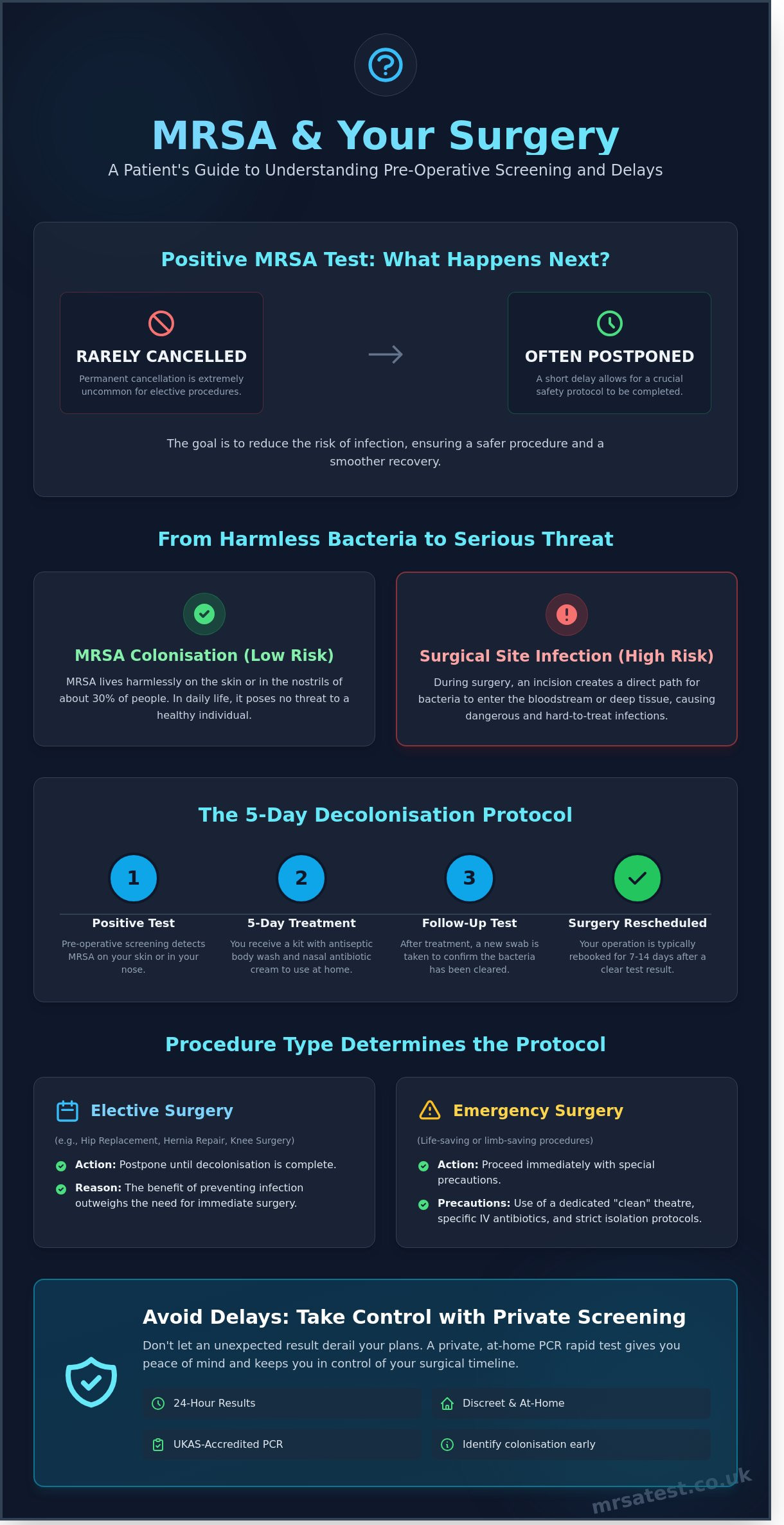
Finding out you’ve tested positive for MRSA just days before a scheduled procedure is naturally distressing. You’re likely asking: can surgery be cancelled due to mrsa? In almost all elective cases, the answer isn’t a permanent cancellation, but a necessary postponement. Surgeons don’t take this decision lightly, yet they must balance your recovery against the risk of a deep-seated surgical site infection. Waiting a few extra days is often the difference between a smooth recovery and a dangerous complication.
Hospitals view Methicillin-resistant Staphylococcus aureus (MRSA) as a significant safety barrier that requires respect. If you’re “colonised”, it means the bacteria lives on your skin or in your nostrils without causing illness. While harmless in daily life, these bacteria can be lethal if they enter a surgical incision. By pausing the procedure, the hospital ensures you’re treated before the first cut is made, significantly reducing the risk of post-operative infections that could lead to weeks of additional hospitalisation and intravenous antibiotics.
There’s a critical distinction between elective and emergency protocols. If you require life-saving surgery today, the team won’t wait for a 5-day decolonisation. Instead, they’ll proceed in a dedicated “clean” theatre using specific intravenous antibiotics and strict isolation protocols to protect other patients. For elective procedures, such as a hip replacement or hernia repair, the risk-to-benefit ratio shifts. In these scenarios, the standard practice is to delay the date until you’ve successfully cleared the bacteria from your system.
Postponement vs. Cancellation: What to Expect
When a screen returns positive, you’ll typically start a 5-day decolonisation programme. This involves using an antiseptic body wash and a nasal antibiotic cream three times a day. Most NHS trusts will reschedule your slot for 7 to 14 days after your treatment ends, provided a follow-up test is clear. The hospital’s admissions team usually handles the logistics, ensuring you don’t lose your place on the wider waiting list. Your surgeon’s priority is a successful outcome, and starting the procedure without the presence of resistant bacteria is the most effective way to guarantee that.
The Emotional Impact of Surgical Delays
It’s completely normal to feel frustrated or anxious when a date is pushed back. While the technical answer to whether can surgery be cancelled due to mrsa is usually a temporary ‘not yet’, the emotional toll is still real. With NHS waiting lists reaching over 7.6 million entries in 2024, a delay feels like a massive hurdle. You’ve likely arranged time off work, booked recovery help, or mentally prepared for the big day. To manage this, keep a direct line of communication with your Pre-Operative Assessment (POA) nurse. Ask for a specific “provisional” date as soon as you start your 5-day wash kit. Staying organised with a simple diary of your decolonisation steps can help you feel back in control of the process while you wait for your new theatre slot.
The stress of a postponed surgery highlights the importance of having support systems for any medical journey. For those who face the additional challenge of needing to travel long distances for care or recovery, services like RN MEDflights can provide crucial medical escort assistance on commercial flights.
Why Hospitals Prioritise MRSA Screening Before Major Procedures
Hospitals don’t screen for MRSA just to add another layer of paperwork to your pre-operative assessment. The primary goal is to prevent Surgical Site Infections (SSIs), which occur when bacteria enter the body through a surgical incision. While Staphylococcus aureus is a common bacterium found on the skin of about 30% of the population, it becomes a significant threat during invasive procedures. When a surgeon makes an opening, they inadvertently provide a direct pathway for these bacteria to move from the skin’s surface into deeper tissues, the bloodstream, or even vital organs.
The decision regarding whether can surgery be cancelled due to mrsa often hinges on the hospital’s ability to manage this risk. Beyond the individual patient, hospitals must consider “herd immunity” within the clinical environment. A single patient carrying MRSA can unknowingly spread the bacteria to other vulnerable individuals in the ward, including those who are immunocompromised or recovering from complex operations. Protecting the collective safety of the ward is a cornerstone of modern infection control.
Financial and clinical costs also play a massive role in these screening programmes. Healthcare-acquired infections (HAIs) are a heavy burden on the UK healthcare system. A 2020 study estimated that HAIs cost the NHS approximately £2.7 billion every year, accounting for over 28,500 deaths. By identifying carriers early, hospitals can implement decolonisation treatments, reducing the likelihood of expensive, life-threatening complications that extend recovery times by weeks or months.
The Risk of Post-Operative Complications
MRSA is a bacterium resistant to common antibiotics like methicillin. This resistance makes it exceptionally difficult to treat if it enters a surgical wound. While a standard staph infection might respond quickly to basic penicillin, MRSA requires much stronger, more expensive intravenous antibiotics that often come with harsher side effects. If an infection takes hold, it’s not just a matter of taking a pill; it often leads to longer hospital stays and, in severe cases, additional “washout” surgeries to clear the infected area. It’s vital to distinguish between MRSA colonization vs. infection, as being a carrier doesn’t mean you are currently ill, but it does change how a surgical team manages your care.
Standard NHS Screening Protocols
The NHS mandates screening for patients undergoing high-risk elective procedures. This includes orthopaedic surgeries like hip or knee replacements, cardiothoracic surgery, and neurosurgery. The process is designed to be simple and non-invasive for the patient. A nurse uses a sterile swab to gently wipe the inside of the nostrils and the skin around the groin area. These samples are then sent to a UKAS-accredited laboratory to check for the presence of the bacteria. If you want to check your status early, you can order a discreet home test kit to get results before your hospital appointment. Understanding the timeline of these tests is key to knowing if can surgery be cancelled due to mrsa, as results typically take 24 to 48 hours. You can find more detail in our guide on Understanding MRSA Screening Before Surgery.
The Decolonisation Protocol: How to Clear MRSA Before Your Operation
If you’ve received a positive test result during your pre-operative screening, your first question is likely whether can surgery be cancelled due to mrsa. In most cases, a positive result doesn’t mean an immediate cancellation, but it does trigger a mandatory “decolonisation” process. Decolonisation is a clinical term for reducing the bacterial load on your skin, hair, and inside your nostrils. It’s a proactive safety measure designed to ensure that MRSA doesn’t enter your surgical wound during or after the procedure.
The goal isn’t necessarily to “cure” an infection, as colonisation means the bacteria are simply living on you without causing harm. Instead, the protocol aims to suppress the bacteria long enough for your surgery to take place safely. This process is standard across UK hospitals and is managed with a high degree of clinical precision. Following the steps exactly as prescribed is the most effective way to keep your surgical date on track.
The Typical 5-Day Treatment Regime
The standard UK decolonisation programme lasts for five consecutive days. It involves a combination of a Chlorhexidine (CHG) wash and a specific antibiotic nasal ointment, usually Mupirocin 2%. You’ll apply the ointment to the inside of both nostrils three times a day using a cotton bud. This is crucial because the nose is the primary reservoir where MRSA bacteria like to gather and multiply.
Alongside the nasal treatment, you’ll use the antiseptic body wash daily. You must apply it to wet skin like a liquid soap, leaving it on for about one minute before rinsing. Pay particular attention to your armpits, groin, and navel. Research regarding MRSA Management in Surgical Facilities indicates that rigorous skin preparation significantly reduces the risk of post-operative complications. To make the treatment effective, you must also follow these hygiene steps:
- Use fresh, clean towels and flannels for every wash.
- Change your bed linens and pillowcases every day of the treatment.
- Wear fresh clothes and pyjamas daily to avoid re-contaminating your skin.
- Don’t use your regular soaps or lotions during these five days, as they can interfere with the antiseptic.
Strict adherence is vital. If you miss even a single dose of ointment or skip a wash, the bacterial colony can quickly recover. This often leads to a failed follow-up test, which is a common reason why can surgery be cancelled due to mrsa at the last minute.
When the First Round of Decolonisation Fails
While the five-day cycle works for most patients, it isn’t always successful on the first attempt. If your post-treatment swabs still show the presence of MRSA, your clinical team will look for underlying reasons. Sometimes, the bacteria “hide” in skin folds or chronic wounds. In other cases, you might be picking the bacteria up again from your environment. Household members or even pets can carry MRSA without symptoms, leading to a “ping-pong” effect where the bacteria move back and forth between people.
If the first round fails, you’ll usually be asked to repeat the cycle, perhaps with a different antiseptic or for a longer duration. Your hospital will require “clearance swabs” to confirm the bacteria are gone. This typically involves three sets of negative swabs taken at weekly intervals. While this delay can feel frustrating, it’s a sign that your surgical team is prioritising your safety. They want to ensure that when you finally enter the operating theatre, the risk of a deep-seated infection is as low as possible.
How to Minimise the Risk of Surgical Delays and Postponements
The prospect of a last-minute postponement is a significant source of anxiety for anyone awaiting an operation. You might find yourself asking, can surgery be cancelled due to mrsa? The reality is that hospitals must prioritise patient safety; if a pre-operative swab identifies colonisation, your procedure will likely be delayed to prevent a life-threatening bloodstream infection. However, these delays are almost entirely preventable with a proactive approach to hygiene and screening.
Preparation should begin at least 14 days before your scheduled admission. Start by maintaining a clinical level of cleanliness in your home. Focus your efforts on “high-touch” surfaces where bacteria often reside; this includes door handles, light switches, TV remotes, and tap handles. Using 70% alcohol-based wipes or a bleach-based cleaner on these areas daily can reduce the bacterial load in your environment. It’s also vital to communicate your medical history clearly. If you’ve ever had a previous MRSA infection or lived with someone who has, tell your surgical team immediately. This allows them to adjust your care plan well in advance rather than reacting to a positive swab result the day before your theatre slot.
Proactive Pre-Screening: The Patient Advantage
Most NHS trusts perform pre-operative screening between 2 and 7 days before a procedure. This window is dangerously narrow. If the test returns a positive result, you’ll typically be prescribed a 5-day decolonisation protocol involving antiseptic body washes and nasal ointments. If your screening happens on a Monday for a Thursday surgery, there’s simply no time to complete the treatment. Early detection allows for decolonisation to finish before the theatre date, ensuring you’re clear and ready for admission.
By using a private, UKAS-accredited screening service two weeks before your hospital appointment, you gain a 14-day lead. If you’re carrying the bacteria, you can start the necessary cleansing steps privately. This ensures that when the hospital performs its official check, you’re already clear of colonisation.
Hygiene Habits for High-Risk Patients
Certain patients are naturally more susceptible to carrying Staphylococcus aureus. If you suffer from chronic skin conditions like eczema, psoriasis, or dermatitis, your skin barrier is compromised, providing a sanctuary for bacteria to thrive. In these cases, standard soap isn’t enough. You should switch to a dermatologically approved antimicrobial wash, such as Octenisan, at least 10 days before your surgery date. It’s also essential to check our Preparing for Surgery: Pre-Op Health Checklist to ensure every base is covered.
Don’t forget that hygiene is a household effort. Approximately 3% of the UK population carries MRSA without showing any symptoms. If a family member or partner is colonised, they can easily pass the bacteria back to you through shared towels or physical contact. Encourage everyone in your home to practice frequent handwashing with antibacterial soap in the fortnight leading up to your operation. It’s a simple step that protects your health and your surgery date.
Take control of your recovery timeline and avoid the stress of a cancelled operation. Order your confidential MRSA home test kit today to ensure you are clear before your hospital assessment.
Taking Control: Private MRSA Screening for Peace of Mind
Waiting for a pre-operative assessment doesn’t have to be a period of high anxiety. Many patients find themselves trapped in a cycle of worry, wondering if an undiagnosed colonisation will derail their entire medical timeline. If you’re asking can surgery be cancelled due to mrsa, the reality is that hospitals will postpone elective procedures if a patient tests positive during their routine pre-op. This delay typically lasts 7 to 14 days while a decolonisation protocol is completed. By choosing private screening, you gain the opportunity to identify and treat the bacteria weeks before your hospital appointment, ensuring your surgical date remains secure.
At-home testing offers a level of discretion and comfort that clinical environments often lack. You can perform the swabs in the privacy of your own bathroom, avoiding the stress of additional hospital visits or the perceived stigma of being screened in a public ward. Our service utilises a UKAS-accredited partner laboratory, which means your results are processed to the same rigorous standards as those within the NHS. Once you receive your confirmed negative result, you can share the digital report with your GP or surgical team. This proactive step provides the clinical evidence needed to move forward with confidence.
The peace of mind that comes from a confirmed negative result is invaluable. It removes the “wait and see” element from your surgical preparation. Instead of arriving at the hospital hoping for the best, you arrive knowing you’re clear. If the test does return a positive result, you’ve bought yourself the time needed to use antiseptic washes and nasal creams before your official hospital screening, effectively preventing a last-minute cancellation.
PCR Testing: The 24-Hour Solution
For patients with surgery dates scheduled in the next 5 to 7 days, speed is the most critical factor. Traditional culture tests are reliable but slow; they require 48 to 72 hours for the bacteria to grow in a petri dish before a result can be confirmed. In contrast, the MRSA Rapid PCR Test Kit uses advanced molecular detection to identify MRSA DNA directly from your swabs. This method is highly precise, offering a 99% sensitivity rate that often exceeds traditional culture methods.
Because PCR testing looks for the genetic signature of the bacteria rather than waiting for it to grow, our laboratory can provide results within 24 hours of receiving your sample. This rapid turnaround is the preferred choice for anyone facing an imminent surgery date. It provides a definitive answer quickly, allowing you to focus on your recovery rather than administrative delays. When you’re concerned about whether can surgery be cancelled due to mrsa, the speed of PCR testing provides the fastest route to certainty.
The Simple Process of At-Home Swabbing
The testing process is designed to be straightforward and manageable for everyone. Your kit arrives in plain, neutral packaging to ensure your privacy is protected from the moment it lands on your doorstep. There’s no need to wait for a nurse or book a clinical appointment; you’re in control of the timing.
- Step 1: Wash your hands thoroughly and lay out the sterile swabs and transport tubes on a clean surface.
- Step 2: Follow the included guide to swab the primary colonisation sites: the inside of both nostrils, the throat, and the groin or armpit areas.
- Step 3: Secure the swabs into the tubes containing the stabilising media, which preserves the sample during transit.
- Step 4: Place the tubes into the protective pouch and use the prepaid Royal Mail Tracked 24 envelope to post your samples back to our UK-based laboratory.
Our lab team processes samples six days a week to ensure your results aren’t delayed by the weekend. As soon as the analysis is complete, your secure report is uploaded to our portal for you to download. Don’t leave your surgery to chance; order your confidential MRSA test kit online today to ensure your procedure stays on schedule and your health remains the priority.
Secure Your Surgery Date With Confidence
Waiting lists for elective operations in the UK are often lengthy; the last thing you need is a preventable delay. Hospitals prioritise screening because MRSA colonisation increases the risk of post-operative infections by approximately 33%. If a positive result occurs, a five-day decolonisation programme is typically required before your procedure can proceed. While can surgery be cancelled due to mrsa is a common concern for patients, early detection allows you to complete any necessary treatment well in advance of your admission date.
Taking control of your screening provides peace of mind and ensures your recovery starts on schedule. Our service uses a UKAS-accredited laboratory to provide rapid 24-hour PCR results, giving you clinical accuracy without the wait. You’ll receive a discreet at-home collection kit that fits through your letterbox, allowing you to test in complete privacy. Don’t leave your operation to chance; get the clarity you need today.
Ensure your surgery goes ahead on time with a private MRSA test kit
You’re one step closer to a successful procedure and a smoother path to health.
Frequently Asked Questions
How long is surgery delayed if I test positive for MRSA?
Your surgery is typically delayed by 5 to 10 days while you complete a standard decolonisation programme. This treatment involves using a prescribed body wash and nasal ointment for 5 consecutive days to reduce the risk of infection. After the treatment, your surgical team will determine if it’s safe to proceed. Clinical data shows that following this protocol reduces the risk of post-operative surgical site infections by 40%.
Can I still have surgery if I have MRSA but it is an emergency?
Yes, emergency surgery will proceed even if you have MRSA, as the immediate risk to your life outweighs the risk of infection. In these cases, hospital staff follow strict infection control protocols, including placing you in a private side room and administering specific intravenous antibiotics like vancomycin before the first incision. This ensures that while can surgery be cancelled due to mrsa in elective cases, life-saving procedures aren’t delayed.
What happens during the MRSA decolonisation process?
The decolonisation process involves a 5-day treatment cycle designed to remove MRSA bacteria from your skin and nose. You’ll apply 2% mupirocin nasal ointment three times a day and wash your hair and body with 4% chlorhexidine gluconate solution daily. It’s essential to change your bedding and towels every day during this period to prevent re-contamination. This simple home-based routine is 90% effective at clearing colonisation before your operation.
Will my surgery be cancelled if a family member has MRSA?
Your surgery won’t be cancelled if a family member has MRSA, provided your own screening tests remain negative. However, if you live with someone who is MRSA-positive, you have a 30% higher chance of becoming a carrier yourself. To stay safe, don’t share towels or razors and encourage your family member to complete their own decolonisation. Your hospital may request an additional swab to ensure you haven’t acquired the bacteria.
How many negative tests do I need before surgery can go ahead?
Most NHS trusts require 3 consecutive negative sets of swabs, taken at least 48 hours apart, before they consider you clear for elective surgery. Each set includes swabs from your nose, throat, and any skin breaks or wounds. If you’ve previously tested positive, can surgery be cancelled due to mrsa until these results are confirmed. Following the full 5-day treatment plan is the most reliable way to achieve these negative results quickly.
Is it possible to clear MRSA permanently before my operation?
You can successfully clear MRSA for your operation, but permanent eradication isn’t always guaranteed as the bacteria can return later. The standard 5-day decolonisation protocol is highly effective at suppressing the bacteria during your recovery window. Research indicates that 75% of patients remain clear for at least 30 days after treatment. This timeframe is usually sufficient to allow your surgical wounds to heal without the risk of an MRSA-related complication.
Can I buy the decolonisation wash and ointment privately?
You can purchase decolonisation products like Hibiscrub or Octenisan privately from most UK pharmacies or through accredited online providers. A complete 5-day kit, including body wash and nasal ointment, typically costs between £15 and £35. Buying these items privately allows you to start the cleaning process immediately if you’re worried about potential delays. It’s a proactive way to manage your health from the comfort of your own home.
What are the symptoms of MRSA before surgery?
Most people have no symptoms at all because they’re colonised rather than infected. In these cases, the bacteria live harmlessly on the skin or in the nose without causing illness. However, if an infection develops, you might notice red, swollen, or painful bumps that look like spots or spider bites. About 2% of the UK population are healthy carriers of MRSA, which is why pre-operative screening is vital for identifying the bacteria before it enters a surgical wound.
