

Blog
What Happens if Your MRSA Test is Positive Before Surgery? A UK Patient Guide
Mar
Imagine receiving a phone call from your NHS pre-assessment clinic just days before your scheduled procedure, only to hear that your screening swab came back positive. It’s a moment that often triggers immediate anxiety, leaving you worried that your surgery is cancelled or that you are somehow ‘unclean’. You are likely searching for exactly what happens if mrsa test is positive before surgery while feeling overwhelmed by the terminology. We understand how stressful this news feels, especially when you have already spent weeks preparing for your operation.
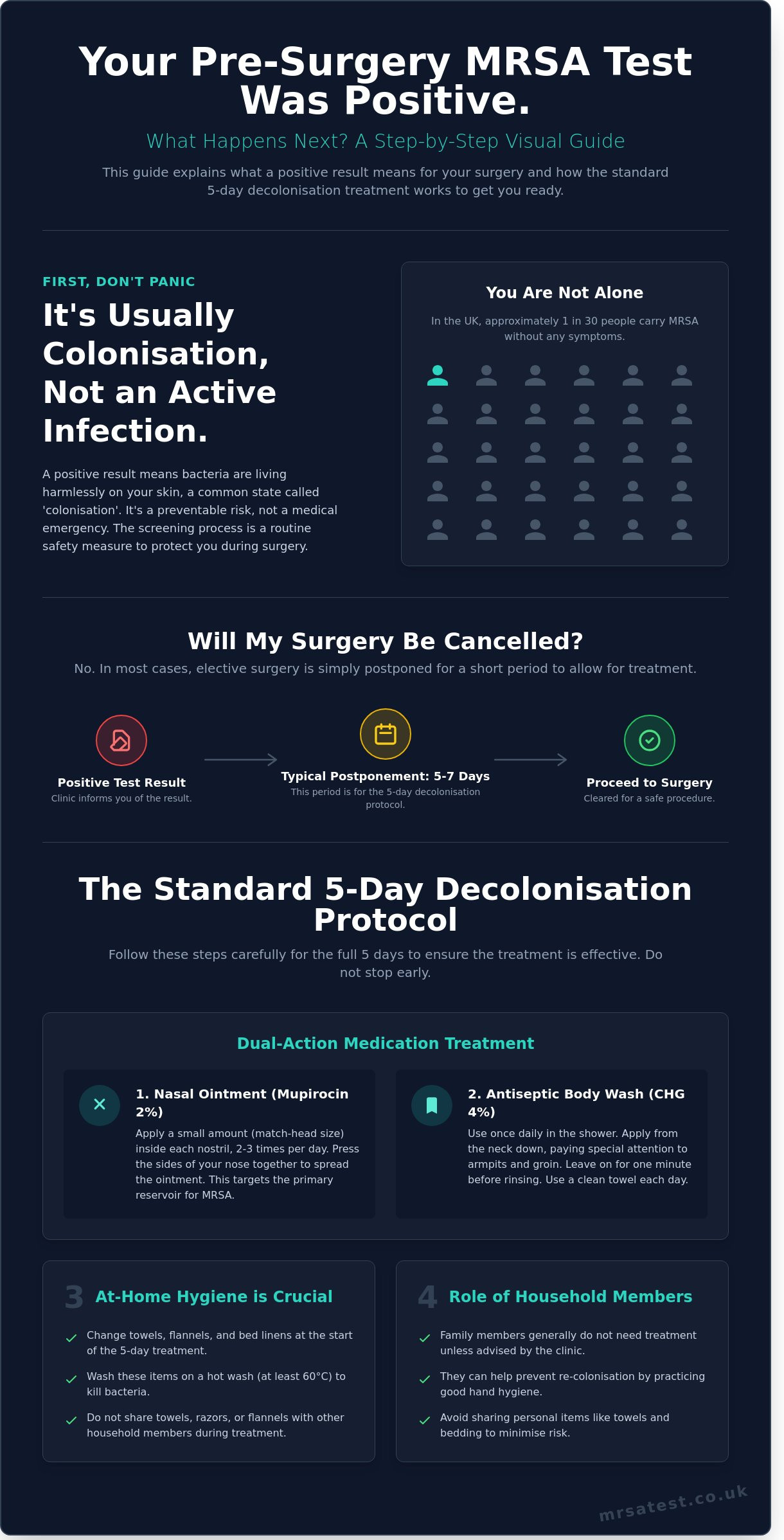
The reality is far less frightening than it sounds. Clinical data suggests that approximately 3% of the UK population carries these bacteria on their skin without any symptoms or illness. This state is called colonisation, and it is a manageable hurdle rather than a medical emergency. This guide will explain exactly what a positive result means for your timeline and how the standard five-day decolonisation treatment works. You’ll discover the specific, actionable steps required to clear the bacteria, ensuring you can proceed to the operating theatre with confidence and total peace of mind.
Key Takeaways
- Understand why a positive result usually indicates ‘colonisation’ rather than illness, a status shared by approximately 1 in 30 people in the UK.
- Discover exactly what happens if mrsa test is positive before surgery and why most elective procedures are only postponed by 5 to 7 days.
- Learn how to correctly follow the standard 5-day UK decolonisation protocol to ensure your skin is clear for a safe surgical outcome.
- Identify practical at-home hygiene measures and the role of household members in preventing potential re-colonisation during your treatment.
- Explore the benefits of using discreet, UKAS-accredited private testing to monitor your status and confirm clearance before your hospital date.
Understanding Your Positive MRSA Result: Colonisation vs Infection
Receiving a positive result from a pre-operative swab can feel alarming, but it is a common occurrence in UK hospitals. It is vital to understand that for the vast majority of patients, a positive result indicates colonisation rather than an active, symptomatic illness. Data from Public Health England suggests that approximately 1 in 30 people carry Methicillin-resistant Staphylococcus aureus (MRSA) on their skin or in their nose without ever knowing it. You aren’t “sick” in the traditional sense, and you don’t pose a risk to healthy people in your daily life.
If you are concerned about what happens if mrsa test is positive before surgery, the most important thing to remember is that this is a preventative discovery. Being a carrier means the bacteria live harmlessly on your body surface. The screening process is designed to identify this presence before you enter a clinical environment where your natural defences, like your skin, will be temporarily breached. It is a routine safety measure, much like checking your blood pressure or heart rate before an operation.
What is MRSA Colonisation?
Bacteria frequently live on our skin as “commensals,” which means they exist in a neutral relationship with us. MRSA colonisation happens when these specific bacteria settle in warm, moist areas of the body. The most frequent sites for colonisation include the nostrils (nares), the throat, the groin, and the armpits. In these locations, the bacteria don’t cause any harm because they remain on the outside of the body.
Surgery changes this dynamic entirely. When a surgeon makes an incision, they create a pathway for surface bacteria to enter deeper tissues or the bloodstream. For a carrier, the risk is that their own colonised bacteria could enter the wound. Because MRSA is resistant to common antibiotics like methicillin, an infection inside a surgical site is much more complex to treat than one caused by standard bacteria. Identifying colonisation allows your team to clear the bacteria from your skin before the first incision is made.
Why Hospitals Prioritise MRSA Screening
NHS trusts and private clinics prioritise screening because there is a proven link between MRSA carriage and post-operative surgical site infections (SSIs). A patient carrying MRSA is significantly more likely to develop a complication following surgery than a non-carrier. By screening every patient, hospitals can provide targeted “decolonisation” treatments, such as antiseptic body washes and nasal ointments, which effectively lower the bacterial load to safe levels.
This protocol protects more than just the individual. It prevents the spread of resistant bacteria to other patients on the ward who may have weakened immune systems. Hospital-acquired infections (HAIs) are a serious concern in the UK, often extending a patient’s stay by an average of 11 days and costing the healthcare system thousands of pounds per case. Knowing what happens if mrsa test is positive before surgery helps you understand that your clinical team is simply taking the necessary steps to ensure your recovery is as smooth and safe as possible. You are in capable hands, and this result is just a manageable part of your surgical preparation.
The Standard UK Decolonisation Protocol: A Step-by-Step Guide
Most UK hospitals, including both NHS trusts and private providers, follow a rigorous 5-day decolonisation programme once a patient carries MRSA. This routine is designed to reduce the bacterial load on your skin and in your nose to the lowest possible level. It’s vital to complete the entire course. Even if your skin feels healthy or “clean,” the bacteria are microscopic and reside in areas you cannot see. Stopping the treatment on day three or four because you feel fine is a common error that often leads to the MRSA returning before your surgery date.
Patients often feel a sense of urgency and worry about what happens if mrsa test is positive before surgery, but the clinical response is a well-established dual-action approach. This protocol uses two different types of medication to target the bacteria where they most commonly live. You’ll typically be prescribed a 2% Mupirocin nasal ointment and a 4% Chlorhexidine (CHG) skin wash, such as Hibiscrub. Following the NHS guidance on MRSA ensures that you are effectively managing the colonisation and protecting yourself from post-operative complications.
Applying Nasal Ointment Correctly
The nostrils are the primary reservoir for MRSA bacteria. To clear this area, you must apply the prescribed Mupirocin ointment three times a day for five consecutive days. Use a cotton bud or your small finger to place a portion about the size of a matchstick head into the front part of each nostril. After application, press your nostrils together and massage them to ensure the ointment spreads across the entire internal lining. A frequent mistake is applying the gel too shallowly; it needs to reach the inner surfaces to be effective. Skipping even one dose can allow the bacteria to begin multiplying again, potentially compromising your surgical schedule.
Using Antibacterial Body Wash and Shampoo
The second part of the protocol involves a daily full-body wash using 4% Chlorhexidine solution. Unlike regular soap, this antiseptic needs time to work. You should wet your skin, apply the solution directly with a fresh flannel or your hands, and leave it in contact with your skin for at least 60 seconds before rinsing. Understanding what happens if mrsa test is positive before surgery helps you appreciate why specific focus is needed on high-risk areas. These include your armpits (axilla), groin, navel, and feet, where the skin is warmer and bacteria thrive.
- Hair Care: You must wash your hair with the antiseptic solution at least twice during the 5-day period, usually on day one and day five.
- Fresh Linen: You must use a freshly laundered towel every single day. Using a damp towel from the day before can immediately re-introduce bacteria to your skin.
- Clean Clothing: Change into clean clothes, underwear, and pyjamas every day after your wash to maintain a sterile environment.
Consistency is the key to success with this protocol. If you follow these steps precisely, you significantly increase the likelihood of a clear screen and a safe procedure. For those who want to verify their status privately after completing the protocol, you can order a discreet at-home test kit to gain peace of mind before your hospital admission. By taking these clinical steps seriously, you move from being a carrier to being a prepared surgical candidate.
Will My Surgery Be Postponed? Navigating the Surgical Timeline
Receiving a positive result just days before a procedure is naturally stressful. It’s the primary concern for most patients. However, a positive result doesn’t mean your surgery is cancelled indefinitely. It’s a pause, not a full stop. In the majority of cases, elective surgeries are only delayed by 5 to 7 days. This brief window allows you to complete a decolonisation programme, which significantly reduces the risk of a post-operative infection. Understanding what happens if mrsa test is positive before surgery helps you manage the logistics of your recovery without unnecessary anxiety.
Most elective procedures, such as routine hernia repairs or gallbladder removals, follow a standard protocol. The hospital will provide a kit containing a special antiseptic body wash and a nasal ointment. You’ll use these for five consecutive days. Once this treatment is finished, the surgical team can often proceed. The NHS guide on MRSA highlights that while the bacteria are often harmless on the skin, they pose a genuine threat if they enter a surgical incision. Taking this extra week ensures your safety is the priority.
Emergency procedures work differently. If you require life-saving surgery or urgent trauma care, the clinical team won’t wait for a five-day treatment course. Instead, they’ll proceed with the operation immediately while using “prophylaxis” antibiotics. This involves administering specific intravenous drugs, such as vancomycin or teicoplanin, during the surgery to provide extra protection against MRSA. The protocol is adapted to the urgency of your medical needs.
Factors That Influence a Postponement
Several variables determine how long your surgery might be delayed. Not all procedures carry the same level of risk, and hospital policies can vary across different NHS trusts. Key factors include:
- The type of surgery: Procedures involving “foreign material,” such as hip replacements, heart valve swaps, or neurosurgery, have a 0% tolerance for active MRSA. These surgeons often require three clear swabs before they’ll agree to a new date.
- Hospital infection control policy: Some private clinics have stricter rules than general hospitals. They may insist on a full 14-day gap between the end of treatment and the new surgery date.
- Your overall health: If you have a weakened immune system or open wounds, the team might be more cautious. They’ll want to ensure the colonisation is fully managed to prevent complications like sepsis.
Communicating with Your Surgical Team
Clear communication is vital once you know what happens if mrsa test is positive before surgery. Don’t wait for the hospital to call you; reach out to the pre-assessment nurse as soon as you get your results. This proactive approach shows you’re committed to the safety protocol. Ask specifically if you’ll need to provide “re-swabs” before the new date or if completion of the five-day wash is sufficient.
Honesty is your best tool for a successful outcome. If you forget to use the nasal ointment for a day, tell your nurse. Cutting corners on the decolonisation process can lead to a failed post-op screening, which might delay your discharge from the hospital later. Confirm the exact date you should start your treatment so it aligns perfectly with your rescheduled surgery. Most teams are happy to guide you through the process to ensure you’re MRSA-free on the day of your operation.
Maximising Success: Practical Tips for Decolonisation at Home
Receiving a positive result can feel overwhelming, but the decolonisation process is a standard clinical pathway designed to ensure your safety. Knowing what happens if mrsa test is positive before surgery allows you to take control of your environment. The goal is to reduce the number of bacteria on your skin and in your surroundings to a negligible level. This five-day treatment programme usually involves antiseptic body washes and nasal ointments, but its success depends heavily on your domestic routine.
To maintain a low-bacteria environment, follow this checklist daily during your treatment:
- Clean high-touch surfaces like door handles, light switches, and taps with disinfectant wipes.
- Use disposable paper towels to dry your hands instead of shared fabric towels.
- Store your toothbrush in a closed container or away from other family members’ brushes.
- Avoid using communal sponges or loofahs, as these porous materials trap moisture and bacteria.
Laundry and Linens: The 60-Degree Rule
Staphylococcal bacteria are resilient and can survive on household fabrics for up to 56 days. To break the cycle of re-infection, you must wash all towels, flannels, and bedsheets at a minimum of 60°C. This temperature is the clinical threshold required to kill MRSA effectively. You should change your pillowcase every single day during the five-day treatment period to prevent nasal bacteria from re-colonising your face overnight. Keep your laundry in a separate bag or basket to avoid cross-contamination with other household members’ clothing.
Personal Hygiene and Household Contact
Close contact is the primary way MRSA spreads within a home. You must not share personal items such as razors, towels, or nail clippers with anyone else in the house. While you don’t need to isolate yourself, maintaining strict hand hygiene is vital. Use an alcohol-based hand gel containing at least 60% ethanol after touching your face or using the bathroom. Frequent handwashing reduces the risk of transferring MRSA from the nose to other body parts. If you live with others, they don’t usually need treatment unless they also have an upcoming surgery or a weakened immune system, but they should increase their own handwashing frequency.
The “pet factor” is a common concern for many patients. Research from the University of Cambridge indicates that cats and dogs can act as mechanical vectors, meaning they can carry MRSA on their fur even if they aren’t “infected” themselves. During your five-day decolonisation, it’s best to keep pets off your bed and wash your hands thoroughly after any physical contact. This prevents the bacteria from “hiding” on your pet and jumping back to you once your treatment is complete.
Understanding what happens if mrsa test is positive before surgery means recognising that the environment is just as important as the medicine. By following these rigorous hygiene standards, you ensure that the antiseptic treatment can do its job without interference. If you have any concerns about your results or need a follow-up screen to confirm you’re clear for your procedure, you can order a discreet MRSA screening kit for peace of mind at home.
Confirming Your Status: The Role of Private MRSA Testing
Securing a negative result is the final hurdle before your surgical team can safely proceed. Understanding what happens if mrsa test is positive before surgery allows you to take control of your recovery timeline. Most NHS trusts require a clear set of results to prove that decolonisation treatment was successful. This process, known as “clearance,” ensures the Staphylococcus aureus bacteria are no longer colonising your skin or nasal passages. Without this confirmation, the risk of a post-operative site infection remains too high for elective procedures to go ahead.
While the hospital provides initial guidance on what happens if mrsa test is positive before surgery, private testing offers a faster route to confirmation. It’s a proactive way to monitor your status without waiting for hospital appointments. You can verify the effectiveness of your treatment programme from home, giving you peace of mind before you even arrive at the pre-assessment clinic.
How to Re-Test for MRSA Post-Treatment
Timing is everything when it comes to re-swabbing. You must wait at least 48 hours after finishing your five-day decolonisation treatment before taking a new sample. If you swab too soon, the antiseptic washes might provide a false negative by temporarily suppressing the bacteria rather than eliminating them. Accuracy depends on following a standardised technique. You’ll need to use the provided swabs on three specific areas: the inside of both nostrils, the armpits (axilla), and the groin. Rotate the swab firmly but gently to collect enough skin cells for the lab to analyse.
Many hospitals follow a “triple clearance” protocol. This means you need three consecutive negative sets of swabs, usually taken one week apart, before you’re considered fully clear. However, for many urgent surgeries, a single negative PCR test is often the first step to getting your date back in the diary. Private testing allows you to complete these checks on your own schedule, ensuring you don’t miss your surgical window due to administrative delays.
Why Choose a Private At-Home Test Kit?
Speed is the primary reason patients opt for private screening. Traditional culture methods require 48 to 72 hours for the bacteria to grow in a laboratory setting; this might be too slow if your operation is scheduled for early next week. In contrast, an MRSA PCR rapid test looks for the genetic material of the bacteria. This molecular detection method provides results within 24 hours of the sample reaching the lab. When every day counts, this 48-hour time saving is vital.
Convenience and discretion are equally important. You don’t need to travel to a busy hospital or sit in a waiting room while potentially vulnerable. Managing your health data privately from the comfort of home reduces the stress of an already difficult period. Our kits are processed in UKAS-accredited facilities, ensuring the same clinical rigour you’d expect from the NHS, but with the efficiency of a private service.
Our service is 100% UK-based, providing you with a dependable partner for your pre-operative journey. By choosing a professional at-home kit, you’re not just buying a test; you’re securing the data you need to move forward with your surgery confidently. We provide clear, easy-to-read results that you can share with your surgical consultant, helping to prevent further delays to your care.
Taking Control of Your Surgical Timeline
A positive result doesn’t mean your operation is cancelled. It simply indicates colonisation, which is managed through a standard 5-day decolonisation protocol involving chlorhexidine washes and nasal ointments. Understanding what happens if mrsa test is positive before surgery allows you to follow these clinical steps accurately. Most elective procedures stay on track once you’ve successfully cleared the bacteria from your skin.
If you’ve finished your treatment and want to confirm your status before heading to the ward, private testing provides immediate clarity. We use a UKAS-accredited UK laboratory to ensure clinical precision. By choosing our PCR rapid test, you’ll receive your results in as little as 24 hours after the lab receives your sample. Our home collection kits are sent in plain, discreet packaging to protect your privacy while you prepare for your procedure from the comfort of your own home. Don’t wait for hospital backlogs to get the answers you need.
Order a Fast & Private MRSA Test Kit Today
You’re now equipped with the facts to manage this hurdle effectively. Focus on your recovery and look forward to a safe, successful surgery.
Frequently Asked Questions
Can I still have surgery if I have MRSA?
Yes, you can still have surgery, but your hospital might reschedule elective procedures. Knowing what happens if mrsa test is positive before surgery helps you prepare for the 5-day decolonisation process. For emergency cases, the team proceeds immediately using isolated theatres and specific antibiotics to ensure your safety. Most elective operations are simply delayed by one or two weeks to clear the bacteria.
How long does it take to clear MRSA before surgery?
The standard decolonisation process takes exactly 5 days to complete. You’ll use a special antimicrobial wash and nasal ointment throughout this period to clear the bacteria from your skin and nose. Once the 5-day course ends, your clinical team usually waits 48 hours before taking a fresh swab. If this follow-up test is clear, your surgery can proceed as planned without further delays.
What ointment is used for MRSA in the nose before surgery?
The standard treatment is Mupirocin 2% nasal ointment, often sold under the brand name Bactroban. You’ll typically apply a small amount to the inside of each nostril three times a day for a 5-day period. This specific antibiotic is highly effective at clearing the bacteria from the nasal cavity; this is the most common place for MRSA to hide before a surgical procedure.
Does a positive MRSA test mean my house is infected?
A positive result doesn’t mean your entire home is contaminated. While MRSA can survive on hard surfaces for up to 56 days, it’s primarily a human-to-human bacteria. You don’t need professional cleaning services. Simply washing your bed linens and towels at 60°C and cleaning high-touch areas like door handles with standard disinfectant is enough to manage the environment effectively and safely.
What happens if I forget to use the MRSA wash for one day?
You must contact your surgical team immediately if you miss a day of treatment. The 5-day decolonisation protocol relies on consistent application to suppress the bacteria effectively. If the cycle is broken, the MRSA may quickly regrow on your skin. Your nurse might advise you to restart the full 5-day programme to ensure you’re safe for your scheduled operation date.
Can my partner give me MRSA back after I’ve finished treatment?
It’s possible for a partner to pass the bacteria back to you through skin contact or shared items. If you have recurring positive tests, your GP might suggest that your partner also undergoes a 5-day decolonisation treatment. This ensures the bacteria isn’t bouncing between household members. You should avoid sharing towels, razors, or flannels during your treatment period to prevent re-colonisation.
Why did I test positive for MRSA when I have no symptoms?
Testing positive without symptoms means you’re “colonised” rather than infected. Statistics show that roughly 3% of the UK population carries MRSA on their skin at any time. Understanding what happens if mrsa test is positive before surgery is vital because these harmless bacteria can cause serious issues if they enter a surgical wound. Screening identifies this risk before you enter the operating theatre.
Is MRSA screening mandatory for all UK surgeries?
Screening is mandatory for most elective NHS admissions under the 2010 Department of Health guidelines. This policy covers approximately 95% of planned hospital stays to prevent outbreaks. However, some very low-risk procedures like minor dental work or outpatient eye surgery might not require a test. You should check with your specific NHS Trust to confirm their local screening requirements before your hospital appointment.
