

Blog
MRSA Test for Hip Replacement Surgery: Pre-Operative Guide 2026

Mar
Recent clinical data shows that approximately 33% of the UK population carries Staphylococcus aureus on their skin without ever knowing it. While usually harmless, these bacteria can cause serious complications during elective orthopaedic procedures. Preparing for a major operation is stressful enough without the looming fear that your surgery might be cancelled at the last minute because of a positive swab. We know that navigating NHS pre-op timelines often feels like a race against the clock, especially when you’re anxious about the risk of a prosthetic joint infection.
This guide explains why securing a private mrsa test for hip replacement surgery ensures your path to recovery remains on schedule. You’ll learn how to obtain fast, UKAS-accredited results from the comfort of your home, allowing you to start any necessary decolonisation treatments well before your hospital admission date. We’ll outline the exact steps of the screening process, explain the difference between culture and PCR testing, and show you how to gain total peace of mind before you head into theatre.
Key Takeaways
- Understand why MRSA screening is a mandatory safety requirement for orthopaedic procedures to prevent life-altering prosthetic joint infections.
- Discover the science behind biofilms and why detecting colonisation is essential before bacteria can “stick” to your new hip implant.
- Compare NHS waiting times with private molecular options to see how a mrsa test for hip replacement surgery can fast-track your pre-operative assessment.
- Learn the correct technique for self-collecting swabs from the nose, groin, and axilla to ensure your samples meet strict clinical standards.
- Explore how to access a discreet, 100% UK-based PCR testing service that delivers accurate, lab-certified results in as little as 24 hours.
Why an MRSA Test is Mandatory for Hip Replacement Surgery
Every patient preparing for elective orthopaedic surgery in the UK must undergo screening for specific bacteria. This isn’t a suggestion; it’s a clinical requirement mandated by the Department of Health since 2009. When you’re booked for a total hip arthroplasty, your surgical team’s primary goal is to prevent a Surgical Site Infection (SSI). These infections are particularly dangerous in joint replacements because the surgery involves placing a large foreign object, the prosthetic hip, into your body. Bacteria love to adhere to metal and plastic surfaces, creating a “biofilm” that’s incredibly difficult for your immune system or standard antibiotics to penetrate.
The mrsa test for hip replacement surgery is the first line of defence in this process. By identifying carriers before they enter the operating theatre, hospitals can significantly reduce the risk of deep-seated infections. In the UK, post-operative infection rates for hip replacements have dropped to approximately 0.5% to 1% thanks to these stringent screening protocols. Without this test, the risk of a life-altering complication would be substantially higher.
The Risk of Methicillin-Resistant Staphylococcus Aureus
Methicillin-resistant Staphylococcus aureus (MRSA) is a specific strain of the common staph bacterium that has developed resistance to widely used antibiotics, such as flucloxacillin. While about 33% of the UK population carries standard staph on their skin or in their nose, roughly 1% to 3% are “colonised” with the resistant MRSA strain. Being colonised doesn’t mean you’re ill; you likely won’t have any symptoms at all. However, if these bacteria are moved from your skin into a deep surgical wound, they can cause a severe infection that standard drugs can’t stop.
Asymptomatic carriers are the biggest challenge in a hospital environment. Because you feel healthy, you might unknowingly introduce the bacteria into the sterile field. This is why a proactive mrsa test for hip replacement surgery is vital. It identifies the bacteria while they’re still on the “outside,” allowing for a simple topical treatment rather than a complex internal battle later.
Hospital Protocols and Surgery Cancellations
UK hospitals operate on strict Pre-operative Assessment (POA) timelines. If you arrive for your surgery and a last-minute swab returns a positive result, your operation will almost certainly be postponed. This isn’t just a minor inconvenience; it’s a significant setback for your recovery. A cancelled theatre slot costs the NHS upwards of £10,000 in lost time and resources. With NHS waiting lists for hip replacements often exceeding 12 to 18 months in some regions, a cancellation can mean months of additional pain while you wait for a new date.
- The Buffer Zone: Testing early gives you a “safety window” to complete a decolonisation programme.
- Decolonisation: This usually involves a 5-day course of special antibacterial body wash and nasal ointment.
- Verification: You’ll need clear swabs after the treatment to prove the bacteria are gone before the surgeon will proceed.
Using a private, UKAS-accredited home test kit allows you to discover your status weeks before your hospital assessment. It puts you in control of the timeline. If you’re positive, you can start the decolonisation process immediately. This ensures that when your surgery date finally arrives, you’re medically ready, your “buffer zone” is intact, and there’s no risk of a costly, frustrating delay to your new start in life.
The Risks of MRSA Colonisation in Orthopaedic Procedures
While hip replacements have a 95% success rate over ten years, MRSA colonisation remains a silent, invisible threat to these clinical outcomes. Approximately 1% to 2% of the UK population carries Methicillin-resistant Staphylococcus aureus without knowing it. On the skin, these bacteria are harmless. However, when a surgeon makes an incision, these microbes can migrate deep into the tissue. Arranging an mrsa test for hip replacement surgery is the most reliable way to identify this risk before the first incision is made.
The impact of an undetected infection is profound. Data from the NHS suggests that while the overall infection rate for primary hip replacements is low, around 0.5% to 1%, the presence of MRSA complicates recovery significantly. A clinical study on MRSA screening shows that pre-operative identification and subsequent decolonisation can reduce surgical site infections by more than 50%. Without this step, the bacteria find a permanent home on your new joint.
Prosthetic Joint Infection (PJI) Explained
A prosthetic joint is a “foreign body.” Unlike your natural bone, metal and plastic components don’t have a blood supply. This means your white blood cells, the body’s natural defenders, can’t easily reach the surface of the implant to fight off invaders. If MRSA reaches the implant, the immune system is effectively locked out. This leads to Prosthetic Joint Infection (PJI), a serious complication that often requires aggressive intervention.
Symptoms of PJI aren’t always immediate. You might notice persistent pain that doesn’t improve with rest, unusual swelling, or a feeling of warmth around the hip. In some cases, the wound may leak fluid or fail to heal. Once the infection takes hold in the surrounding bone, it becomes incredibly difficult to clear because the bacteria are shielded from the body’s natural inflammatory response.
The Biofilm Challenge
The primary reason MRSA is so dangerous in orthopaedics is its ability to create a biofilm. This is a sophisticated, protective “slime” layer that the bacteria secrete once they attach to the surface of a prosthetic joint. Think of it as a biological fortress. Once this layer matures, it acts as a physical barrier. It prevents the body’s immune cells and even high doses of intravenous antibiotics from reaching the bacteria living inside.
Standard antibiotic treatments often fail because they can only kill the “planktonic” bacteria floating around the joint, leaving the colony inside the biofilm untouched. This leads to chronic, recurring infections that can persist for years. Prevention via pre-op screening is the only 100% effective way to manage biofilm risk.
If a biofilm becomes established, the consequences are often life-changing. Surgeons may have to perform revision surgery, which involves removing the infected implant entirely, cleaning the bone, and inserting a temporary “spacer” for several months before a new joint can be fitted. This process is physically demanding and carries a higher risk of permanent disability. Taking a simple at-home MRSA test allows you to address colonisation early, ensuring your recovery stays on track and your new joint remains secure.
NHS Screening vs. Private Home MRSA Testing
While the NHS provides screening as part of the standard pre-operative pathway, timing remains a significant hurdle for many patients. Most NHS pre-op assessments happen 14 to 28 days before your scheduled date. If a positive result occurs during this window, your surgery might be postponed at the last minute to allow for a five-day decolonisation treatment. Choosing a private mrsa test for hip replacement surgery allows you to identify colonisation weeks in advance. This ensures you’re clear before you even step into the hospital clinic.
The cost-benefit of private testing is clear when you look at the numbers. A hip replacement in the UK private sector typically costs between £11,000 and £15,000. Even within the NHS, a cancelled surgical slot costs the hospital trust thousands of pounds in lost theatre time and resources. Spending approximately £40 to £90 on a private screening kit is a small, logical investment to protect your surgery date and your health.
Understanding the Testing Methods
Standard Culture Tests are the traditional method used in many UK hospitals. A lab technician places your sample on a petri dish to see if bacteria grow. This process usually requires 72 to 120 hours to provide a definitive result. While accurate, the wait time can be stressful when your surgery date is fast approaching. It’s the “Gold Standard” for many departments because it’s cost-effective for large populations, but it isn’t always the fastest option for the individual.
Rapid PCR Testing is a molecular method that identifies MRSA DNA directly from the swab. It’s incredibly fast. You’ll often receive results in under 24 hours once the lab receives the sample. For patients in an urgent surgical window, PCR offers the quickest peace of mind. We use UKAS-accredited facilities to ensure these results meet the high clinical standards required by UK surgeons.
Why Patients Choose Private Screening
Avoiding the “Pre-Op Stress” is the primary reason patients turn to home kits. Waiting for a hospital appointment to find out your status creates unnecessary anxiety. By testing at home, you get answers on your own terms. If you test positive, you have plenty of time to complete the decolonisation protocol, which involves specific antiseptic washes and nasal creams, before your official NHS screening. This proactive approach effectively “clears” you in advance.
Discretion is another vital factor. Some patients prefer to keep their medical screenings private from employers or simply want to avoid an extra trip to a busy hospital. A home kit arrives in plain, discreet packaging and includes everything you need for a simple self-swab. It’s a professional service that fits into your daily routine. You can perform the test from the comfort of your own home without the need for hospital transport or parking fees.
- Fast Results: PCR options provide answers in less than 24 hours.
- Early Detection: Identify MRSA weeks before your hospital assessment.
- Clinical Accuracy: All samples are processed in accredited UK laboratories.
- Convenience: Skip the hospital waiting room and test in your own time.
Taking control of your preparation with a private mrsa test for hip replacement surgery removes one of the biggest variables in surgical planning. It’s about ensuring that when your surgery day arrives, you’re medically ready and confident.
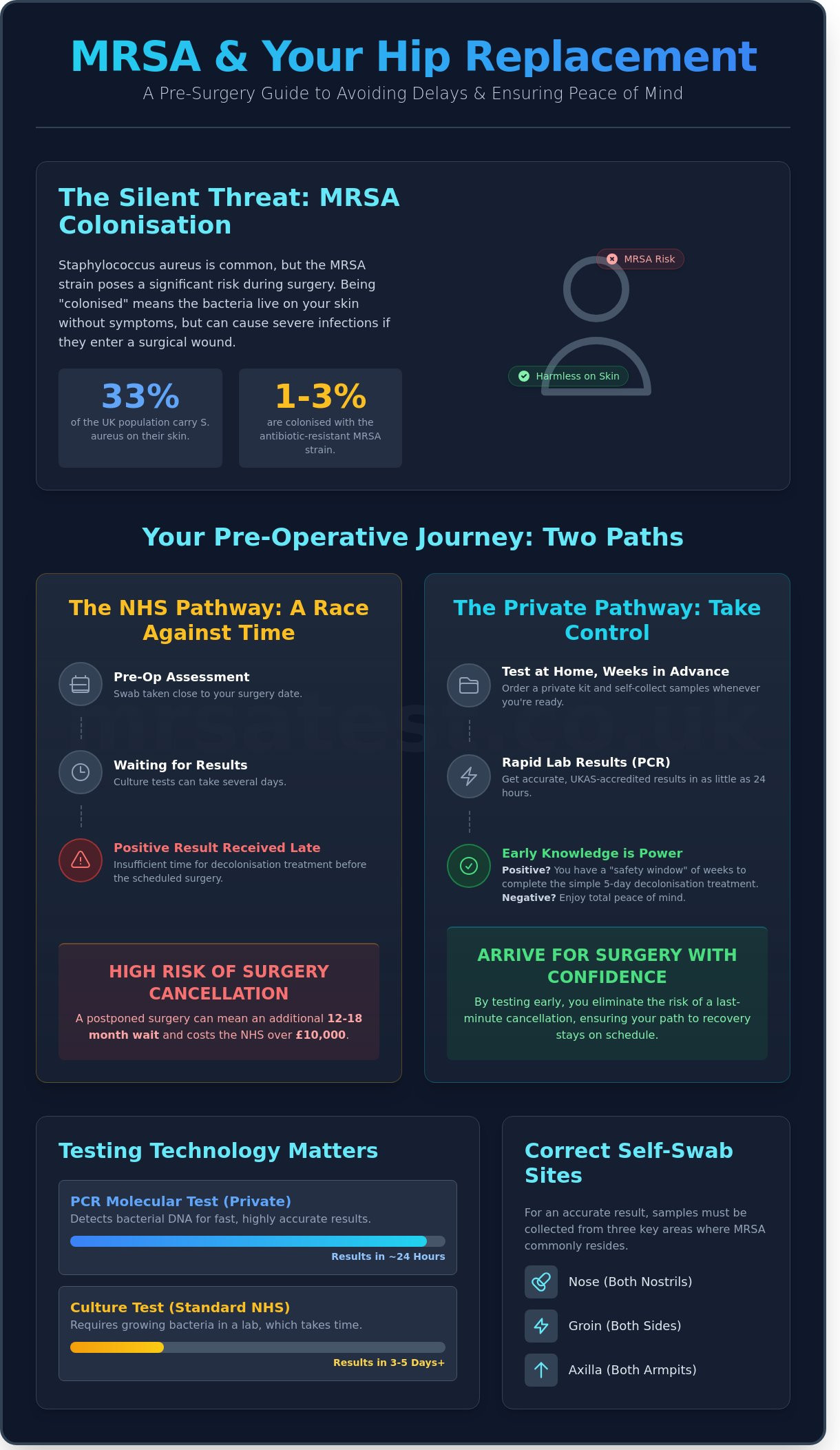
How to Organise Your Pre-Operative MRSA Swab
Organising your pre-operative screening shouldn’t be a source of stress. When you choose a private kit for your mrsa test for hip replacement surgery, it’s vital to ensure it covers the three primary areas where these bacteria typically reside. These locations include the anterior nares (nostrils), the groin, and the axilla (armpits). Surgeons require this comprehensive profile because MRSA often colonises warm, moist areas of the body without causing any visible symptoms. By testing all three sites, you provide the most accurate representation of your status to your clinical team.
The validity of your results depends heavily on the laboratory processing your samples. You should only use UK-based facilities that are UKAS-accredited to ISO 15189 standards. This accreditation guarantees that the results are clinically robust and will be accepted by both NHS and private orthopaedic surgeons. When your report arrives, it’ll indicate either a “Negative” or “Positive” status. A negative result confirms that MRSA wasn’t detected at the time of swabbing, allowing your surgery to proceed. A positive result simply means the bacteria are present on your skin. This isn’t an infection, but it does require a standard decolonisation routine to ensure your safety during the procedure.
A Step-by-Step Swabbing Guide
Collecting your samples correctly is the best way to ensure an accurate mrsa test for hip replacement surgery. Follow these clinical steps to provide the lab with a high-quality sample:
- The Nostrils: Insert the swab approximately 1cm into the anterior nares. Rotate it firmly against the inside wall of each nostril for 5 seconds. This ensures you capture enough skin cells and moisture for a valid culture.
- Groin and Axilla: Use a separate swab for these areas if instructed by your kit. Rub the swab firmly across the skin surface. Skin contact is essential; a light touch may not pick up enough bacterial material.
- Avoid Contamination: Don’t let the swab tip touch any other surfaces, such as your clothing or the outside of the collection tube.
One common mistake that leads to “invalid” results is failing to secure the cap tightly on the transport tube. If the transport medium dries out during transit to the lab, the bacteria cannot be cultured. This often leads to a last-minute delay in your surgical schedule, which can be avoided by double-checking the seal before posting your kit.
Timing Your Test for Maximum Effect
Timing is a critical factor in your surgical preparation. The optimal window to perform your screening is between 14 and 28 days before your scheduled admission. This 2 to 4-week cushion is essential because it allows enough time for a decolonisation treatment if your result comes back positive. Waiting until the week of your surgery is risky, as a positive result at that stage would likely lead to an immediate cancellation of your hip replacement.
If you test positive, your surgeon will prescribe a 5-day decolonisation programme. This usually involves applying 2% Mupirocin nasal ointment three times a day and washing your body and hair with 4% Chlorhexidine solution once daily. Once you finish this 5-day cycle, you’ll need to wait 48 hours before performing a follow-up test. This gap ensures the antiseptic has cleared and won’t interfere with the new sample. Data from UK surgical units shows that 95% of patients successfully clear colonisation after a single 5-day treatment cycle, allowing them to proceed to surgery with a significantly lower risk of post-operative infection.
Take control of your surgical preparation by choosing a kit that provides clinical accuracy and peace of mind. Order your pre-operative MRSA home test kit today for fast results from an accredited UK laboratory.
Fast-Tracking Your Surgery Prep with mrsatest.co.uk
Preparing for major orthopaedic surgery is often a stressful period filled with logistical hurdles. You’ve likely spent months waiting for your date, and the last thing you want is a late-stage cancellation due to a positive MRSA result on your pre-assessment day. That’s why mrsatest.co.uk provides a professional, clinical-grade solution designed to fit into your busy schedule. We prioritise speed and accuracy, ensuring you have the data you need to proceed with confidence. Our service is built on UK expertise, providing a reliable alternative for those who need results faster than standard hospital pathways might allow.
Our service focuses on efficiency without compromising on medical standards. For patients on a tight surgical timeline, our PCR rapid test is the preferred choice. While traditional culture tests can take up to five days to provide a definitive answer, our molecular detection technology identifies MRSA DNA in as little as 24 hours after the sample reaches our facility. This rapid turnaround is vital when your surgery is just days away. Using a mrsa test for hip replacement surgery through a private, UK-based provider allows you to take control of your health timeline rather than waiting for NHS administrative queues. It’s a simple way to ensure your path to the operating theatre remains clear.
- Next-Day Delivery: Kits ordered before 3 PM on weekdays are dispatched immediately via tracked mail to your home.
- High Accuracy: Our PCR tests offer 99% sensitivity, identifying even low levels of colonisation that other tests might miss.
- UK Expertise: Every sample is processed in a 100% UK-based, UKAS-accredited laboratory right here in Britain.
Clinical Excellence and Professional Support
We’ve built our service on a foundation of clinical excellence. By partnering with leading UK pathology laboratories, we ensure that your mrsa test for hip replacement surgery meets the same rigorous standards as those used by the NHS. Your data security is paramount; we use encrypted portals to deliver your results, ensuring 100% confidentiality at every stage. If your result is positive, we don’t just leave you with a digital report. Our support team provides clear, calm guidance on what your results mean and how to discuss decolonisation protocols with your GP or surgical team.
Ready for Surgery: Your Peace of Mind Starts Here
The emotional weight of an upcoming surgery is significant. Knowing you’re clear of MRSA before you even step foot in the hospital for your pre-op assessment removes a massive layer of anxiety. Statistics from Public Health England indicate that roughly 1 in 30 people carry MRSA without knowing it. By identifying colonisation early, you significantly reduce the risk of hospital-acquired infections, which can lead to surgical site complications or even prosthetic joint failure. Taking this proactive step means you’re an active participant in your own recovery. Don’t leave your surgery date to chance. Order your pre-surgery MRSA PCR test kit now and ensure you’re ready for your new start.
Prepare for a Successful Hip Recovery
Securing your surgical date depends on meeting strict clinical safety protocols. An mrsa test for hip replacement surgery isn’t just a formality; it’s a vital safeguard against post-operative complications that affect approximately 1 in 100 orthopaedic patients. By identifying Staphylococcus aureus colonisation before you enter the operating theatre, you significantly reduce the risk of deep-seated prosthetic infections. While traditional screening routes can take days or even weeks to process, modern molecular detection offers a faster path to clinical clearance.
You don’t need to let administrative delays or slow laboratory turnaround times postpone your journey to better mobility. Our service provides a professional solution with discreet, plain-packaged home delivery and testing conducted in a UKAS-accredited UK laboratory. You’ll receive your results within 24 hours of our lab receiving your sample, ensuring your pre-operative assessment stays on track. Take the proactive step today to ensure your hospital admission goes exactly as planned.
Secure your surgery date with a Rapid MRSA PCR Test Kit
We’re here to help you move toward your new hip with total peace of mind and clinical confidence.
Frequently Asked Questions
How long before my hip replacement surgery should I have an MRSA test?
You should arrange your mrsa test for hip replacement surgery approximately 2 to 4 weeks before your scheduled operation date. This timeframe is vital because it allows 5 days for decolonisation treatment and additional time for a follow-up screen if your first result is positive. Most UK hospitals require a clear result that’s no older than 30 days at the time of your admission.
What happens if I test positive for MRSA before my surgery?
If you test positive, your surgical team will prescribe a simple decolonisation treatment to clear the bacteria from your skin and nose. Your surgery might be postponed for a short period, usually 7 to 14 days, to ensure the treatment is successful. This proactive step is essential as it reduces the risk of developing a deep joint infection by approximately 60%.
Is the at-home MRSA test accepted by NHS and private hospitals?
Yes, NHS and private hospitals accept results from at-home kits as long as they’re processed by a UKAS-accredited laboratory. We provide a formal clinical report from our trusted UK partner laboratory which you can present at your pre-operative assessment. It’s a convenient way to complete your screening from the comfort of your own home while meeting all necessary medical standards.
Can I still have my hip replacement if I have MRSA?
You can definitely proceed with your hip replacement once you’ve completed a successful decolonisation course. A positive result doesn’t mean your surgery is cancelled forever; it’s simply a safety delay to protect your health. Once you’ve finished the 5-day treatment and returned a negative result, your surgeon will move forward with the procedure as planned.
What areas of the body are swabbed for an MRSA pre-op test?
The screening process involves taking swabs from the inside of both nostrils, the throat, and the groin area. These specific sites are where the bacteria are most likely to colonise on the skin’s surface without causing symptoms. If you have any active skin conditions or open wounds, the clinical professional or kit instructions may advise swabbing those areas too.
How much does a private MRSA test for surgery cost in the UK?
A private MRSA test in the UK typically costs between £60 and £130 depending on the speed of the technology used. A standard culture test is usually priced around £65, while an MRSA PCR rapid test for molecular detection in 24 hours costs closer to £125. These prices generally include the sterile swabs, laboratory analysis, and your official results certificate.
How long does it take to get MRSA test results back?
You’ll receive your results within 24 to 72 hours of the laboratory receiving your samples. If you choose a PCR rapid test, the molecular detection process provides a result in just 24 hours. A standard culture test takes roughly 3 days because the lab staff must wait for any bacteria present to grow in a controlled environment for accurate identification.
What is the decolonisation treatment if my test is positive?
The standard decolonisation treatment is a 5-day regime using a prescribed antibiotic nasal cream and an antiseptic body wash. You’ll apply Mupirocin 2% ointment to the inside of your nostrils three times a day. You’ll also wash your body and hair daily with a 4% Chlorhexidine solution before your mrsa test for hip replacement surgery is repeated to confirm the bacteria has cleared.
