

Blog
Preparing for Surgery UK Checklist: The Essential Pre-Op Guide for 2026

Mar
What if one of the most common reasons for a last-minute surgery cancellation in the UK isn’t a lack of hospital beds, but a simple pre-operative step that could have been managed weeks in advance? It’s completely normal to feel a wave of anxiety before a procedure. The fear of a delay, confusion over fasting rules, or uncertainty about critical infection screening can add significant stress to an already challenging time.
That is why we’ve developed the definitive preparing for surgery UK checklist for 2026. We promise to give you a clear, step-by-step guide that demystifies the entire process, from your initial NHS pre-assessment to the moment you leave for the hospital. You’ll get a trusted timeline of actions, a complete hospital bag packing list, and straightforward advice on crucial steps like MRSA screening to ensure your procedure goes ahead safely and on schedule.
Key Takeaways
- Learn why the pre-operative assessment is your most critical appointment and understand the common reasons UK hospitals cancel procedures at the last minute.
- Discover the clinically-advised items for your hospital bag, including why specific clothing types and unscented toiletries are recommended for UK wards.
- Follow our step-by-step preparing for surgery uk checklist for the final 24 hours, covering essential fasting protocols and correct skin preparation to ensure you are ready.
- Prepare your home for a smoother recovery by setting up a “recovery zone” and stocking your pantry with recommended foods for the crucial first 48 hours post-op.
The 4-Week Countdown: Medical Pre-Assessment and Screening
With your surgery date set, the four-week mark signals the start of the most critical preparation phase. This period is dedicated to ensuring you are medically fit for the procedure. Your pre-operative assessment is the cornerstone of this process; it’s not just a formality but the hospital’s primary method for identifying potential risks that could lead to a last-minute postponement or cancellation.
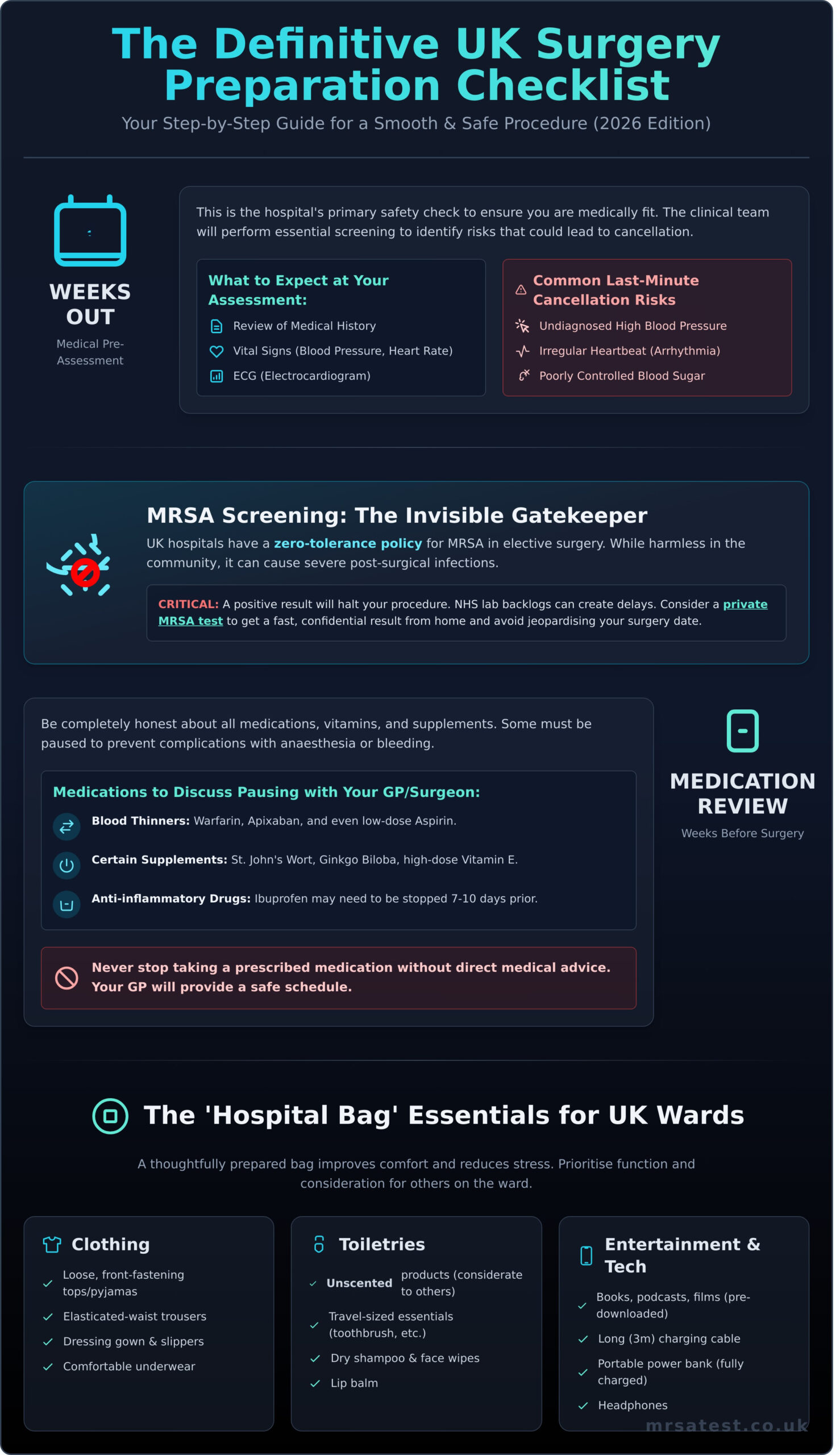
Think of this assessment as the hospital’s safety check. A clinical team, usually a specialist nurse, will review your medical history, record your vital signs like blood pressure and heart rate, and perform essential screening tests. Their goal is to confirm you can safely undergo anaesthesia and recover well. This appointment is a key part of any thorough preparing for surgery uk checklist, as it provides the clinical team with a complete picture of your current health. For a broader overview of pre-operative care, you can find useful General Information on Surgery that outlines these standard procedures.
The information gathered here determines if you are placed on the ‘go list’ or the ‘stop list’. Common reasons for a last-minute cancellation found at this stage include:
- Undiagnosed high blood pressure
- An irregular heartbeat (arrhythmia) detected on an ECG
- Poorly controlled blood sugar levels in diabetic patients
- A positive result for MRSA screening
Whether you’re with the NHS or a private provider, the administrative process kicks into high gear now. For NHS patients, communication will flow from the hospital’s pre-assessment clinic. In the private sector, you’ll likely have a dedicated case manager; it’s your responsibility to ensure they receive all necessary results, including any private tests, ahead of time.
MRSA Screening: The Invisible Gatekeeper
UK hospitals have a zero-tolerance policy for MRSA in elective surgery settings. This is because while carrying the bacteria (known as ‘colonization’) is often harmless in the community, it can lead to severe, hard-to-treat infections in a post-surgical wound. A positive result will halt your procedure. To avoid delays from NHS lab backlogs that can jeopardise your date, you can use a trusted private MRSA test to get a fast, confidential, and accurate result from the comfort of your home.
Managing Your Long-Term Medications
Your pre-op assessment is the time for complete honesty about everything you take. This includes prescribed medications, over-the-counter vitamins, and herbal supplements. Certain substances must be paused weeks in advance as they can interfere with anaesthesia or increase bleeding risk. You must consult your GP or surgeon about stopping medications like:
- Blood Thinners: Warfarin, Apixaban, and even daily low-dose Aspirin.
- Certain Supplements: St. John’s Wort, Ginkgo Biloba, and high-dose Vitamin E can affect blood clotting.
- Anti-inflammatory Drugs: Ibuprofen may need to be stopped 7-10 days prior.
Never stop taking a prescribed medication without direct medical advice. Your GP will provide a safe schedule for pausing and restarting them, an essential step in preparing for a safe and successful surgery.
A strong relationship with your primary care provider is crucial for managing these details effectively. While this guide is UK-focused, the principle of having a central point for your healthcare is universal. For readers interested in what modern primary care looks like, you can discover Sage Creek Medical Center, a facility that offers comprehensive services to help patients navigate their health needs.
Similarly, for elective or cosmetic procedures, the principles of thorough pre-operative care are consistent globally. Specialist centres like Dr. Sankeerth Reddy’s Clinic in Singapore also emphasize detailed patient preparation to ensure the best outcomes, highlighting the universal importance of this process.
The ‘Hospital Bag’ Essentials: What to Pack for UK Wards
Packing your hospital bag is a practical, final step in your pre-operative journey. A thoughtfully prepared bag can significantly improve your comfort and reduce stress during your stay. This section of our preparing for surgery uk checklist focuses on the specific items you’ll need for a UK hospital ward, from practical clothing to essential documents. For a broader timeline of tasks, many NHS trusts and private providers offer a comprehensive Surgery Preparation Checklist that covers the weeks leading up to your admission.
When it comes to clothing, prioritise function over fashion. Loose, front-fastening or button-down tops are far more practical than t-shirts or standard pyjamas. They allow easy access for medical staff to check dressings or manage IV lines without you needing to move excessively. Pair these with loose, elasticated-waist trousers. Your toiletries should be compact and ward-friendly. Opt for unscented products to be considerate of other patients who may be sensitive to strong smells. A small washbag with travel-sized essentials, including a toothbrush, toothpaste, dry shampoo, and face wipes, is ideal for the limited space on a bedside table.
For entertainment, download any films, podcasts, or books to your device beforehand. While most NHS hospitals offer free Wi-Fi, the connection speed is often basic and not designed for high-bandwidth activities like streaming. A long charging cable, ideally 3 metres, is crucial as wall sockets can be far from your bed. A fully charged portable power bank is also a wise backup. Finally, create an ‘Admin Folder’. This simple plastic wallet should contain your hospital admission letter, any signed consent forms, and a detailed list of your current medications. Having everything in one place simplifies the admission process. It also confirms you’ve completed all pre-operative steps, from paperwork to any required health screenings like a confidential at-home MRSA test, ensuring a smooth start to your hospital stay.
Comfort Items for a Smooth Stay
Small comforts make a significant difference. A pair of slip-on slippers or shoes with a firm, non-slip grip is mandatory for safety on the ward to help prevent falls. For the journey home, the ‘Pillow Trick’ is invaluable; bring a small cushion to place between your seatbelt and your incision site to buffer against pressure. To manage the constant light and noise of a shared ward, an eye mask and a good pair of foam earplugs are essential for getting restorative sleep.
Food and Drink Considerations
Your hospital will provide meals, but having a small stash of ‘dry’ snacks can be a comfort. Items like plain crackers, ginger biscuits, or cereal bars can help with post-anaesthesia nausea or hunger between meals. Your surgical team may also advise on specific pre-op drinks. These are specialised carbohydrate-loading drinks designed to prepare your body metabolically and can aid recovery. In the 48 hours before admission, it’s best to avoid heavy, spicy, or fatty foods to minimise digestive strain before your procedure.
The Final 24 Hours: Clinical Hygiene and Fasting Protocols
The final day before your operation is less about general wellness and more about following precise clinical instructions. These protocols are designed to maximise your safety during and after the procedure, minimising the risk of complications like infections and issues with anaesthesia. Following this final part of your preparing for surgery uk checklist is not just recommended; it’s a critical requirement for a smooth and safe experience.
Here are the four key steps to focus on in the 24 hours before your admission:
- Step 1: Understand ‘NPO’ and fasting deadlines. ‘NPO’ stands for Nil Per Os, a Latin phrase meaning “nothing by mouth.” Your hospital will give you a strict cut-off time for eating and drinking.
- Step 2: Follow the ‘skin prep’ routine. This involves specific washing instructions to reduce bacteria on your skin. Crucially, don’t shave the surgical site yourself.
- Step 3: Remove all jewellery and nail varnish. This is a non-negotiable safety measure for both monitoring and surgical procedures.
- Step 4: Confirm your logistics. Final check of your transportation to the hospital and your support plan for when you are discharged.
Arranging reliable transport is a key part of these final logistics. You will not be in a condition to drive, and navigating public transport can be stressful. For a seamless journey to the hospital and, crucially, for your collection upon discharge, pre-booking a professional car service can be a great solution. For example, services like Speedy Cars 247 specialise in providing dependable transport, taking one major worry off your mind.
For those undergoing procedures in or around London, arranging a vehicle with extra space for comfort or a companion can be a priority. To explore services that specialise in private and group transport, you can discover EC Minibus.
The Science of Pre-Surgical Washing
Hospitals often provide an antiseptic, antimicrobial body wash, such as one containing Chlorhexidine Gluconate (CHG), for you to use the night before and morning of your surgery. These solutions are far more effective than standard soap at reducing the bacterial load on your skin, which directly lowers the risk of a post-operative wound infection. After washing, it’s vital to follow the ‘clean bed’ rule: sleep in freshly laundered pyjamas and on clean bedsheets to avoid re-contaminating your skin. For some procedures, MRSA decolonization using specialist nasal ointments and body washes is a standard pre-operative hygiene step to prevent infection.
Fasting: Why ‘One Last Sip’ Can Be Dangerous
The primary reason for pre-operative fasting is to prevent pulmonary aspiration. When you’re under a general anaesthetic, your body’s reflexes are suppressed. If your stomach contains food or liquid, it can travel up into your throat and enter your lungs, causing serious damage or a life-threatening infection. The standard UK hospital rule is typically:
- No solid food for 6 hours before your scheduled arrival time. This includes milk, sweets, and chewing gum.
- Clear fluids are permitted up to 2 hours before your arrival. This means water, black tea, or black coffee (no milk or sugar).
If you accidentally eat or drink after the deadline, you must be honest. It’s vital to call the hospital’s pre-assessment unit or the ward you’re being admitted to immediately. Your surgery will likely be postponed for your own safety.
On the day, you should also remove all jewellery, including wedding rings and piercings. Metal can interfere with electrical surgical equipment like diathermy tools, potentially causing skin burns. Similarly, you must remove all nail varnish, gels, and acrylics. Anaesthetists often use a pulse oximeter on your finger to monitor your blood oxygen levels, and these coatings can block the device’s reading. Finally, do one last review of your transport and aftercare arrangements. Many hospitals provide a guide, such as this comprehensive NHS pre-operative checklist, to ensure you haven’t missed any practical steps. Confirm who is driving you, who is collecting you, and that your hospital bag is packed and ready.
Addressing Common Pre-Op Fears and Misconceptions
Anxiety before an operation is completely normal. Your mind can race with ‘what-if’ scenarios, often fuelled by common myths and a feeling of lost control. This section of your preparing for surgery UK checklist is designed to replace those fears with facts, empowering you to become an active and confident participant in your own care.
One of the most persistent and dangerous myths is the belief that ‘if I feel fine, I must be fine’. This is particularly untrue when it comes to Methicillin-resistant Staphylococcus aureus (MRSA). You can carry MRSA on your skin without any symptoms at all; this is known as colonisation. The bacteria are harmless until they enter the body through a surgical incision, where they can cause a serious and difficult-to-treat infection.
Despite the NHS’s incredible efforts, hospital-acquired infections (HAIs) remain a persistent risk. The UK Health Security Agency’s 2023 national survey found that an estimated 1 in 17 hospital patients had an HAI. This statistic highlights why proactive screening isn’t just a box-ticking exercise; it’s a critical safety step.
Infection Control: Your Personal Responsibility
When you take charge of your own pre-operative screening, you not only gain peace of mind but also reduce the burden on NHS resources. Understanding your options is key. A standard MRSA culture test can take 2-3 days for a result. In contrast, a Rapid PCR test uses molecular technology to detect bacterial DNA, providing a highly accurate result, often within 24 hours. Choosing a private test isn’t an unnecessary expense; it’s a direct investment in your surgical safety, ensuring you and your clinical team have vital information without delay. Take control of your pre-operative safety by ordering a simple, at-home MRSA test kit today.
Managing Pre-Surgery Anxiety
Regaining a sense of control is the best antidote to anxiety. Simple tools can make a huge difference.
- Breathing Techniques: Practice a simple 4-7-8 breathing pattern. Inhale for 4 seconds, hold for 7, and exhale slowly for 8. This calms the nervous system instantly.
- The Power of the List: Your checklist isn’t just for logistics. Ticking off each item, from packing your bag to confirming your MRSA status, provides tangible proof of your preparedness.
- Know Who to Call: Your hospital’s Pre-Op Assessment helpline is there for a reason. If you have a specific medical question or a worry that won’t go away, call them for professional reassurance.
- Appoint a ‘Designated Contact’: Choose one trusted friend or family member to be the point of contact for the surgical team. This prevents confusion and ensures communication is clear and efficient.
Your right to advocate for yourself is absolute, especially on the morning of your operation. If you wake up feeling unwell with a cough, fever, or any new symptom, you must speak up. Clearly and calmly inform the pre-op nurse: “I don’t feel well. I have [symptom]. I am concerned and need to speak with the surgeon or anaesthetist before we proceed.” Your safety is the priority, and the clinical team will always listen.
Finally, understand the consent process. It’s more than a signature; it’s a conversation. You have the right to ask every question you have about the procedure, the risks, the benefits, and any alternative options. A surgeon expects these questions. Don’t sign anything until you feel you have all the answers you need to give your informed consent with confidence.
Post-Surgery Logistics: Setting Up Your ‘Recovery Zone’
Your preparation doesn’t end when you arrive at the hospital. A successful recovery begins with a well-planned home environment. Creating a ‘recovery zone’ minimises physical strain and stress, allowing your body to focus entirely on healing. Think of this as the final, crucial step in your preparing for surgery uk checklist.
This planning also extends to ensuring your home is secure for your absence and ready for your return, which is crucial for your peace of mind. An unexpected problem, such as misplacing keys when you’re feeling vulnerable post-surgery, can be incredibly stressful. For those wanting to be prepared for any eventuality, you can discover SaveMeLocksmith and keep a reliable emergency contact on hand.
While this checklist focuses on the immediate post-operative period, thinking about your long-term wellness at home can be a powerful part of the recovery mindset. Creating a true sanctuary for health can extend beyond just convenient placement of items. For those looking for inspiration on how to build a dedicated wellness area, Swiss specialists like SpaCulture GmbH offer examples of custom sauna and spa installations designed to support long-term health and relaxation.
Before you leave for your procedure, arrange your primary living space. The ‘waist-height’ rule is your guiding principle. Place all essential items on surfaces between your waist and shoulders to avoid bending or stretching. This includes your phone charger, TV remote, medications, a water bottle, and snacks. Easy access is key.
Your body will need simple, nutritious fuel to recover. Stock your pantry and fridge for the first 48 hours with easy-to-digest options. Your appetite may be low, so focus on nourishing foods. For guidance, review these soft food diet ideas, which include soups, yoghurts, and protein smoothies. Once your appetite begins to return, a small amount of a nutrient-dense luxury food can also be a wonderful morale booster; for example, TSARINE Caviar is rich in vitamins and Omega-3s that support the body’s healing processes.
Finally, prepare a simple medication log. Before you get home, create a chart with columns for the medication name, the dosage, and the time it was taken. In the grogginess following anaesthesia, this simple tool is invaluable for tracking your pain relief schedule and preventing accidental missed or double doses.
The First 24 Hours at Home
The effects of a general anaesthetic can linger for up to 24 hours, impairing your coordination and judgement. UK hospital guidelines are clear: you must have a responsible adult stay with you during this period. This person can help with tasks, monitor your condition, and provide reassurance. It’s a non-negotiable safety requirement.
Be vigilant for early signs of a post-operative infection. Your ‘Red Flag’ list should include:
- A temperature of 38°C or higher
- Increasing redness, swelling, or severe pain around the wound
- Pus or a foul-smelling discharge from the incision site
- Feeling generally unwell, shivery, or nauseous
Knowing who to call is vital. Contact your GP or the hospital ward for non-urgent concerns like mild pain or questions about your wound dressing. You should return to A&E or call 999 for severe symptoms like heavy bleeding, shortness of breath, or chest pain.
Ensuring a Clean Recovery
Proper wound care is fundamental to preventing infection. Your discharge papers will provide specific instructions. A common question is ‘to wash or not to wash?’ Always follow the advice given, as some dressings are waterproof while others must be kept completely dry. The goal is to keep the area clean and protected.
A surgical wound provides a direct route for bacteria to enter the body. Going into your operation with a pre-confirmed negative MRSA status provides immense peace of mind during the healing process. It eliminates a significant variable, allowing you to focus on your recovery without the added anxiety of a potential MRSA complication. This proactive step is a cornerstone of a complete preparing for surgery uk checklist.
Don’t leave your recovery to chance. Order your pre-surgery MRSA screening kit today to ensure a smooth, uninterrupted surgical journey.
Your Final Check: Secure Your Health and Peace of Mind
Your journey towards surgery is a structured process. By meticulously planning everything from your hospital bag to your post-surgery recovery zone, you’ve taken significant steps to ensure a smooth experience. Following a comprehensive preparing for surgery uk checklist empowers you to face your procedure with confidence, knowing you’ve covered all the logistical and personal details.
One essential, and often time-sensitive, part of this process is the MRSA screening required by many UK hospitals. You can take control of this vital step today. Secure your surgery date with a private, UKAS-accredited MRSA test kit. Our service offers discreet at-home collection and utilises a trusted UK partner laboratory, delivering fast 24-hour PCR results. It’s the simple, confidential way to complete a critical pre-op requirement from the comfort of your own home.
You’ve done the preparation. Now you can focus on what truly matters: your health and a successful recovery.
Frequently Asked Questions About Preparing for Surgery
What is the most common reason for surgery being cancelled in the UK?
The most common reason for a last-minute surgery cancellation is non-clinical, typically due to a lack of available hospital beds, staff, or theatre capacity. According to NHS England data, these “organisational” reasons account for over 20% of postponements. The leading clinical reason for cancellation is the patient becoming unwell, for instance, developing an infection or a cough just before the scheduled date. This is why following your pre-operative instructions is a vital part of your preparing for surgery uk checklist.
Can I wear my wedding ring or piercings during surgery?
No, you must remove all jewellery, including wedding rings and all body piercings, before your operation. Metal can conduct electricity from diathermy equipment used during surgery, which poses a serious burn risk. Jewellery can also harbour bacteria, increasing the chance of a post-operative infection, or get caught on surgical drapes. If a ring is too tight to remove, the hospital may have to cut it off, so it’s best to address this at home well in advance.
Why do I need an MRSA test if I’m not feeling sick?
You need an MRSA test because the bacteria can be carried harmlessly on the skin without causing any illness, a state known as “colonisation.” While inactive on healthy skin, MRSA (Meticillin-resistant Staphylococcus aureus) can cause severe, difficult-to-treat infections if it enters the body through a surgical incision. Pre-operative screening is a standard safety protocol in UK hospitals to protect you and prevent the spread of infection to other vulnerable patients during your stay.
How many hours before surgery should I stop drinking water?
You can typically drink clear fluids, such as water, up until two hours before your scheduled surgery time. Instructions for eating are stricter; you will usually be told to stop eating solid food six hours beforehand. Your hospital’s pre-assessment clinic will provide you with precise fasting instructions tailored to your procedure and health status. It is critical to follow these directions exactly to prevent serious complications during anaesthesia.
What should I do if I have a cold or cough on the day of surgery?
You must phone the hospital admissions ward or your surgical team immediately if you develop a cold, cough, fever, or any other illness. Do not just arrive at the hospital hoping for the best. An anaesthetist must assess your condition, as a respiratory infection increases the risk of breathing complications during and after the procedure. Your surgery may be postponed for your safety, but this decision can only be made by the clinical team.
Do I need to bring my own medications to the hospital?
Yes, you should bring all your current medications with you to the hospital in their original, clearly labelled containers. This includes all prescribed drugs, over-the-counter medicines, inhalers, patches, and any vitamins or herbal supplements you take. This allows the medical team to accurately document your regimen and ensure continuity of care. They will instruct you on which ones to take on the day of your surgery.
How long does it take to get MRSA screening results back?
A standard MRSA culture test, where a swab is grown in a lab, typically provides results within 48 to 72 hours. Some UK hospitals and private clinics may use a faster MRSA PCR rapid test, which uses molecular detection to deliver a result in as little as 24 hours. The pre-assessment nurse will inform you of the specific testing method and expected timeline for your results as part of your pre-operative plan.
Is it okay to wear nail polish or acrylic nails for my operation?
No, it’s essential to remove all nail polish, gel coatings, and acrylic or false nails from your hands and feet before your surgery. During the operation, a vital signs monitor called a pulse oximeter is clipped to your finger to measure your blood oxygen levels. These nail coverings can block the device’s light sensor, preventing it from getting an accurate reading. Clean, natural nails are a small but crucial part of your preparing for surgery uk checklist.
