
MRSA Test for Surgery Cost in the UK: Your 2026 Guide
With an upcoming surgery, you have enough to think about without adding confusion and unexpected expenses to your list. You’ve been told a pre-operative MRSA test is essential, but navigating the logistics and potential fees can feel like another source of stress. Understanding the mrsa test for surgery cost in the UK is the first step to taking control of the process. Whether you’re considering the NHS pathway or looking at private options for speed and convenience, the lack of clear information can be unsettling.
This 2026 guide is designed to provide the clarity you need. We will walk you through a complete breakdown of the costs, compare the benefits of NHS and private screening, and explain the testing process from start to finish. Our goal is to equip you with the knowledge to make a confident, informed decision, allowing you to focus on what truly matters: your successful surgery and recovery.
Key Takeaways
- Pre-surgery MRSA screening is a crucial safety measure to prevent serious post-operative infections, even if you currently feel perfectly healthy.
- Learn the key differences between your three main screening options in the UK: the standard NHS pathway, private clinics, and convenient at-home test kits.
- Understanding the mrsa test for surgery cost involves comparing the free NHS service against the speed and direct pricing of private and at-home options.
- At-home MRSA tests provide a simple, confidential, and fast way to get certified results from the comfort of your home, helping you meet tight surgical deadlines.
Why is an MRSA Test Required Before Surgery?
Hospitals and surgical centres require an MRSA test before surgery as a critical safety measure to protect you from post-operative complications. The primary goal is to prevent a serious condition known as a Surgical Site Infection (SSI). While patients often consider the mrsa test for surgery cost, this simple screening is essential for ensuring a safe and smooth recovery.
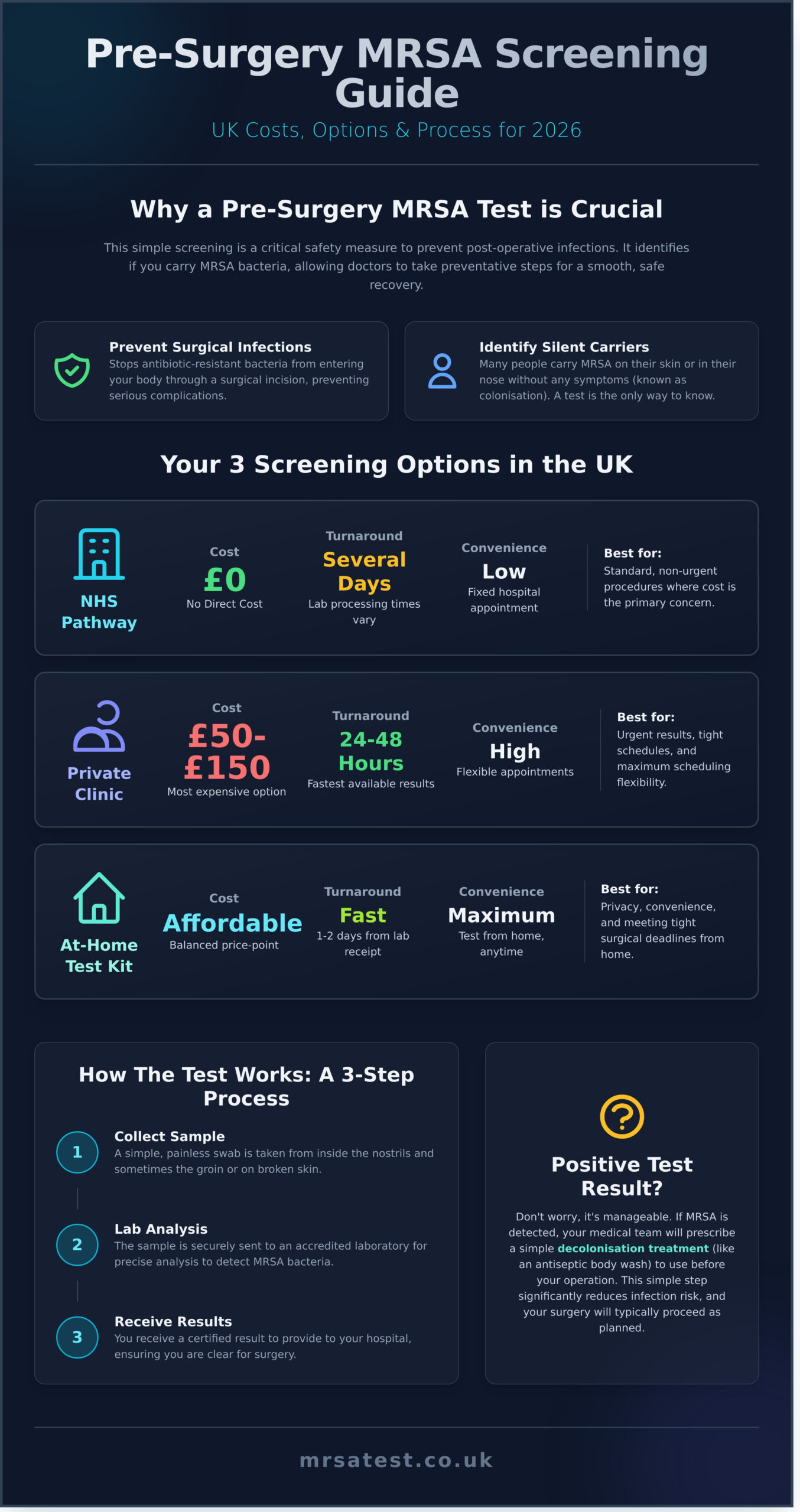
MRSA stands for Methicillin-resistant Staphylococcus aureus, a type of bacteria that has developed resistance to several common antibiotics. Many people carry this bacteria on their skin or in their nose without it causing any harm-a state known as colonisation. However, if these bacteria enter the body through a surgical incision, they can cause a severe infection that is difficult and costly to treat. Pre-operative screening identifies if you are a carrier, allowing your medical team to take simple, preventative steps to minimise this risk.
What is MRSA Colonisation?
MRSA colonisation means the bacteria is present on your body but is not causing an active infection or making you ill. It is a manageable condition and does not mean you are a risk to others in your daily life. The bacteria most commonly live in specific areas, including:
- The nostrils
- The groin or armpits
- On open wounds or broken skin
Being an MRSA carrier is more common than many people realise. Identifying it before a procedure allows for a simple decolonisation treatment, significantly reducing the risk of infection during your hospital stay.
The Link Between MRSA and Surgical Site Infections (SSIs)
An operation, by its nature, creates an incision that serves as a potential entry point for bacteria on the skin to get into deeper tissues or the bloodstream. If MRSA enters the body this way, the resulting infection can lead to serious complications, longer hospital stays, and the need for powerful, specialised antibiotics. Understanding this link helps put the mrsa test for surgery cost into perspective; it is a small, proactive investment in your health. Screening is a crucial step in preventing these complications and is a standard part of safe surgical care. You can learn more by reading our guide on Understanding MRSA Screening Before Surgery.
Your Pre-Surgery Screening Options: NHS vs. Private Clinics
When preparing for surgery in the UK, you have two primary pathways for your mandatory MRSA screening. Your choice between the National Health Service (NHS) and a private clinic will depend on your priorities regarding speed, convenience, and cost. Understanding how each option works is key to managing your pre-operative journey and anticipating any potential expenses.
Screening Through the NHS
For the vast majority of patients, MRSA screening is a standard and integrated part of their pre-operative assessment at the hospital. This appointment is typically scheduled a few weeks before your surgery date. During this assessment, a nurse will perform the test by taking simple swabs, usually from the inside of your nose and sometimes from your throat or groin.
This pathway is provided at no direct cost to you as part of your NHS care. The main drawbacks, however, can be a lack of flexibility with fixed appointment times and potentially longer laboratory processing periods, which may take several days. For a detailed overview of the bacteria, the official NHS information on MRSA provides a comprehensive and trustworthy resource.
Using a Private Hospital or Clinic
Alternatively, you can opt for screening at a private hospital or clinic. This route is often chosen by individuals seeking faster results or those who need to arrange the test around a tight personal or work schedule. The process is straightforward: you book an appointment directly with the provider, attend a brief consultation, and have your swabs taken.
The primary benefit here is speed. Private labs can often return results within 24 to 48 hours, which provides peace of mind and helps avoid any last-minute surgical delays. However, this convenience comes at a price. Choosing this route is the most expensive option and is the biggest variable affecting the final mrsa test for surgery cost. You can expect to pay between £50 and £150, depending on the clinic and the specific type of test performed.
Breaking Down the MRSA Test for Surgery Cost in 2026
When preparing for surgery, understanding the financial implications of pre-operative screening is crucial. The mrsa test for surgery cost in the UK is not a single figure; it varies significantly depending on the route you choose. Your decision will likely balance three key factors: the direct price, the speed at which you need results, and the level of convenience you require. Below, we provide a clear breakdown of the financial landscape for each option.
Cost Comparison: NHS vs. Private Clinic vs. At-Home Test
Your pathway to MRSA screening will determine the direct cost. The NHS provides this service as part of standard pre-operative care, but private options offer greater control and speed.
- NHS Screening: For most patients undergoing planned surgery, the NHS provides MRSA screening at no direct cost. This is typically done at a pre-assessment appointment. While financially advantageous, you have less control over the timing. The process is outlined in the official NHS guidance on MRSA screening, which explains why this step is a routine part of ensuring patient safety.
- Private Clinic Screening: Opting for a private clinic offers speed and a dedicated appointment. The cost typically ranges from £100 to over £250. This fee usually includes the sample collection by a healthcare professional and a consultation, providing fast results for those on a tight schedule.
- At-Home Test Kit: A home test kit provides an excellent balance of cost, convenience, and privacy. Priced between £35 and £70, these kits allow you to take a sample discreetly in the comfort of your own home and send it to an accredited lab for analysis, often with results available in just a few days.
| Screening Option | Typical Cost | Speed of Results | Convenience & Privacy |
|---|---|---|---|
| NHS Screening | £0 (Covered) | Variable (Set by hospital) | Low (Requires hospital visit) |
| Private Clinic | £100 – £250+ | Very Fast (Often 24-48 hours) | Moderate (Requires clinic visit) |
| At-Home Test Kit | £35 – £70 | Fast (Typically 2-3 days) | High (Done at home, confidential) |
Hidden Costs and Considerations
The full mrsa test for surgery cost extends beyond the price tag. When considering an in-person appointment with the NHS or a private clinic, you must factor in associated expenses such as fuel, parking, and public transport fares. Furthermore, these appointments may require you to take time off work, which could impact your income.
Minimizing travel stress is another key consideration, especially if you’re flying in for a procedure. For those traveling for medical care in other regions, like the US for instance, it’s wise to explore MSP Airport Transportation options well in advance to ensure a smooth journey from the airport to your clinic.
There is also an intangible value to consider: your peace of mind. The waiting period before surgery can be a source of anxiety. Opting for a fast, discreet testing method can provide reassurance quickly, allowing you to focus on preparing for your procedure with one less worry. This reduction in stress is a significant, though non-financial, benefit.
Managing this anxiety is a key part of preparing for a successful recovery. For those interested in natural approaches to maintaining emotional balance during stressful periods, resources like Mental Compass offer tinctures and essences designed to support mental well-being.
Thinking about these costs can be a reminder of the importance of long-term financial security. While your immediate focus is on health, planning for the future is also key. For those in Canada exploring property as a way to build wealth, investment firms like PRG MFT offer guidance on the private real estate market.
The At-Home MRSA Test: A Convenient & Affordable Alternative
Beyond traditional hospital and private clinic screenings, a third option has emerged that combines clinical accuracy with modern convenience: the at-home MRSA test kit. This approach allows you to complete your pre-operative screening discreetly and efficiently, often lowering the overall mrsa test for surgery cost while fitting seamlessly into your busy schedule.
Designed for simplicity and privacy, these kits empower you to take control of your pre-surgical preparations from the comfort of your own home, without compromising on the quality of the analysis.
How Does an At-Home Test Kit Work?
The process is designed to be simple, fast, and completely confidential. When you order a kit, it arrives in discreet packaging containing everything you need. The four-step process is straightforward:
- Order Online: Your kit is shipped directly to your address.
- Collect Your Sample: Follow the clear, step-by-step instructions to take a simple and non-invasive swab sample.
- Post Securely: Use the included prepaid, tracked postage label to send your sample to our partner laboratory.
- Receive Results: Your confidential results are delivered securely to your online portal as soon as they are ready.
Crucially, your sample is processed in the same type of fully accredited UK laboratory that hospitals and private clinics use, ensuring your results meet the necessary clinical standards.
Ensuring Accuracy: Lab Accreditation and Test Types
A primary concern for patients is whether an at-home test is reliable enough for surgical screening. The answer is yes, provided the test is processed by a certified laboratory. For ultimate peace of mind, ensure your test is handled by a UKAS-accredited facility. UKAS accreditation is the gold standard for quality and competence in UK medical testing.
These labs use clinically-validated methods, including the standard MRSA Culture Test and the faster MRSA PCR rapid test, both of which are trusted by the NHS. For a detailed breakdown, see our guide on MRSA Culture vs. PCR Tests.
By choosing a reputable service like mrsatest.co.uk, you are not only opting for convenience but also for certified accuracy. This makes at-home screening a highly effective and affordable component when considering the total mrsa test for surgery cost, allowing you to proceed towards your operation with confidence.
Making Your Choice: Is an At-Home Test Right for You?
Deciding on the right pre-surgery MRSA screening method involves balancing several key factors. Your final choice will depend on your specific needs regarding cost, speed, convenience, and crucially, the requirements set by your surgeon or hospital. While NHS or hospital-provided tests are a common route, a private at-home test offers a compelling and efficient alternative for many patients, especially when considering the overall timeline and convenience.
If your hospital mandates their own internal screening and your surgery is several weeks away, their provided test is the most direct path. However, if you need results quickly to meet a tight surgical deadline, or if you prioritise the comfort and discretion of testing at home, a private kit is often the superior choice. An at-home test can also be a more transparent option when evaluating the final mrsa test for surgery cost.
Crucially, before ordering any private test, you must confirm with your hospital or surgical team that they accept results from a private, UKAS-accredited laboratory. This simple check ensures your results will be valid for your procedure and prevents any last-minute delays.
Checklist for Choosing Your Screening Method
Ask yourself these four questions to determine the best option for your circumstances:
- Timeline: How much time do you have before your surgery date? Do you need results in 24 hours or can you wait a few days?
- Budget: What is your budget for the test? Are you looking for the most affordable option or is speed the priority?
- Requirements: Does your hospital have specific requirements for testing providers or the type of test (e.g., PCR vs. Culture)?
- Personal Preference: How important are privacy, comfort, and the convenience of testing at home to you?
Why Choose mrsatest.co.uk for Pre-Surgery Screening?
We provide a trusted, reliable, and straightforward solution for your pre-operative screening needs. When you choose mrsatest.co.uk, you are choosing peace of mind. You benefit from:
- Trusted Results: We use a fully UKAS-accredited UK partner laboratory, the same gold standard trusted by the NHS and private healthcare providers.
- Flexible Options: We offer both our affordable MRSA Culture test and a rapid PCR test for molecular detection, allowing you to choose the service that best suits your timeline.
- Complete Privacy: Your kit arrives in discreet, unbranded packaging, and your results are delivered securely and confidentially online.
Take control of your pre-surgery preparations with a simple, accurate test from the comfort of your own home. Order your confidential pre-surgery MRSA test kit today.
Secure Your Peace of Mind Before Your Procedure
Preparing for surgery involves many steps, and MRSA screening is one of the most important for your safety and successful recovery. As we’ve explored, you have several choices for your pre-operative screening, from traditional NHS and private clinic routes to the modern convenience of at-home testing. Understanding the factors that influence the mrsa test for surgery cost allows you to make an informed decision that prioritises both your health and your budget.
For a straightforward, reliable, and affordable solution, an at-home test kit provides the clinical accuracy you need without the hassle of an appointment. Our 100% UK-based service uses a UKAS-accredited partner laboratory to deliver fast, confidential results directly to you, from the comfort of your own home.
Don’t let uncertainty add to your pre-surgery stress. Choose your trusted, lab-certified MRSA test kit for peace of mind before your surgery. Taking this simple, proactive step today allows you to proceed with confidence, knowing you’ve done everything to ensure a safe procedure and a smooth recovery.
Frequently Asked Questions
How much does a private MRSA test cost in the UK?
The cost of a private MRSA test in the UK typically ranges from £40 to £90. The price can vary depending on the type of test-a standard culture test is often more affordable, while a rapid PCR test, which provides faster results, may be at the higher end of the scale. Our at-home test kits offer a clear, upfront cost, including laboratory analysis and all shipping, ensuring there are no hidden fees for your peace of mind.
Can I get an MRSA test for free on the NHS before my surgery?
Yes, the NHS routinely provides free MRSA screening for patients scheduled for certain types of surgery, especially planned inpatient procedures like joint replacements. This is part of standard pre-operative assessment. However, screening policies can vary between hospitals. A private test offers a convenient and rapid alternative if you require results quickly, are not automatically screened, or simply want the reassurance of a test from the comfort of your home.
How long do MRSA test results take to come back?
The time it takes to receive your results depends on the testing method. A standard MRSA culture test, where bacteria are grown in a lab, typically takes 2 to 4 working days. For faster results, a PCR (Polymerase Chain Reaction) test can detect MRSA’s genetic material much more quickly, often providing a definitive result within 24 to 48 hours of the sample arriving at our UK-based, accredited laboratory.
Do hospitals accept results from at-home MRSA test kits?
This depends entirely on the individual hospital or clinic’s pre-operative policy. While our tests are processed in the same UKAS-accredited laboratories used by the NHS, some surgical units may require the screening to be done through their own internal system. We strongly advise you to check with your surgeon or pre-assessment nurse beforehand to confirm if they will accept a result from a private, certified laboratory test kit.
What happens if my pre-surgery MRSA test is positive?
A positive result simply means MRSA bacteria have been found on your skin, not that you have an active infection. If your test is positive, your surgical team will be notified. The standard procedure is a simple decolonisation treatment, which usually involves using a special antiseptic body wash and nasal cream for several days before your operation. This straightforward protocol significantly reduces risk, and in most cases, your surgery can proceed as planned.
Is the MRSA swab test painful?
No, the MRSA screening test is not painful at all. The process involves gently wiping a soft-tipped swab, similar to a cotton bud, inside your nostrils. Depending on the test or hospital policy, additional swabs may be taken from the surface of the skin, such as the armpit or groin. The sensation is brief and non-invasive, causing no more than a slight tickle for a moment.
How accurate are at-home MRSA tests?
Our at-home MRSA tests are highly accurate because the samples are analysed in a fully UKAS-accredited laboratory, the same standard used by the NHS. The accuracy of the result is dependent on correct sample collection and professional laboratory processing. When considering the mrsa test for surgery cost, it’s vital to choose a service that guarantees analysis in a certified facility to ensure you receive a reliable and clinically valid result you can trust.
Can I buy an MRSA test kit over the counter at a chemist?
MRSA tests are not typically sold over the counter in a chemist like an instant-read test. This is because a valid result requires professional laboratory analysis. The kits you can purchase online, like ours, are for sample collection. You use the simple, sterile swabs provided at home and then send the sample to our accredited partner laboratory in the pre-paid packaging for accurate processing by trained technicians.