Is This Rash MRSA? A Guide to Identifying the Warning Signs
A small red bump or a patch of irritated skin can be easy to dismiss. But when it doesn’t heal, becomes increasingly painful, or starts to look different from a typical spot or insect bite, it’s natural to feel concerned. In the UK, awareness of antibiotic-resistant bacteria is growing, and one of the most common questions we encounter is about identifying potential mrsa rash symptoms.
This guide is designed to provide clear, factual information to help you reduce that uncertainty. We will walk you through the key visual signs of an MRSA skin infection, explain how it often differs from more common skin complaints, and provide a clear, straightforward action plan.
Our goal is to give you the knowledge you need to assess the situation calmly and understand precisely when it is time to seek professional medical advice or consider confidential testing from the comfort of your home.
Key Takeaways
- Learn why an MRSA lesion often begins as a single red bump, frequently mistaken for a simple spot or an insect bite.
- Identify the key mrsa rash symptoms to watch for, including a painful, warm, and pus-filled centre, which signal more than a common skin issue.
- Understand the critical warning signs, such as a rapidly spreading rash or fever, that mean you should seek professional medical advice without delay.
- Discover why a definitive diagnosis cannot be made by sight alone and how a simple lab test provides a conclusive answer.
What Does an MRSA Rash Typically Look Like? First Signs
A skin infection caused by Methicillin-resistant Staphylococcus aureus (MRSA) often begins deceptively, mimicking common and less serious skin complaints. Many people initially mistake an MRSA lesion for a simple pimple, an insect sting, or most frequently, a spider bite. However, the key difference lies in its rapid and painful development. While it can appear anywhere on the body, it is commonly found in areas with more hair, such as the armpits, groin, and buttocks, or areas subject to friction from clothing.
To minimize the risk of skin breakdown in these friction-prone zones, which can create an entry point for bacteria, you can explore Anti-Chafe Balm designed to protect the skin.
It is crucial to understand that visual identification alone is not a definitive diagnosis. These descriptions of common mrsa rash symptoms are for informational purposes, but only a clinical test can confirm the presence of MRSA bacteria. If you are concerned about a skin lesion, seeking professional medical advice or a reliable diagnostic test is the most responsible course of action.
The Initial Bump or Pimple
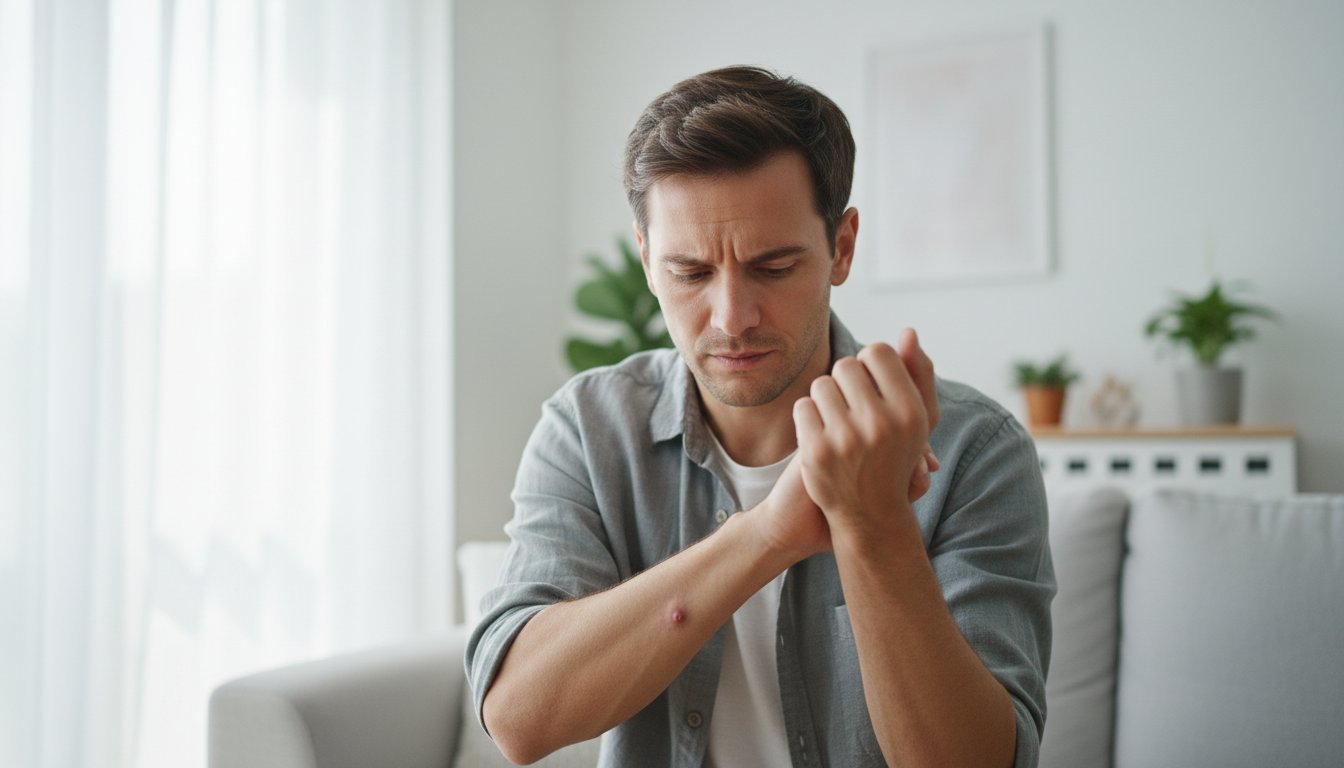
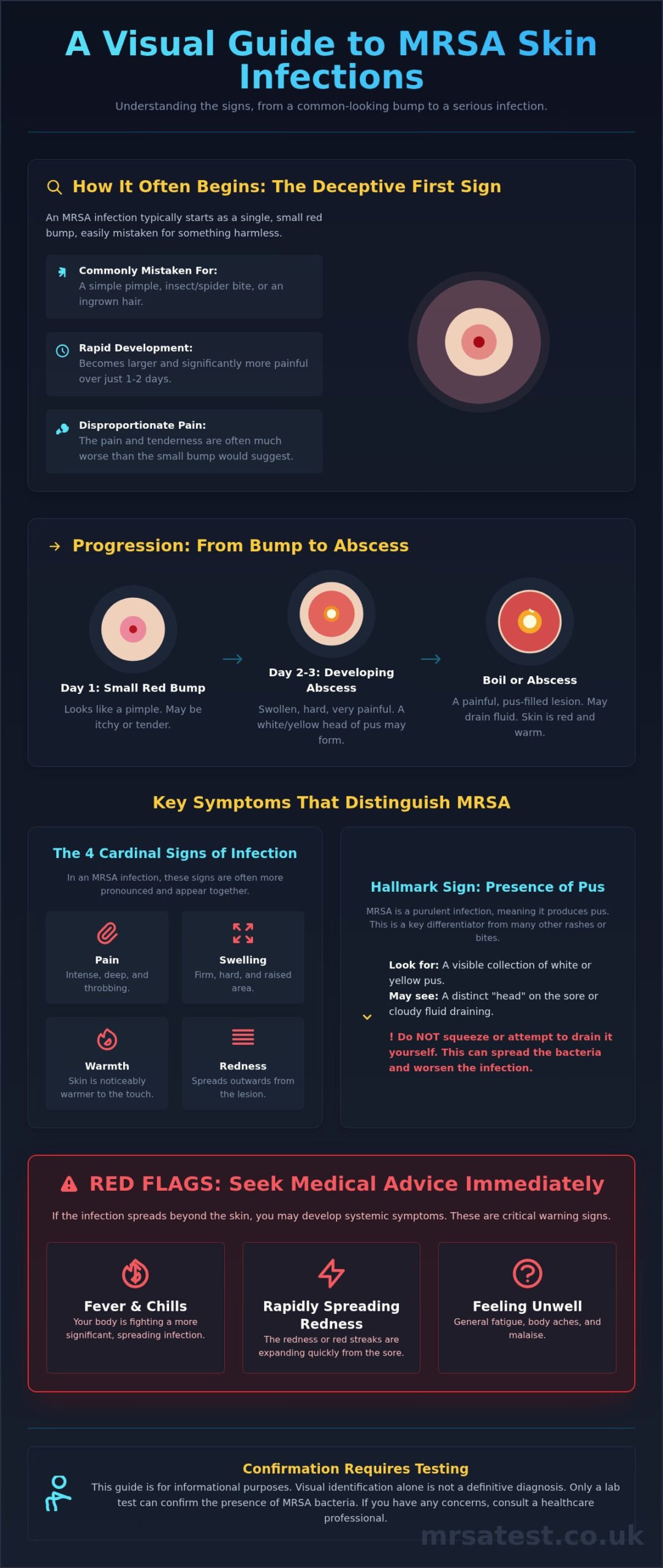
The first sign of an MRSA skin infection is typically a single, small red bump on the skin. At this early stage, it is very easy to dismiss as something minor. Key characteristics to watch for include:
- Appearance: It looks like a common spot, a small boil, or an ingrown hair.
- Sensation: The area may be itchy at first, but this quickly gives way to tenderness and significant pain that seems disproportionate to its small size.
- Development: Unlike a normal pimple, an MRSA bump develops quickly, often becoming larger and more painful over just one or two days.
Progression to an Abscess or Boil
If left untreated, the initial bump rapidly progresses into a more severe lesion. This bump will grow into a swollen, hard, and very painful lump under the skin. As it develops, a visible head or centre point, often yellow or white, may form. This indicates a collection of pus beneath the surface. The skin surrounding the lump will become increasingly red, warm to the touch, and tender. This painful, pus-filled lesion is clinically referred to as a skin abscess or boil, a hallmark of a staph infection like MRSA.
Key Symptoms That Distinguish MRSA from Other Rashes
Many skin irritations can look similar at first glance. However, the key to identifying a potential MRSA infection lies in observing a specific combination of signs developing over 24 to 48 hours. A single symptom, like a red bump, is rarely enough to cause concern. Instead, you should monitor the area closely for a developing pattern. Use the following points as a mental checklist to evaluate the key mrsa rash symptoms that distinguish this bacterial infection from a more common skin issue.
The Four Cardinal Signs: Pain, Swelling, Redness, and Warmth
While many skin problems cause these symptoms, with MRSA, they are often more pronounced and appear together. A typical minor irritation might be itchy but not intensely painful. A MRSA lesion is different:
- Pain: The discomfort is often more intense than you would expect for the size of the sore or boil. It may be described as a deep, throbbing pain.
- Swelling: The area around the initial bump becomes firm, raised, and may feel hard to the touch as it spreads.
- Redness: Known medically as erythema, the redness often spreads outwards from the centre of the lesion.
- Warmth: The affected skin will feel noticeably warmer than the surrounding, unaffected areas when you touch it gently with the back of your hand.
Presence of Pus and Drainage
A hallmark of a MRSA skin infection is that it is typically purulent, meaning it produces pus. Unlike an insect bite that might produce clear fluid, a MRSA lesion often develops a visible collection of white or yellow pus, forming an abscess or boil. You may see a distinct “head” on the sore or notice cloudy fluid draining from it. It is crucial to resist the urge to squeeze or drain the lesion yourself, as this can spread the bacteria and worsen the infection.
Systemic Symptoms: Fever and Chills
If the infection begins to spread beyond the skin, you may develop systemic symptoms. This is your body’s signal that it is fighting a more significant infection. The presence of a fever, accompanied by chills or feeling generally unwell and fatigued, is a critical warning sign. These systemic signs, which are detailed further by public health bodies regarding MRSA symptoms and complications, indicate that the infection may be becoming more serious. This is a clear signal to seek immediate medical attention from a GP or an urgent care centre.
Common Skin Issues Often Mistaken for MRSA
Many common skin complaints can mimic the initial appearance of an MRSA infection, leading to understandable concern. This section provides a clear comparison to help you distinguish between potential mrsa rash symptoms and other, more common issues. However, self-diagnosis is not a substitute for professional medical advice. If you are ever in doubt about a skin lesion, it is essential to consult your GP for an accurate diagnosis.
Spider Bites vs. MRSA
A sudden, red, and painful bump is often blamed on a spider, but true spider bites are less common in the UK than many believe. An MRSA lesion is an infection, not a reaction to venom, and the key differences lie in the details:
- Puncture Marks: A spider bite may have two tiny, visible puncture marks at its centre. An MRSA lesion will not have these marks.
- Development: MRSA typically develops a white or yellow, pus-filled head (an abscess). A bite usually remains a solid red lump that may have a central blister.
- Pain Progression: The pain and swelling from MRSA tend to worsen over 24-48 hours as the infection spreads. The initial sharp pain of a bite often subsides over time.
Standard Boils (Furuncles) vs. MRSA
This is the most challenging comparison because a standard boil and an MRSA abscess can look identical. Both are infections caused by Staphylococcus aureus bacteria that form a tender, pus-filled lump in a hair follicle. The critical distinction is the specific strain of bacteria and its resistance to antibiotics. While visually similar, understanding what an MRSA rash looks like can help identify aggressive signs that warrant immediate attention. Indicators that a boil may be caused by MRSA include rapid growth, extreme pain, the appearance of multiple boils, or failure to heal with standard care. Ultimately, only a laboratory culture test can definitively identify the antibiotic-resistant bacteria.
Cellulitis vs. MRSA
Cellulitis is a bacterial infection of the deeper layers of skin and the tissue beneath. While MRSA can cause cellulitis, the initial presentation is often different from a focused MRSA boil.
- Appearance: Classic cellulitis appears as a flat, swollen, and spreading area of red skin that feels hot and tender. It typically lacks a central ‘head’ or pimple. The skin’s surface may look pitted, similar to an orange peel.
- Origin: An MRSA infection often begins as a distinct abscess which, if left untreated, can spread and lead to secondary cellulitis. In contrast, cellulitis can also start without a preceding boil, often entering through a small break in the skin.
Both conditions are serious and require prompt medical evaluation and treatment to prevent the infection from spreading further.
When You Must See a Doctor: Red Flag Symptoms
While many skin irritations can be monitored at home, certain MRSA rash symptoms are clear indicators that you need professional medical intervention. Recognising these red flags is crucial for your safety and for preventing a localised skin issue from developing into a more serious, systemic infection. This guide helps you understand when to contact your GP and when to seek urgent care.
Signs the Infection is Spreading
If you notice any of the following symptoms, the infection may be moving beyond the skin into deeper tissues or your bloodstream. These are red flags that require immediate medical evaluation. Seek urgent care if you see:
- Red streaks: Thin red lines spreading outwards from the sore, often towards the centre of your body.
- Fever and chills: A body temperature over 38°C (100.4°F), accompanied by chills, aches, or feeling generally unwell.
- Rapid growth: The rash, redness, or swelling grows noticeably larger over just a few hours.
These signs can indicate a serious condition like cellulitis or sepsis and may require a visit to an NHS Urgent Treatment Centre or A&E.
When to Book a GP Appointment
Not all situations require emergency care, but a prompt consultation with your GP is crucial for proper diagnosis and treatment. Book an appointment if you experience the following:
- No improvement: The sore has not started to heal after two to three days of keeping it clean and covered.
- Location or severity: The lesion is extremely painful, larger than a 2p coin, or is located on your face or genitals.
- Underlying conditions: You have a weakened immune system (e.g., due to chemotherapy, diabetes, or HIV) or other chronic health issues.
- Recurring infections: You repeatedly develop boils, abscesses, or other skin infections that could be related to MRSA colonisation.
Your health is the top priority. While monitoring your MRSA rash symptoms is a vital first step, professional medical advice is irreplaceable. Never hesitate to seek help if you are concerned. For non-urgent screening to understand your carrier status, you can test for MRSA from the comfort of your own home, providing valuable information for you and your doctor.
Confirming a Diagnosis: The Role of MRSA Testing
While understanding the visual mrsa rash symptoms is a crucial first step, it is impossible to definitively diagnose MRSA based on appearance alone. Many common skin infections, such as cellulitis or boils caused by other bacteria, can look very similar. For an accurate diagnosis and the correct treatment plan, professional medical testing is essential. This step removes uncertainty and ensures you receive the appropriate care.
How Doctors Diagnose MRSA
If a doctor or nurse suspects an active MRSA infection, they will follow a standard, reliable procedure to confirm it. This typically involves collecting a sample directly from the affected area, such as a swab of pus or a small tissue sample from the wound. This sample is then sent to a laboratory for analysis using one of two primary methods:
- Culture Test: The sample is placed in a special medium to encourage any bacteria present to grow. If MRSA grows, technicians can positively identify it and also perform sensitivity testing to see which antibiotics will be most effective for treatment.
- PCR Test: A Polymerase Chain Reaction (PCR) test is a faster, molecular method that detects the specific genetic material of the MRSA bacteria. This can provide a quicker diagnosis, often within 24 hours.
At-Home Screening for Peace of Mind
Beyond diagnosing an active infection, testing is also used for screening to see if a person is carrying MRSA on their skin without any symptoms-a state known as colonisation. This is particularly important before a hospital stay, as many UK hospitals now require pre-operative MRSA screening to protect patient safety.
For these non-urgent situations, confidential at-home testing offers a simple and discreet way to check for MRSA colonisation from the comfort of your own home, without needing a GP appointment. This provides both convenience and the assurance needed to proceed with medical appointments. If you require pre-operative screening or simply want confidential confirmation, you can learn about reliable at-home MRSA test kits.
Your Next Step: Confirming MRSA with Confidence
Understanding the key differences between common skin issues and potential mrsa rash symptoms is the first critical step. While a rash that looks like a painful, swollen spider bite or boil is a significant warning sign, many conditions can appear similar. The most important takeaway is that visual identification alone is not enough for a definitive diagnosis, particularly if you experience systemic symptoms like a fever.
When you need a clear and accurate answer, professional testing provides the certainty that a visual check cannot. For peace of mind, you can test for MRSA from the comfort of your own home. Our service offers both rapid PCR and standard culture options, with all samples processed in a UKAS-accredited laboratory. With a fully discreet delivery and collection service, getting a reliable result is simple and confidential. Order your confidential MRSA test kit online today.
Taking proactive steps towards your health is always the right decision. Don’t let uncertainty linger-get the clarity you need to move forward.
Frequently Asked Questions About MRSA Rashes
Can an MRSA rash go away on its own without treatment?
It is highly unlikely and unsafe to assume an MRSA rash will resolve without medical intervention. While very minor skin infections might clear up, MRSA is resistant to many common antibiotics and can progress into a more serious, systemic infection if left untreated. Seeking a prompt diagnosis and the correct antibiotic treatment from a GP is crucial for a safe and effective recovery. Never ignore a suspected MRSA infection.
Is an MRSA skin infection always painful?
Yes, pain is one of the most common and defining MRSA rash symptoms. The infection typically presents as a swollen, red, and tender lump or boil on the skin that is often painful to the touch. The area may also feel warm. While the intensity can vary, the presence of pain, especially when combined with other signs like pus or fever, is a strong indicator that you should seek medical advice immediately.
How quickly do the symptoms of an MRSA rash appear after infection?
MRSA symptoms can appear quite rapidly. After the bacteria enters the body, typically through a cut, scrape, or other break in the skin, signs of an infection can develop within 24 to 72 hours. This can start as a small red bump resembling a spider bite or pimple and quickly progress into a painful, swollen abscess. The fast onset is a key reason why prompt medical attention is so important for a suspected MRSA infection.
What is the difference between being ‘colonised’ with MRSA and having an MRSA infection?
Being ‘colonised’ means the MRSA bacteria are present on your body, often in the nose or on the skin, but are not causing any illness. The person is a carrier but feels perfectly well. An MRSA infection, however, occurs when these bacteria breach the body’s defences, such as through a wound, and begin to multiply. This causes active signs of illness, such as a painful rash, abscess, or fever, and requires medical treatment.
How contagious is an MRSA rash, and can I pass it to my family?
An active MRSA skin infection is contagious through direct contact. The bacteria can be spread by touching the infected skin or by sharing personal items that have come into contact with the affected area, such as towels, razors, or bedding. To prevent passing it to family members, it is essential to keep the rash covered with a clean, dry bandage, wash your hands frequently with soap and water, and avoid sharing personal items until the infection has cleared.
Maintaining a consistent hygiene routine is fundamental for overall skin health and can help prevent the spread of various bacteria. This includes using personal, high-quality skin cleansers and care products. For those looking to build a robust skincare regimen, online stores such as Totaal Beauty offer a curated selection of premium options.
What should I do to care for the area while waiting for a doctor’s appointment or test results?
While waiting for medical assessment, proper care is vital to prevent the infection from worsening or spreading. Keep the affected area clean and completely covered with a sterile, dry bandage. Change the bandage as directed by your healthcare provider or if it becomes wet or soiled. It is critical that you do not attempt to squeeze or drain the lesion yourself, as this can push the infection deeper into the skin and spread bacteria. Always wash your hands thoroughly after touching the area.