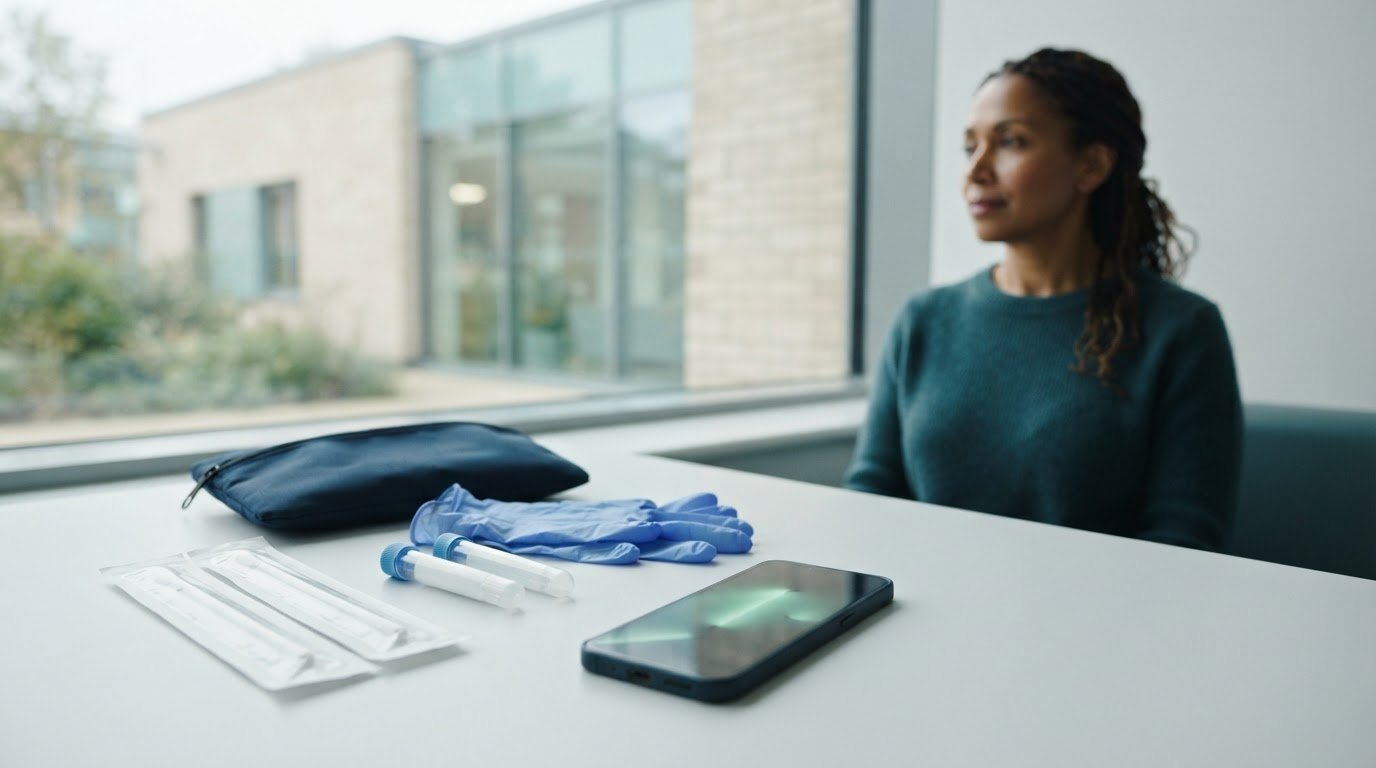

According to the UK Health Security Agency, roughly 1 in 33 people across the country carry MRSA on their skin without showing any symptoms. When surgery is around the corner, however, this harmless colonization can quickly become an urgent concern. Securing an accredited mrsa 3 site screen uk hospital teams require is often the deciding factor in whether your scheduled admission proceeds without delay.
Preparing for an operation is stressful enough without the added anxiety of slow clinic turnarounds, tight deadlines, or confusion about which anatomical sites require swabbing. You don’t need the extra worry of a cancelled surgical slot while waiting for standard paperwork to clear.
This guide explains exactly what an MRSA three-site screen entails, why pre-assessment nurses mandate it, and how to choose between rapid molecular PCR and standard culture testing from the comfort of home. Read on to discover how to collect your samples correctly and secure trusted laboratory documentation well before your admission date.
Key Takeaways
- Understand why surgical teams require swabbing across three specific anatomical zones: the anterior nares (nose), groin, and axilla (armpits).
- Meet pre-admission deadlines by selecting the right mrsa 3 site screen uk protocol, comparing 48 to 72-hour standard culture against rapid 24-hour PCR analysis.
- Follow clinical self-swabbing instructions to ensure valid sample collection and prevent inconclusive reports that could delay your procedure.
- Navigate pre-assessment validity windows with confidence using verified reports issued by accredited UK pathology laboratories.
- Avoid clinic scheduling delays with discreet at-home testing kits featuring prepaid postal delivery directly to the laboratory.
What Is an MRSA 3 Site Screen in the UK?
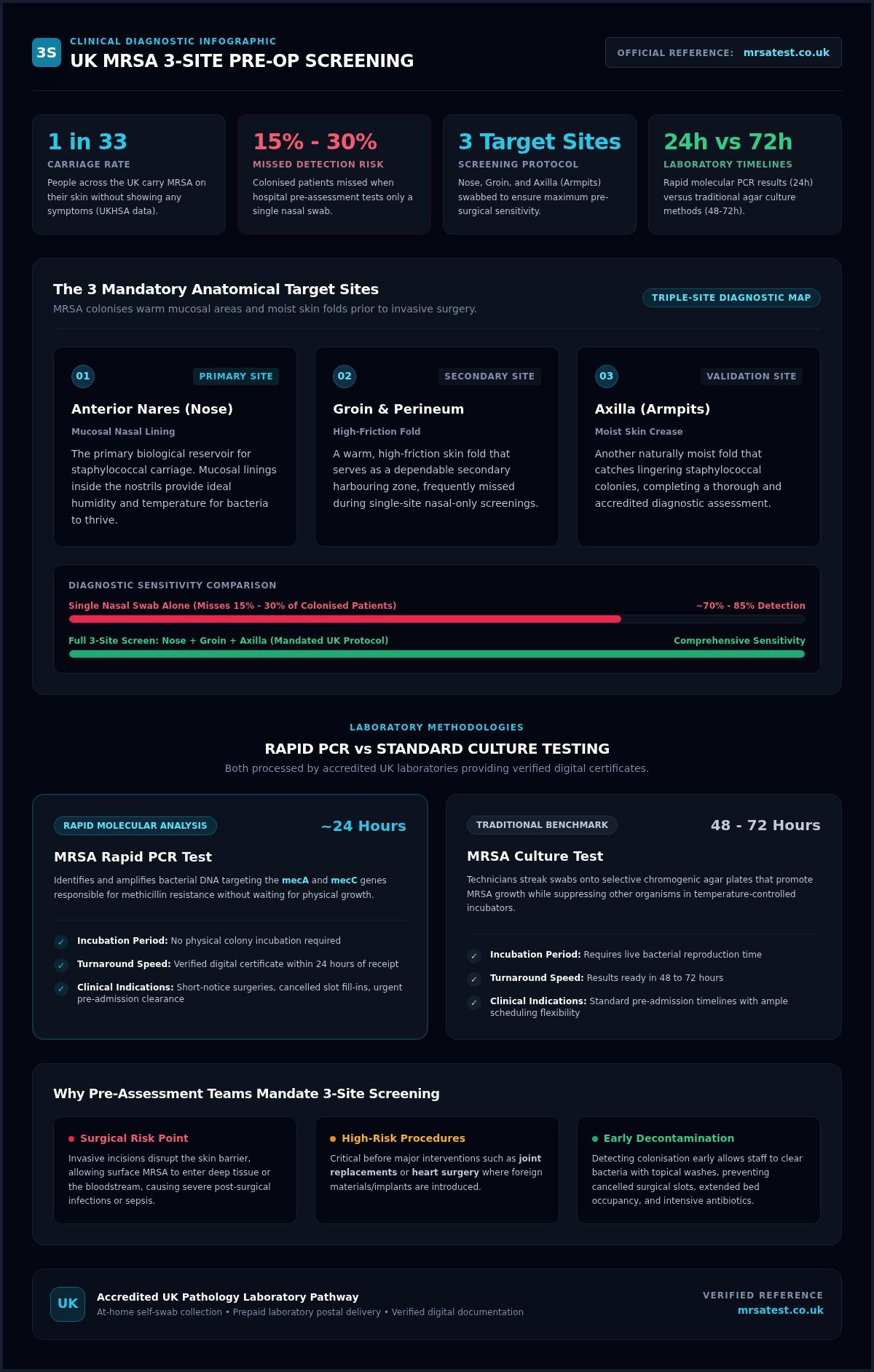
A standard mrsa 3 site screen uk hospitals require is a targeted pre-operative assessment designed to identify whether a patient carries Methicillin-resistant Staphylococcus aureus (MRSA) on their body. The bacterium naturally gravitates towards warm mucosal environments and moist skin folds. For most people, carrying MRSA simply means harmless colonisation; the bacteria live peacefully on the skin surface without causing symptoms or illness.
The clinical risk arises during surgical procedures. When an incision disrupts the skin barrier, surface bacteria can enter deeper tissue or the bloodstream, potentially triggering severe post-surgical infections or sepsis. Pre-assessment teams across the UK use multi-site screening to detect colonisation well before admission, allowing staff to clear the bacteria with simple washes rather than cancelling surgery.
The Three Target Sites: Nose, Groin, and Axilla
Screening protocols focus specifically on three anatomical regions that offer ideal living conditions for staphylococcal organisms:
- Anterior nares (nose): The primary reservoir for staphylococcal carriage. Mucosal linings inside the nostrils provide the optimal humidity and temperature for the bacteria to thrive.
- Groin and perineum: A warm, high-friction skin fold that serves as a dependable secondary harbouring site.
- Axilla (armpit): Another naturally moist fold that catches lingering colonies, completing a thorough diagnostic assessment.
Why UK Hospitals Mandate Multi-Site Pre-Op Screening
Relying solely on a nasal swab leaves gaps in patient safety. Clinical evidence indicates that single-site nasal swabs miss roughly 15 to 30 percent of colonised patients who harbour the bacteria elsewhere on their bodies. Evaluating all three sites substantially elevates diagnostic sensitivity prior to high-risk interventions, such as joint replacements or heart surgery where foreign materials are implanted.
Catching colonization early prevents costly surgical site complications, reduces extended bed occupancy, and eliminates the need for intensive antibiotic therapy. Ensuring you complete your swabs on schedule keeps your admission safe and on track. You can explore additional logistical steps using our detailed pre-op surgery guide.
Rapid PCR vs Standard Culture: Choosing the Right 3-Site Test
When booking a mrsa 3 site screen uk pre-assessment teams require, you will encounter two primary laboratory testing methods: rapid Polymerase Chain Reaction (PCR) and standard microbiological culture. Both approaches are processed by accredited UK laboratories to provide verified digital certificates. However, the diagnostic mechanism and turnaround speed differ significantly.
Deciding which method fits your situation comes down to your surgical schedule. Understanding trust requirements for pre-admission screening for MRSA ensures you choose the test that aligns with your pre-op timeline without risking procedural delays.
MRSA Rapid PCR Test: When Speed Is Critical
Molecular PCR analysis works by identifying and amplifying bacterial DNA rather than waiting for physical colonies to grow. Specifically, the test targets the mecA and mecC genes responsible for methicillin resistance. Because the laboratory doesn’t have to incubate the sample, verified digital results are typically ready within 24 hours of sample receipt at the facility.
This rapid turnaround makes PCR the preferred diagnostic route for urgent clinical deadlines, including:
- Short-notice surgical admissions or cancelled slot fill-ins
- Private cosmetic or elective orthopaedic procedures scheduled within days
- Last-minute clearance requests from pre-admission clinics
If time is running out before your admission date, exploring accredited rapid PCR kit options, such as the MRSA Rapid PCR Test- Nose/Groin/Axilla, gives you certified answers on a strict schedule.
MRSA Culture Test: The Traditional Gold Standard
Culture testing remains the established benchmark across pathology services. Laboratory technicians streak your swabs onto selective chromogenic agar plates, which encourage MRSA growth while suppressing other organisms. The plates are monitored in temperature-controlled incubators to see whether bacterial colonies form.
Because live bacteria require time to reproduce, culture analysis requires 48 to 72 hours of incubation before final clearance can be confirmed. Standard culture screening, like the MRSA Culture – Nose/Groin/Axilla protocol, works best when your operation is scheduled several weeks away and you have ample time to receive your report. For patients planning their screening pathway early, ordering an accredited self-collection kit from mrsatest.co.uk delivers dependable laboratory verification well ahead of hospital pre-assessment.
How to Correctly Perform a 3-Site Self-Swab at Home
Performing a mrsa 3 site screen uk hospitals accept doesn’t require a clinic appointment, but it does demand careful technique. Collecting an adequate biological sample ensures the laboratory can detect bacterial presence accurately. Poor collection habits lead to invalid or inconclusive findings, forcing you to retest and jeopardising surgical pre-admission deadlines.
Before unpacking your materials, wash your hands thoroughly with warm water and soap for at least 20 seconds, then dry them using a clean towel. Lay out the three sterile swabs, collection tubes, and pre-printed labels on a clean, dry surface. Clearly mark each tube with your full name, date of birth, sampling date, and specific anatomical site before you begin sampling.
Step-by-Step Swabbing Guide for Nose, Axilla, and Groin
Follow this precise order to avoid cross-contamination between anatomical locations:
- Nasal sample: Remove the first swab without touching the soft tip. If supplied with a wetting agent, moisten the tip as directed. Insert the swab approximately 1 to 2 centimetres into one nostril. Rotate firmly against the anterior nasal lining five times, then repeat the motion inside the second nostril using the same swab.
- Axillary sample: Take the second sterile swab and rub it firmly across both armpit vaults. Ensure good contact with the central, hair-bearing skin fold for roughly ten seconds per side.
- Groin sample: Use the final swab to firmly rub the skin creases where your upper thigh meets your lower pelvis. Swab both the left and right groin folds thoroughly.
Insert each swab immediately into its individual transport tube containing preservation media. Push or snap the shaft into place so the cap closes firmly.
Avoiding Sample Contamination and Processing Errors
Accuracy depends on maintaining sterility. Never let the absorbent tip touch your fingers, counter surfaces, or clothing prior to swabbing. When closing the transport vial, listen or feel for a distinct click to ensure the liquid medium doesn’t leak during transit. A dried sample cannot be processed reliably by the laboratory.
Once your tubes are securely sealed and labelled, place them inside the provided protective specimen bag alongside your completed requisition paperwork. Put the sealed pouch into the prepaid, tracked return box designed specifically for UK domestic postal transit. Post the parcel on the day of collection via a Royal Mail postbox or delivery office. You can read broader diagnostic preparation guidance in our comprehensive guide to at-home health tests.
Hospital Acceptance, Results Interpretation, and Next Steps
Receiving your screening certificate brings practical clarity to your surgical pathway. UK surgical units mandate strict infection control standards, and presenting a verified mrsa 3 site screen uk certificate confirms you have fulfilled your pre-admission obligations. Accredited UK pathology laboratories issue structured diagnostic certificates that hospital pre-assessment teams review alongside your wider routine health records.
Timing your screen correctly matters just as much as sampling the right anatomical locations. Under national clinical standards issued by the Getting It Right First Time (GIRFT) programme, a routine pre-operative screen remains valid for at least three months, with local trust policies occasionally extending this window to six months. Always check your specific hospital’s documentation timeframe so your clearance remains current on your admission day.
Understanding Negative vs. Positive Screening Certificates
Your official laboratory report outlines distinct outcomes for each anatomical site tested:
- Negative result: No MRSA colonization was detected on your nose, groin, or axilla. Pre-admission nurses will log your certificate, clearing you for surgery without additional microbiological checks.
- Positive result: Staphylococcal carriage was detected at one or more sampling sites. This does not mean you have an active infection, nor does it indicate that your surgery must be cancelled outright.
Recognising that carriage simply represents surface presence helps eliminate unnecessary worry. To understand the biological mechanisms behind bacterial colonization in detail, review our guide explaining what is MRSA.
What Occurs if Your 3-Site Screen Detects MRSA?
A positive swab result triggers an established clinical protocol rather than an emergency. Hospital teams or your attending clinician will prescribe a standard, non-invasive decolonisation pack to clear surface colonies before theatre. This protocol usually involves an antibacterial body wash (such as chlorhexidine) applied daily for five days, paired with a topical nasal ointment (typically mupirocin) applied inside both nostrils.
Completing this simple wash protocol minimizes the risk of post-operative surgical site complications and protects wider hospital wards. To explore how medical teams prevent cross-transmission, see our detailed overview of hospital-acquired infections.
Obtaining reliable laboratory documentation ahead of time gives your surgical team the window needed to manage any necessary washes without delaying your procedure date. You can order your accredited MRSA test kit online to secure accepted pre-admission documentation on your schedule.
Ordering Your UK 3-Site MRSA Test Kit Online
Securing a compliant mrsa 3 site screen uk surgical teams expect is straightforward when arranged directly from home. Rather than navigating delayed outpatient clinic appointments, you can choose a diagnostic pathway that matches your specific pre-admission schedule. Selecting between the MRSA Culture – Nose/Groin/Axilla protocol and the MRSA Rapid PCR Test- Nose/Groin/Axilla depends entirely on your procedural timeframe. Every order arrives in plain, unmarked packaging across all UK postal addresses, protecting your privacy from dispatch to delivery.
Accredited laboratory analysis ensures your results meet rigorous clinical requirements. Reports are issued in a clear digital format, giving pre-assessment staff the exact microbiological verification needed to approve your admission.
What Is Included in an Accredited 3-Site Home Swab Kit?
Each self-collection pack contains all clinical components required to collect valid samples and return them safely for diagnostic processing:
- Three sterile collection swabs paired with individual preservation transport tubes
- Clear, step-by-step collection instructions designed for simple patient self-sampling
- Prepaid tracked return packaging addressed directly to an accredited UK pathology laboratory
- Secure digital access to retrieve and download your verified laboratory certificate as soon as testing concludes
Streamlining Pre-Op Clearance from Home
Arranging your swabs online removes the hassle of securing preliminary GP appointments or taking time off work for clinic visits. You retain complete oversight of your screening schedule, ensuring samples reach the laboratory within the required pre-assessment window. With standard culture reports available in 48 to 72 hours and rapid PCR analysis completed within 24 hours of laboratory arrival, you can easily meet your hospital deadline.
Avoid procedural delays and unnecessary hospital friction by completing your swabs in private. To secure pre-op clearance quickly and reliably, order certified mrsatest.co.uk at-home test kits directly to your door.
Secure Your Pre-Admission Clearance with Confidence
Completing your swabs on time protects both your surgical slot and your peace of mind. Sampling the nose, groin, and axilla provides thorough clinical accuracy, meeting hospital infection control standards well before your admission date. By choosing an accredited mrsa 3 site screen uk home-collection kit, you avoid long clinic queues while keeping your pre-operative timeline completely on track.
Every sample undergoes rigorous UK accredited laboratory testing. Standard culture turnaround within 48 to 72 hours offers dependable verification for planned procedures, while rapid PCR results delivered within 24 hours of lab receipt solve urgent deadlines. Your digital certificate provides clear documentation formatted for hospital surgical pre-assessment teams, ensuring your paperwork is accepted without administrative friction.
Don’t let missing test results jeopardise your scheduled operation. Order your confidential MRSA 3-site screening kit today and move forward with your procedure feeling prepared, protected, and fully supported.
Frequently Asked Questions
Which exact anatomical areas are swabbed during an MRSA 3 site screen in the UK?
The three specific anatomical sites sampled are the anterior nares (both nostrils), the axillae (both armpits), and the groin creases. These locations represent warm, moist areas where staphylococcal bacteria naturally colonise. A standard mrsa 3 site screen uk protocol uses separate sterile swabs for each zone to check for bacterial carriage comprehensively before high-risk procedures.
Do UK private hospitals and the NHS accept private at-home MRSA swab results?
Yes, UK private hospitals and NHS trusts routinely accept self-collected swab certificates, provided the samples are processed by an accredited UK pathology laboratory. The official digital report details your identity, the specific collection sites, and clear microbiological outcomes. Sharing this certificate directly with your surgical pre-assessment nurse ensures your admission proceeds without administrative complications or clinic delays.
How far in advance of my scheduled surgery should I complete the 3-site swab?
You should generally complete your swabs two to four weeks before your scheduled procedure date. Official UK guidance considers an MRSA screen valid for at least three months, though individual hospital units often request results within 14 to 28 days of admission. Testing early gives you sufficient time for laboratory processing while allowing space for simple decolonisation washes if required.
What is the turnaround time difference between MRSA Rapid PCR and Culture swab kits?
MRSA Rapid PCR testing delivers verified digital results within 24 hours of sample receipt at the laboratory, making it ideal for tight surgical deadlines. In contrast, standard culture analysis takes 48 to 72 hours, as the laboratory must incubate live bacteria on agar plates. Both options provide accredited diagnostic accuracy, so your choice depends on your pre-assessment submission deadline.
Does a positive MRSA 3-site screen mean my scheduled operation will be cancelled?
No, a positive result does not mean your operation is automatically cancelled. A positive screen merely detects asymptomatic bacterial carriage on your skin. Your clinical team will simply prescribe a straightforward five-day decolonisation course featuring an antibacterial body wash and nasal ointment. Completing this regimen before your procedure eliminates the bacteria, allowing your surgery to proceed safely on schedule.
Can I take a shower or wash with antibacterial soap immediately before taking my swabs?
You should avoid showering, bathing, or using antibacterial soaps immediately before taking your samples. Washing vigorously can temporarily strip bacteria from the skin surface, potentially causing a false-negative result on your mrsa 3 site screen uk. For the most accurate diagnostic outcome, swab natural skin flora at least a few hours after any wash routine, avoiding body lotions or powders on target sites.
Is an MRSA screening swab painful or uncomfortable to perform at home?
Performing the screening swab is completely painless and non-invasive. You only need to rotate the soft tip gently against the inside of both nostrils and firmly across the skin folds of your armpits and groin. The process takes less than five minutes to complete in privacy, causing minimal discomfort while capturing a reliable sample for accredited laboratory testing.