
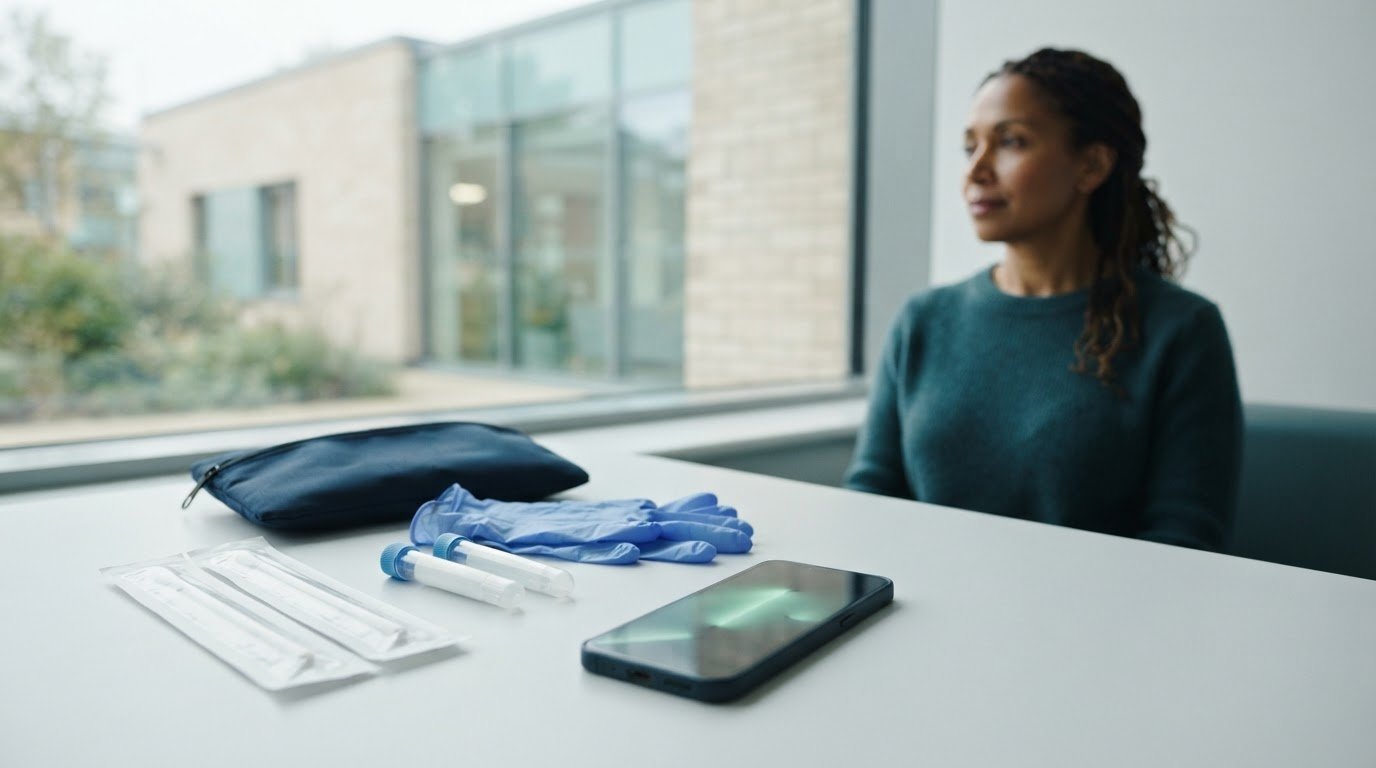
Roughly 1 in 30 healthy individuals in the UK carries MRSA asymptomatically on their skin, yet an unconfirmed swab can halt a planned elective procedure at the eleventh hour. When your surgery date depends on strict pre-admission clearance, ordering a certified pre-op mrsa test kit uk hospitals accept gives you immediate control over your surgical timeline.
Taking time off work for routine hospital pre-assessment visits is inconvenient, and worrying whether your clinical team requires rapid PCR or standard culture analysis only adds unnecessary stress. You shouldn’t have to face theatre cancellations because of NHS or private laboratory backlogs. Discover how to secure certified pre-surgery MRSA screening from home with fast, UK-accredited laboratory results that satisfy pre-admission protocols. Below, we break down hospital validity windows, step-by-step swabbing procedures, and turnaround times so you can approach your operation with complete peace of mind.
Key Takeaways
- Understand why UK hospitals enforce mandatory pre-surgery swabs to shield patients against surgical site infections.
- Select the ideal pre-op mrsa test kit uk patients trust by comparing rapid molecular PCR and standard microbiological culture methods.
- Master the sterile self-swabbing technique across dual or triple anatomical sites to avoid sample rejection or false results.
- Align your swab submission with strict pre-assessment validity windows and discover standard clinical protocols if decolonisation is required.
- Obtain accredited, laboratory-certified documentation delivered straight to your email to confirm surgical clearance without extra clinic appointments.
Why Pre-Op MRSA Screening Is Mandatory for UK Surgeries
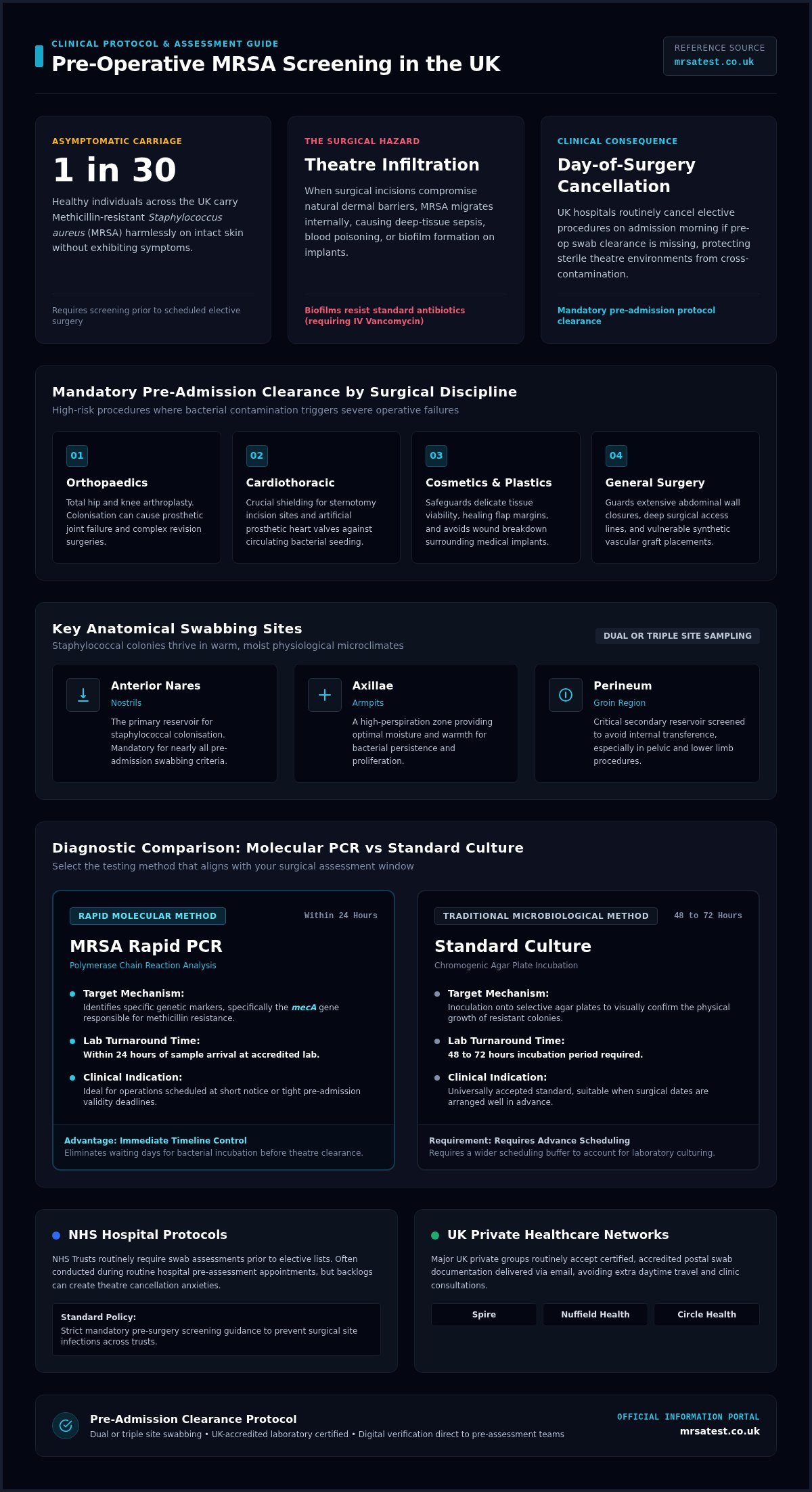
Colonisation by Methicillin-resistant Staphylococcus aureus (MRSA) rarely causes symptoms on intact skin. However, theatre incisions compromise the body’s natural barrier. When these bacteria migrate into an open surgical wound, they pose severe clinical hazards, including systemic blood poisoning and deep-tissue sepsis. Pre-operative assessment teams enforce strict screening rules to detect carriage before you enter an operating theatre. Using an accredited What Is MRSA? Your Complete Guide helps explain how harmless skin carriage differs from an active infection, ensuring you understand why hospitals treat asymptomatic carriage so seriously.
Mandatory pre-admission protocols apply across diverse surgical specialties:
- Orthopaedics: Crucial for total hip and knee arthroplasty, where implant contamination can lead to prosthetic joint failure.
- Cardiothoracic Surgery: Protects sternotomy sites and artificial heart valves from bacterial seeding.
- Cosmetic and Plastic Procedures: Preserves tissue viability and prevents wound breakdown around implants.
- General Surgery: Safeguards major abdominal wall closures and vascular graft sites.
Securing a validated pre-op mrsa test kit uk patients trust prevents last-minute surgery cancellations. Hospitals routinely cancel procedures on the morning of admission if pre-op swab results are missing, as theatres cannot risk exposing vulnerable environments to unmanaged bacteria.
The Risk of MRSA During and After Surgery
Invasive operations create opportunities for bacteria to attach to surgical implants and prosthetics. Once established, MRSA forms protective cellular layers known as biofilms. These barriers resist standard antibiotic penetration, often requiring extended courses of intravenous glycopeptides like vancomycin or even secondary revision surgeries to remove infected hardware. Because staphylococcal bacteria thrive in warm, moist microclimates, colonies predominantly gather in the anterior nares (nostrils), perineum, and axillae (armpits).
Hospital Protocols: NHS vs Private Healthcare Facilities
Both NHS trusts and private hospitals mandate negative swabs prior to elective theatre lists. While NHS facilities often request attendance at a dedicated pre-assessment clinic, private networks like Spire, Nuffield Health, and Circle Health Group routinely accept certified results from private home postal swabs. Reviewing our insights on Hospital-Acquired Infections: A Patient Guide shows how timely self-testing satisfies strict infection prevention criteria without requiring extra travel.
Selecting the Right Pre-Op MRSA Kit: Rapid PCR vs Culture
Matching your diagnostic test to your admission timeline avoids unnecessary procedural delays. Many high-street clinics require inconvenient daytime consultations just to take a basic swab. In contrast, choosing an at-home pre-op mrsa test kit uk patients use allows you to collect your samples privately while choosing between two distinct laboratory techniques: molecular PCR analysis and traditional microbiological culture. Both pathways follow recognised NHS pre-surgery MRSA screening guidance, but their processing times and technical mechanisms differ significantly.
Molecular Precision: MRSA Rapid PCR Test Kits
Polymerase Chain Reaction (PCR) testing identifies specific genetic markers, particularly the mecA gene responsible for methicillin resistance, rather than waiting for live bacterial colonies to grow. This molecular technique yields laboratory results within 24 hours of sample arrival. If your operation is scheduled at short notice, or if your pre-admission assessment date is rapidly approaching, an MRSA Test: Get Fast, Accurate Results using a rapid PCR format ensures you receive verified paperwork before your admission deadline.
Standard Microbiological Swabbing: MRSA Culture Kits
Culture screening involves placing your swab onto selective chromogenic agar plates to observe physical bacterial growth. This traditional method requires an incubation period of 48 to 72 hours to confirm whether resistant staphylococcal colonies develop. While standard culture is universally accepted across all UK surgical units, it requires a broader scheduling buffer. It suits patients who have received their surgical dates well in advance and can submit samples several weeks early.
Swab Sites: Nose and Groin vs Triple-Site Testing
Hospitals dictate which anatomical sites must be sampled based on the invasiveness of your planned procedure. Before purchasing your pre-op mrsa test kit uk protocol, check your pre-assessment paperwork carefully:
- Dual-Site Screening (Nose/Groin): The standard requirement for most elective day-case admissions. It samples the anterior nares and the groin folds.
- Triple-Site Screening (Nose/Groin/Axilla): Often mandated for complex joint replacements, spinal interventions, or cardiothoracic cases. This adds an underarm swab to capture secondary carriage sites.
If your surgical team has not provided a swab in time, you can secure an accredited screening kit directly through mrsatest.co.uk to keep your admission track entirely on schedule.
How to Take Your Pre-Op MRSA Swabs at Home Correctly
Self-swabbing produces diagnostic accuracy identical to clinic-based collection when you follow a sterile routine. A dedicated pre-op mrsa test kit uk patients receive contains individually sealed applicators and transport medium tubes designed to preserve biological material during transit. Maintaining strict hygiene before handling this equipment ensures external bacteria won’t contaminate your diagnostic sample, aligning with standard NICE surgical site infection prevention guidelines.
Begin by thoroughly washing your hands with antibacterial soap and warm water for at least twenty seconds. Dry them with a fresh paper towel rather than a shared cloth towel. Clear a clean, dry surface to lay out your swabs, transport tubes, and laboratory requisition paperwork. Avoid opening swab wrappers until immediately before sampling each site.
Step-by-Step Swabbing Instructions for Accurate Sampling
Complete each designated anatomical site using its separate, allocated swab:
- Anterior Nares (Nose): Peel back the nasal swab package. Insert the soft tip roughly 1 to 2 centimetres into one nostril. Rotate firmly against the inner nasal wall for five seconds. Using the same swab, repeat the exact rotation in the other nostril, then insert it into its transport tube.
- Groin / Perineal Area: Take the second sterile swab and gently rub it back and forth along the skin creases where your legs meet your torso for five seconds. Seal it immediately into its corresponding tube.
- Axillae (Underarms): If your surgical team requires a triple-site screen, take the third swab and rotate it across the hollow of each armpit vault.
Ensure each transport tube cap clicks firmly shut to prevent leakage. Double-check that your full name, date of birth, and sample collection date are written legibly on every vial label before placing them into the return packaging.
Common Collection Errors That Compromise Lab Results
Diagnostic laboratories may reject samples if simple hygiene errors occur during handling. Avoid these frequent pitfalls to protect your pre-admission timeline:
- Touching Swab Tips: Never let the soft cotton or flocked tip contact fingers, countertops, or clothing. Environmental microflora will overwhelm clinical targets.
- Pre-Washing Sample Sites: Do not use antiseptic washes or apply body lotions to swab sites within 48 hours of sampling. Residual antiseptics suppress bacteria temporarily, causing misleading negative results.
- Postage Delays: When you complete your pre-op mrsa test kit uk screening, post your package that same day using the included prepaid return mailer. Prompt laboratory dispatch keeps live samples stable for accurate culture or molecular extraction.
Timelines, Hospital Acceptance, and Decolonisation Protocol
Timing your swab submission accurately protects your admission date. Private facilities and NHS surgical units operate strict validity windows, meaning a swab taken either too early or too late can invalidate your pre-admission clearance. Consulting our Preparing for Surgery: Health & Logistics Checklist helps you synchronise diagnostic testing with administrative tasks, keeping your clinical pathway on track.
Hospitals require pathology documentation issued by verified facilities. When you process your pre-op mrsa test kit uk through an accredited diagnostic laboratory, your PDF report contains the full microbiological breakdown, clinical validation signatures, and device markings needed by pre-assessment nurses. You can forward your emailed certificate straight to your hospital team to confirm surgical readiness.
Understanding Pre-Admission Timelines and Validity Windows
Most UK surgical departments require MRSA screening performed within 14 to 30 days of your procedure date. This window ensures the swab reflects your current carriage status while allowing an adequate operational cushion. Factoring in transit times ensures you meet this window comfortably:
- Standard Timeline: Order your kit 10 to 14 days before your pre-admission deadline. Standard culture screening requires 48 to 72 hours for lab incubation.
- Tight Deadlines: If your admission date is fewer than five days away, choose a rapid PCR kit. Molecular amplification delivers verified results within 24 hours of sample arrival at the lab.
What Happens if Your Pre-Op Test Is Positive?
Receiving a positive screen can feel alarming, but colonisation does not mean you are ill. It simply indicates bacteria are present on your skin folds or nasal lining without causing active disease. Detecting this early is an advantage; it enables proactive decolonisation rather than an abrupt cancellation on the morning of surgery.
Your hospital surgical team will prescribe a standard five-day eradication regimen:
- Antimicrobial Body Wash: A 4% chlorhexidine or octenidine wash used daily in the shower to cleanse skin folds and wash hair.
- Targeted Nasal Ointment: A prescribed course of mupirocin 2% applied inside both nostrils three times daily for five consecutive days.
Completing this regimen clears cutaneous carriage in roughly 85% to 90% of individuals. Take charge of your admission requirements today by ordering your accredited screening directly from mrsatest.co.uk to guarantee timely documentation.
Order Your Pre-Op MRSA Test Kit for Fast UK Delivery
Arranging hospital clearance doesn’t require taking time off work or sitting in crowded clinical waiting areas. Dedicated home screening solves scheduling friction entirely. By ordering a certified pre-op mrsa test kit uk patients receive diagnostic testing delivered straight to their letterbox in plain, discreet packaging. Every order includes prepaid tracked Royal Mail returns to accredited UK laboratories, ensuring your samples reach the diagnostic bench safely and quickly.
Our platform caters specifically to pre-admission deadlines across the UK. You can select an MRSA Rapid PCR Test covering Nose/Groin or Nose/Groin/Axilla for rapid 24-hour turnaround post-lab receipt, or choose a traditional MRSA Culture covering Nose/Groin or Nose/Groin/Axilla sites if you have a comfortable window before your hospital admission date.
The mrsatest.co.uk Service Advantage
Specialised diagnostic focus ensures seamless pre-admission validation:
- Dedicated Expertise: The service focuses entirely on MRSA detection, ensuring clear instructions and zero administrative confusion.
- UK-Accredited Pathology: Samples are analysed exclusively by verified, UK-accredited laboratory partners holding ISO standards.
- Complete Privacy: Diagnostic hardware arrives in plain outer packaging, keeping your medical preparation entirely confidential.
- Hospital-Ready Documentation: Official pathology clearance certificates are delivered via email, ready for pre-assessment validation.
How to Order and Receive Your Clearance Certificate
Securing your surgical clearance follows a straightforward, logical path:
- Select Your Test: Review your hospital requirements to determine whether dual-site or triple-site swabbing is needed, then choose between Rapid PCR and Standard Culture.
- Sample at Home: Follow the enclosed sterile collection steps in private, then label your transport tubes clearly.
- Return via Post: Drop the sample into any Royal Mail postbox using the supplied prepaid return mailer.
- Receive Your Report: Download your accredited PDF clearance certificate as soon as laboratory analysis completes.
Avoid theatre postponements and secure your surgical clearance without extra clinic visits. Order your pre-op MRSA test kit online today to receive your testing package directly at home.
Take Control of Your Pre-Operative Timeline Today
Preparing for surgical admission is demanding enough without the added worry of missed clinical deadlines. Securing an accredited pre-op mrsa test kit uk patients trust provides absolute control over your clearance pathway. By choosing between rapid molecular PCR diagnostics and reliable microbiological culture methods, you match your screening directly to your admission schedule while bypassing inconvenient daytime appointments.
Every test package provides complete convenience and clinical integrity. Samples undergo expert analysis at accredited UK diagnostic laboratories, with rapid PCR results delivered within 24 hours of laboratory arrival. Prepaid tracked return postage ensures safe handling from your doorstep directly to the laboratory bench. Your official digital certificate arrives straight to your inbox, giving hospital pre-assessment teams the validated documentation they need to approve theatre access.
Protect your surgical date and gain immediate peace of mind. Order your pre-op MRSA test kit online today to complete your screening securely and conveniently from home.
Frequently Asked Questions
Will my UK hospital or private surgeon accept an at-home pre-op MRSA test kit result?
Yes, UK hospitals and private surgical providers routinely accept home-collected swabs provided they are processed by a verified, UK-accredited pathology laboratory. Our partner laboratories follow strict UK clinical standards. The resulting pathology certificate includes complete specimen identifiers, methodology details, and diagnostic verification signatures. Always confirm with your surgical pre-assessment nurse beforehand so they can add the incoming report directly to your clinical records.
How far in advance of my surgery should I take the pre-op MRSA swab?
You should complete your screening between 14 and 30 days before your scheduled admission date. Most UK healthcare facilities operate within this validity window to confirm current bacterial colonisation without testing prematurely. Sampling within this timeframe allows adequate contingency for laboratory processing and ensures sufficient time to undertake a standard decolonisation wash regimen if bacteria are detected.
What is the difference between a pre-op PCR test and a culture test?
The primary difference lies in the testing mechanism and turnaround speed. A pre-op PCR screen uses molecular amplification to identify bacterial DNA within 24 hours of laboratory arrival, making it ideal for tight admission deadlines. Conversely, standard culture screening plates the sample on selective agar, requiring 48 to 72 hours for bacterial incubation. Both diagnostic methods deliver clinical-grade accuracy accepted across UK surgical units.
Which swab sites do I need to test before my surgical procedure?
Your surgical specialty dictates your required swabbing sites. Standard pre-admission screening requires dual-site collection covering the nostrils and the groin folds. For high-risk procedures like orthopaedic joint replacements or cardiothoracic operations, pre-assessment protocols frequently mandate triple-site screening that includes the underarms. Review your formal hospital pre-assessment paperwork carefully to select the correct pre-op mrsa test kit uk configuration for your procedure.
What happens if my pre-op MRSA test result comes back positive?
A positive screen indicates asymptomatic bacterial carriage on your skin, not an active clinical illness. You should forward your laboratory certificate directly to your hospital surgical coordinator immediately. The clinical team will prescribe a standard five-day eradication protocol comprising a topical nasal ointment and antimicrobial wash. Completing this regimen clears cutaneous bacteria in over 85% of cases, allowing elective surgeries to proceed safely.
Can I take the MRSA swab test while currently taking antibiotics?
Active systemic antibiotic courses or topical antiseptic treatments can suppress bacterial growth and potentially cause a false-negative laboratory reading. Ideally, complete any ongoing antibiotic therapies before collecting your sample. If your surgical admission date requires immediate testing while taking medication, inform your hospital pre-assessment team so the duty microbiologist can interpret your final pathology report in full clinical context.
How quickly will I receive my pre-op test results after posting the kit?
Turnaround depends on whether you select rapid molecular PCR or traditional microbiological culture. Once your pre-op mrsa test kit uk arrives at the laboratory via Royal Mail, PCR analysis delivers certified results within 24 hours. Standard culture testing requires 48 to 72 hours to monitor bacterial growth plates. Your validated pathology report is uploaded and emailed immediately upon laboratory clearance.