

Blog
How to Test for MRSA at Home in the UK: A Step-by-Step Guide
Sep
What if you could bypass the GP waiting room and complete your mandatory pre-surgery screening in less than five minutes at your own dining table? For many, the requirement for an MRSA screen adds a layer of stress to an already anxious time. Learning how to test for mrsa at home uk provides a professional, discreet alternative to the traditional clinical visit, putting you back in control of your pre-operative timeline.
It’s perfectly natural to feel concerned about whether a self-collected sample is as reliable as one taken by a healthcare professional. We understand that clinical accuracy is your top priority when your surgery date depends on a clear result. This guide will show you exactly how to perform a clinical-grade MRSA screening from the comfort of your home, ensuring you receive fast and private results that meet rigorous medical standards.
We will walk through the simple steps of collecting swabs from the nose, groin, or axilla using accredited kits. You’ll also learn about the differences between rapid PCR testing for 24-hour results and traditional cultures. By the end of this article, you’ll have a clear path to securing your medical clearance without the inconvenience of a hospital waiting room.
Key Takeaways
- Understand the convenience of bypassing hospital waiting rooms by completing your pre-surgery screening in a private and comfortable environment.
- Learn exactly how to test for mrsa at home uk using professional, sterile swabs for the nose, groin, and axilla.
- Compare the benefits of rapid PCR technology for 24-hour results against standard culture tests that provide findings within 72 hours.
- Ensure diagnostic accuracy by using accredited UK laboratories and the included prepaid return shipping for your samples.
- Prepare for your medical procedure with confidence by receiving secure, professional results through a streamlined digital portal.
Why Test for MRSA at Home in the UK?
Methicillin-resistant Staphylococcus aureus (MRSA) is a type of bacteria that has developed resistance to several widely used antibiotics. While many people carry these bacteria harmlessly on their skin or in their nostrils, it can cause serious complications if it enters the bloodstream or a surgical wound. Screening is essential because it identifies carriers before they undergo medical procedures, reducing the risk of spreading the bacteria to others. Understanding how to test for mrsa at home uk has become increasingly popular as patients seek more control over their healthcare timelines and personal safety.
The rise of at-home health testing kits in the UK reflects a significant shift toward patient convenience and clinical privacy. Traditional screening often requires a trip to a GP surgery or a hospital pre-assessment clinic, which can be time-consuming and stressful for those with busy schedules. Private screening allows you to collect your own samples in total discretion, avoiding busy waiting rooms and potential exposure to hospital-acquired infections. It’s a proactive, expert-led way to manage your health without the logistical burden of a traditional clinical appointment.
The Role of Pre-Operative Screening
Most UK surgeons and hospitals require proof of a negative MRSA status before proceeding with elective surgery. This requirement isn’t just a formality; it’s a critical safety measure designed to protect you. Carriers face a significantly higher risk of developing surgical site infections (SSIs), which can lead to longer hospital stays, additional treatments, and a much slower recovery process. Integrating a professional home test into your pre-op health checklist ensures that you have your verified results ready well in advance of your admission date. This preparation helps you avoid last-minute cancellations and provides the clinical clearance your surgical team needs.
Peace of Mind for Skin Concerns
Testing isn’t only for those preparing for surgery. If you’re dealing with recurring boils, abscesses, or stubborn skin issues, you might suspect an underlying MRSA colonisation. It’s often difficult to distinguish these symptoms from common skin infections without a professional laboratory swab. Knowing how to test for mrsa at home uk allows you to identify your carrier status quickly and privately. This knowledge is vital for household safety. It helps you take the necessary hygiene precautions to prevent passing the bacteria to family members or vulnerable individuals in your care. Having these facts allows for a more informed conversation with your doctor regarding future skin health management.
Step-by-Step: How to Use an At-Home MRSA Swab Kit
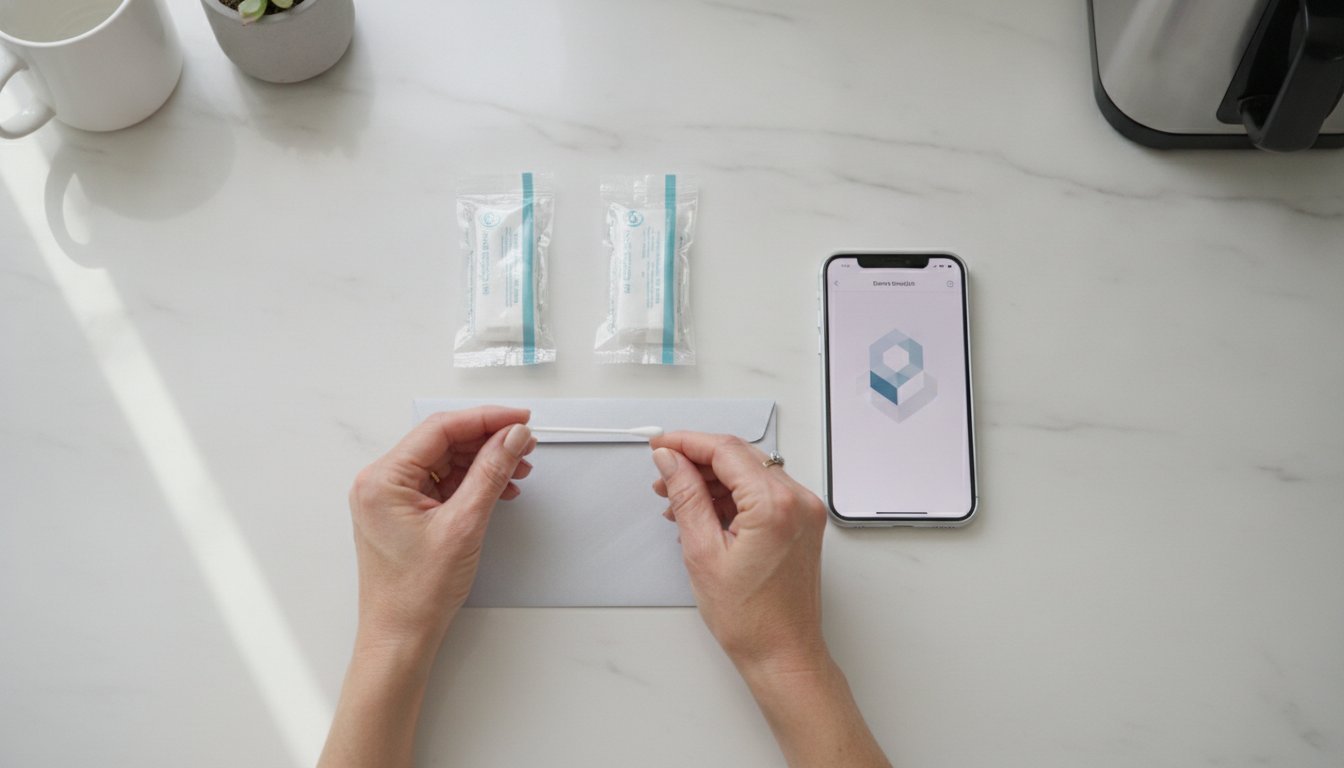
Learning how to test for mrsa at home uk begins with familiarising yourself with the clinical components provided in your diagnostic kit. Each package contains professional-grade sterile swabs, transport tubes filled with a protective medium to keep the bacteria viable, and secure return packaging. Before you start, it’s vital to wash your hands thoroughly with soap and water. Clear a clean surface to lay out your components, ensuring that the environment is free from dust or contaminants. This preparation ensures that your sample remains a pure representation of your skin’s flora.
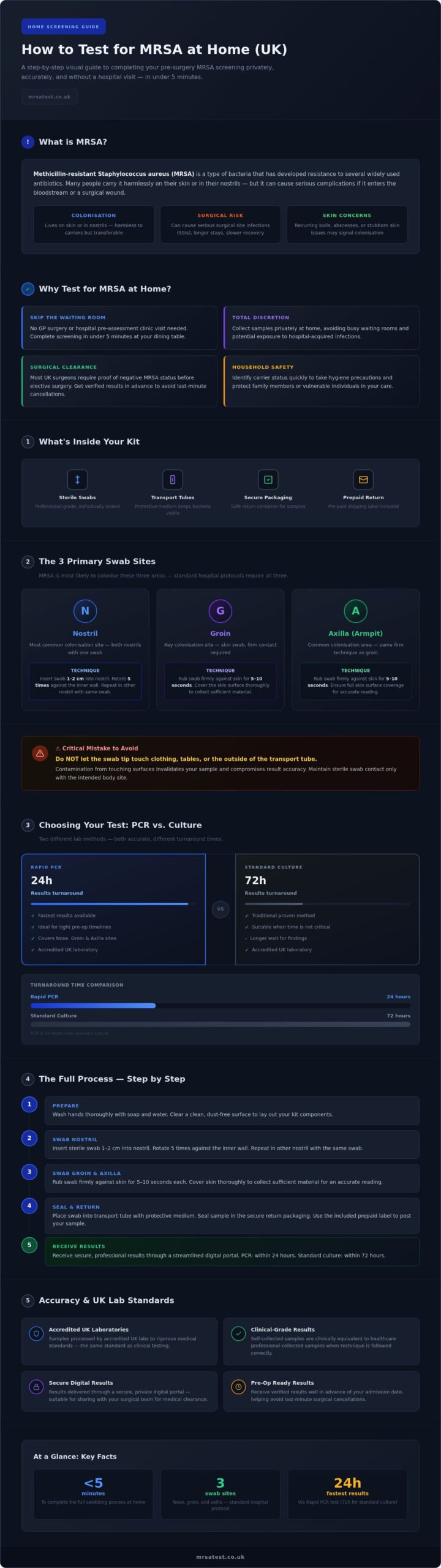
The swabbing process focuses on three primary sites where MRSA is most likely to colonise: the nostrils, the groin, and the axilla (armpit). By targeting these areas, you provide the laboratory with the best opportunity to detect any presence of the bacteria. If you’re preparing for a specific procedure, you might choose the MRSA Rapid PCR Test- Nose/Groin/Axilla to ensure all required sites are covered according to standard hospital protocols.
The Swabbing Technique
To collect a nasal sample, gently insert the tip of the sterile swab approximately 1 to 2cm into your nostril. Rotate the swab five times against the inner wall using firm but gentle pressure. You should repeat this exact process in the other nostril using the same swab. For the groin and axilla, rub the swab firmly against the skin for about five to ten seconds. It’s essential to cover the skin surface thoroughly to pick up enough biological material for an accurate reading.
Precision is key to maintaining sample integrity. A common mistake is allowing the swab tip to touch surfaces like your clothing, the table, or even the outside of the transport tube. Such contact can lead to a contaminated result. According to NHS guidance on MRSA diagnosis and treatment, accurate swabbing is the foundation of a reliable diagnosis. Once you’ve finished each site, immediately place the swab into the transport tube and ensure the cap is snapped shut securely.
Packaging and Registration
After collecting your samples, you must label each transport tube clearly using the stickers provided. This step is critical; laboratories cannot process unlabelled specimens. You’ll also need to register your kit online through our secure portal. This process links your unique barcode to your personal details, allowing you to track your results and maintain total confidentiality. It’s a straightforward way to manage your health data without the need for physical paperwork.
Once everything is labelled and registered, place the tubes into the protective packaging and then into the prepaid return envelope. This envelope is designed for UK-wide delivery via Royal Mail, ensuring your samples reach our accredited laboratory quickly. For those on a tight schedule, choosing an at-home MRSA testing service with rapid turnaround times can provide the necessary clearance for surgery in as little as 24 hours.
Choosing Your Test: Rapid PCR vs. Standard Culture
Selecting the right diagnostic method is a critical step when learning how to test for mrsa at home uk. While both options provide clinical-grade reliability, they use different technologies to identify the presence of bacteria. Your choice usually depends on your specific timeline, especially if you’re preparing for an upcoming hospital admission. Both methods are processed in accredited laboratories to ensure that your results meet the stringent requirements of UK healthcare providers.
PCR, which stands for Polymerase Chain Reaction, is a sophisticated molecular technique. It works by detecting the specific DNA sequences of the bacteria in your sample. Because it identifies the genetic material directly, it doesn’t require the bacteria to grow in a lab setting. This makes it incredibly fast and highly sensitive. In contrast, a standard culture involves placing your sample on a nutrient-rich agar plate and waiting for bacterial colonies to develop. This biological growth process is the traditional method for MRSA testing and remains a highly reliable way to confirm colonisation.
Following NHS guidance on MRSA ensures that whether you choose molecular or biological detection, you’re adhering to recognised clinical standards. Both tests provide the accuracy needed for peace of mind or medical clearance. The primary differences lie in the turnaround time and the laboratory mechanism used to reach a definitive result.
When to Choose Rapid PCR
If your surgery date is imminent, speed is your primary concern. Rapid PCR tests are considered the gold standard for urgent cases because they provide results within 24 hours of the laboratory receiving your swabs. This molecular identification is ideal for meeting high-sensitivity requirements for specific medical clearances. It’s the most efficient path for patients who need a fast, professional confirmation of their status to avoid any delays in their surgical schedule. The precision of DNA detection provides a high level of confidence in a very short window.
When to Choose Standard Culture
A culture test is often the preferred choice for routine screening where time isn’t the most critical factor. Because it relies on biological growth, results typically take between 48 and 72 hours. This method is highly cost-effective for those who are performing regular household checks or are in the early stages of pre-operative planning. It follows standard clinical protocols for non-urgent diagnostics and provides a clear, definitive answer. If you have at least a week before your procedure, a culture test offers a dependable and affordable way to complete your screening requirement.
Accuracy and Reliability: UK Lab Standards
When considering how to test for mrsa at home uk, the primary concern for most patients is whether the results are as dependable as those from a hospital clinic. Accuracy is non-negotiable, especially when your surgery date depends on a clear result. All samples provided through our service are processed in UKAS-accredited laboratories. These facilities adhere to the same rigorous standards as NHS labs, ensuring that every diagnostic report meets high clinical benchmarks for precision and reliability.
Clinical studies have shown that self-collected swabs are highly effective when patients follow structured instructions. The technique for collecting samples from the nose, groin, and axilla mirrors the process used by healthcare professionals in a hospital setting. This ensures that the biological material gathered is sufficient for accurate detection, whether you choose molecular PCR or traditional culture methods. Your data is also handled with the utmost discretion, managed under strict UK health privacy laws to ensure total confidentiality throughout the process.
If you require a verified, clinical-grade result for an upcoming procedure, you can order a professional MRSA test kit to be delivered directly to your door.
Accredited Laboratory Processes
Once your swab reaches the laboratory, it’s handled by trained biomedical scientists. For PCR testing, the lab uses molecular technology to identify the specific genetic markers of the bacteria. If you’ve opted for a culture, the sample is incubated in a controlled environment to monitor for bacterial growth. Every result, whether positive or negative, goes through a multi-stage validation process. This quality control ensures that the findings released to your secure online portal are definitive and medically sound, providing the clearance your surgical team requires.
Sample Transit and Stability
The transport medium included in your kit is a vital component for maintaining sample integrity. It’s a specialized substance designed to keep any bacteria stable during transit without allowing it to degrade or overgrow. This ensures the lab receives a sample that accurately reflects your status at the time of collection. We utilize the Royal Mail system, which has established protocols for the safe handling of biological specimens in compliant packaging. While the transport medium protects the swab for several days, we recommend posting your sample on the same day you collect it to ensure the fastest possible turnaround and the highest level of stability.
Understanding Your Results and Next Steps
Once our accredited laboratory completes the analysis of your swabs, you’ll receive a notification to access your findings through a secure online portal. This digital delivery ensures that your sensitive medical information remains private and is accessible only to you. Understanding how to test for mrsa at home uk involves more than just the swabbing process; it’s about knowing how to interpret the data and take the correct clinical actions to ensure a safe surgical outcome.
A negative result is the outcome most pre-operative patients hope for. It indicates that the laboratory found no evidence of MRSA colonisation in the areas sampled. You can typically download a formal report from the portal to share with your surgical team, providing the necessary clearance for your procedure to go ahead as planned. It’s a straightforward way to tick a vital box on your pre-surgery checklist without leaving your home.
If your result returns as positive, it’s essential to understand the difference between colonisation and infection. A positive screen usually means you’re “colonised,” which means the bacteria are present on your skin but aren’t currently causing illness. This is common and shouldn’t cause alarm. However, because these bacteria can cause issues during surgery, identifying them early allows you to begin a decolonisation protocol to clear them before your operation date.
Next Steps for Pre-Op Patients
If you’ve tested positive before a procedure, you’ll need to share these results with your hospital or surgical team immediately. They’ll typically prescribe a decolonisation kit, which usually consists of a specific antiseptic body wash and a nasal ointment to be used over a five-day period. For more context on why these measures are necessary, you can refer to our What Is MRSA? guide. After completing the treatment, your surgeon might require a follow-up test to confirm that the bacteria are no longer present before they proceed with the surgery.
Managing a Positive Result at Home
When you’re aware of a positive status, simple hygiene adjustments can prevent the bacteria from spreading to other members of your household. We recommend the following practices:
- Avoid sharing personal items like towels, razors, or flannels.
- Wash bed linen and towels on a high-temperature setting.
- Maintain regular hand hygiene, especially after touching affected skin areas.
It’s always a good idea to consult your GP to discuss a positive result, as they can provide further clinical management and advice tailored to your health history. Ensuring your surgical team is fully informed and following your decolonisation plan to the letter are the final steps in securing a safe and successful recovery. Knowing how to test for mrsa at home uk gives you the head start needed to manage these steps effectively and avoid any last-minute delays to your medical care.
Secure Your Pre-Surgery Clearance with Confidence
Taking control of your pre-operative screening shouldn’t be a source of stress. By understanding how to test for mrsa at home uk, you’ve gained the knowledge to manage your health timeline with total discretion. You now know that professional swabbing at home, paired with the precision of molecular PCR or traditional culture methods, provides the same clinical accuracy as a hospital visit. This process effectively eliminates the need for inconvenient clinic appointments while ensuring your results meet rigorous medical standards.
Our service ensures your samples are handled by an Accredited UK Laboratory, with results available in as little as 24 hours via PCR for urgent cases. We prioritize your privacy at every stage, from our secure online results portal to delivery in discreet, plain packaging. This streamlined approach allows you to focus on your upcoming recovery rather than logistical hurdles or hospital queues.
Order Your Confidential MRSA Home Test Kit Today and take the final step toward a safe and successful surgical outcome. We’re here to support you in achieving peace of mind through reliable, expert-led diagnostics delivered directly to your door.
Frequently Asked Questions
Is a home MRSA test as accurate as a hospital test?
A home MRSA test is just as accurate as a hospital screen when you follow the provided instructions carefully. The samples are analyzed in accredited UK laboratories using the same clinical methods found in professional hospital settings. Whether you choose a PCR or culture test, the diagnostic precision remains high. This ensures that your self-collected swab provides a reliable, clinical-grade indication of your carrier status for surgery or peace of mind.
How long does it take to get MRSA test results in the UK?
Turnaround times depend on the specific technology you select for your screening. If you choose a rapid PCR test, you’ll typically receive your results within 24 hours of the laboratory receiving your sample. Standard culture tests take slightly longer, usually between 48 and 72 hours, as the bacteria need time to grow in a controlled environment. Both options offer a fast path to understanding how to test for mrsa at home uk.
Do I need to test my nose and groin for MRSA?
Yes, testing both the nose and groin is standard practice because these are the primary areas where MRSA bacteria colonize the body. Some hospital protocols also require an axilla (armpit) swab for a more comprehensive screen. Our kits provide options for all three sites to ensure you meet the specific requirements of your surgical team. Providing samples from multiple locations increases the likelihood of an accurate and thorough detection process during your screening.
Can I use a home MRSA test for my pre-surgery clearance?
Most UK hospitals and surgical centers accept results from accredited private laboratories for pre-surgery clearance. Our reports are designed to be shared directly with your medical team to confirm your negative status. It’s always wise to check with your specific consultant first, but the clinical-grade nature of our testing means it’s a widely recognized solution for patients who need to complete their pre-operative health checks privately and efficiently without hospital visits.
What happens if my MRSA test comes back positive?
If your result is positive, it indicates that you’re a carrier of the bacteria, which is known as colonization. You should share the report with your hospital or GP immediately. They’ll typically prescribe a simple five-day decolonization treatment involving antiseptic body washes and nasal ointments. This proactive step clears the bacteria from your skin before your procedure, significantly reducing the risk of a post-operative infection and ensuring your safety during recovery.
How do I return my MRSA sample to the lab?
Returning your sample is a straightforward process using the prepaid return envelope included in every kit. Once you’ve collected your swabs and labeled the tubes, place them inside the protective packaging. You can then post the envelope at any Royal Mail postbox across the UK. We recommend posting your sample on the same day you collect it to maintain the highest level of sample stability for the laboratory analysis and faster results.
Is the packaging for the home test kit discreet?
Yes, we prioritize your privacy by using plain, discreet packaging for all our test kits. There are no external markings or branding that indicate the medical nature of the contents, ensuring your diagnostic process remains completely confidential. This commitment to discretion extends from the moment you order online to the delivery of your results through our secure portal. You can manage your health screening without any unwanted attention or concerns about your data.
Do I need a GP referral to buy an MRSA test kit?
You don’t need a GP referral or a prior medical appointment to purchase an MRSA test kit. Our service is designed to give you direct access to professional diagnostics, allowing you to learn how to test for mrsa at home uk on your own terms. This bypasses the need for traditional clinic waiting times and provides a faster route to obtaining the necessary clearance for surgery or general peace of mind.
