

Blog
Order MRSA Test Kit UK: Fast, Private Pre-Surgery Screening
Sep
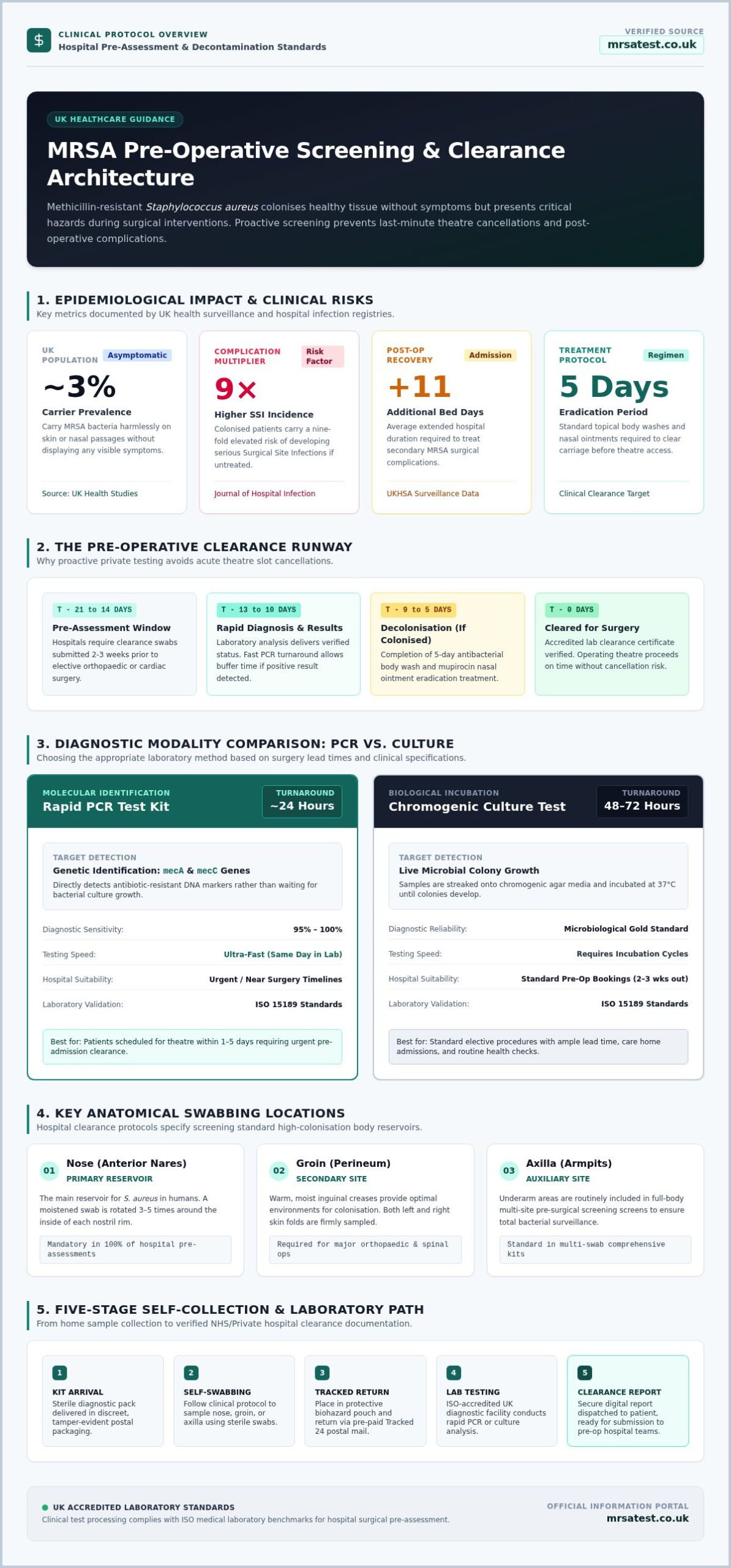
Did you know that approximately 3% of the healthy UK population carries MRSA on their skin or inside their nasal passages without ever showing symptoms? While harmless in daily life, this asymptomatic colonisation can lead to serious surgical site infections or even result in your operation being cancelled at the last minute. If you’re preparing for an upcoming procedure, the pressure to meet hospital clearance protocols can feel overwhelming. You want to ensure your safety without the stress of additional clinic visits or public waiting rooms.
When you choose to order mrsa test kit uk services through a professional provider, you gain control over your pre-surgery timeline. We understand that you need accredited laboratory results and total clinical discretion to move forward with confidence. This article explains how to secure a high-quality testing kit that meets strict hospital standards, providing you with a reliable path to clearance from the comfort of your home.
We’ll break down the differences between rapid PCR and traditional culture methods, helping you choose the right option for your surgery date. You’ll also learn about our streamlined process, from discreet delivery to receiving your verified results within 24 to 72 hours of laboratory receipt.
Key Takeaways
- Learn why UK hospitals require MRSA screening to prevent surgical site infections and ensure your procedure proceeds as scheduled.
- Understand the difference between Rapid PCR molecular testing for 24-hour results and traditional Culture methods for 48-72 hour timelines.
- Discover how to choose the correct swabbing sites, such as nose, groin, and axilla, to meet your specific hospital’s pre-assessment protocols.
- Find out how easy it is to order mrsa test kit uk services for a private, stress-free screening experience without the need for a GP appointment.
- Follow our step-by-step guide to self-collection to ensure your sample is processed accurately by an ISO-accredited UK laboratory.
Why MRSA Screening is Essential for Surgery and Health in the UK
MRSA stands for methicillin-resistant Staphylococcus aureus (MRSA). It’s a type of bacteria that has developed resistance to several widely used antibiotics, making infections much harder to treat than standard staph. Screening isn’t about diagnosing an illness in the traditional sense; it’s a preventative check to identify “colonisation.” This means the bacteria live harmlessly on your skin or in your nose without causing symptoms. However, if these bacteria enter a surgical wound, they can cause serious complications.
UK hospitals maintain strict safety protocols to protect patients from these risks. Data from the Journal of Hospital Infection suggests that patients colonised with MRSA face an estimated 9-fold higher risk of developing a surgical site infection if the bacteria aren’t cleared before the operation. By choosing to order mrsa test kit uk services privately, you can identify your status early. This allows sufficient time for the standard 5-day decolonisation regimen if required, ensuring your surgery proceeds exactly as scheduled.
Proactive testing is often the difference between a smooth recovery and a cancelled theatre slot. Hospitals generally require results to be submitted between 14 and 21 days before elective surgery. If you wait for a hospital-led appointment and test positive, there’s often not enough time to complete treatment and repeat the swabs before your date. Taking control of the timeline yourself removes this uncertainty.
Pre-Surgery Requirements for Orthopaedic and Cardiac Procedures
High-risk surgeries, such as joint replacements or heart procedures, involve stricter MRSA protocols because the stakes are higher. In these cases, a post-operative infection can be devastating, often requiring additional surgeries. UKHSA surveillance data indicates that complications from MRSA infections can extend a patient’s hospital stay by an average of 11 days. You can find more details on coordinating these medical requirements in our guide on preparing for surgery.
Screening for Care Home Admissions and Healthcare Staff
Screening is also vital outside of the operating theatre. Residential care settings often require a clear test before admission to protect vulnerable residents. Similarly, UK medical professionals frequently undergo occupational health screening, particularly if they’ve been carriers in the past. If you need to provide proof of clearance for work or a relative’s care, you can order mrsa test kit uk for a fast, accredited result delivered with total discretion.
Understanding Your Options: MRSA PCR vs. Culture Test Kits
Choosing the right diagnostic method is a vital step when you order mrsa test kit uk. While both tests are designed to detect the same bacteria, they use different technologies to reach a result. Your choice usually depends on how quickly your hospital requires the clearance and how close you are to your scheduled surgery date. Both methods are processed in accredited UK laboratories to ensure clinical accuracy.
How the Rapid PCR Test Identifies MRSA DNA
The Rapid PCR (Polymerase Chain Reaction) test is a advanced molecular technique. Rather than waiting for bacteria to multiply, it searches for the specific genetic “fingerprint” of MRSA. It amplifies and identifies the mecA and mecC genes, which are responsible for the bacteria’s resistance to antibiotics. This method is incredibly precise, with clinical sensitivity rates between 95% and 100%. Because the process is molecular, results are typically available within 24 hours of the laboratory receiving your sample. This speed makes it the preferred choice for patients with surgery dates in the very near future. You can find more technical details in our MRSA rapid PCR kit guide.
The Clinical Reliability of Culture-Based Screening
The traditional culture test remains a primary gold standard in clinical microbiology. In this process, laboratory technicians place your sample on a specialized growth medium, such as chromogenic agar, and incubate it. This allows any present bacteria to grow until they are visible and can be formally identified. While highly reliable, this biological process cannot be rushed, typically requiring 48 to 72 hours from laboratory receipt to provide a final result. It’s a cost-effective option for routine screening when your surgery is still several weeks away. Following NHS guidance on MRSA helps ensure that asymptomatic colonisation is identified before you enter a sterile surgical environment. A negative result provides the documented evidence hospitals need to confirm you aren’t carrying the bacteria.
- Rapid PCR: 24-hour turnaround from lab receipt; detects bacterial DNA; ideal for urgent deadlines.
- Culture Test: 48-72 hour turnaround from lab receipt; traditional bacterial growth; cost-effective for elective procedures.
- Accreditation: Both tests are performed by The Doctors Laboratory Ltd (TDL) under ISO 15189 standards.
If you’re unsure which method your hospital prefers, check your pre-assessment paperwork before you order mrsa test kit uk at mrsatest.co.uk to ensure you meet your specific clinical requirements.
How to Choose the Right MRSA Swab Kit for Your Needs
Selecting the correct diagnostic tool is a critical part of your pre-surgical preparation. When you order mrsa test kit uk from a specialist provider, you’ll notice different options based on the number of body sites being screened. This isn’t just a matter of preference; it’s about matching the specific clinical requirements set by your hospital or surgeon. Choosing the right kit ensures your results are accepted without delay.
Nose and Groin vs. Triple-Site (Axilla) Screening
Surgeons often request a “Triple-Site” screen to ensure the highest level of patient safety. While the nose and groin are the most common areas for colonisation, the axilla (armpit) is another warm, moist environment where MRSA bacteria frequently reside. Following NICE surgical site infection guidelines, many UK trusts now mandate multi-site screening to identify asymptomatic carriers who might be missed by a single-site swab.
It’s essential to check your hospital pre-assessment letter before making a choice. This document will specify whether they require a standard two-site screen or the more comprehensive three-site screen. Opting for the triple-site option provides the most thorough detection, significantly reducing the risk of a missed colonisation that could lead to post-operative complications or an extended hospital stay.
At-Home Convenience vs. Private GP Appointments
Many patients find that self-collection offers a level of privacy and comfort that a clinic visit cannot match. When you order mrsa test kit uk, you avoid the inconvenience of booking a GP appointment and the potential discomfort of an in-person swab. From a financial perspective, at-home kits are often more cost-effective. They typically include the laboratory fees and prepaid return shipping in one price, whereas private clinics frequently charge separate consultation fees on top of the diagnostic costs.
Our at-home test kits UK guide provides more information on how these services bridge the gap between private convenience and clinical excellence. By using UKCA-marked collection systems and partnering with ISO-accredited laboratories, we ensure that your results are just as reliable as those obtained in a hospital setting.
When assessing your needs, you must also consider your timeline. Factor in the time for Royal Mail Tracked 24 delivery both ways, alongside the laboratory’s processing window. If your surgery is scheduled for the coming week, a Rapid PCR kit is usually the safest choice to ensure you have your results in time for your pre-assessment deadline.
Step-by-Step Guide: How to Use Your MRSA Self-Collection Kit
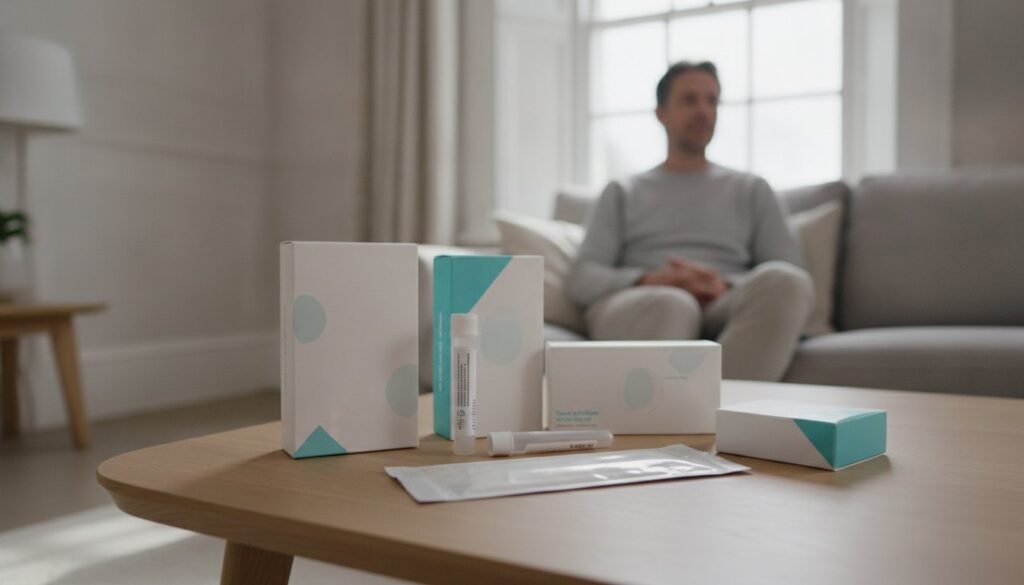
Once you decide to order mrsa test kit uk services, your kit will arrive in discreet packaging with all the necessary components for a clinical-grade sample collection. Preparation is the first step to ensuring a valid result. Begin by thoroughly washing your hands with soap and water, then clear a clean, flat surface to lay out the kit contents. You’ll typically find one or more swabs, transport tubes containing liquid or gel media, and a laboratory request form. It’s vital to read the included instructions carefully before you begin the process.
The collection process involves swabbing specific body sites where MRSA is most likely to colonise. For the nostrils, you’ll need to insert the swab gently into the front of one nostril and rotate it against the inside surface. Repeat this using the same swab for the other nostril. If your kit includes groin or axilla (armpit) screening, you’ll use separate swabs for these areas, focusing on the skin folds where bacteria tend to congregate. Once collected, each swab must be placed immediately into its designated transport tube to preserve the sample for the laboratory.
Mastering the Swab Technique for Accurate Results
To ensure the laboratory can detect any present bacteria, you must collect enough skin cells and secretions. Apply firm but gentle pressure as you rotate the swab. A good rule of thumb is to rotate the swab for 5 to 10 seconds per area. This duration ensures a sufficient sample size for either PCR or culture analysis. Accuracy also depends on avoiding contamination. Don’t let the tip of the swab touch any surfaces other than the specific site being tested, such as your clothing or the outside of the transport tube. If the swab tip is contaminated, the result may be voided, leading to delays in your surgery clearance.
After collection, ensure all tubes are tightly sealed. You must clearly label each tube with your name, date of birth, and the date of collection. If the laboratory cannot verify the identity of the sample or if the request form is incomplete, they won’t be able to process the test. This step is just as important as the swabbing itself for maintaining clinical standards.
Returning Your Sample via UK Prepaid Shipping
Logistics play a critical role in the viability of your sample. We provide a prepaid Royal Mail Tracked 24 return envelope to ensure your kit reaches our accredited UK laboratory as quickly as possible. It’s best to post your sample on the same day you collect it. Avoid posting on a Friday or Saturday if possible, as this can lead to the sample sitting in the postal system over the weekend, which may affect the accuracy of a culture test. By posting Monday through Thursday, you ensure the fastest possible turnaround for your results. You can track your kit’s journey using the reference number provided on your return label for total peace of mind.
Ready to secure your pre-surgery clearance? Order your MRSA screening kit today and take the first step toward a safe, successful procedure.
Why Order Your MRSA Test Kit from mrsatest.co.uk?
When you choose to order mrsa test kit uk services, you’re looking for more than just a simple swab. You need a diagnostic partner that understands the high-stakes environment of pre-operative care and the strict requirements of UK hospital admissions. Our service is built on a foundation of clinical accuracy, rapid turnaround, and total discretion. Every step of our process is designed to give you peace of mind while providing the documented evidence your surgical team requires.
We’ve streamlined the path to clearance by focusing on 100% UK-based operations. This ensures full compliance with domestic health regulations and allows for faster shipping times than international providers. By partnering exclusively with The Doctors Laboratory Ltd (TDL), we ensure your samples are processed using the same high-tier equipment and expertise used by leading private clinics across the country. Whether you’re facing an urgent surgery date or a routine admission, our service provides a reliable, stress-free alternative to traditional clinic visits.
Accredited Laboratories and Trusted Results
Using UKAS-accredited facilities is a non-negotiable standard for medical diagnostics. Accreditation under ISO 15189 means the laboratory has been independently verified for technical competence and quality management. This is exactly why our results are trusted by surgeons and hospital admissions teams alike. Beyond clinical accuracy, we prioritise your data security. Our systems are fully compliant with UK GDPR and the Data Protection Act 2018, ensuring your sensitive health information remains confidential at every stage. For those seeking a deeper understanding of the bacteria and its implications, our what is MRSA guide provides a comprehensive look at symptoms and risks.
Supporting Your Pre-Op Journey with Confidence
We know that a surgery date is often the result of months of waiting. A positive MRSA result doesn’t have to mean a cancellation, provided you have the information early enough to act. Our PCR options are specifically designed for these urgent timelines, offering results within 24 hours of laboratory receipt. This speed allows you to start the necessary decolonisation protocol immediately if required, keeping your surgical recovery on track. We’ve helped many patients avoid costly delays by providing the fast, professional results they need from the comfort of their own homes. When you order mrsa test kit uk through us, you’re choosing a service that prioritises your health and your schedule.
Order your confidential MRSA test kit online today to ensure your surgical journey proceeds without unnecessary hurdles or delays.
Secure Your Pre-Surgery Peace of Mind
Preparing for surgery involves many moving parts, but your MRSA clearance shouldn’t be a source of stress. By choosing to order mrsa test kit uk services, you bypass the need for clinical appointments and take control of your own health timeline. Whether you require the rapid 24-hour results of a PCR test or the traditional reliability of a culture swab, our process ensures your samples are handled with the highest level of expertise.
Our partnership with UKAS-accredited laboratories means your results meet the strict safety standards required by UK hospitals. We provide free shipping and prepaid returns, making the logistics as simple as possible. With results delivered directly to you via a secure digital platform, you can provide your surgical team with the necessary documentation well before your procedure date.
Don’t let avoidable delays impact your recovery. Order Your Professional MRSA Test Kit Online today and move forward with your surgery with total confidence. We’re here to support you through every step of this simple, well-managed process.
Frequently Asked Questions
How long does it take to get MRSA test results in the UK?
When you order mrsa test kit uk, the time to receive your results depends on the testing technology you select. If you choose the Rapid PCR option, results are typically available within 24 hours of the laboratory receiving your sample. For traditional culture tests, the process takes between 48 and 72 hours. This time is necessary for the laboratory to incubate the sample and accurately identify any bacterial growth.
Will my hospital accept a private MRSA test result?
Most UK hospitals and private clinics accept results from our service because all samples are processed by The Doctors Laboratory Ltd (TDL). This facility operates under strict ISO 15189 accreditation, which is the gold standard for clinical laboratories. These accredited results provide the documented evidence that surgical admissions teams require. You should always check your specific pre-operative instructions to ensure the correct body sites are included in your screen.
Do I need to swab my nose, groin, and armpit?
This depends on the specific requirements outlined in your hospital admission letter. Standard pre-operative screening typically involves swabbing the nostrils and the groin area. However, many surgeons now mandate “triple-site” screening, which adds the axilla (armpit) to the process. We offer both two-site and three-site kits to ensure you can meet these clinical standards. Multi-site screening is recommended because it increases the accuracy of detecting asymptomatic colonisation.
What is the difference between an MRSA PCR test and a culture test?
The primary difference lies in the detection technology and the turnaround time. A PCR test uses molecular detection to identify the genetic material of MRSA, providing results within 24 hours of laboratory receipt. A culture test involves growing the bacteria on a special medium, which takes 48 to 72 hours. While both methods are considered highly accurate clinical standards, the PCR method is ideal for patients with imminent surgery dates who need urgent clearance.
Is the at-home MRSA kit discreetly packaged?
Yes, we prioritise your medical privacy at every stage of the process. When you order mrsa test kit uk, the package is delivered in plain, unbranded wrapping that does not mention the contents or the nature of the test. This ensures total discretion from the moment it arrives at your door to when you return it. Your results are also delivered through a secure, confidential digital platform, maintaining your privacy throughout the screening journey.
Can I use an at-home MRSA kit if I have a skin rash?
You can use the kit if you have a rash, but you should avoid swabbing areas of skin that are broken, bleeding, or severely inflamed. The screening is designed to detect colonisation on intact skin surfaces and mucous membranes. If you have an active skin infection or a surgical wound, you should consult your clinical team for guidance. For routine pre-operative screening, ensure you follow the swabbing instructions for the healthy skin folds.
How do I return my MRSA sample to the laboratory?
Returning your sample is straightforward and included in the service cost. Each kit comes with a prepaid Royal Mail Tracked 24 return envelope. Once you have completed your swabs and secured them in the transport tubes, place them in the envelope and post them at any Royal Mail post box. We recommend posting your sample on the same day it is collected, preferably between Monday and Thursday, to ensure the fastest possible transit.
What happens if my MRSA test result is positive?
A positive result indicates MRSA colonisation, meaning the bacteria are present on your skin but not necessarily causing an infection. If this happens, you should contact your hospital or GP. They will typically prescribe a five-day decolonisation treatment, which usually involves an antibiotic nasal ointment and an antiseptic body wash. Completing this protocol before your surgery significantly reduces the risk of post-operative complications and ensures your procedure can safely go ahead as planned.
