

Imagine the frustration of preparing for months for a life-changing procedure, only to have it cancelled at the hospital doors because of a positive swab. In the UK, mrsa screening before cardiac surgery uk is a mandatory requirement designed to protect you from serious complications like endocarditis. With MRSA bacteraemia cases rising by nearly 17% in the last year, hospitals are strictly enforcing a “Zero Tolerance” policy for surgical site infections. It’s completely natural to feel anxious about these requirements or confused by the 5-day decolonisation protocol that follows a positive result.
This 2026 guide is here to ensure your heart surgery stays on schedule by helping you understand the screening timeline and how to manage your results proactively. We’ll walk you through the current NHS mandates, explain why testing two to four weeks before your date is critical, and show you how to secure clinical-grade results from the comfort of your home. You’ll gain a clear roadmap for your pre-operative preparation, giving you the confidence that you’re medically clear and ready for a safe, successful recovery.
Key Takeaways
- Learn why mrsa screening before cardiac surgery uk is a mandatory safety measure to protect prosthetic valves and pacemakers from serious post-operative infections.
- Understand the simple, non-invasive swabbing process for the nose and groin that forms the basis of your pre-operative assessment.
- Discover the optimal 2-4 week testing window that ensures you have enough time to complete decolonisation and avoid last-minute surgical cancellations.
- Gain peace of mind by learning how a 5-day decolonisation protocol can effectively clear MRSA colonisation before your procedure begins.
- Find out how at-home PCR screening kits can provide rapid, clinical-grade results within 24 hours of lab receipt to keep your surgery on schedule.
Why MRSA Screening is Mandatory for Cardiac Surgery in the UK
Preparing for heart surgery involves many clinical steps, but few are as critical as the pre-operative swab. Methicillin-resistant Staphylococcus aureus (MRSA) is a common bacterium that has developed resistance to several widely used antibiotics. While it often lives harmlessly on the skin of healthy individuals, it poses a significant threat in a surgical environment. In the UK, mrsa screening before cardiac surgery uk is a mandatory safety protocol to prevent life-threatening post-operative infections.
Hospitals must ensure you aren’t “colonised” before making a surgical incision. Being colonised means you carry the bacteria on your skin or in your nostrils without being ill. If these bacteria enter the body during a procedure, they can cause deep-seated infections that are difficult to treat. For cardiac patients, this screening isn’t just a formality; it’s a vital safeguard for your recovery.
The Vulnerability of the Heart and Prosthetics
The heart is uniquely vulnerable during surgery. When a surgeon performs a bypass or valve replacement, any bacteria present on the skin can potentially travel into the bloodstream. Once MRSA reaches the heart, it can lead to endocarditis, a serious inflammation of the heart’s inner lining. This risk is exceptionally high because cardiac procedures often involve the insertion of prosthetic valves, pacemakers, or stents.
Bacteria like MRSA have a tendency to “stick” to artificial surfaces. Unlike natural tissue, prosthetic material doesn’t have its own blood supply, which makes it harder for the body’s immune system or traditional antibiotics to reach and clear the infection. Because treating an infected heart valve is incredibly complex, prevention is the only reliable strategy for cardiac patients. Screening ensures that any colonisation is identified and treated well before you enter the operating theatre.
National Clinical Standards for 2026
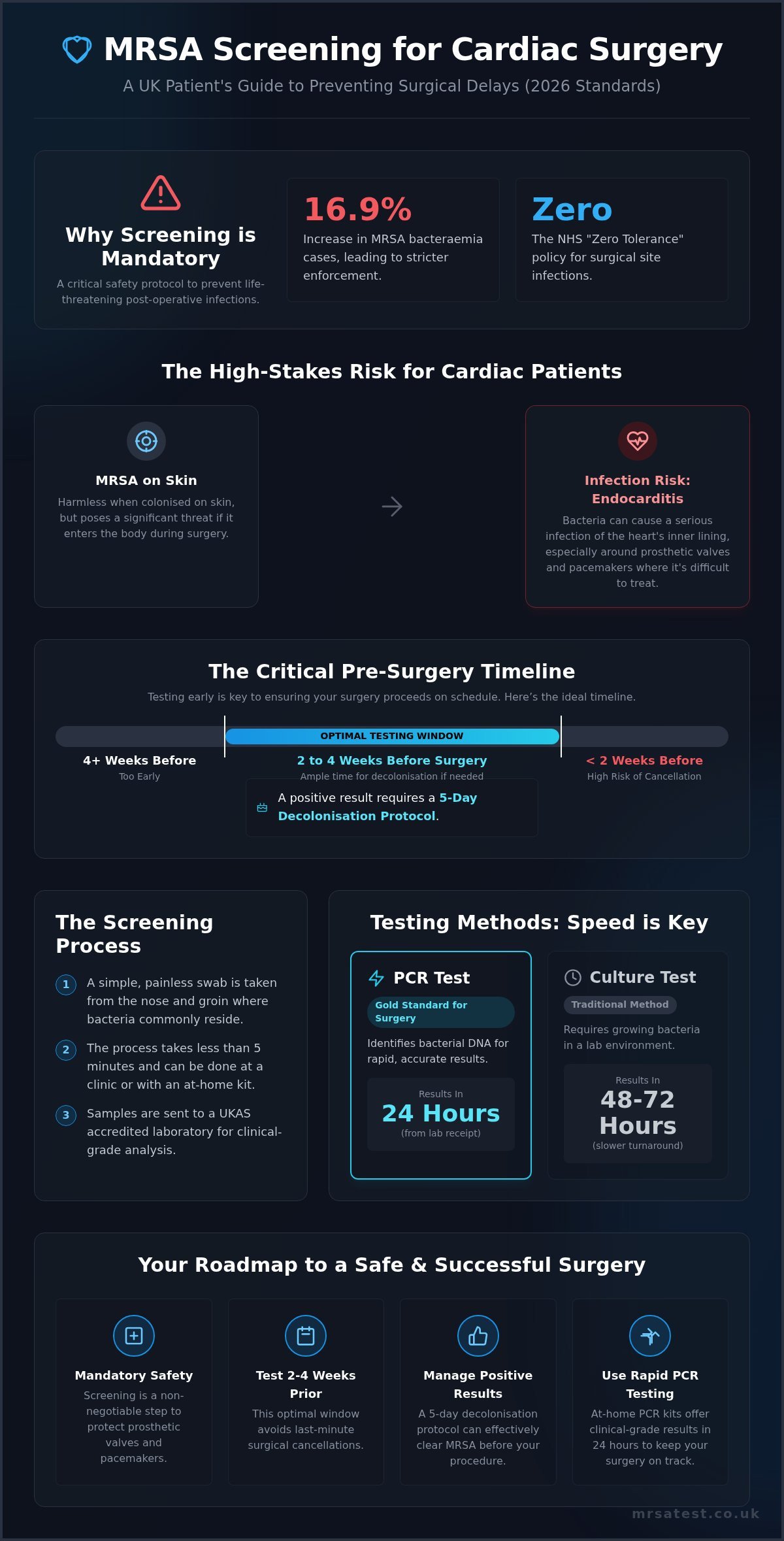
The NHS maintains a “zero tolerance” policy for hospital-acquired MRSA bacteraemia. This policy remains a top priority in 2026, especially as recent data showed a 16.9% increase in cases between 2023 and 2025. Every elective cardiac admission in the UK must undergo screening to maintain these stringent safety levels. Whether you’re being treated in an NHS trust or a private facility, the same UKAS-backed screening protocols apply to ensure uniform patient safety.
Private hospitals mirror these national standards to protect their surgical outcomes. If you’re looking for more detailed information on how these bacteria behave, you can read our What Is MRSA? Complete Guide. Understanding these requirements helps you stay in control of your surgical timeline and ensures your procedure goes ahead as planned without avoidable delays.
The Screening Process: What Cardiac Patients Should Expect
Understanding the steps involved in your pre-operative assessment can help alleviate any lingering anxiety. The actual procedure for mrsa screening before cardiac surgery uk is remarkably simple and non-invasive. It involves taking swabs from specific areas of your body where bacteria are most likely to reside. This process is entirely painless and typically takes less than five minutes to complete, whether you’re at a clinic or using a kit in the privacy of your own home.
For cardiac patients, accuracy is paramount. To ensure your results meet the high standards required by surgical teams, samples must be processed by a UKAS accredited laboratory. These facilities follow strict national guidelines to provide reliable data that your surgeon can trust. This testing is a standard part of the MRSA screening and decolonisation process, ensuring every patient enters the operating theatre with the lowest possible risk of infection.
PCR vs. Culture Testing for Surgery
When time is of the essence, the method of testing matters. Rapid PCR (Polymerase Chain Reaction) testing is the modern gold standard for surgical patients. This technology identifies bacterial DNA and can provide results within 24 hours of the lab receiving your sample. In contrast, standard culture testing involves growing the bacteria in a controlled environment, which usually takes 48 to 72 hours for a definitive identification.
Cardiac patients often prefer the PCR method because it offers a faster route to peace of mind. If your surgery date is approaching quickly, a 24-hour turnaround ensures you have the necessary documentation for admission without the stress of a long wait. If you’re managing your own timeline, selecting a rapid test from mrsatest.co.uk can help keep your preparation on track.
Body Sites: Why Multiple Swabs are Necessary
MRSA tends to “colonise” specific areas of the body known as reservoirs. The most common sites are the nostrils and the groin, also known as the perineum. Because the bacteria might be present in one area but not another, taking swabs from multiple locations is essential for a comprehensive screen. A single swab might miss a colony, which could lead to a false sense of security before your procedure.
Depending on specific hospital protocols or the complexity of your heart surgery, some clinical teams may also request swabs from the armpits (axilla) or the throat. The goal is to achieve a “clear” result across every tested site. By identifying exactly where the bacteria are located, medical professionals can ensure that any necessary decolonisation treatment is targeted and effective, protecting your heart and any prosthetic implants from potential contamination.
Avoiding Surgery Cancellations: The Importance of Early Screening
A positive MRSA result on the day of your procedure usually leads to an immediate cancellation. This isn’t just a minor delay; it’s an emotionally and logistically draining experience for both patients and their families. To prevent this, hospitals require a negative result to be officially documented in your pre-operative file before you’re admitted to the ward. By choosing private mrsa screening before cardiac surgery uk, you can identify any colonisation weeks before your hospital admission, giving you ample time to address it without risking your surgery date.
Cancellations happen because surgeons cannot safely operate while you’re carrying bacteria that could cause a deep-seated heart infection. Managing your own testing allows you to take control of this variable. Arriving at the hospital with a negative result already in hand ensures that you meet the mandatory safety requirements from the moment you check in.
The Pre-Op Health & Logistics Timeline
Ideally, you should arrange your screening between two and three weeks before your scheduled heart surgery. This timeframe aligns with the standardised MRSA screening guidance provided by NHS England, which aims to reduce surgical delays and improve patient outcomes. Building in this “buffer” is essential because if you do test positive, you’ll need at least five days to complete a decolonisation treatment before you can be cleared for surgery.
A proactive timeline helps you manage these specific steps:
- The delivery and return of your at-home collection kit.
- The 24-hour laboratory processing time for PCR results.
- The 5-day window for topical treatments if the bacteria are detected.
- Final confirmation of a clear status before your admission.
For a broader view of how to manage your recovery and clinical requirements, consult our Preparing for Surgery Checklist.
The Stress of Last-Minute Hospital Swabs
Many patients rely solely on the swab taken during their hospital pre-admission appointment. However, this can be a gamble. If that swab returns a positive result just 48 hours before your surgery, the clinical team has no choice but to postpone your operation. This often leads to a cycle of rescheduling that adds unnecessary stress to an already challenging time. It’s often harder to secure a second surgery slot quickly, especially in busy cardiac units.
A private test acts as a reliable safety net. It allows you to identify and resolve any issues quietly and efficiently from home. Knowing that you’ve already met the requirements for mrsa screening before cardiac surgery uk provides the peace of mind you need. You can focus on your upcoming procedure and recovery, rather than worrying about administrative hurdles or the fear of a last-minute cancellation.
Managing a Positive Result: The Decolonisation Protocol
If your mrsa screening before cardiac surgery uk returns a positive result, it’s important to stay calm. Testing positive doesn’t mean you have an active infection or that you’re unwell. It simply means you’re “colonised,” which indicates the bacteria are living on your skin or inside your nostrils without causing harm. While these bacteria are generally harmless in everyday life, they must be removed before your operation to prevent them from entering the surgical site. This situation is common and manageable, provided you have enough time before your admission date.
Colonisation is easily treated with a standard 5-day decolonisation programme. This protocol involves the use of a specific antibacterial body wash and a prescribed nasal ointment to eliminate the bacteria from your skin and mucous membranes. By following the steps precisely, you can effectively clear the bacteria and ensure your heart surgery proceeds safely. Successful decolonisation allows your surgery to stay on schedule, usually after a clear re-test confirms the bacteria are gone.
The 5-Day Treatment Steps
The treatment is straightforward but requires strict adherence to be effective. Missing a day or a dose can allow the bacteria to persist, which might delay your procedure. Most programmes follow these three essential steps:
- Step 1: Apply the prescribed antibacterial nasal ointment to the inside of both nostrils three times a day.
- Step 2: Use a chlorhexidine-based body wash and hair shampoo for your daily wash, ensuring the product covers your entire body.
- Step 3: Change your bed linens, towels, and clothes every day during the treatment period to prevent re-contamination from bacteria shed onto fabrics.
Re-Testing and Hospital Clearance
Most hospitals in the UK require a “clear” set of swabs after the treatment ends to confirm you’re no longer colonised. This is why screening early creates a vital “window of opportunity.” If you wait until the last minute, you won’t have time to complete the five days of treatment and get a follow-up result before your surgery date. A rapid 24-hour PCR test is particularly useful here, as it provides the fast confirmation needed to update your medical records quickly.
Ensuring your surgeon has the updated report before your admission time is the final step in securing your surgery slot. If you need to confirm your status quickly after completing your treatment, you can order a rapid MRSA PCR kit to get clinical-grade results within 24 hours of lab receipt. This proactive approach gives both you and your surgical team the confidence that you’re ready for a safe recovery.
Reliable At-Home MRSA Testing for Cardiac Patients
Preparing for heart surgery is stressful enough without the logistical headache of extra hospital appointments for simple swabs. When you choose mrsatest.co.uk, you’re accessing professional-grade screening that mirrors the exact standards used in NHS and private surgical wards. Our process for mrsa screening before cardiac surgery uk is designed to fit into your existing pre-operative timeline without causing disruption. You can complete the collection process in minutes from the comfort of your own home, avoiding unnecessary trips to a clinic during your preparation period.
Trust is essential when it involves your surgical clearance. We use UKAS-accredited laboratories to ensure your results are reliable and recognised by UK surgeons. Whether you need a standard Culture test or a Rapid PCR kit, our services provide the clinical accuracy required to confirm you’re clear for your procedure. By managing your own screening, you take a proactive step in protecting your health and ensuring your surgical team has the data they need well in advance of your admission.
Why Choose Our Rapid PCR Service?
For cardiac patients, the 24-hour PCR service is often the most effective choice. It’s the fastest way to get definitive pre-surgery answers, providing results within just 24 hours of your sample reaching our laboratory. This speed is a significant advantage if your surgery date is approaching or if you need quick confirmation after completing a decolonisation protocol. Unlike basic kits that might only test one area, our comprehensive screening includes swabs for the nose, groin, and axilla (armpit).
We’ve streamlined the logistics to make the process as efficient as possible. Every kit includes prepaid 24-hour return shipping to our laboratory partners, ensuring your samples are processed without delay. This rapid turnaround helps you avoid the “waiting game” associated with traditional culture methods, giving you and your family peace of mind during a critical time. It’s a professional solution that combines clinical-grade accuracy with the convenience of a non-clinical environment.
Ordering Your Confidential Pre-Surgery Kit
The path to a safe surgery starts with a simple online order. We provide discreet, fast delivery across the UK, ensuring your kit arrives quickly so you can stay on schedule. Our service operates under the same strict clinical governance used for hospital-acquired infection prevention, prioritizing your safety and data privacy at every stage. You’ll receive clear, easy-to-follow instructions that guide you through the self-collection process, making it virtually impossible to get wrong.
By securing your own results, you eliminate the risk of last-minute surprises at the hospital. You’ll have a digital report ready to share with your surgical team, proving you’ve met the mandatory requirements for mrsa screening before cardiac surgery uk. Don’t leave your operation date to chance or rely on a gamble with hospital timelines. Order your pre-surgery MRSA test kit today and move forward with your cardiac care with total confidence.
Securing Your Heart Surgery Timeline
Managing the requirements for mrsa screening before cardiac surgery uk doesn’t have to be a source of anxiety. By understanding the mandatory 2026 safety protocols, you’ve already taken the first step toward a successful recovery. Early screening is your best defence against last-minute cancellations, as it provides the necessary window for the 5-day decolonisation protocol if bacteria are detected. Protecting your heart and any prosthetic implants starts with clinical certainty well before you reach the hospital ward.
We’re here to support your preparation with professional, discreet testing that meets the highest clinical standards. Our UKAS-accredited laboratory partners provide the reliable data your surgical team requires, with rapid PCR results available within just 24 hours of lab receipt. This efficiency ensures you stay in control of your schedule and can arrive for your procedure with total confidence in your health status. It’s a simple process that prioritises your peace of mind and surgical safety.
Don’t leave your operation date to chance. Order Your Pre-Surgery MRSA Test Kit from mrsatest.co.uk today to ensure your cardiac care stays on track. You’re almost there, and we’re ready to help you cross the finish line with confidence.
Frequently Asked Questions
Why is MRSA screening mandatory before cardiac surgery in the UK?
MRSA screening is mandatory because heart surgery involves high risks, particularly when prosthetic valves or pacemakers are inserted. These artificial surfaces are prone to bacterial colonisation, making infections like endocarditis extremely difficult to treat. The NHS follows a “Zero Tolerance” mandate for hospital-acquired infections. Screening ensures you aren’t carrying the bacteria on your skin before the first incision is made, protecting your recovery and reducing the risk of life-threatening complications.
What happens if I test positive for MRSA before my heart operation?
Testing positive means you’re “colonised” with the bacteria rather than having an active illness. If this happens before your procedure, your surgical team will require you to undergo a standard 5-day decolonisation programme. This treatment uses antibacterial body wash and nasal ointment to clear the bacteria from your skin. Once the protocol is complete, a clear re-test is usually necessary before your operation can safely proceed as planned.
How long does the MRSA decolonisation process take?
The decolonisation process typically takes five consecutive days to complete. During this period, you apply a prescribed nasal ointment three times daily and use a chlorhexidine-based body wash for your skin and hair. It’s also vital to change your bed linens and towels every day to prevent re-contamination. After the fifth day, your clinical team will arrange a follow-up mrsa screening before cardiac surgery uk to confirm the bacteria have been successfully removed.
Will my cardiac surgery be cancelled if I have MRSA?
A positive result usually leads to a postponement rather than a permanent cancellation. Surgeons cannot safely proceed while you’re colonised because the risk of a deep-seated heart infection is too high. While a delay is logistically and emotionally difficult, it’s a vital safety measure. By identifying the bacteria early through private screening, you can often complete the treatment and secure a “clear” status before your scheduled hospital admission date arrives.
Can I do a private MRSA test for my NHS heart surgery?
Yes, you can use a private test for your NHS or private cardiac procedure. Hospitals accept results from UKAS-accredited laboratories that meet national clinical standards. Many patients choose a private mrsa screening before cardiac surgery uk as a “safety net” several weeks before their admission. This proactive approach gives you enough time to manage a positive result at home, ensuring you arrive at the hospital with the necessary clearance already documented.
Which is better for surgery prep: MRSA Culture or PCR test?
For surgical preparation, the Rapid PCR test is generally the superior choice due to its speed. PCR testing identifies bacterial DNA and provides results within 24 hours of the lab receiving your sample. Standard culture testing requires 48 to 72 hours to grow the bacteria for identification. If you’re working within a tight pre-operative window, the PCR method offers the fastest route to peace of mind and surgical clearance.
How soon before my cardiac surgery should I be screened for MRSA?
You should ideally be screened between two and four weeks before your scheduled procedure. This timeframe allows enough room for the 5-day treatment and a follow-up test if the bacteria are detected. Most UK hospitals require a negative result to be no older than 30 days on the day of your surgery. However, for major procedures, some clinical guidelines consider a negative screen valid for up to three months if your health status remains stable.
Are at-home MRSA test kits accepted by UK hospitals?
At-home kits are widely accepted by UK hospitals as long as they are processed by UKAS-accredited laboratory partners. These kits use the same clinical-grade swabs and diagnostic methods found in hospital settings. The key is ensuring the service provides a formal laboratory report that your surgeon can review. Using an at-home kit from a professional provider like mrsatest.co.uk allows you to meet mandatory requirements without the need for additional hospital visits.