Did you know that MRSA cases in England reached their highest level in over a decade during the 2024 to 2025 period? Receiving a positive notification can feel overwhelming, especially if you have an upcoming surgery or worry about your family’s safety. It’s completely natural to feel anxious when a term like “superbug” appears on a medical report, but a positive result isn’t a medical crisis. It is a manageable clinical status that simply requires the right response.
Understanding mrsa test results uk protocols is the first step toward regaining control. In most instances, a positive swab indicates “colonisation” rather than an active infection. This means the bacteria are present on your skin or in your nose but aren’t currently making you ill. We’ve designed this guide to provide you with a clear, professional roadmap through the standard five-day decolonisation programme. You’ll discover the exact clinical steps required for surgery clearance, practical home hygiene checklists including laundry temperatures, and how to verify your “clear” status with clinical accuracy. By following these evidence-based steps, you can protect your loved ones and ensure your healthcare journey remains on track.
Key Takeaways
- Understanding mrsa test results uk starts with distinguishing between asymptomatic colonisation and an active infection so you can manage your health effectively.
- Learn the specifics of the standard UK 5-day decolonisation programme, a targeted routine designed to clear the bacteria from your skin and nasal passages.
- Master essential home hygiene protocols, including the “no-sharing” rule for personal items, to protect your household and prevent transmission to loved ones.
- Discover the “Three Clear Swabs” requirement and how it serves as the clinical benchmark for proceeding with scheduled surgeries in the UK.
- Gain clarity on how to communicate private test results to your healthcare provider to ensure a seamless and safe transition into professional care.
Understanding Your Result: MRSA Colonisation vs. Active Infection
Methicillin-resistant Staphylococcus aureus (MRSA) is a specific strain of a very common bacterium that lives on the skin or in the nose of many healthy individuals. While most staph bacteria are easily managed with standard treatments, this version has developed resistance to several widely used antibiotics, such as methicillin. This resistance makes it more difficult to treat if it causes an illness, which is why UK healthcare providers prioritise screening for it before major procedures.
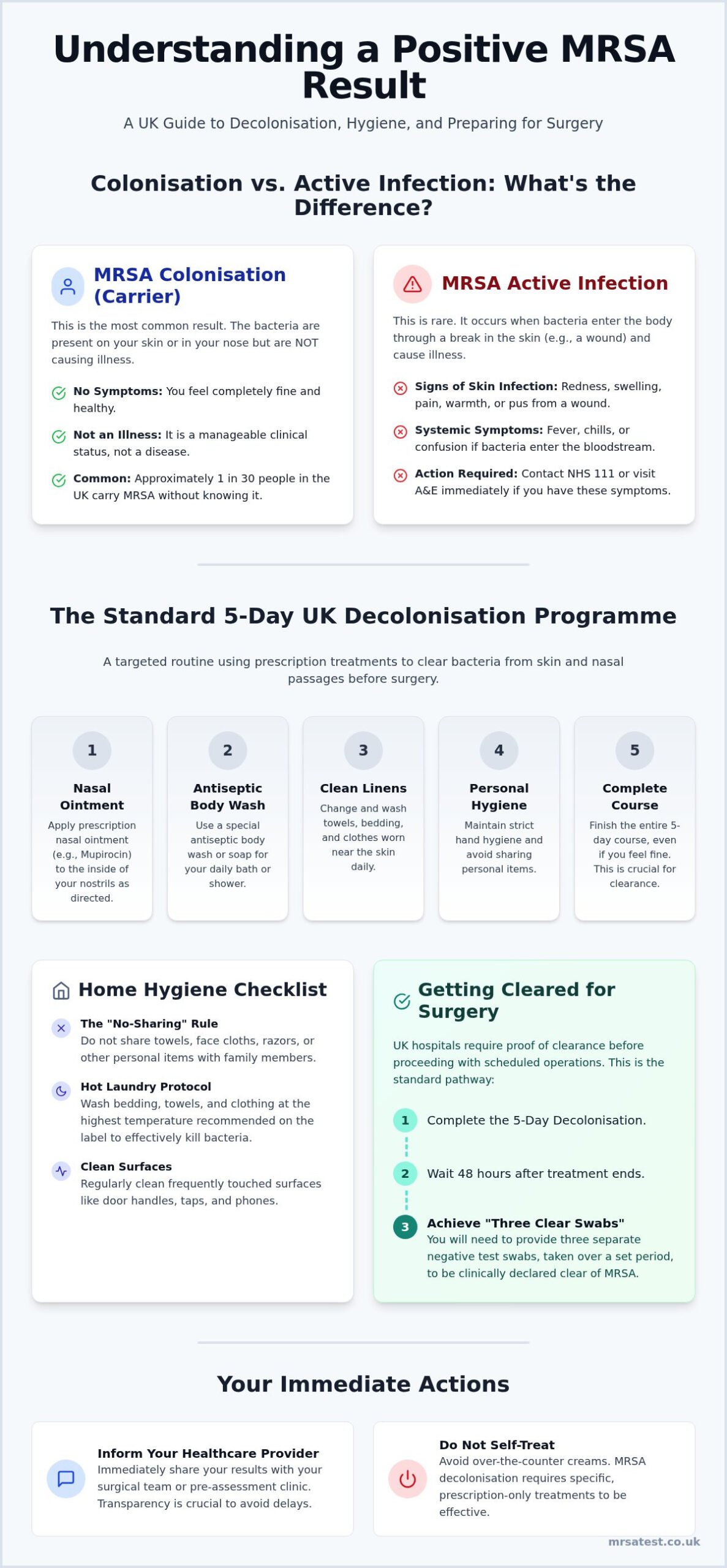
When you start understanding mrsa test results uk reports, the most vital distinction to make is between colonisation and infection. Most people who receive a positive result are “colonised.” This means you’re a carrier of the bacteria, but it isn’t currently causing you any harm or making you feel ill. In contrast, an active infection occurs only if the bacteria bypass your body’s natural defences, usually through a surgical incision, a catheter, or a significant break in the skin.
Hospitals across the UK screen patients before planned surgeries to mitigate the risk of hospital-acquired infections. By identifying carriers early, clinical teams can implement decolonisation steps to protect both the patient and the wider clinical environment. This proactive approach ensures that your recovery isn’t compromised by preventable complications.
Why did I test positive if I feel perfectly fine?
It’s estimated that approximately 1 in 30 people in the UK carry MRSA naturally without ever knowing it. These bacteria reside in “reservoirs” where they can survive without causing any symptoms. Common reservoirs include the nostrils, the throat, and skin folds such as the armpits or groin. Being colonised is a “status” rather than a disease. It doesn’t mean you’re sick; it simply means you’re carrying a specific passenger on your skin that needs to be managed before you undergo medical treatment.
Signs that colonisation has turned into an infection
While colonisation is usually harmless, you should monitor for changes if you have an open wound or recently had a procedure. An infection typically presents as a skin issue that might look like a boil or an abscess. Look for these specific indicators:
- Skin that is red, swollen, or painful.
- Areas that feel unusually warm to the touch.
- Pus or other drainage from a wound site.
If the bacteria enter the bloodstream, you might experience systemic symptoms like fever, chills, or sudden confusion. If you notice these signs, don’t wait. Contact NHS 111 or visit your local A&E immediately for professional assessment. For most people, however, a positive result simply means starting a straightforward decolonisation programme at home.
Immediate Steps: Communicating Private Results to UK Healthcare Providers
Once you’ve received your report, the most important step is transparency. If you’re scheduled for an operation, you must inform your surgical team or the hospital pre-assessment clinic immediately. Hiding a positive result doesn’t just risk your own health; it can lead to last-minute cancellations on the day of your procedure. When you’re understanding mrsa test results uk protocols, remember that clinical teams aren’t there to judge. They’re there to ensure your environment is safe and your recovery is uncomplicated.
You should never attempt to treat MRSA yourself using over-the-counter antiseptic creams or general antibiotics. These aren’t strong enough to eliminate the bacteria and can actually encourage further resistance. Standard UK decolonisation requires specific, prescription-only treatments like Mupirocin nasal ointment. Using the wrong products can provide a false sense of security while the bacteria remain present in your “reservoirs” like the nostrils or skin folds.
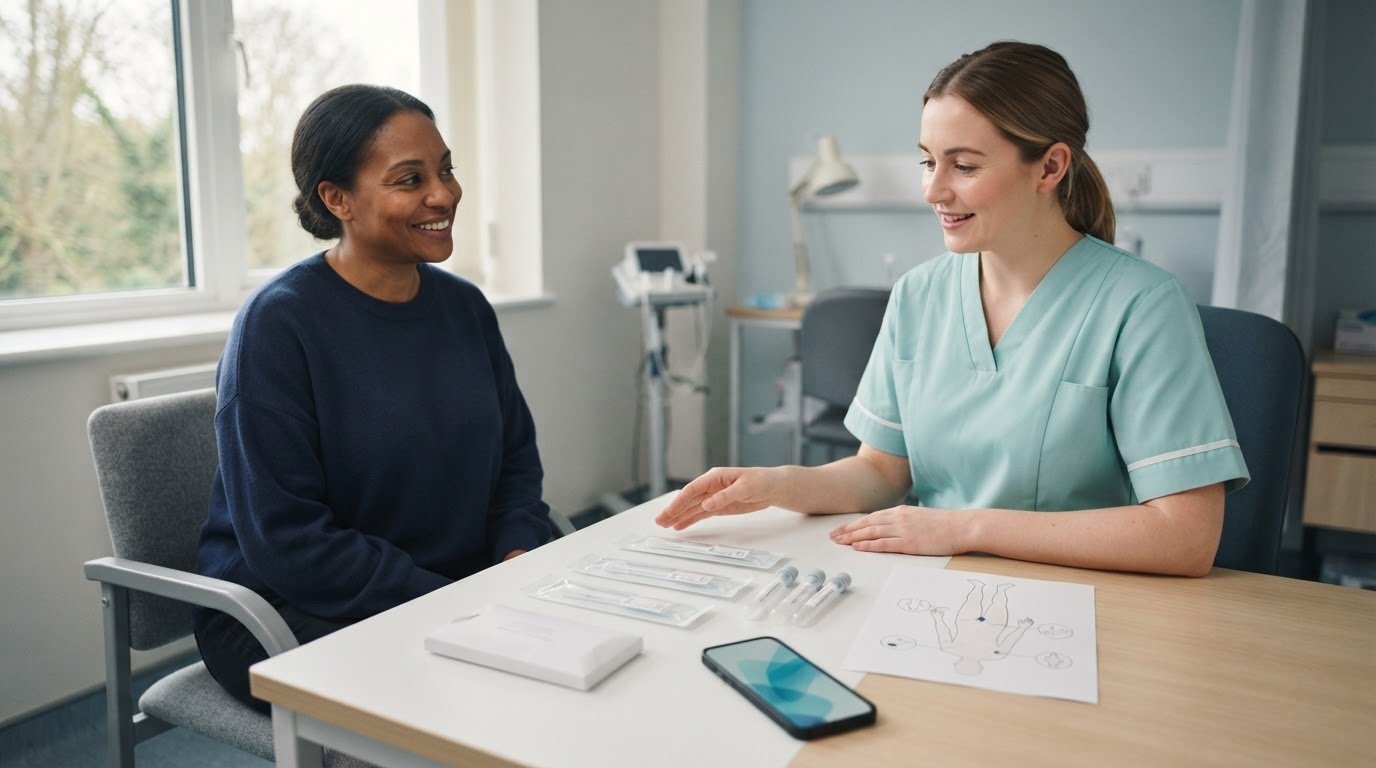
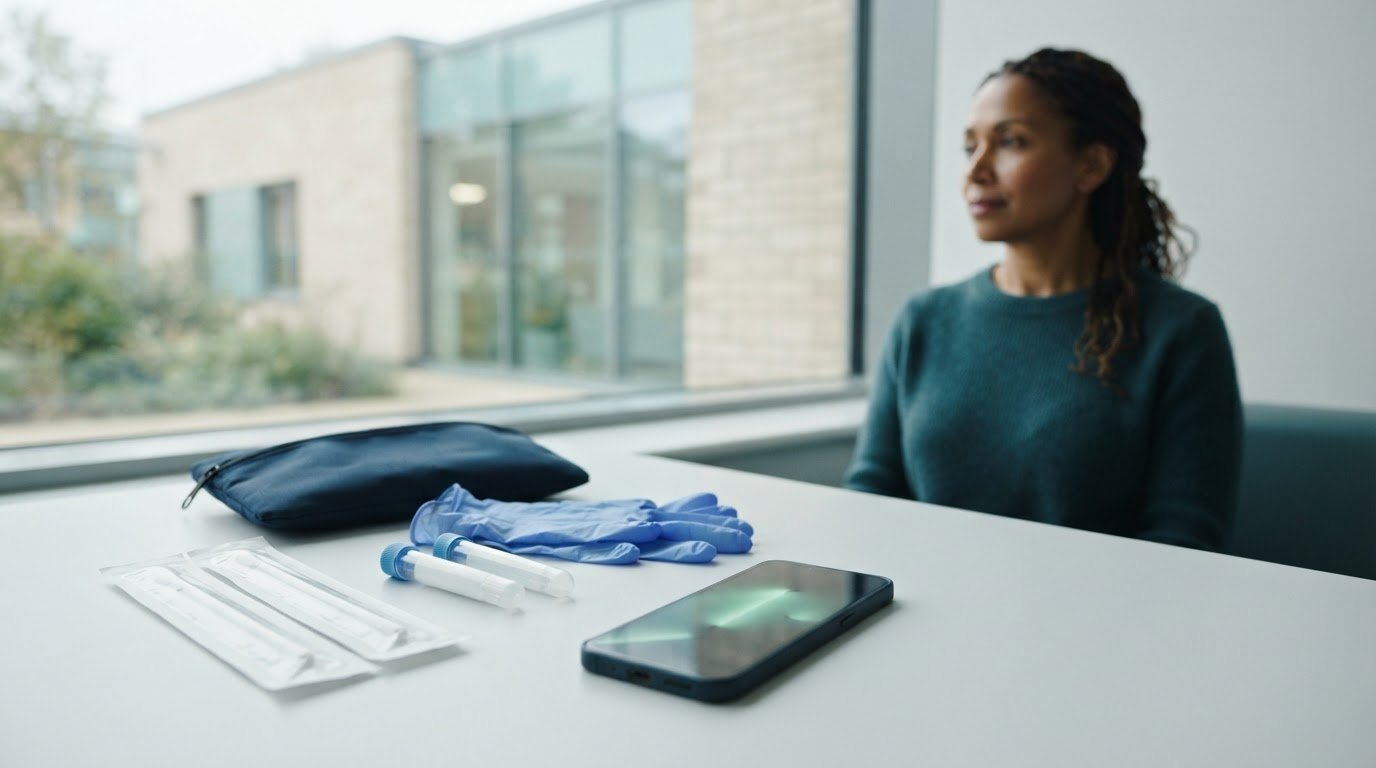
If you’ve used at-home test kits to identify your status, simply provide the digital or printed laboratory report to your healthcare provider. These reports contain the necessary clinical data, including the specific strain detected and the testing method used, which allows your GP or consultant to update your medical records accurately. Most NHS trusts and private hospitals have a dedicated Pre-Assessment Clinic that manages these pathways, ensuring you receive the correct decolonisation pack well before your surgery date.
How to share private test results with your GP
The most efficient way to handle a positive result is to contact your GP surgery via their digital consultation triage or a brief phone call. You can state: “I’ve received a positive MRSA swab result from a UK-accredited lab and need to start the standard 5-day decolonisation programme before my upcoming surgery.” This clear communication allows the GP to issue the correct prescriptions for chlorhexidine-based washes and nasal ointments. Clinical verification is a standard part of surgical safety, and your GP will ensure the treatment is noted on your Summary Care Record.
The transition from private screening to NHS care
UK-accredited laboratory results are widely respected by clinical teams across the country. Whether your result came from a rapid PCR test, which detects bacterial DNA in about 24 hours, or a traditional Culture test, the data is clinically actionable. PCR results are particularly useful for urgent pre-operative windows because of their speed. Once your treatment is complete, you may wish to verify your clear status with a follow-up test to ensure the decolonisation was successful before your final hospital check.
The UK Decolonisation Protocol: A Step-by-Step 5-Day Routine
Receiving a positive result triggers a specific clinical response. This isn’t about general cleanliness; it’s a targeted medical procedure. The standard UK decolonisation programme lasts exactly five days. This duration is clinically chosen to suppress the bacteria on your skin and eliminate it from your nasal passages. Skipping days or stopping early can lead to bacterial resistance, making the strain harder to clear in the future.
The protocol uses two primary medications: an antimicrobial body wash (typically 4% Chlorhexidine gluconate) and a nasal ointment (usually 2% Mupirocin). While understanding mrsa test results uk protocols, it’s helpful to view this as a temporary but essential “reset” for your skin’s microbiome. This two-pronged approach ensures that bacteria are addressed both on the surface and in their primary hiding spots.
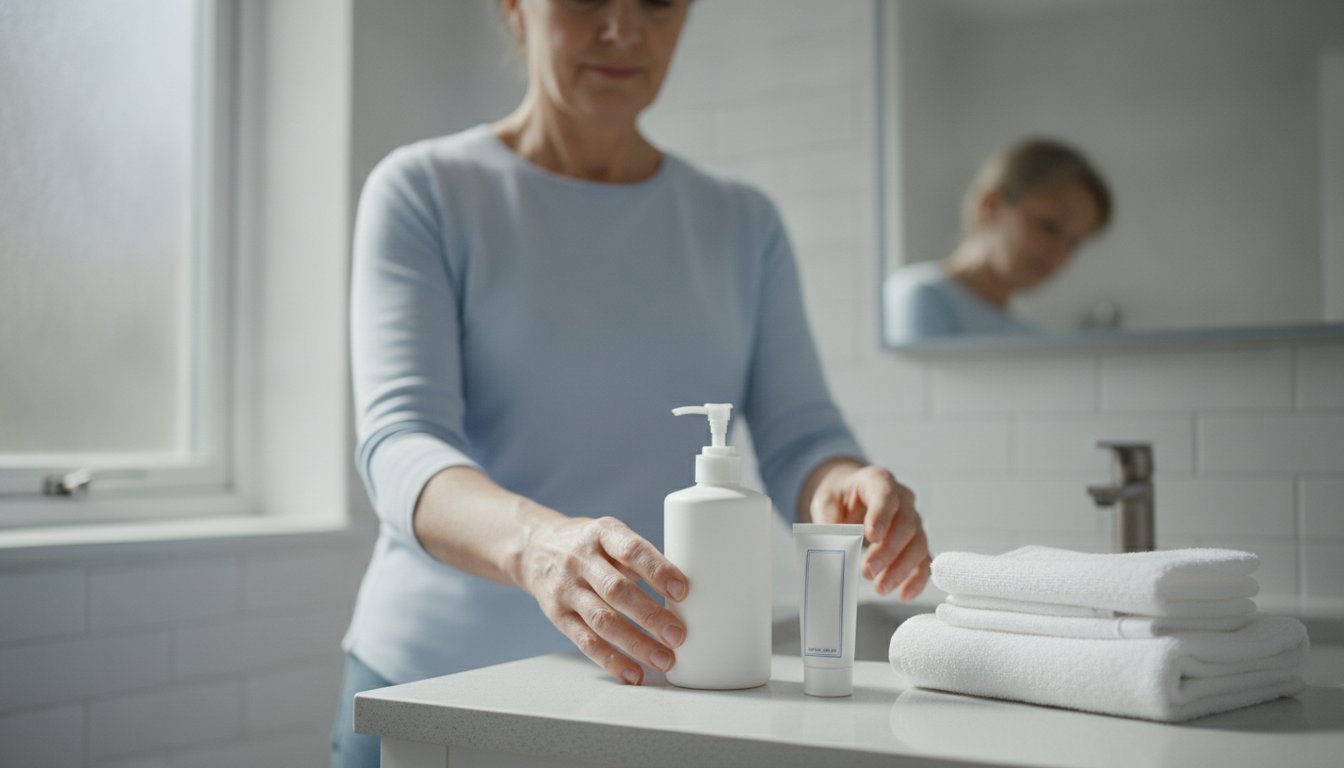
How to use antimicrobial body wash and shampoo
You’ll need to use the prescribed wash daily for five days. Unlike regular soap, this treatment requires a specific application method to be effective. Follow these steps for the best results:
- Wet your skin and hair thoroughly in the shower.
- Apply the wash directly to a clean flannel or your hands.
- Pay close attention to “high-risk” reservoirs: armpits, groin, navel, and any skin folds.
- Leave the lather on your skin for about one minute before rinsing.
- Use the wash as a shampoo on days one, three, and five (or as directed by your clinic).
To prevent re-contamination, you must use a fresh, clean towel every single day. Immediately after drying, put on clean clothes and change your bed linen on the first and last day of the programme. This prevents you from picking up the bacteria you’ve just washed off.
Applying nasal ointment correctly for bacterial eradication
The nose is the most common place for MRSA to hide. To clear it, you must apply the prescribed ointment three times a day for the full duration. Using a cotton bud ensures you don’t introduce new bacteria from your fingers into the nostrils.
- Wash your hands thoroughly before and after application.
- Apply a pea-sized amount of Mupirocin ointment to a clean cotton bud.
- Gently rub the ointment inside each nostril.
- Press your nostrils together and massage them (the “nasal squeeze”) to spread the medication evenly.
Consistency is the key to success. Even if you feel healthy, these steps ensure that you meet the stringent safety requirements for your upcoming procedure. Completing the full course is the only way to verify that the bacteria have been effectively suppressed.
MRSA Hygiene at Home: Preventing Transmission to Family and Others
Managing a household after a positive result requires a calm, systematic approach. While MRSA is not a threat to healthy family members, it can easily spread through skin-to-skin contact or shared items. This can lead to “ping-pong” transmission, where the bacteria move between family members, making it much harder to clear the household entirely. Part of understanding mrsa test results uk protocols involves recognising that your home environment needs as much attention as your skin.
The “No Sharing” rule is non-negotiable. During the decolonisation period, every family member must use their own towels, flannels, razors, and toothbrushes. You should also focus on high-touch surfaces. Door handles, light switches, and taps should be cleaned daily with standard household disinfectants. Hand hygiene remains the single most effective way to stop the spread. Wash your hands frequently with soap and water, especially after applying your treatments or touching your face.
Laundry and bedding protocols for MRSA decolonisation
Washing fabrics at 60°C is the clinical standard for killing MRSA bacteria. During your five-day treatment, you must wash towels and flannels after every single use. Don’t leave damp towels in the bathroom; move them straight to the laundry. For bed linens, follow this specific schedule: change and wash your sheets on Day 1, Day 2, and finally on Day 5 of your programme. This ensures you aren’t sleeping in a reservoir of shed bacteria while trying to clear your skin.
Personal care and waste disposal
Small changes in personal care can make a big difference. If possible, use disposable paper towels for hand drying rather than shared cloth towels. Be diligent with waste disposal. Used dressings, cotton buds, or tissues should be placed in a separate bag and tied before being put in the general waste. Maintaining this high standard of personal hygiene supports the decolonisation process and provides peace of mind that you’re protecting those around you.
Once you’ve completed these household protocols and your clinical treatment, the next step is to order a follow-up MRSA test to confirm your home and body are clear before your medical procedure.
MRSA and Surgery: Understanding Clearance and Rescheduling Protocols
Hospitals across the UK implement universal screening for MRSA because surgical safety is the absolute priority. When you undergo an operation, your skin’s natural barrier is breached. If MRSA is present on your skin or in your nose, it can enter the surgical site and cause a deep-tissue infection that is difficult to treat with standard antibiotics. Understanding mrsa test results uk protocols helps you see that these safety checks are designed to protect your recovery rather than penalise you for carrying the bacteria.
The gold standard for surgical clearance in the UK is often referred to as the “Three Clear Swabs” rule. This typically requires three consecutive sets of negative swabs, taken from multiple sites, to confirm that the decolonisation was successful. To stay organised during this period, many patients use pre-op health checklists to manage their treatment timelines and retesting dates. Using a rapid PCR MRSA test is often the most efficient way to get these confirmations quickly, as results are available in 24 hours compared to several days for traditional cultures.
Will my procedure be cancelled or delayed?
It’s important to distinguish between a postponement and a cancellation. Most hospitals will postpone elective surgery if a patient tests positive, allowing time for the 5-day decolonisation programme to be completed. This short delay is significantly safer than risking a post-operative infection. In some cases, elective surgery may still proceed if the clinical team determines the risk is low, such as when the surgical site is far away from the area of colonisation. However, for most major procedures, achieving a “clear” status is a mandatory requirement.
Retesting to confirm your ‘Clear’ status
You cannot test immediately after finishing your treatment. Clinical guidelines suggest waiting at least 48 hours after your last dose of nasal ointment or antimicrobial wash before taking a follow-up swab. This wait ensures that the medications have finished their work and won’t interfere with the accuracy of the test. Swabs are usually required from the nose, throat, groin, and axilla (armpit) to ensure the bacteria have been suppressed across all common reservoirs.
If a retest comes back positive, don’t panic. This doesn’t mean you’re untreatable; it simply means the first round didn’t reach every colony. Your clinical team may then prescribe a “second line” treatment, which might involve a longer course or a different combination of antimicrobial products. The goal remains the same: ensuring you enter the operating theatre with the lowest possible risk of complication.
Moving Forward with Confidence After Your Result
Navigating a positive result is about following a clear, clinical roadmap rather than managing a medical crisis. By distinguishing between simple colonisation and active infection, you can approach your treatment with a sense of quiet competence. The standard 5-day decolonisation programme, combined with rigorous home hygiene like 60°C laundry cycles, effectively suppresses the bacteria to keep you and your loved ones safe.
Understanding mrsa test results uk protocols ensures that your upcoming surgery remains on track and your recovery is protected. Once you’ve completed your treatment and waited the required 48 hours, the final step is clinical verification. This confirmation provides the peace of mind needed to proceed with your medical journey safely.
To ensure you’ve successfully cleared the bacteria, you can Order a Confidential MRSA Retest Kit to Verify Your Status. We work exclusively with UK-accredited laboratory partners to provide clinical accuracy with the convenience of at-home sampling. Every kit is sent in discreet, plain packaging, and results are delivered quickly via secure email. Taking this proactive step allows you to move forward with certainty and safety.
Frequently Asked Questions
Is a positive MRSA result a reason for panic?
No, a positive result isn’t a cause for alarm. It simply indicates you’re a carrier of the bacteria, which is a very common status in the UK. While it sounds serious, it’s easily managed through standard protocols. You aren’t “ill” if you’re colonised. Instead, you’re carrying a passenger that needs to be cleared before medical procedures to ensure your safety. It’s a clinical status that requires action, not panic.
Can I still live with my family if I test positive for MRSA?
Yes, you can safely live with your family while understanding mrsa test results uk protocols. Healthy individuals rarely develop infections from a colonised family member. You don’t need to isolate or sleep in a separate room. Simply avoid sharing personal items like towels, flannels, or razors. Regular hand washing and cleaning high-touch surfaces like taps and door handles provide more than enough protection for your household during the treatment period.
How long does the MRSA decolonisation treatment take?
The standard UK decolonisation programme lasts exactly five days. You apply a nasal ointment three times daily and use a special antimicrobial body wash once a day. It’s vital to complete all five days, even if you feel perfectly fine. This duration is clinically proven to suppress the bacteria effectively. Stopping early or skipping applications increases the risk of the bacteria returning or developing further resistance to the prescribed treatments.
Will I be banned from the hospital if I have MRSA?
You’ll never be banned from a hospital for having MRSA. Hospitals are experts at managing bacterial colonisation. If you’re admitted, you might be cared for in a single side room or a dedicated bay to prevent spread. Staff will wear gloves and aprons when providing your care. These measures are standard infection control procedures designed to protect everyone in the clinical environment, including yourself, during your stay.
What happens if the 5-day decolonisation wash doesn’t work?
If the initial five-day course doesn’t clear the bacteria, your clinical team will review your status. They may prescribe a second-line treatment, which might involve a different nasal ointment or an extended decolonisation period. Persistent colonisation is sometimes linked to specific reservoirs or environmental factors in the home. It’s important to keep your surgical team informed so they can adjust your care plan and verify your clearance before any procedure.
Can MRSA come back after I have been cleared?
It’s possible to become re-colonised after being cleared. This often happens if the bacteria remain in your home environment, such as on bedding or shared items, or if you have close contact with another carrier. To prevent this, follow the laundry protocols using 60°C cycles and maintain the “no-sharing” rule. Regular hand hygiene is your best defence against picking up the bacteria again after a successful decolonisation programme.
Do I need to take antibiotic pills for a positive MRSA swab?
No, antibiotic tablets or capsules are usually not required for MRSA colonisation. Because the bacteria are living on the surface of your skin or inside your nose, topical treatments like washes and ointments are much more effective. Oral antibiotics are reserved for active infections where the bacteria have entered the bloodstream or deep tissues. Your doctor will only prescribe pills if there’s evidence of an actual infection rather than a carrier status.
Is MRSA the same as a ‘Superbug’ infection?
“Superbug” is a general term often used by the media to describe bacteria like MRSA that have developed resistance to common antibiotics. While the term sounds alarming, it specifically refers to the fact that standard penicillin-type medicines don’t work against it. It doesn’t mean the bacteria are invincible. MRSA is still susceptible to specific, targeted treatments that clinical teams use every day across the UK to manage and clear carrier status safely.