

Imagine arriving at the hospital with your bags packed and nerves steeled, only to be told your procedure is cancelled because of a last-minute screening result. For many, the fear of a delayed operation is just as stressful as the surgery itself. Ensuring you have a clear mrsa test before surgery uk is a vital part of the preparation process that helps avoid these setbacks. It’s perfectly normal to feel anxious about hospital-acquired infections or confused by clinical terms like FBC and U&Es during your pre-op assessment.
We understand that you want to feel prepared, safe, and in control of your health journey. This guide provides a clear checklist of the essential medical tests required by NICE guidelines for elective surgery in the UK. You’ll discover how to navigate the assessment process with confidence and learn the best ways to ensure you are fit for your procedure. We will explain the purpose of each screening, from blood work to infection checks, providing the reassurance you need that your path to recovery is well-managed and secure. By understanding these requirements early, you can focus on your recovery instead of worrying about administrative delays.
Key Takeaways
- Understand how the Pre-Operative Assessment Clinic (POAC) uses NICE guidelines to determine specific tests based on your surgery type and health history.
- Learn why standard blood tests like FBC and U&Es are essential for monitoring your organ function and overall fitness before a procedure.
- Discover when cardiovascular screenings, such as an ECG, are required to ensure your heart can safely handle the stress of anaesthesia.
- Identify why a mrsa test before surgery uk is a mandatory safety measure and how it helps prevent surgical site infections.
- See how at-home screening kits can alleviate anxiety by allowing you to check your infection status well in advance of your hospital admission.
The Purpose of Pre-Operative Assessments in the UK
The Pre-Op Assessment Clinic (POAC) is a standard part of Preoperative care in the UK. Its primary role is to ensure that every patient scheduled for elective surgery is medically stable enough to undergo the procedure. By identifying health issues early, clinicians can reduce the risk of complications during and after surgery. This process isn’t just about ticking boxes; it’s a vital safety check. Clinicians use specific “Fit for Surgery” criteria to decide if you can proceed or if your health needs optimising first. For instance, a mandatory mrsa test before surgery uk helps hospitals manage infection risks before you even enter the operating theatre.
The NICE Guideline (NG45) Framework
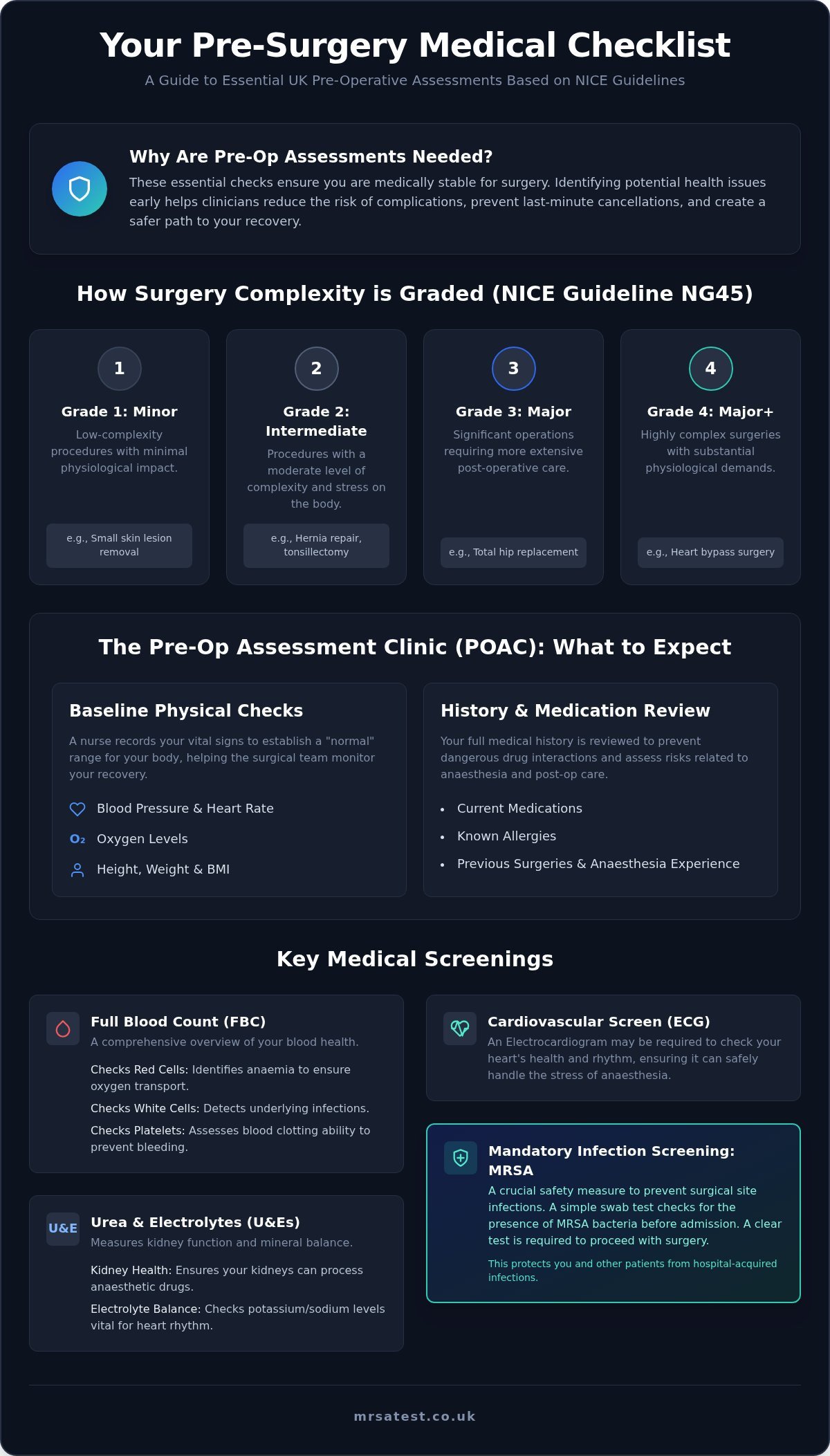
UK hospitals follow the National Institute for Health and Care Excellence (NICE) NG45 guidelines to determine which tests you need. These guidelines categorise surgeries into four grades based on their complexity:
- Grade 1 (Minor): Such as removing a small skin lesion or a simple biopsy.
- Grade 2 (Intermediate): Including operations like hernia repairs or tonsillectomies.
- Grade 3 (Major): Procedures like a total hip replacement or gallbladder removal.
- Grade 4 (Major Complex): Extensive surgeries like heart bypasses or joint revisions.
Your American Society of Anesthesiologists (ASA) physical status also plays a role. An ASA 1 patient, who is otherwise healthy, usually requires fewer tests than an ASA 3 patient with a significant systemic disease. For healthy patients under the age of 16, testing is often kept to a minimum to avoid unnecessary distress unless the surgery is exceptionally complex.
What Happens During the Physical Assessment?
During your visit, a nurse will record baseline observations. They check your blood pressure, heart rate, and oxygen levels. These figures provide a “normal” range for your body, helping the surgical team spot issues during recovery. Your Body Mass Index (BMI) is also calculated by measuring your height and weight. This data is essential for calculating the correct dose of anaesthesia and assessing respiratory risks.
The team also reviews your medication and allergy history. Knowing exactly what you take helps prevent dangerous drug interactions or bleeding issues during the operation. Ensuring you’ve had a clear mrsa test before surgery uk is often the final piece of this puzzle. It confirms that you don’t carry resistant bacteria that could cause a post-operative infection, keeping both you and the hospital ward safe.
Common Blood Tests and What They Reveal
Blood tests are the cornerstone of preoperative preparation because they offer a snapshot of your internal health. Clinicians use these results to tailor your anaesthetic plan and identify risks that aren’t visible during a physical exam. For example, if your bloods show a high white cell count, the team might postpone the operation to treat an underlying infection first. Usually, these tests happen 2-4 weeks before your admission date. This window allows the team to treat issues like low iron or electrolyte imbalances before you reach the operating table. A Full Blood Count is the most common pre-op test because it provides a comprehensive overview of your blood’s health and its ability to support your body during surgery.
Full Blood Count (FBC) and Anaemia
The FBC checks your red blood cell levels to ensure your body can transport enough oxygen while you’re under anaesthesia. If levels are low, you may have anaemia. This might require iron supplements or a small delay to ensure your safety. It also monitors platelets, which are the cells responsible for clotting. Low platelets can lead to excessive bleeding during or after the procedure. Finally, white blood cell counts act as an early warning system for existing infections. It’s much safer to catch these early than to risk complications in the theatre.
Kidney Function (U&Es) and Electrolytes
Urea and Electrolytes (U&Es) are vital for checking your kidney health. Your kidneys process the drugs used in anaesthesia, so the team must know they’re functioning well. Electrolytes like potassium and sodium are equally critical. If these are out of balance, it can affect your heart rhythm. This is especially true under the stress of surgery. If your levels are slightly off, you might be asked to adjust your diet or medication before your admission date. You can find more detail in our Understanding Blood Tests guide.
Blood Clotting and Glucose Screens
For patients on blood thinners, a coagulation screen (PT/APTT) ensures your blood clots at a safe rate. Clinicians also look at HbA1c levels to check for undiagnosed diabetes or manage existing conditions. Stable blood sugar is essential for effective wound healing and reduces the risk of post-surgical infections. While blood tests cover internal health, remember that NHS guidance on MRSA screening is often required alongside these samples. Obtaining a private mrsa test before surgery uk can give you the confidence that your skin is clear of resistant bacteria before your hospital appointment. Taking a mrsa test before surgery uk well in advance prevents the anxiety of a last-minute cancellation. If you’d like to manage this part of your prep privately, you can check your status with a home kit today.
Heart and Lung Health: ECGs and Imaging
While blood tests reveal your internal chemistry, assessing your heart and lungs ensures your body can handle the physical stress of surgery. A simple physical exam, where a clinician listens to your chest with a stethoscope, provides a useful starting point but it has its limits. For many procedures, especially those requiring general anaesthesia, the surgical team needs a more detailed view of your cardiovascular and respiratory function. This data helps them manage your vital signs while you’re asleep and predicts how well you’ll recover in the days following your operation. You can find a full list of these requirements in our Preparing for Surgery Checklist.
The Electrocardiogram (ECG)
An ECG is a non-invasive test that measures the electrical activity and rhythm of your heart. It involves placing small, sticky sensors called electrodes on your arms, legs, and chest. These sensors detect the electrical signals produced by your heart each time it beats. This test is generally required for patients over the age of 60 or anyone with a known history of heart disease or high blood pressure. Having a normal ECG on file provides a vital baseline for the recovery team. If you experience any palpitations or chest pain after surgery, they can compare new readings against your pre-op baseline to quickly identify any changes. Just as a mrsa test before surgery uk protects you from infection, the ECG protects your heart from unforeseen strain.
Chest X-rays and Lung Function
In the past, routine chest X-rays were a standard part of every pre-op assessment. However, current UK guidelines have shifted. They’re now less common unless you have specific symptoms or a history of respiratory illness. Clinicians typically order imaging for patients with chronic obstructive pulmonary disease (COPD), severe asthma, or for those who are heavy smokers. These images help the anaesthetist assess the risk of post-operative chest infections. For major thoracic procedures, you might also undergo spirometry. This is a test where you breathe into a device to measure your lung capacity and airflow. Understanding the hospital MRSA screening process alongside these physical checks ensures every aspect of your health is accounted for. Proactively managing your mrsa test before surgery uk alongside these cardiovascular checks means you’re addressing the two biggest risks of elective surgery: heart stress and infection.
Infection Screening: The Crucial Role of MRSA Swabs
While heart health and blood chemistry are vital, infection control is the final barrier to a successful procedure. For almost all elective admissions in the UK, hospitals require a mandatory screen for methicillin-resistant Staphylococcus aureus. This is because surgical site infections account for 14.5% of all healthcare-associated infections in the UK, making prevention a top priority for clinical teams. A mrsa test before surgery uk identifies whether the bacteria are living on your skin, which is known as colonisation, or if they’ve caused an active infection. By screening patients before they arrive on the ward, hospitals protect not only the individual patient but also the wider surgical environment.
MRSA colonisation often has no symptoms but can delay surgery. Many patients feel perfectly healthy while carrying the bacteria, unaware that these microbes could enter the body through a surgical incision. Once inside, MRSA is significantly harder to treat than standard staph infections because it resists common antibiotics. Identifying these bacteria early allows the surgical team to implement safety protocols that keep you and other patients safe during your stay.
The Screening Process: Nose and Groin Swabs
The screening process is straightforward and non-invasive. A clinical professional or the patient themselves uses a sterile swab to collect samples from specific areas where the bacteria typically reside. Standard sites include the inside of the nostrils and the groin or perineum. For certain high-risk procedures, such as those involving prosthetic implants, a “triple site” screen including the axilla (armpit) is often required. These samples are sent to an accredited laboratory where experts identify the presence of resistant strains. You can find more detail on the biology of these bacteria in our guide on What Is MRSA?.
What Happens if You Test Positive?
Testing positive doesn’t mean your surgery is cancelled forever, but it usually triggers a delay. Hospitals follow a strict five-day decolonisation protocol to clear the bacteria before you enter the theatre. This involves using a prescribed antibacterial body wash and a specific nasal ointment. If you’re found to be a carrier during your hospital pre-op assessment, your procedure might be postponed to allow this treatment to work.
This last-minute delay can be incredibly stressful for patients who’ve already arranged time off work or childcare. To avoid the anxiety of a surprise result, many choose to perform a private mrsa test before surgery uk at home. This proactive step allows you to complete any necessary decolonisation well before your official hospital screening window. If you want to ensure your surgical timeline stays on track, you can order a professional MRSA test kit to check your status discreetly and securely.
Taking Control: Private Screening and Next Steps
Preparing for an operation involves more than just physical readiness. It’s about mental peace of mind. Waiting for the results of a hospital-led mrsa test before surgery uk can be a significant source of anxiety, especially when a positive result might cancel your procedure at the eleventh hour. By taking a proactive approach with private screening, you can identify your status weeks before your official assessment. This gives you the power to manage any necessary decolonisation in the privacy of your own home, ensuring you’re clear long before you step onto the ward.
Knowing your status early is a strategic move. If you carry the bacteria, starting the five-day treatment protocol immediately means you won’t face the stress of a last-minute postponement. It’s about removing the “unknown” from your surgical timeline. This is particularly useful for those undergoing high-stakes procedures like joint replacements or heart surgery, where infection risks are strictly monitored. By choosing to test privately, you’re not just buying a kit; you’re securing your surgical date against unexpected delays.
PCR vs. Culture: Which Pre-Op Test is Best?
When choosing a private mrsa test before surgery uk, you’ll typically find two main diagnostic methods. Understanding the difference helps you pick the right option for your timeline:
- MRSA Culture Test: This is the traditional method. Samples are placed in a controlled environment to see if bacteria grow. It’s highly accurate but takes 48-72 hours to provide a definitive result after the lab receives your sample.
- MRSA Rapid PCR Test: This advanced method looks for the DNA of the bacteria. It’s the gold standard for patients with imminent surgery dates because it provides results within 24 hours of the lab receiving your sample.
If your hospital admission is only a few days away, the Rapid PCR option offers the speed and clinical accuracy needed to make informed decisions quickly. It provides a level of security that standard culture tests can’t match when time is short. Both methods are processed in accredited laboratories to ensure the highest standards of reliability.
How to Order a Confidential At-Home Kit
Ordering a kit through mrsatest.co.uk is designed to be a simple, well-managed process. We offer discreet delivery across the UK, ensuring your health data remains private. Once your kit arrives, you’ll find everything you need to perform the swabs yourself. The process involves taking samples from the nose and groin, and for certain procedures, a kit that includes the axilla (armpit) is also available. Detailed instructions are included to ensure you get a high-quality sample for the lab.
After you’ve completed the swabs, use the prepaid return shipping to send your samples to our accredited laboratory. Options like the MRSA Rapid PCR Test- Nose/Groin/Axilla or the MRSA Culture – Nose/Groin allow you to tailor the screening to your specific hospital requirements. Results are delivered securely to your inbox, allowing you to share them with your surgical team or start treatment if required. It’s an efficient, supportive way to ensure you’re fit for your procedure without the wait.
Preparing for a Successful Recovery
Navigating the path to elective surgery requires careful preparation and a clear understanding of clinical requirements. From initial blood counts to heart health assessments, these protocols ensure your safety and the success of your procedure. By following NICE guidelines and addressing potential issues like anaemia or electrolyte imbalances early, you can step into the hospital with confidence. It’s a structured process designed to support your body through the stress of an operation and the recovery that follows.
Managing your infection status is a critical final step in this journey. Obtaining a private mrsa test before surgery uk allows you to identify colonisation well in advance, removing the risk of a last-minute cancellation. Our service provides confidential at-home screening with accredited UK laboratory analysis, ensuring you have the data you need without the wait. If you have an urgent surgical date, our rapid results can be delivered in as little as 24 hours once your sample reaches the lab.
Ensure you are fit for surgery-order your Rapid MRSA PCR Test Kit today. Taking this proactive step protects your health and keeps your surgical timeline on track. We’re here to support you through a simple, well-managed process so you can focus entirely on your recovery.
Frequently Asked Questions
Will my surgery be cancelled if I have a cold?
Your surgery might be postponed if you have a significant cough or fever, as these increase the risk of respiratory complications under general anaesthesia. For minor procedures with local anaesthetic, it often goes ahead. The surgical team assesses your chest and oxygen levels on the day to ensure safety. It’s always best to call the hospital as soon as symptoms appear so they can advise you on their specific trust policy.
How long are pre-operative test results valid for in the UK?
Most pre-operative test results are valid for three months, provided your health hasn’t changed significantly. According to the May 2025 GIRFT guidance, an MRSA screen is valid for at least three months for major surgery, and potentially up to six months in some cases. However, if you’re admitted to another hospital or develop an infection in the interim, the team will likely require fresh swabs to ensure you remain clear.
Do I need to fast before my pre-op blood tests?
You don’t usually need to fast for standard pre-operative blood tests like a Full Blood Count or Urea and Electrolytes. These tests measure baseline organ function and aren’t affected by food. If your clinician specifically requests a fasting glucose test or a lipid profile, they’ll instruct you to avoid food for 8 to 12 hours beforehand. Always check your appointment letter for specific instructions to avoid any delays to your assessment.
Can I do my MRSA screening at home privately?
You can perform a private mrsa test before surgery uk using a laboratory-accredited home kit. This allows you to check your status discreetly before your official hospital appointment. If you test positive at home, you have time to complete a decolonisation protocol privately. This proactive approach reduces the anxiety of a last-minute cancellation. Kits from mrsatest.co.uk include clear instructions for nose and groin swabs and include prepaid return shipping to our UK laboratory.
What happens if my blood pressure is high at the pre-op?
If your blood pressure is high during the assessment, the nurse will often take repeat readings to rule out “white coat syndrome” caused by anxiety. Consistently high readings might require a review by your GP or a change in medication before surgery can proceed. Surgeons prefer blood pressure to be well-controlled to reduce the risk of heart strain or bleeding during the procedure. In some cases, a minor delay is necessary to ensure your safety.
Is an MRSA test mandatory for all UK surgeries?
Screening is mandatory for the vast majority of elective admissions in the UK, particularly for procedures involving implants or high-risk specialities like neurosurgery. While some very minor procedures under local anaesthetic might be exempt, hospitals generally screen all patients to maintain ward safety. Performing a mrsa test before surgery uk is a standard preventative measure that has helped reduce healthcare-associated infections significantly over the last decade. It protects both you and the wider hospital community.
How long does it take to get MRSA test results back?
The turnaround time depends on the type of technology used by the laboratory. A standard culture test typically takes 48 to 72 hours, as the lab must wait for any bacteria to grow in a controlled environment. If you require a faster result, a Rapid PCR test can provide answers within 24 hours of the lab receiving your sample. This faster method detects bacterial DNA directly, making it the preferred choice for patients with urgent surgical dates.
What if I am already taking antibiotics before my surgery?
You must inform your pre-operative team if you’re taking any antibiotics, as they can interfere with the accuracy of your swabs. Antibiotics may temporarily suppress bacteria, leading to a false-negative result. Your surgical team will decide if the screening needs to be delayed until you’ve finished the course. They’ll also assess if the underlying infection you’re being treated for makes it unsafe to proceed with your elective operation at this time.