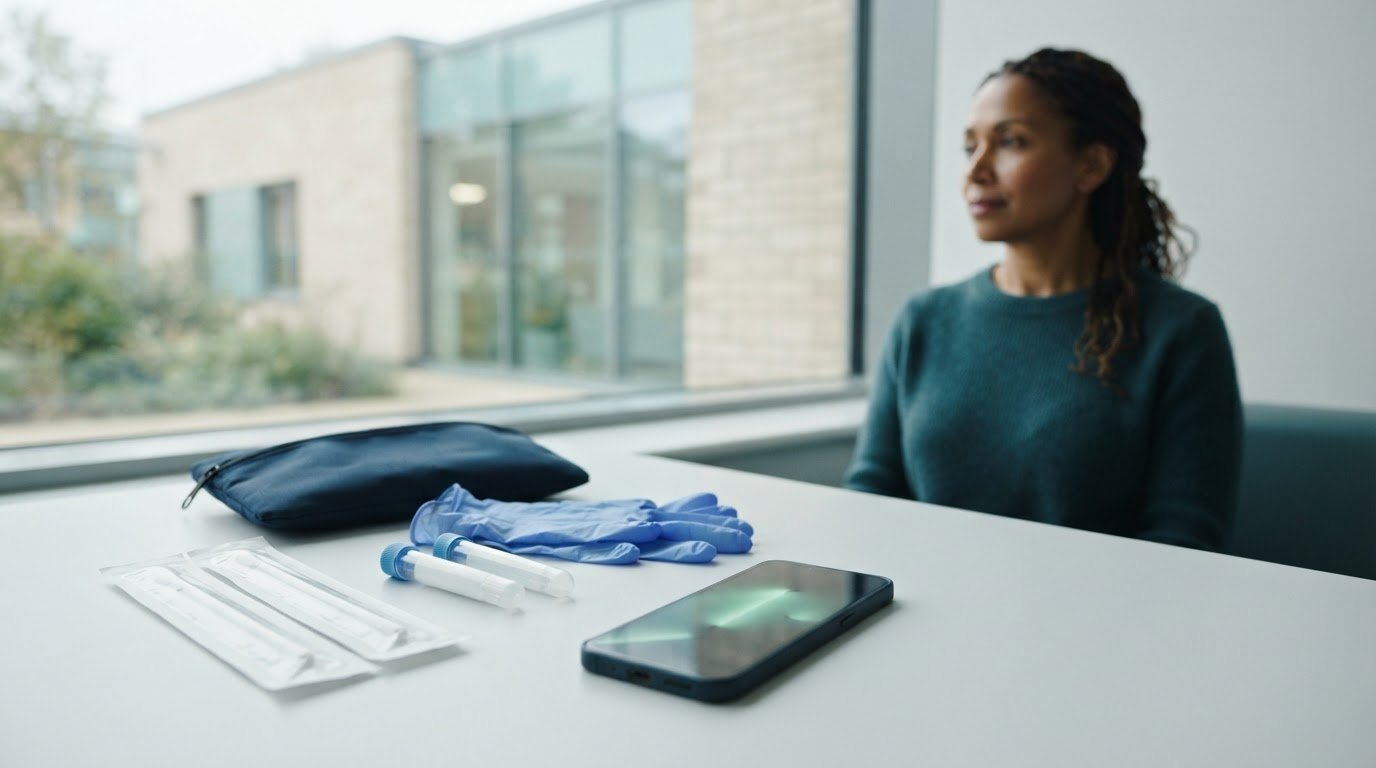

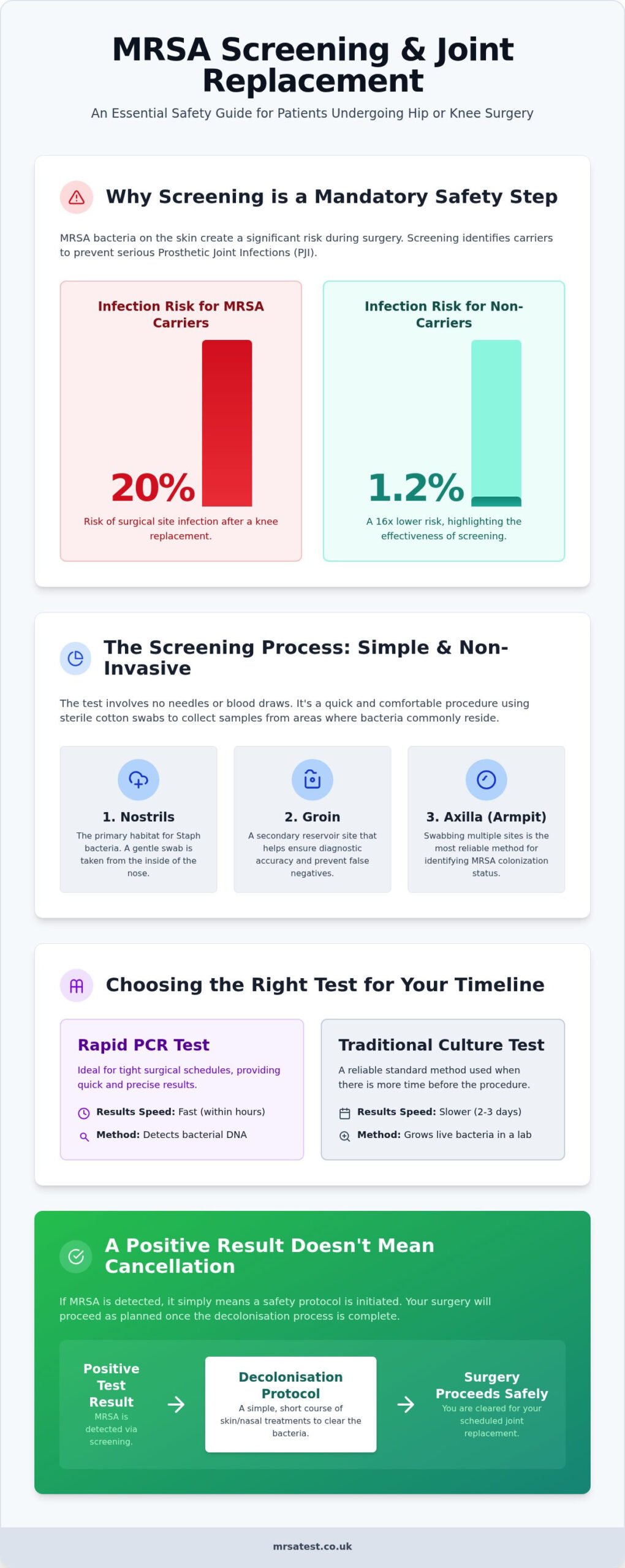
Did you know that patients carrying MRSA face a 20% risk of surgical site infection after a knee replacement, compared to just 1.2% for those who don’t? This stark difference is why mrsa screening for joint replacement has become a mandatory safety standard for elective orthopaedic procedures in 2026. It’s a critical clinical safeguard designed to protect your new hip or knee from the risk of prosthetic joint infection and ensure the best possible surgical outcome.
It’s completely normal to feel a sense of anxiety as your surgery date approaches. You’re likely balancing the excitement of regained mobility with the stress of complex hospital protocols and the fear of a last-minute cancellation. We understand that you want this process to be as smooth and predictable as possible, ensuring your health is prioritized without unnecessary delays or administrative friction.
This guide explains why this screening is a non-negotiable step for your safety and how you can secure your results quickly and privately to keep your surgery on track. We’ll walk you through the simple screening process, the difference between rapid PCR and culture tests, and the clear steps to take if you need decolonisation before your procedure.
Key Takeaways
- Learn why mrsa screening for joint replacement is a mandatory safety measure to protect your new implant from high-risk surgical site infections.
- Understand the non-invasive swabbing process that identifies bacterial reservoirs quickly and comfortably without requiring needles or blood samples.
- Compare Rapid PCR and traditional culture testing to determine which method offers the speed and accuracy required for your specific surgical timeline.
- Find out why a positive result doesn’t mean your surgery is cancelled, but rather triggers a simple decolonisation protocol to ensure your safety.
- Explore how at-home screening kits provide a discreet, accredited alternative to hospital visits, delivering fast results during the busy pre-op period.
Why MRSA Screening is Vital for Joint Replacement Surgery
MRSA, or Methicillin-resistant Staphylococcus aureus, is a type of bacteria that has developed resistance to several widely used antibiotics. In clinical circles, it’s often referred to as a “superbug” because it doesn’t respond to the standard treatments that usually clear up skin infections. For anyone preparing for surgery, it’s helpful to understand What is MRSA? and how it behaves when it encounters a surgical site.
Many people carry these bacteria on their skin or in their nostrils without ever knowing it. This state is called “colonisation.” While it doesn’t cause harm to a healthy person in daily life, it becomes a significant hazard during surgery. When a surgeon makes an incision for a hip or knee replacement, bacteria that were sitting harmlessly on the skin can enter the body. Once inside, MRSA has a unique affinity for the metal and plastic materials used in modern implants. It can latch onto these surfaces and create a “biofilm,” a protective slimy layer that shields the bacteria from your immune system and even high doses of antibiotics.
The Risk of Prosthetic Joint Infection (PJI)
A Prosthetic Joint Infection (PJI) is one of the most challenging complications in orthopaedic medicine. Because the artificial joint lacks its own blood supply, the body’s natural defences can’t easily reach the area to fight off invading microbes. Research from July 2025 highlights the stakes: MRSA-colonised patients undergoing total knee replacements faced a 20% rate of surgical site infection, compared to just 1.2% in those who weren’t carrying the bacteria. For total hip replacements, PJI rates in MRSA-positive patients have been recorded as high as 12.5%.
This is why mrsa screening for joint replacement is a fundamental safety step. It’s much easier and safer to clear the bacteria from the skin before the operation than it is to treat a deep-seated infection after the joint has been fitted. Preventing an infection preserves your mobility and ensures your recovery stays on schedule.
Standard NHS and Private Hospital Protocols
In the UK, both the NHS and private healthcare providers have strict mandates for screening elective orthopaedic patients. These protocols exist to create a sterile environment and protect patients from avoidable harm. By identifying carriers before they enter the operating theatre, hospitals can ensure that every person receives the appropriate preventative care. If you’re looking for more detail on the symptoms and risks associated with this bacteria, you can explore What Is MRSA? Your Complete Guide to Symptoms, Causes & Risks. Screening is the first line of defence in a comprehensive plan to make your joint replacement a success.
The MRSA Screening Process: What to Expect
Many patients feel a sense of relief when they discover that mrsa screening for joint replacement is entirely non-invasive. There are no needles, no blood draws, and no painful procedures involved. Instead, the process relies on simple surface swabs to collect samples from the areas where bacteria are most likely to reside. This straightforward approach ensures that your pre-operative preparation remains as stress-free as possible while still providing the high level of clinical accuracy your surgical team requires.
The procedure is designed to be quick and efficient. A sterile cotton swab is used to gently collect samples from specific “reservoirs” on your body. These are locations where Staphylococcus aureus bacteria, including resistant strains, naturally thrive due to the warmth and moisture of the skin. Clinical research, such as this NIH Study on MRSA Screening, confirms that swabbing multiple sites is the most reliable way to identify carriers who might otherwise be missed by a single-site test.
Key Swabbing Sites: Nose, Groin, and Axilla
The nostrils are the primary habitat for Staph bacteria. Because we breathe in microbes constantly, the anterior nares (the front part of the nostrils) act as a frequent colonial outpost for MRSA. However, testing only the nose can sometimes lead to false negatives. To increase diagnostic certainty, medical protocols often include the groin and the axilla, or armpit. These secondary sites are known reservoirs that help paint a complete picture of your colonisation status.
To perform the test correctly using a self-collection kit, you’ll follow these steps:
- Remove the sterile swab from its packaging, being careful not to touch the tip.
- Insert the tip into the nostril and rotate it gently against the inside wall for five seconds.
- Repeat the process in the second nostril using the same swab.
- Follow the specific instructions for the groin and axilla sites, ensuring the swab makes firm contact with the skin surface.
- Place the swab into the provided transport tube and seal it securely for the laboratory.
Preparing for Your Test
Accuracy depends on a “clean” sample. For at least 24 hours before your mrsa screening for joint replacement, you should avoid using topical antiseptic creams, antibiotic ointments, or medicated nasal sprays. These substances can temporarily suppress bacterial growth on the surface, potentially leading to an inaccurate result that doesn’t reflect your true status. If you’re managing a tight surgical timeline, you can order private MRSA testing kits to be delivered directly to your door, allowing you to sample at your convenience.
Ideally, you should aim to complete your screening one to two weeks before your surgery date. This window provides enough time for the accredited laboratory to process your sample and for you to receive the results. If you’re looking for a broader overview of how to manage your schedule, see our Pre-Op Health & Logistics Checklist. Taking these steps early ensures that if MRSA is detected, there’s still plenty of time for a simple decolonisation routine without delaying your procedure.
PCR vs. Culture Testing: Choosing the Right Screen
When you arrange your mrsa screening for joint replacement, you’ll typically choose between two laboratory methods: traditional culture and molecular PCR. While both are highly accurate, they function differently and serve different needs depending on your surgical timeline. Understanding these differences helps you select the test that aligns best with your pre-operative schedule.
A standard MRSA culture involves placing your sample into a nutrient-rich medium in a laboratory. Scientists then observe the sample to see if Staphylococcus aureus grows in the presence of specific antibiotics. This phenotypic approach is a long-standing method for determining which drugs will effectively kill the bacteria. However, because it relies on biological growth, it’s a naturally slower process that takes time to develop.
In contrast, Rapid PCR (Polymerase Chain Reaction) is a molecular technique. Instead of waiting for bacteria to grow, the lab looks for the specific DNA markers of MRSA. This method provides a fast identification of the bacteria’s presence. It’s an efficient, high-tech solution that prioritises speed without sacrificing diagnostic integrity, making it ideal for patients who don’t have time to wait.
When to Choose the MRSA Rapid PCR Test
Speed is the primary reason to opt for a Rapid PCR test. If your surgery is scheduled for less than a week away, this is often the “emergency” solution. It’s common for hospital-administered tests to be delayed or for administrative errors to occur in the lead-up to a procedure. In these high-pressure scenarios, you need certainty to avoid a last-minute cancellation.
Rapid PCR results are typically available within 24 hours of the laboratory receiving your sample. This fast turnaround provides peace of mind and allows you to present your clearance certificate to your surgical team well before you arrive at the hospital. This method also offers high sensitivity, which is reassuring before a major joint replacement. For those with a tight deadline, this test is the most reliable way to secure your results in time.
When the Standard Culture Test is Sufficient
If you’re planning ahead and have more than two weeks before your surgery date, a standard MRSA culture is a perfectly sufficient and cost-effective option. The laboratory processing time for a culture is usually 48 to 72 hours. This timeline fits comfortably within a standard pre-op window, allowing you to complete your mrsa screening for joint replacement without any rush.
Some consultants specifically request a culture test because it allows the lab to perform antibiotic sensitivity testing. This data tells the medical team exactly which antibiotics would be most effective if treatment is needed. If your hospital hasn’t specified a molecular method, a culture test remains a reliable way to fulfill your screening requirements while managing your budget effectively.
What Happens if You Test Positive? Decolonisation Explained
Discovering that you’ve tested positive for MRSA can be a source of significant anxiety. However, a positive result from your mrsa screening for joint replacement doesn’t mean your surgery is automatically cancelled. Instead, it triggers a proactive safety protocol known as decolonisation. This process is designed to temporarily clear the bacteria from your skin and nose, ensuring you enter the operating theatre with the lowest possible risk of infection.
Decolonisation is a straightforward medical routine. It focuses on the areas where the bacteria live without causing symptoms. By following a specific hygiene regimen, you can effectively reduce the microbial load on your body. This preparation is a vital safeguard for your new hip or knee; it prevents your own resident bacteria from migrating into the surgical site during the procedure.
The Decolonisation Toolkit
Most UK hospitals follow a standard 5-day protocol to prepare carriers for surgery. This toolkit typically includes two essential items. The first is an antiseptic body wash, usually containing Chlorhexidine (CHG). You’ll use this in the shower to “scrub” your skin from head to toe, paying close attention to the surgical area. For more information on how these washes work to prevent complications, see our Hospital-Acquired Infections: A Patient’s Guide.
The second component is an antibiotic nasal ointment, often Mupirocin. Since the nostrils are the primary reservoir for MRSA, applying this ointment several times a day is critical for eradicating the bacteria at its source. Clinical studies show that completing this full 5-day course significantly lowers the chance of developing a post-operative infection.
Hygiene Measures During Treatment
To ensure the treatment is successful, you must prevent re-contamination from your environment. Bacteria can survive on fabrics, so you’ll need to follow these steps during your 5-day protocol:
- Change your towels and washcloths every single day.
- Use fresh bedding and clean clothes throughout the treatment period.
- Maintain strict hand hygiene, as this is the frontline of prevention for both you and your family.
If you’ve performed your mrsa screening for joint replacement privately, you should share the laboratory report with your surgeon immediately. They will provide the necessary prescriptions and schedule a follow-up test to confirm the bacteria has cleared before your operation proceeds. If you need to verify your status quickly after treatment, you can order a private MRSA re-screening kit to secure your results without an extra hospital visit.
Managing Your Pre-Op Screening with At-Home Kits
Preparing for a major procedure is a demanding process. You’re likely managing multiple specialist appointments, coordinating your recovery space at home, and perhaps dealing with significant physical discomfort. Adding another hospital trip for mrsa screening for joint replacement can feel like an unnecessary logistical burden. Private at-home kits offer a streamlined alternative that prioritises your convenience and peace of mind during this stressful pre-operative window.
This shift toward self-collection fits into the broader At-Home Test Kits UK trend. Modern diagnostics are increasingly designed to meet patients where they are, providing clinical accuracy without the need for a clinical environment. By choosing a private screening option, you avoid the risks of traveling to a hospital and waiting in communal areas; instead, you focus on staying healthy and rested before your surgery.
Ordering and Returning Your Kit
The logistics of at-home testing are designed to be as efficient as possible. The process starts with a simple online order, followed by the delivery of your kit in discreet, letterbox-friendly packaging. You won’t need to wait at home for a courier or sign for a medical package. Once you’ve collected your samples following the included instructions, you’ll use the prepaid tracked return envelope to send them directly to our laboratory.
Speed is a core feature of this service. Because we use verified laboratory partners, results are processed rapidly. For PCR tests, you’ll receive your secure digital report within 24 hours of the lab receiving your sample. These reports are accredited and hospital-ready, meaning you can easily share them with your surgical team to confirm your clearance status and prevent any avoidable delays to your hip or knee replacement.
Why Choose mrsatest.co.uk for Your Joint Replacement Screen?
We provide a dedicated UK service that focuses exclusively on MRSA diagnostics. This specialization allows us to pair expert clinical accuracy with the simplicity of home convenience. We understand the specific requirements of orthopaedic surgeons and have tailored our reporting to meet those standards. Our goal is to ensure you feel supported through a well-managed process, providing the quiet competence you need to approach your surgery date with confidence.
If you’re managing a tight deadline or simply prefer the discretion of a private service, we’re here to help. You can choose the testing method that best suits your timeline, whether you need the rapid turnaround of a PCR test or the detailed sensitivity data of a standard culture. Take control of your pre-surgical preparation today.
Order your pre-surgery MRSA test kit today
Take Control of Your Surgical Preparation
Completing your mrsa screening for joint replacement is more than a hospital requirement; it’s a proactive step toward a successful recovery and long-term mobility. By identifying colonisation early, you can follow a simple decolonisation protocol that significantly reduces the risk of deep-seated prosthetic infections. This preparation ensures your surgical team can proceed with confidence, knowing your safety has been prioritised.
Managing this step shouldn’t add to your pre-operative stress. Our service provides the clinical accuracy of UK-accredited laboratories with the convenience of a private, at-home setting. If your surgery date is approaching quickly, our Rapid PCR options deliver results within 24 hours of lab receipt, keeping your schedule on track. Trusted by patients across the UK, we’re here to support you with a simple, well-managed diagnostic process.
Secure your pre-surgery peace of mind with an at-home MRSA test kit
You’re now equipped with the knowledge to manage this vital part of your journey. We wish you a smooth surgery and a swift return to the activities you love.
Frequently Asked Questions
Is MRSA screening mandatory for all hip and knee replacements in the UK?
Yes, it’s a mandatory safety standard for elective orthopaedic procedures in both NHS and private hospitals. This screening helps prevent prosthetic joint infections by identifying carriers before surgery. By 2026, these protocols are strictly enforced to protect patients from the risks associated with antimicrobial resistance. Every patient undergoing planned joint surgery must provide a negative result or complete a decolonisation protocol to ensure a sterile operating environment.
How long before my joint surgery should I get an MRSA test?
You should ideally complete your mrsa screening for joint replacement one to two weeks before your procedure. This window allows the laboratory to process your samples and gives you enough time to complete a five-day decolonisation routine if you test positive. If you’re on a tight schedule, choosing a Rapid PCR test can provide results within 24 hours of the lab receipt, helping you avoid last-minute surgical cancellations.
Can I use an at-home MRSA test result for my hospital admission?
Yes, provided the result comes from a UK-accredited laboratory and includes a professional diagnostic report. Most surgeons and hospitals accept private screening results if they meet clinical standards. Our reports are designed to be hospital-ready, allowing you to share your status with your surgical team securely. Always check with your specific consultant to ensure their department accepts private reports for your pre-operative health clearance.
What happens if my MRSA test is positive just before surgery?
A positive result doesn’t automatically mean your surgery is cancelled, but it will likely be rescheduled. Your surgical team will prescribe a five-day decolonisation treatment involving antiseptic body wash and nasal ointment. After finishing this protocol, you’ll need a follow-up test to confirm the bacteria is cleared. Starting your mrsa screening for joint replacement early ensures there’s enough time for this process without causing a significant delay to your mobility goals.
How much does a private MRSA test cost compared to the NHS?
While the NHS provides screening at no direct cost for elective patients, many choose private testing for convenience and speed. Private costs vary depending on whether you choose a standard culture test or a Rapid PCR molecular screen. Patients often find the investment worthwhile to avoid an extra hospital trip or to secure fast results when their surgery is less than a week away. Check our current options for the most up-to-date service details.
Does a positive MRSA result mean I have an infection?
No, a positive result usually means you are colonised, not infected. This means the bacteria are living harmlessly on your skin or in your nose without causing illness. However, during surgery, these bacteria can enter the body and cause a serious infection on the new implant. Screening identifies this colonisation so it can be cleared before the incision is made, ensuring the safest possible outcome for your joint replacement.
Can I clear MRSA naturally without the decolonisation treatment?
It’s unlikely that MRSA will clear on its own before your surgery date without medical intervention. The bacteria are resilient and often persist in reservoirs like the nostrils for long periods. Relying on natural clearance is risky and could lead to a delayed operation or a post-operative infection. Following the standard five-day clinical protocol is the only reliable way to ensure you are safe for your hip or knee replacement procedure.
How accurate are at-home MRSA swab tests?
At-home kits are highly accurate when used according to the provided instructions and processed by accredited laboratories. The collection method is identical to the one used in hospitals, involving simple surface swabs of the nose, groin, or armpits. Molecular Rapid PCR tests offer particularly high sensitivity, detecting bacterial DNA to provide near-instant identification. This clinical-grade accuracy ensures you receive a dependable result that your surgical team can trust for your pre-operative planning.