In 2026, official data confirms that approximately 1 in 30 people in the United Kingdom are MRSA carriers, often without exhibiting any symptoms. While this colonisation is common, discovering a positive result during your pre-operative assessment can feel overwhelming. You likely worry about the consequences of testing positive for mrsa before surgery, especially the fear that your long-awaited procedure might be cancelled at the last minute. It’s natural to feel anxious about hospital-acquired infections or the potential for your surgical window to close because of slow laboratory turnaround times.
We understand that you want your operation to proceed safely and without unnecessary delays. This guide explains why MRSA screening is a mandatory requirement under the UK’s “Zero Tolerance” mandate for infection control. You’ll learn exactly what happens if your result is positive, including the standard five-day decolonisation protocol involving antiseptic washes and nasal ointments. We also explore how modern testing options, such as rapid PCR kits, provide the fast and accurate answers required to meet strict pre-op deadlines. This information provides the peace of mind you need to manage your surgical timeline with quiet competence and clinical certainty.
Key Takeaways
- Understand why UK hospitals mandate MRSA screening to prevent surgical site infections and maintain a safe environment for your recovery.
- Learn how the consequences of testing positive for mrsa before surgery usually involve a standard five-day decolonisation protocol rather than a permanent cancellation of your procedure.
- Discover the critical differences between Rapid PCR and Culture tests to ensure your results arrive in time for your hospital admission deadline.
- Follow a step-by-step guide on performing an accurate pre-operative swab at home to avoid common sampling errors that can lead to invalid results.
- Find out how private, UKAS-accredited testing offers a discreet and efficient alternative to traditional pre-admission clinics, especially when you’re on a tight schedule.
Why Hospitals Mandate MRSA Screening Before Surgery
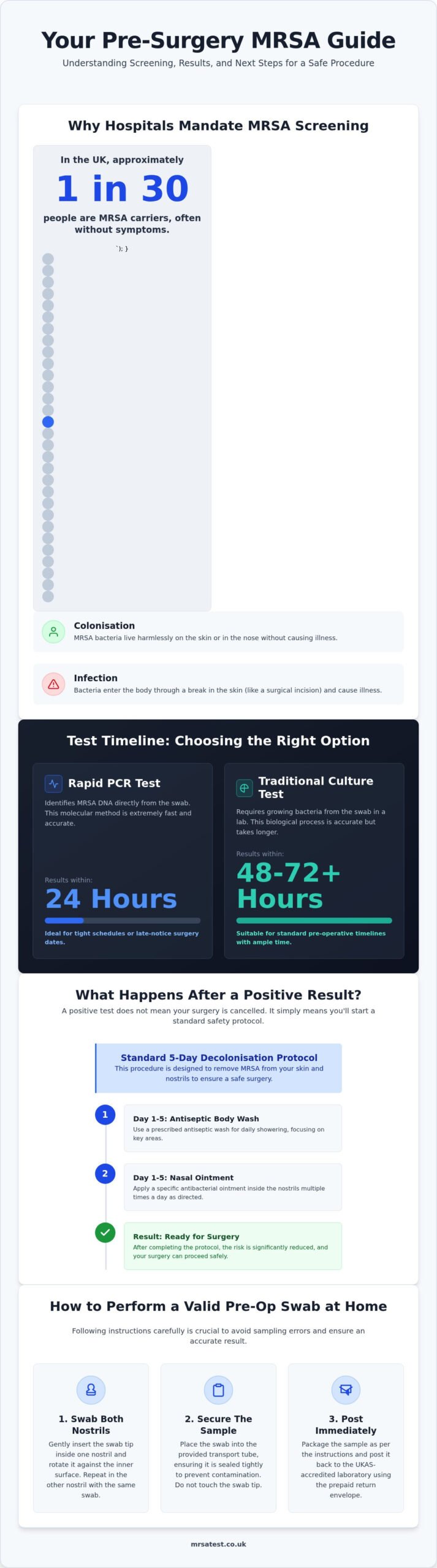
MRSA stands for Methicillin-resistant Staphylococcus aureus (MRSA). It is a specific strain of bacteria that has developed resistance to widely used antibiotics. In the UK, medical professionals distinguish between two distinct states: colonisation and infection. Colonisation means the bacteria live on your skin or in your nostrils without causing any harm. In fact, 2026 data shows that 1 in 30 people are currently carriers. An infection only occurs if the bacteria enter the body and cause illness.
Surgery naturally creates what clinicians call a “portal of entry.” When a surgeon makes an incision, the protective barrier of your skin is breached. This allows bacteria that were previously harmless on the surface to travel into deep tissue, bone, or the bloodstream. Because MRSA is resistant to standard treatments, an infection post-surgery is much harder to manage than one caused by regular staph bacteria. This is why screening is a fundamental safety step for every patient.
Understanding the Risk of Surgical Site Infections (SSIs)
Surgical Site Infections are a significant concern for the NHS, accounting for 14.5% of all hospital-acquired infections. These complications are physically demanding for the patient and costly for the healthcare system. A deep incisional SSI can cost the NHS up to £100,000 per patient. By identifying MRSA early, hospitals can implement preventative measures before you enter the operating theatre. This proactive approach significantly reduces the risk of emergency re-admissions and ensures your recovery remains on track.
Which Procedures Require Mandatory Screening?
Under the UK’s “Zero Tolerance” mandate for hospital-acquired infections, screening is compulsory for most elective procedures. It is particularly vital for high-risk surgeries like orthopaedics, cardiothoracic surgery, and neurosurgery. If you’re receiving a prosthetic implant or a joint replacement, the stakes are higher. Bacteria can adhere to these foreign objects, making an infection nearly impossible to clear with antibiotics alone. Identifying your status before the procedure is the best way to safeguard these delicate outcomes.
The consequences of testing positive for mrsa before surgery involve a temporary delay rather than an outright cancellation. Both NHS and private hospitals follow strict 2025 GIRFT guidance to standardise these protocols. If your test result is positive, you’ll simply undergo a decolonisation programme to clear the bacteria from your skin. This step ensures that when your surgery does take place, your internal tissues are protected from your own skin flora. It’s a simple precaution that provides lasting peace of mind.
PCR vs. Culture: Choosing the Right Test for Your Timeline
Selecting the correct diagnostic method is a critical step in your pre-operative journey. While most patients focus on the result itself, the technology used to obtain that result determines how much time you have to react. The consequences of testing positive for mrsa before surgery are manageable, but only if you have enough time to complete the required five-day decolonisation protocol before your admission date. While the NHS provides an excellent patient guide on MRSA, it doesn’t always highlight how different laboratory techniques can impact your surgical timeline.
Modern diagnostics generally fall into two categories: molecular detection and traditional biological growth. Understanding the MRSA Culture vs. PCR Test distinction helps you choose the kit that best fits your remaining window before surgery. Both methods are highly accurate, but their turnaround times vary significantly due to the scientific processes involved.
Rapid PCR Testing: The 24-Hour Solution
Rapid PCR (Polymerase Chain Reaction) testing is a molecular technique that identifies the specific DNA sequences of the MRSA bacteria directly from your swabs. Because this method doesn’t rely on growing a live culture, it’s exceptionally fast. Our laboratory typically provides results within 24 hours of receiving your sample. This speed is invaluable if you have a late-notice surgery date or if you missed your hospital’s standard pre-assessment window. Receiving your results quickly allows you to address any positive findings immediately, effectively mitigating the potential consequences of testing positive for mrsa before surgery by giving you a head start on treatment.
Standard Culture Testing: The Traditional Method
The traditional culture method involves placing your samples into a nutrient-rich environment to see if bacteria multiply over several days. While this has long been the “Gold Standard” for confirming the presence of live bacteria, it is a slower biological process. You should expect a turnaround time of 48 to 72 hours for a culture test. This method is perfectly suitable for non-urgent screenings where you have several weeks of buffer time before your hospital admission. However, if your surgery is scheduled for the coming days, the extra time required for a culture result could lead to unnecessary stress and potential delays.
The choice between these methods often comes down to your specific surgical window and personal preference for speed. Both testing types provided by UKAS-accredited laboratories meet the rigorous standards required by UK surgical teams. If you’re working against a tight deadline, you can browse our professional testing options to ensure your results arrive with time to spare.
How to Perform a Valid Pre-Op Swab at Home
Accuracy is the foundation of a successful pre-operative screening process. When you perform a self-collection, you’re acting as your own clinical assistant. Ensuring the sample is valid is the best way to avoid the stress of a re-test or an unexpected delay. The consequences of testing positive for mrsa before surgery are easier to manage when you have a clear, accurate result from the start. Most invalid results aren’t caused by laboratory errors but by simple mistakes made during the collection process.
Preparation begins 24 hours before you open your kit. You must avoid using any antibacterial soaps, body washes, or nasal ointments during this window. These products can temporarily suppress bacteria on the skin surface, which might lead to an inaccurate “false negative” result. For more information on navigating these processes, our Guide to At-Home Health Testing Kits in the UK provides a comprehensive overview of modern diagnostic standards.
Primary Swabbing Sites: Nose, Groin, and Axilla
To provide a high level of diagnostic certainty, hospitals require samples from several anatomical “reservoirs” where MRSA is most likely to live. Your kit will typically include instructions for the following areas:
- The Nose: You’ll swab the anterior nares, which are the inside edges of your nostrils. This is the primary site where MRSA bacteria colonise.
- The Groin: Focus on the inguinal folds, the area where your legs meet your torso. These warm, moist environments are common sites for bacterial growth.
- The Axilla: The armpit is often included in comprehensive screens because it’s another area where skin-to-skin contact creates a stable environment for bacteria.
Common Mistakes That Lead to Invalid Results
Sample integrity is vital for laboratory analysis. The most common error is cross-contamination. This happens if you accidentally touch the soft tip of the swab with your fingers or let it rest on an uncleaned surface before swabbing. Always wash your hands thoroughly before starting and handle the swab only by the plastic handle. This keeps the sample pure and representative of your skin flora.
Another frequent issue is insufficient pressure. You don’t need to cause discomfort, but you must press firmly enough to capture skin cells and moisture. A light “dusting” of the area might not collect enough biological material for the PCR or culture process to work effectively. Finally, remember that time is a factor. Once you’ve placed the swabs into the transport media, return them immediately using the prepaid shipping provided. Delays in transit can affect the viability of the sample, potentially complicating the consequences of testing positive for mrsa before surgery if a re-test becomes necessary.
5-Day Decolonisation Protocol After a Positive Result
Receiving a positive result from your pre-operative screen is naturally concerning, but it’s helpful to remember that this is a manageable clinical finding. The consequences of testing positive for mrsa before surgery rarely involve a permanent cancellation of your procedure. Instead, it triggers a proactive safety measure known as a decolonisation protocol. This standard five-day programme is designed to clear the bacteria from your skin and nostrils, significantly lowering the risk of hospital-acquired infections during your recovery. It’s a structured process that ensures your surgery proceeds with the highest possible safety standards.
The protocol typically involves two main components: an antiseptic body wash and a nasal antibiotic ointment. These products work together to reduce the bacterial load on your body. By following the instructions precisely, you’re taking an active role in your own surgical safety. This process is about quiet competence; it’s a simple set of steps that transforms a potential risk into a well-managed situation.
Your Daily Decolonisation Checklist
Consistency is the most important factor for successful decolonisation. Your healthcare provider will usually prescribe a specific routine that lasts for five consecutive days. This routine often includes:
- Nasal Ointment: Applying an antibiotic cream, such as Mupirocin, to the inside of both nostrils three times a day. This targets the primary reservoir where the bacteria live.
- Antiseptic Washing: Using a body wash containing Chlorhexidine Gluconate (CHG), such as Hibiscrub, for your daily shower. You should use this as a liquid soap for your skin and hair, leaving it on for about one minute before rinsing.
- Environmental Hygiene: To prevent re-colonisation, it’s vital to change your towels, clothes, and bed linen every day during the treatment. This removes any bacteria that may have shed onto fabrics.
Re-testing and Surgical Clearance
After you finish the five-day course, your surgical team will need to verify that the treatment worked. This usually involves “clearance swabs,” which are taken at least 48 hours after the final application of the treatment. If these swabs are negative, you’ll be cleared for surgery. If you’re working against a tight hospital deadline and need to confirm your status quickly, you can order a rapid PCR clearance kit to get your results within 24 hours of the lab receiving your sample.
If you remain positive after the first course, don’t panic. The consequences of testing positive for mrsa before surgery even after treatment don’t always mean a delay. In some cases, the hospital will proceed with the operation while using enhanced infection control measures, such as a private room or specific intravenous antibiotics during the procedure. Your surgical team will guide you through the best path forward based on your specific health needs and the urgency of the operation.
Choosing Private MRSA Screening for Surgery Peace of Mind
Choosing a private screening route provides a level of autonomy that traditional pre-admission clinics can’t always match. Many patients find that taking a proactive approach helps them navigate our Preparing for Surgery: A Complete Pre-Op Checklist with much less stress. If you’re managing a complex recovery or have limited mobility, the logistical benefits of at-home collection are significant. You don’t need to arrange transport or spend hours in a hospital waiting room just for a set of swabs. Instead, you can complete the process in the comfort of your own home, knowing your samples are being handled by professionals.
Knowledge is the most effective tool against anxiety. By identifying your status early, you can address the consequences of testing positive for mrsa before surgery on your own terms. If a decolonisation course is required, you’ll have the time to complete it before your official hospital pre-assessment even takes place. This foresight prevents the frustration of last-minute delays and ensures your surgical window remains secure. Understanding the consequences of testing positive for mrsa before surgery before you arrive at the hospital gives you the power to act rather than just react.
Speed, Discretion, and Reliability
One of the primary reasons patients opt for private testing is to avoid the uncertainty of NHS laboratory backlogs. While the health service is excellent, high demand can sometimes lead to slower turnaround times for non-urgent results. A private test offers a faster path, with results delivered securely via email or a private portal. This discretion is important for many, as it allows you to receive your health information privately before it’s shared with your broader medical team. It’s a reliable way to ensure you’re fully prepared for your admission day without the “waiting game” often associated with public health labs.
Why mrsatest.co.uk is the Trusted Choice
We specialise specifically in MRSA detection, offering both Rapid PCR and Standard Culture options to suit your specific timeline. Our service is built on transparency and clinical excellence. We use only UKAS-accredited laboratory partners, which means your results meet the exact standards required by UK surgical teams. These accredited reports are “hospital-ready” and provide the diagnostic certainty surgeons need to proceed. You won’t encounter hidden laboratory fees or unexpected costs; our pricing is all-inclusive, covering the kit, the professional testing, and the prepaid return shipping.
Our team understands the pressure of the pre-operative journey. We provide expert support to help you choose the right test and interpret your results with confidence. Whether you need a 24-hour PCR result for a surgery scheduled next week or a standard culture for a procedure later this month, we’re here to help you move forward with peace of mind. Our domestic operations and verified partners serve as a powerful trust signal for patients across the UK.
Order your pre-surgery MRSA screening kit today to take the next step in your health journey.
Taking Control of Your Surgical Readiness
Preparing for an operation is a significant milestone that requires careful coordination. Identifying your MRSA status early is the most effective way to ensure your procedure stays on track. Understanding the consequences of testing positive for mrsa before surgery allows you to view the screening process as a safety tool rather than a hurdle. Whether you’re completing a standard five-day decolonisation course or confirming a negative result, you’re actively protecting your recovery and reducing the risk of hospital-acquired infections.
Our service is designed to support your timeline with efficiency and discretion. By using a UKAS Accredited Laboratory, we provide the diagnostic certainty required by surgical teams across the UK. With discreet home delivery and results within 24 hours of receipt for our PCR kits, you can meet your hospital deadlines without the stress of laboratory backlogs. Taking these proactive steps ensures that when your surgery date arrives, you’re clinically prepared and focused on your health.
Secure your surgery date with a Rapid MRSA PCR Kit (24h Results). You’ve done the right thing by staying informed; we’re here to help you move forward with confidence.
Frequently Asked Questions
How long before surgery should I have my MRSA screening test?
You should typically undergo screening 2 to 4 weeks before your scheduled surgery date. Most UK hospitals require a negative result that is no older than 30 days on the day of your procedure. This window ensures that your status is current while allowing enough time for decolonisation if needed. If you test too early, the result may expire; testing too late risks a delay to your operation.
Will my operation be cancelled if I test positive for MRSA?
A positive result rarely leads to an outright cancellation. Instead, the procedure is usually postponed for approximately one week to allow you to complete the mandatory five-day decolonisation protocol. One of the main consequences of testing positive for mrsa before surgery is this short delay, which ensures you are in the safest possible condition for your operation. In emergency situations, surgery proceeds with enhanced infection control and specific intravenous antibiotics.
Can I do an MRSA swab test myself at home?
Yes, you can perform a valid MRSA swab test yourself using a professional at-home kit. These kits include sterile swabs and transport media designed for laboratory analysis. Self-collection is a discreet and efficient alternative to attending a hospital pre-admission clinic. It’s vital to follow the instructions carefully, sampling the nose, groin, and sometimes the axilla, to ensure the laboratory receives a high-quality sample that accurately reflects your colonisation status.
What is the difference between an MRSA PCR test and a Culture test?
The primary difference lies in the laboratory technology and the turnaround time. A PCR test uses molecular assays to identify MRSA DNA directly, providing results within 24 hours of lab receipt. A Culture test involves growing the bacteria in a controlled environment, which typically takes 48 to 72 hours. While both methods are highly accurate, PCR is the preferred choice for patients facing tight surgical deadlines who need rapid diagnostic certainty.
Do I need to swab my nose, groin, and armpits for every test?
Yes, sampling multiple sites is necessary because MRSA can live in different reservoirs on the body. Standard UK protocols require swabs from the anterior nares (nostrils) and the groin. Many comprehensive screens also include the axilla (armpits). Swabbing these specific areas increases the sensitivity of the test. Skipping a site could result in a false negative, which might lead to complications during your recovery or unexpected consequences of testing positive for mrsa before surgery later.
Does the NHS accept private MRSA screening results for pre-op?
Most NHS Trusts and private hospitals accept results from private laboratories, provided the facility is UKAS-accredited. This accreditation ensures the testing methods meet the same rigorous standards used within the NHS. When you receive your report, it will contain the necessary clinical details for your surgical team to verify your status. It’s always a good idea to confirm with your specific hospital that they accept external results before ordering your kit.
What should I do if I have been an MRSA carrier in the past?
You must inform your surgical team if you have a history of MRSA colonisation. While you may have been cleared previously, the bacteria can sometimes return. For high-risk procedures like orthopaedic or cardiothoracic surgery, hospitals may require three consecutive negative swabs, taken at least 48 hours apart, to confirm you are currently clear. Early screening is particularly important in these cases to avoid any last-minute changes to your surgical schedule.
How long does it take to get MRSA screening results back?
Turnaround times depend on the specific test you choose. If you opt for a Rapid PCR test, results are typically available within 24 hours of the sample arriving at our laboratory. A Standard Culture test usually takes between 48 and 72 hours because the bacteria need time to grow. These timelines allow you to plan your pre-operative journey with precision, ensuring your results are ready well before your hospital admission date.