
What if the “superbug” you’re worried about is actually a silent passenger already living on your skin without causing any harm? For many people, the term MRSA triggers immediate anxiety, especially when it’s mentioned during pre-surgery consultations. It’s completely natural to feel concerned about your own health and the safety of your family. However, there’s a vital distinction between simply carrying the bacteria and suffering from an active illness. Understanding mrsa colonisation vs infection is the first step in replacing fear with factual knowledge and quiet confidence.
While MRSA cases in the UK saw a 16.9% increase during the 2024/25 period, the majority of these instances begin as colonisation. This means the bacteria are present on the body, often in the nose or groin, but aren’t currently causing an infection. This article explains exactly how these two states differ and why proactive screening is a routine safety measure rather than a cause for alarm. You’ll also discover how rapid, private testing can provide the clear answers you need before a hospital admission, ensuring you can move forward with total peace of mind.
Key Takeaways
- Distinguish between being a “healthy carrier” and having an active illness by understanding the core clinical definitions of MRSA.
- Recognise the specific triggers that cause mrsa colonisation vs infection to shift from a harmless skin presence to a symptomatic medical concern.
- Discover why pre-operative screening is a vital safety step for preventing surgical delays and protecting your household from the spread of bacteria.
- Learn how a simple 5-day decolonisation protocol, using specialised washes and ointments, can effectively clear the bacteria before a hospital admission.
- Explore how private, at-home testing offers a discreet and rapid way to confirm your status with PCR results delivered within 24 hours of laboratory receipt.
MRSA Colonisation vs. Infection: Defining the Two States
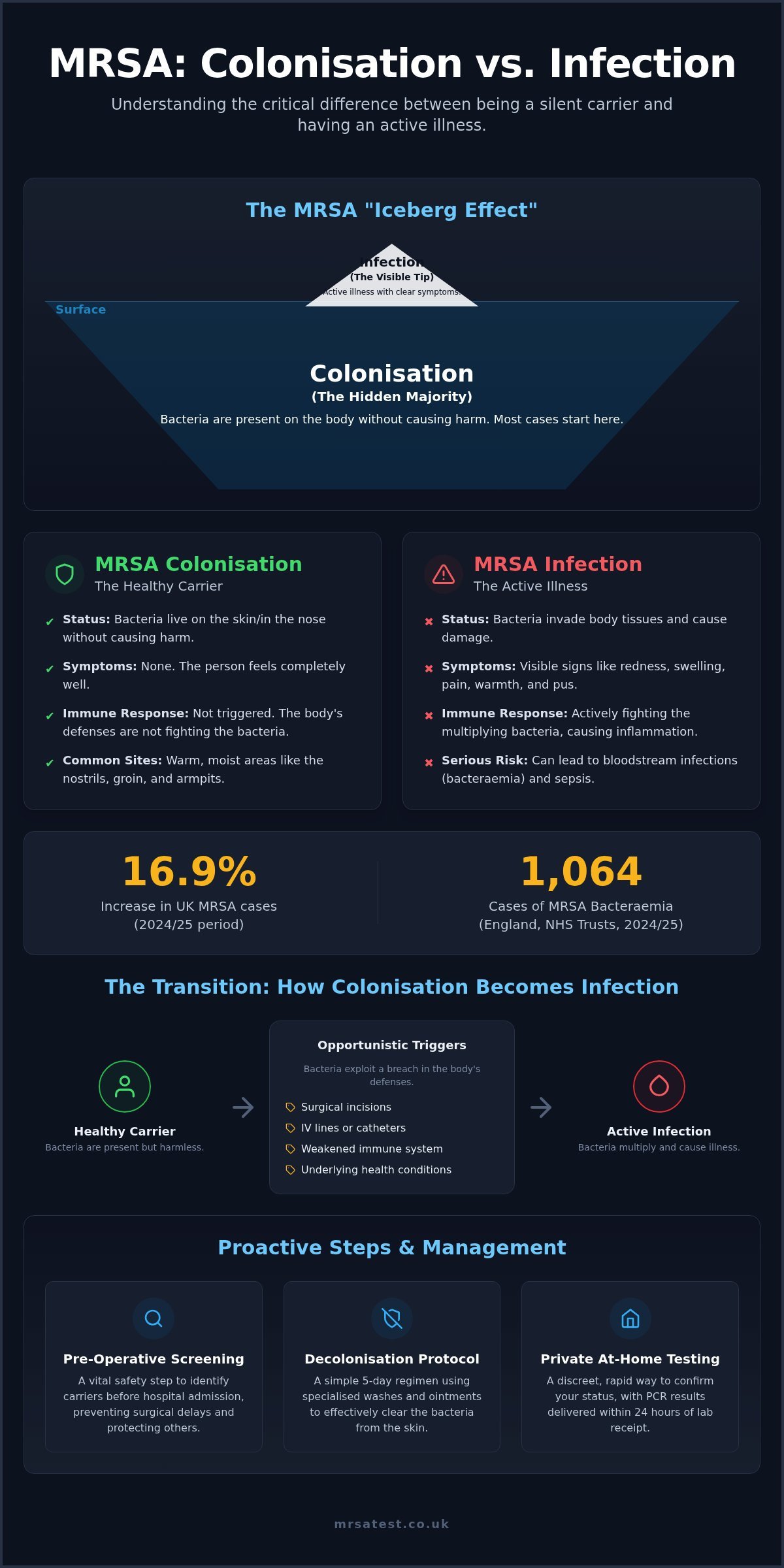
To understand the clinical difference between mrsa colonisation vs infection, we first need to look at the bacteria itself. Methicillin-resistant Staphylococcus aureus is a strain of common staph bacteria that has developed resistance to several widely used antibiotics. This resistance makes it more difficult to treat if it causes an illness, but it doesn’t mean the bacteria are always actively causing harm. In the medical world, we often refer to the “Iceberg Effect.” The visible tip represents active infections, while the much larger portion submerged underwater represents colonisation. Most individuals who have MRSA on their bodies are completely unaware of it because they don’t feel ill.
The Healthy Carrier: Life with MRSA Colonisation
Many people carry Staphylococcus aureus naturally on their skin or in their nostrils as part of their body’s normal flora. When someone is colonised with the drug-resistant strain, they’re known as a “healthy carrier.” In this state, the bacteria live on the body’s surface without triggering the immune system or damaging tissue. They’re essentially hitchhiking. You can be colonised for months or even years without experiencing a single symptom. The bacteria typically congregate in warm, moist areas of the body.
Common colonisation sites include:
- The nostrils (nares)
- The groin area
- The axilla (armpit)
In a healthy individual with intact skin and a functional immune system, these bacteria remain on the surface. They don’t cause issues until they find a way to bypass the body’s natural defences.
When Bacteria Attack: Recognising MRSA Infection
An infection occurs when the bacteria stop being passive passengers and start invading the body’s tissues. This transition usually happens when the skin’s protective barrier is broken or the immune system is compromised. The primary distinction in mrsa colonisation vs infection is the presence of symptoms and a measurable inflammatory response. While a carrier has a stable population of bacteria, an infected patient faces rapidly multiplying bacteria that are actively attacking healthy cells.
Localised skin infections often present with clear clinical signs:
- Persistent redness and warmth around a wound
- Painful swelling or “bumps” that may resemble boils
- The presence of pus or other drainage
If the bacteria move deeper, they can cause systemic issues. In the 2024/25 period, 1,064 cases of MRSA bacteraemia (bloodstream infection) were reported by NHS acute trusts in England. This represents the most serious form of infection, where the bacteria enter the blood and can lead to sepsis. Screening helps identify carriers before they reach this stage, allowing for proactive management before surgery or hospital admission.
The Transition: How Colonisation Becomes an Active Infection
The core difference in mrsa colonisation vs infection lies in the bacteria’s behaviour. Staphylococcus aureus is fundamentally an opportunist. It doesn’t actively seek to cause illness; instead, it waits for a breach in the body’s natural defences. For a carrier, the skin acts as a highly effective barrier that keeps the bacteria on the surface. However, when this barrier is compromised, the bacteria can migrate from the skin into the underlying tissues, where they begin to multiply rapidly and trigger an immune response.
Medical environments often provide the primary “entry doors” for this transition. Surgical incisions, intravenous (IV) lines, and urinary catheters are all necessary interventions that unfortunately create direct pathways into the body. While your immune system works constantly to keep surface colonisation in check, these physical breaches can overwhelm local defences. In a hospital setting, where patients are already recovering from illness or surgery, the risk of the bacteria moving from a colonised state to an active infection is significantly higher.
Risk Factors for Developing an Infection
Several factors can increase the likelihood of a carrier developing a symptomatic infection. Underlying health conditions, particularly diabetes, can impair the body’s ability to heal wounds and fight off bacterial invaders. Similarly, a weakened immune system due to age or medication reduces the effectiveness of the body’s natural “border patrol.”
The balance of your skin’s microbiome also plays a vital role. Recent antibiotic use can inadvertently kill off beneficial bacteria that normally compete with MRSA for space and resources. When these “good” bacteria are absent, MRSA can flourish and become more aggressive. Outside of hospitals, skin-to-skin contact in high-density areas like gyms or dormitories can facilitate the spread of colonisation, increasing the statistical chance of an eventual infection if a minor cut or scrape occurs.
The Surgical Connection: Why Carriers are at Risk
For patients facing surgery, the greatest risk often comes from their own bodies. This is known as “self-infection” or autoinoculation. If you’re a carrier, the bacteria living in your nose or on your skin can be inadvertently introduced into a surgical site during or after the procedure. Once inside, MRSA can reach internal organs, joints, or bone, leading to complications that are far more difficult to treat than a surface colonisation. In the context of MRSA, an opportunistic pathogen is a microorganism that typically lives harmlessly on the body but causes disease when the host’s defences are weakened or bypassed.
This is why clinical guidelines focus heavily on MRSA screening and decolonisation before any planned admission. Identifying your status early allows for the bacteria to be cleared before the “door” of a surgical incision is opened. If you’re concerned about your carrier status, using a private at-home screening kit can provide the clarity you need to proceed with your procedure safely and without unexpected delays.
Why MRSA Screening is Vital Before Surgery or Hospital Admission
Screening acts as an essential safety net in modern healthcare. When we discuss mrsa colonisation vs infection, the primary goal of medical professionals is to identify colonisation before it has the chance to become a clinical infection. In the UK, most NHS trusts and private hospitals require screening to take place 2 to 4 weeks before a scheduled surgery. This window is vital because it provides enough time for lab processing and, if necessary, a 5-day decolonisation treatment. Without this proactive step, a positive result discovered on the day of admission could lead to immediate surgical cancellations, causing significant stress and logistical delays.
The cost-benefit of proactive testing is clear. While a screening kit is a minor investment in your health, treating a post-operative MRSA infection is physically exhausting and medically complex. It often requires prolonged hospital stays and intensive antibiotic therapy. By identifying your status early, you’re effectively taking control of your recovery timeline. Understanding why an MRSA test is a crucial part of pre-op health helps you navigate the hospital system with greater ease and fewer surprises.
The Screening Process: Nose, Groin, and Axilla Swabs
Why do we swab these specific areas? Bacteria like MRSA thrive in warm, moist environments where skin surfaces meet. The nostrils (nose), groin, and axilla (armpits) are the most common reservoirs for colonisation. Standard screening usually involves taking a gentle swab from each of these sites to ensure no colonies are missed. There are two primary ways these swabs are processed in the lab:
- Culture Testing: The traditional method where the lab attempts to grow the bacteria over 48 to 72 hours.
- Rapid PCR Testing: A modern approach that identifies the specific DNA of the bacteria. PCR technology is significantly faster, often providing confirmed results within 24 hours of the lab receiving the sample.
Choosing a rapid PCR test is often the preferred route for those on a tight surgical schedule, as it removes the anxiety of a long wait for results.
Protecting Others: The Public Health Aspect
Screening isn’t just about your individual safety; it’s a vital part of infection control for the wider community. Hospitals are high-density environments where vulnerable patients, such as the elderly or those with open wounds, are at increased risk. By confirming you aren’t a carrier, you help prevent the accidental spread of bacteria within hospital wards. This protection extends to your home life as well. Many people choose to screen themselves if they live with high-risk family members, ensuring they aren’t unknowingly bringing the bacteria into a domestic setting where it could cause harm to others.
Decolonisation vs. Antibiotic Treatment: Managing Your Results
Receiving a positive test result can be unsettling, but the management strategy depends entirely on whether you’re facing mrsa colonisation vs infection. For carriers, the goal is decolonisation. This is a surface-level “deep clean” of the skin and nostrils to remove the bacteria before they can cause trouble. For those with an active infection, the medical approach shifts to systemic treatment, often involving targeted antibiotics to fight bacteria that have already invaded the body’s tissues.
It’s a common misconception that a positive screening result automatically leads to cancelled surgery. In reality, identifying colonisation early allows you to complete a simple, five-day protocol that significantly lowers the risk of post-operative complications. This proactive management is the primary reason why pre-surgical screening is so effective at reducing hospital-acquired infections.
The Decolonisation Protocol for Carriers
If you’re a healthy carrier, you don’t need powerful internal antibiotics. Instead, you’ll follow a topical routine designed to clear the bacteria from your skin’s surface. This protocol usually lasts for five consecutive days and must be completed in full to be effective. Skipping even one day can allow the bacterial population to recover, potentially leading to a failed screen later.
The standard routine typically includes:
- Nasal Ointment: Applying a prescribed antibacterial cream inside the nostrils three times a day.
- Body Wash: Using a specialised antiseptic solution, such as What is Chlorhexidine (CHG) Wash?, to cleanse the skin and hair daily.
- Hygiene Maintenance: Changing your towels, clothes, and bed linen every day during the treatment to prevent re-contamination.
By the end of the five days, the bacterial load on your body is reduced to safe levels, allowing your surgical team to proceed with confidence. If you need to confirm your status quickly to start this process, you can order an MRSA screening kit for rapid, private results.
Treating Active MRSA Infections
When the bacteria move beyond the skin and cause symptoms, the management plan becomes more intensive. Active infections require a clinical diagnosis and specific medications. Because MRSA is resistant to meticillin and other common penicillins, standard “off the shelf” antibiotics won’t work. Doctors must use non-standard drugs that the bacteria haven’t yet adapted to, which are often delivered via oral tablets or, in severe cases, an intravenous (IV) drip.
Wound care is also a critical component of treating symptomatic skin infections. Medical professionals will focus on keeping the site clean, covered, and properly drained to prevent the bacteria from spreading to other parts of the body or other people. While colonisation is managed at home with washes, an active infection requires close medical supervision to ensure the bacteria are fully eradicated from the bloodstream or internal tissues. Understanding the nuances of mrsa colonisation vs infection ensures you receive the right type of care at the right time.
Taking Control: Private At-Home MRSA Testing in the UK
While hospital-led screening is a standard part of pre-operative care, many patients seek a more discreet and efficient way to manage their health logistics. Private at-home testing provides a level of speed and confidentiality that traditional clinic appointments often cannot match. By choosing to test in the comfort of your own home, you avoid the anxiety of public waiting rooms and gain the ability to share your results with your surgical team on your own terms. This proactive approach is particularly beneficial for those who want to clarify their status regarding mrsa colonisation vs infection well before their hospital admission date.
At mrsatest.co.uk, we offer both culture and PCR testing options to suit different requirements. If you have several weeks before your procedure, a standard MRSA Culture test provides reliable results within 48 to 72 hours of lab receipt. However, if you’re on a tighter schedule or simply prefer immediate answers, the MRSA Rapid PCR Test is the most efficient choice. This technology identifies bacterial DNA with high precision, delivering a confirmed result within 24 hours of the sample reaching our accredited UK laboratory. This speed allows you to start any necessary decolonisation protocols without delay, ensuring your surgery remains on track.
How to Swab Correctly at Home
The accuracy of your results depends heavily on the quality of the sample collected. Our kits are designed for ease of use, containing everything you need to perform a professional-grade screening at home. You’ll need to collect samples from the primary reservoirs where MRSA typically resides. This involves using the provided swabs to gently but thoroughly sample the inside of both nostrils, the groin area, and the axilla (armpits). Ensuring you follow the included instructions carefully maintains the integrity of the sample for laboratory analysis.
Once you’ve completed the collection, place the swabs into the secure transport tubes provided. The process is designed to be straightforward and clinical, minimizing any risk of contamination. You can then return your kit using the prepaid, tracked shipping label included in your package. Our streamlined logistics ensure your sample reaches our verified laboratory partners as quickly as possible, so you aren’t left waiting for answers.
Understanding Your Confidential Results
When your results are ready, they’re delivered through a secure and private channel. Understanding the difference between mrsa colonisation vs infection helps you interpret these findings correctly. A “Negative” result means that no MRSA was detected at the sites sampled, providing you with the peace of mind to proceed with your hospital admission. If you receive a “Positive” result, it indicates that you are currently a carrier. As we explored in previous sections, this isn’t a cause for panic. It simply means you should contact your healthcare provider to begin a 5-day decolonisation wash and ointment routine.
Empowering yourself with this knowledge allows you to enter the hospital with confidence, knowing you’ve taken every possible step to protect yourself and others. Taking control of your screening process removes the “unknown” factor from your surgical preparation. If you’re ready to secure your status, you can Order your Rapid MRSA PCR Test Kit for 24-hour results and take the first step toward a safer hospital experience.
Secure Your Health Before Hospital Admission
Navigating the path to surgery is often a logistical challenge, but your MRSA status doesn’t have to be an unknown variable. Understanding the clinical reality of mrsa colonisation vs infection allows you to take proactive steps rather than reacting to a crisis. While colonisation simply means you’re a “healthy carrier,” identifying this state early ensures you can complete a simple decolonisation routine. This prevents the bacteria from becoming an opportunistic threat once a surgical incision is made, protecting both your recovery and the safety of those around you.
Taking control of this process is straightforward with modern diagnostic tools. You can bypass the wait times of traditional clinics and receive the answers you need in total privacy. Our service provides Accredited UK Laboratory results with Rapid 24-hour PCR options available for those on a tight schedule. Every kit is delivered via discreet, plain-packaged shipping to ensure your medical data remains confidential. Order Your Confidential MRSA Test Kit Online Today and move forward with the quiet competence that comes from being fully prepared for your hospital stay.
Frequently Asked Questions
Can I be colonised with MRSA forever?
It’s possible to remain colonised with MRSA for months or even years, though the bacterial population often fluctuates. Medical professionals categorise carriers into persistent carriers, who always harbour the bacteria, and intermittent carriers, who only test positive occasionally. While long-term colonisation isn’t inherently dangerous for a healthy person, it increases the risk of autoinoculation during future medical procedures. Regular screening helps you monitor your carrier status if you’re in a high-risk group.
Is MRSA colonisation contagious to my family?
MRSA colonisation is contagious and can spread to family members through direct skin contact or shared household items like towels and razors. However, most healthy people who acquire the bacteria will simply become carriers themselves without ever falling ill. The primary concern is protecting vulnerable relatives, such as those with weakened immune systems or chronic wounds, as they’re more likely to transition from a colonised state to a symptomatic infection.
What happens if I test positive for MRSA before my surgery?
Testing positive before surgery typically triggers a five-day decolonisation protocol rather than an immediate cancellation. You’ll be prescribed an antibacterial body wash and a nasal ointment to reduce the bacterial load on your skin. This proactive measure is essential for patient safety and helps prevent post-operative complications. Once the course is finished, your surgical team can usually proceed as planned, provided the protocol was followed correctly to manage the mrsa colonisation vs infection risk.
Can I clear MRSA colonisation naturally without treatment?
It is possible for the body to clear MRSA colonisation naturally over time as the skin’s microbiome shifts, but this process is unpredictable. For those scheduled for surgery or clinical procedures, waiting for natural clearance isn’t a safe or recommended option. Clinical decolonisation treatments are used because they provide a controlled, rapid reduction in bacteria. This ensures that the surgical site remains protected during the critical window when the body’s natural defences are bypassed.
How long does it take for colonisation to become an infection?
There is no fixed timeline for this transition because colonisation only becomes an infection when a specific “trigger” occurs. This could be a surgical incision, a catheter insertion, or even a minor skin abrasion. Without such a breach in the body’s defences, a person can remain a healthy carrier for years without any symptoms. The distinction between mrsa colonisation vs infection is defined by the bacteria’s entry into deeper tissues rather than the duration of carriage.
Is a colonised person considered a ‘danger’ to the public?
A colonised person isn’t considered a danger to the general public and can lead a completely normal life. MRSA is common in the community, and most healthy individuals aren’t at risk of serious illness from casual contact. However, carriers should maintain good hand hygiene and cover any open cuts to prevent spreading the bacteria to more vulnerable individuals. In everyday settings, the risk of a carrier causing a public health issue is extremely low.
What is the difference between a PCR and a Culture MRSA test?
The primary difference lies in the laboratory technology and the turnaround time. A Culture test involves placing your sample in a controlled environment to see if bacteria grow over 48 to 72 hours. In contrast, a Rapid PCR test looks for the specific genetic DNA of the bacteria. PCR is significantly faster, often providing a confirmed result within 24 hours of the lab receiving your sample, making it the preferred choice for urgent pre-operative requirements.
Does MRSA colonisation cause a rash or itching?
MRSA colonisation doesn’t cause a rash, itching, or any visible skin changes. By definition, being colonised means the bacteria are living on your skin without causing an inflammatory response or tissue damage. If you’re experiencing redness, pain, or itching, these are symptoms of an active infection or perhaps an unrelated skin condition. Screening is the only way to detect colonisation because it provides no physical warning signs to the carrier.