

Blog
UK MRSA Screening Guidelines 2026: Pre-Op Guide

Jul
Did you know that MRSA bacteraemia rates in the UK saw a 17.4% increase in the 2024 to 2025 financial year? This represents the largest annual rise since surveillance began, making pre-operative safety more vital than ever. If you’re preparing for a procedure, understanding the latest mrsa screening guidelines uk hospitals follow is the first step toward a successful recovery. It’s completely natural to feel a sense of unease when your hospital mentions MRSA or “superbugs.” You might worry that a positive swab could lead to a last-minute cancellation or a long delay in your treatment.
We’re here to help you navigate these protocols with clarity and professional support. You deserve to feel prepared rather than overwhelmed by clinical requirements. In this guide, we’ll explain which surgeries require mandatory testing according to the May 2025 GIRFT standards, exactly which body sites like the nose and groin need swabbing, and how you can manage your results to keep your surgery on schedule. By the end, you’ll have a clear, manageable plan that fits your timeline and gives you peace of mind.
Key Takeaways
- Identify whether your upcoming surgery falls under “high-risk” categories, such as orthopaedics or neurosurgery, which require mandatory MRSA screening.
- Gain a clear understanding of the latest mrsa screening guidelines uk practitioners follow to prevent post-operative infections and avoid procedure delays.
- Learn about the clinical swabbing process for the nose, groin, and axilla, and why these specific sites are essential for accurate detection.
- Discover the standard 5-day decolonisation protocol involving antibacterial washes and nasal creams used to clear MRSA before your operation.
- Explore how private at-home PCR testing offers a fast, discreet alternative to hospital clinics with results available in as little as 24 hours.
Understanding MRSA Screening Guidelines in the UK (2026)
MRSA screening is a proactive clinical process designed to identify asymptomatic carriers of Methicillin-resistant Staphylococcus aureus (MRSA). These are people who carry the bacteria on their skin or in their nostrils without showing any signs of illness. The UK Health Security Agency (UKHSA) works alongside NHS England to establish national standards for these tests. By identifying carriers before they enter a clinical environment, healthcare providers can take specific steps to prevent the bacteria from causing harm during or after a procedure.
Modern protocols focus heavily on the distinction between colonisation and active infection. Colonisation is the presence of bacteria on the body without active symptoms or illness. While these bacteria are often harmless on the surface of the skin, they pose a significant risk if they enter the bloodstream through a surgical incision. Identifying colonised patients allows hospitals to implement preventative measures, significantly reducing the incidence of hospital-acquired infections across surgical wards. To manage NHS resources effectively, there’s been a clear shift toward targeted screening, focusing on patient groups where the risk of infection is highest.
Why is MRSA Screening Mandatory for Some Patients?
For many, a screening test is a non-negotiable part of the pre-operative journey. The primary goal is to prevent the transition from harmless skin colonisation to a life-threatening internal infection. When you follow the mrsa screening guidelines uk trusts have in place, you’re participating in a vital safety check. This process ensures that high-risk patients are identified and treated before they ever enter the operating theatre, protecting both the individual and the wider hospital environment from potential outbreaks.
The Evolution of UK Screening Policy
The approach to testing has changed significantly over the last few years. Following the May 2025 GIRFT (Getting It Right First Time) guidance, the UK moved from universal screening to a more precise, risk-based strategy. This evolution is largely driven by the global impact of antimicrobial resistance (AMR), which makes existing infections much harder to treat. While international standards from the WHO or CDC provide broad frameworks, the mrsa screening guidelines uk hospitals follow are specifically tailored to domestic resistance patterns and local surgical outcomes. This ensures that the most vulnerable patients receive the highest level of protection without unnecessary delays for those at lower risk.
Who Must Undergo Mandatory MRSA Screening?
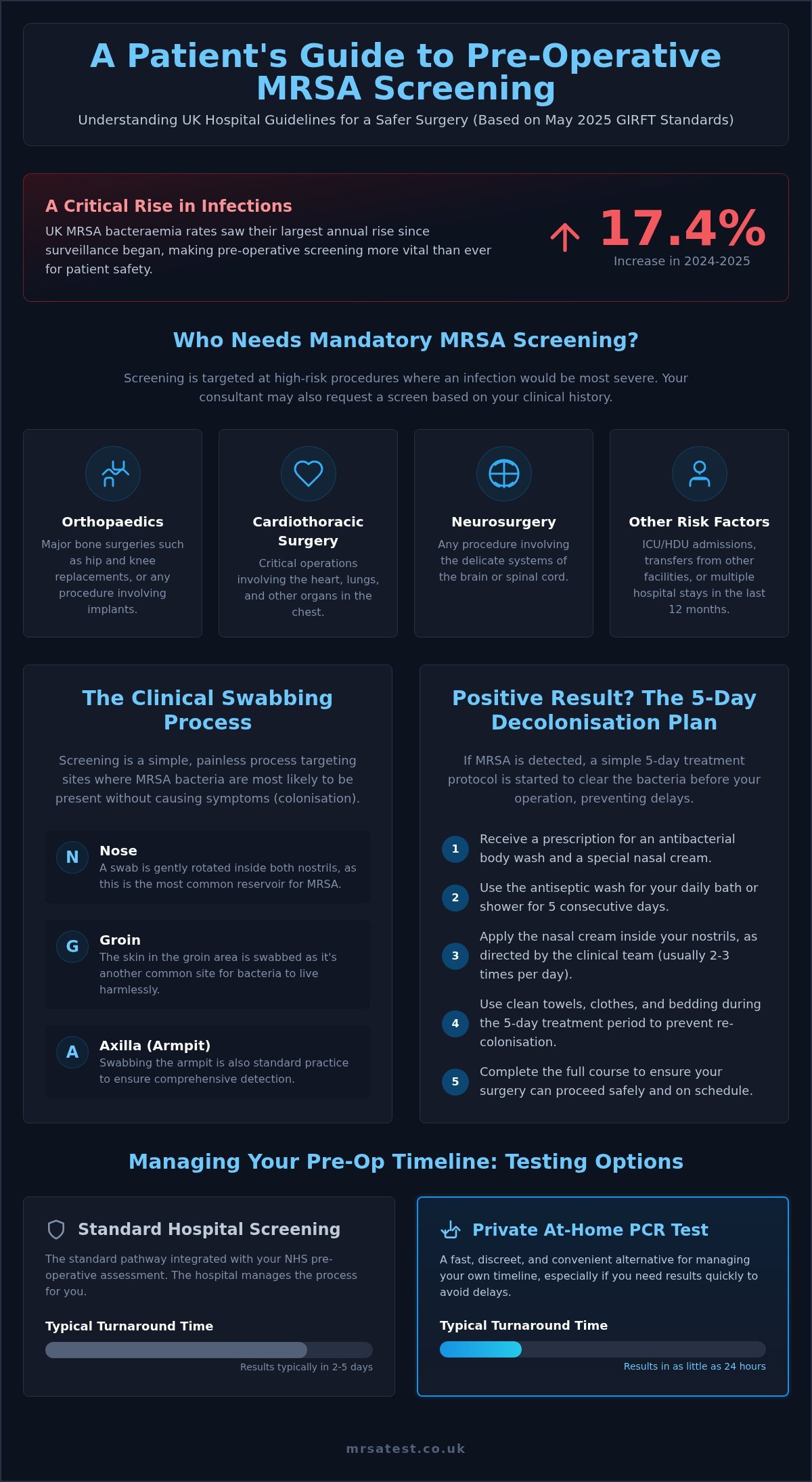
Not every patient entering a hospital requires a swab. Current NHS guidelines on MRSA focus resources where the risk of infection is highest or where the consequences of an infection would be most severe. According to the mrsa screening guidelines uk hospitals follow, mandatory screening is essential for patients undergoing high-risk surgical procedures. This includes:
- Orthopaedics: Specifically major bone surgeries like hip and knee replacements.
- Cardiothoracic Surgery: Operations involving the heart or lungs.
- Neurosurgery: Any procedure involving the brain or spinal cord.
- ICU and HDU Admissions: All patients admitted to Intensive Care or High Dependency Units are screened due to their heightened vulnerability.
Hospitals also target “frequent flyers,” which refers to patients who’ve had multiple hospital admissions within the last 12 months. If you’re being transferred from another healthcare facility or a nursing home, you’ll likely face mandatory screening. This helps clinical teams maintain a sterile environment and prevents the cross-contamination of resistant bacteria between different care settings.
High-Risk vs. Low-Risk Procedures
The presence of implants or prosthetics significantly increases the need for MRSA clearance. Bacteria can adhere to these foreign objects, making infections much harder to treat with standard antibiotics. In contrast, minor day surgeries or ophthalmology procedures like cataract removals are typically considered low-risk and don’t require routine screening. However, a “Clinical Judgement” clause exists. This allows your consultant to request a screen regardless of the procedure if they believe your specific health history or circumstances warrant extra caution.
Special Considerations for Pre-Op Patients
Timing is a critical factor in your surgical journey. Screening usually happens 2 to 4 weeks before your scheduled surgery date. This window allows enough time for results to be processed and for a decolonisation protocol to be completed if you test positive. If you’re a known MRSA carrier from a previous admission, the hospital will likely flag this in your records, but a fresh screen is still required to confirm your current status.
When preparing for surgery, knowing your status early can prevent the anxiety of a last-minute cancellation. If your hospital hasn’t provided clear instructions, checking your status privately can give you the confidence you need before your pre-assessment appointment. This proactive approach ensures you meet the mrsa screening guidelines uk trusts demand without any unexpected delays.
The Clinical Process: Swab Sites and Testing Methods
The physical act of screening is straightforward, yet its accuracy depends on following the correct clinical procedure. To meet the mrsa screening guidelines uk hospitals require, samples must be collected from specific areas of the body where Staphylococcus aureus is most likely to reside. The standard protocol involves swabbing the anterior nares (nostrils), the throat, and the groin or axilla (armpit). These sites are typically warm and moist, providing the ideal environment for the bacteria to thrive without causing an active infection.
Nose, Groin, and Axilla: The ‘Triple Swab’ Standard
The nostrils, or anterior nares, are the primary reservoir for MRSA. When collecting a sample, you should insert the sterile swab into the front of the nostril and rotate it firmly against the inside surface for five seconds on each side. This ensures a sufficient amount of skin cells and bacteria are captured for the laboratory to analyse. While the nose is the most common site, the NHS guidelines on MRSA also emphasise the importance of the groin and axilla.
Screening these additional areas is vital for detecting community-acquired strains that might not be present in the nose alone. For the axilla and groin, the swab is rubbed over the skin surface to pick up any colonised bacteria. Incorrect swabbing technique is the leading cause of false negatives, which can potentially lead to complications during your recovery. Using a systematic approach ensures that the sample is representative and clinically valid.
PCR vs. Culture: Speed vs. Sensitivity
Once your samples are collected, they are sent to an accredited laboratory for one of two primary testing methods. The traditional approach is an MRSA Culture. This involves placing the sample on agar plates and waiting for the bacteria to grow, a process that typically takes 48 to 72 hours. While highly sensitive, the turnaround time can be a source of anxiety for patients with imminent surgery dates.
A more modern alternative is the Rapid PCR (Polymerase Chain Reaction) test. This molecular method identifies the specific DNA of the mecA gene, which is responsible for antibiotic resistance. PCR results are often available in as little as 24 hours, providing a significant advantage for pre-operative planning. Most NHS trusts still rely on culture for routine screening due to cost, but many are shifting toward PCR for emergency admissions or high-risk cases where speed is essential. Understanding which method your hospital trust uses helps you manage your timeline with confidence.
Decolonisation and Reducing Risks Before Surgery
If your pre-operative screen returns a positive result, your surgical team will initiate a decolonisation protocol. This is a routine preventative measure designed to eliminate the bacteria from your skin and nostrils before you enter the operating theatre. Following the mrsa screening guidelines uk hospitals adhere to ensures that the risk of the bacteria entering a surgical wound is kept to an absolute minimum. It’s a manageable process that empowers you to take an active role in your own surgical safety.
The treatment typically lasts for five days and focuses on both the body and the immediate environment. Alongside the clinical treatment, you’ll be advised to change your bed linen, towels, and clothing every day. This prevents you from inadvertently re-colonising your skin with bacteria shed onto surfaces during the previous day. Without these environmental precautions, the risk of “re-colonisation” before your surgery date remains high, even if you follow the medication steps perfectly.
The 5-Day Protocol Explained
The protocol relies on two primary components: a nasal ointment and an antiseptic body wash. You’ll apply the Mupirocin nasal cream three times a day using a cotton bud, ensuring it’s spread thoroughly inside both nostrils. For the skin, a Chlorhexidine (CHG) wash is used daily in the shower. It’s important to apply the wash to damp skin, focusing specifically on your hair, underarms, and skin folds where bacteria often hide. While generally well-tolerated, some patients experience minor skin irritation or dryness. If you notice significant redness, contact your pre-assessment nurse immediately to discuss alternative options.
Why Decolonisation Fails: Common Pitfalls
Successful decolonisation requires strict adherence to the full five-day cycle. Stopping early because your skin feels clean is a common mistake that contributes to mupirocin resistance, making the bacteria harder to clear in the future. Persistent colonisation can also occur if other members of your household or even family pets are carriers, as the bacteria can easily pass back to you through shared surfaces. Adhering to the mrsa screening guidelines uk trusts provide is the best way to ensure your surgery proceeds without delay.
Once the treatment is finished, you’ll usually undergo a “Clearance Screen.” This involves three sets of negative swabs taken over several days to confirm the bacteria are gone. If you want to confirm your status before heading back to the hospital for your final checks, you can order a private MRSA clearance test to ensure you’re ready for your procedure with confidence.
Private MRSA Screening: Managing Your Own Pre-Op Timeline
While the NHS provides a robust framework for infection control, many patients choose private screening to gain better control over their surgical timeline. This is particularly common when surgery dates are imminent or when patients want to avoid the stress of hospital waiting rooms during an already busy pre-operative period. By choosing a private option, you ensure that you align with the mrsa screening guidelines uk trusts require, but on a schedule that fits your personal logistics. Early detection is a significant advantage, allowing you to address any colonisation issues before they can cause a delay in your treatment.
At-home kits are designed to meet the same clinical standards as those used in private hospitals. At mrsatest.co.uk, we utilise UK-based, laboratory-accredited partners to process every sample, ensuring results are accurate and reliable. The process is straightforward. Once you order your kit, it arrives in discreet packaging. You collect your samples from the nose, groin, or axilla as previously described and return them using the included prepaid tracked mail. This eliminates the need for extra hospital visits and allows you to manage your health with quiet competence and minimal friction.
Interpreting your results is simple. A ‘Not Detected’ result means the laboratory found no evidence of MRSA colonisation in the sites swabbed. Conversely, a ‘Detected’ result indicates the presence of the bacteria. If MRSA is detected, you have the advantage of time. You can begin the decolonisation process early, ensuring you’re clear before your official hospital pre-assessment. This proactive approach is a powerful tool for patient autonomy within the mrsa screening guidelines uk framework, giving you the confidence that your surgery will proceed as planned.
The Benefits of At-Home Testing
Testing in the comfort of your own home offers a level of privacy and discretion that a busy clinic cannot provide. It removes the logistical burden of arranging transport or taking time off work for a simple swab appointment. Most importantly, early detection provides peace of mind. If you discover a colonisation early, you can complete the necessary five-day treatment and clearance screens well before your surgery date, preventing any risk of a last-minute cancellation.
Choosing the Right Kit: PCR or Culture?
Selecting the correct test depends on your specific timeline. If your surgery is happening in the next seven days, the MRSA Rapid PCR Test is the most appropriate choice. It provides results in as little as 24 hours by identifying bacterial DNA. For those in the early stages of pre-op prep or routine monitoring, the MRSA Culture Test is a reliable, traditional method. Before you proceed, ensure your private results are accepted by your surgical team. Most UK hospitals welcome results from accredited laboratories, but it’s always best to confirm with your consultant or pre-assessment nurse.
Take Control of Your Pre-Operative Journey
Preparing for surgery is a significant milestone, and understanding the mrsa screening guidelines uk trusts follow is the best way to ensure your procedure remains on schedule. By identifying colonisation early through accurate swabbing of the nose, groin, and axilla, you can complete any necessary decolonisation protocols well before your admission date. This proactive step protects your health and helps prevent the stress of last-minute surgical delays. Knowledge is your most powerful tool for a safe recovery.
You don’t have to wait for a hospital appointment to get the answers you need. You can order your professional MRSA screening kit from mrsatest.co.uk today to access fast UK laboratory results with total privacy. Our service combines accredited clinical testing methods with the convenience of discreet at-home collection, allowing you to manage your pre-op requirements with quiet competence. Taking this step gives you the peace of mind that you’re fully prepared for a successful recovery. We’re here to support you through every stage of your health screening, ensuring you feel confident and supported as you move toward your surgery date.
Frequently Asked Questions
How long does an MRSA screen take to come back in the UK?
Results typically take between 24 and 72 hours depending on the laboratory method used by your provider. A standard culture test requires two to three days for the bacteria to grow on agar plates for identification. If your hospital or private laboratory uses Rapid PCR technology, you can often receive your results in as little as 24 hours. This faster turnaround is particularly helpful for patients with imminent surgery dates who need quick clearance.
Is MRSA screening mandatory for all NHS patients?
No, MRSA screening is not mandatory for every patient, as the NHS follows a targeted, risk-based approach. Under the latest mrsa screening guidelines uk trusts follow, testing is prioritized for high-risk specialties such as neurosurgery, cardiothoracic surgery, and orthopaedics involving prosthetic implants. Patients admitted to Intensive Care Units (ICU) are also routinely screened. Minor day procedures, like cataract surgery, generally don’t require a pre-operative swab unless specifically requested by a consultant.
Can I have surgery if I test positive for MRSA?
Yes, you can still have your surgery if you test positive, but the procedure may be delayed until you complete a decolonisation protocol. This treatment usually involves using a specific nasal ointment and antiseptic body wash for five days to clear the bacteria from your skin surface. Once the treatment is finished, your surgical team will decide if it’s safe to proceed, often following a clearance screen to ensure the risk of infection is minimized.
What does the MRSA swab test feel like?
The test is entirely painless and feels similar to using a standard cotton bud on your skin. A clinician or the patient themselves will gently rub a sterile swab inside the nostrils and across areas like the groin or armpit. While it might feel slightly ticklish or unusual for a few seconds, it doesn’t involve any needles or invasive procedures. It’s a quick and simple process that typically takes less than a minute to complete during a pre-assessment.
How long is a negative MRSA test valid for before surgery?
A negative MRSA screen is generally considered valid for at least three months for major surgical procedures. In some clinical settings, this validity period may extend to six months or longer for other types of operations depending on local trust policies. However, if you’re readmitted to a hospital or move between different healthcare facilities during this time, your surgical team will likely require a new swab to ensure your colonisation status hasn’t changed.
Do I need to screen for MRSA if I am having a private operation?
Yes, most private hospitals in the UK require MRSA screening to maintain high safety standards and prevent post-operative infections. While the specific mrsa screening guidelines uk private providers use might vary slightly between facilities, the core requirement for high-risk procedures remains the same. Many private patients choose at-home testing kits to meet these requirements conveniently, ensuring their results are ready well before their scheduled admission date to avoid any last-minute cancellations.
What happens if I forget to do my decolonisation wash before surgery?
You must inform your surgical team immediately if you miss any part of your decolonisation treatment. Failing to complete the full five-day wash and nasal cream protocol can increase the risk of a surgical site infection during your recovery. Depending on the urgency of your procedure, the hospital might choose to delay the surgery to allow for a full treatment cycle or proceed with additional precautions during the operation to ensure your safety.
Can I get an MRSA test kit on the NHS for home use?
The NHS typically conducts MRSA screening in person during a pre-assessment appointment rather than providing kits for home use. While some trusts might offer specific arrangements in rare cases, the standard pathway involves a clinician taking the swabs at the hospital. Patients who prefer the convenience of testing at home or need faster results often opt for private, laboratory-accredited kits that can be ordered online and returned via tracked mail for professional analysis.
