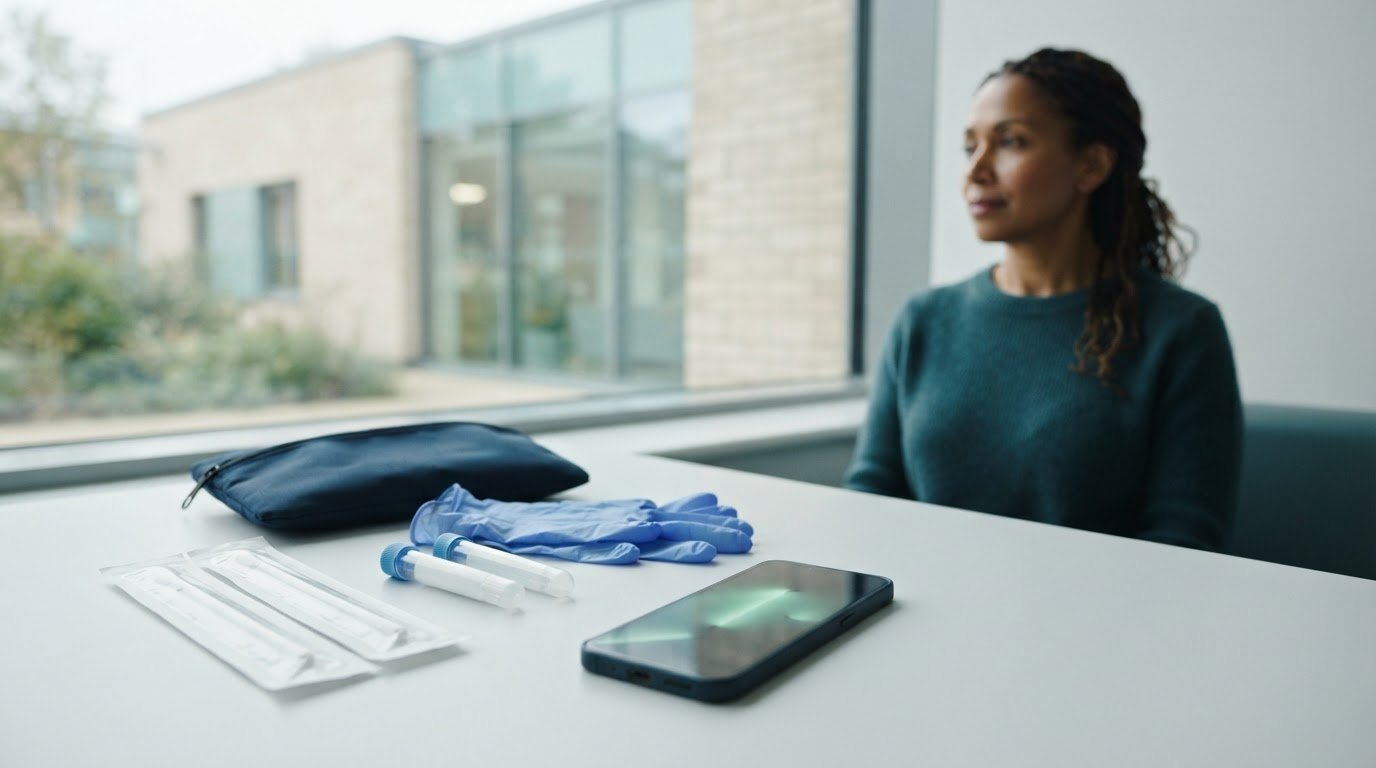

Imagine you’ve finally received your surgery date, but your pre-operative checklist requires a mid-week trip to a hospital clinic for a simple swab. For many UK patients, finding the time for these appointments is difficult, and the anxiety of potential exposure to hospital-acquired infections is a real concern. It’s understandable to feel overwhelmed by the logistics of preparing for a procedure while trying to maintain your daily routine.
You don’t have to choose between convenience and clinical safety. Opting for pre-surgery mrsa screening at home allows you to manage your requirements privately and efficiently, providing the peace of mind you need before admission. This guide explains how at-home kits work, compares the speed of rapid PCR versus traditional culture methods, and shows you how to get fast, discreet results that meet hospital standards. By the end, you’ll know exactly how to secure a clear screening without the extra travel or stress.
Key Takeaways
- Understand why MRSA screening is a mandatory pre-operative requirement to prevent surgical site infections and ensure patient safety.
- Discover how pre-surgery mrsa screening at home provides a discreet alternative to hospital clinics, removing the need for travel and time off work.
- Learn the technical differences between Rapid PCR testing for 24-hour results and traditional culture methods for cost-effective screening.
- Master the correct swabbing techniques for the nose and groin to ensure your samples are valid and meet strict clinical standards.
- Gain peace of mind by managing your pre-surgery requirements efficiently through an accredited UK laboratory process.
Navigating Your Pre-Surgery Assessment in the UK
The pre-operative assessment is a mandatory clinical check designed to ensure you’re fit for both anaesthetic and the surgical procedure itself. It’s a vital step in your patient journey. Hospitals perform these evaluations to identify any underlying health issues that might complicate your recovery. By screening early, medical teams can prevent severe complications like sepsis, which is a life-threatening reaction to infection. This proactive approach ensures your safety remains the priority throughout the elective care process.
During this assessment, staff typically record your blood pressure, Body Mass Index (BMI), and a detailed medical history. However, in 2026, many patients are seeking more flexibility. Instead of multiple hospital visits, people are increasingly choosing at-home components for their pre-op checklist. Using pre-surgery mrsa screening at home allows you to complete one of the most critical infection checks without the stress of a physical clinic visit. This shift towards patient-led diagnostics provides a more relaxed environment for what can otherwise be a high-pressure preparation period.
Standard Tests Required Before Elective Surgery
Your clinical team will usually request several diagnostic tests to build a complete profile of your health. A Full Blood Count (FBC) is essential for checking your iron levels to rule out anaemia and identifying any existing white blood cell elevations that suggest an active infection. Urine tests are also standard to rule out undiagnosed diabetes or asymptomatic urinary tract infections (UTIs) that could lead to post-operative issues.
The most critical safety measure for inpatient procedures is the screening for Methicillin-resistant Staphylococcus aureus (MRSA). This bacterium is resistant to many common antibiotics, making it difficult to treat if it enters a surgical site. Because it’s a non-negotiable requirement for almost all UK elective surgeries, ensuring you’ve completed your screening is paramount to avoiding delays. Many patients don’t realise they carry the bacteria on their skin, which is why universal screening is a standard NHS and private hospital protocol.
When to Start Your Pre-Op Preparation
Timing is everything when it comes to your surgical readiness. Most hospitals require tests to be completed within a specific timeframe, often a 2-week window before your admission date. This ensures the data is current and accurate. You’ll also need to review your current medications and supplements. Doctors often advise patients to stop taking certain drugs, such as blood thinners, several days before the operation to minimize bleeding risks during the procedure.
Managing these logistics can feel complex, but staying organized is the best way to reduce pre-surgery anxiety. For a deeper dive into managing your lead-up to the hospital, you can consult our Preparing for Surgery: A Complete Pre-Op Health & Logistics Checklist. Completing your pre-surgery mrsa screening at home early in this window ensures your results are ready for your final assessment, helping you avoid last-minute cancellations or administrative hurdles.
Why MRSA Screening is a Non-Negotiable Pre-Op Requirement
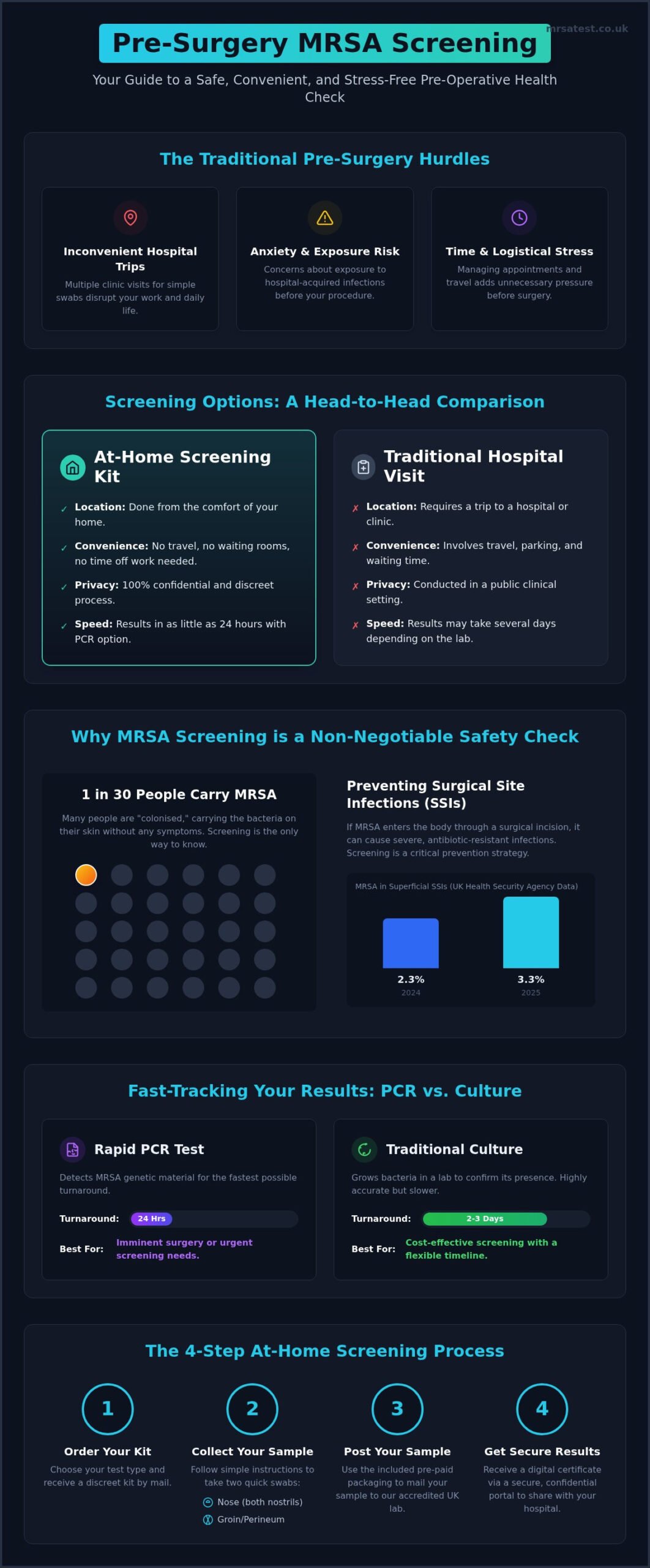
MRSA is a type of bacteria that lives harmlessly on the skin or in the nose of about 1 in 30 people. While it’s usually benign, it becomes a significant threat if it enters the body through a surgical incision. For more detailed clinical context, you can read this NHS information on MRSA. Hospitals prioritize screening because preventing an infection is far more effective than treating one that has already taken hold.
Many patients are “colonised” with MRSA, meaning they carry the bacteria without showing any symptoms or feeling unwell. Because you can’t tell you’re a carrier by looking in the mirror, testing is the only way to ensure safety. Screening protects not only you but also the wider patient population by reducing the risk of hospital-acquired infections (HAIs). If your pre-surgery mrsa screening at home returns a positive result, it triggers a decolonisation protocol. This usually involves a five-day course of special body wash and nasal cream to clear the bacteria before your operation.
The stakes are measurable. Data from the UK Health Security Agency shows that the proportion of superficial surgical site infections caused by MRSA increased from 2.3% to 3.3% between 2024 and 2025. This rise underscores why hospitals maintain such rigorous screening standards. Identifying the bacteria early allows for a simple treatment plan rather than dealing with complex infections after your procedure.
The Impact of MRSA on Surgical Outcomes
If MRSA is present during surgery, it can lead to increased recovery times and severe post-operative infections. This is particularly critical in orthopaedic and cardiac surgeries where prosthetic materials, like heart valves or joint replacements, are used. Bacteria can adhere to these surfaces, making infections exceptionally difficult to clear. To understand the full scope of these risks, consult our guide: What Is MRSA? Your Complete Guide to Symptoms, Causes & Risks.
NICE Guidelines and UK Hospital Protocols
UK hospitals follow strict national standards set by the National Institute for Health and Care Excellence (NICE) to manage infection control. These protocols specify that swabs must be taken from the primary areas where the bacteria live, typically the nose and groin. Sometimes the armpits (axilla) are also included. It’s helpful to remember that MRSA screening is a safety barrier designed to protect you, not a reason for your surgery to be cancelled.
Completing your pre-surgery mrsa screening at home ensures you have your results ready for your pre-assessment. If you’re looking for a professional and discreet way to manage these requirements, you can order an accredited testing kit today.
Comparing Hospital-Based vs. Private At-Home Pre-Surgery Tests
Choosing pre-surgery mrsa screening at home removes many of the logistical hurdles associated with traditional hospital appointments. Attending a pre-operative clinic often requires navigating hospital parking, enduring long queues, and taking valuable time off work. For elective surgery patients, these administrative tasks add unnecessary stress to an already anxious period. By contrast, an at-home kit allows you to integrate your clinical requirements into your existing schedule without leaving your house.
Privacy is another significant factor. MRSA screening requires swabs from sensitive areas, including the groin and sometimes the armpits (axilla). Performing these swabs in a public hospital environment can feel intrusive for many patients. Testing in the comfort and privacy of your own home ensures the process remains discreet and clinical standards are maintained without compromising your personal comfort. Additionally, private laboratories often outpace busy NHS diagnostic hubs for elective cases, providing the rapid results needed for tight surgical timelines.
When considering the cost, it’s helpful to perform a simple cost-benefit analysis. While there is an upfront price for a private kit, you should weigh this against the hidden expenses of hospital visits. Fuel costs, expensive hospital parking fees, and lost wages from a half-day of work can quickly surpass the cost of a home test. For many, the efficiency and peace of mind gained by securing results early justify the investment in a private screening service.
The Convenience of At-Home Health Testing Kits
The process is designed to be straightforward and professional. Once you place a discreet online order, your kit is delivered directly to your door. You’ll find everything you need to collect a valid sample, which you then return to an accredited laboratory using prepaid shipping. Using an accredited facility for your pre-surgery test at home UK ensures that your results are processed to the highest clinical standards. To understand the broader landscape of diagnostic options, you can explore the At-Home Test Kits UK: The Complete Guide for 2026.
Will My Surgeon Accept Private Test Results?
Yes, most UK surgeons and hospitals accept results from private laboratories, provided they are UKAS-accredited or CQC-regulated. These certifications serve as a guarantee of clinical accuracy and reliability. When you receive your digital laboratory report, you can simply present it to your pre-op nurse or consultant during your final assessment. It’s essential to ensure your chosen kit covers the specific swab sites required by your Trust. Some hospitals only require nose and groin swabs, while others include the axilla. Official guidance on how to screen yourself at home highlights that following the correct swabbing technique is key to ensuring your results are accepted by your surgical team. By using a professional service for your pre-surgery mrsa screening at home, you can be confident that your preparation meets all necessary medical protocols.
Step-by-Step: How to Use a Pre-Surgery Home Swab Kit
Performing your pre-surgery mrsa screening at home is a straightforward process, but it requires precision to ensure the laboratory can provide an accurate result. Before you begin, clear a clean surface and wash your hands thoroughly with soap and water. This prevents accidental cross-contamination from other bacteria on your skin. Check that your kit contains the correct number of sterile swabs and transport tubes required by your specific hospital trust. Most kits will include one or two swabs depending on whether you need to sample the nose, groin, or axilla.
For the nose swab, gently insert the tip of the sterile swab into one nostril. Rotate it slowly against the inside wall of the nostril several times, ensuring you make contact with the mucosal surface. Repeat this exact process in the second nostril using the same swab. For the groin area, you’ll need to sample the skin fold where the leg meets the torso. Rub the swab back and forth across this area to collect a sufficient sample. If your surgeon has requested an axilla swab, which is common for high-risk orthopaedic or cardiac procedures, you should sample the deepest part of the armpit in a similar manner.
Common Mistakes to Avoid During Self-Sampling
The most frequent error in self-sampling is accidental contamination. You must avoid touching the swab tip against any surface, including your clothes or the outside of the tube, before it enters the transport medium. This medium is the liquid at the bottom of the tube; it’s vital for keeping any collected bacteria alive until they reach the lab. Never pour this liquid out or let it spill. Finally, double-check your labelling. If the personal details on the tube don’t match your laboratory request form exactly, the lab may be unable to process the sample for safety and regulatory reasons.
Returning Your Sample to the Laboratory
Once your swabs are secure in their tubes, place them in the provided protective packaging and seal the envelope. Use the prepaid tracked shipping label included with your kit to ensure the samples reach the laboratory with maximum speed and reliability. Timing is important for bacterial viability. You should aim to post your sample on a Monday through Thursday to avoid it sitting in a sorting office over the weekend. Avoid posting on a Saturday evening or Sunday. Always record your tracking number for peace of mind during transit so you can verify exactly when the laboratory receives your samples.
Ready to manage your pre-operative requirements with confidence? You can order your accredited pre-surgery MRSA screening kit today for professional, discreet results.
Fast-Tracking Your Results: PCR vs. Culture for Imminent Surgery
Timing is the most critical factor when you’re preparing for a hospital admission. Choosing the right method for your pre-surgery mrsa screening at home depends entirely on how soon your operation is scheduled. While both testing methods are clinically accurate, they operate on different timelines and use different laboratory technologies to identify the presence of bacteria.
The MRSA Culture test is the traditional diagnostic method. It’s a cost-effective standard where the laboratory places your swab sample in a petri dish to see if bacteria grow over time. This process usually takes between 48 and 72 hours. It’s an excellent choice if your surgery is several weeks away and you aren’t in a rush. However, if your procedure is imminent, the MRSA Rapid PCR test is the superior option. This method uses molecular detection to look for the DNA of the bacteria. Because the lab doesn’t need to wait for the bacteria to grow, results are typically available within 24 hours of the sample arriving at the facility.
If your result comes back positive, it’s important to remain calm. A positive result doesn’t usually mean your surgery will be cancelled. Instead, it allows your surgical team to start a five-day decolonisation programme. This routine involves using a prescribed antibacterial body wash and a specific nasal cream to clear the bacteria from your skin and nostrils. Completing this simple protocol ensures you’re in the safest possible condition before you enter the operating theatre.
Understanding Your Laboratory Report
When you receive your digital report, the terminology is straightforward. A ‘Not Detected’ result means the laboratory found no evidence of MRSA, and you’re clear to proceed with your admission. If the report says ‘Detected’, it means you’re currently a carrier of the bacteria. You can easily download your secure report as a PDF to share with your pre-op nurse or consultant. For more help with interpreting medical data, refer to our guide on Understanding Blood Tests: A Simple Guide for Patients.
Next Steps: From Testing to the Operating Theatre
Once you have your results, your next step is to confirm your status with the hospital booking team. Providing them with an accredited laboratory report early helps prevent any administrative delays on the day of your surgery. Being proactive about your health doesn’t stop at the testing phase. You can use our Hospital-Acquired Infections (HAIs): A Patient’s Guide to learn more about staying safe during your recovery. Don’t leave your surgical clearance to the last minute. To ensure a smooth path to your operation, order your pre-surgery MRSA test kit today and manage your requirements with professional ease.
Secure Your Surgical Readiness with Confidence
Preparing for an operation is a significant event, and managing your clinical requirements shouldn’t add to your stress. By choosing pre-surgery mrsa screening at home, you take control of your pre-operative timeline while avoiding the inconvenience of hospital clinics. You’ve learned that whether you choose a cost-effective culture test or a rapid PCR option, the key to success lies in using an accredited laboratory and following precise swabbing techniques. These steps ensure your results are valid, professional, and ready for your final hospital assessment.
Our service is designed to support your journey with quiet competence and clinical accuracy. With accredited UK laboratory analysis, prepaid return shipping included, and fast PCR results available within 24 hours of lab receipt, you can focus on your recovery rather than the logistics of testing. Don’t let administrative hurdles delay your procedure.
Order Your Pre-Surgery MRSA Test Kit Online today to ensure your preparation is as smooth and discreet as possible. We are here to help you move toward your surgery date with total peace of mind.
Frequently Asked Questions
Is an at-home MRSA test as accurate as a hospital test?
Yes, at-home MRSA tests are just as accurate as those performed in a hospital clinic, provided the samples are processed by an accredited UK laboratory. The testing technology, whether it’s a traditional culture or a rapid PCR method, remains identical to hospital standards. Accuracy depends on following the swabbing instructions carefully to ensure a high-quality sample is collected before being returned for professional analysis.
How long do MRSA test results take to come back?
Turnaround times depend on the specific diagnostic method you choose for your pre-surgery mrsa screening at home. A standard culture test typically provides results within 48 to 72 hours of the lab receiving your sample. If you have an imminent surgery date, a rapid PCR test is much faster, delivering secure digital results in as little as 24 hours. Always factor in shipping time when planning your test.
Which sites do I need to swab for a pre-surgery MRSA test?
Most UK hospitals require swabs from the nostrils and the groin area, as these are the primary sites where the bacteria live. Some surgical consultants also request an axilla (armpit) swab, particularly for high-risk procedures involving implants or metalwork. You should check your specific pre-operative instructions from your hospital trust to ensure your kit covers all the necessary sampling sites for your admission.
What should I do if my pre-surgery MRSA test is positive?
If your result is positive, you should inform your hospital’s pre-operative assessment team immediately. A positive result rarely leads to a cancelled surgery. Instead, your healthcare provider will prescribe a simple five-day decolonisation treatment. This usually involves using a specialized antiseptic body wash and a nasal antibiotic cream. Once you complete this routine, you’ll typically be cleared for your procedure to go ahead as planned.
Can I use a home MRSA test for private surgery in the UK?
Yes, private hospitals across the UK accept results from accredited independent laboratories. Providing your own pre-surgery mrsa screening at home can often be more convenient than attending a private clinic in person. Ensure that the laboratory report you receive is clear and contains your full personal details. You can then share this digital PDF directly with your private consultant or the hospital’s admissions team.
How far in advance of my surgery should I take the test?
You should ideally take your test within the two-week window before your scheduled surgery date. Most hospital trusts require results to be current, typically no older than 14 days, to ensure maximum patient safety. Taking the test too early might mean the results are no longer valid by your admission date. Conversely, testing at least one week before surgery allows enough time for results and any necessary decolonisation.
Does the kit include everything I need to return the sample?
Every kit includes all the clinical components needed for a valid screen, along with prepaid tracked return shipping. You’ll find sterile swabs, transport tubes containing the necessary medium, and clear instructions for use. Once you have collected your samples and labelled the tubes, you simply place them in the provided protective packaging and use the prepaid label to return them to our UK laboratory for analysis.
Is the packaging discreet when the kit is delivered?
Yes, we prioritize your privacy by using plain, discreet packaging for all kit deliveries. There are no external markings or logos that indicate the medical nature of the contents. This ensures your diagnostic requirements remain confidential from the moment the kit is dispatched to your home. The results are also delivered through a secure digital platform, maintaining your data privacy throughout the entire screening process.