
Could a tiny, invisible bacterium living harmlessly on your skin be the only thing standing between you and your scheduled surgery date? Preparing for a major operation is stressful enough without the added worry of a last-minute hospital cancellation. It’s completely natural to feel anxious about pre-operative requirements, especially when the clinical terminology feels complex and the stakes for your health are so high. Most patients find themselves wondering what happens if you test positive for mrsa before surgery, fearing that a positive result means their procedure will be scrapped entirely.
In reality, a positive screen is a manageable hurdle rather than a dead end. We’ll explain why MRSA screening is mandatory for elective admissions in the UK, how the different test types like PCR and culture work, and how you can secure your surgical date with private at-home testing. This guide provides the clinical clarity you need to navigate the screening process with confidence. You’ll learn how to bypass long GP wait times and get the fast, discreet results required to ensure your surgery proceeds exactly as planned in 2026. By taking a proactive approach, you can replace uncertainty with the peace of mind that comes from professional, laboratory-backed diagnostics.
Key Takeaways
- Understand why MRSA screening is a mandatory UK safety protocol designed to prevent surgical site infections and protect your post-operative recovery.
- Learn the technical differences between Rapid PCR and Culture tests so you can choose the most efficient method for your specific surgical timeline.
- Discover exactly what happens if you test positive for mrsa before surgery and why the standard decolonisation process usually leads to a short delay rather than a cancellation.
- Follow a clear, step-by-step guide to performing your own pre-op swabs at home, ensuring accurate collection from the nose, groin, and armpit areas.
- Find out how private at-home testing provides a discreet and convenient way to secure your surgical date without the need for additional clinical appointments.
The Vital Role of MRSA Screening for Surgery: Protecting Your Recovery
Every year, thousands of patients across the UK prepare for elective procedures. While your focus might be on the operation itself, hospitals prioritize a mandatory safety protocol: MRSA screening. This requirement is a cornerstone of modern UK healthcare, designed to identify individuals carrying Methicillin-resistant Staphylococcus aureus (MRSA). Because this specific bacterium is resistant to many common antibiotics, it poses a unique challenge in surgical settings where sterile conditions are paramount. Screening isn’t just a box-ticking exercise; it’s a vital step in ensuring your recovery isn’t derailed by preventable complications.
When MRSA is present on the skin during an incision, it can lead to deep-seated surgical site infections (SSIs). These complications often require longer hospital stays, additional rounds of intensive antibiotics, and sometimes further surgery to clean the wound. Screening identifies these risks while they are still manageable on the skin’s surface. By catching the bacteria early, clinical teams can take action before you even enter the hospital, significantly reducing the chance of post-operative issues that could impact your long-term health.
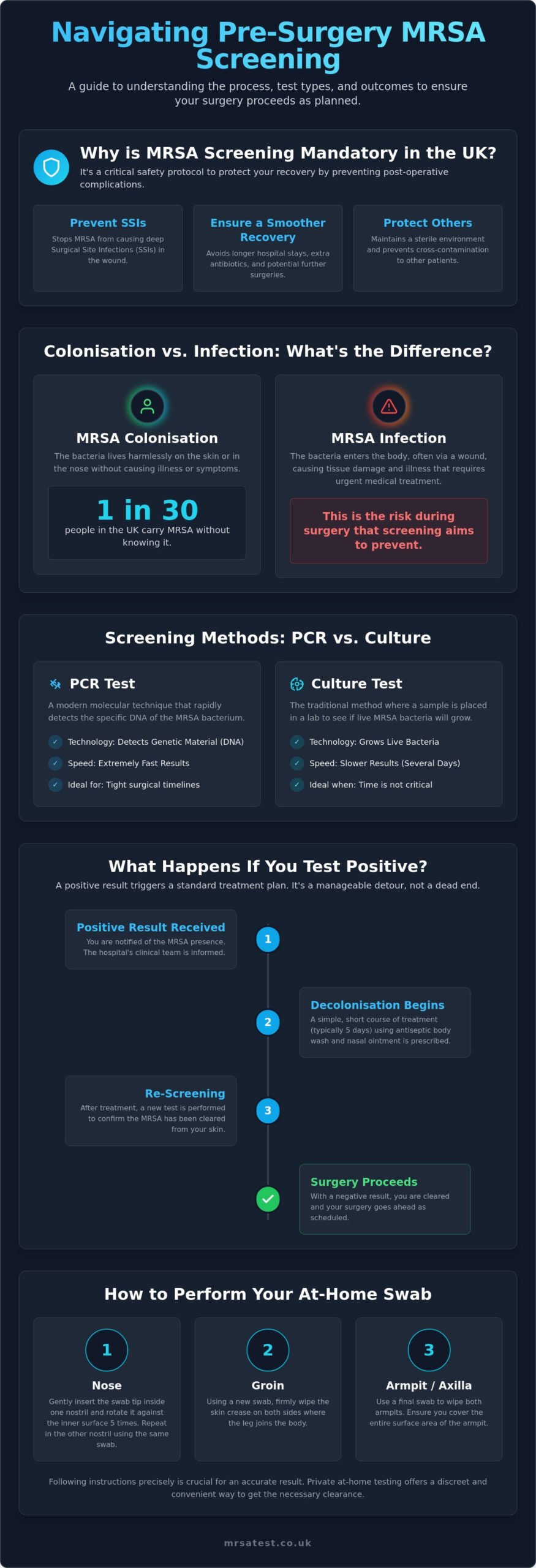
The primary concern for most people is what happens if you test positive for mrsa before surgery. It’s a common fear that a positive result will lead to an indefinite cancellation of your treatment. However, screening is strategically timed two to four weeks before your admission. This window allows clinical teams to implement a decolonisation plan if necessary, ensuring you are clear of the bacteria by the time you reach the operating table. Understanding what happens if you test positive for mrsa before surgery helps alleviate the stress of the pre-op process, as it reveals that a positive result is simply a prompt for a standard, manageable treatment plan.
What is MRSA Colonisation vs. Infection?
About 1 in 30 people in the UK carry MRSA on their skin or in their nose without ever knowing it. This is known as colonisation. It’s different from an active infection because the bacteria live harmlessly on the surface without causing illness. Colonisation is defined as the presence of bacteria on the body without tissue damage or clinical symptoms. While you might feel perfectly healthy, carrying the bacteria into surgery increases the risk of it entering a wound. This is when a harmless colonisation can turn into a dangerous, invasive infection that requires urgent medical intervention.
Why Hospitals Cannot Skip This Step
Hospitals cannot skip this step due to the severe implications of hospital-acquired infections guide. These infections are costly to the NHS and, more importantly, can be devastating for patient recovery. Pre-operative screening protects the sterile surgical environment and prevents the cross-contamination of other vulnerable patients. By confirming your status early, the hospital ensures that every precaution is taken to facilitate a smooth, infection-free recovery. It’s a protective shield for both you and the healthcare facility.
Understanding the Science: PCR vs. Culture Screening Methods
Choosing the right diagnostic method is the first step in securing your surgical timeline. UK laboratories primarily use two distinct technologies to identify the presence of MRSA: Polymerase Chain Reaction (PCR) and traditional Culture. While both methods are highly accurate and widely accepted by NHS and private hospitals, they operate on different biological principles. PCR is a molecular technique that detects the specific genetic material (DNA) of the bacteria. In contrast, a Culture test involves placing your sample in a controlled environment to see if live bacteria grow over several days. Understanding these differences helps you decide which test fits your remaining window before admission.
The choice between these methods often comes down to how much time you have left. If you are researching what happens if you test positive for mrsa before surgery, you likely already know that time is your most valuable asset. A rapid result allows for immediate action, whereas a slower result might leave you with insufficient days to complete a decolonisation programme. Both methods require swabs from specific areas where the bacteria typically reside, such as the nose and groin, to ensure the highest possible diagnostic yield. You can explore the full range of at-home MRSA testing kits to find the method that best suits your schedule.
MRSA Rapid PCR Test: When Speed is Essential
The Rapid PCR test is the gold standard for patients facing tight deadlines. Because it identifies the DNA of the bacteria directly, it doesn’t need to wait for biological growth. This allows accredited UK laboratories to provide results within 24 hours of receiving your sample. It’s the ideal solution if your surgery is scheduled for the coming week. This molecular approach is incredibly sensitive and utilizes swabs from the nose, groin, and sometimes the axilla (armpit) to provide a comprehensive screen. According to NHS guidance on MRSA, rapid testing is increasingly used in clinical settings where fast decisions are necessary to prevent delays.
MRSA Culture Test: The Standard Diagnostic
The Culture test remains the traditional diagnostic pillar in the UK. It involves monitoring the swab samples for 48 to 72 hours to see if any MRSA colonies develop. While this method takes longer, it’s often the most cost-effective choice for patients whose elective procedures are still several weeks or months away. Culture tests are highly reliable and provide a definitive confirmation of living bacteria on the skin. However, you must account for the laboratory’s processing time when planning your screen. If you find yourself asking what happens if you test positive for mrsa before surgery with only a few days to spare, the culture method may not provide the answers quickly enough to save your appointment.
NHS vs. Private MRSA Screening: Managing Your Surgical Timeline
When planning your procedure, a major concern is what happens if you test positive for mrsa before surgery in a private clinic versus the NHS. In a hospital setting, the staff will usually manage your treatment. However, if you are using a private facility, you are often responsible for providing proof of a negative result before you are allowed to enter the sterile suite. Taking control of this process early ensures that you have enough time to address any issues without risking your surgical slot or your financial deposit. It’s about replacing clinical uncertainty with a structured, predictable plan.
The Surgical Window and Why It Matters
The timing of your screen is a non-negotiable factor in surgical safety. Most UK hospitals and private clinics require a clear result that is no more than four to six weeks old on the day of your admission. You can consult our preparing for surgery checklist to see how this fits into your overall pre-operative timeline. If your results aren’t available and verified at least 48 hours before you arrive at the hospital, the risk of a last-minute cancellation increases significantly. This window is designed to protect you, but it requires precise coordination to ensure your data is current and valid.
Taking Control with At-Home Test Kits
The rise of at-home test kits in the UK has transformed how patients prepare for surgery. Rather than taking time off work to sit in a hospital waiting room, you can perform the swabs in the privacy of your own home. This method eliminates the risk of exposure to other clinical infections while you wait for a traditional appointment. To ensure your surgical team accepts these results, it is essential to use a provider that utilizes accredited UK laboratories. By following NHS guidance on MRSA screening, these private labs adhere to the same rigorous standards as hospital facilities. This provides you with a professional certificate that confirms your status and is recognized by surgical teams across the country.
Step-by-Step Guide: How to Perform a Pre-Op MRSA Swab at Home
Performing your own clinical swabs might feel intimidating, but the process is designed for simplicity and accuracy. When you receive your at-home collection kit, it typically includes sterile swabs, a tube containing transport medium to keep any bacteria viable, a laboratory request form, and a prepaid return envelope. It’s essential to check that the kit is complete before you begin. Following these instructions precisely ensures your sample is valid, which is the first step in answering what happens if you test positive for mrsa before surgery with reliable data rather than a false alarm caused by poor collection technique.
The screening process focuses on three primary areas where MRSA is most likely to colonise: the nostrils (nares), the groin, and the axilla. To avoid sample contamination, you must wash and dry your hands thoroughly before opening the sterile packaging. Don’t touch the tip of the swab with your fingers or allow it to come into contact with any surfaces other than the targeted collection sites. This level of care prevents the introduction of environmental bacteria that could interfere with the laboratory’s sensitive molecular or biological analysis.
Swabbing Technique for Maximum Accuracy
For each site, you should rotate the swab firmly against the skin or mucosal surface for approximately 5 to 10 seconds. This friction is necessary to collect enough cellular material for the lab to analyze. In many pre-op protocols, a single swab is used sequentially for the nose, then the armpits, and finally the groin. The axilla is defined as the armpit area; it’s a frequent site for MRSA colonisation due to its warmth and moisture. Using the same swab across these sites is a standard clinical practice that helps concentrate any present bacteria, making it easier for the laboratory to detect even low levels of colonisation.
Returning Your Sample to the Lab
Once you’ve completed the collection, place the swab into the transport tube and ensure the cap is tightly sealed. It’s vital to label the tube clearly with your name and the date of collection. To maintain the integrity of the biological material, you should post your sample on the same day it’s taken. Accredited UK laboratories process these samples using rigorous quality controls to ensure clinical reliability. Once the lab receives your kit, you can track your progress through a secure online portal. This transparency is helpful if you’re worried about what happens if you test positive for mrsa before surgery, as it gives you the fastest possible start on any required decolonisation. If you’re ready to begin, you can order an at-home MRSA test kit today to secure your surgical timeline.
What Happens Next? Interpreting Results and Decolonisation
Receiving your results is the final step in your pre-operative preparation. If your laboratory report shows a negative result, this is your clinical green light for surgery. It confirms that MRSA was not detected at the sites swabbed, allowing your surgical team to proceed with your admission as planned. However, if the result is positive, don’t panic. This is a common finding and a manageable situation that clinical teams handle daily. Understanding what happens if you test positive for mrsa before surgery is key to staying calm; it simply means you are colonised with the bacteria, not that you have an active illness or infection.
A positive screen triggers a standard decolonisation process. This treatment is highly effective at reducing the bacterial load on your skin and in your nose, significantly lowering the risk of a surgical site infection. In most UK hospitals, a positive result leads to a short treatment window rather than an outright cancellation. Once the protocol is finished, your surgical team may proceed immediately or request a follow-up screen to confirm the bacteria have been successfully suppressed. Taking these steps ensures that your recovery is not compromised by preventable complications.
The 5-Day Decolonisation Protocol
In the UK, the standard protocol typically lasts five days. This involves using a specific antiseptic body wash and shampoo, often containing chlorhexidine, alongside a prescribed nasal ointment like mupirocin. You’ll use the wash daily in the shower and apply the ointment inside your nostrils three times a day. Following every step of this routine is essential for your safety. For a deeper look at how these bacteria behave and the risks they pose, you can read our what is MRSA guide. Completing the full course ensures the surgical site remains as sterile as possible during your procedure.
Communicating with Your Surgeon
If you’ve used a private at-home kit, you’ll receive a professional laboratory report. You should present this document to your hospital’s pre-assessment team or your private surgeon as soon as possible. They’ll use this data to update your medical records and confirm your admission date. Providing these results early prevents administrative delays on the morning of your operation. It also allows the clinical team to plan any necessary intra-operative antibiotic adjustments. To ensure your timeline remains on track, you can Order your confidential MRSA test kit today. Taking this step now provides the clarity needed to secure your surgical date and focus on a successful recovery.
Securing Your Surgical Timeline with Confidence
Preparing for surgery requires careful coordination; however, your MRSA status doesn’t have to be a source of stress. We’ve explored how screening acts as a vital safeguard for your recovery and how modern PCR technology provides the rapid answers needed for tight deadlines. Whether you are navigating the NHS or preparing for a private elective procedure, taking control of your diagnostics ensures that your surgical window remains secure and your operation stays on track.
Understanding what happens if you test positive for mrsa before surgery allows you to approach the process with clinical clarity. A positive result simply leads to a standard decolonisation protocol, ensuring you’re in the best possible condition for your operation. By choosing a private screening option, you bypass waiting rooms and logistical delays, receiving professional results from an accredited UK laboratory. Our specialist service is trusted by pre-op patients nationwide for its speed, accuracy, and discretion. You can choose between fast PCR or traditional culture options to suit your specific timeline. Order your private MRSA screening kit today for fast, lab-certified results and take the final step toward a safe and successful procedure. We’re here to support your journey back to full health.
Frequently Asked Questions
How long before surgery should I have an MRSA screen?
You should ideally have your MRSA screen between 2 and 4 weeks before your scheduled surgery date. Most UK hospitals require a negative result that is no older than 30 days on the day of your admission. This timeline ensures any necessary treatment can be completed without delaying your procedure. If you’re having major surgery, the screen might be considered valid for up to three months depending on specific local trust policies.
What happens if I test positive for MRSA before my operation?
If you find out what happens if you test positive for mrsa before surgery, you’ll learn that it triggers a standard 5-day decolonisation protocol. This involves using a prescribed antiseptic body wash and a nasal antibiotic cream to remove the bacteria from your skin. It’s a routine safety measure designed to prevent surgical site infections. Your operation is typically delayed for a few days to complete the treatment rather than being cancelled entirely.
Can I do an MRSA test at home for my private surgery?
Yes, you can perform an MRSA test at home for both private and NHS surgeries as long as the laboratory used is accredited. Private cosmetic and elective clinics often require independent screening to maintain their sterile environments. At-home kits provide a discreet and convenient alternative to hospital pre-assessment clinics. Once you’ve collected your samples, they’re analyzed by professional UK labs to provide the certification your surgical team requires.
How long do MRSA PCR test results take?
MRSA PCR test results are typically available within 24 hours of the laboratory receiving your sample. This molecular method is significantly faster than traditional culture testing, which can take up to 72 hours for biological growth. Rapid PCR is the preferred option for patients with imminent surgery dates. It provides the quick clinical clarity needed to confirm your status and avoid last-minute delays to your scheduled procedure.
Which parts of the body are swabbed for MRSA screening?
MRSA screening involves taking swabs from three specific areas where the bacteria are most likely to live: the nostrils, the groin, and the axilla (armpit). These sites are chosen because they are warm, moist environments that support bacterial colonisation. In some clinical protocols, a single swab is used sequentially across all three areas to maximize the chance of detection. The process is quick and focuses only on these external surface areas.
Will a positive MRSA test cancel my surgery?
A positive MRSA test won’t usually cancel your surgery; instead, it typically results in a short delay for decolonisation treatment. Understanding what happens if you test positive for mrsa before surgery helps clarify that the goal is to make the procedure safer, not to stop it. Once you complete the five-day course of antiseptic washes and nasal cream, you’re usually cleared for admission. In emergency cases, surgery proceeds with extra infection control precautions.
Is the MRSA screening for surgery painful?
No, MRSA screening is a completely non-invasive and painless process. It involves gently rotating a soft-tipped swab against the skin or inside the front of the nostrils for about ten seconds. There are no needles or uncomfortable physical examinations involved. Most patients describe the sensation as a mild tickle. Because it’s so straightforward, the swabs can be easily and accurately performed at home without any clinical assistance or medical training.
How accurate are at-home MRSA test kits?
At-home MRSA test kits are highly accurate when they are processed by accredited UK laboratories. Molecular PCR tests offer a sensitivity range of 85% to 95%, while traditional culture methods provide a definitive confirmation of living bacteria. The accuracy depends on following the collection instructions carefully to avoid sample contamination. Using a specialist diagnostic service ensures your samples are handled with the same professional rigor as those taken in a hospital setting.