
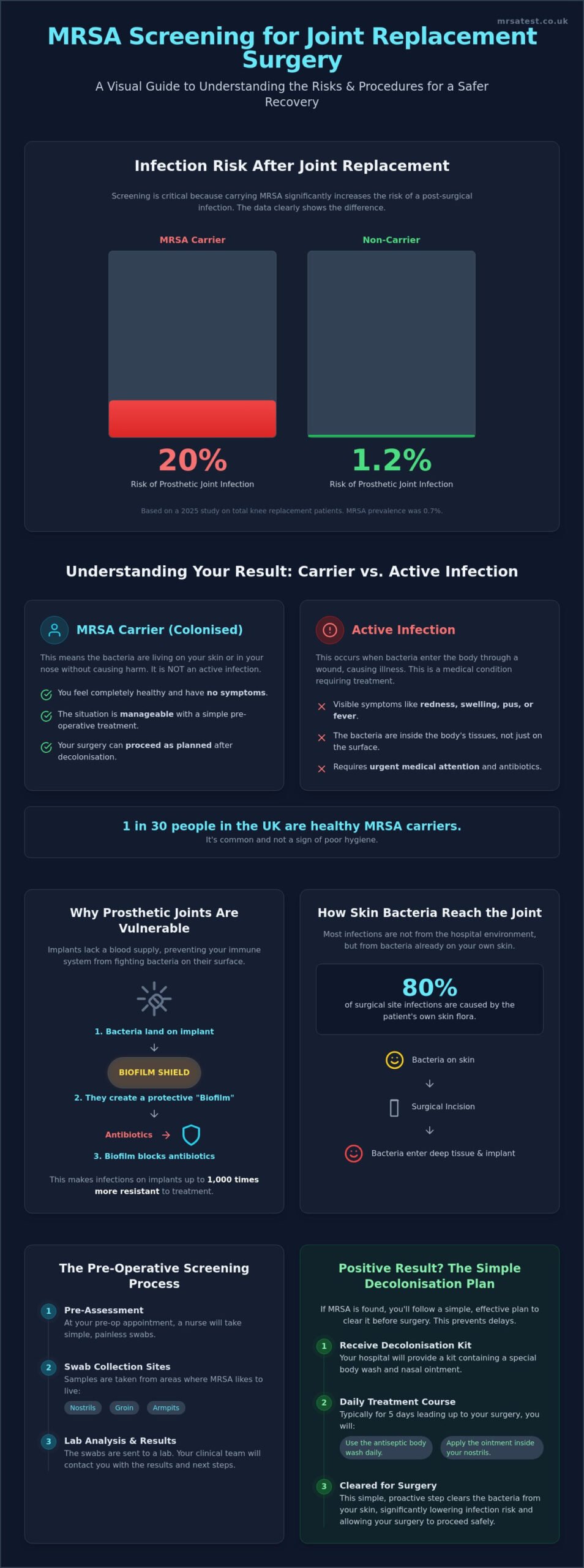
A 2025 study on patients undergoing total knee replacement found that while MRSA prevalence is low at 0.7%, the risk of infection for those carrying the bacteria is 20%, compared to just 1.2% for non-carriers. This data highlights why mrsa screening for joint replacement surgery is far more than just a routine box-ticking exercise. It’s a critical safety measure designed to protect your health and the long-term success of your new joint.
It’s completely natural to feel anxious about the word “superbug” or worry that a positive result might lead to a cancelled operation. You’ve likely spent months preparing for your hip or knee surgery, and the last thing you want is an unexpected delay. We understand these concerns and believe that clear, factual information is the best way to provide peace of mind before you head into the hospital.
In this guide, you’ll learn exactly why screening is a clinical necessity and how the process works. We’ll also explain what it means to be a carrier versus having an infection, and detail the simple steps you can take to clear the bacteria if it’s found. By the end, you’ll know how to manage your results proactively so you can walk into your surgery with confidence.
Key Takeaways
- Understand why prosthetic joints are uniquely vulnerable to bacteria and how screening acts as a vital safety shield for your recovery.
- Learn the crucial difference between being a healthy MRSA carrier and having an active infection to help alleviate pre-surgery anxiety.
- Discover the typical timeline for mrsa screening for joint replacement surgery within the UK healthcare system to ensure you’re prepared for your pre-assessment.
- Get a clear overview of the decolonisation process used to clear the bacteria and prevent unexpected surgical delays.
- Find out how private testing options like rapid PCR can provide fast results and peace of mind before your official hospital appointment.
Why MRSA Screening is Essential for Joint Replacement Surgery
Undergoing a hip or knee replacement is a life-changing event that aims to restore mobility and reduce pain. Because these procedures involve placing a foreign object into your body, UK hospitals follow strict safety protocols to prevent complications. One of the most vital steps in this process is mrsa screening for joint replacement surgery. This is a standard requirement across both NHS Trusts and private clinics to ensure that your skin is clear of specific bacteria before the first incision is made.
What is MRSA? It is a type of bacteria that has developed resistance to several widely used antibiotics. While it often lives harmlessly on the skin of healthy people, it becomes a significant threat during orthopaedic surgery. If these bacteria enter the surgical site, they can cause a Prosthetic Joint Infection (PJI). This condition is difficult to treat and often requires long-term antibiotic therapy or even revision surgery, where the new joint must be removed to clear the infection.
The ‘Biofilm’ Problem in Joint Replacements
Prosthetic joints made of metal, ceramic, or plastic are uniquely vulnerable to bacteria. Unlike your natural bone, these materials don’t have a blood supply, which means your immune system’s white blood cells can’t easily reach the surface of the implant to fight off germs. When bacteria like MRSA land on an implant, they produce a “biofilm.” This is a sticky, protective layer that acts as a shield, making the bacteria nearly 1,000 times more resistant to antibiotics than they would be in soft tissue. Because biofilm is so resilient, prevention through screening is far more effective than trying to treat an established infection after the operation.
How Skin Bacteria Reach the Surgical Site
Most people are surprised to learn that the majority of surgical site infections aren’t caught from the hospital environment. Instead, they often come from the patient’s own body. Research indicates that up to 80% of surgical site infections are caused by the patient’s own “skin flora” or the bacteria already living on their skin. During surgery, these microscopic organisms can be inadvertently moved from the skin surface into the deep tissues of the joint.
The ‘entry point’ theory suggests that any break in the skin during surgery provides a direct pathway for surface bacteria to colonise the underlying bone and the new prosthetic implant. By identifying if you are carrying MRSA through mrsa screening for joint replacement surgery, your clinical team can use a decolonisation kit to clear your skin before you enter the operating theatre. This simple proactive step significantly lowers the risk of bacteria reaching the surgical site, ensuring your new joint has the best possible start.
Understanding MRSA Colonisation: Carrier vs. Active Infection
One of the biggest sources of anxiety for patients preparing for surgery is the fear of testing positive for a “superbug.” However, it’s essential to understand that carrying MRSA is not the same as being sick. In the medical world, this is known as colonisation. Being colonised simply means the bacteria are living on your skin or in your nose without causing any harm or symptoms. You feel perfectly healthy because your immune system is doing its job. You’re simply a “carrier” for the time being.
In contrast, an active infection occurs only if the bacteria enter the body through a break in the skin, such as a surgical incision. This can lead to visible symptoms like redness, swelling, pus, or a fever. While active infections require urgent medical treatment, colonisation is a manageable state that can be addressed before your operation begins. Most carriers have no idea they have the bacteria until they undergo mrsa screening for joint replacement surgery as part of their pre-operative workup.
Data suggests that approximately 1 in 30 people in the UK carry MRSA at any given time. This means thousands of people are walking around, going to work, and living normal lives while being carriers. It isn’t a sign of being “unclean” or having poor hygiene. It’s simply a reflection of the bacterial diversity we all carry. Identifying this carriage early turns a potential risk into a controlled part of your pre-operative plan.
Where Does MRSA Hide on the Body?
MRSA thrives in specific environments on the human body. It prefers areas that are warm, dark, and slightly damp. This is why screening swabs focus on three primary locations: the nostrils (nares), the groin, and the armpits (axilla). These sites provide the ideal conditions for Staphylococcus aureus to settle. By understanding MRSA symptoms versus carriage, you can better appreciate why these swabs are necessary even when you feel 100% well. If you want to check your status privately before your hospital appointment, you can order UK-accredited MRSA testing to be used in the comfort of your own home.
The Emotional Impact of a Positive Result
Receiving a positive result can feel overwhelming. Many patients worry about being contagious or feel a sense of stigma. Please be reassured that carriers are typically healthy individuals with robust immune systems. The bacteria are simply part of your temporary skin flora. Knowing your status is a powerful tool. It doesn’t mean your surgery is cancelled. Instead, it means your team can take the right steps to protect your new joint. This proactive approach ensures that mrsa screening for joint replacement surgery remains a bridge to a safer recovery rather than a barrier to your care.
The Pre-Operative Screening Process in the UK
In the UK, the journey toward a new hip or knee involves several preparatory steps. The most critical of these is the visit to the Pre-Assessment Clinic (PAC). This usually happens between two and four weeks before your scheduled operation date. During this appointment, the clinical team performs various checks to ensure you’re fit for anaesthesia and surgery. A primary focus of this visit is mrsa screening for joint replacement surgery, which is now a standardised requirement across the country.
The 2026 NHS GIRFT (Getting It Right First Time) guidelines for orthopaedics have reinforced the necessity of consistent screening. These national standards ensure that every patient, regardless of where they are treated in the UK, receives the same high level of infection prevention. The swabbing procedure itself is remarkably simple and entirely painless. A nurse uses a sterile swab, which looks like a long cotton bud, to gently rub the inside of your nostrils and the skin in your groin or armpit area. It takes only a few seconds, and you won’t feel any discomfort.
NHS vs. Private Hospital Protocols
While the basic swabbing procedure is the same, the logistics can vary between providers. NHS Trusts follow strict national pathways, but private hospitals may have their own additional requirements. Some private surgeons might request more frequent testing or specific swabs for the throat or any existing skin breaks. Keeping track of these requirements is easier when you use a pre-op health checklist to stay organised. Regardless of the provider, the goal remains the same: identifying carriers before they enter the sterile environment of the operating theatre.
What Happens if Your Swab is Positive?
If your result comes back positive, it’s natural to feel a surge of panic. However, it’s important to remember that a positive swab rarely leads to a permanent cancellation. Instead, it usually results in a short delay. This pause allows you to complete a five-day decolonisation programme to clear the bacteria from your skin. By delaying the procedure until you are clear, the hospital ensures that hospital-acquired infections are kept to an absolute minimum. This safety-first approach protects your new joint and prevents the need for complex revision surgeries later on. Participating in mrsa screening for joint replacement surgery early gives you the best chance of keeping your original surgery date.
Decolonisation: Clearing MRSA Before Your Operation
If your mrsa screening for joint replacement surgery returns a positive result, your surgical team will prescribe a decolonisation bundle. This is a simple yet highly effective five-day treatment plan designed to eliminate the bacteria from your skin and nose. The goal is to reduce your bacterial load to the lowest possible level before you enter the operating theatre. This protocol is a standard safety measure in the UK and is essential for protecting your new prosthetic joint from infection.
The treatment typically consists of two main components: an antimicrobial body wash and a nasal antibiotic ointment. Strict adherence to the full five-day course is vital. Even if you feel perfectly healthy, skipping a day or stopping early can allow the bacteria to remain, potentially compromising the safety of your surgery. Most patients find the process straightforward to incorporate into their daily routine.
- Antimicrobial Body Wash: You’ll use a wash such as chlorhexidine or Octenisan once a day for five days. Wet your skin, apply the wash directly using a clean flannel or your hands, and leave it on for about one minute before rinsing thoroughly. Pay particular attention to your armpits, groin, and feet.
- Nasal Ointment: You’ll apply an antibiotic ointment, usually Mupirocin, to the inside of each nostril three times a day. After applying a small, pea-sized amount, gently squeeze your nostrils together to ensure the ointment spreads evenly across the lining of the nose.
Managing Your Home Environment
To prevent the bacteria from immediately returning to your skin, you must manage your home environment during the treatment period. Bacteria can survive on fabrics, so using fresh towels and bedding is a critical part of the process. We recommend changing your pillowcase and towel every day of the five-day course. All used linens, towels, and clothing should be washed at 60°C to ensure the bacteria are completely eliminated. It’s also important to avoid sharing personal items like razors, flannels, or sponges with other members of your household, as this can lead to cross-contamination.
Success Rates and Re-Testing
The success rate for a single five-day decolonisation course is high, with the majority of patients successfully clearing the bacteria. Once the treatment is finished, you’ll usually wait 48 hours before having a set of ‘clearance swabs’ taken. These swabs confirm that the MRSA is no longer present. If the bacteria persist, your surgeon may recommend a second course of treatment or arrange for you to receive specific intravenous antibiotics, such as vancomycin, during your operation. If you’ve previously tested positive and want to confirm you’re clear before your official pre-op, you can order a private MRSA screening kit for fast, accredited results at home.
Taking Control: Private MRSA Testing Options
Many patients find the weeks leading up to surgery are filled with logistical stress. Waiting for the official hospital pre-assessment can feel like a gamble. If you only discover you’re an MRSA carrier 14 days before your operation, the window to decolonise and re-test is incredibly tight. Choosing to undergo private mrsa screening for joint replacement surgery allows you to take control of the timeline. It provides a proactive way to ensure you’re clear before the hospital’s official checks, removing the fear of a last-minute surgical delay.
Early detection is the most effective way to protect your surgical date. If a private test identifies that you are a carrier, you have the luxury of time to complete the decolonisation process described in the previous section. This means you can arrive at your NHS or private hospital appointment already knowing your status and, if necessary, already having taken steps to clear the bacteria. This level of preparation provides immense peace of mind during an otherwise anxious period.
Culture vs. Rapid PCR: Which is Best for Surgery?
When selecting a test, speed and accuracy are the most important factors. Traditional Culture testing has been the standard for decades. It involves growing the bacteria in a lab environment, which typically takes 48 to 72 hours to yield a final result. While reliable, this timeframe isn’t always ideal if your surgery date is approaching quickly. It is a solid choice for general screening when time is not a pressing factor.
Rapid PCR (Polymerase Chain Reaction) testing offers a modern, molecular alternative. This method detects the DNA of the bacteria directly, allowing for much faster processing. Results are typically available within 24 hours of the laboratory receiving your sample. For patients with a narrow window before their admission, the speed of PCR is a significant advantage. You can find more details in our MRSA test type comparison to help you decide which kit fits your specific needs.
Ordering Your At-Home Kit in the UK
Taking a private test doesn’t require a trip to a clinic or an extra hospital visit. We provide accredited at-home test kits in the UK that are designed for ease of use and total discretion. The process is straightforward: you order your kit online, and it arrives in plain, non-identifiable packaging. You perform the swabs yourself in the privacy of your own bathroom, following the clear instructions provided for the nose, groin, and axilla.
Once you’ve collected your samples, you simply return them to our UK-accredited laboratory using the prepaid post provided. By managing your own mrsa screening for joint replacement surgery, you eliminate the uncertainty of the pre-operative period. Knowing your status early empowers you to start decolonisation immediately if needed, ensuring that when you walk into the hospital, you’re fully prepared for a smooth and successful recovery.
Ensuring a Smooth Path to Your New Joint
Taking the right steps before you enter the hospital is the best way to guarantee a successful outcome. We’ve explored how screening protects your implant from biofilm and why being a carrier is a common, manageable state rather than a cause for alarm. By understanding the UK’s clinical protocols, you can navigate your pre-assessment with confidence and clarity.
Proactive mrsa screening for joint replacement surgery removes the uncertainty that often accompanies major procedures. Identifying your status early gives you the time needed to complete decolonisation without the stress of a looming deadline. Our UK-accredited laboratory provides rapid PCR results within 24 hours of receipt, offering a discreet and professional way to verify your health from the comfort of home.
Order a Private MRSA Home Test Kit for Pre-Surgery Peace of Mind and take the first step toward a safe, infection-free recovery. You’ve worked hard to prepare for this surgery; let’s ensure nothing stands in the way of your new mobility.
Frequently Asked Questions
Will my joint replacement be cancelled if I test positive for MRSA?
A positive result rarely leads to a permanent cancellation. Instead, it usually means a short delay of about one to two weeks. This time is used to complete the five-day decolonisation treatment. Once you’ve finished the wash and ointment course and cleared a follow-up swab, your surgery can safely proceed. Your surgical team prioritises your safety and wants to ensure the best environment for your new joint.
Is being an MRSA carrier the same as having an infection?
No, being a carrier is fundamentally different from having an active infection. Carrying the bacteria, known as colonisation, means MRSA is living harmlessly on your skin or in your nose. You won’t have any symptoms and will feel perfectly well. An infection only occurs if the bacteria enter the body through a wound, leading to redness, pain, or fever. Most carriers discovered during mrsa screening for joint replacement surgery have no symptoms.
How long does the MRSA decolonisation treatment take?
The standard decolonisation treatment in the UK takes exactly five days. During this period, you’ll use a special antimicrobial body wash once daily and apply an antibiotic nasal ointment three times a day. It’s vital to complete the full five days even if you feel fine. Skipping applications can allow the bacteria to survive, which might lead to further delays in your surgical timeline.
Can I give MRSA to my family members if I am a carrier?
It’s possible to pass the bacteria to others through close physical contact or shared items like towels. However, MRSA rarely causes problems for healthy family members with intact skin and strong immune systems. To minimise the risk during your treatment, avoid sharing personal items and wash your hands frequently. Focus on high-temperature laundry for shared linens to keep your home environment as clear as possible.
Why is MRSA screening mandatory for hip and knee replacements?
Screening is mandatory because prosthetic joints are highly susceptible to infection. Once bacteria like MRSA reach a metal or plastic implant, they can form a protective biofilm that’s extremely difficult for antibiotics to penetrate. By making mrsa screening for joint replacement surgery a standard requirement, hospitals can identify and clear the bacteria before the operation. This significantly reduces the risk of complex post-operative infections.
What is the difference between a PCR and a Culture MRSA test?
The main difference lies in the method and the speed of results. A Culture test involves trying to grow the bacteria in a laboratory, which typically takes 48 to 72 hours. A PCR test is a molecular method that detects the DNA of the bacteria directly. PCR is much faster, often providing results within 24 hours of the lab receiving the sample. This makes PCR an excellent choice for patients with tight surgical deadlines.
Can I get rid of MRSA permanently?
Decolonisation is very effective at removing MRSA from your skin and nose, but it doesn’t always guarantee permanent removal. Because the bacteria are common in the community, it’s possible to be re-colonised at a later date. For the purposes of your surgery, the goal is to be clear during the immediate pre-operative and post-operative periods. This window of clearance provides the necessary protection for your new joint.
Does carrying MRSA mean I have a weak immune system?
No, carrying MRSA isn’t a reflection of your immune system’s strength. Many healthy individuals with perfectly normal immune systems are carriers. The bacteria simply find a way to live on the skin’s surface without triggering an immune response. Testing positive doesn’t mean you’re more prone to other illnesses. It’s simply a clinical factor that needs to be managed to ensure your joint replacement is as safe as possible.