
Did you know that in the 2024-2025 financial year, NHS hospitals in England reported 1,250 surgical site infections? While this represents a small percentage of total operations, the proportion of superficial infections caused by MRSA actually rose to 3.3% during this period. Mastering surgical site infection prevention is a critical step in ensuring your procedure goes ahead as planned and your recovery remains on track.
It’s natural to feel a sense of unease regarding “superbugs” or the possibility of your surgery being cancelled at the last minute. We understand that hospital instructions can sometimes feel confusing or overwhelming when you’re already anxious about an upcoming procedure. This guide provides you with evidence-based strategies to significantly reduce your risk of post-operative complications. We’ll cover everything from your pre-op hygiene checklist to the clinical necessity of proactive MRSA screening. By the end of this article, you’ll have the clarity and confidence needed to step into the operating theatre knowing you’ve taken every professional precaution for your health and safety.
Key Takeaways
- Understand why surgical site infection prevention is a collaborative effort between you and your surgical team, involving specific care phases before, during, and after your procedure.
- Learn how to apply NICE and WHO guidelines to your own preparation, focusing on the clinical standards that hospitals use to ensure patient safety.
- Discover why MRSA screening is a mandatory requirement for most surgeries and how identifying silent colonization early can prevent serious complications.
- Access a practical 48-hour hygiene checklist, including instructions on using fresh linens and specific cleaning protocols to prepare your body for the operating theatre.
- Find out how at-home pre-screening kits provide a discreet way to verify your status early, helping you avoid the anxiety of last-minute surgery cancellations.
What is a Surgical Site Infection (SSI) and Why is Prevention Critical?
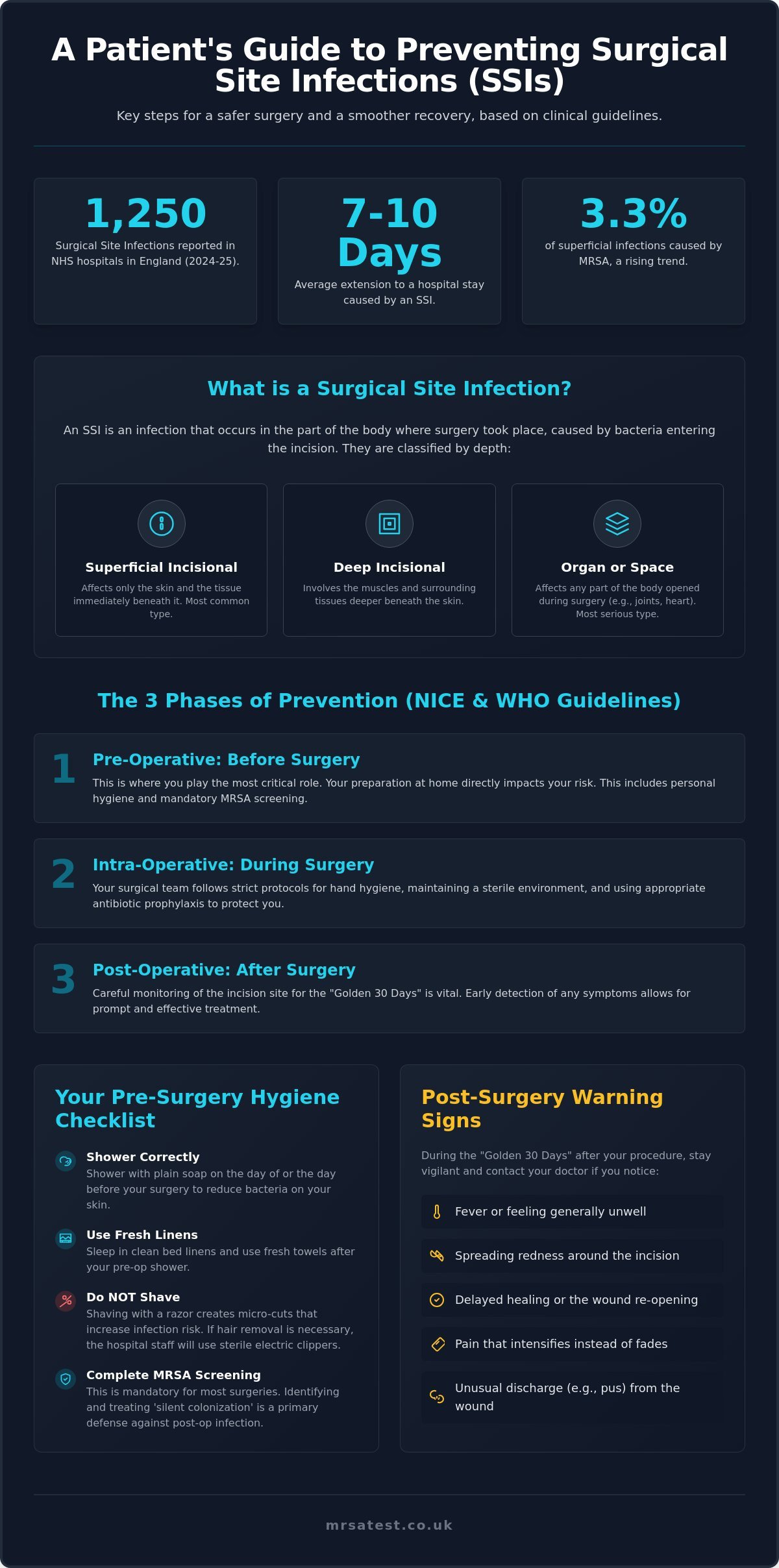
What is a Surgical Site Infection (SSI)? In its simplest terms, it is an infection that occurs in the part of the body where a surgical procedure took place. These infections are caused by bacteria that enter the body through the incision during or after surgery. While modern operating theatres are incredibly sterile environments, the risk of infection is never zero. This is why surgical site infection prevention is a priority for both your surgical team and you as a patient.
Medical professionals divide these infections into three distinct categories based on how deep the bacteria travel. Superficial incisional infections are the most common and affect only the skin and the tissue immediately under it. Deep incisional infections involve the muscles and the surrounding tissues. The most serious type is an organ or space infection, which can affect any part of the body opened or manipulated during the operation, such as the heart, lungs, or joints.
Data from the 2024-2025 financial year shows that 1,250 surgical site infections were reported across NHS hospitals in England. These figures indicate that SSIs remain a leading cause of hospital readmissions in 2026. For a patient, an infection can extend a hospital stay by an average of 7 to 10 days. This isn’t just a clinical setback; it represents a significant financial cost due to lost wages and a delayed return to daily life. Understanding the risks allows you to take proactive steps before you even reach the hospital.
Common Symptoms of a Surgical Site Infection
Detecting an infection early is vital for a smooth recovery. You should monitor your incision site for redness that spreads, delayed healing, or any unusual discharge like pus. While some discomfort is expected, pain that intensifies rather than fades is a warning sign. You might also experience systemic symptoms like a fever or a general feeling of being unwell, which often suggests the body is fighting a deeper issue. Clinical guidelines emphasize the “Golden 30 Days,” which means you must stay vigilant for at least a month after your procedure.
Risk Factors: Who is Most at Risk?
Every patient is unique, but certain factors can increase your vulnerability to infection. Underlying conditions such as diabetes or a weakened immune system can slow down the body’s natural healing process. Lifestyle choices also play a major role; smoking and a high BMI are known to significantly reduce blood flow to tissues, which hinders wound closure. According to 2026 NHS data trends, the proportion of superficial SSIs caused by MRSA has risen to 3.3%, making pre-operative screening more important than ever for high-risk groups.
The Gold Standard: NICE and WHO Guidelines for SSI Prevention
Clinical excellence in the UK relies heavily on the NICE NG125 guidelines, which were last updated in 2019. These standards outline a rigorous three-phase approach to care: pre-operative, intra-operative, and post-operative. By following these and the WHO Guidelines for SSI Prevention, hospitals ensure that every stage of your journey is managed with clinical precision. This structured framework is the backbone of modern surgical site infection prevention, designed to catch risks before they become complications.
Hospitals focus on hand hygiene and maintaining a sterile environment as the absolute foundation of safety. However, there’s been a significant shift in how healthcare providers approach these risks. We’ve moved from “universal” strategies, where every patient receives the same generic care, to “targeted” prevention. This means identifying specific risks, such as bacterial colonization, before you even enter the hospital. It’s a proactive model that prioritizes your individual health profile over a one-size-fits-all approach.
Pre-Operative Guidelines for Patients
Your preparation usually begins at home. NICE recommends that patients shower using plain soap or a specific antiseptic wash on the day of or the day before surgery. One common misconception involves hair removal. Clinical evidence shows that shaving with a razor can create micro-cuts that actually increase infection risk. Consequently, hair removal is now discouraged unless it’s strictly necessary for the surgical site, and even then, electric clippers are used instead of blades. For high-risk procedures, such as joint replacements, NICE suggests nasal decolonisation to clear specific bacteria before the operation begins.
What Happens During and After Surgery?
While you’re in the operating theatre, the medical team manages several critical factors. This includes antibiotic prophylaxis, where you’re given antibiotics just before the first incision, and maintaining your body temperature to support your immune response. Once the surgery is over, wound care becomes the priority. Standard advice is to keep the original dressing in place for 48 hours unless there’s heavy leakage. This protects the site while the skin begins its initial seal.
After you return home, your GP or surgical team might use diagnostic tools to ensure you’re healing correctly. You can read more about how clinical markers are used in Understanding Blood Tests: A Simple Guide for Patients. If you want to ensure you’re fully prepared for your hospital admission, you might consider private screening options to verify your status ahead of time and avoid any day-of-surgery delays.
MRSA and SSI: Why Screening is Your Best Defence
MRSA, or Methicillin-resistant Staphylococcus aureus, is a specific type of bacteria that has developed resistance to several widely used antibiotics. This resistance makes it a formidable opponent in the context of surgical site infection prevention. While many people associate MRSA with active illness, it’s possible to carry the bacteria on your skin or in your nose without showing any symptoms. This state is known as colonization. Statistics suggest that approximately 1 in 30 people are colonized with MRSA without even knowing it.
The danger arises when these bacteria, which are harmless on the surface of the skin, are introduced into the body during a surgical incision. Once inside, MRSA can cause deep tissue infections or enter the bloodstream, potentially leading to sepsis. Because of this risk, MRSA screening is a mandatory requirement for all elective surgeries within the NHS. Identifying carriers before they reach the operating table is the most effective way to prevent post-operative complications and ensure a safe recovery environment.
Why Hospital Screening Might Not Be Enough
While hospitals perform routine checks, these often happen very close to the scheduled surgery date. If a hospital screen returns a positive result, it frequently leads to a “last-minute” cancellation. This causes significant emotional stress and logistical challenges for patients and their families. Early detection, performed weeks before your admission, allows you to address colonization in a calm, managed way. Long-term carriers benefit from knowing their status early so they can complete treatment before their date is finalized. For a deeper look at how this bacteria behaves, you can read What Is MRSA? Your Complete Guide to Symptoms, Causes & Risks.
Decolonisation: The Process of Clearing MRSA
If you test positive for MRSA, you’ll undergo a process called decolonisation. This typically involves a “triple pack” consisting of an antibiotic nasal ointment and a specialized antiseptic body wash, often containing Chlorhexidine (CHG). The standard course lasts for five days. It’s vital to complete the entire course to ensure the bacteria are fully eradicated. Decolonisation is only effective if the initial screening is accurate and identifies all areas of colonization. By taking control of this process early, you ensure your surgical site infection prevention strategy is robust and your surgery proceeds without delay.
Practical Steps for Patients: A Pre-Surgery Hygiene Checklist
Your role in surgical site infection prevention begins exactly 48 hours before your procedure. During this window, your body needs optimal support to prepare its natural defences. Focus on a diet rich in protein and vitamins, as these nutrients provide the essential building blocks for tissue repair and immune function. If you manage chronic skin conditions like eczema or dermatitis, ensure these areas are as calm as possible. Active flare-ups can harbour higher levels of bacteria, so consult your clinical team if your skin seems particularly irritated in the days leading up to your surgery.
The night before your operation is a critical time for reducing your environmental bacterial load. You should strip your bed and replace everything with fresh, clean linens. Similarly, ensure you have a set of freshly laundered towels ready for your final pre-op showers. These simple steps create a “clean zone” for your recovery and minimize the chance of transferring household bacteria to your incision site. For a comprehensive look at the final countdown, you can follow our Preparing for Surgery: A Complete Pre-Op Health & Logistics Checklist.
The Correct Way to Use Chlorhexidine (CHG) Wash
If your hospital provides a Chlorhexidine (CHG) antiseptic wash, using it correctly is vital for its efficacy. Start by washing your hair with regular shampoo, as the CHG wash is designed for the skin rather than the scalp. Once you’ve rinsed your hair, apply the CHG wash to your entire body from the neck down. Pay particular attention to the groin and axilla (armpits), as these areas naturally host more bacteria.
- Apply the wash with a clean cloth or your hands; don’t use a sponge or loofah which can trap germs.
- Leave the wash on your skin for at least one minute before rinsing to allow the antiseptic to work.
- Avoid using regular soap or moisturizers at the same time, as these can neutralize the active ingredients in the CHG.
Home Environment Safety
Maintaining a safe home environment involves more than just personal hygiene. In the days before surgery, try to keep pets away from your bed and the sofa where you’ll be recovering. High-touch surfaces like door handles, light switches, and remote controls should be wiped down with a standard disinfectant. Most importantly, do not shave the surgical area at home. Shaving creates microscopic tears in the skin that bacteria can easily colonise. If hair removal is necessary, your surgical team will handle it using professional clippers in a sterile setting. To ensure your home preparation is as thorough as possible, you may wish to order a pre-surgery screening kit to confirm your skin is clear of resistant bacteria.
Taking Control: How Private MRSA Screening Saves Your Surgery
Taking control of your health timeline is a powerful way to manage the anxiety that often accompanies a major procedure. While the NHS provides mandatory screening, the timing of these tests is often outside of your control. By choosing to pre-screen, you gain a vital head start in your surgical site infection prevention strategy. This proactive approach ensures that any bacterial colonization is identified and addressed weeks before you are due to enter the hospital, effectively removing the risk of a last-minute cancellation.
mrsatest.co.uk provides a discreet, postal service that allows you to collect samples from the nose, groin, and axilla in the privacy of your own home. We offer two distinct diagnostic methods to suit your specific timeline. Our MRSA Rapid PCR Test provides results in just 24 hours; this speed is essential for urgent surgeries or for patients who have reached the end of a long waiting list and received a date at short notice. Alternatively, our MRSA Culture test is a cost-effective option that delivers results within 48 to 72 hours. Both methods utilize accredited UK laboratory testing to ensure clinical accuracy.
If your home test returns a positive result, you aren’t left in a state of uncertainty. You can immediately share these professional results with your GP or surgical team to begin the 5-day decolonisation process. This early intervention means that by the time you attend your official hospital pre-op appointment, you’ve already completed the necessary steps to clear the bacteria. You transition from a passive participant to an empowered patient who has actively secured their own surgery date.
The mrsatest.co.uk Advantage
Our service delivers professional clinical results directly to your inbox, allowing you to manage your health without the need for additional travel or in-person appointments. This is particularly beneficial for patients who are shielding or have mobility issues before their surgery. By swabbing at home, you also eliminate the small but present risk of exposure to other pathogens in a clinical waiting room. You can learn more about these risks in our guide to Hospital-Acquired Infections (HAIs): A Patient’s Guide to Risks & Prevention.
Peace of Mind for Elective and Private Surgery
Private surgical facilities often require comprehensive data before they can proceed with your admission. Having your results in hand well in advance reduces the stress of the final “pre-op” week and provides the facility with the documentation they need. It creates a seamless transition from your home environment to the operating theatre. Don’t leave your recovery to chance or wait for a hospital appointment to find out your status. Secure your surgery date and your peace of mind by ordering a proactive screen today.
Securing Your Path to a Successful Recovery
Effective surgical site infection prevention is a collaborative effort that begins long before you reach the hospital. By following a structured hygiene checklist and understanding the clinical necessity of bacterial screening, you move from a state of uncertainty to one of active preparation. You’ve learned how simple actions, such as managing your home environment and following precise washing protocols, significantly reduce the risk of post-operative complications. These steps ensure your body is in the best possible condition for a smooth and uninterrupted recovery.
Taking control of your screening timeline is the final, essential step in this process. Our discreet home collection kits provide a professional way to verify your status without the need for additional hospital visits. With UKAS accredited laboratory analysis and fast 24-hour PCR results, you can identify and resolve potential issues weeks in advance. Ensure your surgery goes ahead as planned; order your fast-track MRSA Rapid PCR Test Kit today. We’re here to support your journey toward a safe and successful surgical outcome.
Frequently Asked Questions
What is the most common cause of surgical site infections?
Enterobacterales are currently the most common cause of surgical site infections in the UK, accounting for 32.0% of superficial and 28.0% of deep infections according to 2024-2025 data. Other frequent causes include Staphylococcus aureus, including the resistant MRSA strain. These bacteria can be found on your own skin or in the surrounding environment, which is why hospitals place such a high priority on skin preparation and sterile techniques.
How long after surgery can a surgical site infection occur?
A surgical site infection typically occurs within 30 days of your procedure. However, if your surgery involved an implant, such as a joint replacement or a heart valve, the risk period can extend up to a full year. It’s vital to monitor your incision site throughout the first month of recovery, as early detection is the most effective way to manage complications before they become serious.
Can I prevent an SSI if I am already colonized with MRSA?
You can certainly prevent an infection even if you are currently colonized with MRSA. By identifying the bacteria early through proactive screening, you can undergo a five-day decolonisation treatment using antiseptic washes and nasal ointments. This process clears the bacteria from your skin and nose, significantly lowering the risk that they’ll enter your body during the surgical incision and cause a post-operative complication.
Is it necessary to have a private MRSA test if the NHS is screening me?
While the NHS provides mandatory screening, a private test offers earlier results and greater control over your surgical timeline. Many patients choose private screening to avoid the anxiety of a last-minute cancellation on the day of their procedure. Having your results weeks in advance allows you to complete any necessary decolonisation in a relaxed home environment rather than facing a sudden clinical hurdle just before admission.
What is the difference between a PCR and a Culture MRSA test for surgery?
The primary difference lies in the speed and the methodology used by the laboratory. A Rapid PCR test identifies the genetic material of the bacteria, providing results in just 24 hours. A Culture test involves growing the bacteria in a controlled environment, which typically takes 48 to 72 hours. While both are clinically accurate, PCR is often preferred for urgent procedures where a quick turnaround is essential for surgical site infection prevention.
What should I do if I notice my surgical wound is red or leaking?
You should contact your surgical team or GP immediately if you notice your wound is red, hot, or leaking fluid. These are common indicators of a developing infection that requires professional assessment. Early intervention often means the issue can be resolved with a simple course of oral antibiotics. This prevents the need for a hospital readmission or further surgical procedures to clean and drain the affected site.
Does showering with antiseptic wash really prevent infections?
Yes, showering with an antiseptic wash like Chlorhexidine (CHG) is a proven method for surgical site infection prevention. It works by significantly reducing the number of bacteria on your skin’s surface before you enter the operating theatre. When used correctly as part of a 48-hour hygiene protocol, it creates a much safer environment for the initial surgical incision and helps protect you during the early stages of healing.
Can smoking increase my risk of getting an infection after surgery?
Smoking significantly increases your risk of post-operative infection by reducing the amount of oxygen that reaches your tissues. Oxygen is critical for wound healing and for the immune system’s ability to fight off invading bacteria. Clinical data suggests that smokers have a much higher rate of wound complications, which is why surgeons often advise patients to stop smoking at least four weeks before their scheduled procedure.