
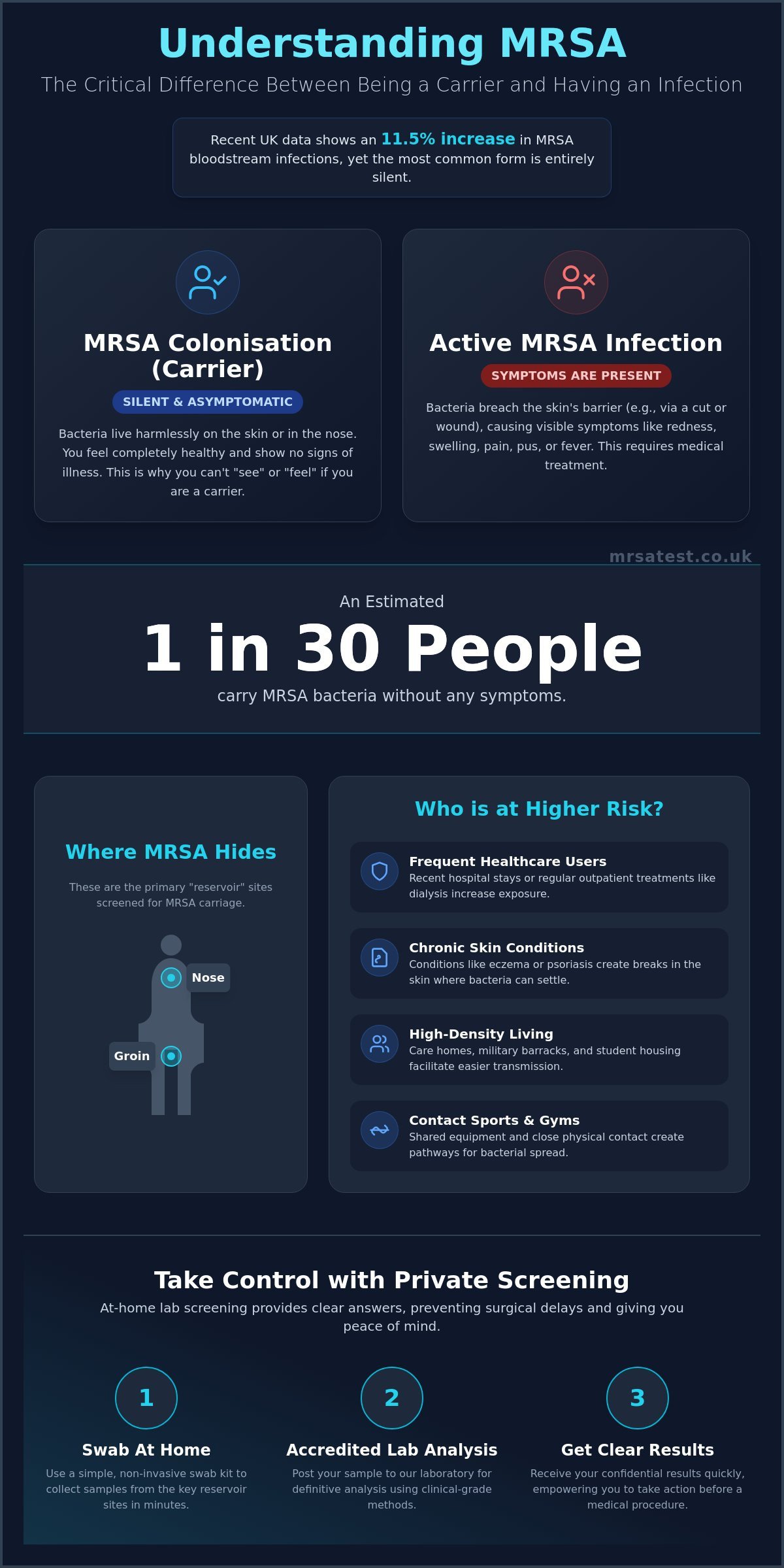
Recent UK health data from May 2026 shows an 11.5% increase in MRSA bloodstream infections, yet the most common way to harbour the bacteria involves no symptoms at all. This silent state, known as colonisation, means you could be a carrier without ever feeling sick. If you’re wondering how to know if you are an mrsa carrier, you aren’t alone. Many people feel a deep sense of anxiety about unknowingly passing an infection to a loved one or having a vital surgery postponed due to a surprise positive result during hospital admission.
It’s understandable to feel confused when trying to distinguish between a standard skin rash and something more clinical. We’re here to provide clarity. In this guide, you’ll discover exactly where MRSA bacteria hide on the body and the risks associated with carriage. We’ll also explain how you can use private, accredited laboratory screening to get clear answers from the comfort of your home. By understanding the screening process, you can take control of your health and approach your next medical appointment with total confidence.
Key Takeaways
- Understand the vital difference between active infection and silent colonisation, where bacteria live on the skin without making you ill.
- Learn why visual inspection is impossible and the specific clinical methods required for how to know if you are an mrsa carrier.
- Identify the primary “reservoir” sites on the body, such as the nose and groin, where MRSA bacteria are most likely to thrive.
- Recognise high-risk factors, including recent hospital admissions or chronic skin conditions, that may necessitate proactive screening.
- Discover how private at-home testing can prevent surgical cancellations and provide peace of mind through rapid, accredited laboratory results.
The Difference Between Being an MRSA Carrier and Having an Infection
MRSA, or Methicillin-resistant Staphylococcus aureus (MRSA), is a resilient strain of “staph” bacteria. While most staph bacteria are easily treated with common antibiotics, MRSA has evolved to resist them. This resilience is what makes it a concern in medical settings. However, simply having the bacteria on your body doesn’t mean you’re sick. There’s a critical distinction between carrying the bacteria and being infected by it, and understanding this is the first step in managing your health.
Most people are surprised to learn that roughly 1 in 30 people are estimated to carry these bacteria without any ill effects. This state is known as colonisation. It’s the primary reason people ask how to know if you are an mrsa carrier, as you can’t rely on feeling unwell to alert you. An active infection, by contrast, only occurs when the bacteria penetrate the skin’s barrier through a wound, cut, or medical incision. While an infection causes visible symptoms, carriage remains hidden.
What is MRSA Colonisation?
Colonisation is a silent state. It involves no pain, no fever, and no skin irritation. Because it’s asymptomatic, carriers can unknowingly spread the bacteria to vulnerable people or throughout healthcare facilities. Carriage isn’t always permanent; some people carry the bacteria for weeks, while others remain colonised for years. Without a specific test, there’s no way to determine your status or when you might have cleared the bacteria naturally. This makes proactive screening essential. Understanding MRSA and its carriage patterns is the most effective way to prevent accidental transmissions to those you care about.
When Does Carriage Become a Risk?
The main danger of carriage is “self-infection” during surgery. When the skin is breached during a procedure, the bacteria you’re carrying can enter your bloodstream or deep tissues. This can lead to serious complications that delay recovery or require intensive, specialised antibiotic therapy. Hospitals often screen high-risk patients because a positive result might lead to a surgery being rescheduled. Knowing your status privately beforehand allows you to complete decolonisation on your own terms, ensuring your procedure stays on schedule.
Protecting your household is another reason to seek clarity. Carriage creates risks for others in your home, particularly:
- Individuals with weakened immune systems or those undergoing chemotherapy.
- Family members with chronic skin conditions like eczema or psoriasis.
- Anyone using indwelling medical devices, such as a catheter or feeding tube.
If a screening confirms you’re a carrier, you can begin a decolonisation protocol. This usually involves using specific antiseptic body washes and nasal creams for five days. It’s a simple, effective way to clear the bacteria before it causes a problem for you or your family.
Common Risk Factors: Who is Most Likely to Carry MRSA?
While anyone can harbour staph bacteria, certain lifestyle factors and environments significantly increase the likelihood of colonisation. Understanding these risks is the first step in determining how to know if you are an mrsa carrier. In the UK, surveillance data from May 2026 highlighted a 9.6% increase in community-associated MRSA cases, suggesting the bacteria are circulating more widely beyond clinical settings. Certain groups, however, remain at a much higher statistical risk than the general population.
Those most likely to carry MRSA include:
- Frequent healthcare users: This includes individuals with recent inpatient stays or those receiving regular outpatient treatment, such as dialysis.
- Individuals with skin barriers issues: Chronic conditions like eczema, psoriasis, or recurring dermatitis provide “breaks” in the skin where bacteria can easily settle.
- Residents in high-density housing: Shared environments like care homes, military barracks, or student accommodation facilitate easy skin-to-skin or surface-to-skin transmission.
- Athletes in contact sports: Rugby players, wrestlers, and frequent gym users often share equipment or have close physical contact, which are known pathways for the bacteria.
If you fall into one of these categories, a private screening kit can help you establish your status discreetly and accurately.
Healthcare-Associated vs. Community-Acquired MRSA
Medical professionals categorise MRSA into two main types. Healthcare-Associated MRSA (HA-MRSA) is typically contracted in hospitals or nursing homes. Because of the rise in resistant strains within these environments, hospital-acquired infections are a primary focus for UK health policy. As of January 2026, the NHS prioritises targeted screening for high-risk groups, including those in intensive care or orthopaedics. Community-Acquired MRSA (CA-MRSA), however, affects healthy individuals in the wider community. These strains often spread through shared items like towels or razors in gyms and schools.
Recurring Skin Issues as a Warning Sign
If you or a family member suffer from persistent skin infections, it may be a sign of carriage. Many people mistake MRSA infections for “spider bites” because they appear as painful, red, or swollen bumps. If these issues keep returning, it’s often because the bacteria are “reseeding” the skin from a hidden reservoir, such as the nasal passages. When you’re a carrier, you’re essentially your own source of reinfection. Screening is the only way to identify if these reservoirs exist, allowing you to break the cycle of recurring staph infections for good.
Why You Can’t ‘See’ MRSA: Addressing the Symptom Misconception
A common misconception is that you can identify a bacterial carrier through a simple visual inspection. In reality, you cannot know you are a carrier by looking in the mirror. MRSA colonisation feels exactly like normal, healthy skin. There’s no itching, no redness, and no visible indication that the bacteria are present. This invisibility is precisely why people struggle with how to know if you are an mrsa carrier without professional intervention. You might feel in peak physical condition while unknowingly harbouring resistant bacteria on your skin’s surface.
Many patients have heard of the “spider bite” myth. This refers to active MRSA infections that appear as painful, red, swollen bumps that people often mistake for an insect bite. While these are clear signs of an infection, a carrier possesses neither the “bite” nor the pain. This is why visual checks by GPs often miss colonisation entirely. A doctor cannot see microscopic bacteria with the naked eye. They require a laboratory swab to confirm whether the bacteria are present in their preferred “hiding spots.”
The ‘Invisible’ Threat Before Surgery
Hospitals perform mandatory screening because they cannot judge a patient’s bacterial status by how healthy they look. A patient might look and feel perfectly fine, yet still harbour MRSA in their nasal passages. Discovering this on the day of a procedure is a significant source of anxiety, as it often leads to immediate cancellations to protect the sterile surgical environment. Using a private test allows you to identify colonisation early and follow a decolonisation plan well before your admission date. For a smoother experience, review our preparing for surgery checklist to manage all your pre-op logistics effectively.
Common Skin Conditions Mistaken for MRSA
Distinguishing between harmless skin issues and MRSA is difficult without clinical testing. For example, folliculitis (inflamed hair follicles) often looks like a small red rash or white-headed pimples. While these are usually benign, MRSA boils are typically deeper, more painful, and more likely to spread. It’s also vital to understand that even if a specific rash on your arm isn’t MRSA, the bacteria could still be colonising your nose or groin. Asymptomatic carriage is defined as the presence of bacteria on the body without any clinical signs of disease. This “hidden” presence is what makes targeted screening the only reliable way to confirm your status.
How to Test for MRSA Carriage: Swab Sites and Methods
Clinical screening is the only definitive answer for how to know if you are an mrsa carrier. Because the bacteria are microscopic, laboratory analysis of samples taken from “reservoir” sites is required. These reservoirs are specific areas of the body where the bacteria thrive due to warmth and moisture. Identifying these sites correctly is essential for an accurate diagnosis, as sampling the wrong area could lead to a false negative result.
The nose, specifically the anterior nares, is the most frequent site for colonisation. Healthcare providers also focus on skin folds where moisture is easily trapped. The groin and the axilla (armpit) are critical sampling sites because the bacteria can persist in these areas even after you’ve showered. In some comprehensive hospital screenings, a throat swab is also included to ensure no carriage site is overlooked. By sampling these multiple locations, the laboratory can build a complete picture of your bacterial status.
The Self-Collection Swab Process
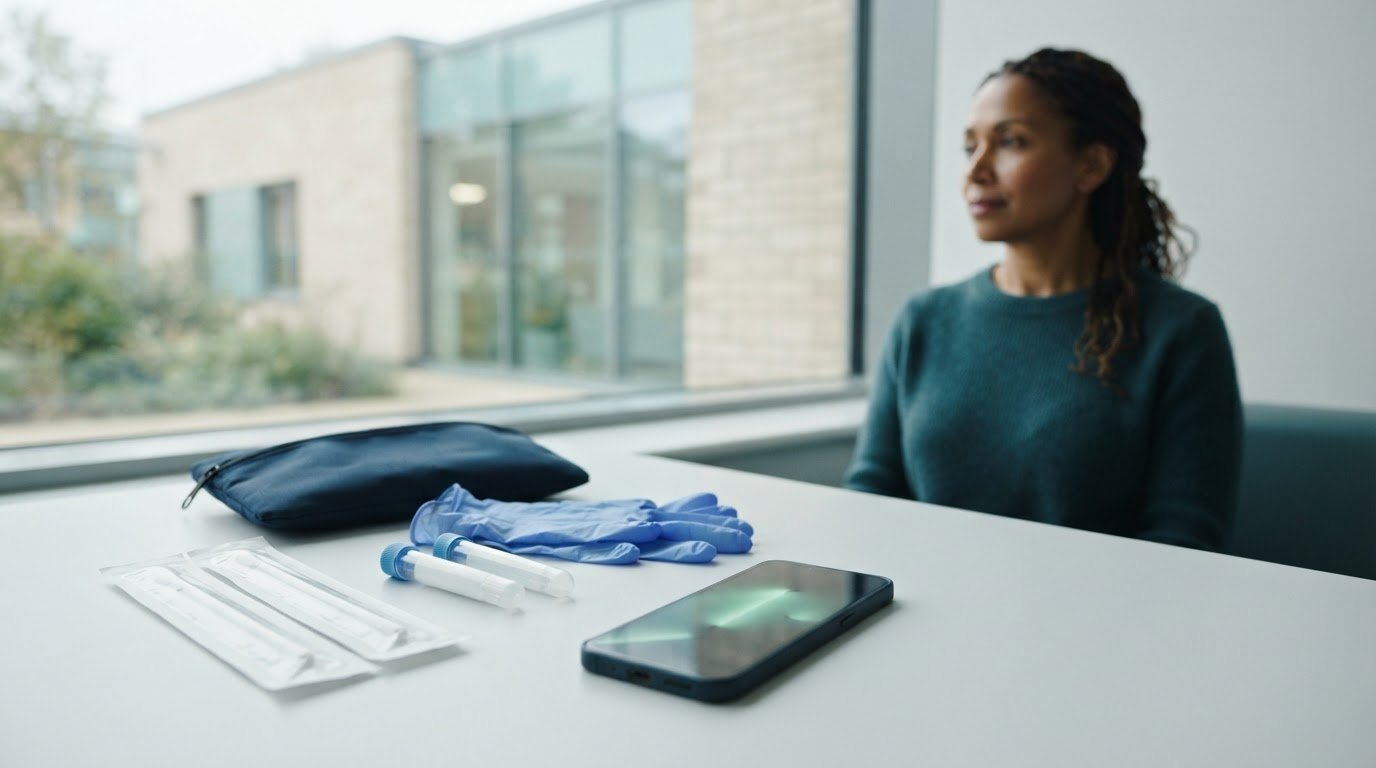
Collecting your own samples is a straightforward process that ensures your privacy. To begin, wash your hands thoroughly to prevent cross-contamination. Remove the sterile swab from its packaging, being careful not to touch the tip against any surfaces. If your kit requires it, you may need to moisten the swab with sterile saline. This simple step helps the swab “pick up” more bacteria from the skin surface, improving the accuracy of the test.
Follow these steps for a correct collection:
- Rotate the swab gently but firmly around the inside of each nostril.
- Sample the skin folds of the groin and both armpits by rubbing the swab against the skin.
- Place the swab immediately into the provided transport tube and seal it tightly for dispatch.
Culture vs. PCR: Choosing Your Test Method
There are two primary laboratory methods used to identify MRSA. A Culture test involves placing your sample in a controlled environment to see if bacteria grow over 48 to 72 hours. While reliable and cost-effective, it takes longer to produce a final result. PCR (Polymerase Chain Reaction) testing is a more advanced method. It detects the specific DNA of the MRSA bacteria, allowing the laboratory to provide results within 24 hours of receipt. This speed is often vital for those with tight medical deadlines.
Your choice depends on your timeline. If you have an upcoming surgery and need urgent confirmation, the PCR method is the gold standard for speed and accuracy. For those looking for routine peace of mind, a culture test is a suitable and affordable alternative. You can find more detail on these options in our guide to at-home test kits in the UK. If you’re preparing for a hospital admission, you can order your MRSA screening kit today to ensure your status is confirmed well before your appointment.
Taking Control: Private MRSA Screening for Peace of Mind
Choosing to screen privately provides a level of control that standard hospital pathways often lack. While the NHS provides targeted screening, this typically occurs very close to your admission date. If you’re looking for how to know if you are an mrsa carrier before you enter the clinical system, private testing is the most efficient solution. This is especially beneficial for those in high-risk professions like healthcare or professional sports, where discretion is paramount. By testing at home, you avoid the anxiety of a public diagnosis while ensuring you aren’t a risk to patients or teammates.
For patients with upcoming procedures, the “Pre-Surgery PCR” option is specifically designed to handle tight deadlines. Discovering a positive result on the morning of a surgery can be devastating, leading to immediate cancellations and months of further waiting. Proactive screening allows you to identify colonisation weeks in advance. We utilise UK-accredited laboratories for all our samples, ensuring that your results are clinical-grade, secure, and reliable. This professional oversight provides the quiet competence you need to manage your health logistics without unnecessary stress.
What Happens if Your Test is Positive?
Receiving a positive result can feel daunting, but it’s important to remember that carriage is not a sickness. It’s a manageable state of colonisation. If your test returns positive, it simply means the bacteria are present on your skin or in your nose. You aren’t “ill,” but you do have a responsibility to manage the bacteria before surgery or contact with vulnerable family members. The standard decolonisation protocol is straightforward and highly effective. It usually involves a five-day course of a specialised antibacterial body wash and a prescribed nasal cream. Knowing your status early allows you to complete this process privately, ensuring your surgery proceeds safely and your loved ones remain protected.
How to Order Your MRSA Test Kit
The process for acquiring an accurate result is designed to be as simple and discreet as possible. You can choose between several MRSA test options depending on your specific needs and timeline. Once you place your order, a sterile kit is dispatched to your home in plain packaging. After following the swabbing instructions detailed in the previous section, you simply post the samples back to our verified laboratory partners using the provided return materials.
Your results are delivered via a secure email, typically within 24 hours of the lab receiving a PCR sample. This streamlined procedure removes the friction of booking GP appointments or visiting clinics in person. If you have questions about your report, support is available to help you interpret the findings and understand the next steps. Taking this proactive step is the most reliable way to achieve peace of mind and ensure your long-term health is supported by expert diagnostics.
Secure Your Health with Proactive Screening
Identifying MRSA colonisation early is a simple yet powerful way to manage your long-term health. Because carriage is entirely asymptomatic, you cannot rely on physical signs or visual checks. Clinical swabbing of the nose and skin folds is the only reliable method for how to know if you are an mrsa carrier. This knowledge allows you to complete decolonisation protocols on your own terms, ensuring that surgical schedules remain on track and your household remains protected.
Order your private MRSA screening kit today for fast, laboratory-accurate results. We provide a streamlined process with discreet at-home collection and UK-accredited laboratory analysis. With results available in as little as 24 hours for PCR testing, you can obtain the clarity you need without the wait. Taking charge of your diagnostic health is a sensible, proactive choice. You deserve the confidence that comes with professional accuracy and the convenience of a private service.
Frequently Asked Questions
Can I test myself for MRSA at home?
Yes, you can use a professional at-home screening kit to collect your own samples. These kits provide sterile swabs and clear instructions for sampling the nose, groin, and axilla. Once you’ve collected the samples, you simply post them to an accredited laboratory for analysis. This process offers a discreet and convenient way for those wondering how to know if you are an mrsa carrier without needing a clinical appointment.
What are the first signs of being an MRSA carrier?
There are usually no visible signs or symptoms of being an MRSA carrier. Carriage, or colonisation, means the bacteria live harmlessly on your skin or in your nostrils without causing an infection. You won’t feel unwell, and your skin will look normal. The only way to identify carriage is through a laboratory swab test, as visual inspection cannot detect the presence of microscopic bacteria.
How long does an MRSA swab test take to show results?
The turnaround time depends on the testing method you choose. A Rapid PCR test can provide results within 24 hours of the laboratory receiving your sample, as it identifies bacterial DNA. Standard culture tests, which involve growing the bacteria in a lab, typically take between 48 and 72 hours. Choosing a PCR test is often the best option for those facing urgent medical deadlines or pre-surgery requirements.
Does a positive MRSA screen mean I have to stay in hospital?
No, a positive screen for carriage doesn’t require hospitalisation. It simply indicates that you are colonised with the bacteria. If you’re an outpatient or testing for personal peace of mind, you’ll usually be advised to follow a decolonisation protocol at home. This typically involves using antiseptic body washes and nasal creams for five days to clear the bacteria from your skin and nose.
Can I get rid of MRSA if I am a carrier?
Yes, MRSA carriage can be successfully managed through a process called decolonisation. This treatment involves using a specific antibacterial skin wash and a prescribed antibiotic ointment for the inside of your nostrils. When followed correctly for the full five-day course, this protocol is highly effective at removing the bacteria. It’s a standard procedure used by hospitals to clear carriage before surgery.
Is MRSA carriage permanent?
MRSA carriage isn’t necessarily permanent. Some people are transient carriers who harbour the bacteria for a short time, while others are persistent carriers who may have it for months or years. Your status can change based on your health, environment, and whether you’ve completed a decolonisation treatment. Regular screening is the only way to confirm if you’ve cleared the bacteria or if you’ve become recolonised.
How often should I be screened if I work in a hospital?
Screening frequency for healthcare workers is usually determined by specific workplace policies and local infection control guidelines. If you work in high-risk areas like intensive care or surgery, your employer might require more regular checks. Outside of mandatory workplace screening, many professionals choose to test privately if they have recurring skin issues or if they’re concerned about passing the bacteria to vulnerable family members.
What body parts are swabbed during an MRSA test?
A standard MRSA screen typically involves swabbing the nose, groin, and axilla (armpit). These areas are known as reservoirs because the bacteria thrive in warm, moist environments. In some clinical settings, a throat swab may also be taken. Sampling these specific sites is the most reliable method for how to know if you are an mrsa carrier, as it targets the areas where the bacteria are most likely to colonise.