

Blog
Why is MRSA Screening Mandatory Before Surgery in the UK?
Jun
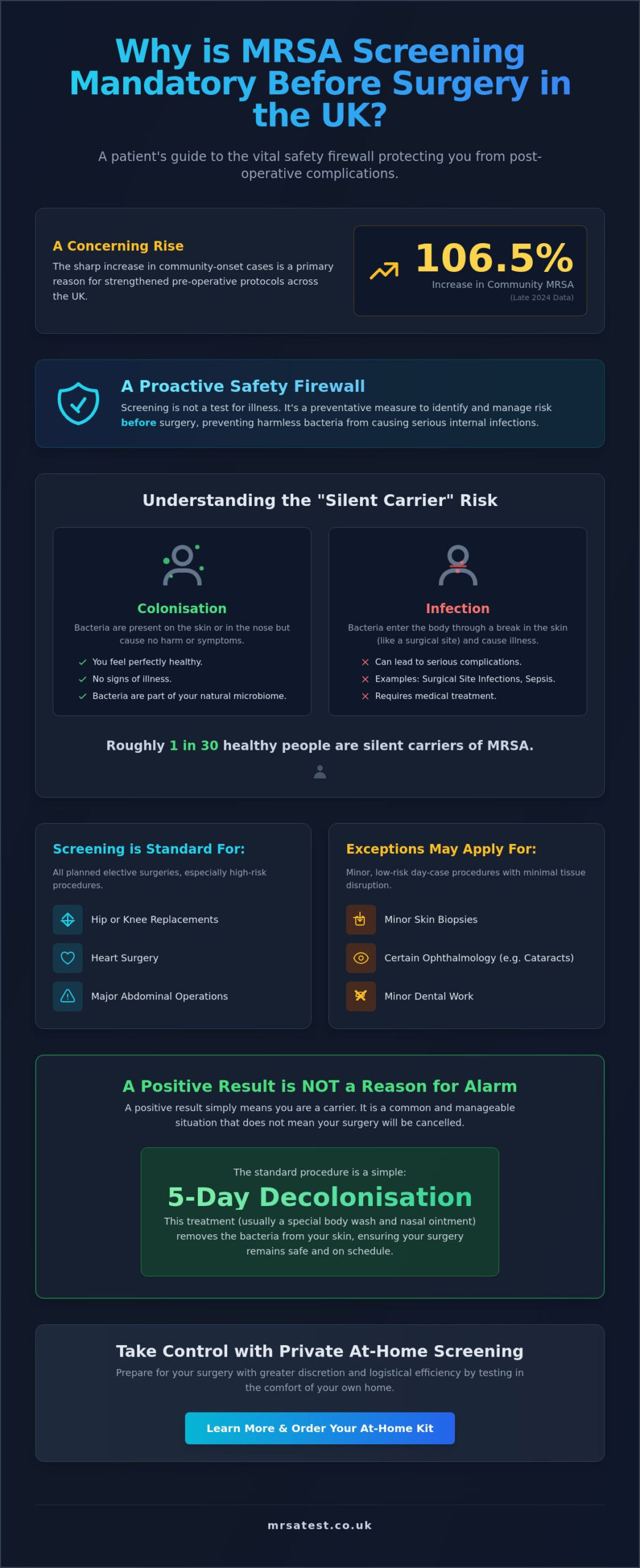
Did you know that community-onset MRSA cases in the UK rose by 106.5% in late 2024? While that statistic might sound concerning, it’s the primary reason health officials have strengthened pre-operative protocols. You might be asking why is mrsa screening mandatory before surgery uk when you feel perfectly healthy. It’s a common question, and feeling a bit anxious about surgical delays or the stigma of a “superbug” is a completely natural response to a complex medical process.
We’re here to provide clarity and professional reassurance. This article explains the clinical necessity of MRSA screening and how it protects you from serious post-operative complications. You’ll learn about the latest NHS guidance, what a positive result actually means for your procedure, and how simple decolonisation treatments ensure your surgery remains safe and on schedule. Understanding this standard safety measure is the first step toward a confident and complication-free recovery.
Key Takeaways
- Understand why is mrsa screening mandatory before surgery uk and how this proactive measure acts as a vital safety firewall for elective procedures.
- Learn the clinical distinction between colonisation and infection to understand why “silent carriers” are screened before entering a hospital environment.
- Familiarise yourself with the swabbing process and the technical advantages of rapid PCR testing compared to traditional laboratory cultures.
- Discover why a positive result is a manageable step rather than a reason for alarm, typically requiring only a simple five-day decolonisation treatment.
- Identify how private, at-home screening kits can help you prepare for your surgery with greater discretion and logistical efficiency.
The NHS Mandate: Why MRSA Screening is a Standard Pre-Op Requirement
The requirement for MRSA screening isn’t just a hospital preference; it’s a national safety directive designed to protect patients at their most vulnerable. If you’re scheduled for an operation, you might wonder why is mrsa screening mandatory before surgery uk hospitals. The policy was introduced by the Department of Health as a clinical firewall to combat healthcare-associated infections (HCAIs). By identifying individuals who carry the bacteria before they enter the operating theatre, medical teams can take proactive steps to prevent that bacteria from entering a surgical site. This approach has positioned the UK as a global leader in infection control, moving the focus from treating infections to preventing them entirely.
Screening acts as a preventative shield rather than a diagnostic tool for illness. Most people who carry Methicillin-resistant Staphylococcus aureus (MRSA) don’t feel unwell and have no visible symptoms. However, during surgery, the skin’s natural barrier is breached. If MRSA is present on the skin, it can transition from a harmless external presence to a serious internal complication. The mandate ensures that every elective admission is assessed, creating a safer environment for everyone in the ward.
The History of the UK Screening Programme
The shift toward universal screening began in the early 2000s when MRSA rates in UK hospitals reached levels that demanded urgent intervention. In response, the government implemented a rigorous policy shift that made screening a central pillar of pre-operative care. The results were significant; mandatory screening protocols contributed to a substantial reduction in MRSA bloodstream infection rates across the country. According to the May 2025 GIRFT (Getting It Right First Time) guidance, these protocols remain essential for maintaining patient safety. The screening mandate is a mandatory safety protocol for all elective surgical patients in England.
Who Exactly Needs to be Screened?
While the policy is broad, it focuses most heavily on “planned” or elective surgeries where the risk of infection could lead to devastating outcomes. This includes high-risk procedures such as hip or knee replacements, heart surgery, and major abdominal operations. When preparing for surgery, you’ll likely find MRSA swabs at the top of your health logistics checklist.
There are some exceptions to the rule, typically involving minor day-case procedures that don’t involve high-risk sites or significant tissue disruption. These might include:
- Minor skin biopsies or lesion removals.
- Certain ophthalmology procedures like cataracts.
- Minor dental work performed under local anaesthetic.
Despite these exceptions, the vast majority of patients will undergo screening to ensure the hospital environment remains as sterile as possible. It’s a simple, non-invasive process that provides immense peace of mind for both the patient and the surgical team.
Colonisation vs. Infection: Understanding the “Silent Carrier” Risk
It’s a common misconception that carrying MRSA means you’re unwell. In reality, roughly 1 in 30 people carry these bacteria on their skin or in their nose without showing any symptoms at all. This state is known as colonisation. When you’re colonised, the bacteria live harmlessly on the surface of your body as part of your natural microbiome. However, an active infection occurs when those same bacteria enter the body, usually through a break in the skin, and begin to cause illness. Understanding why is mrsa screening mandatory before surgery uk hospitals is vital for patient peace of mind, as it addresses this silent risk before it becomes a clinical problem.
Surgery acts as a tipping point for these silent carriers. During a procedure, the protective barrier of your skin is intentionally opened. This allows surface bacteria a direct route into your bloodstream or deep tissues. If MRSA enters these areas, it can lead to severe complications like surgical site infections (SSIs), pneumonia, or even sepsis. Reviewing the NHS information on MRSA can help you understand how these risks are managed within the hospital environment. By screening every patient, hospitals ensure that these bacteria don’t have the opportunity to cause harm during or after your operation.
Why Healthy People Carry MRSA
MRSA isn’t just found in hospitals; it’s prevalent in the community. You might pick it up at the gym, in schools, or even on public transport. It’s important to remove the stigma surrounding a positive swab result. Carrying MRSA isn’t a sign of poor hygiene or a failure to stay clean. It’s a biological occurrence where certain bacteria find a home in warm, moist areas like the nose, groin, or armpits. If you’re concerned about your carrier status, you can easily use an at-home MRSA screening kit to get clear answers in a private setting.
The Surgical Risk Factor
The body’s immune system usually keeps surface bacteria in check, but surgery changes the internal balance. Anaesthesia and the physical stress of an operation can temporarily weaken your immune response. This vulnerability is particularly dangerous in orthopaedic surgeries, where bacteria can reach the bone, or cardiac procedures involving the heart. Screening identifies carriers so they can be treated before their own bacteria causes an infection. By addressing the carrier risk early, medical teams ensure your recovery is as smooth and safe as possible.
How MRSA Screening Works: Swabs, Sites, and Timelines
The physical screening process is designed to be as non-invasive and efficient as possible. While you now understand why is mrsa screening mandatory before surgery uk hospitals, knowing exactly what happens during the appointment can alleviate pre-op anxiety. The procedure involves taking simple swabs from specific areas of the body where MRSA is most likely to reside. These samples are then sent to a laboratory for analysis using one of two primary diagnostic methods, ensuring your surgical environment remains as safe as possible.
The Different Swab Sites
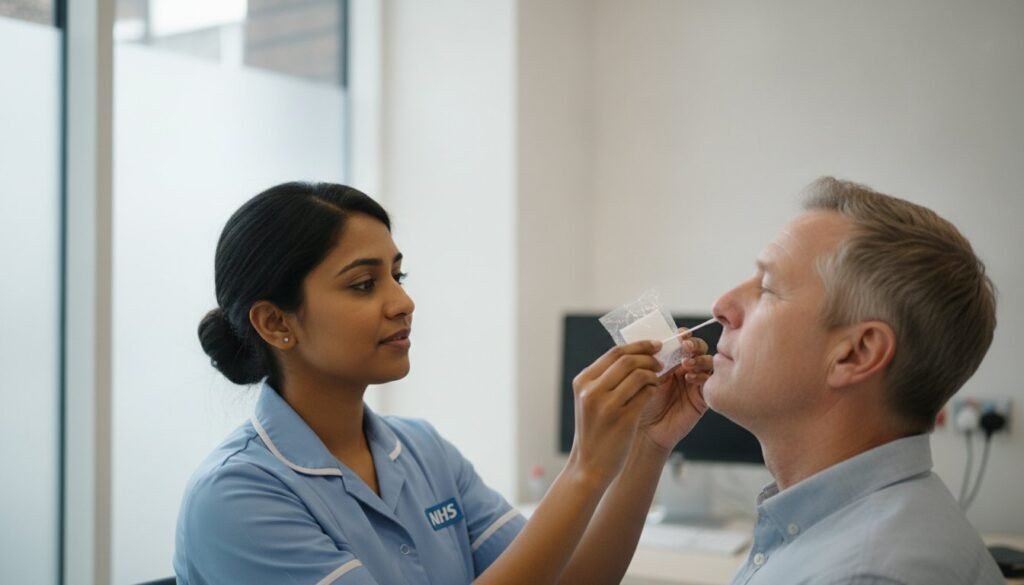
Medical professionals focus on “reservoirs,” which are warm, moist areas of the body where bacteria thrive. The primary sites are the nostrils (anterior nares) and the groin. In many clinical protocols, a swab of the axilla (armpit) is also required for a more comprehensive assessment. If you are conducting a private MRSA screen using an at-home kit, the process remains identical. You’ll use the provided sterile swabs to collect samples from these key areas, ensuring a high degree of diagnostic accuracy from the comfort and privacy of your own home.
Culture Test vs. Rapid PCR
There are two main ways laboratories identify the presence of MRSA. The traditional method is a Microbiology Culture. This involves placing the sample on a special nutrient agar and waiting for bacteria to grow in a controlled environment. While highly reliable, it typically takes 48 to 72 hours to yield a final result. This timeframe can sometimes be tight if your surgery is scheduled for early the following week.
In contrast, Rapid PCR (Polymerase Chain Reaction) technology offers a significant speed advantage. Instead of waiting for bacteria to grow, PCR uses molecular detection to identify specific MRSA DNA within the sample. This method can provide a definitive result within 24 hours of the laboratory receiving the swab. For patients with imminent surgery dates or urgent pre-operative requirements, PCR is often the preferred choice to avoid last-minute logistical delays.
Understanding the logistical flow helps you stay in control of your healthcare journey. Another reason why is mrsa screening mandatory before surgery uk for elective patients is to provide a sufficient window for intervention. Within the NHS, screening usually takes place at your pre-assessment clinic, often 3 to 5 days before your procedure. Testing early is the most effective way to ensure that if a result is positive, you have enough time to complete a decolonisation regime, allowing your surgery to proceed safely and on schedule.
What Happens if You Test Positive for MRSA?
Receiving a positive MRSA result often sparks immediate concern, but it’s a manageable part of the pre-operative journey. A positive result rarely leads to the permanent cancellation of your procedure. Instead, it triggers a short delay to ensure your safety. This proactive approach is precisely why is mrsa screening mandatory before surgery uk hospitals; it allows clinical teams to neutralise risks before you enter the operating room. The primary tool for this is decolonisation, a simple process that significantly lowers the chance of a post-operative infection.
The treatment typically involves a combination of a nasal ointment and an antibacterial body wash, often containing Chlorhexidine (CHG). CHG is highly effective at clearing resistant bacteria from the skin’s surface without damaging the skin itself. By following this protocol, you aren’t just preparing for your own surgery; you’re contributing to a safer environment for every patient on the ward. Understanding why is mrsa screening mandatory before surgery uk helps patients see this treatment as a vital safety firewall rather than a setback.
The 5-Day Decolonisation Routine
To be effective, the treatment must be followed meticulously for five consecutive days. This usually involves applying the prescribed nasal cream three times daily and washing with the antiseptic solution once a day. Personal hygiene plays a critical role in hospital-acquired infection prevention during this window. To prevent re-contamination from your environment, you should consider these daily habits:
- Use fresh towels and washcloths for every wash.
- Change your bed linen and nightwear every day of the treatment.
- Focus on washing skin folds, such as the armpits and groin, where bacteria often hide.
- Avoid using your regular soap or moisturiser during the five-day period.
Clearing the Path for Surgery
Decolonisation is remarkably successful, often clearing the bacteria in a high majority of cases after just one round of treatment. If the MRSA persists, your clinical team might recommend a second course or adjust your surgical antibiotics to ensure you’re fully protected during the operation. Even if you remain a “known carrier,” the hospital can still proceed safely by using enhanced barrier nursing techniques or providing a private room. If you’ve received a positive result and want to verify your status privately before your official hospital retest, you can order a professional MRSA screening kit for fast, discreet confirmation. This step provides an extra layer of reassurance that your treatment has been effective before you arrive for your procedure.
Taking Control: The Benefits of Private At-Home MRSA Screening
While we’ve established why is mrsa screening mandatory before surgery uk, the logistical burden of hospital-led testing can sometimes add to pre-operative stress. Many patients, particularly those undergoing private surgery, find themselves needing to arrange their own diagnostics or wanting to verify their status weeks in advance to avoid last-minute complications. Private at-home screening offers a discreet, professional alternative that puts you in charge of your surgical timeline. By testing early, you eliminate the risk of a surprise positive result just days before your procedure, which could otherwise lead to a stressful postponement.
The convenience of self-collection is a significant advantage for many. Instead of navigating hospital parking or spending time in waiting rooms where you might be exposed to other illnesses, you can collect your samples in the comfort and privacy of your own home. This is particularly beneficial for those with busy schedules or limited mobility. Your health data remains confidential and is managed on your own terms, providing a sense of agency that’s often lost in busy clinical environments.
Is At-Home Testing Accurate?
Accuracy is a primary concern for any patient preparing for a major operation. Professional at-home kits utilise the same high standards as the NHS, with samples processed in verified, UKAS-accredited laboratories. When you choose at-home MRSA tests, you’re receiving a diagnostic service that matches the precision of hospital-based swabs. The self-swabbing process is designed for simplicity, with clear, illustrated instructions that ensure you collect a high-quality sample from the nose, groin, and axilla for a comprehensive result.
Ordering Your Pre-Op MRSA Kit
Choosing the right test depends largely on your surgery date and personal preference for speed. If your operation is several weeks away, a traditional MRSA Culture provides a cost-effective and reliable option. However, if your pre-assessment is approaching rapidly, a Rapid PCR test is the superior choice, delivering molecular results within 24 hours of lab receipt. This proactive approach is the reason why is mrsa screening mandatory before surgery uk for both private and NHS patients; it removes the element of surprise from your surgical journey.
The process is streamlined for your convenience: order online, receive your kit via discreet delivery, and post your samples back to our laboratory partners using the provided packaging. Ensuring your recovery stays on track starts with proactive preparation. Don’t leave your surgical schedule to chance. Order your confidential MRSA test kit today to secure the peace of mind you deserve before your procedure.
Securing Your Path to a Complication-Free Recovery
MRSA screening is more than just a procedural box to tick; it’s a vital safety measure that protects you from preventable surgical complications. By identifying silent carriers early, medical teams ensure that surface bacteria don’t become serious internal infections during your recovery. Understanding why is mrsa screening mandatory before surgery uk allows you to approach your pre-operative care with clarity and confidence. It’s a standard part of modern surgical safety that prioritises your long-term health and well-being.
Taking control of your health logistics shouldn’t be a source of anxiety. Whether you’re preparing for an NHS procedure or a private operation, testing early gives you the time needed to manage your results without risking a last-minute delay. We provide professional, UKAS-accredited laboratory testing with rapid 24-hour PCR results available for urgent requirements. Every kit is sent with discreet, plain-packaging delivery to protect your privacy. Order Your Pre-Surgery MRSA Test Kit today to ensure your surgical journey remains on track. You’re supported by experts every step of the way.
Frequently Asked Questions
Is MRSA screening mandatory for private surgery in the UK?
Yes, MRSA screening is a standard requirement for private surgery in the UK for most elective procedures. Private healthcare providers adhere to the same clinical safety benchmarks as the NHS to minimise the risk of healthcare-associated infections. This universal policy ensures that every surgical environment remains as sterile as possible, regardless of whether you are being treated in a public or private facility.
How long before surgery is MRSA screening usually done?
Screening is typically performed during your pre-operative assessment, which usually takes place 3 to 5 days before your operation. However, current GIRFT guidance from May 2025 indicates that a negative screening result can be considered valid for at least three months. Testing within this timeframe provides a sufficient window to complete any necessary decolonisation treatments without delaying your surgical date.
What happens if I test positive for MRSA just before my operation?
A positive result usually leads to a short delay rather than a permanent cancellation of your surgery. You’ll be prescribed a five-day decolonisation regime consisting of an antibacterial body wash and a nasal ointment to clear the bacteria from your skin and nostrils. Once this treatment is complete, your surgical team will determine the safest way to proceed with your procedure.
Can I carry out my own MRSA swab at home for pre-op requirements?
Yes, you can perform your own MRSA swabs using a professional at-home screening kit. These kits provide the same diagnostic accuracy as hospital swabs and are processed in UKAS-accredited laboratories. Many patients prefer this method for its privacy and the ability to confirm their status well in advance of their official hospital pre-assessment appointment.
Why do they swab the groin for MRSA screening?
The groin is swabbed because it’s a primary reservoir where MRSA bacteria are known to colonise. Bacteria thrive in warm, moist areas of the human body, making the groin, nostrils, and armpits the most effective sites for detection. Swabbing these specific locations ensures that “silent carriers” are accurately identified before they enter a sterile operating theatre.
Will MRSA colonisation make me feel sick or give me a fever?
No, MRSA colonisation is entirely asymptomatic and won’t make you feel unwell or cause a fever. Being a carrier simply means the bacteria are living harmlessly on your skin’s surface. The reason why is mrsa screening mandatory before surgery uk hospitals is to prevent these harmless surface bacteria from entering your body through a surgical incision, where they could cause a serious infection.
How long do MRSA test results take in the UK?
The time it takes to receive your results depends on the laboratory method used for the analysis. A traditional microbiology culture typically requires 48 to 72 hours for the bacteria to grow and be identified. If you need a faster turnaround, a Rapid PCR test can detect MRSA DNA and provide a definitive result within 24 hours of the laboratory receiving your sample.
Is the MRSA test painful or invasive?
The MRSA screening process is completely painless and non-invasive. It involves using a sterile swab, which looks like a long cotton bud, to gently wipe the surface of the skin in the nostrils, groin, or armpits. There are no needles or blood samples involved, and the entire swabbing process takes less than a minute to complete during your pre-op assessment.
