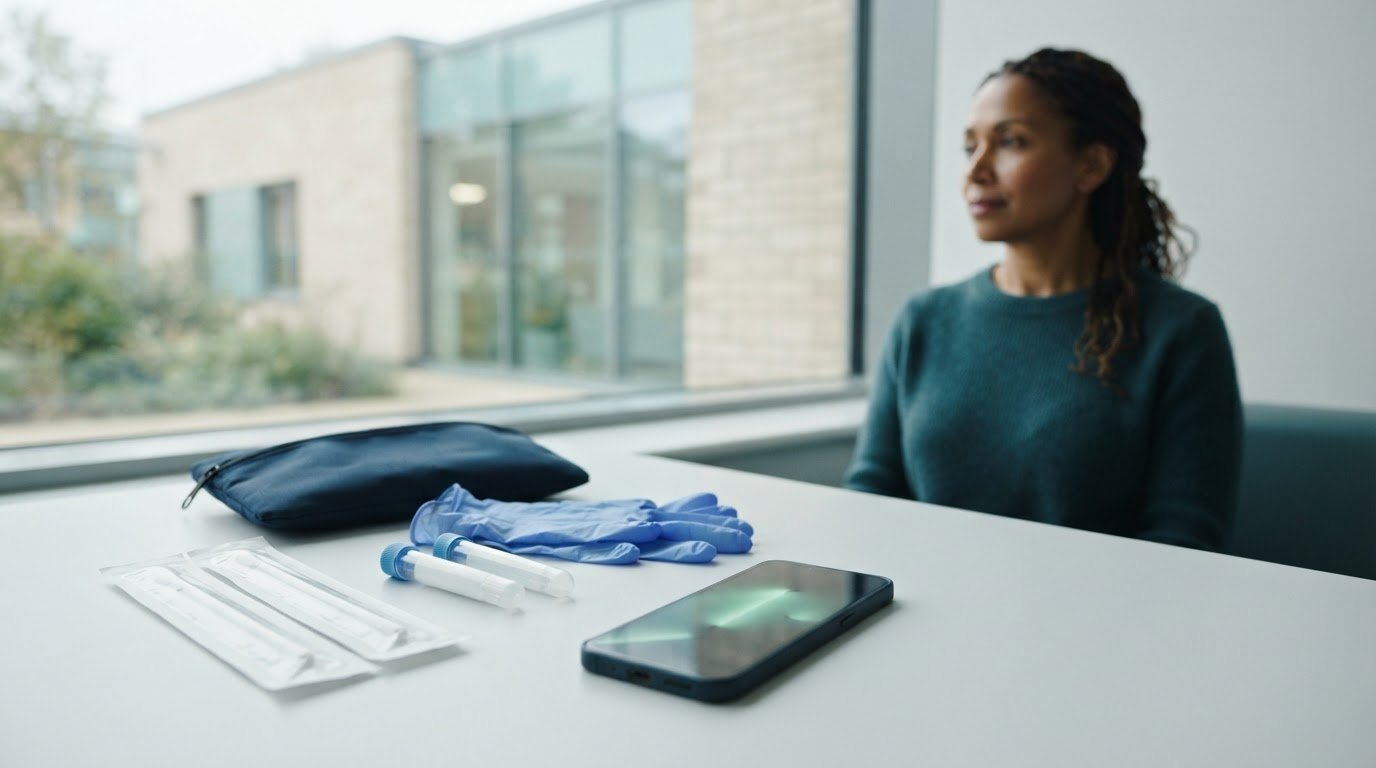

Could refusing a simple nasal swab actually be the factor that cancels your long-awaited surgery? While you have the legal right to decline medical procedures, many patients feel a loss of autonomy when faced with mandatory hospital protocols. It’s understandable to feel anxious about invasive swabbing or the confusion surrounding when to get mrsa test before surgery to ensure your procedure remains on schedule. In 2026, with the UK Health Security Agency reporting a rise in community-acquired cases, understanding your options is more important than ever.
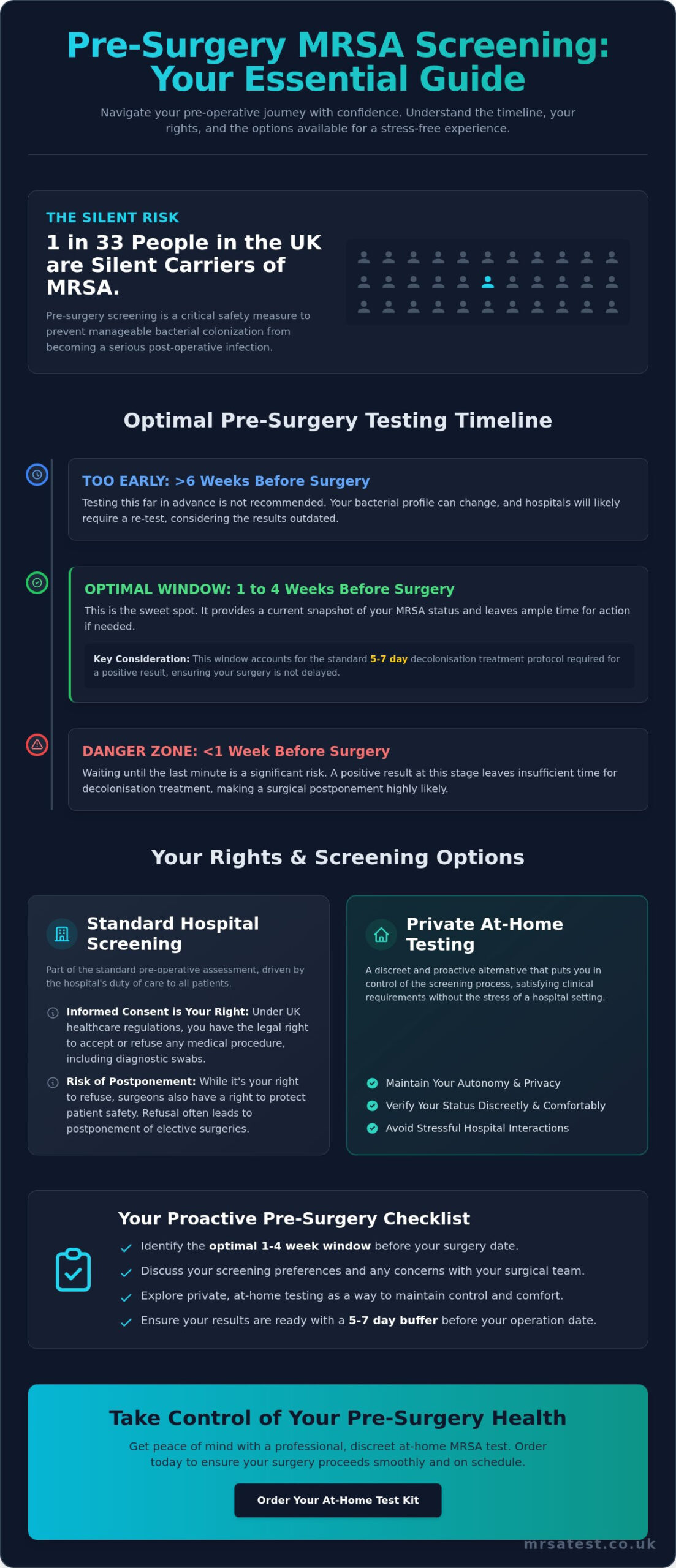
We agree that your privacy and comfort should be a priority during pre-operative care. This guide explains your rights regarding screening refusal and the clinical risks involved, such as the fact that 1 in 33 people in the UK are currently silent carriers of MRSA. You’ll discover the optimal timeline for testing to allow for the standard five-day decolonisation protocol if it’s required. We also preview how private, at-home PCR testing provides a professional and discreet alternative to hospital-led screening, giving you clarity and control without the stress of a clinical environment.
Key Takeaways
- Understand the legal distinction between NHS hospital policy and your right to informed consent under UK healthcare regulations.
- Learn exactly when to get mrsa test before surgery to ensure there’s a vital 5-7 day buffer for decolonisation treatment if it’s needed.
- Identify the clinical risks of refusing a screen, including the high likelihood that a surgeon will postpone elective procedures to protect patient safety.
- Explore how private, at-home PCR or culture swabs offer a discreet way to verify your status without the anxiety of a clinical setting.
- Access a proactive checklist to help you discuss your screening preferences with your surgical team while maintaining your personal autonomy.
Understanding Your Rights: Can You Refuse MRSA Screening in the UK?
Many patients feel that MRSA screening is a non-negotiable part of their hospital journey. It’s often presented as a standard requirement during pre-operative assessments. However, it’s vital to understand that in the UK, medical procedures require your active consent. You aren’t just a passive participant; you’re an informed decision-maker in your own care. While clinicians strongly recommend these tests to prevent the spread of Methicillin-resistant Staphylococcus aureus (MRSA), you have the legal right to decline the swab. Healthcare staff are professionally obligated to respect your choice, provided you understand the implications of that decision.
The Legal Basis for Patient Consent
The NHS Constitution is clear about your rights. It establishes that you have the right to accept or refuse treatment that is offered to you. This protection includes diagnostic tests like MRSA swabbing. The Department of Health and Social Care (DHSC) provides guidelines for screening, but these aren’t compulsory laws that override your bodily autonomy. Before any healthcare professional uses a swab on your nose, groin, or axilla, they must obtain your verbal or written agreement. This process of informed consent ensures you understand what the test involves and why it’s being performed. If you’re deciding when to get mrsa test before surgery, knowing that you have a choice can reduce the feeling of being “processed” by a large system. It’s your right to ask for a full explanation of the risks associated with refusal before you make your final decision.
Voluntary Screening vs. Hospital Admission Policies
Hospitals operate under a strict ‘duty of care.’ This means they’re responsible for the safety of all patients on a ward, not just you. Because MRSA can lead to serious surgical site infections or bacteraemia, hospitals implement universal or targeted screening policies to protect their environment. In March 2026, 90 cases of MRSA bacteraemia were reported by the UKHSA, highlighting why clinical teams are often so insistent on testing. With an estimated 1 in 33 people in the UK acting as “silent carriers,” the hospital’s goal is to prevent a manageable colonization from turning into a life-threatening infection post-surgery.
- NHS Trusts: Often follow a risk-based approach for high-risk procedures like heart surgery or bone implants.
- Private Clinics: May have even stricter admission criteria to maintain their infection-free status and low complication rates.
When a policy meets a patient’s refusal, the clinical team must document the decision carefully. They shouldn’t pressure you, but they’ll explain that refusing a screen might impact the surgeon’s decision to proceed. Knowing when to get mrsa test before surgery, and choosing to do so privately, can often bypass these stressful hospital interactions while still satisfying the clinical need for safety and data. This proactive approach allows you to maintain your autonomy while ensuring your surgery remains on schedule.
When to Get an MRSA Test Before Surgery: Optimal Timelines
Timing is everything for a successful operation. Most UK hospitals schedule MRSA screening between one and four weeks before your surgery date. This window is chosen carefully. It’s close enough to the procedure to reflect your current health status but far enough away to manage any positive results effectively. If you test too early, such as more than six weeks before your admission, the results may be considered outdated. Hospitals often require a re-test because your bacterial profile can change over time through community contact.
Conversely, waiting until the last minute is a significant risk. If a swab returns positive just 48 hours before your procedure, the clinical team will likely postpone the surgery to ensure patient safety. This is because the necessary decolonisation treatments cannot be completed in such a short timeframe. Knowing exactly when to get mrsa test before surgery allows you to navigate the pre-operative process without the fear of sudden cancellations.
The Pre-Op Assessment Window
Standard NHS protocols typically require a clear result within 30 days of your surgical date. If you’ve had a recent hospital stay or work in a healthcare setting, your testing frequency might increase. Standard culture tests can take up to three days to process in a lab. In urgent cases, a Rapid PCR test can provide results much faster, which is essential when surgery is imminent. Rapid molecular testing identifies the DNA of the bacteria, offering a high level of accuracy within hours rather than days. This efficiency is particularly helpful for patients who need to confirm their status quickly before a private or elective procedure.
Proactive Testing: Why Timing Matters
Many patients choose to perform a private screen about two weeks before their official hospital pre-op appointment. This proactive step provides a vital “buffer zone.” If the result is positive, you have exactly enough time to complete the standard five-day decolonisation protocol. This treatment involves specific antiseptic body washes and nasal ointments designed to reduce bacterial load. After finishing the five-day course, clinical guidelines require a wait of 48 to 72 hours before a clearance swab can be taken.
This timeline is strict. Attempting a clearance swab too soon can lead to false negatives, potentially compromising your safety during the operation. Testing ahead of time removes the element of surprise and ensures you enter the high-risk surgical environment with confidence. If you want to verify your status discreetly before your official appointment, you can order a private MRSA test to manage the process on your own terms. This approach ensures that by the time you reach your hospital assessment, you’re already prepared for a successful outcome.
The Consequences of Refusing an MRSA Screen
Refusing a screen isn’t just a legal choice; it’s a clinical decision with significant logistical ripples. While we’ve established your right to informed consent, the practical reality is that most surgeons view screening as an essential safety barrier. Without a confirmed negative result, the risk of developing hospital-acquired infections increases. This is especially critical for orthopaedic or cardiothoracic procedures where an infection can be devastating. Clinical guidelines for MRSA screening before surgery emphasize that identifying carriers allows for targeted treatment before an incision is even made. By opting out, you’re choosing to enter the operating theatre with an unknown risk profile, which many clinical teams find unacceptable for elective care.
Impact on Your Surgical Schedule
Surgeons have a finite number of slots on elective lists and they prioritize patients who meet all pre-operative safety criteria. If you refuse screening, your consultant may determine that the risk of a post-operative infection outweighs the benefit of the procedure at that time. This often leads to your surgery being postponed or cancelled entirely. Such a delay doesn’t just affect your health; it can reset your position on an NHS waiting list. While emergency, life-threatening surgeries bypass these protocols, elective lists are strictly managed. Understanding when to get mrsa test before surgery helps you avoid these administrative hurdles. If you’re using private medical insurance, be aware that some providers might contest claims if standard pre-operative safety protocols were intentionally bypassed, potentially leaving you responsible for costs.
Changes to Your Hospital Stay Experience
If a hospital agrees to proceed without a screen, they’ll likely treat you as a ‘presumed positive’ case. This is a precautionary measure to protect other vulnerable patients on the ward. This status changes your entire hospital experience through ‘barrier nursing’ protocols:
- You’ll likely be placed in a side room or isolation ward instead of a standard bay.
- Staff must use enhanced PPE, including aprons and gloves, for every single interaction.
- Visitors and family members may face additional restrictions or strict hygiene requirements.
- Your movement around the hospital may be limited to prevent cross-contamination.
The psychological impact of being isolated can be significant during your recovery. It creates a sense of separation from the standard care pathway and can make you feel like an outlier. Knowing when to get mrsa test before surgery and choosing a private testing route ensures you can avoid being treated as a high-risk case while still maintaining your personal autonomy and privacy.
Private MRSA Testing: A Discreet Alternative to Hospital Screening
For many patients, the clinical environment of a hospital can trigger significant stress. This “white coat” anxiety often makes the pre-operative process feel overwhelming, especially when it involves invasive swabbing in a public or semi-private setting. Private testing offers a professional alternative that prioritises your comfort and confidentiality. By choosing to screen in a stress-free, at-home environment, you gain control over the process. You receive your results directly, which means they don’t appear on your permanent medical record unless you choose to share them with your consultant. This level of discretion is particularly valued by those who prefer to manage their health data privately before committing to a hospital-led procedure.
One of the primary advantages of this route is the ability to fast-track decolonisation. If you discover a positive result through a private screen, you can begin the necessary antiseptic protocols immediately. This proactive approach ensures that by the time your hospital pre-op assessment arrives, you’re already clear of the bacteria. It eliminates the risk of a last-minute cancellation and provides peace of mind that your surgery will proceed as planned. All samples are processed by UK-accredited laboratories, ensuring the same level of clinical accuracy used by the NHS.
Why Choose At-Home MRSA Screening?
At-home screening kits are designed for simplicity and ease of use. They allow you to collect samples from the required sites, typically the nose, groin, and axilla (armpit), in the privacy of your own bathroom. There’s no need to wait in a crowded clinic or explain your preferences to multiple staff members. Once you’ve completed the self-collection, the samples are returned via discreet shipping to a professional laboratory for analysis. This streamlined process is efficient and respects your time, providing a reliable diagnostic result without the logistical friction of a hospital visit.
PCR vs. Culture: Choosing the Right Test for Surgery
When deciding when to get mrsa test before surgery, the type of technology you choose is vital. A Rapid PCR test is the gold standard for urgent needs. It looks for the genetic material of the bacteria and can provide results in as little as 24 hours after reaching the lab. This is ideal if your surgery date is approaching quickly. Alternatively, a standard Culture test is a cost-effective way to check your status several weeks in advance. It involves growing the bacteria in a controlled environment, which takes longer but is equally accurate for long-term planning.
You can use your private MRSA test results to inform your surgical team of your status well before your admission date. This transparency helps build trust with your surgeon and demonstrates that you’re taking proactive steps for your own safety. If you’re ready to secure your surgical timeline with a professional, discreet screening, you can order your MRSA testing kit today for rapid, reliable results.
Preparing for Your Operation: A Proactive Checklist
The final days before a surgical procedure are often the most stressful. Ensuring all clinical requirements are met can feel like a full-time job. To avoid last-minute friction, it’s essential to coordinate your private screening results with the hospital’s pre-operative team. Most consultants appreciate proactive patients who take their safety seriously. By providing verified laboratory results from a UK-accredited facility, you demonstrate a commitment to infection control that can actually speed up your admission process. It transforms a standard administrative step into a collaborative effort between you and your clinical team.
Communication is key when discussing your screening preferences. If you’ve chosen to test privately to avoid the discomfort of hospital-based swabbing, simply present your lab report during your pre-op assessment. Explain that you wanted to ensure your status early to allow for any necessary preparation. When deciding when to get mrsa test before surgery, aiming for that two-week window gives you the flexibility to complete a decolonisation course if needed. This proactive approach shows you aren’t just following rules; you’re actively managing your surgical outcome and reducing the risk of complications.
Proactive decolonisation often involves using Chlorhexidine (CHG) washes and nasal ointments. Even if you haven’t tested positive, some surgeons recommend a universal “washout” period as an extra layer of security. This five-day protocol significantly reduces the bacterial load on your skin, which is the primary source of surgical site infections. By synchronising this treatment with your testing timeline, you create the safest possible environment for your recovery. Following these steps ensures your hospital stay is focused on healing rather than managing avoidable infections.
Empowering Your Healthcare Journey
MRSA screening is a proactive safety tool designed to protect your health rather than a hurdle to clear. It’s about ensuring you enter the operating theatre in the best possible condition. To help you manage the other moving parts of your procedure, we’ve created a preparing for surgery checklist for total logistics prep. This resource covers everything from fasting windows to transport arrangements, helping you feel prepared and in control.
Order Your Confidential Kit Today
Taking control of your health shouldn’t be complicated. Our ordering process is designed for speed and discretion, offering UK-wide delivery directly to your doorstep. Once you return your samples, our clinical team is available to help you interpret your lab report. This ensures you understand every detail before your hospital visit. You deserve the confidence that comes with professional diagnostics and a clear timeline. Order your confidential MRSA test kit today for total peace of mind and ensure you know exactly when to get mrsa test before surgery to stay on schedule.
Secure Your Surgery with Proactive Screening
Navigating the pre-operative process requires a balance between your legal rights and the clinical necessity of infection control. While you maintain the right to informed consent, choosing to skip hospital screening can lead to isolating barrier nursing or postponed elective procedures. By understanding when to get mrsa test before surgery, you can avoid these administrative hurdles. Testing privately two weeks before your admission date provides the perfect buffer zone to complete decolonisation protocols if they’re needed. This proactive approach ensures you’re ready for your operation without the stress of last-minute results.
Our service utilizes UK Accredited Laboratory testing to provide the same level of accuracy as the NHS. We offer rapid 24-hour PCR results to meet even the tightest pre-op timelines through a discreet and confidential at-home service. You can Secure your private MRSA test kit from mrsatest.co.uk to manage your health on your own terms. You don’t have to face surgical anxiety alone. With the right data and a clear timeline, you can step into the hospital feeling prepared, protected, and in total control of your recovery.
Frequently Asked Questions
Can I be forced to have an MRSA swab in the UK?
No, you cannot be legally forced to undergo an MRSA swab. Under the NHS Constitution and the principle of informed consent, you have the right to refuse any medical procedure or diagnostic test. However, while staff must respect your decision, they are also required to explain the risks of refusal. Declining a screen may result in your surgery being postponed or requiring you to stay in an isolation room during your hospital admission to protect other patients.
What happens if I test positive for MRSA before my operation?
A positive result doesn’t mean your surgery is automatically cancelled. It usually triggers a standard five-day decolonisation protocol designed to clear the bacteria from your skin and nose. This involves using a specific antiseptic body wash and a prescribed nasal ointment. Once the treatment is finished, you’ll need a clearance swab to confirm the bacteria is gone. Planning when to get mrsa test before surgery is essential to ensure there’s enough time for this treatment before your scheduled date.
Is the MRSA screening swab painful or invasive?
The screening process is entirely non-invasive and generally painless. A healthcare professional or the patient themselves uses a soft cotton swab to gently wipe the inside of the nostrils and the skin surface of the groin or armpit. The process takes only a few seconds per site. While some people find the sensation slightly ticklish or strange, it doesn’t involve needles, skin punctures, or any physical discomfort.
How long do MRSA screening results take to come back?
The turnaround time depends on the specific diagnostic method used by the laboratory. Standard culture tests, which involve growing the bacteria in a controlled environment, typically take between 48 and 72 hours. Rapid PCR tests are much faster, identifying bacterial DNA to provide results within 24 hours of the sample reaching the lab. Knowing when to get mrsa test before surgery helps you choose the right test type for your specific timeline.
Can I use an at-home MRSA test for my hospital pre-op assessment?
Yes, you can present results from a private, at-home kit to your surgical team. Many patients prefer this route to manage their status discreetly and avoid the anxiety of hospital-based swabbing. To ensure the hospital accepts the data, the test must be processed by a UK-accredited laboratory. Providing a clear lab report during your pre-op assessment can help streamline your admission and confirm you’re ready for the procedure.
Will my surgery be cancelled if I refuse the MRSA screen?
There is a significant possibility that elective surgery will be postponed if you refuse a screen. Surgeons have a duty of care to maintain a safe environment and prevent surgical site infections. If your MRSA status is unknown, the clinical team may decide the risk of proceeding is too high. While emergency, life-saving operations will go ahead regardless, elective lists are strictly managed to ensure all patients meet safety protocols.
Do I need to be screened for MRSA if I am only having a minor procedure?
Not necessarily. Many NHS trusts now use a targeted, risk-based approach rather than universal screening for every patient. Screening is most common for high-risk procedures, such as joint replacements, heart surgery, or any operation involving a prosthetic implant. For minor day-case procedures with a low risk of infection, your surgical team will decide if a screen is necessary based on your health history and the type of surgery.
Can I treat MRSA myself if I test positive at home?
No, you shouldn’t attempt to treat MRSA without a professional clinical plan. While antiseptic washes are part of the process, a successful decolonisation protocol for surgery requires specific prescription nasal ointments that aren’t available over the counter. If your at-home test returns a positive result, you should share the laboratory report with your GP or surgical consultant. They’ll provide the correct treatment to ensure you’re clear before your operation.