Did you know that MRSA bacteraemia rates in the UK increased by 29.5% between 2018 and 2025? This significant rise explains why healthcare providers are increasingly vigilant about pre-operative safety protocols. If you’re preparing for an upcoming procedure, it’s natural to feel anxious about potential delays or the risk of infection. Understanding exactly what to expect from mrsa screening before surgery uk can help you replace that uncertainty with a sense of quiet competence and control.
We understand that your primary goal is a successful operation and a smooth recovery. This guide provides a clear, professional overview of the entire screening process, from how nose and groin swabs are collected to the timeline for receiving your results. We’ll explain the difference between rapid PCR tests and traditional cultures, while outlining the standard five-day decolonisation steps required if you test positive. By following this guide, you’ll gain the practical knowledge and peace of mind needed to manage your pre-op requirements discreetly and efficiently.
Key Takeaways
- Learn why hospitals require this check and exactly what to expect from mrsa screening before surgery uk to ensure your procedure stays on schedule.
- Understand the simple triple swab protocol involving the nose, groin, and armpit to ensure accurate sample collection.
- Compare the speed of rapid PCR testing with traditional culture methods to choose the best option for your surgical timeline.
- Discover how a positive result is managed through a five-day decolonisation routine. This proactive step helps prevent unnecessary surgical cancellations.
- Explore how private at-home kits provide a discreet and clinically verified alternative to hospital-based screening appointments.
Why MRSA Screening is Mandatory for UK Surgery in 2026
MRSA screening is a preventative medical check designed to identify the presence of Methicillin-resistant Staphylococcus aureus (MRSA) before a patient undergoes an invasive procedure. In the UK, this process has become more standardised following guidance released in May 2025 by the “Getting It Right First Time” (GIRFT) programme. With MRSA bacteraemia rates increasing by 29.5% between 2018 and 2025, these protocols are more important than ever. The primary goal is to reduce Surgical Site Infections (SSIs), which can lead to prolonged hospital stays and complex recoveries. By understanding what to expect from mrsa screening before surgery uk, you can prepare for your procedure with confidence.
A common misconception is that only “sick” people carry these bacteria. In reality, many healthy individuals are “colonised” with MRSA; this means the bacteria live harmlessly on their skin or in their nose without causing illness. However, the distinction between colonisation and active infection is vital in a clinical environment. While the bacteria may be harmless on the skin’s surface, they pose a significant threat if they enter the body through a surgical incision. This is why NHS trusts and private clinics alike insist on clear screening results before you enter the operating theatre.
Understanding the Risks of MRSA in a Surgical Setting
During surgery, the skin’s natural protective barrier is breached. If MRSA is present on the patient’s body, it can easily enter the bloodstream or deep tissues. Because this specific strain is resistant to many common antibiotics, treating a resulting infection is exceptionally difficult. Screening protects you from these complications and ensures the wider hospital environment remains safe for other vulnerable patients. It’s a proactive measure that prioritises your safety and the efficiency of the surgical team. It also helps prevent the spread of resistant bacteria within the ward, protecting those with weakened immune systems.
Who Needs to be Screened?
Current UK protocols require screening for most elective inpatient admissions. This is especially critical for “metalwork” procedures, such as hip or knee replacements, where an implant is being placed. High-risk specialties including orthopaedics, neurosurgery, and cardiothoracic surgery always mandate these checks. Even for day-case surgeries, clinicians often recommend screening if the patient has a history of MRSA or is considered high-risk. You can find more detail on these factors in our guide on What Is MRSA? Your Complete Guide to Symptoms, Causes & Risks. Knowing what to expect from mrsa screening before surgery uk ensures you aren’t caught off guard by these requirements during your pre-operative assessment.
The Screening Process: Where and How Swabs are Taken
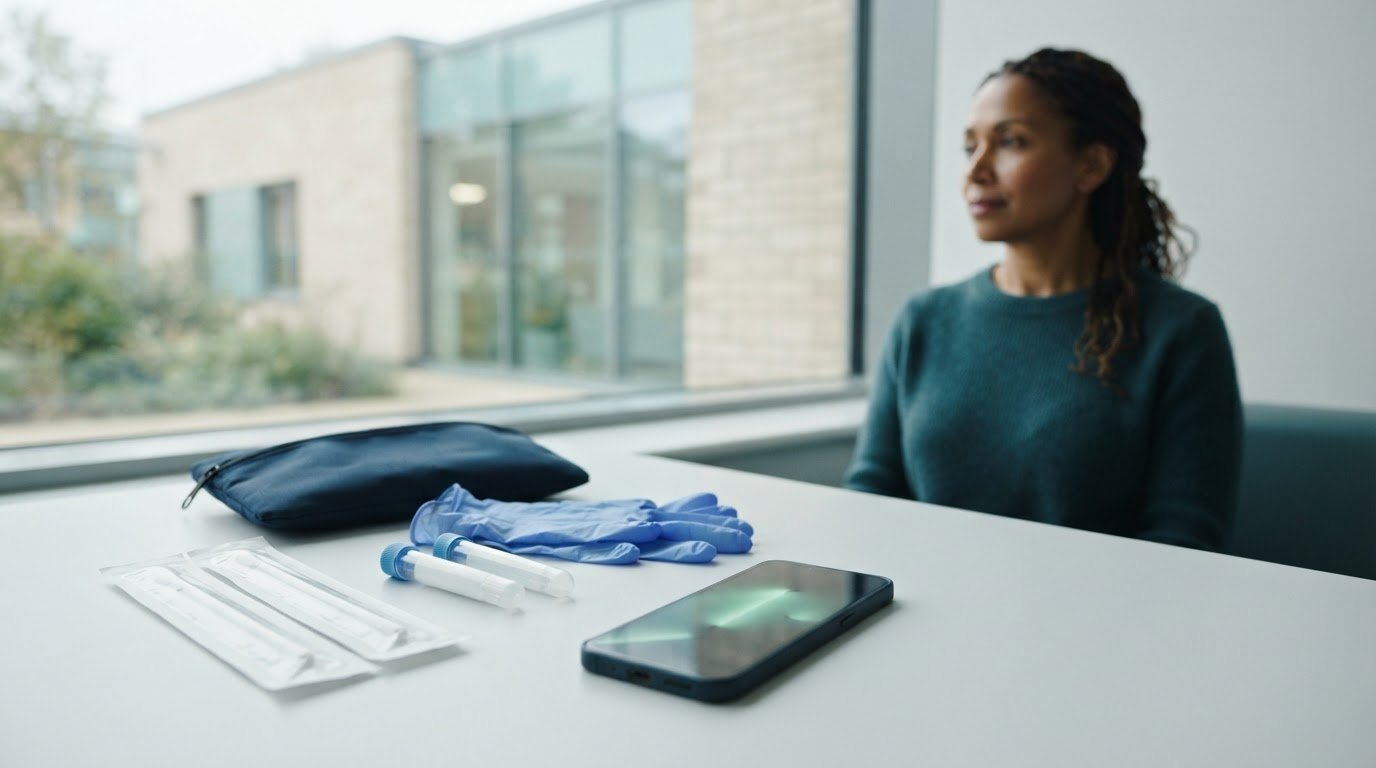
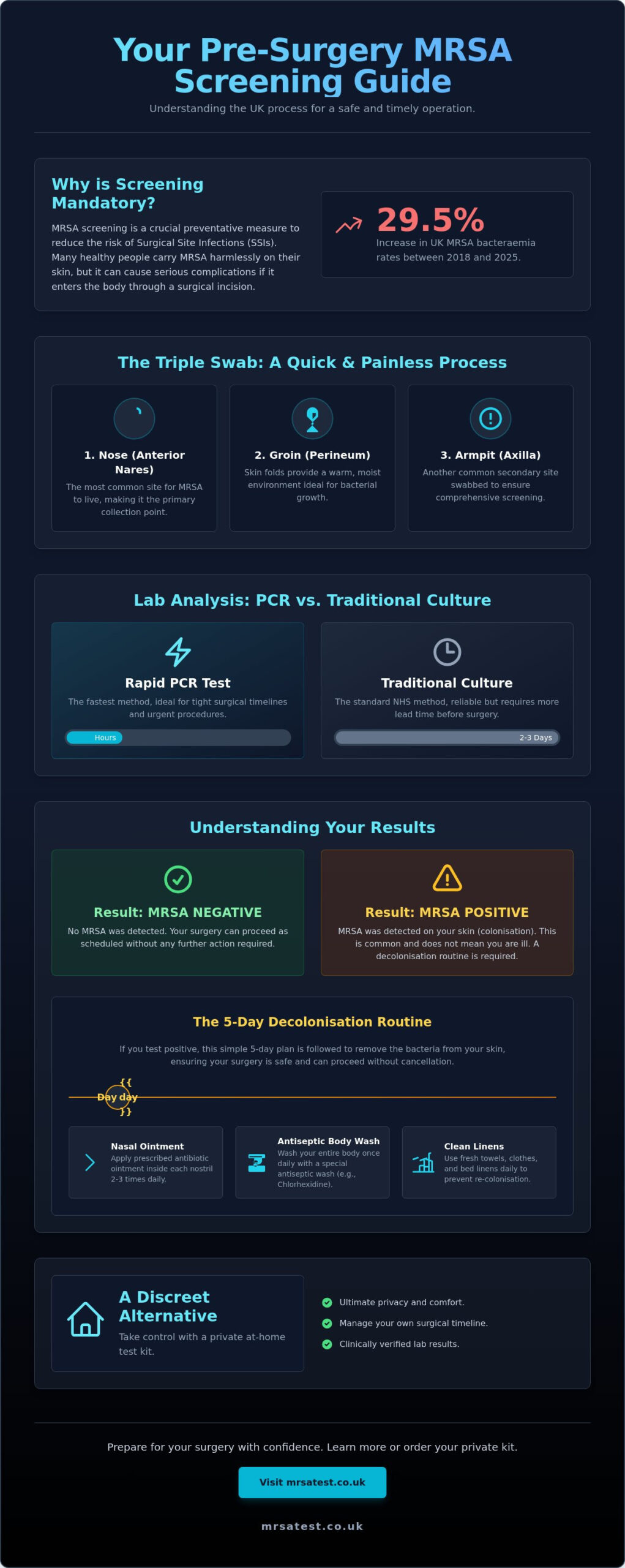
Most patients encounter the swabbing process during a Pre-Operative Assessment Clinic (POAC) appointment. This visit is a standard part of your surgical journey. A nurse will typically explain the “triple swab” protocol, which is the most common method used to ensure no carriage sites are missed. This involves taking samples from your nose, your groin (perineum), and your armpit (axilla). Knowing what to expect from mrsa screening before surgery uk helps remove the mystery from this quick, non-invasive procedure. Once the swabs are collected, they are carefully labelled with your unique patient identifiers and placed in a stabilising transport medium. This ensures the sample remains viable as it travels to an accredited laboratory for analysis.
During your POAC appointment, the clinical team prioritises both accuracy and your comfort. The process is efficient, usually taking less than two minutes to complete all three sites. The swabs used look like long cotton buds, and the procedure is entirely painless, though it might feel slightly ticklish. After collection, these samples are stored in temperature-controlled environments before being couriered to the lab. This logistical precision is vital; if a sample degrades during transport, it could lead to an inconclusive result and a potential delay in your surgery date.
Anatomical Sites for MRSA Swabbing
The anterior nares, or the front part of the nostrils, are the most common place for MRSA to live. This makes the nose the primary reservoir for any screening programme. Skin folds, such as the groin and axilla, are secondary priorities because their natural warmth and moisture provide an ideal environment for bacterial growth. If you have any open wounds, skin lesions, or indwelling devices like catheters, the nurse will likely swab these areas too. This comprehensive approach is aligned with NHS guidance on MRSA to ensure every possible risk is identified before you enter theatre.
Step-by-Step Self-Collection Guide
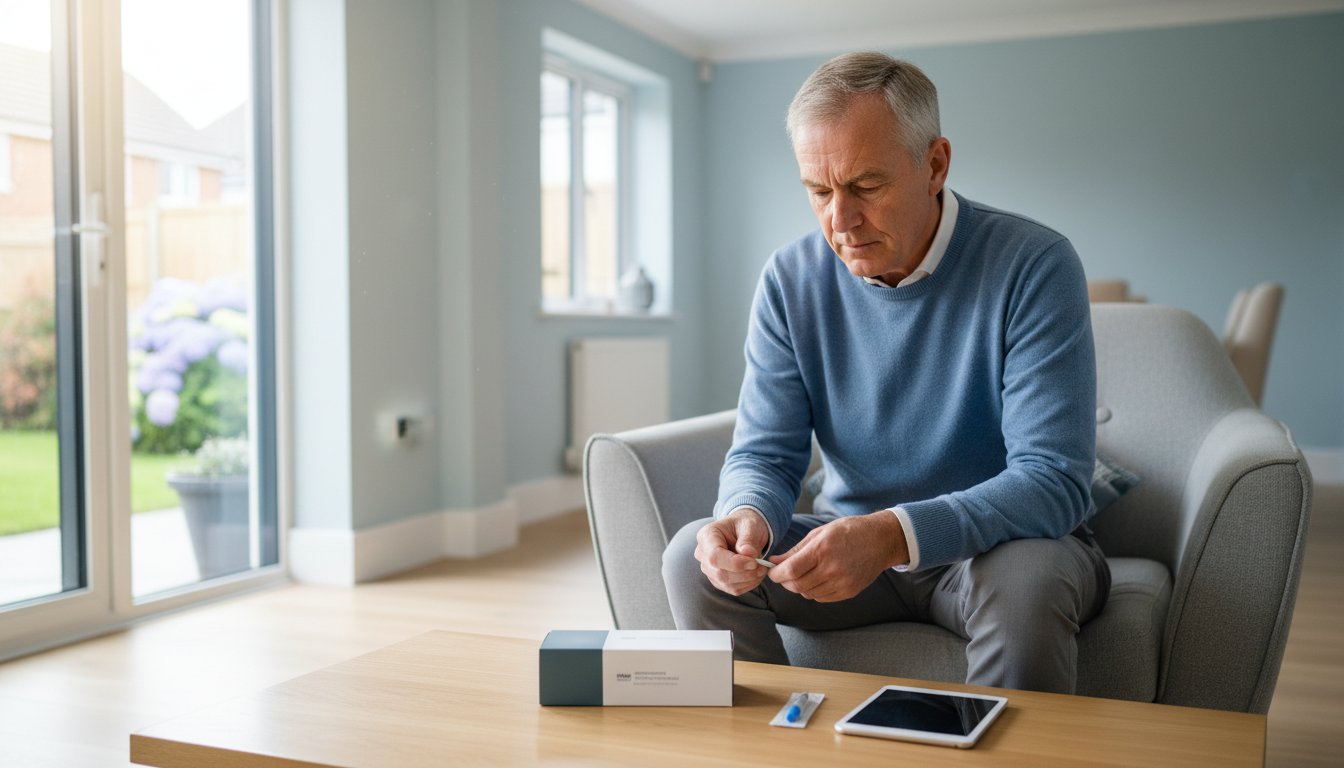
Many patients now prefer the privacy and convenience of self-collection at home. When using a kit, you must ensure the swab tip remains sterile; don’t let it touch any surfaces or your clothing before use. For each site, you should rotate the swab firmly but gently against the skin for approximately 5 to 10 seconds. This duration is necessary to collect enough biological material for the laboratory to detect the bacteria accurately. After swabbing, place the tip immediately into the transport tube and secure the cap tightly. If you want to manage this step privately, you can order a professional MRSA Culture – Nose/Groin/Axilla kit to complete the process on your own timeline.
PCR vs. Culture: Choosing the Right Test for Your Timeline
Choosing the right diagnostic method depends largely on your surgical timeline. When considering what to expect from mrsa screening before surgery uk, you’ll likely encounter two primary testing types: traditional culture and rapid PCR. While both are clinically accurate, their turnaround times differ significantly. Traditional culture testing has been the gold standard for decades. It involves placing your swab samples onto a growth medium in a laboratory. Scientists then monitor the samples to see if MRSA colonies develop. This process is thorough but requires patience; it typically takes between 48 and 72 hours to provide a definitive result.
Rapid PCR (Polymerase Chain Reaction) offers a modern, molecular alternative. Instead of waiting for bacteria to grow, PCR technology detects the specific DNA sequences of the MRSA bacteria. This method is exceptionally fast, often delivering results in under 24 hours. For patients on a tight schedule, this speed is a vital advantage. Both methods are rigorous and meet the high standards required for MRSA screening for elective surgery. The choice usually boils down to how quickly you need your clearance certificate to proceed with your operation.
The Benefits of Rapid PCR for Patients
The greatest benefit of PCR testing is the reduction of the “waiting window.” Pre-surgery anxiety is common, and waiting three days for a lab result can add unnecessary stress. If you’ve been offered a last-minute surgical slot or are using a private healthcare provider with strict admission windows, speed is essential. PCR provides the quiet competence of knowing your status almost immediately. If you’re managing a tight deadline, an at-home MRSA Rapid PCR Test Kit can provide the fast, accurate results you need without the hospital wait.
When is a Culture Test Sufficient?
A culture test is often perfectly sufficient if your surgery is scheduled for two to four weeks in the future. It’s a cost-effective solution for routine screening when time isn’t a critical factor. One unique advantage of the culture method is that it allows laboratories to perform “sensitivity testing.” If bacteria grow, the lab can test different antibiotics against the sample to see which ones are most effective. This provides detailed information about resistance patterns, which can be helpful for your clinical team if a positive result occurs. Understanding these options helps you decide what to expect from mrsa screening before surgery uk and how to best manage your own pre-op preparation.
Understanding Your Results and the Decolonisation Process
Receiving your results is a key milestone in your pre-operative journey. A ‘Negative’ result means no MRSA was detected, and your surgery can proceed as planned. If you receive a ‘Positive’ result, it indicates that you are ‘colonised’ with the bacteria. This isn’t a cause for alarm; it simply means the bacteria are present on your skin or in your nose. While a positive result is a vital piece of information regarding what to expect from mrsa screening before surgery uk, it rarely leads to a cancellation. Instead, your procedure might be slightly delayed to allow time for a standard five-day decolonisation programme. Even if the bacteria persist after treatment, surgeons can often proceed by using specific antibiotics during the operation to maintain safety.
The decolonisation process is a straightforward, home-based routine designed to suppress the bacteria before you enter the hospital. Compliance is essential for success. Missing even a single dose can allow the bacteria to recolonise, potentially leading to further delays. By following the instructions with quiet competence, you ensure the highest level of safety for your upcoming procedure. Most patients find the routine easy to manage alongside their usual daily activities. Clear communication with your clinical team will ensure everyone is prepared for your admission date.
The Decolonisation Toolkit: CHG and Mupirocin
The standard treatment involves two main components: an antiseptic body wash and an antibiotic nasal ointment. Chlorhexidine (CHG) wash is used daily for five days. You apply it to your skin and hair, leaving it on for a few minutes before rinsing. This significantly reduces the bacterial load on your body’s surface. Simultaneously, you’ll use Mupirocin, a specific nasal cream, to clear carriage from the nostrils. To support the treatment, you should change your bedding and towels daily during the five-day window to prevent re-exposure from household fabrics.
What Happens After Treatment?
Once you’ve completed the five-day programme, your surgical team will determine if a follow-up swab is required. Re-testing protocols vary between hospitals, but the goal is always to confirm that the bacterial levels are sufficiently suppressed. It’s your responsibility to ensure the results are updated on the hospital’s system before your admission date. For a more comprehensive look at your pre-op requirements, you can review our Preparing for Surgery Checklist. If you need to verify your status quickly and privately after treatment, you can order an MRSA Rapid PCR Test– Nose/Groin for peace of mind.
Taking Control with Private At-Home MRSA Screening
Traditional pre-operative pathways often require multiple hospital visits, which can be difficult to manage alongside a busy schedule or pre-surgery anxiety. Private at-home screening offers a discreet and convenient alternative. By choosing this route, you maintain control over your diagnostic timeline while avoiding the need for extra clinical appointments. Understanding what to expect from mrsa screening before surgery uk involves recognising that you have choices in how you access these essential checks. These kits provide the same clinical accuracy found in a hospital setting, ensuring your results are valid for your surgical team.
Our at-home kits meet rigorous UK clinical standards. Every sample is processed by accredited laboratory partners, providing a level of reliability that matches NHS protocols. This service bridges the gap for patients who want to speed up their pre-op process or those who prefer to handle sensitive swabbing in the privacy of their own home. Your health data is managed with strict confidentiality, ensuring your results are delivered securely and efficiently. This professional approach allows you to focus on your upcoming procedure with a sense of quiet competence.
How the mrsatest.co.uk Process Works
The process is designed to be straightforward and action-oriented. It begins when you choose the right diagnostic method for your needs. You can select from several options depending on your timeline and the requirements of your surgeon:
- Ordering your kit: Choose between an MRSA Culture – Nose/Groin/Axilla or a Rapid PCR option for faster results.
- The return process: Once you’ve collected your samples, use the prepaid, tracked shipping label provided. Your kit travels directly to our accredited UK labs.
- Receiving results: You’ll receive your results via a secure digital delivery. These verified reports are easy to share with your surgical team or hospital consultant.
Why Peace of Mind Matters Before Surgery
There is nothing more stressful than a “day of surgery” cancellation because of a positive MRSA result that wasn’t identified in time. Taking a proactive approach to infection control allows you to identify colonisation early. If you test positive, you’ll have the necessary time to complete a decolonisation programme before your admission date. This foresight prevents the nightmare of last-minute delays and ensures you’re medically ready for theatre. For more information on choosing the right diagnostic tools, read our At-Home Test Kits UK: The Complete Guide for 2026. By managing your own screening, you gain the peace of mind that comes from knowing you’ve taken every possible step to ensure a safe and successful operation.
Secure Your Surgical Timeline with Confidence
Preparing for surgery is a significant event that requires careful logistical planning. Understanding what to expect from mrsa screening before surgery uk allows you to navigate the pre-operative process with quiet competence and control. We’ve explored how standardized screening protocols protect your health and why choosing between rapid PCR and traditional culture testing is vital for meeting hospital deadlines. By identifying colonisation early, you can complete any necessary decolonisation steps without the stress of a last-minute cancellation.
Our service provides the clinical accuracy you need from the comfort of your own home. We utilise UKAS accredited laboratory testing to ensure your results meet the highest professional standards. With our discreet and confidential at-home service, you can receive PCR results in as little as 24 hours. This efficiency gives you the certainty required to move forward with your procedure. Order Your Pre-Surgery MRSA Test Kit for Fast, Private Results and take a proactive step toward a safe recovery. Your health and peace of mind remain our priority as you prepare for your upcoming operation.
Frequently Asked Questions
How long before surgery is MRSA screening usually done?
MRSA screening is typically performed between two and four weeks before your scheduled surgery date. This timeline allows sufficient time for laboratory processing and any necessary decolonisation treatment if required. According to 2025 GIRFT guidance, a clear result is generally valid for three months for major procedures. Some hospitals may extend this validity to six months depending on local policy and your specific risk factors.
Can I do my MRSA pre-op swab at home?
You can absolutely perform your pre-op swab at home using a private diagnostic kit. These kits follow the same clinical standards as hospital-based tests and use accredited UK laboratories for analysis. This option provides a discreet and convenient way to understand what to expect from mrsa screening before surgery uk without requiring an extra trip to the clinic. You simply follow the instructions and return your samples via tracked mail.
What happens if I test positive for MRSA before my operation?
If you test positive, you’ll undergo a five-day decolonisation programme to reduce the bacteria on your skin. This typically involves using a special antibacterial body wash and a nasal antibiotic cream. Your surgical team will be notified, and they’ll decide if your operation needs a brief delay. In many cases, the surgery proceeds as planned with the addition of specific intravenous antibiotics during the procedure to ensure your safety.
How long does it take to get MRSA screening results in the UK?
Turnaround times depend on the specific testing method used by the laboratory. Traditional culture tests usually take between 48 and 72 hours because the bacteria must be grown in a controlled environment. However, a Rapid PCR test can provide results in under 24 hours by detecting bacterial DNA directly. This faster method is ideal if your surgery is approaching quickly and you need verified clearance without a long wait.
Is the MRSA swab painful or invasive?
The screening process is neither painful nor invasive. It involves using a soft swab, similar to a long cotton bud, to gently wipe the surface of your skin or the inside of your nostrils. You might feel a slight tickling sensation or mild pressure, but there’s no broken skin or discomfort involved. The entire process takes less than two minutes to complete, making it a very simple part of your pre-operative preparation.
Will my surgery be cancelled if I have MRSA?
Having MRSA doesn’t mean your surgery will be cancelled. While it’s a serious clinical consideration, it’s a manageable one. Your medical team will use the screening result to tailor your care, often prescribing a decolonisation routine before you arrive. If the surgery is urgent, it may proceed with extra infection control measures. The goal of screening is to make the procedure safer, not to prevent it from happening.
How many swabs are taken during MRSA screening?
Most hospitals follow a triple swab or dual swab protocol for comprehensive screening. This usually involves taking samples from the nostrils and the groin area. In some cases, the armpits are also included. These specific sites are known as reservoirs where bacteria are most likely to live. Knowing what to expect from mrsa screening before surgery uk helps you understand why multiple sites are checked to ensure nothing is missed.
Do I need to stop using any creams or lotions before my MRSA test?
You should avoid using antibacterial washes, nasal sprays, or medicated creams for at least 24 to 48 hours before your test. These products can temporarily suppress the bacteria on the skin’s surface, which might lead to a false negative result. It’s best to use your normal, non-medicated soap and water during this window. If you’re currently prescribed a nasal treatment, check with your clinical team for specific instructions before swabbing.