
Did you know that between 1% and 3% of the UK population carry MRSA on their skin without ever feeling unwell? If you’re preparing for an upcoming procedure, you might be asking: is mrsa screening mandatory in uk hospitals? It’s completely normal to feel anxious about hospital safety or the fear that a surprise result could lead to a cancelled surgery. You want to ensure your admission goes smoothly and that you’re entering a safe, sterile environment.
In this guide, you’ll understand the current NHS mandates for MRSA screening based on the GIRFT national guidance published on May 22, 2025. We’ll explain why screening is required before admission for high-risk groups and how you can proactively manage your surgical timeline. We’ll also break down the screening process and explain terms like colonisation so you can move forward with confidence. Knowing exactly what to expect helps you stay in control of your health journey and ensures your surgery proceeds exactly as planned.
Key Takeaways
- Understand whether is mrsa screening mandatory in uk hospitals for your specific procedure, as current 2026 protocols focus heavily on high-risk elective surgeries.
- Learn the clinical difference between standard culture tests and rapid PCR molecular detection options to better prepare for your pre-op assessment.
- Discover why hospitals screen for colonisation, or harmless carriage, to prevent it from turning into a serious infection during surgical procedures.
- Find out how a positive result is managed through simple decolonisation protocols, such as antiseptic washes, ensuring your surgery can still proceed safely.
- Explore how private at-home screening can eliminate the anxiety of last-minute hospital cancellations by confirming your status weeks in advance.
The UK Mandate: Is MRSA Screening Mandatory for All Patients?
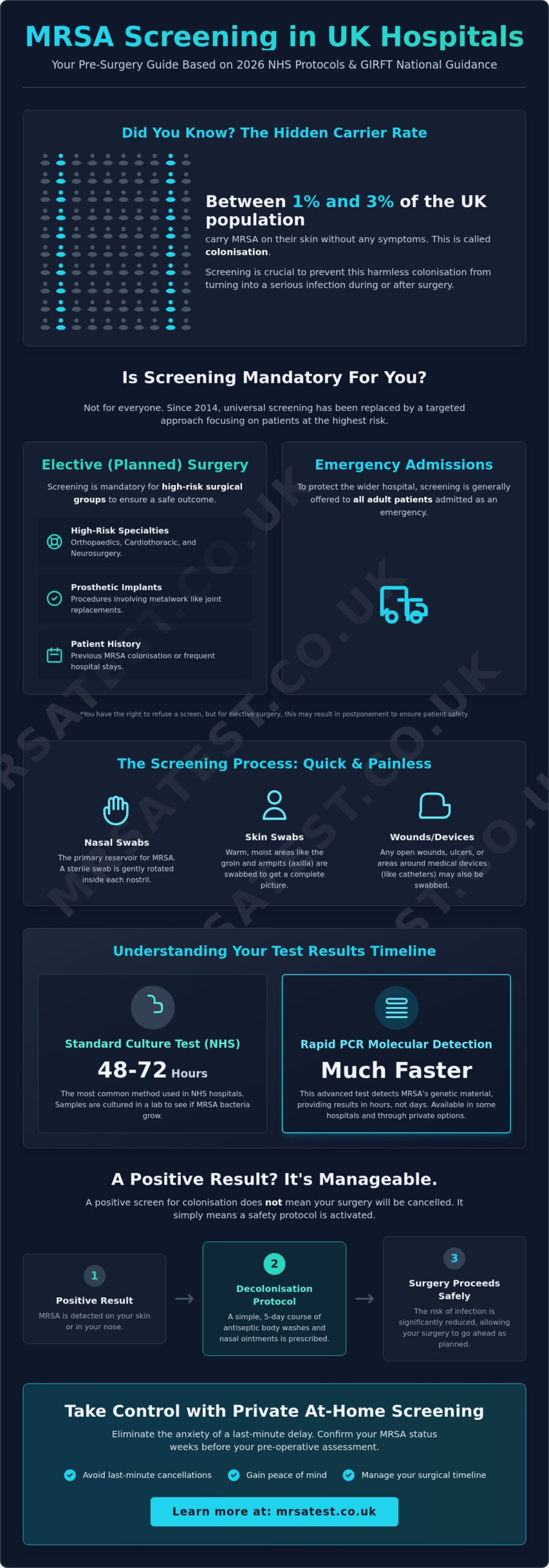
The Department of Health and Social Care (DHSC) oversees the safety protocols that keep our hospitals running safely. The MRSA screening mandate is a national clinical safety requirement designed to prevent healthcare-associated infections. While you might remember a time when everyone entering a hospital was tested, the clinical landscape has changed. In 2014, the standard was universal screening, but current 2026 protocols follow the “Adult MRSA screening and suppression/eradication prophylaxis” guidance published on May 22, 2025. This shift means hospitals now focus their resources on high-risk admissions where the danger of infection is greatest.
If you’re wondering, is mrsa screening mandatory in uk hospitals for your specific visit, the answer depends on your admission type. For elective, or planned, surgeries, the focus is on patients undergoing procedures where Methicillin-resistant Staphylococcus aureus (MRSA) could cause the most harm. Emergency admissions are handled differently; usually, all adult patients admitted as an emergency are offered a screening test to protect the wider hospital population. This targeted approach ensures that those at the highest risk are identified without placing unnecessary burdens on every single patient.
Who is Required to be Screened?
The 2025 GIRFT guidance identifies specific groups who must undergo screening to ensure a safe surgical outcome. This includes high-risk surgical patients in specialties like orthopaedics, cardiothoracic surgery, and neurosurgery. Patients with a documented history of MRSA colonisation or frequent hospital stays are also prioritised. Additionally, day-case patients undergoing procedures that involve the insertion of prosthetics or metalwork, such as joint replacements, are required to be screened. These groups are more vulnerable because the bacteria can easily travel from the skin into deeper tissues during invasive procedures.
Can You Refuse an MRSA Screen?
You always have the right to make decisions about your own body. Hospital staff will ask for your consent before taking any swabs from your nose or groin. However, it’s vital to understand the potential consequences of refusing a screen in an elective setting. Because MRSA screening is a core safety protocol, a refusal might lead to your surgery being delayed or rescheduled. Hospitals must balance your individual rights with the collective safety of other vulnerable patients on the ward. If you’re feeling anxious about the process, speaking with your pre-op team can often provide the reassurance you need to proceed with confidence. Knowing your status is a simple step that protects both you and the hospital community.
How MRSA Screening is Performed in UK Hospitals
When you attend your Pre-Operative Assessment Clinic (POAC), the screening process is usually one of the first steps. It’s a simple, painless procedure designed to identify if you’re carrying bacteria on your skin. While you might still be wondering is mrsa screening mandatory in uk hospitals for your specific procedure, the nursing staff will guide you through the swabbing process with care. This screening ensures that every patient enters the operating theatre with the highest level of safety possible.
The clinical team follows a standardised approach to MRSA screening to ensure consistency across NHS Trusts. This involves taking samples from specific areas of the body where the bacteria are most likely to colonise. In an NHS setting, you’ll typically wait between 48 and 72 hours for results if a standard culture test is used. However, some hospitals now utilise rapid PCR molecular detection, which can provide answers much faster. If you prefer to skip the wait and gain peace of mind early, you can choose an at-home MRSA culture test to confirm your status before your hospital appointment begins.
The Swabbing Process Step-by-Step
The process is non-invasive and takes only a few moments. A healthcare professional uses a sterile swab, which looks like a long cotton bud, to collect samples from several key locations:
- Nasal swabs: The nostrils are the primary reservoirs for MRSA. The nurse gently rotates the swab inside the tip of each nostril to pick up any present bacteria.
- Groin and Axilla (armpit) swabs: Bacteria often “hide” in warm, moist skin folds. Screening these areas provides a more complete picture of your colonisation status.
- Wound and device sites: If you have an existing surgical wound, a catheter, or a skin lesion, the nurse will swab these areas too. These sites are high-risk entry points for potential infection.
Understanding the Laboratory Results
Once your swabs are collected, they’re sent to a UKAS-accredited facility for analysis. This accreditation is a vital trust signal; it ensures the laboratory meets strict national standards for reliability and accuracy. Scientists look for specific DNA markers or use selective agar plates to see if methicillin-resistant strains grow. A “negative” result is your surgical green light. It means no MRSA was detected and your procedure can go ahead as planned. If the result is “positive,” it simply means you’re colonised, and the hospital will start a simple decolonisation protocol to keep you safe during your stay.
Why Screening is Mandatory: The Risks of MRSA in Surgery
Understanding why you need a swab before your procedure helps turn anxiety into confidence. The primary reason is mrsa screening mandatory in uk hospitals involves the transition from colonisation to infection. Colonisation, or “carriage,” means the bacteria live harmlessly on your skin or inside your nose. This is common; about 30% of people carry Staphylococcus aureus, the parent bacteria of MRSA. However, surgery changes the environment. An incision provides a direct entry point for these bacteria to move from the skin’s surface into the bloodstream or deep tissues, where they can cause life-threatening disease.
The official NHS guidance on MRSA screening emphasises that prevention is far more effective than treatment. In the 2020/21 reporting period, there were 694 cases of MRSA bacteraemia in acute NHS Trusts in England. While this was a 14.7% decrease from the previous year, each case represents a significant risk to patient safety. If an infection occurs, it can lead to sepsis, pneumonia, or organ failure. This not only endangers your health but also puts immense pressure on hospital resources by increasing recovery times and reducing bed availability for other patients. You can find more details on these risks in our guide to hospital-acquired infections.
The Danger of Surgical Site Infections (SSIs)
Protecting the Wider Hospital Environment
Screening isn’t just about your individual safety; it’s about protecting every person on the ward. Hospitals function like a community. One undetected carrier can inadvertently lead to an outbreak, especially in vulnerable units like intensive care or neonatal wards. By identifying carriers early, hospitals can implement “herd immunity” strategies, such as isolating positive patients or starting decolonisation protocols before admission. Being proactive and preparing for surgery with a clear screening result ensures you aren’t the missing link in the hospital’s safety chain. It gives you the peace of mind that you’re entering the ward as a safe, prepared patient.
What Happens if Your MRSA Screen is Positive?
Receiving a positive result from your pre-op swab can feel overwhelming, but it’s important to stay calm. A positive screen is not a ‘fail’ but a manageable clinical finding that allows the hospital to protect you more effectively during your stay. Once the laboratory identifies colonisation, the hospital will implement specific safety measures to ensure your procedure remains as safe as possible. You might be placed in a side room or a designated area to prevent the spread of bacteria to other patients; this is a standard precaution and doesn’t mean you’re “ill,” just that you’re carrying bacteria that require extra care.
While you’ve learned that is mrsa screening mandatory in uk hospitals for most elective surgeries, the protocol for a positive result is just as standardised. The clinical team’s priority is to reduce the amount of MRSA on your skin before you enter the operating theatre. This process is straightforward and managed by the nursing staff, who’ll provide you with clear instructions and the necessary supplies. By identifying the bacteria early, the hospital can take proactive steps rather than reacting to a post-surgical complication.
The Decolonisation Protocol
The decolonisation protocol usually involves a 5-day cycle of treatment designed to clear MRSA from your skin and nose. You’ll typically be prescribed Mupirocin nasal cream and Chlorhexidine antiseptic body wash. You apply the nasal cream inside each nostril three times a day, while the antiseptic wash is used daily for your skin and hair. Following this protocol exactly is crucial for your surgery to proceed. If the treatment is successful, the bacterial load is significantly reduced, which lowers the risk of the bacteria entering your surgical incision.
Will My Surgery Be Cancelled?
The biggest fear for many patients is a cancelled operation. Whether your surgery is delayed depends on the urgency of the procedure and the specific risks involved. For major elective surgeries, such as a joint replacement, a surgeon might postpone the date by 7 to 14 days to ensure the decolonisation cycle is complete. For urgent procedures, the team may proceed as scheduled but will modify your intraoperative antibiotics to specifically target MRSA. Open communication with your surgical team is key. Ask your surgeon how your status affects the specific risks of your procedure and what steps they’re taking to protect you. To avoid the stress of a last-minute surprise at the hospital, many patients choose to order an MRSA Rapid PCR Test weeks before their assessment to manage any colonisation in advance.
Taking Control: The Benefits of Private Pre-Surgery Screening
Waiting for your pre-operative assessment to find out your colonisation status can lead to significant last-minute stress. If you’ve been asking is mrsa screening mandatory in uk hospitals for your upcoming surgery, you already know that a positive result at the hospital could delay your procedure by 7 to 14 days. By taking a proactive approach, you can identify any carriage weeks before your hospital appointment. This window of time is invaluable; it allows you to complete a decolonisation cycle in private, ensuring that when you finally walk into the clinic, you do so with the confidence that your surgery will stay on track.
The convenience of at-home test kits in the UK has changed how patients manage their surgical preparation. You don’t need to navigate busy clinic waiting rooms or take time off work for a simple swab. Instead, you can collect your samples from the comfort of your own home and receive results from a UKAS-accredited laboratory. This discreet process puts the power back in your hands, allowing you to manage your health logistics without the pressure of hospital-driven timelines.
PCR vs. Culture: Which Private Test is Right for You?
When choosing a private test, you’ll typically decide between a standard culture test and a rapid PCR test. A culture test involves growing the bacteria on agar plates, which usually takes 48 to 72 hours. While accurate, it’s slower than modern molecular methods. An MRSA Rapid PCR test, on the other hand, looks for specific DNA markers and can provide molecular detection in just 24 hours after reaching the lab. If your hospital admission is imminent, the speed of a PCR test is often the best choice. You can then present these results to your NHS clinical team as a verified trust signal that you’ve been proactive about your surgical safety.
Peace of Mind for Patients and Families
Major surgery is a significant life event that naturally causes anxiety for both patients and their families. Removing the “unknown” factor of MRSA colonisation can significantly lower your stress levels. Professional MRSA testing provides a clear, factual starting point for your recovery journey. It ensures that you aren’t just another statistic in the 1-3% of the population carrying the bacteria unknowingly. Taking this step demonstrates a commitment to your own safety and the safety of the hospital ward. Don’t leave your surgical timeline to chance. Order your confidential MRSA test kit today to ensure your surgery proceeds exactly as planned.
Secure Your Surgical Timeline with Confidence
Preparing for a procedure involves more than just physical readiness; it’s about managing the logistical safety requirements that protect your recovery. Under the GIRFT guidance published on May 22, 2025, the question of is mrsa screening mandatory in uk hospitals is now focused on high-risk elective surgeries. By understanding that a positive result is simply a manageable clinical finding, you can approach your pre-op assessment without fear.
You don’t have to wait for a hospital appointment to gain clarity. Our service offers rapid 24-hour PCR options for molecular detection and standard culture tests, all processed in a UKAS-accredited laboratory. With discreet at-home collection, you can confirm your status and complete any necessary decolonisation weeks before your admission date. This proactive step ensures you remain in control of your schedule and your health.
Ensure your surgery goes ahead as planned with a private MRSA test kit and move forward with the peace of mind you deserve. We’re here to help you stay in control of your surgical journey.
Frequently Asked Questions
Is MRSA screening mandatory for all NHS patients in 2026?
No, there is no blanket mandate requiring every patient to be tested. National guidance updated on May 22, 2025, by the GIRFT programme recommends a targeted approach. While you might wonder is mrsa screening mandatory in uk hospitals for your visit, it currently applies primarily to high-risk surgical groups and most adult emergency admissions. This ensuring that resources are focused where the risk of infection is highest.
How long does it take to get MRSA screening results from an NHS hospital?
Standard culture results typically take between 48 and 72 hours to process in a hospital laboratory. Some trusts now use rapid PCR molecular detection which can provide results in under 24 hours. If your hospital uses the traditional culture method, you’ll usually receive your results during your pre-operative assessment or via a phone call a few days later.
What happens if I test positive for MRSA before my surgery?
If you test positive, your clinical team will start a simple decolonisation protocol to reduce the bacteria on your skin. This involves using an antiseptic body wash and a nasal cream for a 5-day cycle. You aren’t “ill” if you test positive; it simply means you’re among the 1% to 3% of the UK population who carry the bacteria harmlessly on their skin.
Can I have surgery if I have MRSA?
Yes, you can still have surgery even if you carry MRSA. For elective procedures, your surgeon might delay the date by a week to allow you to complete your decolonisation treatment. In urgent cases, the surgery proceeds as planned, but the medical team will use specific antibiotics and potentially place you in a side room to ensure the safety of the ward.
Do I need to be screened if I am only having a day-case procedure?
Screening for day-case patients depends on the type of procedure you’re undergoing. If your surgery involves the use of prosthetics, metalwork, or is considered high-risk like neurosurgery, screening remains a requirement. Your pre-op letter will confirm if you need to attend a swabbing appointment based on the latest 2025 clinical safety protocols.
How is the MRSA swab test actually performed?
The test is a quick and painless process using sterile swabs that look like long cotton buds. A nurse will gently rotate the swab inside the front of each nostril and then use separate swabs for your groin or perineum. These areas are the primary reservoirs where the bacteria like to hide. The entire process takes less than two minutes to complete.
Can I get a private MRSA test to speed up the process?
Yes, you can order a private at-home test kit to confirm your status before your hospital appointment. Choosing an MRSA PCR rapid test allows for molecular detection in just 24 hours once the sample reaches the UKAS-accredited laboratory. This proactive step helps you manage any necessary decolonisation early, preventing last-minute stress or potential surgical delays at the hospital.
What is the difference between being colonised and having an MRSA infection?
Colonisation means you’re a “carrier” and the bacteria live harmlessly on your skin without making you ill. An infection occurs only when those bacteria enter the body, perhaps through a surgical incision, and cause symptoms like redness, swelling, or fever. About 30% of people carry the parent bacteria, Staphylococcus aureus, but screening identifies the specific methicillin-resistant strains that require extra care.