

Blog
How is MRSA Transmitted? Understanding the Spread and Prevention of Staph
Apr
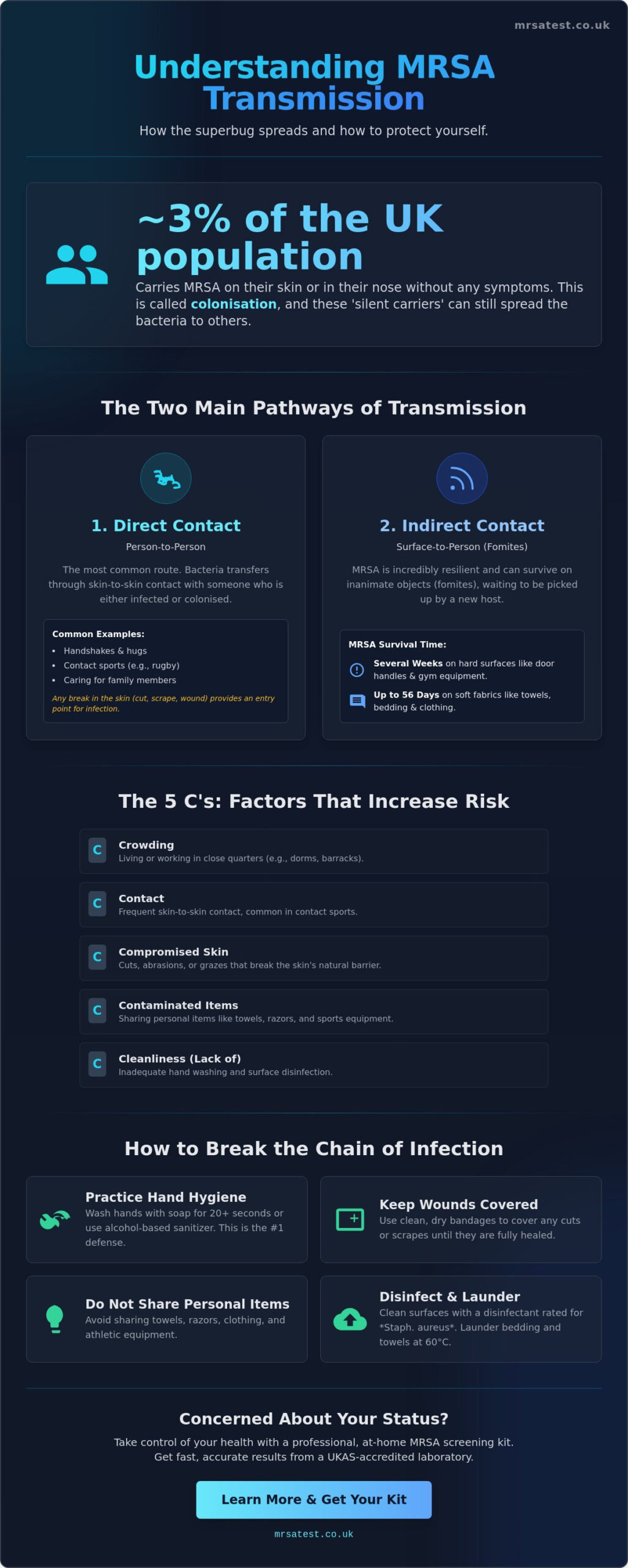
Approximately 3% of the UK population carries MRSA on their skin or in their nose without even knowing it, according to NHS data. This means you could be a carrier of an antibiotic-resistant superbug while feeling perfectly healthy. It’s completely understandable to feel anxious about these invisible threats, particularly when the line between harmless skin bacteria and a serious infection feels so thin.
Understanding how is mrsa transmitted is the most effective way to replace that worry with proactive care. In this guide, we’ll explain the exact routes these bacteria take to move between people and surfaces; we also provide you with clear, practical steps to protect your family. You’ll learn how to accurately check your own status using a professional, at-home screening kit that delivers fast results from a UKAS-accredited laboratory. This article covers everything from hospital-based risks to everyday prevention so you can manage your health with confidence.
Key Takeaways
- Understand the critical distinction between direct person-to-person contact and indirect spread via “fomites,” which are contaminated everyday objects.
- Learn exactly how is mrsa transmitted between people and surfaces so you can identify potential risks in both community and healthcare settings.
- Uncover the facts about “silent spread” and why you may carry MRSA through colonisation even if you show no visible skin symptoms or rashes.
- Discover how to break the chain of infection using gold-standard hygiene protocols and proactive screening to keep your home and family safe.
Understanding the Mechanics of MRSA Transmission
Methicillin-resistant Staphylococcus aureus, commonly known as MRSA, is a specific strain of staph bacteria that has developed a resistance to several widely used antibiotics. While many staph infections are easily treated with standard medications, MRSA is resilient against methicillin and other beta-lactam antibiotics. This resistance makes it a significant concern in both clinical settings and the wider community. To protect yourself and your family, it’s vital to understand how is mrsa transmitted and how the bacteria behave in different environments.
Transmission refers to the biological process where bacteria are transferred from a source, such as an infected person or a contaminated surface, to a new host. In many cases, the bacteria live harmlessly on a person’s skin or inside their nose. This state is known as colonisation. A person who is colonised doesn’t feel ill and has no visible symptoms, yet they can still spread the bacteria to others. For a comprehensive overview of MRSA and its microbiological characteristics, medical records show that this strain was first identified in the UK in 1961 and has since become a global health priority.
The Role of Skin-to-Skin Contact
Direct physical contact is the most efficient route for MRSA to migrate from one person to another. This often occurs during routine social interactions like handshakes or through more prolonged contact, such as playing rugby or other contact sports. It’s also common when caring for family members who may be elderly or recovering from surgery. The bacteria are opportunistic. While they can sit on healthy skin without causing trouble, any break in the skin’s barrier, such as a minor scrape, a surgical wound, or a paper cut, provides a direct entry point for the bacteria to cause an active infection.
Why ‘Staph’ is So Resilient
Direct vs. Indirect Contact: How the Bacteria Moves
Understanding how is mrsa transmitted involves looking at two distinct pathways: direct and indirect contact. Direct spread happens when you touch the skin of someone who carries the bacteria, whether they have an active infection or are simply colonised. Indirect spread occurs when the bacteria hitches a ride on inanimate objects, waiting for a new host to touch the contaminated surface. Because Staphylococcus aureus is resilient, it doesn’t require a living host to survive for long periods outside the body.
Hand hygiene serves as the primary barrier against both transmission types. Washing your hands with soap and water for at least 20 seconds, or using an alcohol-based sanitiser, physically removes or neutralises the bacteria before it can enter a break in the skin. If you are concerned about potential exposure after being in a high-risk environment, using a professional at-home MRSA screening kit provides peace of mind and clinical accuracy from your own home.
Inanimate Objects (Fomites) and Surface Spread
In medical terms, inanimate objects that carry infection are called fomites. MRSA is notoriously hardy; research indicates the bacteria can survive on hard surfaces like door handles and gym equipment for several weeks. On soft fabrics, such as towels or bedding, the bacteria can remain viable for up to 56 days if conditions are right. High-traffic items like shared razors, sports gear, and even television remotes in shared housing are common culprits for indirect spread.
To eliminate these bacteria, standard cleaning isn’t always enough. Laundering shared items like towels and bed linen at 60°C is essential to kill resistant strains. For hard surfaces, using a disinfectant that is specifically rated to kill Staph aureus ensures the environment remains safe for everyone in the household.
The Danger of Shared Personal Items
Sharing items that come into close contact with the skin is a leading cause of community-associated MRSA. This is particularly common in environments where people live or work closely together. Health experts often refer to the “Five Cs” that facilitate the spread of MRSA and skin contact: Crowding, frequent skin-to-skin Contact, Compromised skin (cuts or grazes), Contaminated items, and a lack of Cleanliness.
For athletes in contact sports or students living in university halls, the risk increases significantly. You should avoid sharing personal care items like towels, flannels, or bar soap. Keeping even minor cuts or abrasions covered with a clean, dry bandage acts as a vital shield. By understanding how is mrsa transmitted through these everyday interactions, you can take practical steps to protect yourself and your community from unnecessary infection risks.
High-Risk Settings: Where Transmission is Most Common
Understanding how is mrsa transmitted requires looking at two distinct environments: healthcare facilities and the wider community. While the bacteria are the same, the way they spread and the people they affect can differ significantly. We categorise these as Healthcare-Acquired (HA-MRSA) and Community-Acquired (CA-MRSA).
Hospitals are uniquely vulnerable because they house individuals with weakened immune systems in close proximity. In an acute setting, the natural barrier of the skin is often compromised. Medical devices like urinary catheters, IV lines, and feeding tubes provide a direct “highway” for bacteria to enter the bloodstream. When these barriers are bypassed, a simple surface colonisation can quickly turn into a serious systemic infection.
MRSA in the Hospital Environment
Healthcare workers play a vital role in patient recovery, yet they can unintentionally move bacteria between patients. If hand hygiene isn’t perfect, MRSA can hitchhike on gloves, aprons, or stethoscopes. This is a primary driver of hospital-acquired infections (HAIs), which the NHS manages through strict clinical protocols.
Patients with post-operative wounds or those in intensive care units face the highest risks. NHS trusts across the UK use mandatory screening for many elective admissions to identify carriers before they enter a ward. This proactive approach helps protect vulnerable patients whose immune systems are already stretched by illness or surgery.
Community-Acquired MRSA (CA-MRSA)
You don’t have to be in a hospital to encounter this bacteria. CA-MRSA often affects healthy individuals in “hotspots” where frequent skin-to-skin contact or shared equipment occurs. These environments include:
- Schools and nurseries: Close play and shared toys can facilitate spread.
- Military barracks: Shared living quarters and physical training increase contact.
- Correctional facilities: Overcrowded spaces make infection control difficult.
- Gyms and sports clubs: Bacteria can live on shared mats, weights, or towels.
CA-MRSA strains are often more virulent than hospital types. They can cause aggressive symptoms in people who have no underlying health issues. It’s vital to identify common skin infections early to prevent a wider outbreak. Within a household, “silent” transmission is a major factor. One person might be a carrier without showing any symptoms, yet they can pass the bacteria to family members through shared personal items. Understanding how is mrsa transmitted in these everyday settings is the first step in keeping your family safe and healthy.
Colonisation vs. Infection: The Silent Spread
The biggest misconception about MRSA is that you’ll always know if you have it. Most people assume that without a painful red boil or a weeping skin rash, they’re in the clear. This isn’t true. Medical professionals distinguish between being infected and being colonised. Colonisation occurs when the bacteria live on your body without causing active tissue damage or symptoms. You feel perfectly healthy, but you’re a carrier.
These bacteria typically prefer warm, moist environments. The primary sites of colonisation are the nostrils, known as the nares, the armpits, and the groin. Because the bacteria are simply sitting on the skin surface, a carrier can unknowingly spread the pathogen through touch. This silent transfer is often how is mrsa transmitted to vulnerable individuals in homes or healthcare settings who may not have the immune strength to fight it off.
How You Become a Carrier
Recent data from UK health authorities suggests that approximately 1 in 30 people carry MRSA at any given time. You don’t need to be ill to become a carrier. Simple skin-to-skin contact or touching a contaminated surface is often enough. Whether the bacteria remain as a harmless colonisation or turn into a dangerous infection depends on your immune system and skin integrity. The transition usually happens when the bacteria find a way into the body; this often occurs through a minor cut, a surgical site, or a medical device like a catheter.
The Risks of Unknown Colonisation
Carrying MRSA without knowing it poses a significant risk if you’re preparing for surgery. When a surgeon makes an incision, they provide a direct gateway for any bacteria on your skin to enter your bloodstream or deep tissue. This is why UK hospitals prioritise pre-admission screening. If you test positive, you’ll undergo decolonisation treatments. This process typically involves using mupirocin nasal ointment and special antiseptic body washes, such as Hibiscrub, for five days to clear the bacteria from your skin.
Knowing your status early provides vital peace of mind. Choosing confidential MRSA screening allows you to take control of your health before a scheduled procedure. It ensures you aren’t part of the chain of how is mrsa transmitted to loved ones or hospital staff during your recovery. Identifying a carrier state is the first step in preventing a serious post-operative complication.
Breaking the Chain: Prevention and Proactive Screening
Understanding how is mrsa transmitted allows you to target the specific points where the bacteria spread. This process is known as breaking the chain of infection. By removing just one link, you stop the pathogen from reaching a new host. The most effective link to break is the method of transport, which usually involves skin-to-skin contact or contaminated surfaces.
Hand hygiene remains the gold standard for infection control. Scrubbing with soap and water for at least 20 seconds physically removes bacteria and oils from the skin surface. Alcohol-based hand gels are an excellent secondary option for when hands aren’t visibly soiled, provided the solution contains at least 60% alcohol. While hand hygiene is vital, environmental cleaning is equally important. Studies have shown that MRSA can survive on hard surfaces for up to 56 days. Regularly disinfecting high-touch areas like door handles, light switches, and remote controls directly addresses how is mrsa transmitted through environmental contact.
Practical Prevention Steps for the Home
Preventing the spread at home relies on simple, consistent habits. These steps help protect your family and prevent the bacteria from colonising your living space:
- Handwashing: Wash hands thoroughly after changing bandages or touching any infected skin.
- Wound Care: Keep all cuts, scrapes, and grazes covered with clean, dry dressings until they’re fully healed.
- No Sharing: Avoid sharing personal items that touch the skin, such as towels, razors, or athletic equipment.
- Laundering: Wash towels and bed linens at 60°C to ensure bacteria are destroyed.
If a GP prescribes antibiotics, it’s essential to complete the entire course. Stopping treatment early, even if the skin looks better, allows the strongest bacteria to survive and develop further resistance. You should seek medical advice immediately if a wound becomes increasingly red, swollen, or starts weeping pus.
The Importance of Pre-Emptive Testing
Proactive screening is the most effective tool for managing infection risk. Using a private at-home test kit allows for fast, confidential results without the need for a GP appointment. This is particularly helpful for people who want peace of mind before visiting vulnerable relatives or undergoing medical treatments.
PCR testing offers a significant advantage for those requiring rapid confirmation. Unlike traditional cultures that can take several days, a PCR test provides results within 24 hours. This speed is crucial for patients preparing for hospital admission, as many UK facilities require proof of a negative status to prevent ward outbreaks. Testing at home ensures you can manage your health with clinical accuracy and total discretion.
Take control of your health today. Order a discreet MRSA self-test kit today to ensure you are clear before your procedure.
Protect Yourself and Your Family with Proactive Screening
Understanding how is mrsa transmitted through direct skin contact or shared items is vital for maintaining a safe environment. Whether you’re preparing for a hospital procedure or living in a communal setting, identifying silent colonisation helps stop the bacteria from becoming a serious infection. Proactive screening remains the most effective way to break the chain of transmission and ensure peace of mind for those in high-risk groups.
You can manage your health confidently by choosing a reliable testing partner. We provide a simple, clinical-grade solution that fits into your schedule. When you order your confidential at-home MRSA test kit from mrsatest.co.uk, your samples are processed in UKAS-accredited UK laboratories. You’ll receive fast 24-hour PCR results, ensuring you have the information you need without delay. Every kit is delivered in discreet, plain packaging to protect your privacy throughout the process.
Taking this small step today helps safeguard your wellbeing and protects those around you. It’s a straightforward process designed to give you clarity and control over your health.
Frequently Asked Questions
Is MRSA contagious through the air?
No, MRSA isn’t typically considered an airborne pathogen. It spreads primarily through direct skin-to-skin contact or by touching contaminated surfaces like door handles or gym equipment. While some clinical studies suggest bacteria can travel on dust particles in specific hospital settings, the NHS confirms that physical contact is the main route. You don’t need to worry about breathing it in during normal daily activities, but maintaining hand hygiene is the most effective way to prevent transmission.
Can you catch MRSA from a toilet seat or swimming pool?
You can catch MRSA from a toilet seat if your skin touches a contaminated surface, though the risk is relatively low. The bacteria can survive on non-porous surfaces for several weeks. In swimming pools, the risk is minimal because chlorine levels maintained between 1 and 3mg/L usually kill the bacteria. Transmission is more likely to occur in shared changing rooms or through sharing towels rather than through the pool water itself.
How long does MRSA live on clothing and bedding?
MRSA can survive on fabrics like clothing and bedding for 5 to 90 days. Research published in the Journal of Clinical Microbiology highlights that polyester and cotton blends are particularly prone to harbouring these bacteria. To eliminate the risk, you should wash contaminated items at 60°C. This temperature is high enough to kill the bacteria and ensure your home remains a safe, clean environment for your family.
Can I give MRSA to my pets (or catch it from them)?
Yes, MRSA can be transmitted between humans and animals, a process known as zoonosis. While it’s relatively rare, the British Veterinary Association has documented cases where pets like dogs and cats carry the bacteria, often after being colonized by their owners. If you’re concerned about your pet, a vet can perform a screening. Practising good hygiene after handling your pets helps prevent the bacteria from spreading through the household.
If someone in my house has MRSA, do I need to be tested?
You don’t necessarily need to be tested unless you show symptoms or have an upcoming hospital procedure. However, understanding how is mrsa transmitted within a household is vital for prevention. If a family member is infected, there’s a 25% to 30% chance that others in the home may become colonized. You can use a discreet at-home MRSA culture test to check your status safely and accurately from the comfort of your own home.
What should I do if I think I have been exposed to MRSA?
If you suspect exposure, you should monitor your skin for signs of infection and consider a screening test. Our UKAS-accredited laboratory provides a PCR rapid test for molecular detection in 24 hours, giving you fast and reliable results. Early detection through a simple swab can help you take the right steps before an infection develops. Keep any cuts covered and avoid sharing personal items like razors or towels until you’re clear.
Can MRSA be transmitted through food or water?
MRSA is not considered a foodborne illness, but it can be transmitted if an infected person handles food without washing their hands. The bacteria can survive on various food surfaces at room temperature for several hours. It isn’t typically found in UK mains water because standard treatment processes are highly effective. To stay safe, follow standard food hygiene practices and wash your hands thoroughly before preparing any meals or handling raw ingredients.
How can I tell if a skin bump is MRSA or just a regular pimple?
It’s difficult to distinguish between the two by sight alone, but MRSA often presents as a painful, swollen red bump that resembles a spider bite. Unlike a regular pimple, an MRSA infection may quickly turn into a deep, pus-filled abscess and might be accompanied by a fever. If a bump doesn’t heal or worsens within 48 hours, it’s important to seek medical advice or use a home screening kit for a definitive, clinical answer.
