
Worried About MRSA Before an Operation? A Guide to Pre-Op Screening and Peace of Mind
Last Tuesday, Sarah received a phone call she’d been dreading for months: her hip replacement was postponed because of a routine pre-admission swab. If you’re feeling worried about mrsa before operation, you’re certainly not alone in fearing that a positive result might derail your surgical timeline at the eleventh hour. You’ve likely spent months waiting for your date, and the thought of an unexpected complication or a hospital-acquired infection is understandably stressful. It’s perfectly normal to feel a lack of control over these clinical timelines.
This guide will help you understand why MRSA screening is a vital safety step for your recovery, what exactly happens if you test positive, and how you can take proactive control of your preparation today. We’ll walk you through the straightforward decolonization process and show you how early testing from a UKAS-accredited facility provides the clarity you need. By taking these steps now, you can gain the peace of mind required to walk into the hospital with confidence, knowing your health and your surgery date are protected.
Key Takeaways
- It is entirely natural to feel worried about mrsa before operation; learn why screening is a routine safety measure designed to protect your health and ensure a successful recovery.
- Understand the vital clinical difference between MRSA colonisation and active infection to alleviate common fears regarding what a “positive” test result actually means.
- Discover why a positive screening result typically leads to a simple, proactive decolonisation treatment rather than a cancelled surgery, keeping your medical timeline on track.
- Explore the advantages of private, UKAS-accredited home testing to gain fast answers and peace of mind weeks before your scheduled hospital assessment.
- Learn how a discreet and simple “Order-Swab-Return” process allows you to take professional control of your pre-surgery preparation from the comfort of your own home.
Understanding MRSA Risks: Why It is Normal to Feel Worried Before an Operation
Feeling anxious before a hospital stay is a natural response. You’re preparing for a significant life event, and the thought of complications can be overwhelming. If you’re worried about mrsa before operation day, you aren’t alone. It’s a concern shared by thousands of patients across the UK every month. This anxiety often stems from a desire to ensure the best possible recovery. Understanding the facts can help transform that worry into proactive preparation.
MRSA, or Methicillin-resistant Staphylococcus aureus, is a strain of bacteria that’s developed resistance to several widely used antibiotics, such as flucloxacillin. This resistance makes infections more challenging to manage than standard “staph” infections. For a deeper look at the biology and history of this pathogen, Understanding MRSA helps clarify why these bacteria are so resilient in clinical environments. In the UK, hospitals have spent decades refining protocols to manage this risk, and the results are visible in the data. According to the UK Health Security Agency (UKHSA), MRSA bloodstream infection rates have remained relatively low and stable, with 773 reported cases in England during the 2022/23 financial year. While any infection is serious, this number is a small fraction of the millions of successful procedures performed annually.
The Reality of Surgical Site Infections (SSI)
A Surgical Site Infection (SSI) happens when bacteria enter the body through the incision made during surgery. While your skin acts as a natural protective barrier, an invasive procedure provides a doorway for bacteria. If MRSA is present on your skin, a state known as colonization, it can migrate into the wound. This isn’t just a minor setback. An infection can extend your hospital stay by an average of 7 to 11 days. It can also lead to additional surgeries or long-term complications that delay your return to work and family life. Surgeons are primary advocates for MRSA prevention because they want to protect the integrity of their work and your long-term health.
Why Hospitals Prioritise MRSA Screening
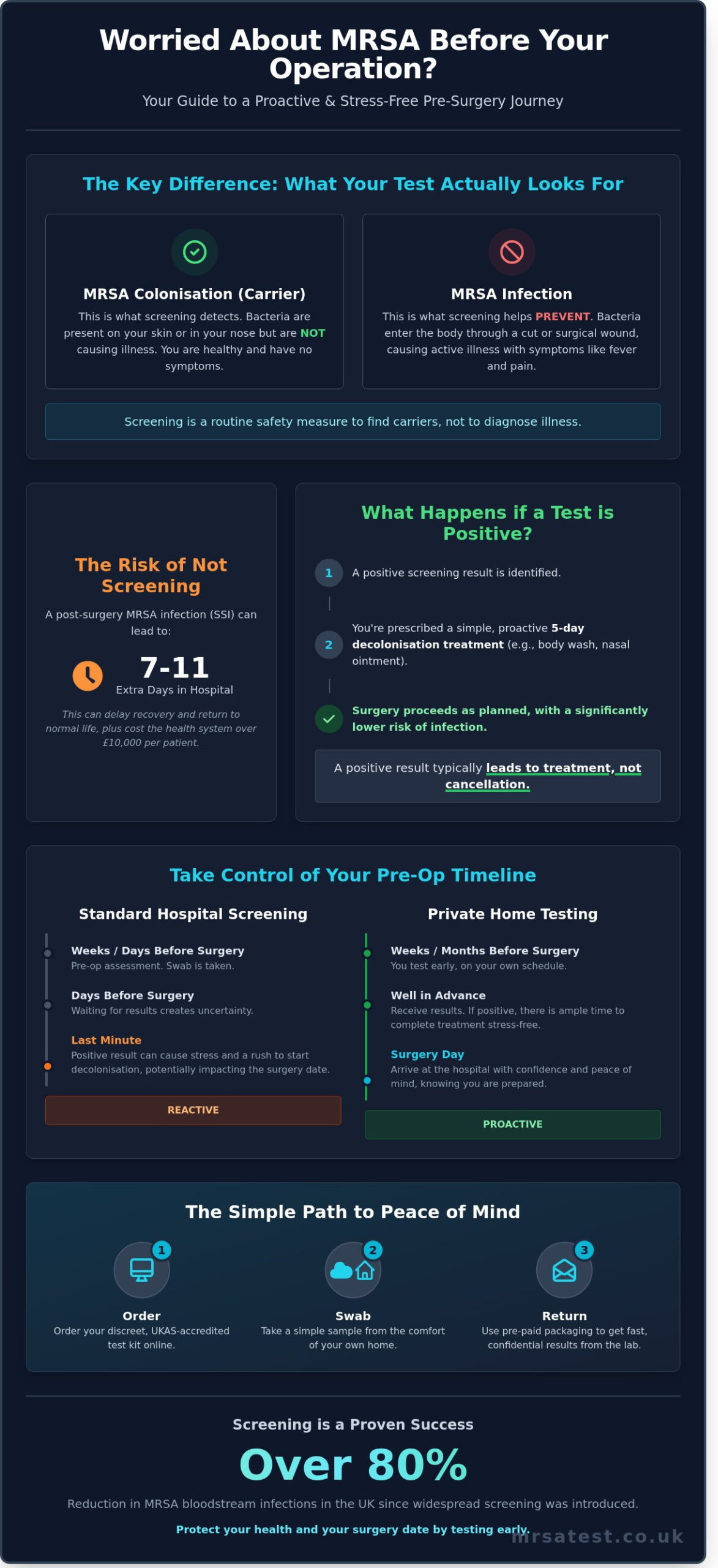
NHS and private hospitals in the UK follow strict pre-operative assessment guidelines. Since 2010, the Department of Health has mandated that almost all elective surgical patients are screened for MRSA before admission. It’s vital to remember that screening is a routine “box-ticking” exercise for safety. It isn’t a sign that the hospital suspects you specifically are unwell. This “Patient Safety First” approach is both a health and financial necessity. Treating a complex MRSA infection can cost the healthcare system upwards of £10,000 per patient. In contrast, a simple screening swab and a five-day decolonization treatment cost a tiny fraction of that amount. By identifying carriers early, hospitals have successfully reduced MRSA bloodstream infection rates by over 80% since the mid-2000s peak. This proactive stance ensures that if you are worried about mrsa before operation, you can trust that the system is designed to catch risks before they become problems.
- Routine Procedure: Screening is standard for almost everyone entering a UK hospital for elective surgery.
- Preventative Care: Identifying colonization allows for simple skin treatments that significantly lower infection risk.
- Proven Success: Strict UK protocols have made modern hospitals safer than they were twenty years ago.
- Peace of Mind: Knowing your status before you arrive at the hospital gives you one less thing to worry about during your recovery.
Colonisation vs. Infection: What an MRSA Screening Actually Measures
If you’re worried about mrsa before operation day, you aren’t alone. Many patients assume that a “positive” result on a screening test means they’re suffering from an active illness. This is a common misconception that creates unnecessary stress. In reality, MRSA screening is designed to detect colonisation, not necessarily an active infection. Understanding this distinction is the first step toward feeling more in control of your surgical journey.
Most people who test positive for MRSA are perfectly healthy. They’re what clinicians call “carriers.” These individuals go about their daily lives without any symptoms, unaware that the bacteria are present. The screening process is simply a precautionary measure to ensure that your surgical team can take the right steps to protect you once you enter the operating theatre.
The Difference Between ‘Carrying’ and ‘Infection’
To understand colonisation, think of seeds on a jacket versus weeds in a garden. If you walk through a field, you might pick up seeds on your sleeves. They’re present, but they aren’t growing into the fabric or causing damage. This is colonisation. An infection, however, is like weeds taking root in a flowerbed; the bacteria have entered the body’s tissues, multiplied, and started causing harm. Data from public health bodies in the UK suggests that approximately 1 in 30 people carry MRSA on their skin or in their nose at any given time without knowing it.
This “carrier” status only becomes a clinical concern when you undergo a medical procedure. When a surgeon makes an incision, the skin’s natural protective barrier is broken. If MRSA is sitting on the surface of the skin, it has a direct pathway into the bloodstream or deeper tissues. Research into the Effectiveness of MRSA Screening shows that identifying these carriers beforehand allows hospitals to use targeted antiseptic washes and specific antibiotics. This proactive approach significantly reduces the risk of the bacteria moving from the skin’s surface into the surgical wound.
How the Screening Swab Process Works
The actual screening process is straightforward, painless, and takes less than a minute. You don’t need to prepare in any special way, and there are no needles involved. A healthcare professional, or you yourself if using a home kit, will use a sterile swab that looks like a long cotton bud. This swab is gently rubbed over specific areas of the body where MRSA is most likely to reside. The standard sites include:
- The Nostrils: The inside of the nose is the most common place for MRSA to live.
- The Groin: This warm, moist area is a frequent site for bacterial colonisation.
- The Axilla: The armpits are often swabbed as an additional check.
Once the samples are collected, they’re sent to a UKAS-accredited laboratory. Scientists there place the samples in a controlled environment to see if any bacteria grow. They specifically look for the “methicillin-resistant” strain, which is a version of Staphylococcus aureus that has developed resistance to common antibiotics. If you’re worried about mrsa before operation delays, it’s helpful to know that modern PCR tests can often provide these results within 24 hours, ensuring your surgery stays on schedule. For those who prefer privacy, you can order a discreet at-home testing kit to get these answers before your formal hospital pre-assessment.
The results tell your medical team exactly what they’re dealing with. If the test is negative, you continue as planned. If it’s positive, it simply means you’ll undergo a “decolonisation” routine, which usually involves using a special antibacterial body wash and nasal cream for five days before your surgery. It’s a simple, manageable process that keeps you safe.
The ‘Positive’ Result: What Happens if MRSA is Detected Pre-Surgery?
Receiving a positive test result can feel overwhelming. You might think your surgical plans are in jeopardy. Rest assured, a positive MRSA screen is a routine part of modern surgical preparation. If you’re worried about mrsa before operation day, understand that detection is a success. It allows your medical team to act before you’re at your most vulnerable. Instead of a cancellation, you’ll start a simple treatment called decolonization. This process targets the bacteria living harmlessly on your skin so they don’t cause an infection during recovery. It’s a standard safety measure used across the UK to ensure patient outcomes remain high. Finding the bacteria now is far better than discovering it after an infection has taken hold in a surgical wound.
The Decolonization Protocol: Wash and Ointment
The 5-day decolonization protocol is the gold standard in UK healthcare. It’s a straightforward routine you perform at home. You’ll use an antiseptic soap, such as Chlorhexidine, for your daily shower. You must pay close attention to areas where bacteria thrive, like your armpits and groin. Along with the wash, you’ll apply a nasal antibiotic ointment, frequently Mupirocin, three times every day. This targets the most common “reservoir” for MRSA. To make the treatment effective, you must be thorough. Use clean flannels for every wash and change your pyjamas and bedsheets daily. Washing these items at 60°C kills any lingering bacteria. This 5-day commitment is your best defense against post-surgical complications.
- Daily Wash: Use the antiseptic body wash from head to toe, leaving it on the skin for one minute before rinsing.
- Nasal Ointment: Apply a small amount of ointment to your pinky finger or a cotton bud and massage it into the inside of each nostril.
- Environmental Hygiene: Change your towels and bedding every day during the treatment to prevent re-colonization.
- Consistency: Don’t skip any doses. The bacteria need constant exposure to the treatment to be fully cleared.
Will My Surgery Be Delayed?
Most patients find their surgery date remains unchanged. The goal is to complete the 5-day treatment just before you’re admitted. If your surgery is low-risk, the medical team often proceeds immediately after your final dose. Delays are usually reserved for “prosthetic” surgeries, such as hip replacements or cardiac implants. In these cases, doctors might wait for a follow-up test to confirm the bacteria is gone. This might add 7 to 14 days to your waiting time, but it’s a small price for long-term safety. If you’re worried about mrsa before operation schedules are locked in, ask your surgical coordinator for their specific policy. They’ll explain whether they require a negative re-test or if completing the protocol is sufficient. Clear communication ensures you aren’t left guessing about your procedure date.
Remember that being an MRSA carrier doesn’t mean you’re “sick.” It simply means the bacteria are present on your body. By identifying this early through screening, you and your hospital team are working together. This proactive approach has been shown to reduce surgical site infections significantly in clinical settings across the UK. You’re taking control of your health and ensuring your recovery is as smooth as possible. Trust the process and follow the 5-day plan carefully. It’s a simple, proven way to protect yourself during your hospital stay.
Taking Control of Your Pre-Op Prep: Private vs. Hospital Screening
The weeks leading up to a surgical procedure are often filled with checklists and appointments. If you’re worried about mrsa before operation dates are confirmed, it’s helpful to understand that you don’t have to wait for the hospital to take the first step. Most NHS trusts conduct MRSA screening during a pre-operative assessment, which usually occurs 14 to 28 days before your surgery. While this is a vital safety measure, it creates a narrow window for intervention. If a hospital swab returns a positive result just two weeks before your date, the resulting rush to complete decolonization can be incredibly stressful.
Taking control through private screening allows you to identify colonization on your own terms. By testing 4 to 6 weeks in advance, you gain a significant head start. If the results show you’re carrying the bacteria, you have ample time to complete a 5-day decolonization protocol. This proactive approach ensures that by the time you attend your official hospital appointment, your skin and nasal passages are likely clear, significantly reducing the risk of a last-minute cancellation.
Why Patients Choose Private Pre-Op Screening
The primary driver for private testing is the elimination of “wait and see” anxiety. Waiting for a hospital appointment to find out your status can be a source of significant mental strain. Private screening offers psychological relief through early data. It’s about privacy and comfort. You can collect your samples in a discreet, familiar environment rather than a busy clinic. This convenience is paired with the clinical advantage of having a “clean” result in hand. Many patients find that entering their pre-op assessment with a recent negative test result provides a sense of security that the standard system cannot offer.
Understanding PCR vs. Culture Tests for Speed
When time is a factor, the type of technology used in the lab matters. While culture tests take 48-72 hours to grow bacteria, PCR tests detect MRSA DNA within 24 hours of lab receipt. For patients who have surgery scheduled in less than 8 days, the speed of molecular detection is indispensable. It’s the difference between starting treatment on a Tuesday versus waiting until Friday.
- Culture Testing: This traditional method involves placing the swab on a petri dish and waiting for bacterial colonies to grow. It’s highly accurate but requires a 2-to-3-day incubation period.
- PCR Rapid Testing: This method uses Polymerase Chain Reaction to identify the genetic signature of MRSA. It’s exceptionally precise and can detect even low levels of colonization that a standard culture might miss in its early stages.
Choosing a PCR test is the most efficient route for those on a tight timeline. It provides a definitive answer quickly, allowing for immediate action. If you’re worried about mrsa before operation day arriving too soon, the 24-hour turnaround of a PCR test offers the fastest path to clarity. Whether you choose a standard culture or a rapid PCR, using a UKAS-accredited laboratory ensures that your results meet the highest clinical standards required for surgical safety.
Ready to secure your peace of mind? Order your MRSA home test kit today for fast, professional results from our UK-based laboratory.
Discreet MRSA Testing with mrsatest.co.uk: Fast Answers for Peace of Mind
Preparing for surgery is stressful enough without the added fear of an undiagnosed infection. If you’re worried about mrsa before operation day, you’re taking a sensible step by seeking answers early. At mrsatest.co.uk, we’ve established ourselves as the UK’s leading specialist in home MRSA screening. We understand that hospital waiting lists are long and pre-op assessment slots are often limited. Our service fills that gap, providing a bridge between your concerns and the clinical certainty you need to proceed with your surgery safely.
The core of our service is the “Order-Swab-Return” process. It’s designed to be as simple as possible. You order your kit online, and it arrives at your door in plain packaging. You take your own samples following the clear instructions provided, and then you send them back to our facility. We don’t use generic labs; we partner exclusively with UKAS-accredited laboratories that meet the ISO 15189 standard for medical testing. This ensures that the results you receive aren’t just “indicators” but are clinical-grade data points that your surgical team can rely on.
Waiting for hospital results can take weeks. We’ve streamlined our logistics to provide a 24 to 48-hour turnaround once your sample reaches our lab. Don’t let being worried about mrsa before operation delays keep you up at night; take the test and move forward with the facts. By identifying colonisation early, you give yourself the 5 to 7 days required for standard decolonisation treatments, ensuring your surgery stays on schedule.
How Our UK-Based Home Testing Works
Our process prioritises your privacy and speed. Every kit is dispatched in discreet, unbranded packaging that fits through a standard letterbox. We include prepaid Royal Mail 24 or 48 Tracked shipping labels with every order, ensuring your samples reach our technicians quickly. Once processed, we deliver your results securely via an encrypted email link. Because our entire operation is 100% UK-based, there are no international shipping delays or customs issues to navigate. You get fast, local, and reliable results.
Confidentiality and Lab Accuracy
Trust is the foundation of clinical testing. We handle your sensitive medical data in strict compliance with UK GDPR and Data Protection Act 2018 regulations. Using a UKAS-accredited facility is vital because it guarantees the accuracy of the culture or PCR rapid test you’ve chosen. Surgeons and anaesthetists trust these accredited results because they meet the same rigorous quality benchmarks as NHS hospital labs. This professional alignment helps you regain control over your health journey. Order your confidential MRSA test kit today and prepare for surgery with confidence.
- Specialist Expertise: Dedicated solely to MRSA screening for surgical patients.
- Clinical Grade: Samples are processed in ISO 15189 accredited UK laboratories.
- Total Discretion: Plain packaging and secure, private result delivery.
- Rapid Results: Most results are available within 24-48 hours of lab receipt.
Taking a proactive approach to your pre-operative health isn’t just about following rules; it’s about personal safety. MRSA colonisation affects approximately 3% of the UK population. Knowing your status allows you to act, treat, and enter the operating theatre with one less thing to worry about. It’s simple, it’s fast, and it puts you back in the driver’s seat of your own healthcare.
Secure Your Peace of Mind Before Surgery
Preparing for surgery is stressful enough. You don’t need the added weight of health uncertainties. Understanding that MRSA colonisation is common and treatable shifts the focus from fear to preparation. Screening isn’t just a clinical requirement; it’s your way of ensuring your body is ready for recovery. Being worried about mrsa before operation shouldn’t keep you awake at night when fast, clinical answers are available.
Our service uses a UKAS-accredited laboratory to provide hospital-grade accuracy with total privacy. You’ll receive results in as little as 24 hours with our PCR rapid test, and every kit includes free, discreet UK shipping. By identifying your status early, you can start any necessary decolonisation treatments well before your hospital admission date. This proactive approach ensures your surgical team can work in the safest environment possible.
Order Your Fast & Discreet MRSA Test Kit Now
Take the first step toward a safer surgery and genuine peace of mind today. You’re in safe hands, and we’re here to help you prepare with confidence.
Frequently Asked Questions
What happens if I test positive for MRSA before my operation?
If you test positive, you’ll undergo a simple decolonisation treatment to remove the bacteria from your skin and nose. This process usually involves using a special antiseptic body wash and an antibiotic nasal cream for 5 days. It’s a standard safety procedure to prevent the bacteria from entering your body during the incision. Your surgical team will guide you through this routine to ensure you’re ready for your procedure.
Can surgery be cancelled because of a positive MRSA result?
Yes, elective surgeries are often postponed if you test positive to allow time for decolonisation. While emergency procedures proceed with extra precautions, about 95% of planned operations are rescheduled by at least one week to ensure your safety. This delay reduces the risk of post-operative infections significantly. Once you’ve completed the 5 day treatment, your surgery can usually proceed as planned without further issues.
How do I get rid of MRSA before my surgery?
You follow a decolonisation protocol prescribed by your clinical team, which typically lasts 5 days. This includes washing your hair with antiseptic shampoo twice, using 4% chlorhexidine body wash daily, and applying mupirocin nasal ointment three times a day. If you’re worried about mrsa before operation day, completing this cycle correctly is the most effective way to clear the bacteria and protect your health during recovery.
How long does it take to get MRSA test results back?
Results typically take between 24 hours and 3 days depending on the method used. A PCR rapid test provides molecular detection in 24 hours, while a traditional culture test requires 48 to 72 hours for the bacteria to grow in a lab. Our UKAS-accredited facility ensures you receive these vital updates as quickly as possible, allowing you to start any necessary treatment without delay.
Is MRSA screening mandatory for all surgeries in the UK?
Screening is mandatory for most elective admissions in the UK, following Department of Health guidelines established in 2010. This includes all high-risk procedures like orthopaedic or cardiothoracic surgeries. However, low-risk minor procedures, such as day-case eye surgery or simple skin biopsies, don’t always require a formal screen. Your hospital will confirm if you need a test during your pre-assessment appointment about 2 weeks before surgery.
Can I test myself for MRSA at home if I am worried?
Yes, you can use a discreet at-home kit to check your status before your hospital appointment. If you’re worried about mrsa before operation dates are confirmed, testing from the comfort of your own home provides peace of mind. These kits use the same UKAS-accredited laboratory standards as the NHS, with results delivered securely to your phone or email within 24 to 72 hours of receipt.
What is the difference between an MRSA PCR test and a culture test?
A PCR test looks for the genetic material of the bacteria, offering a rapid result within 24 hours. A culture test involves placing the swab on a nutrient dish to see if bacteria grow over 2 to 3 days. While culture tests are the traditional gold standard, PCR is increasingly popular for its speed and accuracy in pre-operative settings. Both methods are highly reliable for detecting colonisation before your procedure.
Does a positive MRSA test mean I have an infection?
No, a positive result usually means you’re “colonised,” which means the bacteria live on your skin without causing harm. Approximately 3% of the UK population carries MRSA harmlessly at any given time. The risk only arises during surgery when the bacteria could enter a wound. This is why decolonisation is so important for patient safety, even if you feel perfectly healthy and have no symptoms.