
What is Chlorhexidine (CHG) Wash and Why Is It Used?
Preparing for an operation can feel overwhelming. Alongside the natural anxiety about the procedure itself, you are often given a list of complex medical instructions. If your healthcare team has asked you to use a special antiseptic skin cleanser, you may be wondering what it is and why it’s so important. This cleanser is a chlorhexidine gluconate solution, commonly known as a CHG wash. Correctly using this CHG wash is a simple yet powerful step you can take to significantly reduce your risk of developing a serious post-operative infection.
This guide is here to provide clear, reassuring answers. We will walk you through exactly what a CHG wash is and why it is a trusted tool in preventing surgical site infections, including those caused by MRSA. You will find simple, step-by-step instructions on how to apply the wash correctly, what areas to avoid, and how to manage any potential skin sensitivity. Our goal is to replace any confusion with confidence, helping you feel fully prepared for a safe procedure and a smooth recovery.
Key Takeaways
- Chlorhexidine (CHG) is a medical-grade antiseptic wash used before surgery to significantly reduce germs on your skin and lower the risk of infection.
- Learn the correct step-by-step showering process to ensure the wash is as effective as possible in preparing you for your procedure.
- Using a chg chg wash safely is crucial; discover the essential do’s and don’ts to prevent skin irritation and ensure its antiseptic action.
- Understand how pre-operative CHG washing fits into a comprehensive safety plan that may also include vital MRSA screening for a safer surgical outcome.
Understanding Chlorhexidine (CHG): Your Pre-Surgery Antiseptic Wash
If you are preparing for surgery, your clinical team may have instructed you to wash with Chlorhexidine Gluconate, or CHG. This is a simple yet crucial step to ensure your safety. CHG is a trusted, medical-grade antiseptic skin cleanser used to significantly reduce the number of germs on your skin. The goal of a pre-surgical chg chg wash is to lower the risk of a surgical site infection (SSI) by creating a cleaner surface before your procedure begins. A key benefit of CHG is its lasting effect; it binds to the skin and continues working for hours after application, offering prolonged protection.
What is CHG and Why is it So Effective?
An antiseptic is a substance designed to stop or slow the growth of microorganisms on the body. Unlike regular soap, which primarily washes dirt and some germs away, a CHG solution actively kills a broad spectrum of germs on contact. To understand the science behind What is Chlorhexidine, it is helpful to know it works by disrupting the cell membranes of bacteria, yeasts, and certain viruses. This powerful action is why it has been a trusted tool in UK hospitals for over 60 years for both patient pre-operative washing and for healthcare workers to clean their hands effectively.
Different Types of CHG Products
CHG is available in several convenient forms, and your healthcare provider will recommend the best one for your specific situation. The most common products you will encounter include:
- 4% Liquid Antiseptic Soap: This is a liquid cleanser, often pink or red in colour, intended to be used in the shower or for a sponge bath in the days leading up to your surgery.
- Pre-Saturated CHG Wipes: These are single-use cloths or sponges impregnated with a 2% CHG solution. They offer a simple, no-rinse application, making them very convenient for targeted skin preparation at home or in the hospital.
- CHG Mouthwash: While its primary pre-surgical use is on the skin, CHG is also the active ingredient in some prescription mouthwashes. This demonstrates its versatility in controlling bacteria, but for surgery, the focus remains firmly on skin cleansers.
The Crucial Role of CHG Wash in Preventing Surgical Site Infections (SSIs)
Think of preparing for surgery like an artist preparing a canvas. Before any work can begin, the canvas must be perfectly clean. In a medical context, your skin is the canvas, and a Chlorhexidine (CHG) wash is the essential preparation step. The primary goal is simple but vital: to significantly reduce the number of germs living on your skin before your operation. Surprisingly, one of the most common sources of infection after surgery is the patient’s own skin flora-the bacteria that normally live on us without causing harm.
By cleansing with an antiseptic agent like CHG, you create a “sterile canvas,” drastically lowering the risk of these microorganisms entering the surgical wound and causing complications. Following the correct procedure is key, and healthcare professionals often provide detailed guides on how to use CHG wash to ensure it is as effective as possible.
What is a Surgical Site Infection (SSI)?
A Surgical Site Infection, or SSI, is an infection that develops in the part of the body where a surgical procedure was performed. These infections can range from minor skin issues to more serious complications that affect deeper tissues or organs. While SSIs are treatable, the most effective strategy is always prevention. This is why pre-operative skin cleaning is a standard and critical part of your care pathway in the UK.
Targeting MRSA and Other Hospital-Acquired Bacteria
Hospitals are particularly vigilant about bacteria like Methicillin-resistant Staphylococcus aureus (MRSA). This specific bacterium can be carried harmlessly on the skin of many healthy individuals. However, if it enters the body through a surgical incision, it can lead to a severe and difficult-to-treat infection. The use of chg chg wash is a clinically proven measure to reduce the presence of MRSA and other potentially harmful bacteria on the skin, significantly lowering the risk of them contaminating the surgical site during and after your procedure.
How to Use CHG Wash Correctly: A Step-by-Step Guide
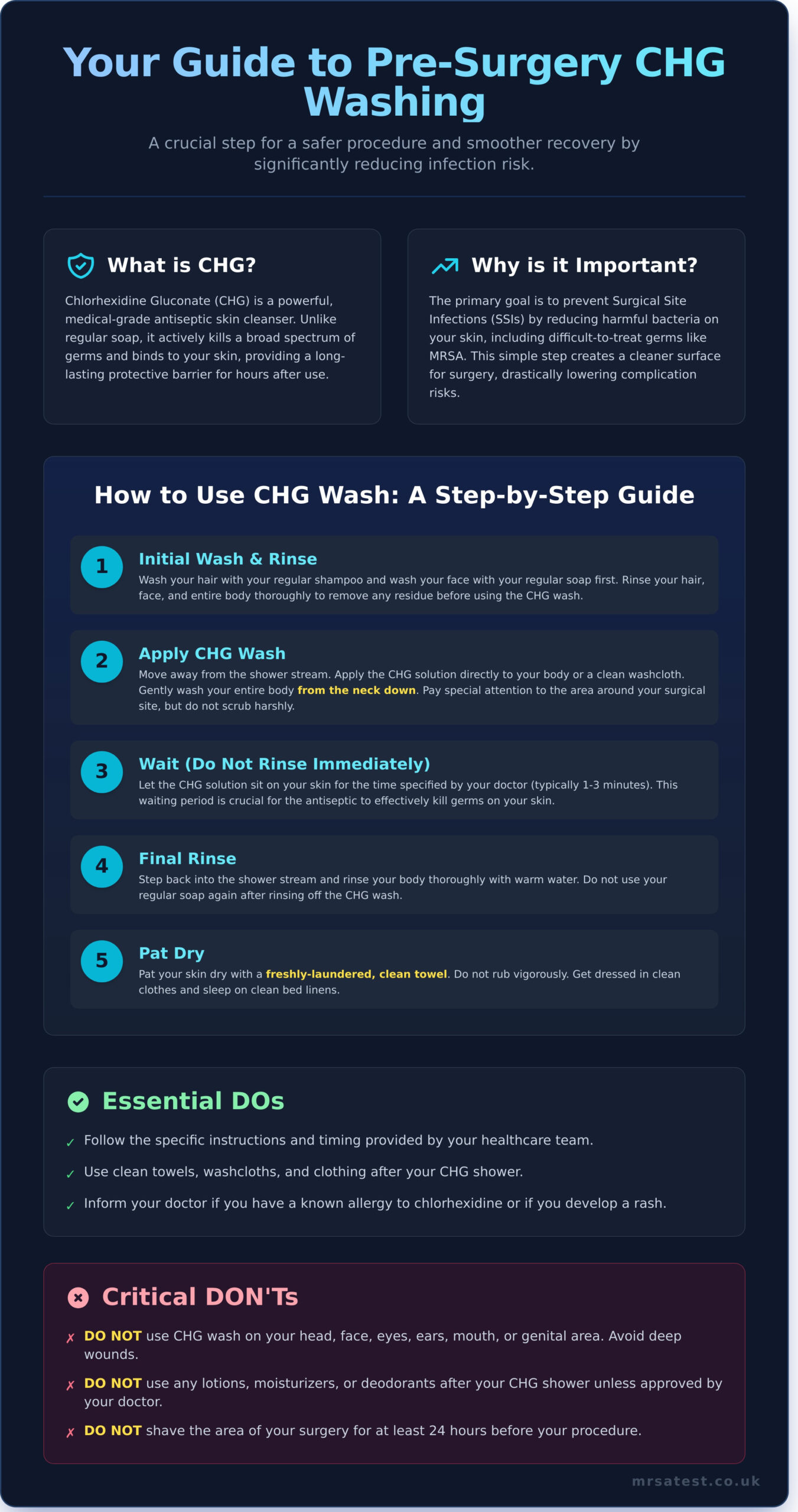
Using a CHG wash before surgery is a critical step in reducing your risk of a post-operative infection. To ensure the antiseptic is as effective as possible, it is vital to follow the correct chg chg application procedure. These guidelines are based on standard clinical practice for preventing surgical site infections. However, please remember that these are general instructions. Always prioritise the specific directions given to you by your surgeon or hospital staff.
Preparation: What to Do Before Your Shower
Before you step into the shower, a few simple preparations can make the process smoother and more effective. Taking these steps ensures you have a clean environment ready for after your wash.
- Read All Instructions: Carefully read the label on your CHG wash bottle and any specific instructions provided by your hospital. Note the required lathering time.
- Gather Clean Linens: Have a set of clean, freshly laundered towels, a washcloth, and pyjamas or clothes ready to use immediately after your shower.
- Remove Jewellery: Take off all piercings, rings, watches, and other jewellery. You should leave them off until after your procedure is complete.
The Showering Process: Step-by-Step
Follow this sequence to ensure you clean your body thoroughly and allow the CHG wash to work correctly. The goal is to first remove surface dirt, then apply the antiseptic.
- Wash Your Hair First: Using your normal shampoo, wash your hair and rinse it thoroughly. Try to let the shampoo and water run off your back rather than down your face and body.
- Initial Body Wash: Wash your entire body with your regular soap or body wash to remove any surface dirt and oils. Rinse off completely.
- Apply the CHG Wash: Turn off the shower water. Squeeze the CHG solution onto a clean, damp washcloth or into your hand and apply it to your entire body from the neck down.
- Lather and Wait: Gently lather the solution over your skin for the recommended time, usually 3-5 minutes. Pay special attention to the area where your surgery will be. Do not use the chg chg wash on your face, head, or genital area unless specifically instructed to do so.
After Your Shower: Final Important Steps
What you do after the shower is just as important as the wash itself. These final steps help maintain your skin’s cleanliness and prevent recontamination before your surgery.
- Rinse Thoroughly: Turn the water back on and rinse the CHG solution from your body completely with warm water.
- Pat Dry Gently: Use your clean, fresh towel to pat your skin dry. Do not rub vigorously, as this can irritate the skin and remove the protective film left by the CHG.
- Avoid Lotions and Deodorants: Do not apply any lotions, moisturisers, perfumes, or deodorants after your shower, as these can interfere with the CHG’s effectiveness.
- Dress in Clean Clothes: Put on your clean, freshly laundered clothes or pyjamas.
Similarly, it’s generally recommended to avoid hair removal methods like shaving or waxing in the surgical area right before your procedure to prevent nicks and skin irritation. For those interested in managing body hair more permanently after they have fully recovered, it can be beneficial to explore Super Hair Removal (SHR) Treatments for a gentle, long-term solution.
Safety First: CHG Wash Do’s, Don’ts, and Potential Side Effects
Chlorhexidine is a highly effective antiseptic trusted by healthcare professionals across the UK. When preparing with a chg chg wash, safety is paramount to ensure you receive its full benefits without complications. Although it is exceptionally safe when used correctly, adhering to proper usage guidelines is crucial, especially when preparing for a surgical procedure.
Key Do’s and Don’ts for Safe Use
For quick reference, follow these essential guidelines to ensure you are using your CHG wash safely and effectively. This simple checklist helps minimise risk and maximise the antiseptic benefits.
- DO: Use the product exactly as instructed by your surgeon, GP, or hospital. Their directions are tailored to your specific medical needs and procedure.
- DON’T: Apply the wash to your head, face, eyes, ears, or genital area. CHG can cause severe irritation to these sensitive mucous membranes. It must never be ingested.
- DON’T: Use on deep wounds, burns, or broken skin unless you have been specifically instructed to do so by a healthcare professional. The wash is designed for use on intact skin.
- DO: Stop using the wash immediately and contact your doctor if you develop a rash, significant redness, or persistent irritation.
Understanding Potential Side Effects
It is reassuring to know that serious side effects from chlorhexidine are very rare. Most people experience no issues at all. When side effects do occur, they are typically mild and temporary. These can include:
- Slight skin dryness or itching
- Minor redness or irritation at the application site
- A temporary sticky feeling on the skin
In the extremely rare event of a severe allergic reaction, the signs are more pronounced and require urgent attention. Seek immediate medical assistance by calling 999 or going to A&E if you experience hives, a severe skin rash, swelling of the face or mouth, or difficulty breathing after using a CHG product. If you have a known allergy, always inform your clinical team well in advance of any procedure.
CHG & MRSA Screening: Your Combined Strategy for a Safer Surgery
Using a Chlorhexidine Gluconate (CHG) wash before your operation is a crucial step in reducing the risk of a surgical site infection (SSI). However, it is most effective when viewed as one part of a complete pre-operative safety strategy. To give yourself and your surgical team the ultimate peace of mind, this powerful skin decontamination should be paired with proactive bacterial detection.
This is where MRSA screening comes in. The dual approach of a chg chg wash and an MRSA test creates a robust defence against post-operative infection. The CHG wash works to reduce the general population of germs on your skin, while the MRSA screen specifically identifies if you are carrying Methicillin-resistant Staphylococcus aureus-a bacterium that can cause serious, hard-to-treat infections. Together, they address both the known and the unknown risks, providing a comprehensive safety net.
Decontamination vs. Detection: Why You Need Both
Think of preparing for surgery like tending to a garden. Your CHG wash is like thoroughly weeding the entire plot, clearing away the general overgrowth before you plant. This is decontamination. An MRSA screen, however, is like testing the soil to see if a specific, invasive weed is present deep down. This is detection. Knowing your MRSA status beforehand allows your clinical team to implement targeted prevention strategies if needed, ensuring you are protected in every possible way.
Taking Control of Your Pre-Operative Health
By combining your CHG wash routine with MRSA screening, you are taking an active and empowered role in your surgical outcome. You are providing your healthcare team with a complete picture, allowing for the most personalised and effective care. Modern, at-home MRSA testing makes this process simple, private, and convenient, allowing you to complete your sample from the comfort of your own home. This final step ensures you walk into the hospital fully prepared and confident in your health.
Complete your pre-op plan with a confidential, at-home MRSA test.
Your Proactive Role in a Safer Surgery
Ultimately, understanding and correctly using a chlorhexidine wash is a powerful step you can take towards a successful surgical outcome. This pre-operative cleansing, often involving a specific chg chg protocol, is a proven method for reducing harmful bacteria on your skin and lowering the risk of surgical site infections. It empowers you to play an active part in your own care, transforming a clinical recommendation into a personal safety measure.
For complete peace of mind, complementing your CHG wash routine with MRSA screening is a vital consideration. Knowing your MRSA status beforehand allows your medical team to provide the best possible care. Our fast, reliable, and completely confidential service allows you to test from the comfort of home, with results processed by a fully UKAS-accredited laboratory, ensuring you receive trusted and accurate information.
Take the next step in your pre-surgical preparation. Order your confidential, UKAS-accredited MRSA Home Test Kit today and approach your procedure with the utmost confidence.
Frequently Asked Questions About CHG Wash
Can I use my regular moisturiser or deodorant after a CHG shower?
No, it is strongly advised to avoid using any lotions, moisturisers, creams, powders, or deodorants after using a CHG wash. These products can interfere with the antiseptic action of chlorhexidine, making it less effective at reducing bacteria on your skin. Your healthcare provider will give you specific instructions, but as a general rule, you should only use the CHG wash and clean towels and clothing provided or recommended by the hospital.
Once you are fully healed and your doctor confirms it is safe, you can resume your normal skincare routine. For those looking to invest in their skin’s long-term health and wellbeing post-recovery, exploring professional treatments can be beneficial. You can find more information on holistic and scientific skincare at louisefrostskincare.co.uk.
What should I do if the CHG wash gets in my eyes or mouth?
If CHG wash accidentally gets into your eyes, rinse them immediately and thoroughly with cool, clean water for several minutes. If it enters your mouth, spit it out and rinse your mouth with water; do not swallow. CHG is for external use only. If you experience persistent irritation, pain, or blurred vision, or if you have swallowed a significant amount, seek prompt medical attention by contacting your GP or calling NHS 111.
How many days before my surgery should I start using the CHG wash?
The protocol for using a CHG wash before surgery can vary. Typically, your surgical team will instruct you to start showering with the CHG solution for two to five consecutive days leading up to your operation. Always follow the specific instructions provided by your hospital or surgeon, as they will be tailored to your procedure and medical history. This pre-operative cleansing is a critical step in reducing the risk of a surgical site infection.
Where can I purchase CHG antiseptic wash?
CHG antiseptic wash is widely available in the United Kingdom. You can purchase it over-the-counter from most high-street pharmacies, including Boots and LloydsPharmacy, as well as in larger supermarkets with a pharmacy section. It is also available to buy from reputable online chemists. In many cases, if it is required for pre-operative care, the hospital or your GP will provide you with a prescription or supply the product directly.
What happens if I have an allergic reaction to CHG?
While rare, allergic reactions to chlorhexidine can occur. Signs of a reaction may include skin redness, rash, itching, hives, or swelling. In severe cases, it can cause breathing difficulties or anaphylaxis. If you experience any of these symptoms, stop using the product immediately, wash the affected area with plain water, and seek urgent medical advice. Inform your doctor or surgeon about the reaction before any medical or surgical procedure.
Is it safe to use CHG wash if I am pregnant?
It is essential to consult with your doctor or midwife before using a CHG wash if you are pregnant or breastfeeding. While it is a topical antiseptic and absorption into the bloodstream is minimal, your healthcare provider must weigh the benefits against any potential risks. They can provide the safest and most appropriate advice based on your individual health circumstances and the reason for its use, ensuring the well-being of both you and your baby.