
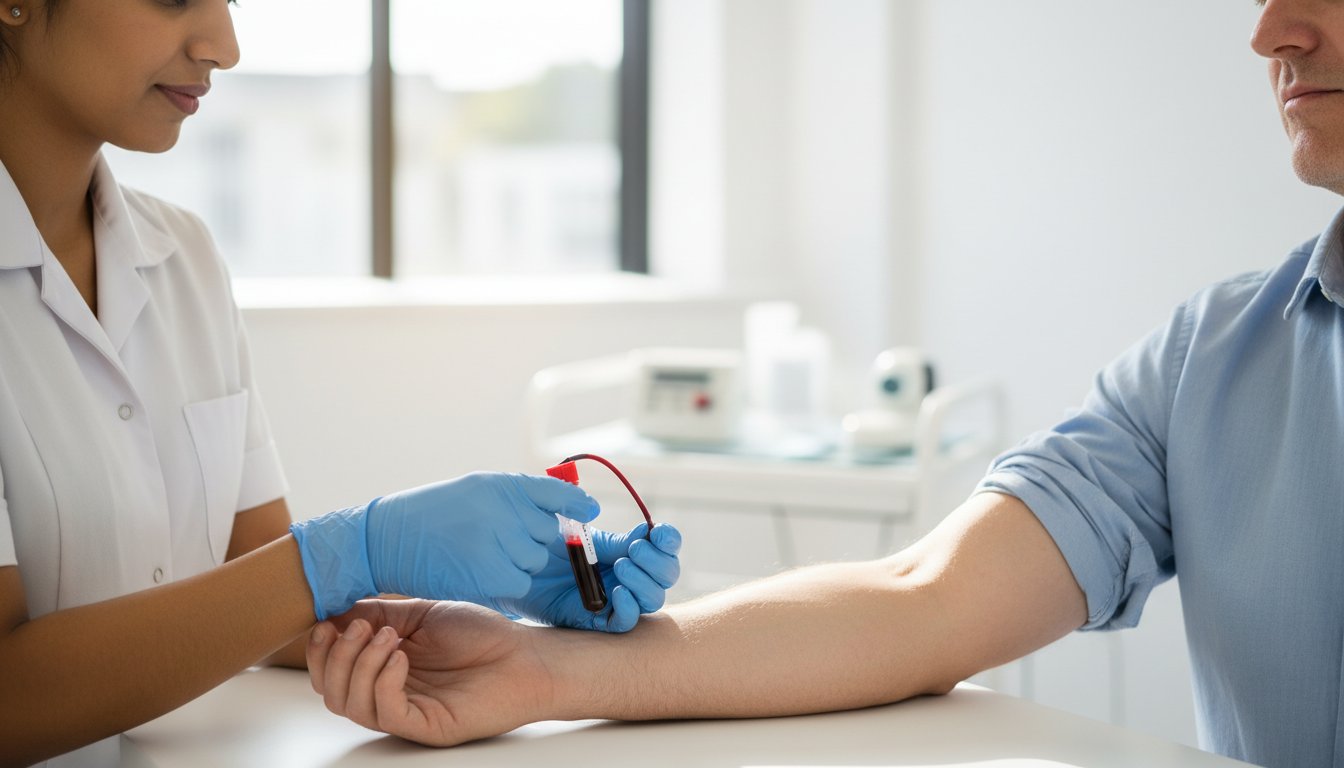
What Is a Full Blood Count (FBC) Test?
If your GP has ordered a Full Blood Count, or you’ve seen ‘FBC’ on a lab form, it’s completely normal to have questions and feel a little apprehensive. Perhaps you’re trying to understand persistent symptoms like fatigue and bruising, or maybe you’re simply looking at your results and the medical terms seem intimidating. Understanding what an fbc blood test is, and why it’s one of the most common tests performed in the UK, is the first step toward taking control of your health information.
This guide is designed to provide clear, straightforward answers. We will walk you through what a Full Blood Count actually measures, from the different types of blood cells to other crucial markers of your health. You will learn what to expect during the simple procedure and gain the confidence to understand the key components of your results-such as red blood cells (RBC), white blood cells (WBC), and platelets. Our aim is to demystify the process, reduce any anxiety, and empower you to have a more informed conversation with your doctor.
Key Takeaways
- Understand why the Full Blood Count is a fundamental screening test used to provide a snapshot of your overall health.
- Learn what key components of your blood-including red cells, white cells, and platelets-are measured and what they can indicate.
- Get a clear, step-by-step guide to the simple and quick fbc blood test procedure to feel prepared and at ease.
- Discover why an out-of-range result is a starting point for discussion with your doctor, not an immediate diagnosis.
What is a Full Blood Count (FBC) and Why Is It So Common?
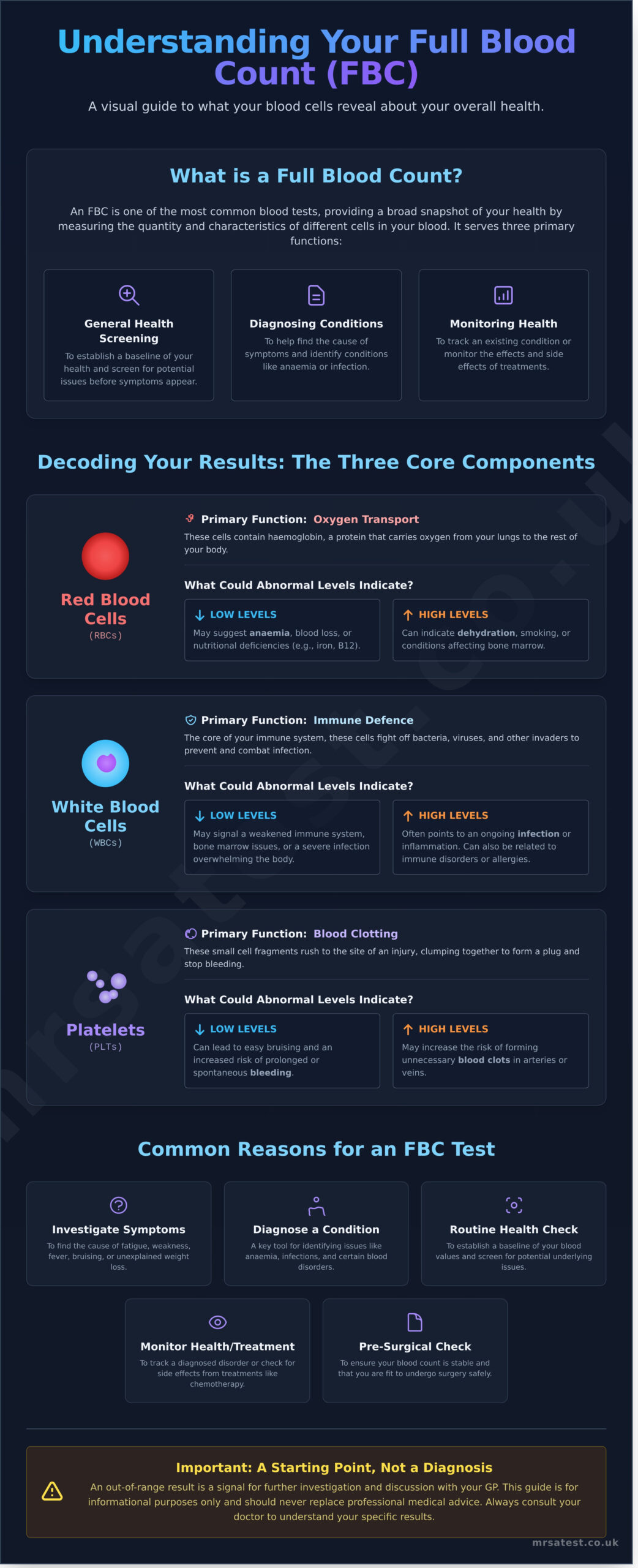
A Full Blood Count, often abbreviated to FBC, is a fundamental blood test that provides a detailed snapshot of your overall health. It is one of the most frequently requested tests by GPs and hospital doctors across the UK because it offers a broad overview of your physical wellbeing. The test serves three primary functions: general health screening, diagnosing a wide range of conditions, and monitoring existing medical issues or treatments.
An fbc blood test measures the quantity and characteristics of different cells circulating in your blood. Known internationally as a Complete blood count (CBC), it provides crucial clues that guide further investigation. However, it is important to understand that an FBC offers a general picture and does not typically provide a specific diagnosis on its own. Instead, abnormal results will prompt your doctor to consider further, more specific tests.
The Three Main Types of Cells Measured in an FBC
This comprehensive test evaluates the three main types of cells in your bloodstream, each with a distinct and vital role:
- Red Blood Cells (RBCs): These cells are responsible for transporting oxygen from your lungs to the rest of your body. The FBC assesses their number, size, and the amount of haemoglobin (the oxygen-carrying protein) they contain.
- White Blood Cells (WBCs): As the core of your immune system, these cells fight infection and inflammation. The test measures the total number of white cells and can also provide a ‘differential’ count, breaking down the numbers of the five main types.
- Platelets (PLTs): These are small cell fragments that are essential for blood clotting. They group together at the site of an injury to form a plug, preventing excessive bleeding.
Common Reasons Your Doctor Might Request an FBC Test
Your GP may recommend an fbc blood test for a variety of reasons, as it provides valuable baseline information about your health. Common scenarios include:
- As part of a routine health check: To establish a baseline of your normal blood values and screen for potential issues before they cause symptoms.
- To investigate symptoms: To help find the cause of general symptoms like persistent fatigue, weakness, fever, bruising, or unexplained weight loss.
- To diagnose a medical condition: It is a key tool for diagnosing conditions such as anaemia (a lack of red blood cells), infections, and certain blood disorders.
- To monitor an existing condition or treatment: For individuals with a diagnosed blood disorder or those undergoing treatments like chemotherapy, regular FBCs help track progress and check for side effects.
- As a pre-operative assessment: To ensure your blood count is stable and you are fit to undergo surgery safely.
Pregnancy is a key time when such routine screening is vital. An FBC is a standard part of antenatal care to monitor the mother’s health for conditions like anaemia. Alongside these essential medical tests, many expectant parents also seek the reassurance and detailed insights provided by specialist ultrasound services. For those looking for such scans, clinics like Scan Baby Ltd offer a way for families to connect with and monitor their baby’s development.
Decoding Your FBC Results: A Component-by-Component Breakdown
Important Disclaimer: It is essential to remember that only a qualified healthcare professional, such as your GP, can accurately interpret your FBC results in the context of your overall health and symptoms. This guide is for informational purposes only and should not be used for self-diagnosis.
Receiving the report from your fbc blood test can feel complex, but it is a structured look at the different cells in your blood. Each component is measured and compared against a ‘reference range’, which represents the typical values for a healthy person. These ranges can vary slightly between laboratories and are also dependent on factors like age and sex. Below, we break down the main components in simple terms.
FBC Components at a Glance
| Component Group | Primary Function | Key Insights |
|---|---|---|
| Red Blood Cells (RBCs) | Oxygen Transport | Can indicate anaemia, dehydration, or blood loss. |
| White Blood Cells (WBCs) | Immune Defence | Helps identify infection, inflammation, or immune issues. |
| Platelets (PLTs) | Blood Clotting | Assesses risk of bleeding or abnormal clotting. |
Red Blood Cells (RBCs) and Oxygen Transport
This group of tests evaluates the cells responsible for carrying oxygen from your lungs to the rest of your body. Key measurements include:
- Red Blood Cell Count (RBC): The total number of red blood cells.
- Haemoglobin (Hb): The iron-rich protein within red blood cells that binds to oxygen. Low levels are a primary indicator of anaemia.
- Haematocrit (Hct): The proportion of your blood volume that is composed of red blood cells.
- Mean Corpuscular Volume (MCV): The average size of your red blood cells, which can help determine the specific type of anaemia.
White Blood Cells (WBCs) and Your Immune Response
White blood cells are the core of your immune system, defending your body against infection and disease. An fbc blood test looks at the total WBC count. High levels often suggest your body is fighting an infection, while very low levels can indicate a compromised immune system. A ‘WBC differential’ may also be performed, which breaks down the count into specific types (like neutrophils and lymphocytes) to provide more specific clues about the cause of an illness.
Platelets (PLT) and Blood Clotting
Platelets, or thrombocytes, are tiny cell fragments crucial for stopping bleeding. When you get a cut, platelets rush to the site to form a plug, or clot. The platelet count measures their concentration in your blood. Abnormally low levels (thrombocytopenia) can lead to easy bruising and prolonged bleeding. Conversely, high levels (thrombocytosis) can increase the risk of forming unnecessary blood clots. While this guide focuses on the results, understanding the simple FBC test procedure can also provide reassurance.
The FBC Test Procedure: What to Expect Before, During, and After
Understanding the procedure for an fbc blood test can help ease any concerns you may have. It is a very common, safe, and quick diagnostic tool used throughout the NHS. The process is straightforward and is performed by a trained professional, such as a phlebotomist or nurse, whether you are at your local GP surgery or in a hospital setting.
This guide walks you through each simple step, ensuring you feel prepared and confident.
How to Prepare for Your Blood Test
Preparation is minimal and designed to make the process as smooth as possible. For a Full Blood Count alone, you do not usually need to fast (avoid eating or drinking). However, it is essential to follow the specific advice given to you.
- Check with your doctor: If other blood tests are being performed at the same time, they may require you to fast. Always confirm any specific instructions with your healthcare provider beforehand.
- Wear suitable clothing: Choose a top with short sleeves or sleeves that can be easily rolled up to allow clear access to your arm.
- Stay hydrated: Drinking a glass of water before your appointment can help make your veins easier to find, simplifying the blood draw process.
During the Blood Draw
The blood draw itself is a very quick and efficient procedure that typically takes only a few minutes. First, the phlebotomist will apply a tourniquet (a tight band) to your upper arm to make the vein more prominent. They will then clean the area with an antiseptic wipe. You will feel a brief, sharp scratch as the needle is gently inserted into the vein. Only a small vial of blood is needed for the analysis. The needle is then removed, and the entire collection is usually over in less than a minute.
After the Test and Getting Your Results
Once the sample has been collected, the phlebotomist will apply a small cotton ball or gauze to the site and secure it with a plaster or medical tape. It is common to experience slight bruising around the area, which is harmless and will fade within a few days. The blood sample is then labelled and sent to a laboratory for analysis.
The results are not given to you directly. Instead, they are sent securely to the doctor who ordered the test. Your doctor will interpret these results by looking at the various components of a Full Blood Count and comparing them to established reference ranges. You can typically expect your GP to receive and review the results within a few days to a week.
Understanding Normal Ranges and What ‘Abnormal’ Really Means
Receiving your blood test results and seeing a value marked as ‘high’ or ‘low’ can be unsettling. However, it is crucial to understand that an out-of-range result from an fbc blood test is simply a data point, not an immediate diagnosis. Medical interpretation is a nuanced process where context is everything, and this is why a discussion with your healthcare provider is the most important next step.
Why ‘Normal’ Varies From Person to Person
The term ‘normal range’ (or reference range) is a statistical average calculated from a large population of healthy individuals. This range is not a one-size-fits-all measure. Your personal ‘normal’ can be influenced by several factors, including:
- Age and Sex: Reference values for red blood cells, for example, differ between men and women and change throughout life.
- Lifestyle and Environment: Factors like pregnancy, recent intense exercise, or living at a high altitude can naturally alter your blood cell counts.
- Laboratory Differences: Each laboratory establishes its own reference ranges based on the equipment and population it serves. A result considered slightly high at one lab may be normal at another.
What Happens After an Abnormal FBC Result?
If one or more of your results fall outside the standard range, your doctor will begin a logical and calm assessment. This is a standard part of the diagnostic process designed to build a complete picture of your health. Next steps often include:
- Considering the whole picture: The doctor will evaluate the result alongside your symptoms, medical history, and any medications you are taking.
- Repeating the test: A minor, temporary illness or even dehydration can sometimes affect results. A repeat test can confirm if the finding is persistent.
- Ordering further tests: If necessary, your doctor may order more specific blood tests to investigate the initial finding in greater detail.
The Importance of a Professional Interpretation
It can be tempting to search for your results online, but this often leads to unnecessary anxiety and misinformation. Only a qualified doctor or healthcare professional can correctly interpret your fbc blood test results within the unique context of your overall health. A single value that is slightly out of range may be clinically insignificant when viewed as part of the complete assessment.
While FBCs are performed in-clinic, staying informed about your health involves knowing about all available screening options. For targeted concerns about bacterial colonisation, you can learn about other important health screenings like our confidential at-home MRSA tests.
Taking Control of Your Health with Clear Insights
The Full Blood Count is a cornerstone of diagnostic medicine, offering a vital snapshot of your overall health. Understanding its key components-from red and white blood cells to platelets-empowers you to have more informed conversations with your healthcare provider. Remember that an fbc blood test is a powerful tool, and interpreting the results is a collaborative process to gain a complete picture of your well-being.
Proactively managing your health is a crucial step towards peace of mind. At mrsatest.co.uk, we are dedicated to providing expert-reviewed health information you can trust. Our confidential service uses discreet packaging, and all tests are processed in a UKAS-accredited laboratory, ensuring clinical accuracy from the comfort of your home. Learn more about our clinically-backed home test kits and take the next step in your health journey today.
This principle of empowerment through knowledge extends beyond personal health. Many people find a similar sense of purpose and control by learning practical, in-demand skills. For those considering a career in the construction industry, for example, accredited centers like YTA Training provide intensive courses that equip individuals with the expertise needed to build a successful future.
Frequently Asked Questions
How long does it take to get FBC results back from the lab?
Typically, once your blood sample arrives at the laboratory, the analysis is completed efficiently. For tests conducted via the NHS, you can usually expect your GP to receive the results within 24 to 48 hours. Private at-home testing services may offer a similar or faster turnaround, often providing secure digital access to your results as soon as they are available from their accredited UK-based lab. Your healthcare provider will contact you to discuss the findings.
Can a full blood count test detect cancer?
An FBC test cannot diagnose cancer on its own. However, it is a crucial diagnostic tool that can reveal abnormalities in your blood cells, such as unusually high or low counts. These irregularities can sometimes be an early indicator of certain blood cancers, like leukaemia or lymphoma. If your results show any significant abnormalities, your doctor will recommend further, more specific tests to determine the underlying cause. It serves as an important initial screening, not a definitive diagnosis.
What is the difference between an FBC and a CBC?
There is no clinical difference between a Full Blood Count (FBC) and a Complete Blood Count (CBC). The two terms refer to the exact same test, which measures the quantity and quality of your red blood cells, white blood cells, and platelets. “Full Blood Count” or “FBC” is the standard terminology used within the NHS and throughout the UK healthcare system, while “Complete Blood Count” or “CBC” is more commonly used in the United States and other countries.
Can stress, anxiety, or lack of sleep affect my FBC results?
Yes, significant physiological or psychological stress can have a temporary impact on your FBC results. Acute stress, anxiety, or severe lack of sleep can sometimes cause a short-term increase in certain white blood cells, particularly neutrophils, as part of the body’s ‘fight or flight’ response. Healthcare professionals are trained to interpret results within the context of your overall health and lifestyle, but it is always best to be as rested and calm as possible before your test.
Can I get a Full Blood Count test done at home in the UK?
Yes, it is possible to arrange for an FBC blood test from the comfort of your own home. Several private UK companies offer at-home test kits, which typically involve a simple finger-prick blood sample that you collect yourself. The sample is then posted in a pre-paid package to a fully accredited UK laboratory for analysis. Your results are then delivered to you securely and confidentially online, often within a few days of the lab receiving your sample.
Does an FBC test for iron levels or vitamin deficiencies?
An FBC provides important clues but does not directly measure your iron or vitamin levels. It can suggest iron deficiency anaemia by showing small, pale red blood cells and low haemoglobin. However, to confirm an iron deficiency, a specific ferritin or iron studies test is required. An FBC does not test for vitamin deficiencies like B12, folate, or Vitamin D; these all require separate, dedicated blood tests ordered by a healthcare professional.