

Tonsil Stones: What They Are, Causes, and How to Get Rid of Them
Have you noticed small, white or yellowish deposits at the back of your throat, perhaps accompanied by persistent bad breath or the uncomfortable sensation that something is lodged there? If so, you are likely dealing with a common and typically harmless condition known as tonsil stones. While their appearance can be concerning and the associated symptoms, such as halitosis, can cause significant anxiety, they are a manageable issue for most people. Understanding the cause is the first step toward finding a safe and effective solution.
This guide offers a clear, reassuring overview of what tonsil stones are, why they form, and what you can do about them. We provide medically-sound advice on safe, at-home removal techniques to help you find relief from discomfort. Furthermore, we will explore practical prevention strategies and offer clear, professional guidance on the specific symptoms that indicate it is time to consult your GP. Our aim is to provide you with the trusted information you need to manage this condition with confidence and peace of mind.
Key Takeaways
- Learn what tonsil stones are composed of, helping to demystify this common and manageable condition.
- Discover safe, gentle techniques for at-home removal and the critical signs that indicate you should stop immediately.
- Understand the clear guidelines for when at-home care is not sufficient and it is time to consult a doctor for professional advice.
- Implement simple, proactive oral hygiene habits as the most effective long-term strategy for preventing recurrence.
What Are Tonsil Stones? (And What Causes Them?)
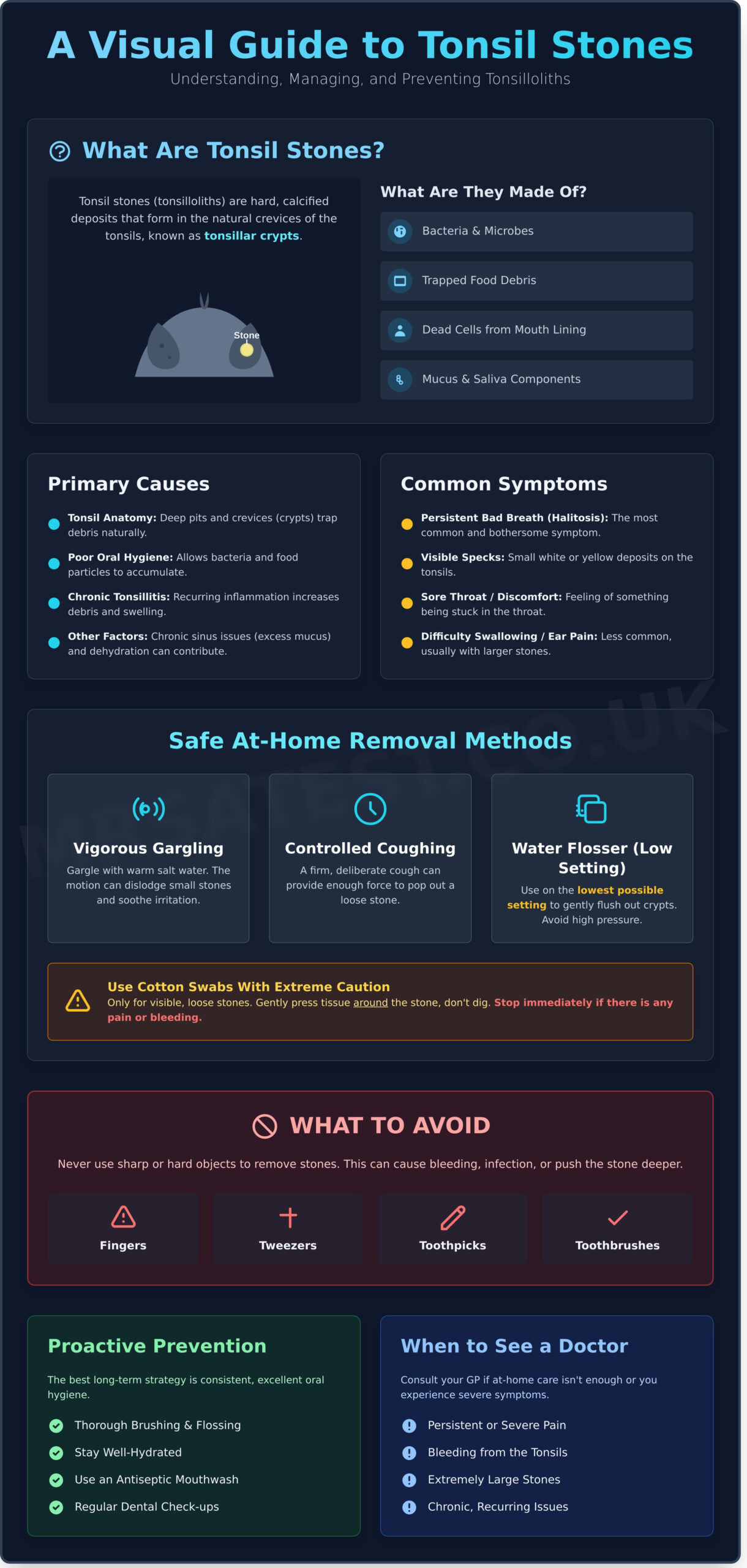
If you have ever noticed small, white or yellow specks at the back of your throat, you may have encountered tonsil stones. Medically referred to as tonsil stones (tonsilloliths), these are hard formations that develop in the natural crevices of your tonsils. You can think of them as small, hardened pebbles, formed from a calcified mixture of bacteria, food debris, dead cells, and mucus that becomes trapped.
While the thought of them may be unpleasant, it is reassuring to know that they are a common condition and are typically harmless. For most people, they are a minor nuisance rather than a significant medical concern.
The Main Causes of Tonsil Stones
The formation of these deposits is often linked to several key factors. Understanding the primary causes can be the first step toward managing and preventing them.
- Tonsil Anatomy: Your tonsils are not smooth surfaces; they have natural pits and crevices called tonsillar crypts. Debris can easily become lodged in these deep pockets, creating an ideal environment for stones to form.
- Poor Oral Hygiene: Inconsistent brushing and flossing can allow bacteria and food particles to accumulate in the mouth, providing the materials for stone formation.
- Chronic Tonsillitis: Recurring inflammation of the tonsils (tonsillitis) can lead to swelling and an increase in debris, contributing to the development of tonsilloliths.
- Other Factors: Conditions such as chronic sinus issues, which increase mucus production, and dehydration, which can concentrate the deposits, may also play a role.
Common Symptoms You Might Notice
While some individuals have tonsil stones without any awareness, others may experience noticeable symptoms. The most common signs to look for include:
- Persistent Bad Breath (Halitosis): This is often the most prominent and bothersome symptom, caused by the compounds released by the bacteria within the stones.
- Visible White or Yellow Specks: You may be able to see small, speck-like deposits on the surface of your tonsils when looking in a mirror.
- Sore Throat or Discomfort: A persistent feeling that something is stuck in your throat, or a mild, localised soreness, is a common complaint.
- Difficulty Swallowing or Ear Pain: Less commonly, larger stones may cause discomfort when swallowing or a sensation of pain in the ear due to shared nerve pathways.
How to Safely Remove Tonsil Stones at Home
While the presence of tonsil stones can be unsettling, many will dislodge on their own during normal activities like eating, drinking, or coughing. If you decide to attempt removal at home, the primary goal must be safety. Gentle, non-invasive methods are key to avoiding injury to the delicate tonsil tissue. It is crucial to stop any attempt immediately if you experience pain or cause any bleeding.
Effective and Gentle At-Home Techniques
Before resorting to direct contact, several simple methods can encourage a stone to come out naturally. These techniques are the safest first steps for managing tonsil stones at home.
- Vigorous Gargling: Dissolve half a teaspoon of salt in a glass of warm water and gargle for 30-60 seconds. The saltwater can help soothe any irritation and the motion may be enough to loosen and dislodge smaller stones.
- Controlled Coughing: A firm, deliberate cough can sometimes provide enough force to pop a loose stone out of its crypt.
- Water Flosser: Using a water flosser on its lowest possible setting can gently flush out tonsil crypts. Aim the stream of water towards the stone, being careful not to use excessive pressure. As detailed in this guide to Tonsil Stones: Symptoms, Causes, Removal & Treatment, professional advice should be sought if at-home methods are ineffective.
Using a Cotton Swab (With Caution)
This method should only be considered as a last resort for stones that are clearly visible, at the surface, and appear loose. Moisten the end of a cotton swab with water and, using a mirror and good lighting, gently press on the tissue immediately surrounding the stone. The goal is to encourage the stone to pop out, not to dig it out. If you feel any pain, begin to gag, or the stone does not move easily, stop immediately.
What to Absolutely Avoid
Never attempt to remove a tonsil stone with a sharp or hard object. This includes your fingers, tweezers, toothbrushes, or toothpicks. Using such implements carries a significant risk of:
- Causing bleeding or tearing the delicate tonsil tissue.
- Introducing bacteria, leading to infection.
- Accidentally pushing the stone deeper into the tonsil crypt.
Aggressive poking or scraping of your tonsils should always be avoided. If gentle methods are not successful, it is safer to consult a healthcare professional.
When to See a Doctor: Professional Treatment Options
While home remedies are often sufficient for managing occasional tonsil stones, there are times when professional medical advice is necessary. It is a sensible and proactive step to consult a healthcare professional if symptoms persist or become severe. Your GP is the best first point of contact and can provide an initial assessment, potentially referring you to an Ear, Nose, and Throat (ENT) specialist for further evaluation and treatment.
Signs That You Should Book an Appointment
Seeking a professional opinion is recommended if you experience any of the following:
- Significant Discomfort: The stones are unusually large, causing pain, or creating a persistent feeling of something being stuck in your throat.
- Difficulty Swallowing or Breathing: Any obstruction that impacts your ability to swallow (dysphagia) or breathe properly requires prompt medical attention.
- Persistent Symptoms: Home care does not alleviate chronic bad breath (halitosis), sore throat, or earache associated with the stones.
- Chronic Recurrence: The stones return frequently, impacting your confidence and overall quality of life.
How Doctors Diagnose and Treat Tonsil Stones
Diagnosis is typically straightforward and involves a simple physical examination of your mouth and throat. If treatment is needed, a doctor or ENT specialist may perform a minor procedure in the clinic. This can involve using a pressurised water irrigator or a sterile instrument to carefully dislodge and remove the calculus. In cases where a bacterial infection like tonsillitis is also present, a course of antibiotics may be prescribed to address the infection, though this does not treat the stones themselves.
Surgical Procedures for Chronic Cases
For individuals with severe, chronic tonsil stones that do not respond to other treatments, a surgical procedure may be considered. These options are typically reserved for the most persistent cases:
- Laser or Coblation Cryptolysis: These minimally invasive procedures use laser or radiofrequency energy to resurface the tonsils. This eliminates the crypts where debris collects and stones form.
- Tonsillectomy: The complete surgical removal of the tonsils. This is the only permanent solution and is reserved for severe, recurrent cases due to the required recovery time and surgical risks.
Preventing Tonsil Stones: A Proactive Approach
While removing existing tonsil stones provides immediate relief, the most effective long-term strategy is prevention. By understanding that these formations are primarily caused by an accumulation of bacteria and debris in the tonsillar crypts, you can adopt simple, consistent habits to minimise their recurrence. A proactive approach focuses on creating an oral environment where it is difficult for tonsil stones to develop.
This does not require complex procedures but rather a dedicated focus on excellent oral hygiene and mindful lifestyle choices. The following steps are fundamental to reducing your risk.
The Importance of Excellent Oral Hygiene
A thorough and consistent oral hygiene routine is the cornerstone of preventing stone formation. By mechanically removing bacteria and food debris, you eliminate the core materials that form these calcified deposits. We recommend integrating the following practices into your daily regimen:
- Brush and Floss Daily: Brush your teeth for at least two minutes, twice a day. Crucially, floss once daily to remove trapped food particles and plaque from between the teeth and along the gumline, areas that brushing alone cannot reach.
- Use a Tongue Scraper: A significant amount of bacteria resides on the surface of the tongue. Using a tongue scraper each morning can effectively reduce this bacterial load, contributing to fresher breath and a cleaner oral cavity.
- Gargle Regularly: After brushing, gargle with a non-alcoholic mouthwash or a simple warm salt water solution (half a teaspoon of salt in a glass of warm water). This helps to dislodge any remaining debris from the back of the throat and tonsils.
Lifestyle and Dietary Adjustments
Beyond oral care, certain lifestyle factors can influence the likelihood of developing stones. Simple adjustments can make a significant difference.
Staying well-hydrated is essential. Drinking plenty of water throughout the day helps to naturally cleanse your mouth and throat, washing away bacteria and preventing the buildup that leads to stone formation. Some individuals find a correlation between high dairy intake and an increase in stone formation; if you suspect this is the case, consider monitoring your consumption. Finally, quitting smoking is strongly advised, as tobacco use negatively impacts overall oral health and can create an environment more conducive to bacterial growth.
As part of a holistic approach to wellness and hydration, incorporating natural beverages can be beneficial. For those interested in exploring traditional wellness options, you can buy Jamaican herbal tea online, which many people enjoy for its soothing properties and contribution to daily fluid intake.
Managing Tonsil Stones: Your Path to Better Oral Health
Understanding the causes and treatments for tonsil stones is the first step toward managing them effectively. While often harmless, they can be a source of discomfort. The key takeaways are clear: diligent oral hygiene is your primary defence, and for minor cases, safe at-home removal is possible. For persistent or severe symptoms, however, consulting a healthcare professional is always the most prudent course of action.
Navigating any health concern requires reliable information. We are committed to empowering you with knowledge that has been reviewed for clinical accuracy. As part of our dedication to your well-being, we partner exclusively with UKAS-accredited laboratories to provide confidential and discreet health solutions you can trust. Taking a proactive approach is the most powerful tool you have for your health.
Learn more about taking control of your health with our guides.
Frequently Asked Questions About Tonsil Stones
Are tonsil stones contagious?
No, tonsil stones are not contagious. They are a build-up of calcified material, including dead cells, mucus, and food debris, that collects in the crevices of the tonsils. While they contain bacteria, these are common oral bacteria, not an infectious agent that can be passed to another person through kissing, sharing utensils, or other close contact. You cannot “catch” tonsil stones from someone else.
Can tonsil stones cause serious health problems?
In most cases, tonsil stones are a benign condition and do not lead to serious health complications. They are primarily a nuisance, causing bad breath or mild discomfort. However, in rare instances, exceptionally large stones can cause difficulty swallowing, persistent ear pain, or significant tonsil swelling. If you experience severe symptoms, it is advisable to consult a GP or an ENT (Ear, Nose, and Throat) specialist for a professional evaluation.
It is also important to consider that persistent pain in the ear or jaw can be a symptom of a serious dental problem, such as a tooth infection. If the pain is severe and you suspect it may not be related to your tonsils, seeking an emergency root canal London could be the necessary step to address the true source of the discomfort.
Do tonsil stones go away on their own without removal?
Smaller tonsil stones can sometimes dislodge on their own. Actions such as coughing, gargling vigorously, or even eating can be enough to loosen and expel them. However, larger or more deeply embedded stones may not go away without intervention. If they persist and cause discomfort, manual removal, either at home with care or by a medical professional, may be necessary to resolve the issue.
Can you smell your own tonsil stones?
Yes, it is very common to be able to smell your own tonsil stones. The most prominent symptom is halitosis (bad breath), which is caused by anaerobic bacteria within the stone breaking down debris and releasing volatile sulfur compounds. This can also create a persistent foul or metallic taste in the back of the throat, making you aware of the odour even when others may not notice it.
What is the difference between tonsil stones and tonsillitis?
Tonsil stones and tonsillitis are distinct conditions affecting the same area. Tonsil stones (tonsilloliths) are physical formations of hardened debris that accumulate in the tonsil crypts. In contrast, tonsillitis is the inflammation and infection of the tonsils themselves, typically caused by a virus or bacteria. Tonsillitis is characterised by severe sore throat, fever, and red, swollen tonsils, symptoms not usually associated with stones alone.
Is it normal to get tonsil stones frequently?
For some individuals, experiencing recurring tonsil stones is quite common. This is often due to having large or deep tonsillar crypts (the small pockets on the surface of the tonsils) where debris can easily become trapped. Chronic allergies, sinus issues, or suboptimal oral hygiene can also contribute to their frequent formation. While not everyone gets them, frequent recurrence is a normal pattern for those who are anatomically predisposed.