
Pre-Surgery Health Check UK: The Essential Guide to Pre-Op Preparation
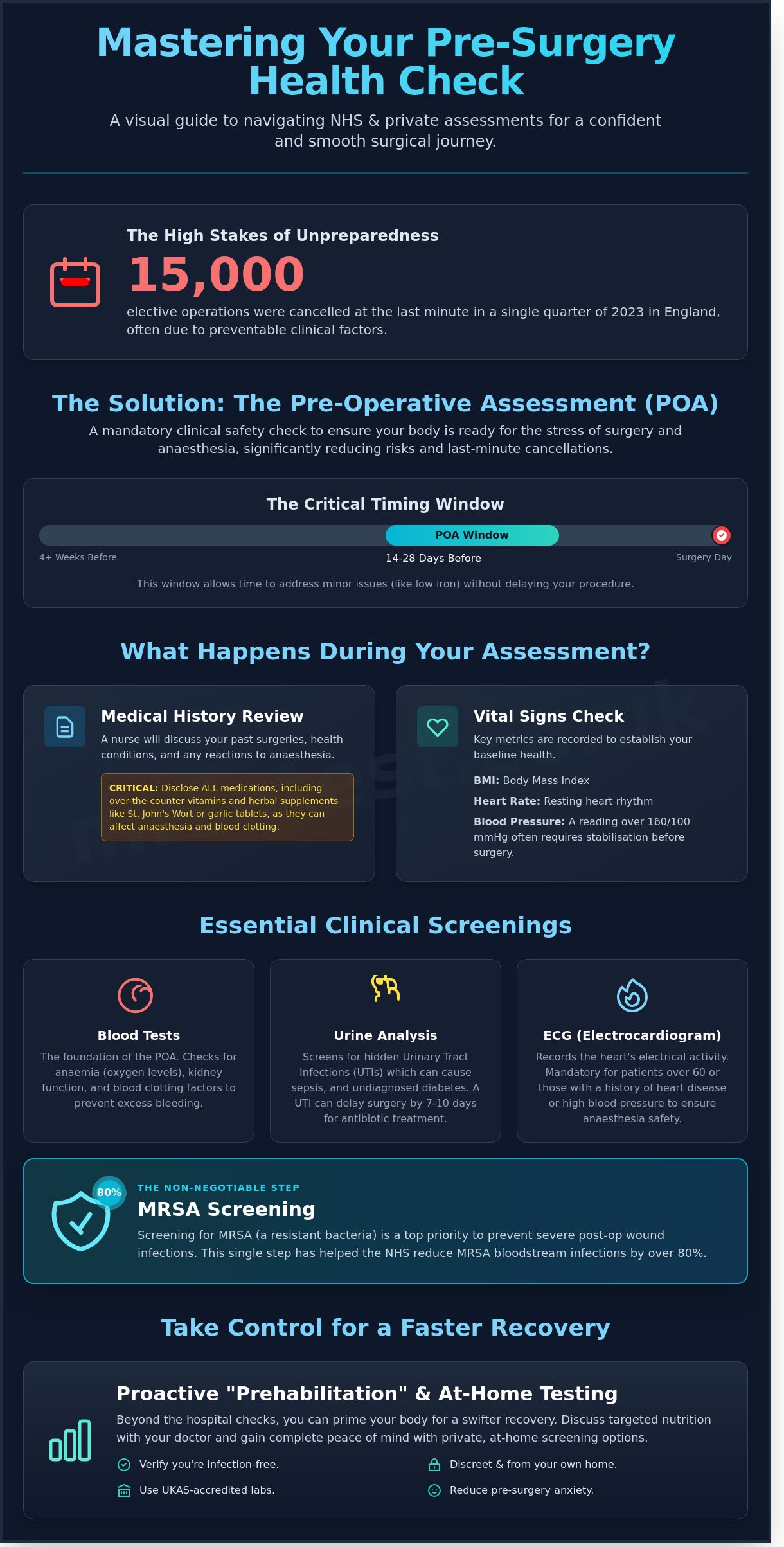
Nearly 15,000 elective operations were cancelled at the last minute in a single quarter of 2023 across England, often because of clinical factors that could have been identified sooner. It’s natural to feel anxious as your date approaches, especially when the fear of a “theatre-day” cancellation or a hospital-acquired infection like MRSA weighs on your mind. You’ve likely waited months for this appointment, and you deserve the peace of mind that comes with knowing your body is fully prepared for the procedure.
This guide simplifies the pre-surgery health check uk process, helping you master every step from mandatory NHS assessments to private, proactive screenings. We’ll show you how to take control of your health so you can walk into the hospital with total confidence. You will find a clear checklist of essential tests, professional advice on using a discreet MRSA culture test to verify you’re infection-free from the comfort of your own home, and clinical strategies to help speed up your post-surgery recovery.
Key Takeaways
- Understand the Pre-Operative Assessment (POA) timeline and why the NHS requires these formal checks several weeks before your elective procedure.
- Identify the essential clinical tests, including blood work and urinalysis, that your surgical team uses to screen for anaemia and underlying health risks.
- Learn how to navigate your pre-surgery health check uk requirements, specifically focusing on the non-negotiable step of MRSA screening for hospital safety.
- Discover “prehabilitation” strategies, such as targeted nutritional support, designed to prime your body for a significantly swifter post-operative recovery.
- Gain peace of mind by exploring how discreet, UKAS-accredited at-home testing allows you to manage vital screenings from the comfort of your own home.
Navigating the Pre-Operative Assessment (POA) in the UK
The Pre-Operative Assessment (POA) is a mandatory clinical safety check required by the NHS and private providers before any elective surgery. It’s designed to ensure your body can handle the physical stress of a procedure and the physiological effects of anaesthetic. Most patients attend their pre-surgery health check uk between 14 and 28 days before their scheduled operation. This specific window allows the clinical team enough time to address minor health issues, such as low iron levels or high blood pressure, without necessitating a full cancellation of your surgical date.
The format of your assessment depends on your general health and the complexity of your upcoming operation. Low-risk patients might receive a 20-minute telephone screening with a specialist nurse. However, if you have existing conditions like diabetes or heart disease, you’ll likely attend an in-person clinic for more intensive monitoring. The primary objective is a formal Preanesthetic assessment. This evaluation determines if you’re medically stable and “fit for anaesthesia.” It helps the surgical team avoid intra-operative complications, which can occur in roughly 15% of high-risk cases if the patient’s baseline health isn’t thoroughly understood beforehand.
What to Expect During Your Appointment
During the appointment, a nurse will conduct a thorough review of your medical history. They’ll ask about previous surgeries and any adverse reactions to anaesthetic, such as post-operative nausea or rare conditions like malignant hyperthermia. You must provide a full list of medications, including over-the-counter vitamins and herbal supplements. Supplements like St John’s Wort or garlic tablets can interfere with blood clotting or anaesthetic metabolism, so total transparency is vital. The nurse will also record your Body Mass Index (BMI), blood pressure, and heart rate. A blood pressure reading consistently over 160/100 mmHg often requires stabilisation before the surgery can safely proceed.
The Consequences of a “Failed” Assessment
A “failed” assessment doesn’t mean you’re ineligible for surgery; it simply means the timing isn’t safe yet. Common reasons for postponement include uncontrolled hypertension or undiagnosed anaemia. If the screening detects an active infection, such as a chest infection or MRSA colonisation, the hospital will likely postpone the procedure to protect your recovery and the safety of the ward. This can be emotionally taxing, especially if you’ve already waited the standard 18-week NHS referral-to-treatment target. Logistically, a last-minute delay often means reorganising time off work or childcare, which adds significant stress to your surgical journey. Ensuring you’re prepared for your pre-surgery health check uk is the best way to keep your recovery on track.
Essential Clinical Tests: What Your Surgeon Needs to Know
Your pre-surgery health check uk isn’t a mere formality; it’s a clinical deep dive into your current physiological state. Surgeons use these metrics to predict how your body will react to the stress of surgery and the drugs used during general anaesthesia. By identifying risks early, the medical team can adjust your care plan, which significantly reduces the chance of cancellations on the day of your procedure.
Blood tests are the foundation of any pre-operative assessment. Your medical team checks for anaemia to ensure you have enough oxygen-carrying capacity to support healing. They also evaluate kidney function and blood clotting factors. If your blood doesn’t clot correctly, the risk of intraoperative bleeding increases. These tests provide a baseline that allows doctors to monitor your recovery more accurately in the post-operative ward.
A simple urine sample can reveal a lot about your readiness for theatre. It screens for asymptomatic urinary tract infections (UTIs) that could cause post-operative sepsis if left untreated. It also picks up undiagnosed diabetes by checking for glucose levels. If a UTI is detected, your surgeon might postpone the operation for 7 to 10 days to allow for a course of antibiotics, ensuring your immune system isn’t compromised during the procedure.
An electrocardiogram (ECG) records your heart’s electrical activity and is a standard requirement for many. While not every patient needs one, it’s typically mandatory for those over 60 or anyone with a history of heart disease or high blood pressure. This test helps the anaesthetist decide which medications are safest for your heart rhythm during the operation.
Hospitals prioritise screening for MRSA (Methicillin-resistant Staphylococcus aureus) because this resistant bacterium can cause severe wound infections. According to NHS data, pre-operative screening has helped reduce MRSA bloodstream infections by over 80% since 2006. You can easily perform an MRSA self-test at home to gain peace of mind and ensure you’re clear of colonisation before your hospital admission date.
Specific Blood Panels Explained
A Full Blood Count (FBC) identifies low iron levels. If your haemoglobin is below 120g/L for women or 130g/L for men, you might need a pre-op iron infusion. Urea and Electrolytes (U&E) tests ensure your kidneys can process anaesthetic drugs efficiently. Finally, HbA1c testing measures long-term blood sugar. High levels can impair wound healing and increase the risk of skin infections, making blood sugar control vital for your recovery timeline.
The Complexity of the Procedure vs. Test Requirements
The scale of your surgery dictates the depth of your pre-surgery health check uk. A minor procedure, like a mole removal or a simple cyst excision, may require no tests at all for a healthy individual. In contrast, major surgeries like hip replacements or cardiac procedures follow strict GIRFT guidance on preoperative assessment. These protocols ensure that patients with comorbidities, such as asthma or chronic obstructive pulmonary disease, receive the specific cardiac or pulmonary checks they need. NICE guidelines suggest that routine tests for healthy patients undergoing minor elective surgery are often unnecessary, but your age and existing health conditions remain the primary drivers for extra testing. If you’re over 65 or have a BMI over 30, expect a more comprehensive battery of tests regardless of the surgery’s complexity.
Why MRSA Screening is a Non-Negotiable Step for UK Surgery
Methicillin-resistant Staphylococcus aureus, or MRSA, is often labelled a “superbug” because it resists several widely used antibiotics. In a community setting, it’s rarely a concern. However, within the sterile environment of a UK hospital, it represents a serious threat to patient safety. During a pre-surgery health check uk, screening for this bacteria is a mandatory safety barrier designed to prevent healthcare-associated infections. If MRSA enters a surgical incision, the resulting infection is much harder to treat than standard staph infections, often requiring specific, high-strength intravenous antibiotics.
Understanding the difference between colonisation and infection is vital for your peace of mind. Approximately 3% of the British public carry MRSA on their skin or in their nostrils without knowing it. This is “colonisation.” You don’t feel ill, you don’t have a fever, and you don’t have a rash. You are simply a healthy carrier. The danger arises only when your skin’s protective barrier is broken during surgery. Without a prior screen, the bacteria can migrate from your skin into the surgical site, potentially leading to life-threatening sepsis or deep-tissue infections.
The screening process acts as a clinical “gatekeeper.” If your swab returns a positive result, your surgery will likely be postponed. This isn’t a punishment; it’s a protective measure. NHS data indicates that identifying and treating MRSA carriers before they enter the ward reduces the risk of surgical site infections by up to 40%. Hospitals cannot risk an outbreak that might affect other vulnerable patients, so they won’t proceed until your decolonisation is complete and verified.
The Standard UK MRSA Swab Process
The swabbing process is quick, painless, and focused on areas where bacteria thrive. Clinical staff or at-home kits focus on the “primary sites,” which are the nostrils, the throat, and the groin. These warm, moist environments are the most common reservoirs for MRSA colonisation. Once the swabs are taken, they are sent to a microbiology lab where they are cultured for 24 to 48 hours to identify any resistant strains. If you want to learn more about the clinical environment, you can read about What to expect at your pre-op assessment to see how these tests fit into your overall care plan.
If the lab confirms colonisation, you’ll start a standard 5-day decolonisation protocol. This typically involves using a special antiseptic body wash and a prescribed antibiotic nasal cream. You’ll need to use these products daily, alongside fresh towels and bed linen, to ensure the bacteria are fully eradicated from your personal environment before you return for a re-test.
Private vs. NHS Screening: Avoiding the Last-Minute Rush
Timing is the biggest challenge with NHS screening. Many hospitals perform the swab only a few days before the operation. If the result is positive, the last-minute cancellation of your surgery can cause significant emotional and logistical stress. It’s a frustrating wait that often leaves patients feeling anxious about their pre-surgery health check uk results.
Proactive private testing offers a more controlled alternative. By testing yourself two or three weeks before your scheduled date, you gain a head start. If you find you’re colonised, you can complete the 5-day treatment and be clear before your official hospital assessment even begins. This ensures your “personal environment” is sterile, your surgery stays on track, and you enter the hospital with the confidence that you aren’t bringing a hidden risk into the operating theatre.
Preparing Your Body: Optimising Health for Faster Recovery
Think of your upcoming procedure as a physical challenge, similar to a marathon. You wouldn’t show up to a 26-mile race without training; your body requires the same level of preparation for the physiological stress of surgery. This process, known as prehabilitation, can reduce post-operative complications by up to 30%. By focusing on your physical and nutritional health weeks before your pre-surgery health check uk, you give your immune system the best possible chance to heal quickly and efficiently.
Protein is the primary building block for tissue repair. Increasing your intake of lean proteins, such as chicken, fish, or plant-based alternatives, in the 14 days leading up to surgery supports wound healing. Many hospitals now recommend specific “pre-op drinks” that are high in carbohydrates. These drinks, usually consumed up to two hours before your fasting window begins, ensure your liver has enough glycogen to manage the energy demands of the operation. This simple step prevents the “starvation state” that can slow down your initial recovery in the post-anaesthetic care unit.
For those looking to complement their diet with targeted nutritional support, brands specializing in physician-formulated supplements, such as MNM ProLabs, offer products designed to support physical wellness and recovery.
Lifestyle choices play a decisive role in how your blood carries oxygen. If you smoke or vape, stopping just 48 hours before your admission provides immediate benefits. Within this short window, carbon monoxide levels in your blood drop to normal; this increases the oxygen available to your heart and the surgical site. Alcohol should also be avoided for at least 48 hours prior to the procedure. Alcohol can interfere with how your liver processes anaesthetic drugs and may increase the risk of bleeding during the operation.
The Impact of Lifestyle on Surgical Outcomes
Physical activity isn’t just about fitness; it’s about lung capacity. Engaging in 20 minutes of brisk walking daily improves your functional reserve. This reduces the risk of post-operative pneumonia, a complication that affects approximately 5% of major surgery patients in the UK. Mental preparation is equally vital. Patients who practice relaxation techniques often report lower pain scores and require less opioid medication. Don’t forget to organise your home; move trip hazards like rugs and ensure essential items are at waist height to prevent strain during the first 72 hours back home.
Hygiene and Infection Control at Home
Reducing the bacterial load on your skin is a critical step in preventing Surgical Site Infections (SSIs). Your clinical team may provide an antiseptic wash, such as 4% Chlorhexidine, to use in the days before admission. It’s essential to follow the instructions precisely. Focus on the area where the incision will be made, but avoid shaving the site yourself. Shaving with a manual razor creates micro-cuts that act as gateways for bacteria. If hair removal is necessary, the surgical team will use professional clippers on the day of the procedure. To maintain a sterile environment, use fresh bed linen and clean towels for the two nights preceding your surgery.
Ensuring you are free from specific bacteria is a standard part of a comprehensive pre-surgery health check uk. Many hospitals require proof of a negative MRSA status to protect both you and other patients. You can proactively manage this requirement by using a discreet MRSA home test kit to check your colonisation status before your hospital pre-assessment appointment. This provides peace of mind and ensures your surgery remains on schedule without unexpected delays due to infection risks.
Taking Control with Private At-Home MRSA Screening
Preparing for an operation is often a period of high anxiety. Much of this stress stems from the mandatory pre-surgery health check uk conducted by hospitals. One of the biggest hurdles in this assessment is the MRSA screen. If you test positive on the day of your hospital appointment, your surgical date could be postponed indefinitely while you undergo treatment. Taking a private test at home allows you to manage this risk on your own terms, providing a vital buffer before your official appointment.
The mrsatest.co.uk service provides a bridge between clinical accuracy and personal convenience. Every kit is dispatched in discreet packaging, ensuring your medical privacy remains intact from the moment it arrives at your door. We partner exclusively with UKAS-accredited laboratories. This means your samples are processed in a 100% UK-based facility to the same rigorous standards as those used by the NHS. You aren’t just getting a home kit; you’re accessing professional diagnostic expertise from your living room.
You have two primary options when choosing a test. The standard culture test is the traditional method, typically providing results within 48 to 72 hours. It’s a reliable way to check for bacterial growth. For those on a tighter schedule, the MRSA PCR rapid test uses molecular detection to identify the presence of bacteria DNA. This method provides results in as little as 24 hours after the sample reaches the lab. This speed is vital if your official pre-surgery health check uk is only a few days away and you need answers fast.
How Our Self-Test Kits Empower Patients
Our kits are designed for simplicity and accuracy. You’ll receive clear, illustrated instructions on how to perform a self-swab of the nose and groin areas. These are the primary sites where MRSA colonisation occurs. Once you’ve collected your samples, place them in the provided secure tubes. Every kit includes prepaid return shipping to our trusted UK partner laboratory, so you don’t need to worry about extra postage costs or logistics. Your results are delivered through a secure, confidential portal, accessible only by you, keeping your data safe and private.
Why Proactive Testing is the Smart Choice
Knowledge is the best tool for reducing pre-operative stress. Testing early eliminates the “fear factor” of a surprise positive result during your formal hospital assessment. If the bacteria is detected, you’ll have ample time to begin a private decolonisation programme. This typically involves a five-day course of antiseptic body wash and nasal cream. By clearing the colonisation before your hospital appointment, you ensure your surgical timeline remains on track and avoid the emotional and financial cost of a last-minute cancellation. You can ensure your surgery goes ahead as planned with a private MRSA test and enter the operating theatre with total peace of mind.
Take Proactive Control of Your Surgical Journey
Preparing for a procedure involves more than just showing up on the day. Your pre-surgery health check uk is the foundation of a safe operation and a swift return to daily life. By understanding the Pre-Operative Assessment (POA) and completing essential clinical tests, you ensure your surgical team has the data they need to protect you. MRSA screening remains a critical step because identifying colonisation early prevents serious post-operative infections.
You don’t have to wait for hospital appointments to tick this off your list. Our 100% UK-based service provides the same clinical accuracy as hospital labs but from the comfort of your home. We use UKAS-accredited partner laboratories to process your samples, offering rapid PCR results within 24 hours of lab receipt. Every kit includes free, discreet shipping to maintain your privacy throughout the process. Taking control of your preparation now means fewer delays and a more confident journey toward recovery.
Order your fast and discreet MRSA test kit today for total peace of mind. You’re making a responsible choice for your health and your future well-being.
Frequently Asked Questions
What happens at a pre-operative assessment in the UK?
A pre-operative assessment involves a series of clinical checks to ensure you’re fit for anaesthesia and your specific procedure. You’ll meet a nurse who records your height, weight, blood pressure, and heart rate to calculate your BMI and baseline health. They also review your full medical history and current medications. Depending on your surgery type, you might undergo an ECG or specific blood tests during this 30 to 60 minute appointment.
Can I eat and drink before my pre-surgery health check?
You can usually eat and drink as normal before a pre-surgery health check uk unless your appointment letter specifically instructs you to fast. Most routine pre-op checks don’t require an empty stomach. If the clinical team needs to measure your fasting glucose or cholesterol levels, they’ll ask you to avoid food for 6 to 8 hours before your arrival. Always check your hospital instructions for specific guidance regarding your morning tea or coffee.
How long do pre-op blood test results take to come back?
Most pre-op blood test results are processed and returned to your surgical team within 24 to 48 hours. When samples are sent to a UKAS-accredited laboratory, the clinical staff usually reviews the data within 3 working days. You won’t typically receive a call if your results are normal. The hospital will contact you immediately if they find issues like low iron levels or high blood sugar that need treatment before your operation date.
Will my surgery be cancelled if I have a cold or cough?
Your surgery might be postponed if you have a productive cough or a fever above 38°C to ensure your safety while under general anaesthesia. Anaesthetists often recommend waiting 2 to 6 weeks after a chest infection to reduce the risk of respiratory complications. If your symptoms are mild, such as a slight runny nose, the medical team will assess you on the day. It’s best to call the hospital 48 hours in advance to discuss any new symptoms.
Why do I need an MRSA test if I feel perfectly healthy?
You need an MRSA test because 1 in 30 people carry these bacteria on their skin without showing any symptoms of illness. This is known as colonisation. While harmless on healthy skin, MRSA can cause serious infections if it enters a surgical wound or the bloodstream. Screening ensures that if you’re a carrier, you can complete a simple 5-day decolonisation treatment to protect yourself and other vulnerable patients in the hospital environment.
How far in advance should I do a private MRSA test before surgery?
You should ideally complete your private MRSA test 10 to 14 days before your scheduled surgery date. This timeframe allows 2 to 3 days for laboratory processing and leaves enough time for a 5-day decolonisation treatment if your result is positive. Using a UK-based partner lab ensures fast results, but starting the process 2 weeks early provides a vital safety margin to prevent any last-minute delays to your procedure.
What should I do if my pre-op assessment identifies high blood pressure?
If your blood pressure is higher than 160/100 mmHg, your surgical team will likely ask your GP to manage it before you proceed. Surgery is often delayed if readings consistently exceed 180/110 mmHg due to increased cardiovascular risks during the operation. Your GP might prescribe new medication or adjust your current dosage. Usually, a 2-week period of home monitoring is required to confirm your blood pressure is stable enough for a safe pre-surgery health check uk clearance.
Is an at-home MRSA test as accurate as the one done in hospital?
Yes, an at-home MRSA test is just as accurate as a hospital test when it’s processed by a UKAS-accredited facility. Our kits use the same clinical-grade swabs and laboratory techniques, such as PCR rapid testing, used by the NHS. These molecular detection methods identify MRSA DNA with 99% accuracy. This allows you to screen for colonisation from the comfort of your own home while maintaining the highest clinical standards for your pre-operative preparation.