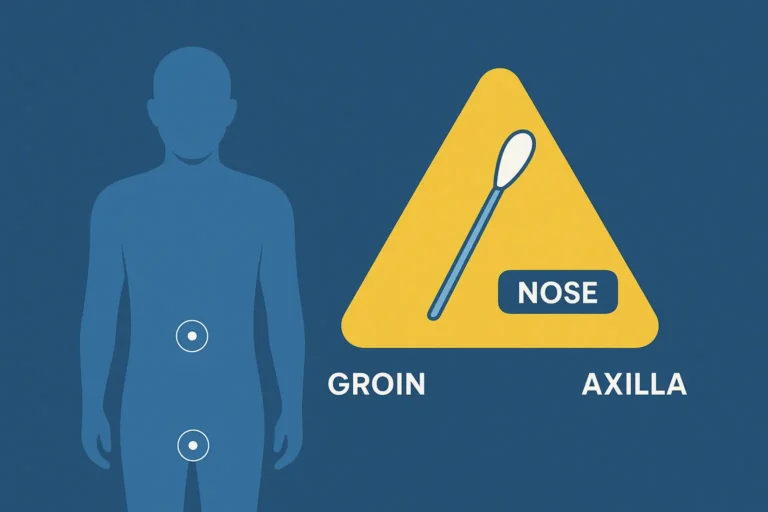

Peace of Mind Before Surgery: A Comprehensive Guide to Pre-Op Preparation
What if the most crucial steps for a successful surgery aren’t taken in the operating theatre, but in your own living room weeks before?
It’s completely normal to feel a wave of anxiety as a procedure date approaches. The fear of the unknown, worries about recovery, and concerns over hospital-acquired infections like MRSA can easily disrupt your sleep and make you feel like a passive participant in your own care. This guide is designed to change that. We will provide you with a clear, actionable framework to regain control, helping you achieve genuine peace of mind before surgery. You’ll discover how to transform that pre-surgical anxiety into clinical confidence through a blend of simple psychological techniques and proactive health screening.
We’ll walk you through a step-by-step checklist, from mental preparation exercises to understanding the simple, discreet MRSA screening you can complete from the comfort of your own home, ensuring you’ve done everything possible for a safe and smooth recovery.
Key Takeaways
- Learn why pre-surgical anxiety is a normal biological response and discover simple psychological techniques to regain a sense of calm and control.
- Utilise a practical pre-op checklist to manage logistics and make lifestyle adjustments that can directly improve your surgical outcome.
- Understand why proactive screening for infections like MRSA is a critical step for achieving clinical peace of mind before surgery, especially when standard NHS screening may be limited.
- Follow our 7-day countdown protocol to feel organised and empowered, combining mental, physical, and clinical prep into one easy-to-manage plan.
Understanding Pre-Surgery Anxiety: Why It Is Normal to Feel This Way
If you’re feeling a sense of dread or worry in the days leading up to your operation, you are not alone. This experience, known as pre-operative anxiety, is a completely normal physiological and psychological response. It stems from a perceived loss of control; you are placing your health and safety into the hands of a medical team, a situation that is unfamiliar and inherently uncertain. This feeling is incredibly common. Clinical studies confirm that up to 80% of patients scheduled for surgery experience significant levels of anxiety.
Your body is hardwired with a “fight or flight” mechanism, a primitive survival response designed to react to threats. When you anticipate surgery, your brain can interpret it as a threat, triggering a surge of adrenaline and cortisol. This is your body preparing for a challenge. A degree of vigilance is healthy; it ensures you pay close attention to pre-op instructions and ask important questions. The challenge arises when this vigilance escalates into debilitating fear, which can interfere with your well-being and recovery. Understanding these reactions is the first step toward achieving peace of mind before surgery.
The Symptoms of Pre-Op Stress
Pre-operative stress doesn’t just exist in your mind; it manifests physically and cognitively as your body processes the impending event. Recognising these signs is key to managing them. Common symptoms include:
- Physical Signs: You might notice a racing heart (palpitations), difficulty sleeping (insomnia), an upset stomach, or changes in appetite. These are direct results of stress hormones affecting your body’s systems.
- Cognitive Signs: Your thoughts may feel scattered or race uncontrollably. Many people experience “catastrophising,” where they imagine the worst-case scenario. Forgetfulness and difficulty concentrating are also frequent complaints.
Elevated levels of the stress hormone cortisol can also suppress your immune system’s effectiveness. While this is a short-term effect, managing stress is a proactive step you can take to ensure your body is in the best possible condition for both the procedure and the healing process that follows.
The “Control Gap” in Modern Healthcare
The journey from diagnosis to the operating theatre can often make patients feel like passive participants, or “cogs in a machine.” You are guided through appointments, tests, and administrative processes with little input, which can amplify feelings of powerlessness. This creates a “control gap,” where you feel things are happening to you, not with you.
Bridging this gap is essential for your mental well-being. The psychological benefit of moving from a passive to an active patient role is profound. When you become an engaged partner in your own care, you regain a sense of agency. A key step is to educate yourself; reading a comprehensive guide to pre-op preparation, for instance, provides a foundation of knowledge that empowers you to ask informed questions. This guide will focus on precisely that: helping you identify and “control the controllables.” By taking charge of your preparation, you can significantly reduce anxiety and build a foundation for a smoother recovery.
Psychological Techniques for a Calmer Mind
Achieving peace of mind before surgery involves more than just physical preparation; it requires a focused approach to your mental and emotional state. Anxiety before a medical procedure is a completely normal response. However, unchecked stress can affect your experience and even your recovery. The good news is that you can actively manage these feelings. Leading medical institutions, like the Washington University School of Medicine in St. Louis, advocate for using psychological techniques for a calmer mind as a key part of your pre-operative plan.
One of the most effective strategies is “Information Seeking.” Fear often stems from the unknown. You can reduce this by requesting a clear, step-by-step timeline for the day of your surgery. Ask your clinical team about check-in times, pre-operative procedures, the approximate duration of the surgery, and what to expect in the recovery room. Understanding this sequence transforms a vague, intimidating event into a predictable and manageable process. Taking control of your pre-operative requirements, such as ensuring your MRSA screening is completed well in advance, is another powerful way to proactively manage your pre-surgical checks and eliminate last-minute worries.
Another powerful tool is Cognitive Reframing. Your perspective has a direct physiological impact on your body’s stress response. Instead of viewing the procedure as something that is happening to you, consciously reframe it as a process you have chosen for your benefit. This simple shift in language moves you from a passive role to one of active participation in your own health outcome. It reinforces that the surgery is a positive step towards improved well-being.
Finally, don’t underestimate the importance of a strong support network. You don’t have to navigate this journey alone. Before your surgery date, identify a trusted friend or family member who can act as your main point of contact and advocate at the hospital. Speaking with others who have undergone similar procedures, often through patient groups recommended by NHS trusts, can also provide practical advice and emotional reassurance.
Breathing and Grounding Exercises
When anxiety peaks, such as in the waiting room, simple physiological techniques can provide immediate relief. The 4-7-8 breathing technique is a clinically recognised method for calming the nervous system. Here’s how to do it:
- Inhale quietly through your nose for a count of four.
- Hold your breath for a count of seven.
- Exhale completely through your mouth, making a whoosh sound, for a count of eight.
- Repeat this cycle three to four times.
Grounding exercises pull your focus away from anxious thoughts and into the present moment. A simple technique is the 5-4-3-2-1 method: silently identify five things you can see, four things you can feel (your chair, your clothes), three things you can hear, two things you can smell, and one thing you can taste. For surgical patients, box breathing is a simple, rhythmic technique of inhaling for four seconds, holding for four, exhaling for four, and holding for four, creating a ‘box’ that helps regulate the nervous system.
Visualisation and Mental Rehearsal
Elite athletes have used mental rehearsal for decades to improve performance, visualising every step of a successful outcome. This same technique can be applied to your surgery to build confidence in your body’s ability to heal. In the days before your procedure, take five minutes to close your eyes and vividly imagine waking up in the recovery room feeling calm, comfortable, and relieved. Picture the nursing staff being attentive and your body beginning its healing process. This mental practice prepares your mind for a positive result. Positive affirmations, which are short statements repeated to counter negative thoughts, also reinforce a resilient mindset. Using phrases like, “My body is strong and knows how to heal,” or “I am in the care of a skilled and dedicated team,” can provide significant peace of mind before surgery.
Controlling the Controllables: Your Physical Pre-Op Checklist
While you can’t control the surgical procedure itself, you can manage many of the surrounding factors. Taking charge of these practical elements is a powerful way to reduce anxiety and build a sense of calm. This proactive approach is fundamental to achieving peace of mind before surgery, transforming uncertainty into a structured, manageable plan.
Your surgical team has a plan for the operating theatre; this is your plan for everything else. It focuses on optimising your physical readiness and logistical security, ensuring you arrive for your procedure feeling prepared, not panicked.
The 48-Hour Logistics Plan
The final two days before your admission are about eliminating last-minute stress. A clear plan prevents morning-of-surgery chaos. Start by confirming the exact hospital address, department, and your required arrival time from your admission letter. If driving, check the hospital’s parking policy and current costs; a day pass can often be more economical than paying hourly. Arrange for a trusted friend or family member to take you and collect you, or pre-book a reliable local taxi service.
Next, pack your “comfort bag” for your hospital stay. Focus on items that will make an unfamiliar environment feel more manageable. We recommend including:
- Comfortable Clothing: Loose-fitting items like pyjamas or a dressing gown, and non-slip slippers.
- Essential Toiletries: A toothbrush, toothpaste, deodorant, and any personal skincare items.
- Entertainment: A book, tablet, or headphones for listening to music or podcasts.
- Practical Items: An extra-long phone charging cable, a small notebook and pen to jot down questions, and a list of contact numbers for family.
When choosing toiletries, using familiar, gentle products can make the clinical environment feel more personal and calming. For those who prefer natural options, suppliers like Freshskin Beauty Ltd offer a wide range of premium health and beauty items.
Health Optimisation Before the Big Day
Simple lifestyle adjustments in the days leading up to your operation can have a measurable impact on your recovery. Always follow the specific fasting and medication instructions provided by your anaesthetist to the letter. These rules are not optional; they are critical safety protocols to prevent serious complications during anaesthesia. For example, fasting for a minimum of six hours before general anaesthesia reduces the risk of pulmonary aspiration by over 65%.
If you smoke, stopping even 24 hours before your surgery can make a difference. According to NHS guidance, this short period allows nicotine and carbon monoxide to begin clearing from your system, which increases oxygen delivery to your body’s tissues by up to 10% and aids the healing process. Where permitted by your pre-op instructions, maintain good hydration in the days prior, and focus on balanced, nutritious meals. A gentle walk for 20-30 minutes each day can also improve circulation and help manage stress hormones, contributing to both physical and mental preparedness.
Finally, clear communication is key. Your pre-operative assessment is the ideal time to ask questions. Write them down beforehand. Understanding your medication schedule, fasting times, and what to expect immediately post-op provides clarity and removes fear of the unknown, securing your peace of mind before surgery.
Eliminating the Hidden Risk: Clinical Peace of Mind Through Screening
For many patients, the greatest anxiety isn’t the procedure itself, but the risk of what might happen afterwards. The number one fear is often a hospital-acquired infection (HAI), with MRSA (Meticillin-resistant Staphylococcus aureus) being a primary concern. This apprehension is completely understandable. You’re placing your trust in a clinical environment to help you heal, and the thought of a hidden threat can undermine that confidence.
While the NHS has robust screening protocols, they are typically reserved for specific high-risk procedures or patient groups. Depending on your surgery type and hospital trust policies, you may not be automatically screened, or the screening might happen very close to your admission date. This can leave a window of uncertainty. Taking a proactive “double-check” approach with a private screening test provides a definitive safety net, removing doubt and empowering you with knowledge. It’s a simple step that delivers profound peace of mind before surgery.
There is immense psychological relief in seeing a “Negative” result on paper before you even pack your hospital bag. It allows you to walk into the hospital with one less major worry, focusing all your energy on a smooth procedure and a successful recovery. You’ve taken control and confirmed your health status on your own terms.
Why MRSA Screening is the Ultimate Safety Tool
The danger of MRSA lies in its silent nature. A person can carry MRSA bacteria on their skin or in their nose without showing any symptoms at all; this is known as colonisation. When your body is vulnerable after surgery, these harmless bacteria can enter the bloodstream or a surgical wound and cause a serious infection. Knowing your status beforehand is the key. If a test is positive, your GP can prescribe a simple decolonisation treatment, often involving an antiseptic body wash and nasal cream, to clear the bacteria before you enter the hospital. This simple intervention is incredibly effective. Studies have shown that a comprehensive screen-and-treat protocol can reduce the risk of post-operative MRSA infections by up to 60%.
Comparing Screening Methods: PCR vs. Culture
Understanding your options allows you to choose the test that best fits your timeline and needs. Both methods are highly accurate and processed by our trusted UK partner laboratory, which is fully UKAS-accredited for your assurance.
- PCR Testing: The MRSA PCR (Polymerase Chain Reaction) rapid test offers the fastest confirmation. This advanced molecular detection method identifies the bacteria’s genetic material, providing a precise result within 24 hours of the sample reaching the lab. It’s the ideal choice for urgent confirmation and immediate peace of mind.
- Culture Testing: This is the traditional gold-standard method. A sample is cultured in the lab to see if MRSA bacteria grow. While it takes longer, typically 48-72 hours, it is exceptionally reliable and suitable for patients with more lead time before their procedure.
Don’t leave your safety to chance. Taking this one simple, proactive step puts you in control of a critical risk factor. Confirm your MRSA status from the comfort of your own home with a confidential test kit.
The 7-Day Peace of Mind Protocol
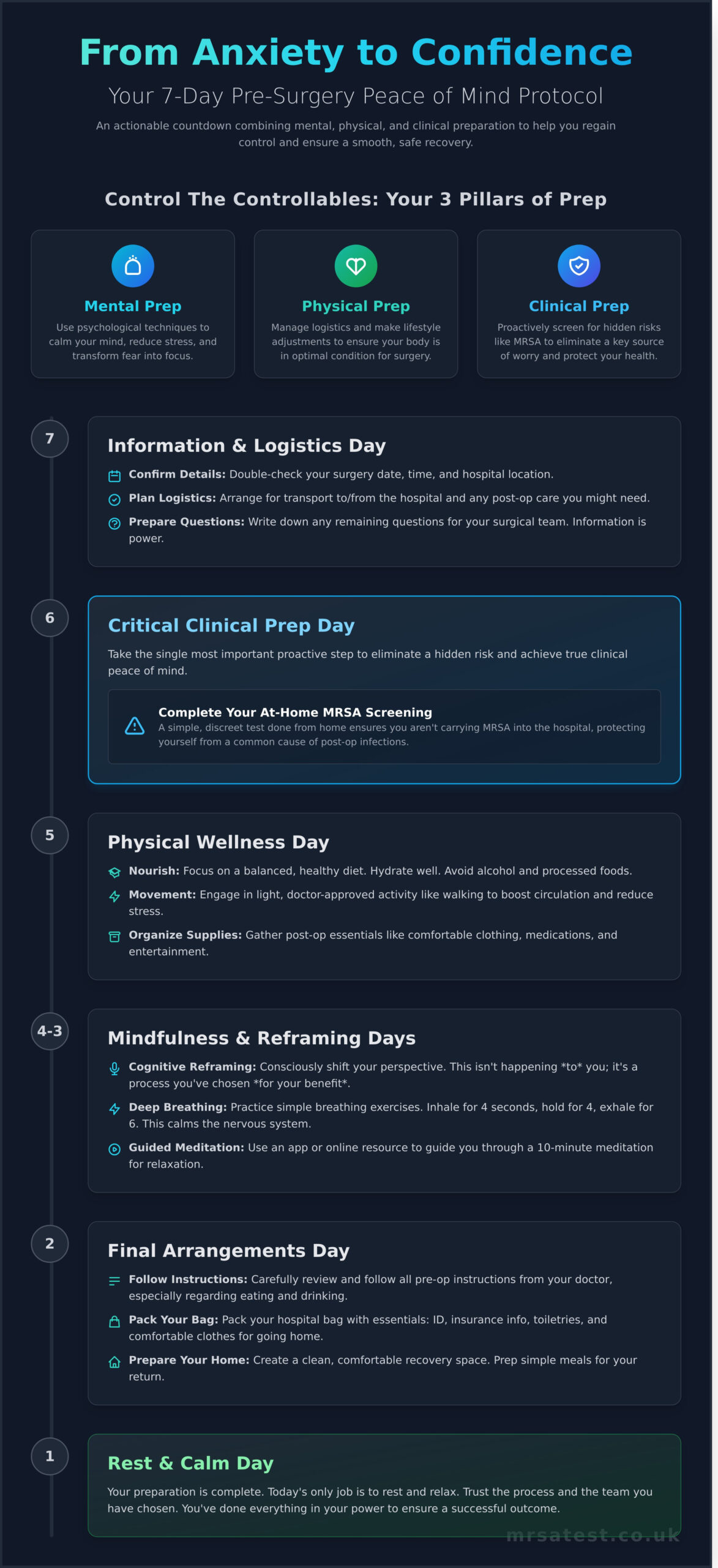
The week leading up to a procedure can feel overwhelming. Pre-op jitters are common, but a structured routine can transform anxiety into a feeling of control and preparedness. This simple, 7-day countdown integrates essential clinical screening with mental and physical preparation, empowering you to walk into the hospital with confidence. Following this protocol is a powerful way to achieve genuine peace of mind before surgery.
Days 7 to 4: Proactive Preparation
This initial phase is about taking decisive, early action to eliminate last-minute stress. By addressing key tasks now, you create the space to focus on your well-being as your surgery date approaches. It’s about getting ahead of the curve, not just keeping up.
- Confirm Your MRSA Status: One of the most significant steps you can take for your safety is proactive screening. Order your at-home MRSA test kit today. Completing the simple swab test now ensures your confidential results from our UKAS-accredited lab arrive well before your procedure, allowing you to share your status with your clinical team if necessary. It’s a fast, simple, and discreet way to take control of your health from the comfort of your own home.
- Finalise All Paperwork: Locate and complete all hospital forms, consent documents, and pre-authorisation paperwork. Call your surgeon’s office to clarify your medication schedule, especially regarding what you should and shouldn’t take on the morning of the surgery. Keep everything in a single, clearly marked folder.
- Begin a Mindfulness Practice: Dedicate just five minutes each day to a simple mindfulness or breathing exercise. Apps like Calm or Headspace offer guided sessions, or you can simply focus on slow, deep breaths. This practice has been shown to lower cortisol levels and reduce anxiety.
Days 3 to 1: The Final Countdown
With the major tasks completed, these last few days are for finalising your recovery environment and focusing on your physical health. The goal is to make your return home as comfortable and stress-free as possible, allowing your body to focus entirely on healing.
- Receive and Share Your Results: Your MRSA test results should arrive during this period. Having this information provides critical assurance. If required by your hospital’s protocol, you can now confidently share the results with your surgical team, confirming you’ve taken a vital step in infection prevention.
- Arrange Your Recovery Nest: Prepare your home for your return. This includes stocking the fridge with simple meals, placing extra pillows on your bed or sofa, setting up a side table with everything you’ll need within reach (medication, water, phone charger, books), and queuing up films or TV series.
- Enforce the “Early Night” Rule: Prioritise getting 7-9 hours of quality sleep each night. Sleep is not a luxury; it’s essential for a robust immune system. Research consistently shows that sufficient sleep strengthens your body’s ability to fight infection and promotes faster healing post-operatively.
By following this structured approach, you shift from being a passive patient to an active participant in your own care. You are your own best advocate for a safe and successful surgery. This preparation is the foundation for your recovery and the key to finding peace of mind before surgery.
Your Final Step Towards Surgical Confidence
Preparing for an operation is about more than just following hospital instructions; it’s about actively managing your anxiety and taking control of the variables you can influence. By using the psychological techniques we’ve discussed and diligently following your physical pre-op checklist, you build a strong foundation for a smooth recovery. Achieving true peace of mind before surgery comes from managing both your mental state and your clinical readiness.
One of the most significant steps you can take is eliminating the hidden risk of MRSA. Our at-home test kits provide the clinical certainty you need, with discreet, free shipping across the UK and analysis by our UKAS-accredited partner laboratories. For maximum assurance, rapid 24-hour PCR results are available. Order Your Private MRSA Test Kit for Peace of Mind Before Surgery and remove a major source of pre-operative worry.
Walk into your procedure with the confidence that you’ve prepared for everything. You’ve got this.
Frequently Asked Questions
Is it normal to be terrified of surgery?
Yes, feeling terrified or anxious before surgery is extremely common. Studies, such as those published in the British Journal of Anaesthesia, indicate that up to 80% of patients experience some level of pre-operative anxiety. These feelings often stem from concerns about anaesthesia, pain, and the unknown. Acknowledging these fears is the first step toward managing them and finding peace of mind before surgery.
Does the NHS always test for MRSA before surgery?
No, the NHS does not screen every patient for MRSA. Screening is typically reserved for those undergoing specific ‘high-risk’ procedures, such as orthopaedic, cardiac, or vascular surgery, as recommended by NICE guidelines. Patients who have previously had MRSA or have been in a hospital recently are also more likely to be tested. If you don’t fall into these categories, a test may not be automatically performed, which is why some patients choose private screening.
How far in advance should I do a private MRSA test?
We recommend taking your private MRSA test 2 to 3 weeks before your surgery. This timeframe provides sufficient leeway for the sample to be processed by our UKAS-accredited lab. If you choose a standard culture test, results take 2-3 days. This window ensures that if a positive result is returned, there is enough time to complete the 5-day decolonisation treatment prescribed by your GP without needing to postpone your operation.
Can anxiety actually affect the outcome of my surgery?
Yes, significant pre-operative anxiety can influence surgical outcomes. Research published in journals like Anaesthesia has shown that highly anxious patients may experience increased post-operative pain, require more pain relief medication, and sometimes have a longer hospital stay. Managing your anxiety is not just about comfort; it’s a proactive step you can take to support a smoother and faster recovery process. Taking control of what you can, like pre-operative screening, often helps.
What happens if my MRSA test comes back positive before surgery?
If your test comes back positive, your surgery will almost certainly proceed as planned. You will need to inform your GP and surgical team immediately. They will typically prescribe a simple 5-day decolonisation treatment. This involves using an antiseptic body wash and a nasal ointment to remove the bacteria from your skin and nostrils before your hospital admission. This straightforward protocol is highly effective and is standard procedure in UK hospitals.
Are at-home MRSA test kits as accurate as hospital tests?
Yes, our at-home MRSA test kits provide the same level of accuracy as hospital-administered tests. The kit uses the same sterile swabs for sample collection, and your samples are analysed in a fully UKAS-accredited laboratory, the same standard required by the NHS. The only difference is that you can collect your sample discreetly and conveniently from the comfort of your own home, without the need for a hospital visit.
What should I do if I have a panic attack on the day of surgery?
If you experience a panic attack on your surgery day, inform the nearest nurse or a member of your anaesthetic team straight away. They are highly experienced in supporting anxious patients and will not judge you. They can talk you through the process again, use breathing techniques to help calm you, or potentially offer a mild sedative if it is clinically appropriate. Your well-being is their top priority, so please don’t hesitate to speak up.
How can I explain my pre-surgery fears to my doctor without sounding difficult?
Explain your fears by being specific and preparing questions in advance. Instead of saying “I’m nervous,” try asking, “I’m worried about the anaesthesia; could you explain how it works?” or “What is the plan for managing pain immediately after the operation?” Writing down 2-3 key questions before your consultation shows you are engaged, not difficult. This approach helps your doctor give you the precise information you need to gain peace of mind before surgery.