
Managing MRSA in Hospitals: A Patient’s Guide to Screening & Safety
Preparing for a hospital stay, particularly for a planned surgery, can be a source of significant anxiety. Beyond the procedure itself, there is often an underlying concern about the risk of hospital-acquired infections, a worry that can make you feel powerless. While NHS staff are experts at managing MRSA in acute settings, feeling informed and in control as a patient is crucial for your peace of mind. Understanding the safety protocols in place, especially around a complex term like MRSA, is the first step toward taking back that control.
This guide, brought to you by mrsatest.co.uk, is designed to empower you with clear, trusted information. We will walk you through exactly how UK hospitals work to prevent and manage MRSA, explaining the medical terminology in simple, straightforward language. You will learn what MRSA colonisation means and why pre-operative screening is now considered the most important step you can take for a safer procedure. Our goal is to help you feel prepared, understand the risks, and have confidence that you are ensuring the safest possible outcome without preventable complications or delays.
Key Takeaways
- Understand the difference between MRSA colonisation and infection-a crucial first step in managing methicillin resistant staphylococcus aureus in acute setting before a hospital stay.
- Discover why pre-operative screening is a cornerstone of effectively managing methicillin resistant staphylococcus aureus in acute setting and ensuring a safer surgical procedure.
- Gain insight into the core hospital strategies for managing methicillin resistant staphylococcus aureus in acute setting, including what you can expect to see during your stay.
- A positive MRSA test result is not a cause for alarm; learn how it provides your medical team with actionable information to protect you.
Why MRSA is a Major Concern in Acute Hospital Settings
MRSA, or Methicillin-resistant Staphylococcus aureus, is a specific strain of bacteria that has developed resistance to several common antibiotics. While Staphylococcus aureus is a common bacterium often found harmlessly on the skin, the methicillin-resistant strain poses a significant challenge, particularly in hospitals. Understanding what MRSA is and how it spreads is the first step in effective prevention. The complexities of managing methicillin resistant staphylococcus aureus in an acute setting make pre-operative screening a crucial safety measure for both patients and healthcare providers.
Colonisation vs. Infection: What’s the Difference?
It is essential to understand the distinction between MRSA colonisation and an active infection.
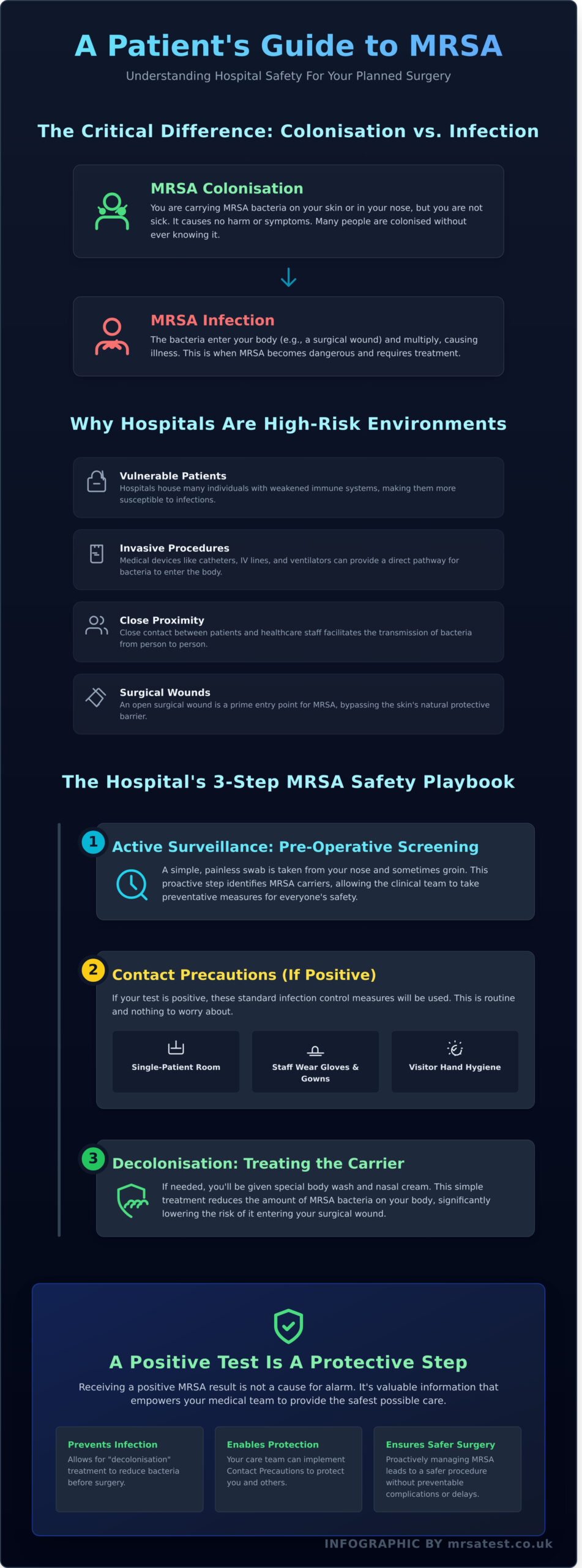
Colonisation means you are carrying the MRSA bacteria on your skin or in your nose without it causing any harm or symptoms of illness. Many people are colonised without ever knowing it. An Infection occurs when these bacteria enter the body-for instance, through a break in the skin like a surgical wound-and begin to multiply, leading to illness. The physical stress of surgery can compromise the immune system, creating an opportunity for a harmless colonisation to develop into a serious infection.
Hospitals as High-Risk Environments
Hospitals, by their very nature, present a unique environment where MRSA can thrive and spread. Several factors contribute to this heightened risk:
- Vulnerable Patients: Hospitals house many individuals with weakened immune systems, making them more susceptible to infections.
- Invasive Procedures: Medical devices such as catheters, IV lines, and ventilators can provide a direct pathway for bacteria to enter the body.
- Close Proximity: The close contact between patients and healthcare staff facilitates the transmission of bacteria from person to person.
- Surgical Wounds: An open surgical wound is a prime entry point for MRSA, bypassing the skin’s natural protective barrier.
The Dangers of Post-Surgical MRSA Infections
For a patient recovering from surgery, an MRSA infection can have serious consequences. The risks include a significantly higher chance of developing a surgical site infection (SSI), which can be difficult to treat due to the bacteria’s resistance. This can lead to more severe complications, such as bloodstream infections (septicaemia) or pneumonia. Consequently, patients with post-surgical MRSA often face longer hospital stays, require more complex antibiotic treatments, and experience slower recovery times, potentially impacting the overall success of their surgery. This highlights why proactively managing methicillin resistant staphylococcus aureus in an acute setting through screening is standard practice.
The Hospital’s Playbook: Core Strategies for MRSA Management
When you are admitted for surgery, the hospital activates a clear and proven set of procedures to protect you and other patients from infection. These protocols are central to managing methicillin resistant staphylococcus aureus in an acute setting and are designed to be as non-intrusive as possible. Think of it as a safety checklist that ensures the highest standards of care, from screening on arrival to specialised cleaning routines.
The level of professional cleaning required in hospitals highlights a broader principle: maintaining hygienic environments is a specialised skill. Commercial cleaning services are essential for upholding these standards in all public and private facilities to help prevent the spread of bacteria. This is a responsibility taken seriously by professional firms, such as That’s Cleaning, who provide the expertise needed to maintain safe spaces.
Active Surveillance: Finding MRSA Before it Spreads
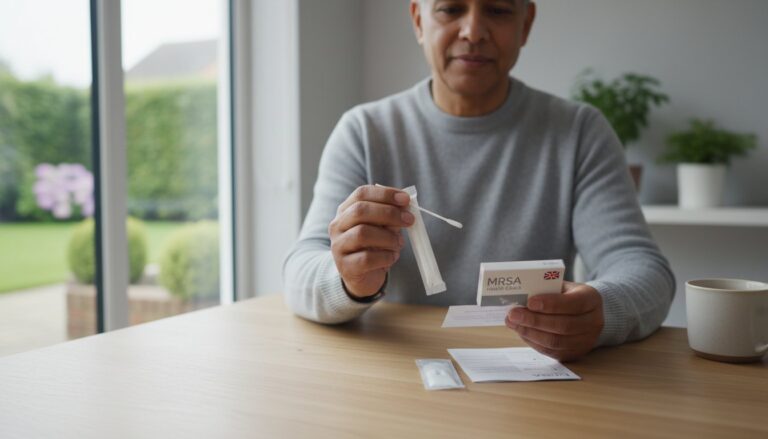
Hospitals use a proactive strategy often called ‘active surveillance screening’ to identify MRSA carriers upon admission, especially for high-risk groups like surgical patients. This process is simple, fast, and painless. A nurse will use a soft swab, much like a cotton bud, to take a sample from the inside of your nostrils and sometimes from your groin. This is the same type of screening you can do with an at-home test kit. The goal of this Pre-Operative MRSA Screening is not to cause alarm, but to gather vital information that allows the clinical team to take preventative steps and protect everyone’s health.
Contact Precautions: What to Expect
If your screening test is positive for MRSA, the hospital will implement ‘Contact Precautions’. This is a standard infection control measure and nothing to be worried about. You will likely be given a single-patient room to help prevent the bacteria from spreading. You’ll also notice staff members wearing disposable gloves and aprons or gowns when they enter your room. This is a routine barrier to stop transmission. For your visitors, the most important step is simple: they must wash their hands with soap and water or use an alcohol-based hand gel before entering and after leaving your room.
Decolonization: Treating the Carrier, Preventing the Infection
Identifying MRSA is only the first step; the next is to reduce the amount of bacteria on your body before surgery. This process, called ‘decolonization’, is a simple and highly effective treatment. It typically involves:
- Using a special antiseptic body wash (containing an ingredient like chlorhexidine) for several days.
- Applying a dedicated antibiotic ointment inside your nostrils.
This straightforward regimen significantly lowers the risk of MRSA entering your surgical wound and causing an infection, forming a critical part of the strategy for managing MRSA in a hospital environment.
This level of procedural rigour extends beyond clinical safety. Hospitals also adhere to strict protocols for managing the immense amount of confidential patient information generated, ensuring privacy is maintained from admission through to the secure disposal of records. For those interested in how modern organizations handle such sensitive data, it can be insightful to explore On-site Archive Shredding to understand the certified standards involved.
Pre-Operative MRSA Screening: Your Most Important Proactive Step
While your surgical team is responsible for your care in the hospital, the most empowering step you can take for a safe and smooth procedure happens before you even arrive. Pre-operative MRSA screening is a simple, proactive measure with one primary goal: to identify and manage any potential risk before your admission. This knowledge puts you and your clinical team firmly in control of your surgical journey.
Why Screening is Crucial Before Any Surgery
Identifying if you are carrying MRSA on your skin before you enter the hospital is a critical safety measure. Understanding the difference between being a carrier (colonization) and having an active infection is a key first step, as explained in this helpful A Patient’s Guide to MRSA from the NHS. The benefits of pre-operative screening are clear:
- Reduces Infection Risk: It significantly lowers your chance of developing a serious and difficult-to-treat surgical site infection.
- Allows for Simple Treatment: If you test positive, a straightforward decolonization treatment (often a special body wash and nasal cream) can be completed at home before your surgery.
- Prevents Delays: It helps avoid the stress and disappointment of a last-minute postponement or cancellation of your procedure.
- Provides Peace of Mind: Knowing this risk is managed gives you and your healthcare team confidence as you head into surgery.
The Benefits of Knowing Your Status in Advance
Receiving your results ahead of time transforms the approach to your care. It allows your surgical team to implement tailored infection control protocols, a crucial element of successfully managing methicillin resistant staphylococcus aureus in an acute setting. You become an active participant in your own safety by starting decolonization from home, and you avoid the anxiety of an unexpected positive result while already in the hospital. This proactive step ensures everyone involved is fully prepared.
At-Home Screening: Convenience, Privacy, and Control
Modern testing puts you in charge of this vital step with maximum convenience. The process is designed to be simple and discreet: you order a kit online, take the painless swab sample yourself, and post it to our UKAS-accredited laboratory. There is no need for an extra trip to a clinic or your GP. Your results are delivered privately, giving you the information you need with complete confidentiality. Take control with a confidential at-home MRSA test.
What Happens if You Test Positive for MRSA?
Receiving a positive MRSA test result can be worrying, but it is crucial to understand that this is not a cause for alarm. Instead, it is valuable information that empowers you and your surgical team to take simple, proactive steps to ensure your safety during your procedure and recovery. This knowledge is a key part of modern, preventative healthcare.
A Positive Result is Not a Panic Button
A positive screen simply means you are ‘colonised’ with MRSA. This means the bacteria is living harmlessly on your skin or in your nose, usually without causing any illness. It is more common than you might think and is entirely manageable. This knowledge gives your medical team the power to prevent an infection before it has a chance to start. Your first step should always be to inform your GP and the hospital’s pre-assessment team of your result.
The Decolonization Protocol: A Simple Routine
If you test positive, your healthcare provider will likely prescribe a straightforward decolonization treatment to complete at home in the days leading up to your surgery. This is a standard and highly effective procedure designed to significantly reduce the amount of bacteria on your body. The typical routine lasts for five days and involves:
- Using a prescribed antiseptic body wash in the shower each day.
- Applying a specific antibiotic ointment just inside your nostrils, usually two to three times a day.
- Using clean towels, clothes, and bedding during the treatment period to prevent re-colonisation.
Will My Surgery Be Cancelled?
For the vast majority of patients undergoing planned (elective) surgery, a positive MRSA result will not lead to a cancellation. The decolonization protocol is the standard, trusted step that allows your surgery to proceed safely. This proactive approach is a cornerstone of managing methicillin resistant staphylococcus aureus in acute setting. It shows the system is working to protect you, and your surgeon will be glad to have this information in advance, allowing them to proceed with confidence knowing the risk of a post-operative infection has been effectively minimised.
Understanding your MRSA status is the first step. Our confidential home testing kits at mrsatest.co.uk provide the accurate results you need to prepare properly for your procedure.
Your Proactive Role in a Safer Hospital Stay
Navigating a hospital stay requires being an informed and active participant in your own care. As we’ve explored, understanding the risks of MRSA and the critical importance of pre-operative screening are your most powerful tools. This knowledge is fundamental to successfully managing methicillin resistant staphylococcus aureus in acute setting, ensuring that if you are a carrier, a clear and effective treatment plan is in place before your procedure.
Don’t leave your health to chance. Knowing your MRSA status beforehand provides essential peace of mind. Our simple at-home process delivers the same accurate tests used by healthcare professionals, with fast, confidential results processed by a fully UKAS-accredited laboratory. Take control of your pre-operative health. Order your confidential MRSA test kit today.
Entering your procedure with confidence is the best first step towards a smooth and safe recovery.
Frequently Asked Questions About MRSA Screening
Is an at-home MRSA test as accurate as one from a hospital?
Yes, provided the sample is processed by an accredited laboratory. A high-quality at-home MRSA test kit uses the same swab and collection method as a hospital. The sample is then sent to a UKAS-accredited laboratory for analysis, the same standard the NHS trusts. The accuracy depends on the lab’s quality, not where the sample is taken. Our service guarantees your sample is processed by a trusted, 100% UK-based partner laboratory for complete peace of mind.
Why do I need an MRSA test if I feel perfectly healthy?
Many people carry MRSA on their skin or in their nose without any signs of illness. This is known as being “colonised.” While harmless on the surface, the bacteria can cause a serious, hard-to-treat infection if it enters the body through a surgical wound. Screening identifies this risk beforehand, allowing for simple treatment to remove the bacteria. This preventative step is a key part of safely managing methicillin resistant staphylococcus aureus in an acute setting to ensure a safer surgical outcome.
How long does the decolonization treatment take before surgery?
If your screening test is positive for MRSA, a decolonization treatment is typically a straightforward five-day course. This usually involves using a special antiseptic body wash or soap daily and applying an antibiotic ointment inside your nose. This simple, non-invasive treatment is highly effective at clearing the bacteria from your body, significantly reducing the risk of a post-operative infection. Your clinical team will provide the exact products and instructions you need to follow.
Can my family or visitors catch MRSA from me in the hospital?
The risk of transmission to healthy visitors is very low. MRSA is primarily spread through direct contact with a colonised or infected area, or contaminated surfaces. Hospitals have strict hygiene protocols to prevent this. Visitors can protect themselves by practicing good hand hygiene, such as washing their hands with soap and water or using alcohol-based hand gel before and after seeing you. These simple measures are extremely effective at preventing the spread of bacteria.
Do all NHS trusts screen for MRSA before surgery?
While MRSA screening is a standard and highly recommended practice, policies can vary between different NHS Trusts and for different types of surgery. It is most common before high-risk elective procedures like joint replacements, cardiac surgery, and neurosurgery. If you are unsure whether you will be screened, it is best to ask your GP, surgeon, or the hospital’s pre-operative assessment clinic directly. They can confirm the specific protocol for your procedure.
What is the difference between a rapid PCR test and a standard culture test for MRSA?
The primary difference is speed. A rapid PCR (Polymerase Chain Reaction) test detects the genetic material of the MRSA bacteria, delivering a highly accurate result in as little as 24 hours. A standard culture test involves placing the sample in a substance that encourages bacteria to grow, which can take 48-72 hours to yield a result. Both methods are clinically reliable, but a PCR test provides the fastest answer, which is often crucial when scheduling surgery.