
Difference Between MRSA Infection and Colonisation: A Clinical Guide
What if the reason your upcoming surgery gets cancelled isn’t a lack of hospital beds, but a microscopic passenger you didn’t even know you were carrying? It’s a common source of anxiety for patients across the UK to be told they’ve tested positive for MRSA when they feel completely healthy. This confusion often stems from not knowing the difference between mrsa infection and colonization. While colonization means you’re simply a carrier with the bacteria living harmlessly on your skin, an infection is a more serious clinical state where the bacteria have entered the body and caused illness.
We understand that medical terminology can feel overwhelming, especially when you’re already worried about a procedure or the safety of your family. You deserve clear, factual answers that replace fear with a practical plan. In this guide, you’ll learn how to identify when a skin spot becomes dangerous and exactly how to manage carrier status before it impacts your health or your surgery date. We’ll also outline the straightforward steps for pre-surgery decolonisation to ensure you’re protected and prepared.
Key Takeaways
- Learn why MRSA is known as the “Great Mimicker” and how to identify skin irritations that look like common acne or insect bites.
- Understand the clinical difference between mrsa infection and colonization to determine if you’re a healthy carrier or facing an active medical issue.
- Recognise the warning signs of progression from a localised abscess to systemic risks like sepsis if the bacteria breach the skin barrier.
- Discover why proactive screening is essential for UK surgery patients to prevent post-operative infections and avoid last-minute procedure cancellations.
- Identify how rapid PCR testing offers a discreet, professional way to confirm your status with results delivered within 24 hours of reaching the laboratory.
Identifying MRSA: Why It Is Often Called the “Great Mimicker”
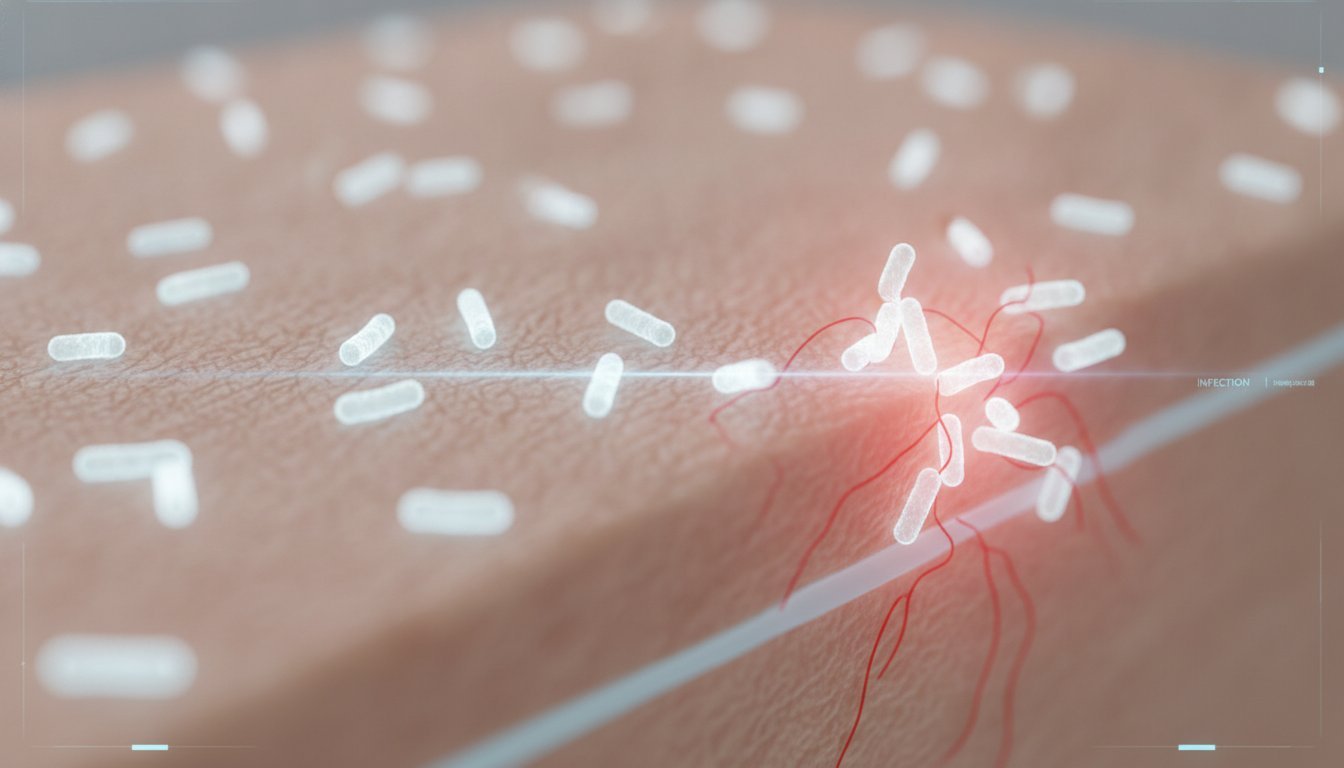
Methicillin-resistant Staphylococcus aureus, commonly known as MRSA, is frequently misunderstood because it rarely looks like a “superbug” in its early stages. Instead, it often presents as a simple pimple, a minor skin irritation, or a small, red bump. This subtle appearance is exactly why clinicians refer to it as the “Great Mimicker.” Understanding the difference between mrsa infection and colonization is the first step in managing your health effectively. While colonization involves the bacteria living quietly on your skin without causing harm, an infection occurs when these bacteria begin to damage tissue, often disguised as something far more innocent.
Clinicians use the “mimicker” label because MRSA is notorious for imitating acne, ingrown hairs, or even heat rashes. Early visual markers include persistent redness and swelling that doesn’t resolve with standard over-the-counter antiseptic creams. The site will often feel abnormally warm to the touch compared to the surrounding skin, signaling that the immune system is actively fighting a breach. Identifying this mimic early is essential to prevent the bacteria from migrating from the skin’s surface into deeper muscle or bone tissue.
The “Spider Bite” Myth in the UK
In the UK, many patients visit their GP reporting a “spider bite,” yet native UK spiders rarely bite humans or cause significant skin reactions. Most of these cases are actually a localised MRSA skin infection. A key indicator is the speed of progression. If a small, red bump becomes intensely painful and worsens significantly over a 24-hour period, it’s likely bacterial rather than an insect bite. A hallmark of MRSA is that the pain is usually out of proportion to the visible size of the bump. A tiny, innocuous-looking spot can feel like a deep, throbbing ache that makes it difficult to move the affected limb.
Physical Attributes of a Localised MRSA Site
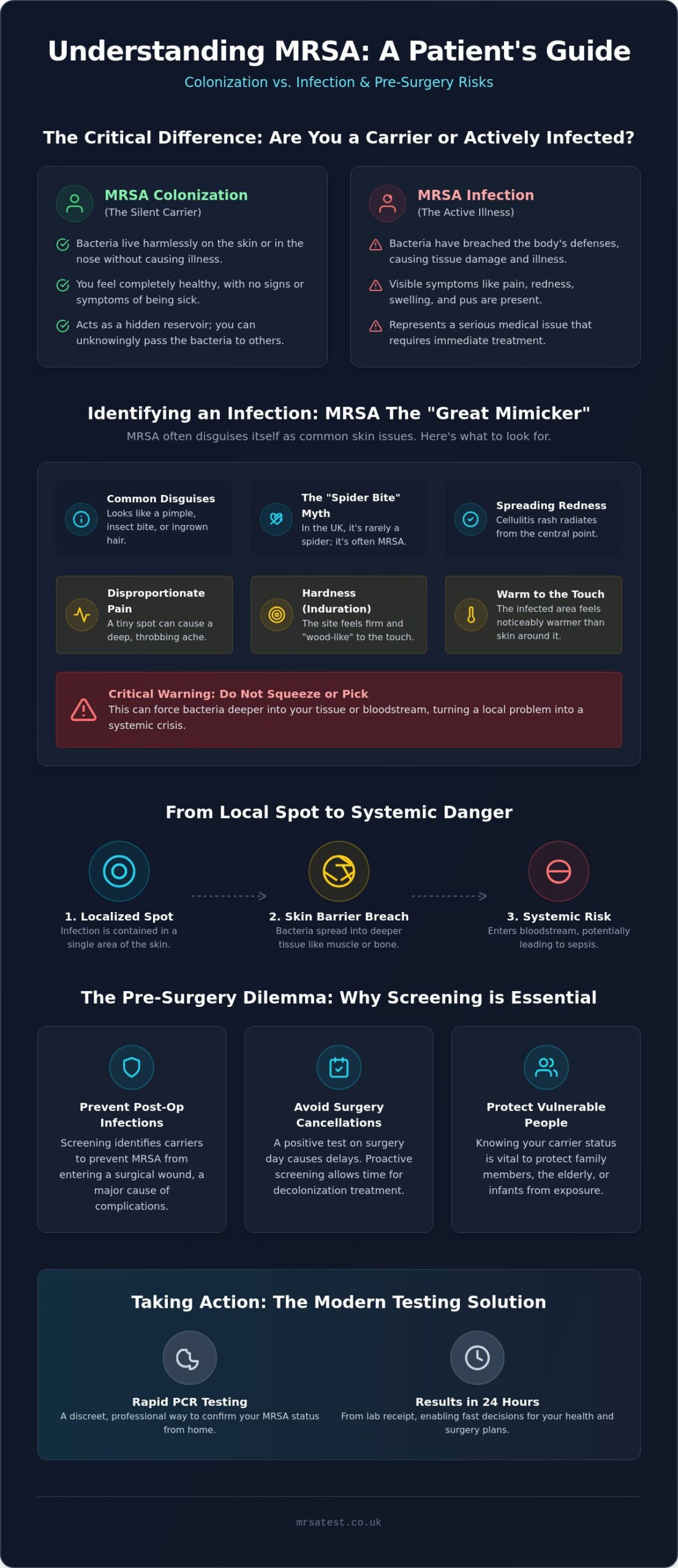
Identifying a localised site involves looking for specific clinical markers that distinguish it from a regular spot. One of the most telling signs is “induration,” which is a characteristic hardness of the skin around the site. While a normal spot feels soft or fluid-filled, an MRSA site feels firm and wood-like to the touch. This physical change is a primary indicator of the difference between mrsa infection and colonization. In a colonized state, your skin appears perfectly healthy. However, once an infection takes hold, the inflammatory response creates this distinct hardness.
This often accompanies cellulitis, a spreading red rash that radiates from the central point of the infection. You might also notice that the “head” of an MRSA boil is firm and non-drainable. It’s vital to remember that attempting to squeeze or pick these sites at home is dangerous. Doing so can push the bacteria deeper into the bloodstream, turning a localised issue into a systemic crisis.
MRSA Colonisation vs. Infection: Understanding the Invisible Line
The distinction between being a carrier and being sick is often the most confusing part of a diagnosis. For many people in the UK, a positive test result comes as a total surprise because they feel perfectly healthy. This is the essence of colonisation. In this state, the bacteria live on your skin or inside your nose as “commensals,” meaning they coexist with you without triggering an immune response. According to the Baylor College of Medicine, the core distinction lies in whether the bacteria are simply present or are actively causing disease. Understanding the difference between mrsa infection and colonization is vital for patients who “feel fine” but may still be at risk of developing a future complication or passing the bacteria to a vulnerable family member.
Carriers act as a reservoir for the bacteria. While you might not have a single symptom, you can still shed MRSA onto surfaces, towels, or other people. This invisible presence is why the bacteria remains a challenge in healthcare settings; you can’t treat what you don’t know is there. Without screening, you could remain a carrier for weeks or even months without ever realising you’re housing a potentially dangerous pathogen.
Where MRSA Hides: Common Colonisation Sites
MRSA doesn’t live just anywhere on the body. It prefers warm, moist environments where it can thrive undisturbed. The three primary reservoirs are the nostrils, the axilla (armpits), and the groin. These areas provide the perfect balance of moisture and friction, allowing the bacteria to colonise the skin surface without necessarily causing a rash or irritation. Gaining a deeper perspective on what MRSA is involves recognising it as a hardy survivor that waits for the right conditions to expand its presence.
The Trigger: How Colonisation Becomes Infection
The transition from a harmless carrier to an infected patient usually requires a “trigger.” This is typically a breach in the skin’s protective barrier. Something as minor as a shaving nick, a small cut from gardening, or a surgical incision provides a gateway for the bacteria to move from the surface into the deeper tissues. Once inside, the bacteria multiply rapidly. If your immune system is already under strain due to illness or the stress of surgery, it may struggle to contain the invasion.
This is why carrier status is often only discovered during routine hospital screening before elective procedures. In a household setting, colonisation can persist for months, spreading through shared towels or gym equipment before an injury finally “activates” the infection. If you’re preparing for an upcoming operation, using an at-home screening kit can help you identify colonisation early, allowing for decolonisation before the bacteria ever get a chance to cause an infection.
From Localised Spot to Systemic Danger: Recognizing the Progression
The transition from a minor skin lesion to a full-body emergency can happen with surprising speed. When the skin barrier is breached, the bacteria don’t always stay local. According to the NHS, while many people carry the bacteria safely on their skin, an invasive infection is a medical priority that requires immediate intervention. This progression highlights the critical difference between mrsa infection and colonization; one is a passive state where you’re a carrier, while the other is an active assault on the body’s vital systems.
Sepsis, often called blood poisoning, is the most critical risk of an invasive MRSA infection. It occurs when the immune system overreacts to the bacteria in the bloodstream, leading to widespread inflammation and potential organ failure. Systemic symptoms often start with a high fever, uncontrollable chills, and deep muscle aches that feel similar to a severe flu. It’s vital that you never attempt to “pop” or squeeze a suspected MRSA boil. Doing so can force the bacteria deeper into your tissue or directly into the bloodstream, bypasssing your body’s natural defences and accelerating the path toward sepsis.
Warning Signs of Spreading Infection
Monitoring the area around a suspected infection site is essential for early detection of spreading. You should look for specific red flags, including:
- Lymphangitis: This appears as thin red streaks moving away from the infection site toward the heart. It’s a clear sign that the bacteria are travelling through your lymphatic system.
- A&E Red Flags: A rapid heart rate, shallow breathing, and sudden confusion are critical symptoms. If these occur, you must attend an Accident and Emergency department immediately.
- Non-healing Wounds: Any surgical site or cut that remains open and continues to weep fluid after several days should be screened for antibiotic resistance.
High-Risk Complications Beyond the Skin
When MRSA moves beyond the skin, it can settle in the internal organs, leading to life-threatening conditions. This includes MRSA pneumonia, which affects the lungs, and endocarditis, a serious infection of the heart valves. These hospital-acquired infections are often more difficult to treat than community cases because the strains found in clinical environments have often developed resistance to a wider range of standard antibiotics.
Certain aggressive strains of MRSA also produce potent toxins. These substances can cause rapid tissue death, or necrosis, around the site of the infection. This isn’t just about the bacteria multiplying; it’s about the chemical damage they do to your cells. Understanding the difference between mrsa infection and colonization helps you recognise that while a carrier “feels fine,” the shift to an infected state involves these complex, dangerous biological processes that require professional clinical management.
The Pre-Surgery Dilemma: Why “Looking Healthy” Isn’t Enough
When you’re preparing for an operation, your surgeon’s primary concern isn’t just the success of the procedure itself, but the biological environment in which it happens. Carrying MRSA is the leading cause of post-operative surgical site infections (SSIs). Because the bacteria live on your skin without symptoms, you may feel at your physical peak while unknowingly harbouring a significant risk factor. Understanding the difference between mrsa infection and colonization is essential here; while you aren’t “sick” in the traditional sense, your carrier status can turn a routine operation into a life-threatening complication once an incision is made.
UK hospitals routinely screen patients weeks before elective surgery to ensure they are “clear” of the bacteria. This protocol is designed to protect both the patient and the clinical environment. However, many patients only discover their status during these hospital-led swabs. If a positive result is returned too close to the procedure date, it often leads to immediate and stressful cancellations. This delay is necessary to allow for treatment, but it can be devastating for patients who have already arranged time off work or childcare. Proactive knowledge of your carrier status is the best way to prevent these last-minute disruptions.
Reducing the Risk of Cancelled Surgery
One of the most effective ways to manage this uncertainty is screening for MRSA at home well in advance of your hospital date. Knowing your status early gives you the logistical advantage of time. Most decolonisation protocols require a full 5-day cycle of treatment before a patient is considered safe for the operating theatre. Preparing for surgery requires more than just fasting or following medication instructions; it requires biological readiness. By testing early, you can complete your decolonisation and arrive at the hospital with confidence that your procedure will go ahead as planned.
The Decolonisation Process Explained
Decolonisation is the temporary removal of MRSA from the skin surface and nasal passages to minimise the risk of infection during a procedure. This process typically involves using specific antiseptic washes, such as Chlorhexidine, and prescribed nasal creams for several consecutive days. Patients are often required to wash their hair and body with these antiseptics to ensure the bacterial load is as low as possible before they enter the sterile field of the hospital. It’s important to remember that decolonisation doesn’t mean you’re “cured” of the bacteria forever. Instead, it ensures you’re “safe” for the duration of the procedure while your skin barrier is vulnerable. If you want to ensure your surgery proceeds without delay, you can order a rapid screening kit today to verify your status privately.
Taking Action: How to Test for MRSA at Home in the UK
Identifying the difference between mrsa infection and colonization isn’t something you can do through a visual check alone. While previous sections detailed the physical signs of an active infection, professional laboratory testing remains the only definitive way to distinguish MRSA from other types of staph bacteria. This clinical certainty is especially vital if you’re preparing for surgery or live with someone in a high-risk category. Relying on guesswork can lead to unnecessary anxiety or, worse, a missed diagnosis that complicates a future medical procedure.
You have two primary options for professional diagnostics: Rapid PCR and Standard Culture tests. Rapid PCR tests utilize molecular detection to identify the DNA of the bacteria. This method is incredibly efficient, providing results within 24 hours of the sample reaching the laboratory. In contrast, Standard Culture tests involve growing the bacteria in a controlled environment over 48 to 72 hours. While slower, a culture test allows microbiologists to perform sensitivity testing. This process determines exactly which antibiotics will be most effective if an active infection is present, which is a critical step for clinical treatment planning.
Choosing Between PCR and Culture Testing
The choice between these methods depends on your specific timeline and needs. By understanding the clinical difference between mrsa infection and colonization, you can choose the testing method that best fits your current health situation. PCR is widely considered the gold standard for urgent pre-surgery screening where every day counts toward meeting a hospital deadline. If you need to know your status immediately to avoid a cancellation, the speed of molecular testing is unmatched.
Conversely, culture testing is ideal for non-urgent skin concerns or for confirming that a 5-day decolonisation cycle was successful. Modern at-home test kits in the UK now match the accuracy of hospital-grade diagnostics, providing a reliable and discreet alternative to waiting for a GP appointment or visiting a busy clinic.
The mrsatest.co.uk Process
Acquiring professional results doesn’t require a trip to a hospital. Our process is designed to be as streamlined and stress-free as possible, allowing you to collect samples in the privacy of your own home. This approach minimizes friction and builds confidence by putting the diagnostic process in your hands.
- Order Online: Select the kit that meets your needs for discreet home delivery.
- Simple Collection: Use the included swabs to collect samples from the nose, groin, or axilla following the clear instructions provided.
- Prepaid Return: Place your samples in the provided prepaid envelope and post them directly to our accredited UK laboratory.
- Secure Results: You’ll receive your results via secure email, which you can easily share with your GP or surgical team.
Taking control of your health screening shouldn’t be a complicated or anxious process. You can order your confidential MRSA test kit today for peace of mind and to ensure your surgical journey stays on schedule.
Taking Control of Your Pre-Surgery Health
Navigating a surgical journey is stressful enough without the added worry of invisible bacterial risks. By now, you should have a clear understanding of the difference between mrsa infection and colonization; you know that being a healthy carrier is a manageable state that simply requires proactive steps. Whether you’re monitoring a suspicious skin site or preparing for a hospital procedure, identifying your status early is the most effective way to prevent complications or last-minute surgery cancellations.
Our professional screening process provides the clinical accuracy you need without the wait times of a traditional clinic. With accredited UK laboratory analysis and rapid 24-hour PCR results available, you can gain certainty from the comfort of your home. Our discreet, professional home collection kits ensure your privacy while delivering hospital-grade reliability. This streamlined approach allows you to share secure results with your medical team well before your admission date.
Order Your Private MRSA Test Kit for Fast, Accurate Results
Don’t let uncertainty hold back your healthcare plans. Taking this simple step today ensures you move forward with confidence, safety, and peace of mind.
Frequently Asked Questions
Can MRSA look like a normal pimple?
Yes, MRSA frequently mimics a normal pimple or an ingrown hair in its early stages. It typically appears as a small, red, and swollen bump that may be mistaken for acne or an insect bite. Because it looks so ordinary, many people don’t realise they have an infection until the site becomes increasingly painful or fails to heal with standard over-the-counter treatments.
What is the main difference between staph and MRSA appearance?
Visually, there is no way to distinguish a standard staph infection from an MRSA infection. Both conditions can cause redness, swelling, and pus-filled boils that look identical to the naked eye. The only way to tell them apart is through professional laboratory testing, such as a PCR or culture test. Recognizing the difference between mrsa infection and colonization through these tests ensures that patients receive the correct treatment before the bacteria can spread.
Can I carry MRSA on my skin without having a rash?
Yes, you can carry MRSA on your skin or in your nose without any rash, redness, or symptoms at all. This state is known as colonization. Understanding the difference between mrsa infection and colonization is essential because carriers don’t feel sick but can still transmit the bacteria to others. In this scenario, the bacteria live harmlessly on your surface until a breach in the skin allows them to cause an infection.
How quickly does a MRSA skin infection spread?
An MRSA skin infection can spread remarkably quickly, often progressing significantly within just 24 to 48 hours. What starts as a small, firm bump can rapidly expand into a larger, painful abscess or lead to cellulitis, where the redness spreads across the surrounding skin. If you notice red streaks moving away from the site, it indicates the infection is moving through your lymphatic system and requires immediate medical attention.
Should I cover a suspected MRSA infection with a bandage?
Yes, you should keep any suspected MRSA site covered with a clean, dry bandage. This is a critical step in preventing the bacteria from spreading to other parts of your body or to other people in your household. MRSA is easily transmitted through contact with the fluid from a wound or by touching contaminated surfaces like towels and bedsheets. Always wash your hands thoroughly after changing the dressing.
What happens if my pre-surgery MRSA test is positive?
If your pre-surgery test is positive, your hospital will likely initiate a decolonization protocol. This usually involves a five-day course of antiseptic body washes and nasal creams to clear the bacteria from your skin surface. Depending on the urgency of your procedure, the surgery might be delayed until you’ve completed this cycle. Testing early at home allows you to manage this process without the stress of a last-minute hospital cancellation.
Is a MRSA skin infection always painful?
While pain levels vary, an MRSA infection is almost always tender and often feels significantly more painful than its size suggests. This “disproportionate pain” is a common clinical marker. While a colonized person feels nothing, an infected person will likely experience a deep, throbbing ache, especially if the site is firm or hard to the touch. If a spot is completely painless and soft, it’s less likely to be an active MRSA abscess.
Can MRSA go away on its own without antibiotics?
It’s very unlikely for an active MRSA infection to resolve on its own without professional medical intervention. Because these bacteria are resistant to many common antibiotics, they can be difficult for the immune system to clear once they’ve taken hold in deeper tissue. Leaving an infection untreated increases the risk of it entering the bloodstream and causing systemic complications like sepsis. Always seek clinical advice if you suspect an active infection.