
At-Home Sex Disease Test Kits: A Confidential UK Guide
The thought of visiting a clinic for a sexual health screening can be a significant barrier for many. Concerns about confidentiality, the potential for embarrassment, or simply finding the time for an appointment can lead to understandable hesitation. Fortunately, managing your sexual health in the UK has become more accessible and private than ever. At-home sex disease test kits provide a modern, confidential solution, allowing you to take control without stepping outside your front door.
But with various options available, how can you be sure you’re choosing a reliable and accurate test? This guide is designed to answer your questions and provide complete peace of mind. We will walk you through exactly how at-home STI testing works, explain which infections different kits can screen for, and provide clear guidance on selecting a trusted service that uses accredited UK laboratories. Prepare to gain the clarity you need, on your own terms and in complete comfort.
Key Takeaways
- Learn how to verify a provider’s UK laboratory accreditation to ensure your test results are both confidential and clinically accurate.
- Compare the key differences between using at-home sex disease test kits and visiting a free NHS sexual health clinic to decide which is right for you.
- Gain a clear understanding of the common STIs, including chlamydia, gonorrhoea, and HIV, that can be detected with a home test.
- Find out the recommended next steps and support options available after you receive your results, ensuring you have a clear path forward.
Understanding At-Home STI Testing: How Does It Work?
The rise of at-home health screening has empowered individuals to take control of their sexual health with unparalleled privacy and convenience. Modern sex disease test kits offer a confidential and reliable alternative to traditional clinic visits, removing common barriers like time constraints and potential embarrassment. The entire process is designed to be simple, secure, and managed from the comfort of your own home, providing peace of mind through clinical-grade accuracy.
The Simple 4-Step Process
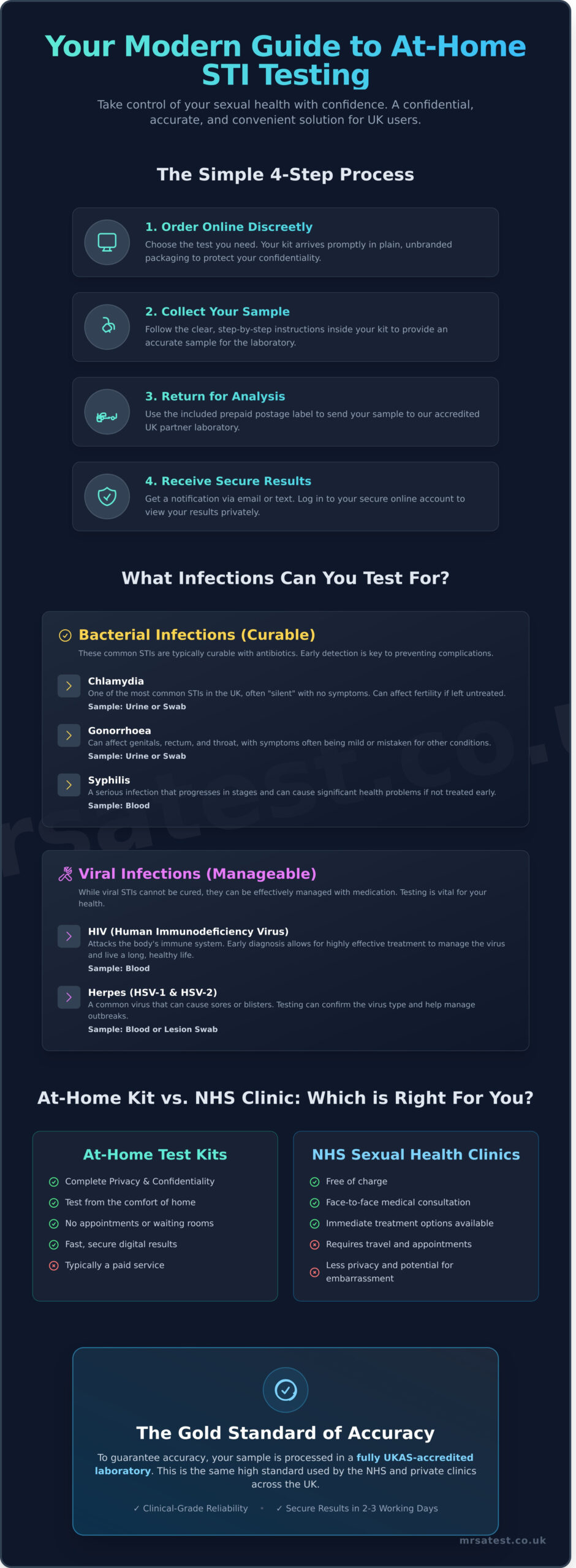
Our at-home testing service is built around a straightforward, user-friendly process. Each step is designed for maximum discretion and ease:
- 1. Order Online: Choose the test that suits your needs. Your kit will be dispatched promptly and delivered in plain, unbranded packaging to your chosen address, ensuring complete confidentiality.
- 2. Collect Your Sample: Inside your kit, you will find clear, step-by-step instructions. Following these instructions carefully is essential for providing an accurate sample for the laboratory.
- 3. Return Your Sample: Once collected, place your sample into the provided clinical transport bag and use the included prepaid, confidential postage label to return it to our UK-based partner laboratory.
- 4. Receive Your Results: You will receive a notification via email or text message once your results are ready. You can then log in to your secure, personal account on our portal to view them privately.
Types of Samples Required
The type of sample you need to provide depends on the specific infections being screened for. Each kit contains the necessary components for collection. Understanding which test is right for you is crucial, and a comprehensive overview of STIs can provide valuable context on different infections. Common sample types include:
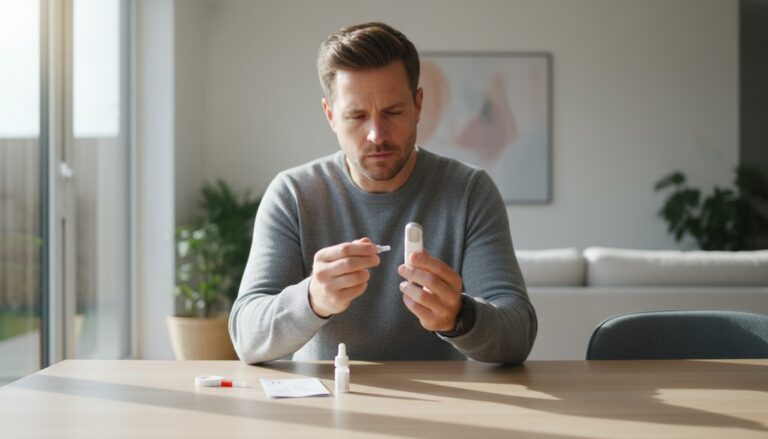
- Finger-prick blood test: A small blood sample is used to detect blood-borne infections such as HIV, Syphilis, and Hepatitis B & C.
- Urine sample: A simple and non-invasive method most commonly used to test for Chlamydia and Gonorrhoea.
- Swabs: These can include vaginal, rectal, or throat swabs for targeted bacterial detection, or a swab taken directly from a visible lesion or blister to test for infections like Herpes (HSV).
To guarantee accuracy, all samples are processed in fully UKAS-accredited laboratories, the same labs used by the NHS and private clinics. This ensures your results are reliable and meet the highest clinical standards. Typically, you can expect to receive your secure results within just 2-3 working days from the moment our laboratory receives your sample.
What Do Home Test Kits Screen For? Common STIs Explained
Understanding what you are testing for is the first step toward taking control of your sexual health. A crucial fact to remember is that many sexually transmitted infections (STIs) can be asymptomatic, meaning they show no visible signs or symptoms. This makes regular screening essential for early detection and treatment. According to global STI facts and statistics from the World Health Organization (WHO), over one million new STIs are acquired every day worldwide, highlighting the importance of accessible testing.
Comprehensive sex disease test kits are designed to screen for the most prevalent infections, which are typically grouped by their cause: bacterial, viral, or parasitic. Below is a clear overview of the common STIs our home kits can test for.
Common Bacterial Infections
Bacterial STIs are typically curable with a course of antibiotics. Early detection is key to preventing long-term health complications.
- Chlamydia: One of the most common STIs in the UK, chlamydia is often “silent” with no symptoms. If left untreated, it can affect fertility. It is reliably detected with a simple urine sample or a swab.
- Gonorrhoea: This infection can affect the genitals, rectum, and throat. Symptoms are often mild and can be mistaken for other conditions. Testing is performed using a urine sample or a swab.
- Syphilis: A more serious infection that progresses in stages, syphilis can cause significant health problems if not treated. It is diagnosed using a small blood sample collected via a finger-prick test.
Common Viral Infections
Viral STIs cannot be cured, but they can be effectively managed with medication. Testing is vital for management and to prevent transmission.
- HIV (Human Immunodeficiency Virus): HIV attacks the body’s immune system. Early diagnosis allows for highly effective treatment to manage the virus and live a long, healthy life. It is tested for with a finger-prick blood sample.
- Herpes (HSV-1 & HSV-2): This common virus can cause oral or genital sores. Testing can be done via a finger-prick blood sample to detect antibodies or a swab of an active lesion.
- Hepatitis B & C: These viruses cause inflammation of the liver and can lead to serious liver disease. Both are detected through a blood sample.
Other Infections
Our sex disease test kits also screen for other common infections to provide a complete picture of your health.
- Trichomoniasis: Caused by a tiny parasite, this infection is very common and treatable. It is tested for using a urine sample or swab.
- Mycoplasma & Ureaplasma: These are bacteria that can be passed on through sexual contact. While less known, they can cause inflammation and are important to identify.
Choosing the Right Test Kit: Key Factors for UK Users
Navigating the world of at-home testing can feel overwhelming, but ensuring you select a high-quality, reliable service is the most critical step. Not all home STI tests are created equal. Your choice directly impacts the accuracy of your results and the quality of care you receive. To make a confident decision, focus on a provider’s laboratory standards, the type of test offered, and their commitment to your privacy and support.
Accuracy and Laboratory Accreditation
The reliability of any test hinges on the quality of the laboratory that processes your sample. For UK users, this means looking for key indicators of clinical excellence:
- UKAS Accreditation: Ensure the provider’s partner laboratory is accredited by the United Kingdom Accreditation Service (UKAS). This is the national body responsible for assessing laboratories against internationally recognised standards.
- CE Marking: The physical test kit should be CE marked, which certifies that it meets UK and European health, safety, and environmental protection standards.
- Test Performance: Reputable providers will be transparent about their tests’ sensitivity and specificity ratings, which measure how accurately a test identifies positive and negative cases, respectively.
Comprehensive Panels vs. Single Tests
Choosing between a broad screening and a specific test depends on your personal circumstances. A comprehensive panel, which screens for multiple common STIs like chlamydia, gonorrhoea, and HIV from one sample, is often the best choice for a routine sexual health check-up or after a potential exposure where the risk is unknown. However, a single-infection test is more appropriate if you are experiencing specific symptoms or have been notified that a partner has tested positive for a particular infection. If you have specific concerns, comparing your symptoms against the official NHS guidance on STIs can help you decide if a targeted test is right for you.
Privacy, Discretion, and Support
Your confidentiality is paramount. A professional service will prioritise your privacy at every stage. Look for a company that guarantees plain, unbranded packaging for delivery. Crucially, check their data privacy policy to ensure they are fully GDPR compliant, meaning your personal and medical information is handled securely. The best sex disease test kits also provide a clear pathway for support after you receive your results. A truly dependable service will offer access to a clinical team to confidentially discuss your results, answer questions, and guide you on the next steps for treatment if necessary.
At-Home Kits vs. NHS Sexual Health Clinics: Pros and Cons
Deciding where to get tested for STIs is a personal choice, and both at-home kits and NHS clinics offer excellent, reliable options. The best path depends on your specific needs, symptoms, and priorities. Understanding the distinct advantages of each can help you make a confident and informed decision for your sexual health. This is not about one being better than the other, but about which service is right for you at a given time.
Benefits of Using an NHS GUM Clinic
The National Health Service provides an outstanding and vital service for sexual health. All testing and subsequent treatment at an NHS sexual health or GUM (Genitourinary Medicine) clinic are completely free of charge. This is the ideal and recommended option if you are experiencing clear symptoms, as you will have immediate access to healthcare professionals for a physical examination, consultation, and a treatment plan.
Benefits of Using an At-Home Test Kit
For those seeking discretion and convenience, at-home sex disease test kits offer an invaluable alternative. They provide unmatched privacy, allowing you to collect your sample in the comfort of your own home without appointments. This makes them perfect for routine screening or for individuals who need rapid results for peace of mind. Results from our UKAS-accredited labs are often processed and delivered faster than through some standard channels.
| Feature | At-Home Test Kit | NHS GUM Clinic |
|---|---|---|
| Cost | Paid service | Completely free |
| Speed of Results | Typically 24-72 hours from lab receipt | Can vary depending on location and demand |
| Privacy | Highly discreet; no face-to-face visit required | In-person appointment required |
| Consultation | Post-result support and guidance available | Immediate, face-to-face consultation |
Ultimately, both services play a crucial role in public health. While NHS clinics are the definitive choice for symptomatic individuals needing immediate medical advice, private sex disease test kits provide a fast, confidential, and convenient solution for asymptomatic screening. If privacy and speed are your primary concerns for routine testing, exploring a trusted at-home service is a reliable step towards managing your sexual health proactively.
This model of accessible, clinician-supported health management is expanding into other areas of wellbeing too. For those seeking guidance on medical weight loss, for instance, UK-based services like foundry offer programs that provide similar levels of professional support and privacy.
What to Do After You Get Your Results
Receiving the outcome from your test is a crucial step in managing your sexual health. Whether the result is positive or negative, there are clear, calm, and confidential next steps to take. This guide will help you understand your results and what to do next.
If Your Result is Negative
A negative result from your sex disease test kit is reassuring news, indicating that the specific infection was not detected in your sample. However, it is vital to be aware of the ‘window period’. This is the time between potential exposure to an STI and the point when a test can accurately detect it. If you tested very soon after a potential exposure, you may need to re-test after the window period has passed to be certain.
Continue to protect your health by:
- Practising safe sex to reduce future risks.
- Considering regular screening as part of your routine health care, especially if you have new partners.
If Your Result is Positive
First, it is important not to panic. A positive result can be concerning, but the vast majority of STIs, including herpes, are either curable with a simple course of treatment or effectively manageable with medication. You have taken a responsible step by getting tested.
It’s also normal to feel a range of emotions, from anxiety to stress, when dealing with sexual health matters. Managing your mental well-being is just as important as the physical treatment. For women seeking support tailored to their unique health experiences, a service like Women’s Mental Health Specialist can provide virtual, hormone-informed mental health care.
Your immediate next steps should be:
- Contact a healthcare professional. Your GP or a local NHS sexual health clinic can provide a confirmatory diagnosis and, in most cases, free treatment and confidential advice.
- Inform recent partners. It is essential to let any recent sexual partners know they may have been exposed, so they can also get tested. Clinics can offer support with this through anonymous partner notification services if you feel uncomfortable doing it yourself.
Reputable providers of sex disease test kits often include information and support pathways to help you access the care you need. At mrsatest.co.uk, we believe in providing a fully supportive, confidential, and clinically robust service from start to finish.
Your Path to Confidential Testing and Peace of Mind
Navigating your sexual health can feel complex, but understanding your options is the first step towards empowerment. At-home sex disease test kits provide a vital service, offering a discreet, convenient, and reliable way to get the answers you need from the comfort of your own home. Remember that choosing a certified provider and having a clear plan for your results are key to making the process effective. Proactive testing is a responsible part of your overall healthcare, giving you control and clarity.
While taking control of your health, ensure all bases are covered. For confidential, pre-surgery screening, explore our lab-certified at-home MRSA test kits. As a 100% UK-Based Service partnered with UKAS-Accredited Laboratories, we provide the same discreet, confidential, and reliable testing you expect, ensuring you are fully prepared for your upcoming surgery.
Your health is your priority. By staying informed and taking decisive action, you are making the best choice for your peace of mind.
Frequently Asked Questions
Are at-home sex disease tests accurate?
Yes, when you use a reputable provider. Our at-home test kits are processed in the same UKAS-accredited laboratories that the NHS and private clinics use. This ensures your results meet the highest clinical standards for accuracy and reliability. For the most accurate result, it is crucial that you carefully follow the simple collection instructions provided with your kit to ensure a valid sample is returned to our UK-based partner laboratory.
How long should I wait after potential exposure before taking an STI test?
Each infection has a different “window period” – the time between exposure and when a test can accurately detect it. For infections like chlamydia and gonorrhoea, we recommend waiting at least 14 days. For blood-borne infections such as HIV, syphilis, and hepatitis, the window period can be up to 12 weeks for a fully conclusive result. Testing too early may lead to an inaccurate result, so it is important to test at the correct time.
Is the packaging and billing for home STI tests discreet?
Absolutely. We prioritise your confidentiality at every step. All our sex disease test kits are sent in plain, unbranded packaging with no indication of the contents or our company name. The return address is to the laboratory, not our brand. Similarly, the charge on your bank or credit card statement will appear under a generic trading name, ensuring your purchase remains completely private and confidential from start to finish.
Can I get treatment through the company I buy the test from?
Many UK-based home testing services, including ours, provide a clear and confidential pathway to treatment. If your results are positive, a member of our clinical team will contact you to privately discuss the results and next steps. They can arrange for a prescription to be sent directly to a UK pharmacy of your choice for you to collect at your convenience. This ensures you receive fast, appropriate care without delay.
What is the difference between a culture test and a PCR test for STIs?
A culture test involves attempting to grow bacteria or a virus from your sample in a laboratory, which can take several days. A PCR (Polymerase Chain Reaction) test is a highly sensitive molecular technology that detects the specific genetic material (DNA or RNA) of an infection. PCR tests are generally much faster and more accurate, capable of detecting even very low levels of an infection. Most modern home test kits utilise PCR technology for this reason.
Do I need to test for STIs if I’m in a long-term relationship?
It is always a good idea for both partners to get tested at the beginning of a new, mutually monogamous relationship. This provides peace of mind and ensures you are not unknowingly passing an infection between you. If you and your partner have been exclusively together since you both last received negative test results, and neither of you has symptoms, routine testing may not be necessary unless your circumstances change.