

How to Mentally Prepare for Surgery: A Guide to Pre-Op Peace of Mind
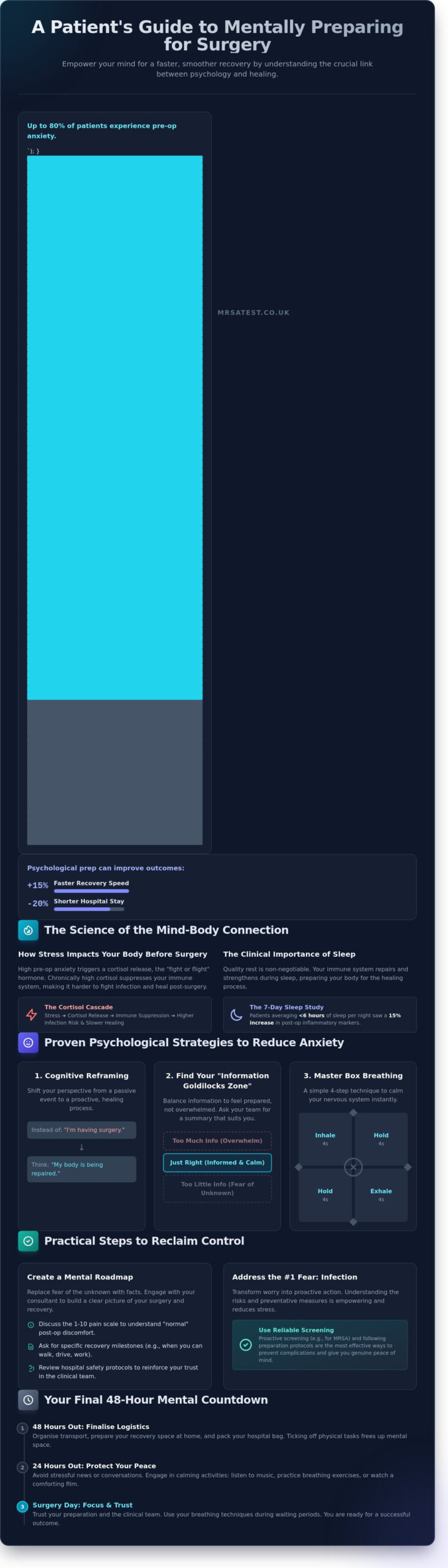
Did you know that research published in the British Journal of Anaesthesia suggests up to 80% of patients experience significant anxiety before an operation, yet those who engage in structured psychological preparation often see a 15% improvement in recovery speed? Understanding how to mentally prepare for surgery is just as vital as the physical preparations your consultant recommends. It’s the difference between feeling like a passive participant and being an empowered patient who is ready for a successful outcome.
It’s completely normal to feel a sense of unease about anaesthesia or the risk of hospital-acquired infections like MRSA. You deserve to feel like a person, not just another case on a busy surgical list. This guide shares evidence-based psychological strategies and practical steps to help you reduce pre-op cortisol levels and optimise your body for healing. We’ll outline a clear plan for your surgery day, including how to verify your safety protocols and use screening to your advantage, so you can head into the operating theatre with genuine peace of mind.
Key Takeaways
- Understand why ‘prehabilitation’ is a clinical necessity and how your mental state directly influences your physical recovery and surgical outcomes.
- Discover how to mentally prepare for surgery using cognitive reframing techniques and the ‘Information Goldilocks Zone’ to manage your anxiety levels.
- Learn practical ways to reclaim control of your journey, from organising your home environment to using a structured checklist for mental clarity.
- Address the fear of hospital-acquired infections by transforming worry into proactive action through reliable screening and effective preparation.
- Follow a calm, 48-hour countdown strategy to finalise logistics and protect your peace of mind by avoiding common pre-op pitfalls.
Why Mental Preparation for Surgery is a Clinical Necessity
Surgery is often viewed as a purely physical event, yet clinical outcomes are deeply tied to a patient’s psychological state. Modern medical teams now prioritise “prehabilitation,” a process that treats mental readiness with the same importance as physical fitness. Understanding how to mentally prepare for surgery isn’t just about feeling better; it’s about optimizing your body’s biological response to the procedure. When you prepare your mind, you transition from being a passive patient to an active participant in your own recovery journey.
High levels of Preoperational anxiety can trigger a physiological cascade that complicates surgery. This stress response can lead to fluctuations in blood pressure and heart rate, which may require more intensive monitoring by the anaesthetist. Research indicates that patients who engage in psychological preparation programmes see a 20% reduction in the length of their hospital stay. By taking control of your mindset, you directly influence the efficiency of the clinical team and your own safety.
The Science of the Mind-Body Connection
When the brain perceives a threat, it signals the adrenal glands to release cortisol. While this hormone is useful for short-term “fight or flight” situations, chronic pre-op stress causes cortisol levels to remain elevated, which suppresses the immune system. This suppression makes it significantly harder for the body to fight off potential infections at the surgical site. Psychoneuroimmunology is the study of how your thoughts and emotional states interact with your nervous system to influence physical healing and immune function.
Sleep quality in the seven days leading up to your procedure is a major clinical factor. A 2021 study found that patients who averaged fewer than six hours of sleep per night in the week before surgery experienced a 15% increase in post-operative inflammatory markers. Prioritising rest isn’t a luxury; it’s a vital component of your surgical preparation that ensures your immune system is robust enough to begin the repair process immediately after the final stitch is placed.
Setting Realistic Expectations for Recovery
Anxiety often stems from a lack of data, so “knowing the numbers” can be a powerful tool for peace of mind. For example, understanding that a common procedure like a hip replacement has a 95% success rate in the UK can ground your expectations in clinical reality. It’s helpful to remember that anxiety is a natural, biological response to a perceived threat, rather than a premonition of a negative outcome.
- Discuss the 1 to 10 pain scale with your consultant during your pre-op assessment to understand what “normal” discomfort looks like.
- Ask for specific recovery milestones, such as when you can expect to walk or return to work, to create a mental roadmap.
- Review the safety protocols of the hospital to reinforce your trust in the clinical environment.
By engaging with these facts, you replace fear with information. This proactive approach allows you to manage the biological stress response, ensuring your body is in the best possible state to heal quickly and effectively.
Proven Psychological Strategies to Reduce Pre-Op Anxiety
Understanding how to mentally prepare for surgery involves more than just following fasting rules; it requires active mental management to keep your stress response in check. One effective method is cognitive reframing. Instead of thinking “I’m having surgery,” try “My body is being repaired.” This shifts the focus from a passive, frightening event to a proactive, healing process. Research published in 2023 suggests that 60% to 80% of patients experience significant preoperative stress. Learning to manage pre-surgery anxiety through these cognitive shifts can lower blood pressure and improve recovery speeds.
When considering how to mentally prepare for surgery, many patients find their “Information Goldilocks Zone.” Every person is different. Some want to know every detail of the anaesthetic process, while others prefer a broad overview. Too much information can overwhelm; too little can create fear of the unknown. Ask your surgical team for a summary that matches your comfort level to ensure you feel informed but not burdened.
Mastering Relaxation Techniques
- Box breathing: This 4-step technique is used by UK emergency services and elite athletes to reset the autonomic nervous system. Inhale for 4 seconds, hold for 4, exhale for 4, and hold for 4.
- Progressive muscle relaxation (PMR): This helps you identify where you’re holding stress. Tense your toes for five seconds, then release. Move slowly up to your calves, thighs, and shoulders to physically discharge tension.
- Guided imagery: Spend 10 minutes daily visualising a successful procedure. Picture yourself waking up comfortably in the recovery ward and eventually returning to your own home.
The Power of a Support Network
Don’t try to handle everything alone. Brief your friends and family on specific tasks, like feeding the dog or managing your household admin. Designate a “lead communicator” to handle group updates on WhatsApp or via text. This stops you from feeling the social burden of replying to dozens of individual messages while you’re trying to rest. Plan a small “post-op treat,” such as a new book or a favourite meal for when you’re recovered. It gives your brain a positive milestone to focus on beyond the hospital stay.
Bring a playlist of calming music and a “comfort item” like a soft blanket or a familiar book to the pre-operative holding area. These small anchors to your normal life reduce the clinical coldness of the theatre environment. Ensuring your body is ready is just as vital as your mind. Part of this clinical peace of mind includes knowing you’re entering the hospital in the best possible health. Many patients choose a private MRSA screening before their admission to ensure they’ve met all safety requirements from the comfort of their home.
Practical Steps to Reclaim Control of Your Surgical Journey
Regaining a sense of agency is vital when learning how to mentally prepare for surgery. Much of the anxiety surrounding a medical procedure stems from a perceived loss of control over your own body and schedule. You can counteract this by taking ownership of your immediate environment and your information. Start by organising your home for your return. Clear pathways, a prepared “recovery station” with phone chargers and medications, and a stocked fridge reduce the mental load during your first 48 hours at home. This physical order translates directly into psychological calm.
- Create a written Pre-Op Checklist to offload cognitive stress and stop repetitive worrying.
- Optimise hydration and nutrition in the days leading up to the procedure to build physical resilience.
- Set up a support network for household chores and pet care so you don’t feel guilty while resting.
Physical preparation reinforces mental confidence. When you follow a structured pre-operative programme, you’re telling your brain that you’re ready and capable. This proactive approach is a powerful, practical tool for how to mentally prepare for surgery effectively.
Asking the Right Questions
Addressing the fear of the unknown requires direct, clinical communication with your surgical team. Speak with your anaesthetist about their strategy for managing your comfort. Post-operative nausea affects approximately 30% of surgical patients; knowing your team has a specific anti-emetic plan can alleviate significant dread. Clarify your “nothing by mouth” (NPO) instructions. Typically, this involves fasting for 6 hours for food and 2 hours for clear fluids. Knowing these timings precisely prevents the panic of an accidental sip of water on the morning of your procedure. If you’ve used a health at home kit for MRSA screening, share these results with your team early. Providing a PCR rapid test result from a UKAS-accredited facility ensures your clinical pathway remains smooth and secure.
Logistics that Lower Stress
Focusing on tangible logistics provides a necessary distraction from abstract worries. Pack your hospital bag with items that provide comfort and routine, such as your own toiletries, a familiar book, or a specific pillow. It’s helpful to follow a professional preparing for surgery checklist to ensure no small detail is overlooked. Finally, plan your discharge route well in advance. Confirming who will collect you and how you’ll get from the ward to the car eliminates “day-of” uncertainty. Having a confirmed plan for the journey home removes a significant mental burden, allowing you to focus entirely on your recovery once the procedure is over.
Addressing the #1 Fear: Preventing Complications and Infection
It is entirely natural to feel a sense of trepidation when thinking about the sterile environment of a hospital. For many, the primary source of anxiety isn’t the procedure itself, but what happens afterwards. Hospital-acquired infections (HAIs) are a valid concern. According to data from the Office for National Statistics, healthcare-associated infections affect approximately 3.5% of patients in England. Validating this fear is the first step in managing it. When you understand how to mentally prepare for surgery, you realise that much of your peace of mind comes from replacing passive worrying with effective, proactive action.
Hospitals in the UK follow rigorous protocols to ensure theatre hygiene and infection control. These measures include strict hand-washing regimes, the use of sterile barriers, and advanced ventilation systems designed to keep the air clear of contaminants. However, you aren’t just a passive participant in this process. By taking steps to ensure your own body is “clear” before admission, you create a psychological safety net. This shift from feeling like a vulnerable patient to an active partner in your own safety is a powerful tool for reducing pre-operative stress.
The Role of MRSA Screening in Mental Prep
MRSA remains a primary concern for surgical patients because it is resistant to several common antibiotics. If these bacteria enter a surgical site, they can cause complications that prolong recovery. You can learn more about these risks by reading this guide on what is MRSA. Taking an at-home test provides a sense of safety before you even reach the hospital doors. It allows you to identify any colonisation in the comfort of your own home, away from the clinical pressure of a ward. This knowledge removes the “unknown” factor that often fuels late-night anxiety.
Empowerment Through Testing
There is a significant difference between waiting for hospital-led screenings and taking a private, discreet test early in your preparation journey. Early testing gives you the gift of time. If a result is positive, you can begin a simple decolonisation programme well before your admission date. If the result is negative, it acts as a mental green light for your procedure. You can walk into the hospital knowing you’ve done everything possible to mitigate risk. MRSA screening is a standard but vital safety barrier in UK hospitals. By managing this step yourself, you reclaim control over your health narrative.
When you consider how to mentally prepare for surgery, remember that information is the best antidote to fear. Knowing that you are entering a controlled environment with a clean bill of health allows you to focus your energy on recovery rather than “what-if” scenarios. This proactive approach ensures your mind is as ready for the procedure as your body is.
Your Final 48-Hour Mental Countdown
The final two days before your procedure are when the abstract becomes reality. This is the most critical window for learning how to mentally prepare for surgery by shifting your focus from “what if” to “what is.” By following a structured countdown, you replace frantic thoughts with purposeful action.
- 48 Hours Out: Finalise your home recovery station and confirm your transport. Ensure your lift home is booked for a specific time; research shows that 15% of surgical delays can be linked to transport logistics. Having a firm plan in place reduces cortisol levels.
- 24 Hours Out: Focus on hydration and gentle movement. Avoid “doom-scrolling” medical forums or reading anecdotal horror stories. These platforms often highlight the 0.5% of outlier cases that don’t reflect your specific clinical reality or your surgeon’s track record.
- The Night Before: Prioritise sleep hygiene. Keep your bedroom at a cool 18°C and avoid blue-light screens for 60 minutes before bed. Perform any required skin cleansing with the prescribed antiseptic wash to lower the risk of site infections.
- The Morning Of: Trust your preparation and your medical team. Use diaphragmatic breathing to keep your heart rate steady as you travel to the hospital.
Managing the ‘Waiting Room’ Anxiety
Sitting in a surgical gown in a clinical environment can make you feel vulnerable. To stay grounded, use the “5-4-3-2-1” sensory method. Identify five things you see, four things you can touch, three things you hear, two things you can smell, and one thing you can taste. This technique forces your brain to bypass the “fight or flight” response and return to the present moment. Don’t hesitate to tell the nursing staff you’re feeling anxious. They see dozens of patients daily and are trained to provide immediate emotional support or clinical reassurance when you need it most.
The Value of Clinical Peace of Mind
Final reassurance comes from knowing you’ve mitigated every possible risk. You’ve prepared your mind and your home; now ensure your health is equally ready. One of the primary concerns for UK surgical patients is the risk of hospital-acquired infections. Understanding how to mentally prepare for surgery involves removing these “hidden” worries from your mind.
High-speed MRSA rapid PCR tests offer molecular detection with results delivered in just 24 hours. These tests, processed in UKAS-accredited laboratories, provide 99% accuracy, giving you the data-driven confidence that you aren’t carrying bacteria into the operating theatre. This simple step transforms anxiety into clinical certainty.
Order a confidential MRSA test kit to ensure you are surgery-ready from the comfort of home.
Take Proactive Control of Your Recovery Journey
Understanding how to mentally prepare for surgery transforms a daunting clinical event into a manageable process. By implementing psychological strategies and sticking to a practical checklist during your final 48 hours, you’ll significantly lower your stress levels. Clinical preparation is just as important as mental resilience; addressing specific fears like surgical site infections can provide the clarity you need to move forward with confidence.
You don’t have to leave your health to chance or wait for hospital screenings to feel secure. You can reduce your pre-op anxiety with a discreet, at-home MRSA test kit from mrsatest.co.uk. We provide UKAS-accredited laboratory results through a professional, confidential service delivered directly to your door. Our PCR rapid test option offers molecular detection within 24 hours of the lab receiving your sample, giving you fast and accurate data before you even reach the ward. Taking this simple step allows you to focus on your healing, knowing you’ve prioritised your safety with clinical precision. You’re capable of navigating this journey, and we’re here to help you start it with total peace of mind.
Frequently Asked Questions
Is it normal to feel terrified before surgery?
Yes, it’s completely normal to feel apprehensive or even terrified before a procedure. A 2022 study in the British Journal of Anaesthesia found that up to 80% of patients experience significant preoperative anxiety. This emotional response is a natural protective mechanism. Understanding the procedure and discussing your concerns with the surgical team can help lower these stress levels and provide a sense of control.
Can anxiety actually affect the success of my operation?
High levels of anxiety can impact physical recovery and pain management. Clinical research indicates that patients with elevated stress levels may require more anaesthesia and report 20% higher pain scores post-operatively. Managing your mental state is a key part of how to mentally prepare for surgery because lower stress levels support the body’s natural healing processes and improve overall immune function.
What should I do if I have a panic attack on the morning of surgery?
Inform the nursing staff or anaesthetist immediately if you feel a panic attack beginning. Medical teams are trained to manage acute anxiety and can provide breathing exercises or fast-acting sedative medication if appropriate. Focus on box breathing by inhaling for 4 seconds, holding for 4, and exhaling for 4 to regulate your nervous system while the clinical team supports you.
How can I explain my surgical fears to my doctor without feeling silly?
Be direct and use a written list of specific concerns during your pre-assessment appointment. Surgeons and anaesthetists see hundreds of patients monthly and expect these conversations. Use clear phrases like “I’m worried about the recovery timeline” or “I have a fear of needles.” This allows the clinician to provide factual reassurance, which reduces uncertainty and builds trust between you and your medical team.
Does ‘positive thinking’ really help with surgical recovery?
Evidence suggests that a positive mindset correlates with better outcomes, though it works alongside clinical care rather than instead of it. A 2018 review of 16 studies showed that patients who practised cognitive reframing had shorter hospital stays by an average of 1.5 days. Visualising a successful recovery helps lower cortisol, the stress hormone that can slow down tissue repair and increase inflammation.
What are the best relaxation exercises for the night before surgery?
Progressive Muscle Relaxation (PMR) and guided imagery are highly effective for calming pre-op nerves. Spend 15 minutes tensing and releasing each muscle group, starting from your toes and moving to your jaw. Research suggests these techniques can reduce heart rate by 10% to 15%. This physical release helps quiet the mind and improves sleep quality before you head to the hospital the next day.
How does knowing my MRSA status help my mental preparation?
Knowing your MRSA status provides peace of mind by removing the fear of hospital-acquired infections. Using an at-home MRSA screening kit from a UKAS-accredited facility allows you to confirm your status discreetly and safely. If the test is negative, you can enter the theatre with more confidence. If positive, you can begin a simple decolonisation programme before your procedure to ensure the safest possible outcome.
Can I take herbal supplements for anxiety before my procedure?
You must stop taking most herbal supplements at least 14 days before surgery to avoid dangerous interactions with anaesthesia. Common remedies like St John’s Wort or Valerian root can affect blood clotting or prolong the effects of sedatives during the operation. Always provide your surgeon with a full list of supplements. Focus instead on non-pharmacological methods as you learn how to mentally prepare for surgery.