Do I Need to Retest for MRSA After Treatment? A Guide to Post-Treatment Screening
Imagine finishing your final day of decolonisation treatment, only to find yourself awake at 2:00 am wondering if the bacteria is truly gone before you hug your children or visit a vulnerable relative. It’s a common source of stress, particularly when you’re receiving conflicting advice from different clinics or facing the fear of a vital surgery being postponed at the last minute. You likely want more than just hope; you want clinical certainty. One of the most frequent questions patients ask our clinical team is, “do i need to retest for mrsa after treatment?”
We understand that clear, factual answers provide the peace of mind you deserve. In this guide, you’ll discover why retesting is a critical step in confirming you’re no longer a carrier and how it helps prevent the bacteria from returning. We’ll explain the standard “three clear swabs” protocol used by UK healthcare providers and show you how to obtain a discreet, UKAS-accredited result without the hassle of repeated GP visits. We’ll outline exactly how to test for MRSA from the comfort of your own home to ensure your recovery is complete and your status is officially clear.
Key Takeaways
- Understand the vital difference between a clinical “cure” and full bacterial “clearance” to prevent the risk of future MRSA recurrence.
- Learn the specific “waiting period” required after finishing antiseptic washes to ensure your post-treatment swabs provide an accurate result.
- Discover how the UK’s “Three Clear Swabs” protocol helps answer the question: do i need to retest for mrsa after treatment to confirm you are no longer a carrier?
- Explore the benefits of using a confidential at-home screening kit to verify your decolonisation status from the comfort and privacy of your own home.
Understanding the Need for MRSA Retesting After Treatment
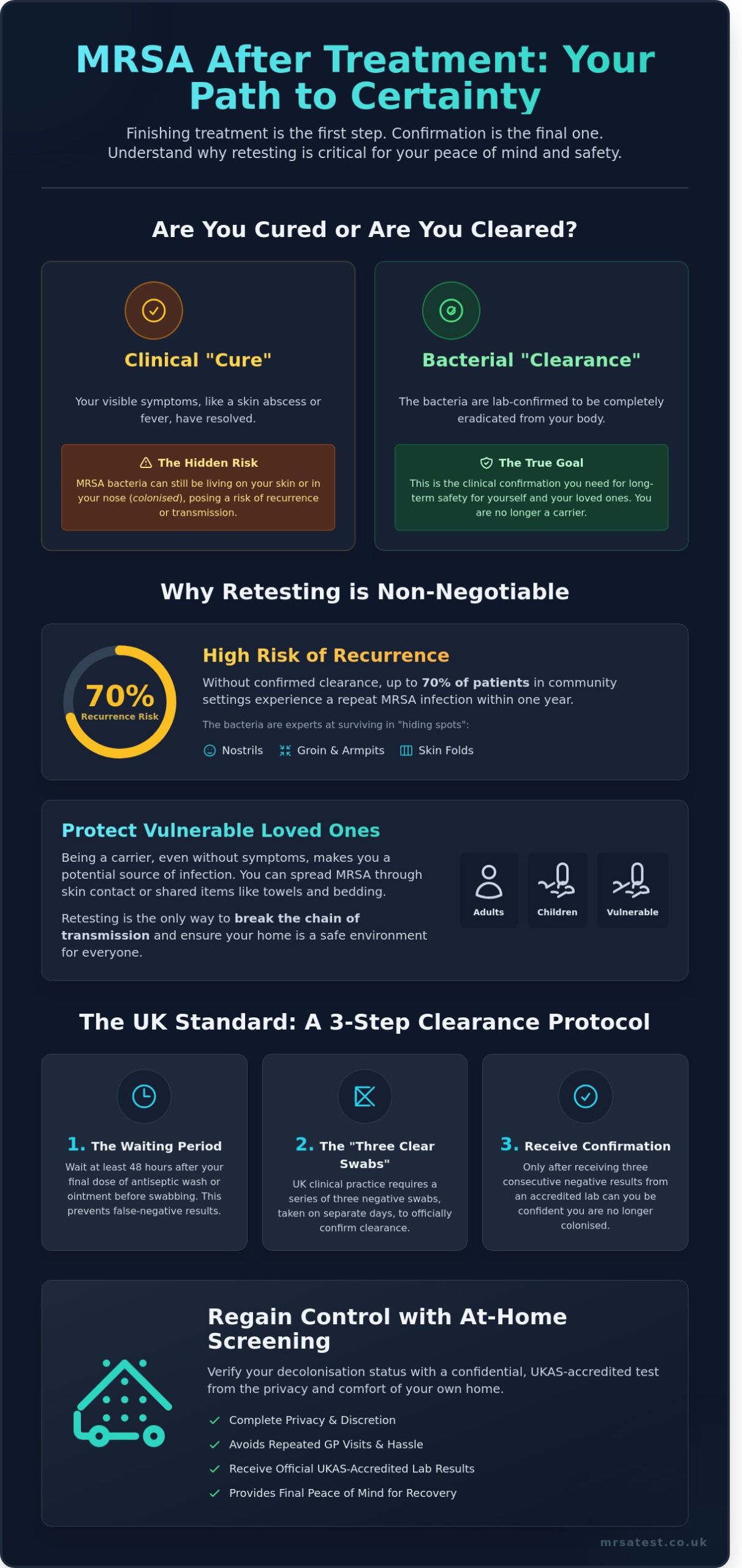
When you finish a course of antibiotics or a decolonisation wash, you might assume the danger has passed. However, many patients find themselves asking, do i need to retest for mrsa after treatment? To answer this, you must understand the difference between a clinical cure and bacterial clearance. A clinical cure means your visible symptoms, such as a skin abscess or fever, have resolved. Clearance means the bacteria are no longer living on your skin or inside your nose. You can be “cured” of an active infection while still being colonised, which leaves you at risk of future flare-ups.
Methicillin-resistant Staphylococcus aureus (MRSA) is a uniquely stubborn pathogen. It has evolved to resist the most common antibiotics used in the UK, such as flucloxacillin. This resistance makes it much harder to kill than standard staph infections. Even after a strict five-day decolonisation protocol, “rebound” colonisation can occur. This happens when a small number of bacteria survive in a protected area and multiply once the treatment ends. Confirming a negative status with a follow-up test provides the psychological peace of mind you need to move forward confidently.
The Risk of Recurrence in MRSA Patients
The numbers regarding recurrence are sobering. Clinical research shows that up to 70% of patients in community settings experience a repeat infection within one year if the bacteria aren’t properly cleared. These microbes are experts at finding “hiding spots” on the human body. They often congregate in moist, warm areas like the nostrils, the groin, or deep within skin folds. Gaining a foundational knowledge of what is MRSA is vital for identifying early warning signs. Without a post-treatment screen, you won’t know if the bacteria are still lurking in these areas, waiting for a small cut or a period of stress to trigger a new infection.
Protecting Vulnerable Contacts and Family
Being a carrier of MRSA doesn’t always make you feel ill, but it does make you a potential source of infection for others. If you remain colonised after treatment, you can easily spread the bacteria through shared towels, bedsheets, or skin-to-skin contact. This poses a significant threat to household members, especially elderly relatives or those with weakened immune systems who may struggle to fight off a “superbug.” Retesting is the most effective way to break the chain of transmission. By confirming you are clear, you ensure your home remains a safe environment for your loved ones. It’s a simple step that replaces uncertainty with clinical fact.
Decolonisation vs. Infection: What Are You Testing For?
Understanding the difference between an active infection and colonisation is vital for your recovery. An active MRSA infection usually presents with visible, painful symptoms like boils, abscesses, or red, swollen skin. In contrast, colonisation means the bacteria live on your skin or inside your nose without causing any immediate illness. If you have finished a course of medication, you might ask, “do i need to retest for mrsa after treatment?” The answer is usually yes, because clearing an infection in a wound does not automatically mean the bacteria have been removed from your skin or nasal passages.
Post-treatment testing is known as clearance screening. It focuses on ensuring you are no longer a carrier, which prevents the bacteria from causing a new infection later or spreading to vulnerable people. This process is a standard part of UK clinical practice, especially before hospital admissions or after a confirmed positive result.
How Antibiotics Affect MRSA Carriage
Systemic antibiotics, taken as tablets or through an IV, are designed to attack bacteria circulating in your system or deep within a wound. However, these drugs don’t always reach the surface of the skin or the inside of the nostrils in high enough concentrations to eliminate colonisation. This is why a wound can heal visibly while the bacteria remain elsewhere on your body. It is wise to monitor common skin infections for any signs of redness, but only a follow-up swab can confirm if you are truly clear. Retesting is necessary because the presence of MRSA in the groin or armpits can lead to a relapse if the skin barrier is broken again.
The Role of Antiseptic Washes and Ointments
In the UK, medical professionals use a decolonisation “bundle” to target the bacteria on the body’s surface. This typically involves a five-day regime using 4% Chlorhexidine antiseptic wash for the skin and 2% Mupirocin ointment for the nostrils. These topical treatments are the most effective way to lower the bacterial load. Once you complete this cycle, you are usually re-screened to check you are clear of MRSA. This protocol often requires three sets of negative swabs, taken at least 48 hours apart, to be considered fully clear.
Retesting verifies that these topical treatments worked as intended. If you want to check your status from the comfort of your home, using a professional MRSA self-test kit provides a discreet and reliable way to get answers. When considering “do i need to retest for mrsa after treatment,” remember that the goal is long-term safety. Ensuring the bacteria are gone from your skin reservoirs is the only way to prevent future complications for yourself and your family.
When is the Best Time to Retest for MRSA?
Timing is the most critical factor in ensuring your results are reliable. If you’re asking yourself, “do i need to retest for mrsa after treatment”, you must understand that testing too early often leads to a false negative. This happens when the bacteria are still present but suppressed by recent medications, making them invisible to laboratory equipment. To get a definitive answer, you must allow a “clearance window” where no antimicrobial agents are active in your system.
For the most accurate assessment, follow these specific UK clinical timelines:
- Post-Antiseptic Wash: Wait at least 48 to 72 hours after your final application of antiseptic washes or nasal creams.
- Post-Antibiotics: Wait a minimum of 14 days after finishing a full course of oral or intravenous antibiotics.
- Multiple Site Testing: Ensure you swab the nose, throat, groin, and axilla (armpit). Testing only one area can miss colonisation elsewhere, as MRSA often migrates between these warm, moist environments.
Why Timing Matters for Accurate Results
Accuracy depends on the bacteria’s ability to grow in a laboratory culture. When you use medicated soaps or chlorhexidine washes, residual traces of the antiseptic stay on the skin surface. These chemicals can “stun” the bacteria on your swab. While the bacteria aren’t dead, they’re unable to multiply on a petri dish in a UKAS-accredited facility, leading to a misleading negative result. It’s vital to avoid all medicated soaps for at least 48 hours before using an at-home kit. Similarly, recent antibiotic use can linger in the tissues, preventing a successful culture even if the colonisation remains.
The Consequences of Testing Too Early
Testing before the recommended window creates a false sense of security. If you receive a premature negative result, you might assume the decolonisation was successful when it wasn’t. This becomes a major issue when preparing for surgery. Many NHS and private hospitals perform their own screenings on the day of admission. If they detect MRSA because your earlier test was a false negative, your procedure will likely be cancelled. This leads to significant emotional distress and potential financial loss from lost deposits or time off work. It’s much simpler to wait the required 14 days than to repeat an entire five-day decolonisation cycle because of a rushed test.
The ‘Three Clear Swabs’ Rule and UK Protocols
In the United Kingdom, the gold standard for confirming you’re no longer carrying MRSA is the “three clear swabs” rule. This protocol requires three separate sets of negative results taken at weekly intervals, typically seven days apart. Clinical professionals consider a single negative test insufficient. This is because of the “suppression effect.” During your decolonisation treatment, antiseptic washes and nasal creams reduce bacterial levels significantly. They often drop below the detectable limit of a standard culture test, leading to a false sense of security.
Without follow-up tests over a 21-day period, you cannot be certain the colonisation won’t recover as the chemical suppression wears off. Different NHS Trusts may have varying local policies, but most acute hospitals require these three consecutive negatives before they’ll “clear” a patient from their active MRSA register. If you’re asking, “do i need to retest for mrsa after treatment?” the answer is almost always yes to ensure the bacteria hasn’t simply gone into hiding.
NHS Guidelines for Post-Treatment Screening
Most NHS Trusts follow strict screening protocols to minimise the risk of hospital acquired infections. If you’ve been flagged as positive during a pre-admission check, you’ll likely stay on the hospital’s high-risk register until the full three-swab protocol is complete. Many patients find their local GP surgery cannot offer this repetitive screening due to limited resources. This often leaves individuals in a difficult position when they need to prove they are clear for work or private surgery. Using a UKAS-accredited home test kit can provide the evidence needed without multiple trips to a clinic.
What to Do if You Test Positive Again
Finding out you’re still positive after a decolonisation cycle is common. It occurs in roughly 20% to 30% of cases. Don’t feel discouraged; it often requires a second round of treatment with different products. Frequently, the issue is “environmental re-contamination.” MRSA can survive on soft surfaces like cushions and mattresses for weeks. If you don’t wash your bedding at 60°C or replace your flannel and toothbrush during treatment, you may be re-infecting yourself. For persistent carriage that survives two or more treatment cycles, ask your doctor for a specialist microbiology consultation to check for deep-seated colonisation.
If you need to verify your status quickly and privately, you can order a professional MRSA screening kit for use in the comfort of your home.
How to Get a Private MRSA Retest from Home
If you’re asking yourself, “do i need to retest for mrsa after treatment,” the answer is usually yes if you want to confirm that your decolonisation therapy was successful. Using a professional at home test kit UK allows you to bypass the logistical hurdles of GP appointments or hospital visits. Clinical environments can be stressful and carry their own risks of exposure. Private testing offers a calm, professional alternative that fits into your daily routine without disruption.
Accuracy is never compromised for convenience. Every sample provided through this service is processed in UKAS-accredited laboratories. These facilities use the same rigorous diagnostic standards as NHS trusts, providing 99.9% accuracy in detecting Staphylococcus aureus. By choosing a private route, you gain access to clinical-grade results while maintaining complete control over your schedule and environment.
The Process of At-Home MRSA Swabbing
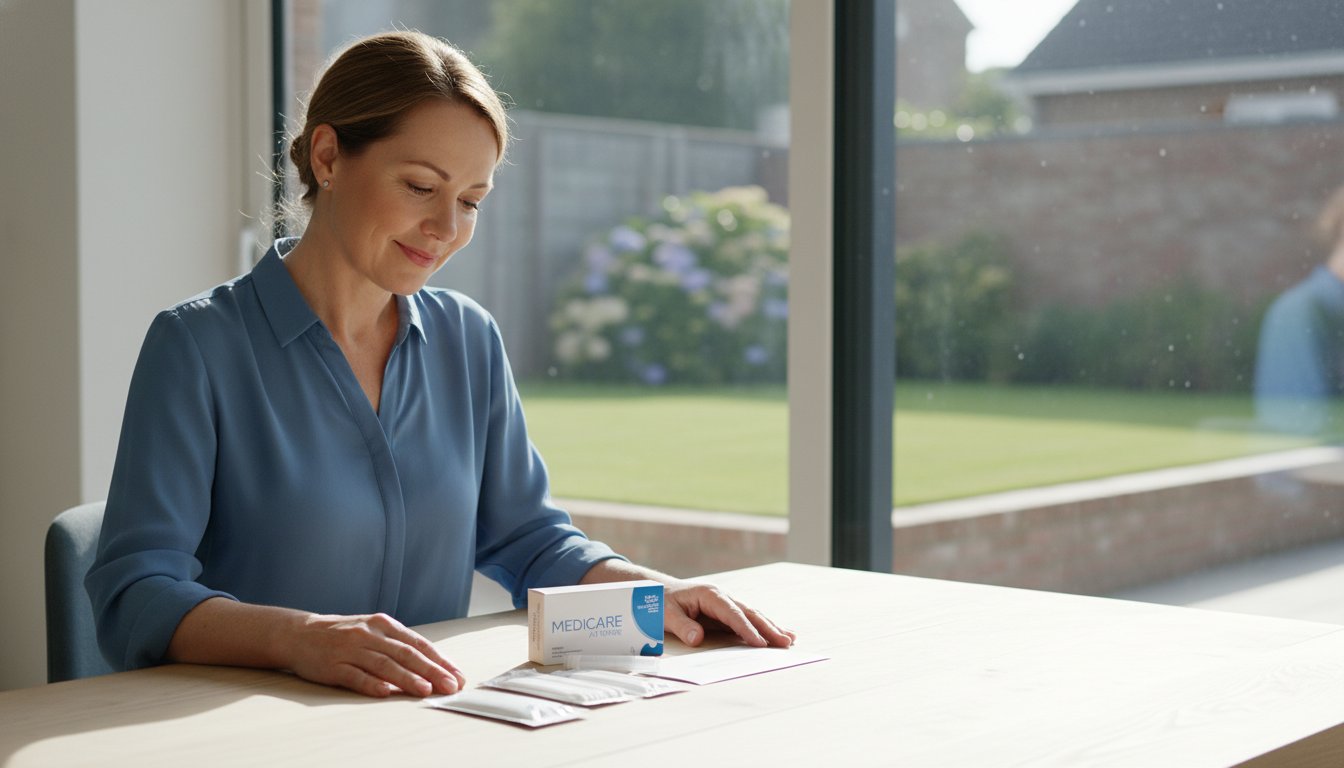
The testing procedure is designed to be simple and stress-free. Once you order your kit, it arrives in plain, unmarked packaging to ensure your privacy. You don’t need medical training to collect the samples. The kit includes clear instructions for swabbing the primary colonisation sites, typically the nostrils and the groin area. After you’ve collected the samples, you simply place them in the pre-paid envelope and post them to the laboratory.
Discretion is a core part of the service. Your results are delivered through a secure digital portal, meaning no physical letters arrive at your home and no records are shared with third parties without your consent. This 100% confidential approach ensures you can manage your health with total peace of mind and professional support.
Choosing Between Culture and PCR for Retesting
When you decide “do i need to retest for mrsa after treatment,” you should consider your timeline. There are two primary methods for verification:
- MRSA Culture Test: This is the traditional, cost-effective method. The laboratory grows the bacteria over 48 to 72 hours to identify any growth. It’s an excellent choice for routine post-treatment checks.
- Rapid PCR Test: This is the fastest option available. It uses molecular detection to identify MRSA DNA, providing results within 24 hours of the sample reaching the lab. This is essential if you have a surgery date scheduled in the next few days.
Take Control of Your Post-Treatment Recovery
Confirming that you’ve successfully cleared a colonisation is a vital step in protecting your health and the safety of your household. When patients ask, do i need to retest for mrsa after treatment, the clinical answer focuses on certainty; you need to ensure the bacteria are no longer present on the skin. Following the UK standard of three clear swabs taken at least 48 hours after finishing your decolonisation therapy provides the most reliable confirmation of success. This process helps prevent the risk of reinfection or transmission to vulnerable individuals.
You can complete this screening process quickly and privately. Our service utilises a UKAS-accredited partner laboratory to ensure every sample meets strict clinical standards. We prioritise your privacy with discreet and confidential packaging, and for those needing immediate answers, we offer rapid 24-hour PCR results. Managing your health shouldn’t be stressful, and our home testing kits provide a simple, professional way to verify your recovery.
Order Your Private MRSA Retest Kit Today
We’re here to help you move forward with total confidence in your results.
Frequently Asked Questions
How long after MRSA treatment should I wait to retest?
You should wait at least 48 hours after completing your course of antibiotics or decolonisation washes before you retest. This gap ensures that the antimicrobial agents don’t interfere with the laboratory results. Most UK clinical protocols recommend a window of 2 to 7 days post-treatment. Testing too early can lead to a false negative result because the treatment might temporarily suppress the bacteria without fully eradicating the colonisation.
Can I still be positive for MRSA if my wound has completely healed?
Yes, it’s possible to test positive for MRSA even after a skin infection or wound has fully closed. MRSA often colonises the skin, nostrils, or throat without causing an active infection. While the visible symptoms are gone, the bacteria can remain dormant on your body. This is why many patients wonder, “do i need to retest for mrsa after treatment” even when they feel healthy. Around 30% of the population carries Staph bacteria, and screening ensures you aren’t a carrier who could spread it to others.
What is the “three clear swabs” rule for MRSA?
The “three clear swabs” rule is the clinical standard used in the UK to confirm a patient is no longer carrying MRSA. You must provide three separate sets of swabs, taken at least 24 hours apart, which all return negative results from a UKAS-accredited laboratory. If even one swab in the series is positive, the process usually restarts. This rigorous approach ensures the bacteria hasn’t simply moved to a different area of the body or dropped below detectable levels temporarily.
Is a single negative test enough to prove I am clear of MRSA?
A single negative test isn’t sufficient to guarantee you’re clear of MRSA. Bacteria levels can fluctuate, and a single swab might miss a small colony residing in the nasal passages or skin folds. To be medically decolonised, healthcare providers typically require three consecutive negative results. This multi-test approach reduces the risk of a false negative, providing a higher level of certainty before you undergo surgery or stop taking contact precautions.
Why did my MRSA return after I finished the decolonisation wash?
MRSA often returns because the bacteria survived in the environment or on household items like towels, razors, and bedding. Statistics show that up to 50% of people may experience re-colonisation if they don’t simultaneously deep-clean their living space during treatment. It’s also possible the decolonisation wash didn’t reach every area, such as the back of the throat. Using a professional MRSA Culture Test helps identify exactly where the bacteria still resides so you can target it effectively.
Do I need a GP referral to get an MRSA retest in the UK?
You don’t need a GP referral to get an MRSA retest in the UK if you choose a private screening service. While the NHS provides testing for planned surgeries, many people prefer the speed and discretion of an at-home kit. These kits allow you to collect your samples privately and send them directly to a UKAS-accredited facility. You’ll receive your results electronically, often within 24 to 72 hours, without needing to book a clinic appointment or wait for a doctor’s letter.
What happens if I test positive for MRSA just before my surgery?
If you test positive before surgery, your operation might be delayed so you can complete a 5-day decolonisation treatment. This protocol involves using special nasal creams and antimicrobial body washes to lower the risk of a post-operative infection. In the UK, surgical site infections cost the NHS approximately £700 million annually, so hospitals are very strict. Clearing the bacteria first significantly improves your recovery outcomes and protects other vulnerable patients in the hospital ward.
Is the at-home MRSA test as accurate as the one done in a hospital?
At-home MRSA tests are just as accurate as hospital tests when they’re processed by a UKAS-accredited laboratory. The kit provides the same medical-grade swabs used in clinics, and the laboratory methods, such as PCR rapid testing, are identical. The only difference is that you collect the sample yourself in the comfort of your own home. Following the instructions carefully ensures the sample is valid, providing you with a reliable and confidential result without the stress of a hospital visit.