

Blog
MRSA Nose and Groin Swab Test: The Ultimate Guide to At-Home Screening
Mar
What if the one thing standing between you and your scheduled surgery isn’t a long hospital waitlist, but a simple screening you can complete in minutes from your own home? It’s completely normal to feel a sense of anxiety about pre-operative requirements, especially when you’re concerned about getting the sampling right or facing potential delays. The thought of performing a personal swab, particularly in the groin area, can also feel a bit daunting.
This guide is here to eliminate that uncertainty. We will walk you through every step of the at-home mrsa nose and groin swab test, ensuring you can collect your sample confidently, correctly, and with complete privacy. By the end, you’ll have mastered the process for achieving accurate, clinical-grade results that help keep your surgical plans on track. We’ll cover the precise swabbing technique, explain the difference between rapid PCR and standard culture results, and show you how to return your sample for fast analysis by our UKAS-accredited UK laboratory.
Key Takeaways
- Learn why the nose and groin are the most critical areas for MRSA screening due to bacterial colonization hotspots.
- Follow a detailed guide to correctly perform an at-home mrsa nose and groin swab test for reliable, clinical-grade results.
- Discover the key differences between PCR and culture tests to choose the right screening option for your needs, especially for urgent deadlines.
- Understand how to get fast, confidential MRSA screening results from a UKAS-accredited lab, all from the comfort of your home.
Understanding the MRSA Nose and Groin Swab Test
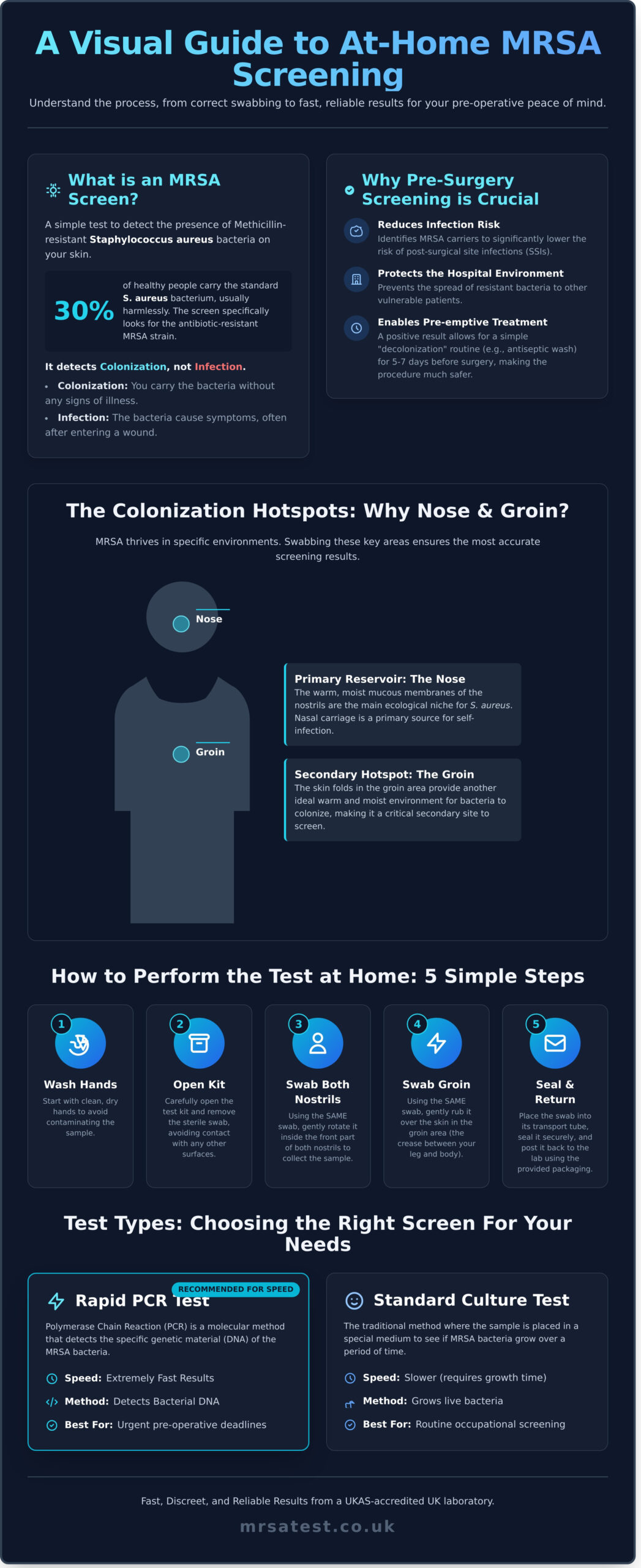
An MRSA screen is a simple yet critical diagnostic tool used to identify the presence of methicillin-resistant Staphylococcus aureus bacteria. While standard Staphylococcus aureus is a common bacterium found on the skin of about 30% of healthy people, the MRSA strain is resistant to several widely used antibiotics, making potential infections more difficult to treat. For a deeper clinical background, Understanding MRSA provides a comprehensive overview of its history and transmission. The purpose of the screen is not to diagnose an active illness, but to detect “colonization” before it can cause a problem.
The test specifically targets the nose and groin because these are the most common reservoirs for the bacteria. The warm, moist environments of the nasal passages and the skin folds in the groin provide ideal conditions for MRSA to live harmlessly. By swabbing these two key areas, the mrsa nose and groin swab test provides the most accurate picture of a person’s carrier status.
This screening is a standard and often mandatory requirement for patients being admitted to UK hospitals and private clinics, a practice set to become even more rigorously enforced by 2026. It’s vital to distinguish between being “colonized” and having an “infection.” Colonization means you carry the bacteria on your body without any signs of illness. You are healthy. An infection occurs when the bacteria breach your body’s defences, such as through a surgical wound, and begin to cause symptoms. Screening aims to identify carriers to prevent this from happening.
Who Needs an MRSA Swab Test?
While most commonly associated with hospital admissions, several groups can benefit from this straightforward screening:
- Pre-operative patients: Individuals scheduled for elective surgery, particularly high-risk procedures like orthopaedic (hip/knee replacements), cardiac, or neurosurgery, are routinely tested.
- Healthcare and care home staff: As part of routine occupational health checks, staff are screened to prevent transmission to vulnerable patients and residents.
- Individuals with recurring skin infections: If you experience persistent boils, abscesses, or skin wounds that don’t heal properly, an MRSA test can help identify an underlying cause.
The Importance of Pre-Surgery Screening
Undergoing an MRSA screening before a planned operation is a crucial safety measure with multiple benefits. It’s not a barrier to your procedure; it’s a step to ensure its success.
- Reduces infection risk: Identifying MRSA colonization allows doctors to significantly lower your risk of developing a post-surgical site infection (SSI), which can lead to serious complications and longer recovery times.
- Protects the hospital environment: Screening helps prevent the introduction and spread of resistant bacteria within hospitals, safeguarding other vulnerable patients from exposure.
- Enables pre-emptive treatment: If your mrsa nose and groin swab test result is positive, it simply means a “decolonization” treatment will be prescribed. This typically involves using an antiseptic body wash and a special nasal ointment for 5-7 days before your surgery to clear the bacteria from your skin, making your procedure much safer.
Why the Nose and Groin? The Science of Bacterial Colonization
You may wonder why a test for MRSA focuses so specifically on the nose and groin. The answer lies in the biology of the bacterium itself, Staphylococcus aureus. This bacterium is remarkably adapted to live on human skin and mucous membranes, often without causing any illness. This harmless presence is known as “colonization.” However, for an accurate screening, we must look for the bacterium in the specific places it prefers to live. These “colonization hotspots” are typically warm, moist, and protected, providing the perfect environment for bacteria to thrive.
A comprehensive mrsa nose and groin swab test is designed to check these primary and secondary reservoirs, ensuring the highest level of accuracy and providing you with a reliable result. Simply swabbing a random area of skin would be far less effective.
The Nasal Reservoir
The anterior nares, or the front part of your nostrils, are the primary ecological niche for Staphylococcus aureus. In fact, studies show that up to 30% of the healthy population carries the bacteria here without any symptoms. The warm, moist mucous membranes inside the nose offer an ideal breeding ground. This is why our test instructions specify rotating the same swab inside both nostrils; this action maximises the sample collection and increases the likelihood of detection if the bacteria are present.
Nasal carriage is a significant factor because it creates a constant source for self-infection. An individual can easily transfer bacteria from their nose to their hands and then to a break in the skin, such as a cut, a surgical wound, or the site of an intravenous line, where a serious infection can begin.
The Groin and Skin Folds
While the nose is the most common site, it’s not the only one. Other warm, moist areas like the groin and axilla (armpit) serve as important secondary colonization sites. These skin folds provide a similar protective environment where bacteria can persist, often due to skin-to-skin contact and friction. This is why screening the nose alone is considered incomplete. Clinical data suggests that a nose-only swab can miss 15-20% of MRSA carriers, as the bacteria may be colonizing the groin or other sites instead of, or in addition to, the nose.
This two-site approach is why official UK guidance on MRSA screening from the NHS confirms that swabs are taken from the nose, and often the groin, before many hospital procedures. By checking both key locations, the mrsa nose and groin swab test provides a far more complete and dependable picture of your status. Understanding where to look is the first step in getting an accurate result, a process made simple and confidential with our professionally designed at-home test kits.
How to Perform an MRSA Swab Test at Home: A Step-by-Step Guide
Our at-home MRSA screening kit is designed to be simple, discreet, and completely safe. To ensure our UKAS-accredited laboratory can provide a definitive result, it’s vital to collect your sample correctly. This guide provides clear, clinical instructions to help you perform the mrsa nose and groin swab test with confidence. The entire process takes less than five minutes.
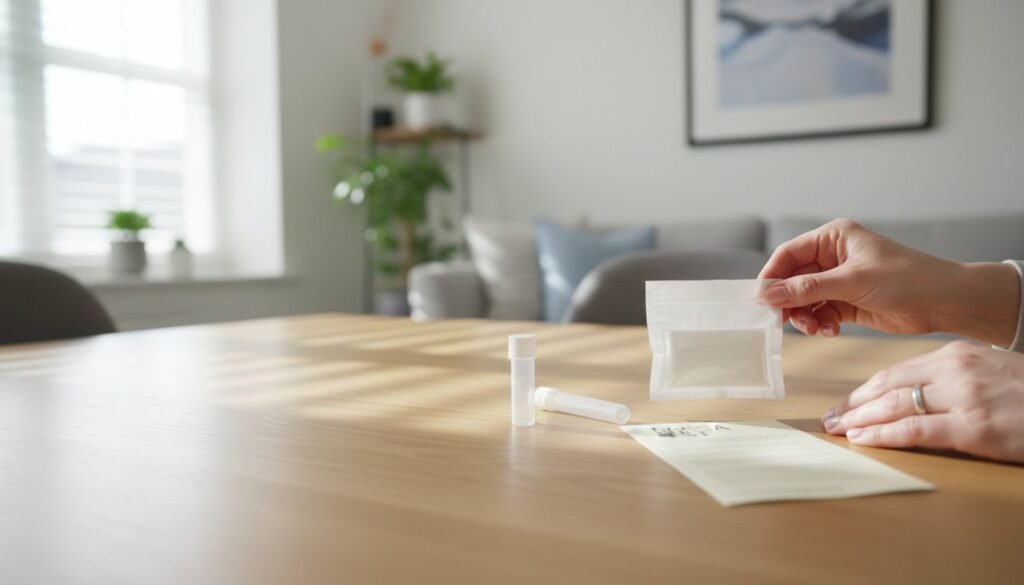
Before you begin, prepare a clean, flat surface like a table or countertop. Wash your hands thoroughly with soap and warm water for at least 20 seconds and dry them completely. Unpack your test kit and lay out all the components so they are within easy reach.
Step-by-Step Swabbing Instructions
Follow these five steps precisely to ensure your sample is viable for laboratory analysis. Always refer to the specific printed instructions included with your kit, as some components may vary slightly.
- Prepare the Swab: Remove the first swab from its sterile packaging, holding it by the plastic shaft. Be careful not to touch the soft tip. Some kits may require you to moisten the swab in a provided sterile solution; if so, do this now to improve bacterial collection.
- Collect the Nose Sample: Gently insert the soft tip of the swab about 1-2 cm into your first nostril. You are aiming for the fleshy inner wall, not deep inside the nasal passage. Firmly but gently rotate the swab in a circular motion 5 times, ensuring it makes good contact with the skin. Using the very same swab, repeat this exact process in your other nostril.
- Collect the Groin Sample: Take the second, separate swab. Identify the skin crease where your upper thigh meets your body (this is the inguinal fold). Rub the tip of the swab firmly back and forth along this crease five times. This area is a common site for MRSA colonisation, so a thorough sample is crucial. Proper collection technique is essential for all types of MRSA Tests to ensure an accurate diagnosis.
- Secure the Sample: Immediately after collection, place each swab into its correct transport tube. Push the swab all the way to the bottom and screw the cap on tightly until you feel or hear it click. This is critical for preserving the sample in the transport medium.
- Label and Post: Fill out the required information on the provided labels and attach one to each sample tube. Place the sealed tube(s) into the protective bio-safe wallet, and then put the wallet into the pre-paid postage bag. Your sample is now ready to be sent to our laboratory.
Common Swabbing Mistakes to Avoid
A successful test depends on a high-quality sample. Avoiding these common mistakes will prevent delays and the need for a re-test, ensuring you get your results as quickly as possible.
- Contaminating the Swab Tip: Never allow the soft tip of the swab to touch your fingers, clothing, or any other surface before or after you’ve collected the sample. Accidental contact can introduce other bacteria and invalidate the test result.
- Using Insufficient Pressure: A gentle tickle isn’t enough. The swab needs to make firm contact with the skin to collect an adequate number of cells for analysis. A sample that is too small may be reported by the lab as “inadequate,” which means you’ll have to perform the test again.
- Failing to Secure the Tube Cap: The liquid inside the tube is a special medium designed to keep the bacteria alive during transit. If the cap is loose, this medium can leak out, ruining the sample before it even reaches the lab. Always ensure the cap is tightly sealed.
PCR vs. Culture Testing: Choosing the Right Screen for Your Needs
When you require screening for MRSA, you’ll find two primary laboratory methods available: PCR and traditional culture. While both are effective at detecting the presence of MRSA, they operate very differently. Understanding this difference is crucial for selecting the right mrsa nose and groin swab test for your specific circumstances, whether you’re facing an urgent pre-operative deadline or conducting a routine health check. The choice directly impacts the speed, sensitivity, and cost of your result.
Your decision hinges on balancing the need for rapid results against your budget and the clinical reason for the test. Let’s explore the distinct advantages of each method.
The Rapid PCR Advantage
The Polymerase Chain Reaction (PCR) test is the gold standard for speed and sensitivity. Instead of waiting for bacteria to grow, this advanced molecular technique directly detects MRSA’s genetic material. Our UKAS-accredited laboratory analyses your sample for the mecA gene, the specific gene that gives the Staphylococcus aureus bacterium its resistance to methicillin and other common antibiotics. By targeting the DNA itself, we can provide a definitive result in as little as 24 hours from the moment your sample is received. This makes it the ideal choice for time-sensitive situations, such as last-minute pre-surgical screening required by hospitals or for gaining rapid peace of mind before visiting a vulnerable individual.
The Standard Culture Method
The culture method is the traditional and highly reliable technique for MRSA detection. After your swab arrives at our lab, the sample is carefully applied to a specialised nutrient agar plate. This plate is then incubated for 48 to 72 hours in a controlled environment to encourage any MRSA bacteria present to grow into visible colonies. While slower, this method remains valuable. Some clinicians prefer it because if a positive result is found, the live bacterial colonies can be used for further antibiotic sensitivity testing. This helps determine which specific antibiotics would be effective for treatment, though this is more relevant for active infections than for screening colonisation. For non-urgent occupational health checks or routine screenings where immediate results aren’t essential, the culture test provides a highly accurate and more cost-effective solution.
To help you decide, here is a direct comparison of the two testing options:
- Speed: PCR delivers results within 24 hours of lab receipt, whereas a culture test takes 48-72 hours.
- Technology: PCR is a molecular test that detects MRSA DNA. Culture physically grows live bacteria from your sample.
- Sensitivity: PCR is exceptionally sensitive and can detect even very low levels of bacterial DNA, potentially identifying colonisation that a culture might miss.
- Cost: The standard culture method is the more economical option, while the rapid PCR test carries a premium for its speed and advanced technology, often costing around £20-£30 more.
Ultimately, the best mrsa nose and groin swab test for you depends on your personal timeline and requirements. Both methods are processed in our certified UK laboratory to ensure clinical accuracy and confidentiality.
If you have an urgent surgical deadline or need the fastest possible confirmation, the choice is clear. Order our Rapid 24-Hour PCR MRSA Test today for a trusted and timely result.
Fast, Discreet, and Reliable: Why Order from mrsatest.co.uk?
When you need an MRSA screening, you need a service that combines clinical accuracy with speed and complete confidentiality. Waiting for a GP appointment or navigating hospital pre-assessment schedules can add unnecessary stress, especially when facing an upcoming surgical procedure. We designed our service to eliminate these obstacles, providing a trusted, direct-to-lab solution from the comfort of your home.
Our entire operation is 100% UK-based. We don’t outsource any part of the process. Every sample is processed at our trusted UKAS-accredited partner laboratory. UKAS accreditation is the gold standard for testing and calibration, recognised by the government and the NHS as a symbol of quality and impartiality. This means your test is handled with the same rigorous standards you would expect from a hospital, ensuring the results are always reliable.
We understand the sensitive nature of health screening. That’s why your privacy is our priority. Every kit is shipped in plain, unbranded packaging, with no indication of the contents. Your results are delivered securely and confidentially to your email inbox, giving you sole control over your personal health information.
To meet diverse clinical needs, we offer several kit options:
- Nose & Groin Swab Test: This is our standard and most frequently requested kit, meeting the pre-operative screening requirements for the majority of UK hospitals.
- Nose, Groin & Axilla (Armpit) Swab Test: Some surgical procedures or specific hospital protocols require a more comprehensive screening. This kit includes an additional swab for the axilla to provide a complete picture of MRSA colonisation.
Our Commitment to Clinical Excellence
Your health is not a compromise. We use the same high-quality, CE-marked swabs and adhere to the exact laboratory culture protocols used by the NHS. Every at-home kit includes simple, step-by-step instructions with clear diagrams to ensure you collect a viable sample. Should you have any questions about the process or need help understanding your results, our professional team is here to provide clear, helpful support.
Simple Ordering and Rapid Turnaround
We’ve streamlined the entire process to be as efficient as possible. All orders placed before 3 PM Monday to Friday are dispatched the same day for next-day delivery. Your kit for the mrsa nose and groin swab test includes a prepaid Royal Mail 24 Tracked return label, so you can post your sample from any post box with zero fuss. It’s the fastest way to get the certification you need. Order your MRSA Nose and Groin Swab Test Kit today.
Your Next Step: Fast, Accurate MRSA Testing at Home
You now understand that screening for MRSA colonization focuses on the nose and groin for precise scientific reasons, and that performing an at-home mrsa nose and groin swab test is a simple, empowering process. With the knowledge to choose between rapid PCR and detailed culture tests, you’re equipped to make an informed decision about your health, on your own schedule.
When you’re ready for definitive answers, we provide a service built on clinical accuracy and complete privacy. Order your professional MRSA swab test kit for home collection and take the first step. Your sample is processed in our UKAS-accredited UK laboratories, with fast 24-hour PCR results available for urgent cases. From the plain packaging to your secure results, our service is 100% confidential and discreet.
Don’t leave your health to chance. Taking this proactive step from the comfort of your home is a powerful way to gain the peace of mind you deserve.
Frequently Asked Questions
Does the MRSA nose and groin swab test hurt?
No, the MRSA nose and groin swab test is a painless and non-invasive procedure. When you collect the sample, you may feel a slight tickling sensation inside your nostril or on your skin, but it should not cause any pain. The swabs are soft and designed for comfortable sample collection, making the entire process quick and straightforward. The procedure takes less than a minute to complete.
How long does it take to get MRSA swab results back?
The turnaround time depends on the type of test you choose. Our standard MRSA culture test results are typically available within 2 to 3 working days after our partner laboratory receives your sample. For faster results, our MRSA PCR rapid test option provides molecular detection, with results delivered securely to you within 24 hours of the sample arriving at our UKAS-accredited lab.
What happens if my MRSA test result is positive?
A positive result simply means that MRSA bacteria are present on your skin, a condition known as colonisation. It doesn’t mean you have an active infection. If your test is positive, you should share your results with your GP or hospital consultant. They will typically prescribe a simple, 5-day decolonisation treatment, which usually involves an antiseptic body wash and a special nasal cream to clear the bacteria before a hospital admission. Having a trusted primary care provider, like those at a comprehensive clinic such as Sage Creek Medical Center, is essential for managing these results and coordinating your care effectively.
Can I do an MRSA test while I am taking antibiotics?
Yes, you can perform the test while taking antibiotics, but it’s important to be aware of the potential impact. Some antibiotics can suppress the MRSA bacteria, which could lead to a false-negative result. For the most accurate outcome, it’s best to complete your course of antibiotics before testing. If you must test while on medication, please inform us of the specific antibiotic you are taking so our lab can interpret the results with this information in mind.
Will my hospital accept results from a private MRSA test?
Most NHS and private hospitals in the UK accept results from our service because all samples are processed in a fully UKAS-accredited laboratory, meeting the same high standards as NHS tests. However, we strongly recommend you confirm with your specific hospital or surgical team beforehand. Checking their pre-admission screening policy ensures your results will be accepted and helps avoid any potential delays to your procedure.
How long is an MRSA swab result valid for before surgery?
An MRSA screening result is generally considered valid for 4 to 6 weeks prior to a planned surgical procedure. This timeframe can vary slightly between different NHS trusts and private healthcare providers. It is crucial to check your specific hospital’s pre-operative assessment guidelines. They will provide the exact window in which your test must be completed to be accepted for your admission.
What is the difference between a nose swab and a throat swab for MRSA?
A nose swab is the primary method for MRSA screening, as the anterior nares (the front of the nostrils) are the most common site where the bacteria live. A throat swab is not typically included in a routine mrsa nose and groin swab test. It is generally only used by clinicians if a throat infection is suspected or as part of an enhanced screening protocol for specific, high-risk patient groups in a hospital setting.
Can I test for MRSA at home if I have a skin rash?
No, our at-home screening kits are not suitable for diagnosing an active skin infection or rash. These tests are designed to detect MRSA colonisation on the surface of intact skin, such as the nose and groin. If you have a rash, boil, or an open wound that you believe is infected, it’s essential to see your GP for an in-person medical assessment and appropriate treatment as soon as possible.
