
The Role of Pre-Op Drinks in Your Surgery Preparation
Navigating the instructions for an upcoming surgery can feel overwhelming, particularly the rules around fasting. The traditional “nil by mouth” order often causes anxiety, leaving patients confused and worried that a simple mistake could risk their procedure being cancelled. However, medical guidelines have evolved significantly. You may be surprised to learn that specific, clear pre op drinks are now a recommended and crucial part of modern surgical preparation, designed to help your body, not hinder it.
This guide is designed to provide clear, professional advice on the role of these specialised carbohydrate drinks. We will explain the clinical reasoning behind this change and how it helps to reduce post-operative nausea, thirst, and anxiety. By understanding the purpose and benefits, you can approach your surgery feeling confident and well-prepared. Our goal is to demystify the process, ensuring you know exactly how to follow your instructions for a safer, more comfortable, and faster recovery.
Key Takeaways
- Understand the modern shift in pre-operative guidance, moving away from prolonged fasting to a more managed approach for better outcomes.
- Discover the science behind how pre-operative carbohydrate drinks help your body prepare for and manage the physical stress of surgery.
- A typical timeline shows when to take pre op drinks, but it is crucial to follow the precise instructions provided by your surgical team.
- See how these drinks fit into a complete preparation checklist designed to minimise risks and support a smoother recovery.
What Are Pre-Op Drinks and Why Are They Recommended?
Pre-operative drinks, often called pre-op drinks, are specialised, clear fluids rich in carbohydrates. They are specifically designed to be consumed in the hours leading up to surgery. Think of them not as a meal, but as a carefully formulated fuel source that hydrates your body and provides essential energy, helping to prepare you for the physical demands of an operation. Their introduction marks a significant and evidence-based shift in how patients prepare for surgery.
The primary goal of these drinks is to reduce your body’s physiological stress response to the procedure. Going into surgery in a fasted state can trigger a stress reaction similar to starvation, which can hinder recovery. By providing a source of carbohydrates, these drinks help maintain your body’s energy reserves, reduce post-operative insulin resistance, and ultimately support a smoother recovery process. It is a key part of preparing your body for a major event, much like an athlete would prepare for a race.
Moving Beyond Traditional Fasting
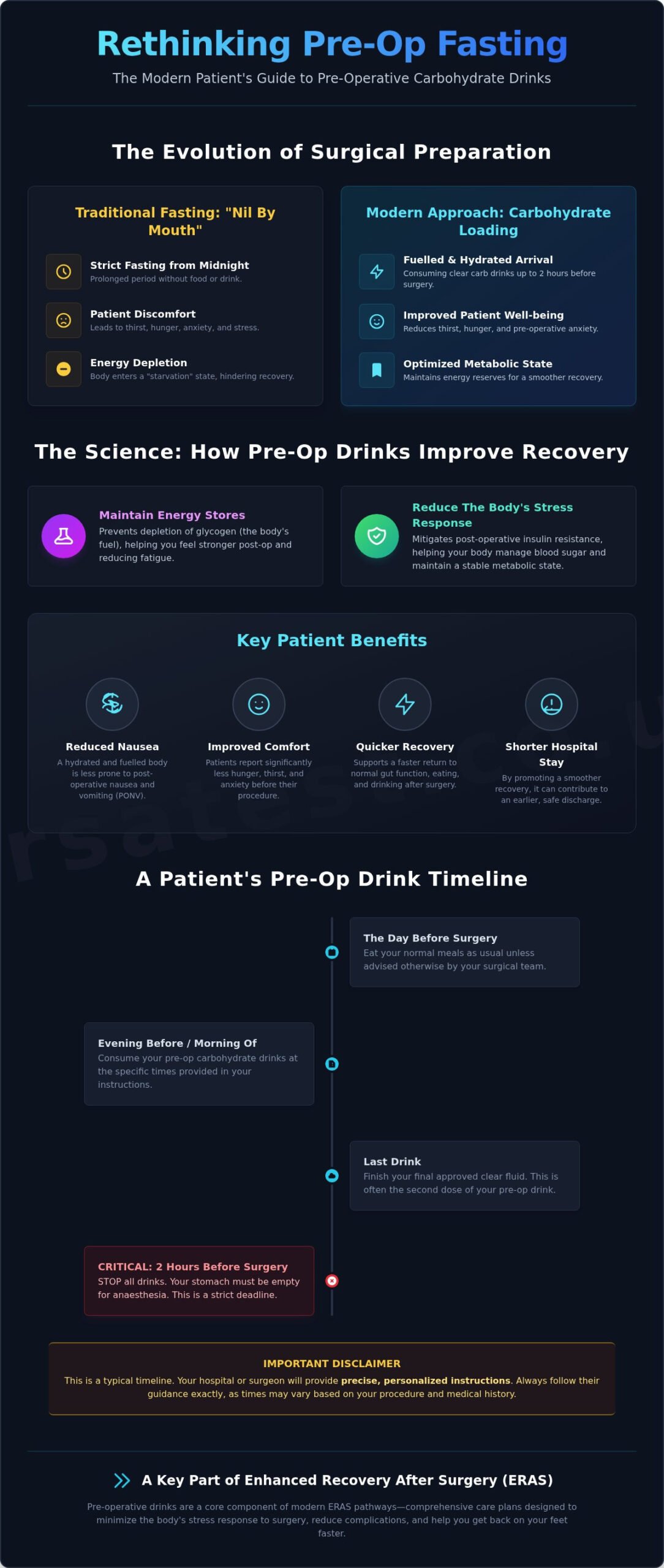
For decades, the standard instruction before surgery was “nil by mouth from midnight.” This strict fasting was based on the need to ensure the stomach was empty, primarily to prevent a rare but serious complication called pulmonary aspiration (when stomach contents enter the lungs) during anaesthesia. However, prolonged fasting can leave patients feeling dehydrated, anxious, thirsty, and hungry, which increases stress and discomfort. Modern anaesthetic techniques and a deeper understanding of patient physiology have led to updated preoperative fasting guidelines, which confirm that allowing clear, specialised fluids up to two hours before surgery is safe for most patients.
The Role of ERAS Pathways
The move towards pre-operative drinks is a core component of a modern, evidence-based approach known as Enhanced Recovery After Surgery (ERAS). ERAS pathways are comprehensive care plans designed to help patients recover more quickly and with fewer complications after major surgery. The philosophy is to minimise the body’s stress response throughout the entire surgical journey.
Within these pathways, carbohydrate loading with pre op drinks is a key instruction. It ensures patients arrive for their procedure in an optimised metabolic state-hydrated and fuelled, rather than fasted and stressed. This simple step has been clinically shown to improve patient well-being, reduce post-operative nausea, and contribute to a faster return to normal gut function, getting you back on your feet sooner.
Specialist healthcare providers focusing on areas like musculoskeletal health, such as GB Clinic, are often at the forefront of implementing these ERAS protocols to ensure their patients receive the best possible care before and after their procedures.
Similarly, facilities dedicated to surgical weight loss, another field where ERAS principles are critical for patient recovery, integrate these modern preparation steps into their care plans. For a look at how these protocols are applied in a specialized setting, you can find more information at nusbaummedicalcenters.com.
The Science Explained: How Carbohydrate Drinks Improve Recovery
Think of a marathon runner preparing for a race. They ‘carbo-load’ to ensure their body has the maximum energy reserves required for a demanding physical event. In a similar way, surgery places significant stress on your body. Instead of arriving for your procedure after a long, depleting fast, modern medical protocols now recommend specific carbohydrate drinks to fuel your body and support a smoother, faster recovery.
These specially formulated pre op drinks provide your body with easily accessible energy, helping to minimise the physical toll of the operation and improve your post-operative experience.
Maintaining Your Energy Stores
Traditional pre-operative fasting can deplete the body’s primary fuel source, known as glycogen, which is stored in your liver and muscles. Arriving for surgery in a fasted, energy-depleted state can contribute to feelings of weakness and fatigue afterwards. A carbohydrate drink helps to keep these crucial energy stores topped up without placing a burden on your digestive system, helping you feel stronger and more comfortable after your procedure.
A major physiological stressor like surgery can also trigger a condition called post-operative insulin resistance. This is a temporary state where the body becomes less effective at using insulin to manage blood sugar levels, which can slow down recovery. Providing a controlled source of carbohydrates before the operation helps your body maintain a more stable metabolic state. The scientific evidence for carbohydrate drinks strongly supports their role in mitigating this response, a key factor in improving patient outcomes.
Key Benefits for Patients
The clinical benefits of this simple preparation step are well-documented, focusing on improving the patient experience both before and after the operation. Key advantages include:
- Reduced post-operative nausea and vomiting (PONV): A body that is properly hydrated and fuelled is less likely to react with nausea after anaesthesia.
- Improved pre-operative comfort: Patients consistently report feeling significantly less hungry, thirsty, and anxious while waiting for their surgery.
- Quicker return to normal function: Maintaining energy levels can contribute to a faster return to drinking and eating a normal diet.
- Potentially shorter hospital stays: A smoother initial recovery period can support an earlier, safe discharge from the hospital.
A Patient’s Guide: When and How to Take Pre-Op Drinks
IMPORTANT: ALWAYS follow the specific, personalised instructions provided by your surgeon and anaesthetist. The information below is a general guide and should not replace the medical advice given to you by your healthcare team.
The timing and type of fluid you consume before an operation are critical for your safety and recovery. Pre-op drinks are specifically designed to be ‘clear’ liquids. This means you can see through them, like water or black tea, and they are free from pulp, fat, and protein. Opaque drinks like milk, smoothies, or orange juice with pulp are not permitted as they empty from the stomach much more slowly and can pose a significant risk during anaesthesia.
Typical Pre-Surgery Drink Schedule
While your individual plan may vary, a common schedule for taking these specialised carbohydrate drinks often follows a precise timeline to ensure your stomach is empty at the time of your surgery:
- The Evening Before Surgery: You may be advised to drink one or two cartons (typically 200ml each) of the pre-op drink in the evening, often with your last light meal.
- The Morning of Surgery: You will typically be instructed to drink one final carton, finishing it no later than two hours before your scheduled hospital arrival time.
It is crucial to adhere to these timings exactly. Consuming anything, including water, within the two-hour window before your procedure can lead to delays or even cancellation of your surgery for safety reasons.
Common Questions and Misconceptions
Can I just drink a sports drink like Lucozade instead?
No. While sports drinks contain sugar, they are not a suitable substitute. Specialised pre op drinks are formulated with complex carbohydrates (like maltodextrin) and balanced electrolytes, designed specifically to optimise your body’s metabolic state before surgery. This specific formulation has been shown to aid recovery. For a deeper understanding of the clinical evidence, you can review The Science of Pre-Op Drinks and Recovery from the National Institutes of Health.
What about plain water?
Water is a clear fluid and is generally allowed up until the two-hour cut-off point. However, it does not provide the carbohydrate energy that helps reduce post-operative nausea, hunger, and insulin resistance. The carbohydrate loading from a pre-op drink is a key part of the enhanced recovery pathway.
Are these drinks suitable for people with diabetes?
This is a critical point that requires direct medical consultation. Patients with diabetes must speak with their surgeon or diabetic specialist nurse for tailored advice. They will receive specific instructions on managing their blood sugar levels and may be given a different pre-operative fasting plan.
Beyond Drinks: Your Complete Pre-Operative Preparation Checklist
While specialised pre op drinks are a key part of modern surgical protocols designed to improve your recovery, they are one element of a comprehensive safety plan. The ultimate goal of pre-operative preparation is to minimise all potential risks, ensuring you are in the best possible condition for your procedure. Following your clinical team’s full checklist is crucial for a safe and successful outcome.
Think of each preparation step as another layer of safety. By addressing nutrition, medication, and infection risks ahead of time, you actively contribute to a smoother surgical experience and recovery.
Medication Management and Hygiene
Reducing the risk of a surgical site infection begins at home, well before you arrive at the hospital. Your care team will provide precise instructions, which typically include:
- Medication Review: A crucial discussion with your doctor about all current medications, vitamins, and supplements. It is especially important to create a plan for stopping medications that can increase bleeding risk, such as blood thinners.
- Antiseptic Washes: You may be asked to wash with a special antiseptic skin cleanser, often containing Chlorhexidine (CHG), for several days leading up to your surgery. This simple step significantly reduces the amount of bacteria on your skin.
Screening for Infection Risks like MRSA
Another critical step in preventing post-operative complications is screening for specific bacteria, such as Methicillin-resistant Staphylococcus aureus (MRSA). MRSA is a type of bacteria that can be carried harmlessly on the skin but may cause serious infections if it enters the body during surgery.
For this reason, UK hospitals routinely screen patients for MRSA before planned operations. Identifying if you are a carrier beforehand is a simple, proactive measure. If the bacteria is detected, a straightforward treatment course of a special body wash and nasal cream is usually all that is needed to clear it, protecting you from potential complications.
For those seeking the convenience and confidentiality of testing before their hospital admission, you can learn more about private MRSA screening from home. By taking a proactive role in your preparation-from your diet and pre op drinks to hygiene and screening-you are setting the stage for the best possible result.
Finalising Your Pre-Operative Plan for a Smoother Recovery
Preparing for surgery involves several key steps designed to ensure the best possible outcome. As we’ve discussed, understanding the role of pre op drinks is crucial; these specialised carbohydrate beverages are clinically proven to reduce your body’s stress response and can significantly aid your recovery. Following your surgical team’s precise instructions is paramount. However, your preparation extends beyond nutrition.
A complete pre-operative checklist also includes vital safety screenings. Proactively testing for MRSA is a critical step many UK hospitals require to minimise the risk of post-surgical infection. You can take control of this part of your preparation with confidence and complete privacy from the comfort of your home.
Ensure you’re fully prepared with a confidential at-home MRSA test. Our simple self-collection process uses a fully UKAS-accredited partner laboratory, delivering confidential results in discreet packaging. Taking these proactive steps empowers you to face your procedure with greater peace of mind.
Frequently Asked Questions About Pre-Op Drinks
Are pre-op drinks safe for everyone, including people with diabetes?
Most pre-op drinks are safe, but specific formulations exist for different patient needs. For individuals with diabetes, a specially formulated, sugar-free or low-glycaemic version is often required to prevent unsafe changes in blood sugar levels. It is crucial to only use the drink prescribed by your anaesthetist or surgical team, as they will select the correct type for your specific medical condition. Never substitute the drink you have been given.
What happens if I forget to take my pre-op drink or drink it at the wrong time?
If you forget your drink or take it outside the prescribed time window, you must contact the hospital’s pre-assessment unit or the surgical ward immediately for guidance. Do not proceed without their instruction. Depending on the timing and your procedure, the surgery may need to be rescheduled to ensure your safety during anaesthesia. Prompt and honest communication is essential to avoid any complications and ensure the best outcome for your health.
Can I make my own pre-operative carbohydrate drink at home?
No, you should not attempt to make your own pre-operative drink. Medically approved pre op drinks are formulated with a specific osmolality, which allows them to empty from the stomach quickly and safely. Homemade drinks, including sports drinks or fruit juices, do not meet these precise clinical standards. Using an unapproved drink will likely be treated as a breach of fasting rules, which could lead to the delay or cancellation of your surgery for safety reasons.
Where do I get pre-op drinks? Are they available over the counter?
Pre-operative drinks are typically provided directly by the hospital or given to you as a prescription to be collected from a pharmacy. While some brands may be found online, it is vital that you only use the specific drink recommended or supplied by your clinical team. They are considered a medical product, not a standard over-the-counter item. Your pre-assessment nurse will provide clear instructions on how to obtain the correct drink for your procedure.
What do pre-op drinks taste like and are there different flavours?
Most pre-operative drinks have a clear, slightly sweet taste, often described as being similar to a diluted fruit squash or a non-carbonated sports drink. To make them more palatable, they are usually available in several common flavours, such as lemon and lime, orange, or summer fruits. The hospital or pharmacy will typically provide the flavour they have in stock. Many patients find that chilling the drink beforehand improves the taste and makes it more refreshing.
Will drinking a pre-op drink make me feel sick or full before surgery?
These drinks are specifically designed to be isotonic, meaning they pass through the stomach very quickly, usually within 60 to 90 minutes. This rapid gastric emptying means they are highly unlikely to make you feel full or nauseous, unlike other liquids or solid food. The primary goal is to hydrate and energise your body without leaving any residue in the stomach, ensuring you arrive for your operation in a safer, more comfortable state.