Testosterone Test UK: A Complete Guide to At-Home & Clinic Options
Are you experiencing persistent fatigue, a noticeable drop in libido, or unexplained mood swings? These common yet disruptive symptoms can often be linked to your testosterone levels, but finding a clear and reliable answer can feel overwhelming. If you are considering a testosterone test UK services offer, navigating the options between the NHS and private clinics, or questioning the accuracy of at-home kits, you are not alone.
This complete guide provides the clarity you need. We will walk you through recognising key symptoms, explain the different types of tests available-from clinic-based blood draws to discreet at-home finger-prick tests-and help you understand your results. Our goal is to empower you with trusted, clinical information so you can make a confident and informed decision about your health and know the precise next steps to take.
Key Takeaways
- Recognise the common symptoms of a potential testosterone imbalance, from persistent fatigue to changes in mood, to help you decide if testing is the right next step.
- Explore the different pathways for getting a testosterone test UK wide, comparing the convenience, cost, and process of using the NHS versus private at-home services.
- Understand how modern at-home finger-prick tests provide a simple, confidential, and scientifically accurate way to check your hormone levels with a UK-accredited laboratory.
- Learn to interpret your results report, giving you the clarity to understand what your testosterone levels mean and how to plan your next steps with confidence.
What is Testosterone and Why Does it Matter for Both Men and Women?
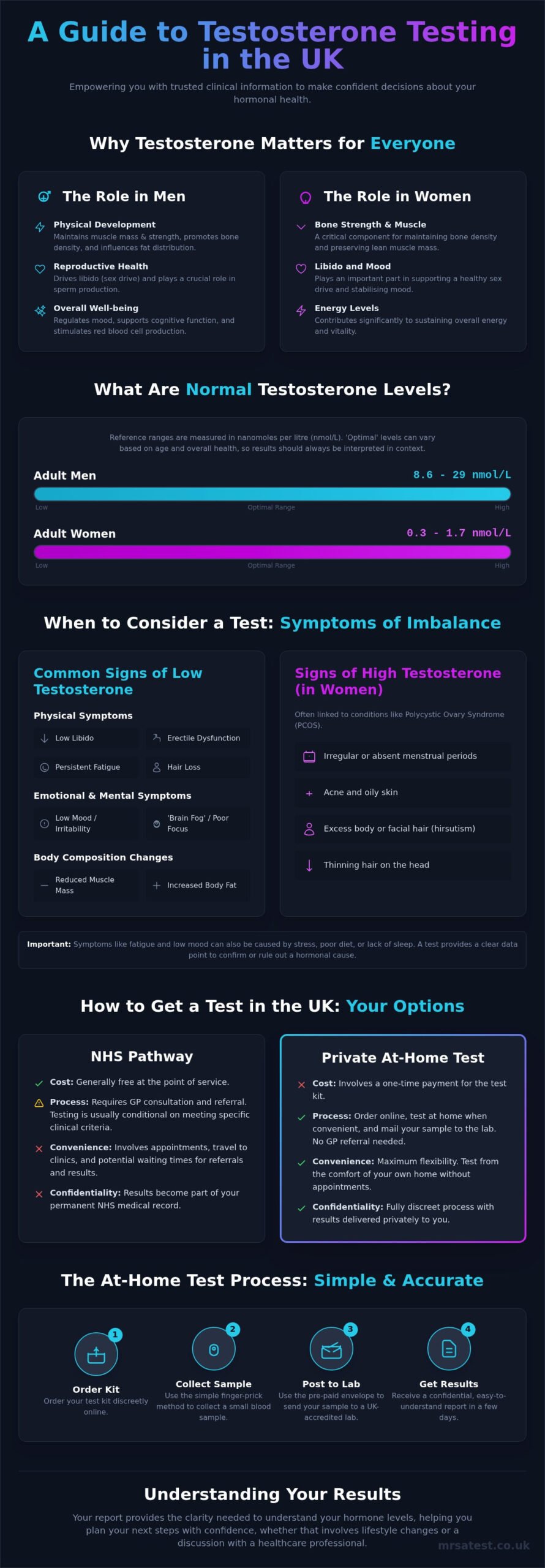
Testosterone is often misunderstood as solely a ‘male’ hormone, responsible for deep voices and muscle growth. While it is the primary male sex hormone, testosterone is a vital steroid hormone essential for the health and well-being of both men and women. Understanding what is testosterone and its functions is the first step in recognising the importance of hormonal balance for regulating everything from your mood and energy levels to your physical strength. As we age, levels naturally decline in both sexes, which is why monitoring them through a reliable testosterone test UK providers offer can provide valuable health insights.
The Role of Testosterone in Men
In men, testosterone is primarily produced in the testes and is fundamental to numerous physiological processes. Its influence extends far beyond libido and sexual function. Key responsibilities include:
- Physical Development: Maintaining muscle mass and strength, promoting bone density, and influencing fat distribution.
- Reproductive Health: Driving libido (sex drive) and playing a crucial role in sperm production.
- Overall Well-being: Regulating mood, supporting cognitive functions like memory and concentration, and stimulating the production of red blood cells.
The Often-Overlooked Role of Testosterone in Women
Women also produce testosterone, albeit in much smaller amounts, in the ovaries and adrenal glands. This hormone is a critical component of female health, contributing significantly to bone strength and helping to maintain lean muscle mass. Furthermore, it plays an important part in supporting a healthy libido, stabilising mood, and sustaining overall energy levels. An imbalance can be just as impactful for women as it is for men.
What Are ‘Normal’ Testosterone Levels?
It is important to understand that there is no single ‘perfect’ testosterone level. Instead, results are interpreted within a reference range, measured in nanomoles per litre (nmol/L). When you take a home testosterone test, UK laboratories typically use the following guideline ranges:
- Adult Men: Approximately 8.6 to 29 nmol/L
- Adult Women: Approximately 0.3 to 1.7 nmol/L
These ranges can vary slightly between different labs. A result should always be considered in the context of your symptoms, age, and overall health. What is ‘optimal’ for one person may not be for another, making a professional interpretation of your results essential.
Symptoms of Imbalance: When to Consider a Testosterone Test
Feeling “off” is a common complaint, but identifying the root cause can be challenging. Many factors influence your energy, mood, and physical well-being. This section acts as a helpful checklist to determine if your symptoms align with a potential testosterone imbalance, which could make a home testosterone test UK a logical next step for gaining clarity.
Remember, these symptoms can have multiple causes. A test provides a clear, clinical data point to understand if your hormone levels are a contributing factor.
Common Signs of Low Testosterone (Hypogonadism)
Low testosterone, medically known as hypogonadism, can manifest in subtle but persistent ways. If you consistently experience several of the following, it may be worth investigating your hormone levels.
- Physical Symptoms: A noticeable decrease in libido (sex drive), difficulty achieving or maintaining an erection (erectile dysfunction), persistent fatigue and low energy levels, or even hair loss (on the body and head).
- Emotional & Mental Symptoms: A persistent low mood or increased irritability, difficulty concentrating, and a feeling of ‘brain fog’ that impacts your daily focus.
- Changes in Body Composition: A reduction in muscle mass and strength despite regular exercise, coupled with an increase in body fat, particularly around the mid-section.
Recognising Symptoms of High Testosterone
While less commonly discussed in men, elevated testosterone levels are a significant clinical concern, particularly for women. In women, high testosterone is often linked to conditions like Polycystic Ovary Syndrome (PCOS) and can present with symptoms such as:
- Irregular or absent menstrual periods
- Acne and oily skin
- Excess body or facial hair (hirsutism)
- Thinning hair on the head
Could It Be Something Else?
It is crucial to recognise that symptoms like fatigue, low mood, and poor concentration are not exclusive to hormonal imbalances. The pressures of modern life-including chronic stress, a poor diet, or insufficient sleep-can produce a nearly identical set of feelings. This is where testing becomes invaluable. An accurate testosterone test helps to either identify or rule out a hormonal cause, allowing you to focus your efforts. The results provide a factual baseline, and understanding the nuances of interpreting testosterone test results is the first step toward a productive conversation with your GP or a specialist to determine the right path forward.
How to Get a Testosterone Test in the UK: Your Options Explained
When investigating your testosterone levels, UK residents have several clear pathways to choose from. Your decision will likely depend on factors such as cost, convenience, and the urgency of your results. Understanding the pros and cons of each method is the first step toward making a confident and informed choice about your health.
The NHS Pathway: Consulting Your GP
The most traditional route is to book an appointment with your local GP. During the consultation, you can discuss your health concerns. If your doctor determines there is a clear clinical need based on recognised symptoms of low testosterone, they will refer you for a blood test. This service is provided free of charge by the NHS. However, this pathway can involve significant waiting times, both for the initial GP appointment and for the laboratory to process your results.
Private In-Clinic Blood Tests
For those seeking a faster alternative, private clinics offer testosterone testing without the need for a GP referral. You book an appointment, visit the clinic, and have your blood drawn by a trained phlebotomist. This option provides the reassurance of a professional sample collection and generally delivers quicker results than the NHS. The main drawbacks are the cost, which can range from £75 to over £150, and the need to travel to a physical clinic location.
At-Home Testosterone Test Kits
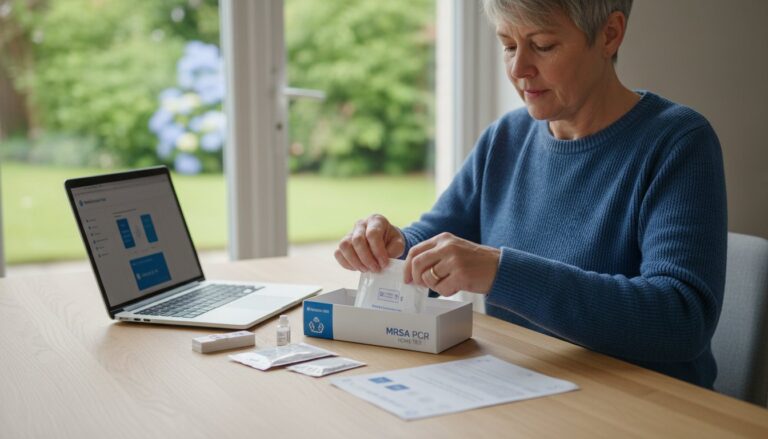
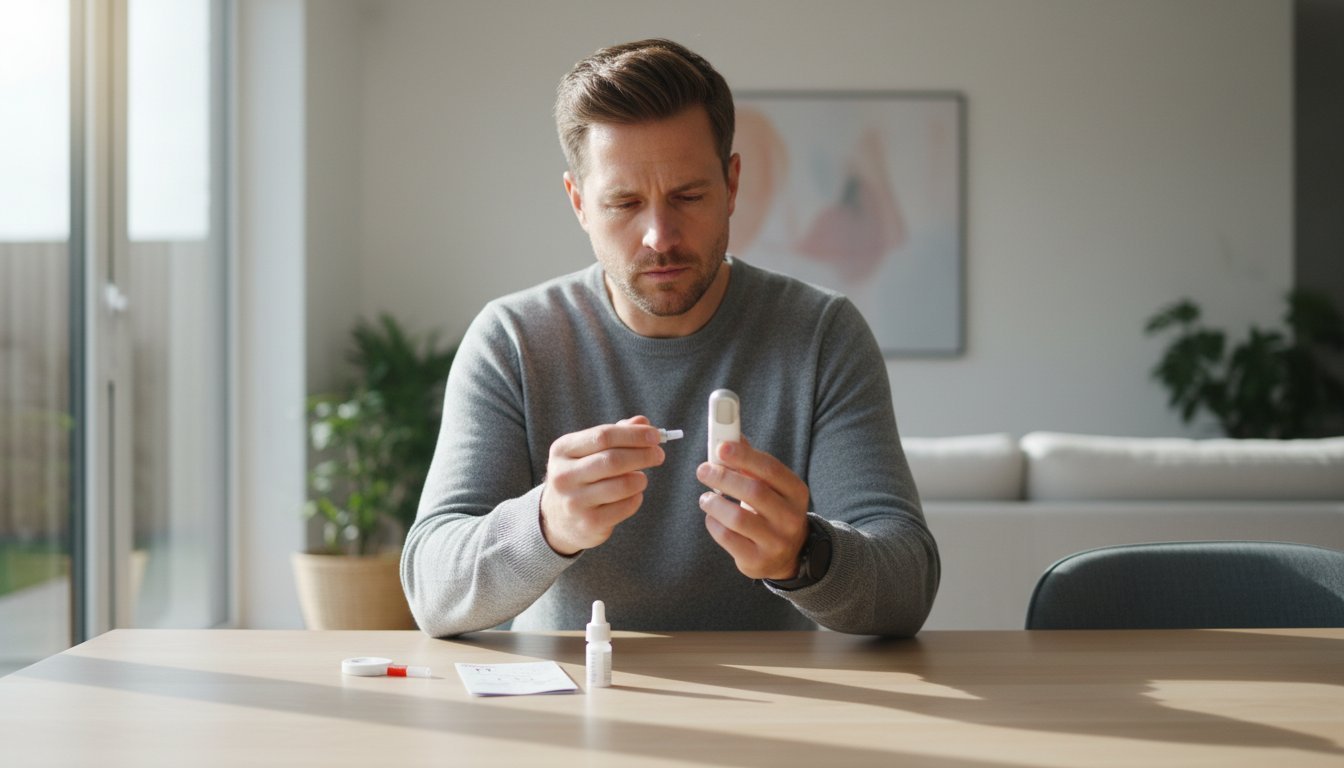
The most convenient and discreet option is a modern at-home testosterone test UK kit. The process is simple: you order a kit online, it arrives in discreet packaging, and you collect a small blood sample yourself using a simple finger-prick lancet. You then post your sample to a certified, UKAS-accredited laboratory using the pre-paid return envelope.
- Pros: Maximum convenience, complete privacy, and the ability to test from the comfort of your own home. Results are often delivered securely online within a few days.
- Cons: The accuracy of the result is dependent on you following the collection instructions carefully. Incorrect sample collection is the primary source of potential user error.
This method empowers you to take control of your health monitoring discreetly and on your own schedule, setting the stage for a new approach to personal wellness.
A Deep Dive into At-Home Testosterone Tests
Understanding how at-home health screening works is the first step toward taking control of your well-being. For many, the process can seem complex, but modern kits are designed to be simple, secure, and highly reliable. Here, we break down the science and logistics to demystify the experience and help you make an informed decision.
How Do At-Home Kits Work? The Step-by-Step Process
The journey from ordering a kit to receiving your results is straightforward and designed for complete discretion. The process typically involves three simple stages:
- Order & Register: Once you order online, your kit arrives in plain packaging. You must then register your unique kit ID on the provider’s secure website. This essential step links your sample to your confidential account.
- Collect Your Sample: The test uses a finger-prick blood sample. The kit contains sterile lancets and a collection vial. For best results, warm your hands beforehand to encourage blood flow and follow the included instructions carefully.
- Return for Analysis: Secure your sample in the provided packaging and post it back using the prepaid envelope. Your sample is then sent directly to a certified laboratory for professional analysis.
What’s Being Measured? Total vs. Free Testosterone
A comprehensive testosterone test UK providers offer will often measure more than one biomarker. Total Testosterone refers to all the testosterone in your bloodstream, including that which is bound to proteins. In contrast, Free Testosterone is the ‘active’ portion that is unbound and readily available for your body to use. Analysing both provides a much clearer and more clinically useful picture of your hormonal health.
Are Finger-Prick Testosterone Tests Accurate?
This is a primary concern for many, and the answer is yes-when done correctly. While a venous blood draw (from the arm) is considered the clinical gold standard, finger-prick tests are validated to be highly accurate. Accuracy depends on two key factors: your ability to collect a clean, sufficient sample without contamination, and the quality of the laboratory. This is why choosing a provider that uses a fully accredited lab is non-negotiable.
How to Choose a Reputable At-Home Test Provider
To ensure your results are accurate and your data is secure, look for a provider that meets these criteria:
- Lab Accreditation: The lab must be UKAS-accredited, the UK’s national standard for testing laboratories.
- Regulatory Compliance: The service should be regulated by the Care Quality Commission (CQC).
- Doctor-Reviewed Results: A qualified doctor or clinical team should review your results before they are released.
- Transparent Pricing: All costs, including delivery and lab fees, should be stated upfront.
- Customer Feedback: Check independent reviews for insight into the user experience and service reliability.
Investing in your health starts with choosing a trusted partner. Learn more about the importance of certified at-home health screening.
Understanding Your Results and Planning Your Next Steps
Receiving your test results is an important first step, but it is not the final destination. This data is a powerful tool that empowers you to understand your health and have informed discussions with a medical professional. The goal is to move from a number on a report to a clear, positive action plan for your well-being.
Interpreting Your Testosterone Level Report
Your results will be presented with a numerical value, typically measured in nanomoles per litre (nmol/L), alongside a “reference range.” This range indicates the typical testosterone levels for a healthy adult male. It is crucial to avoid self-diagnosing based on a single result. Testosterone levels fluctuate naturally throughout the day and can be influenced by sleep, illness, and stress. For this reason, tests are best performed in the morning when levels are at their peak.
Lifestyle Factors That Can Influence Testosterone
While you await a professional consultation, there are several positive lifestyle changes that can support healthy hormone levels. These are proactive steps you can take to manage your health:
- Exercise: Regular physical activity, particularly strength training and high-intensity interval training (HIIT), has been shown to support testosterone production.
- Nutrition: A balanced diet rich in protein, healthy fats, and complex carbohydrates provides the building blocks for hormone synthesis.
- Sleep: Consistently achieving 7-9 hours of quality sleep per night is essential, as a significant amount of testosterone is produced during sleep.
- Stress and Alcohol: Chronic stress elevates cortisol, a hormone that can suppress testosterone. Similarly, excessive alcohol consumption can negatively impact levels.
When and How to Discuss Your Results with a Doctor
It is always recommended to discuss your results with your GP, particularly if your level falls outside the normal reference range or if you are experiencing symptoms. The result from your at-home testosterone test UK kit serves as a valuable starting point for a clinical diagnosis, not a conclusion in itself. Your GP will consider your symptoms and medical history, and may suggest further blood tests to confirm the reading and investigate the underlying cause. Based on a comprehensive evaluation, they can discuss appropriate next steps, which may include a referral to a specialist or, if clinically indicated, a discussion about Testosterone Replacement Therapy (TRT).
Your Path to Understanding and Hormonal Balance
Understanding your testosterone levels is a crucial step towards managing your overall health, for both men and women. If you’re experiencing persistent fatigue, changes in mood, or other potential symptoms of a hormonal imbalance, it’s important to know that you have options. Accessing a professional testosterone test UK is now more straightforward and accessible than ever before, putting clear, actionable information within your reach.
For those who value privacy and convenience, at-home testing offers a definitive solution. We provide fully confidential, discreet at-home testing kits that deliver clear, reliable health insights. To guarantee clinical accuracy, all samples are processed efficiently in our UKAS-accredited laboratories, giving you results you can trust to plan your next steps.
Discover our range of confidential, lab-certified at-home health tests today.
Taking this proactive step is a powerful investment in your long-term wellbeing. Empower yourself with the knowledge you need to feel your best and move forward with confidence.
Frequently Asked Questions About Testosterone Testing
What is the best time of day to take a testosterone test?
To ensure the most accurate results, it is essential to collect your blood sample in the morning, ideally between 7 AM and 10 AM. Testosterone levels naturally follow a daily rhythm, peaking in the early hours. Taking a sample later in the day can lead to a reading that is artificially low and may not accurately reflect your true baseline hormone level. Our at-home kits provide clear instructions to help you test at the optimal time.
Do I need to fast before taking a testosterone blood test?
Yes, fasting is highly recommended for clinical accuracy. You should not eat or drink anything other than water for at least eight hours before collecting your blood sample. Consuming food, particularly meals high in sugar or fat, can cause a temporary decrease in your testosterone levels and may skew your results. For the most reliable measurement, perform the test first thing in the morning after fasting overnight.
Can exercise or my diet affect my testosterone test results?
Yes, both can have a short-term impact on your hormone levels. Strenuous exercise, especially heavy weightlifting, can cause a temporary spike in testosterone, while prolonged endurance activities may lower it. For this reason, we advise avoiding intense exercise for 24 hours before your test. As fasting is also required, your diet on the day of the test will not be a factor, ensuring a more stable and accurate reading.
How much does a private testosterone test typically cost in the UK?
The price for a private testosterone test UK can vary based on the provider and the specific biomarkers being measured. A basic test for total testosterone typically costs between £30 and £60. More comprehensive panels, which may include free testosterone, albumin, and SHBG for a fuller picture of your hormonal health, can range from £70 to over £150. These prices generally include the collection kit, processing at a UKAS-accredited laboratory, and your confidential results report.
Are there separate testosterone tests for men and women?
While the method of testing the blood sample is the same, the interpretation of the results is entirely different. Men and women have vastly different “normal” ranges for testosterone. A reputable testing service will always interpret your results against the correct reference range for your sex and age. This ensures that your report is clinically relevant and provides a meaningful insight into your personal hormonal health, whether you are male or female.
What is Testosterone Replacement Therapy (TRT) and who needs it?
Testosterone Replacement Therapy, or TRT, is a medical treatment prescribed to restore testosterone levels in individuals diagnosed with clinical hypogonadism-a condition where the body fails to produce enough testosterone. A diagnosis requires confirmed low levels from blood tests combined with persistent symptoms like chronic fatigue, low libido, or depression. TRT is a serious medical intervention and should only ever be started and managed under the strict supervision of a qualified medical professional.