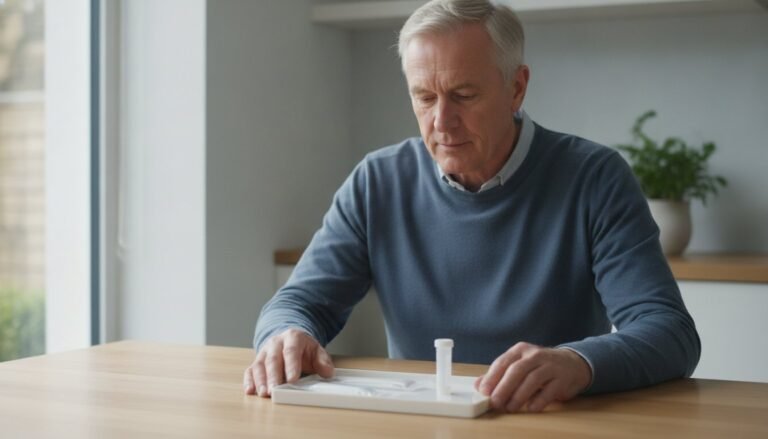

UK Patient Pre-Op Checklist: Surgery Preparation Guide 2026
What if the most significant hurdle to your upcoming operation isn’t the surgery itself, but a simple screening result you didn’t see coming? For many, the weeks leading up to a procedure are filled with a confusing mix of hospital leaflets and the underlying fear of a last-minute cancellation. Arranging a private mrsa test before surgery uk has become a vital step for patients who want to confirm their health status well before they reach the admissions desk. It’s completely natural to feel overwhelmed by the logistics of recovery while worrying about hospital-acquired risks like MRSA.
We believe that a successful surgery begins long before you enter the operating theatre. This guide offers a definitive, step-by-step timeline to help you manage your preparation with professional precision and quiet competence. We will walk you through essential lifestyle adjustments, current NHS fasting protocols, and the specific screening processes required for 2026. By taking these proactive steps, you can reduce the risk of infection and ensure your journey to recovery begins exactly when it is scheduled.
Key Takeaways
- Optimise your physical health by managing chronic conditions like blood pressure and diabetes at least four weeks before your scheduled procedure.
- Understand the clinical necessity of infection screening and how a private mrsa test before surgery uk can provide early peace of mind.
- Organise essential recovery logistics, including hospital transport and home environment adjustments, to ensure a seamless transition after discharge.
- Adhere strictly to the final 24-hour protocols, including Nil by Mouth (NPO) instructions and antimicrobial washing, to maintain theatre safety.
The Pre-Operative Timeline: 4 Weeks to Surgery
Successful surgery is rarely just about the time spent in the theatre. It is the result of careful preparation that begins at least four weeks before your admission date. This month-long window is essential because it provides your body with the time needed to reach peak physiological condition. It also offers a vital buffer to identify and manage potential risks, such as Methicillin-resistant Staphylococcus aureus (MRSA), which could otherwise cause a late-stage cancellation. Many patients choose to arrange a private mrsa test before surgery uk at this stage to ensure they are clear of colonisation well in advance of their hospital screening.
Medication and Supplement Review
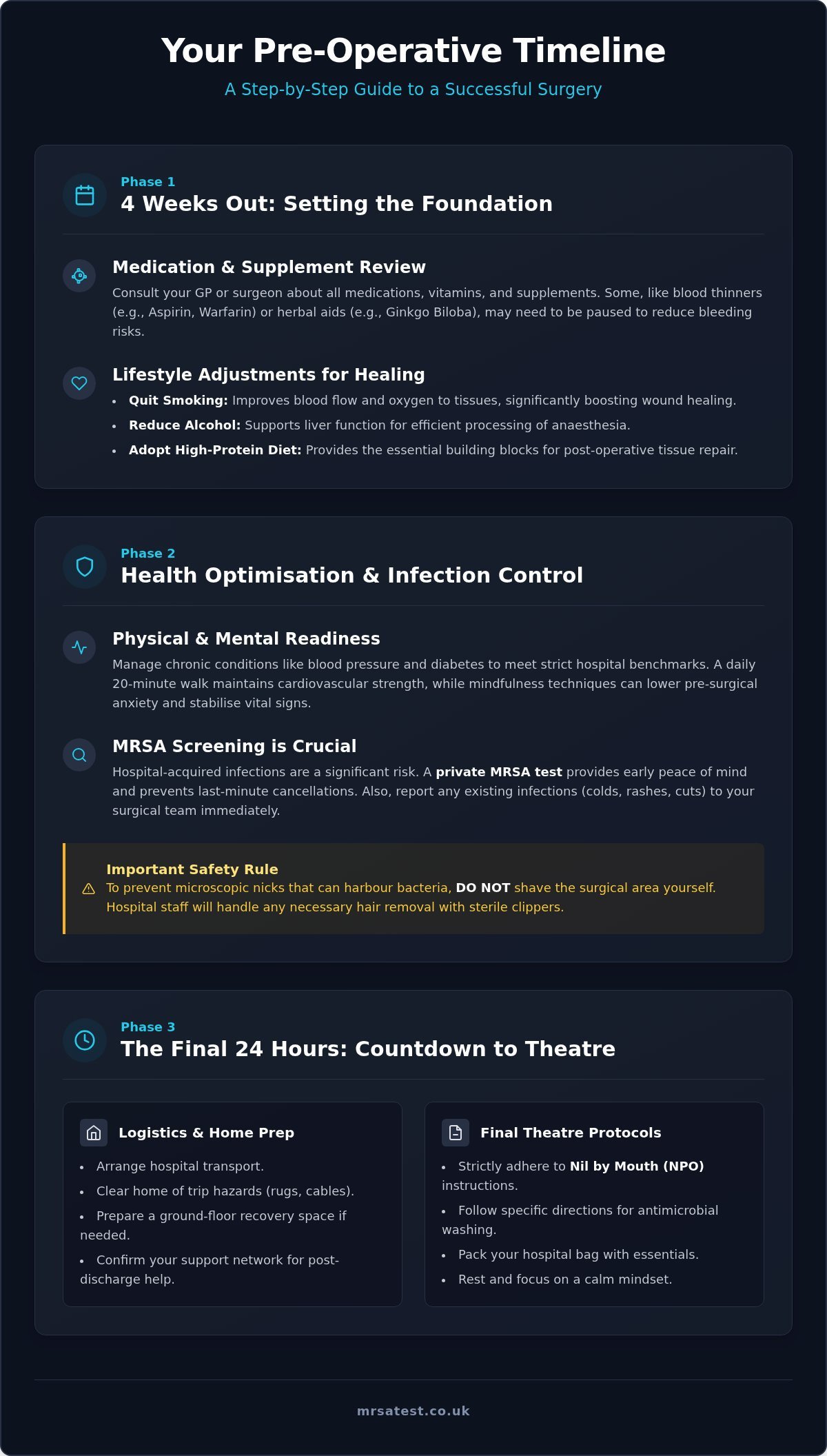
You must review your entire cabinet with your GP or surgeon immediately. Common medications like aspirin or warfarin, and even herbal supplements such as Ginkgo Biloba, can significantly increase bleeding risks during an operation. Document every prescription, over-the-counter pill, and vitamin for your upcoming Pre-Assessment Clinic (PAC) appointment. Certain medications can alter how the body processes anaesthetic agents, potentially leading to complications during the procedure. Your surgical team will provide a specific schedule for when to pause these substances safely.
Lifestyle Adjustments for Better Healing
Your habits in the weeks before surgery directly influence your recovery speed. Smoking restricts blood flow and reduces the oxygen reaching your tissues, which can lead to poor wound healing and increased infection rates. Reducing alcohol intake is equally critical; it supports liver function and ensures your system can process anaesthesia efficiently. Focus on a high-protein diet during this period. Protein provides the essential building blocks for tissue repair, helping your body knit back together more effectively after the incision.
Don’t overlook the practicalities of your living space. Conduct a home safety assessment by clearing trip hazards like loose rugs or cables. If your recovery involves mobility restrictions, consider preparing a ground-floor sleeping area. Finally, organise your recovery team. Confirm that friends or family members are available to assist with shopping, cleaning, and transport for the first few days post-discharge. Having this support network in place reduces stress and allows you to focus entirely on your clinical recovery.
Physical Preparation and Health Optimisation
Achieving physical readiness is a cornerstone of a successful surgical outcome. Hospitals use strict clinical benchmarks for blood pressure and glucose levels to ensure you can safely undergo anaesthesia. If these metrics are outside the acceptable range on the morning of your procedure, the clinical team may decide to postpone. Utilizing a structured Preparing for Surgery framework helps you track these vital markers systematically. This approach ensures that you aren’t just waiting for your date, but actively moving towards it in peak condition.
Gentle exercise, such as a daily 20 minute walk, maintains cardiovascular strength without overexertion. Mental health is equally vital during this period; techniques like mindfulness or sessions with Brookhouse Hypnotherapy Manchester can effectively lower pre-surgical anxiety. This is clinically beneficial, as reduced stress helps keep your heart rate and blood pressure stable during hospital admission.
Blood Tests and Vital Signs
Your pre-assessment will include a Full Blood Count (FBC) to check for anaemia or signs of underlying inflammation. Understanding your blood test results is important; for instance, low iron levels might require a course of supplements before you can proceed safely. If you have a history of hypertension, monitoring your blood pressure at home with a validated device provides a clearer picture of your health than a single reading in a stressful clinical setting. These data points allow your anaesthetist to tailor their approach to your specific needs.
Managing Existing Infections
Even a minor cold or a lingering dental abscess can compromise your immune system, leading to a deferred theatre date. Surgeons are particularly cautious about skin integrity. Any rashes, cuts, or breaks in the skin near the surgical site must be reported to your team immediately. To prevent microscopic nicks that can harbour bacteria, avoid shaving the area yourself at home. The hospital team will handle any necessary hair removal using sterile clippers on the day of the procedure.
Proactive infection screening is central to this preparation. While hospitals conduct their own checks, many patients opt for a private mrsa test before surgery uk to identify potential issues weeks in advance. Following NHS guidance on MRSA ensures you understand the standard protocols for decolonisation if bacteria are detected. Taking control of this screening process provides an extra layer of security and helps avoid the stress of unexpected delays. For those seeking immediate results, a private screening kit can offer the clarity needed to proceed with confidence.
Infection Control: The MRSA Screening Process
MRSA is a strain of Staphylococcus aureus bacteria that’s resistant to several widely used antibiotics. While many people carry it harmlessly on their skin, it poses a significant risk if it enters the body through a surgical incision. UK hospitals mandate screening for elective surgeries to prevent hospital-acquired infections, which can lead to serious complications and prolonged recovery times. By identifying colonisation early, clinical teams can implement safety measures before you ever set foot in the theatre.
If you test positive, the standard protocol is decolonisation. This isn’t a complex medical treatment but a simple hygiene regimen. It usually involves using a prescribed antibacterial body wash and a nasal ointment for five days. Following NHS information on MRSA screening ensures you’re prepared for these swabs, which are typically taken from the nose and groin. Clearing the bacteria from your skin effectively reduces the risk of it causing an infection during or after your procedure.
Types of MRSA Tests: Culture vs. PCR
There are two primary methods for detecting MRSA. Standard culture tests are affordable and widely used; however, they require the bacteria to grow in a lab, which takes 48 to 72 hours. This delay can be stressful if your surgery date is approaching quickly. Rapid PCR tests offer a modern alternative, providing results within 24 hours of the lab receiving your sample. PCR testing identifies specific bacterial DNA, allowing for much faster and highly accurate detection compared to traditional methods.
The Benefits of Private Pre-Op Screening
Many patients choose to arrange a private mrsa test before surgery uk to gain early peace of mind. Taking this step before your official hospital pre-assessment allows you to identify colonisation in a discreet environment. If the result is positive, you’ll have ample time to complete the decolonisation process without the threat of a last-minute cancellation. High-quality at-home test kits work with accredited UK laboratories to provide clinical-grade results. This proactive approach ensures you arrive at your hospital appointment with confidence, knowing your infection status is already managed.
Essential Logistics and Home Preparation
Preparing your home for recovery is just as important as the clinical steps you’ve already taken. While you may have already secured peace of mind by arranging a private mrsa test before surgery uk, the practicalities of getting to and from the hospital require equal attention. Most UK hospitals strictly forbid patients from driving themselves home after a general anaesthetic or sedation. You’ll need to confirm a designated driver or a taxi service, provided you have a responsible adult to escort you into your home. It’s often helpful to have this person stay for at least the first 24 hours to assist with basic tasks.
Stock your pantry with easy-to-digest foods like soups, toast, and crackers. High-fibre options are also essential, as post-operative pain medications can often cause digestive sluggishness. Set up a dedicated recovery station before you leave for the hospital. Ensure your phone charger, water bottle, and current medications are within easy reach of your bed or chair. This nesting phase reduces the need for unnecessary movement during the first few days of healing. To ensure your carefully planned logistics aren’t disrupted by a preventable delay, order your private mrsa test before surgery uk today.
Coordinate with your employer regarding your expected time off and the process for obtaining a Fit Note. Your surgical team usually provides an initial sick note for your hospital stay, but your GP will handle any extensions required for long-term recovery. Managing these financial and professional logistics early prevents unnecessary stress while you are recuperating.
The Hospital Bag Checklist
- Essential Documents: Bring your appointment letter, a full list of current medications, and a form of photo ID.
- Comfort Items: Pack loose-fitting clothing that’s easy to put on, slip-on shoes or slippers with good grip, and basic toiletries.
- Valuables: Leave all jewellery and large amounts of cash at home. Hospitals are busy environments, and most trusts cannot take responsibility for lost personal items.
Post-Discharge Planning
Ensure a friend or family member is available to stay with you for the first 24 to 48 hours after you return home. This is a critical window for monitoring your recovery and ensuring you’re managing your pain effectively. If your surgeon has already provided prescriptions for post-op care, try to pre-fill these at your local pharmacy to avoid a detour on the way home. Setting up a simple medication log is also a smart move. It allows you to track pain relief intervals accurately, ensuring you don’t miss a dose or take one too early while feeling groggy from the procedure.
The Final 24 Hours: Countdown to Theatre
The final day before your procedure is a period of focused preparation where your attention to detail directly impacts your safety. By this stage, you’ve likely completed your home logistics and confirmed your health status through clinical assessments. While arranging a private mrsa test before surgery uk earlier in the process gave you the confidence that you are not a carrier of resistant bacteria, these final hours are about maintaining that sterile environment. Your surgical team relies on you to follow these protocols exactly to ensure the theatre schedule remains on track.
Precision is vital during this countdown. You must remove all makeup, nail varnish, and acrylic nails. These can interfere with monitoring equipment, such as pulse oximeters, and prevent the anaesthetist from checking your natural skin tone to monitor oxygen levels. Similarly, all piercings and jewellery must be removed to avoid the risk of electrical burns from diathermy equipment used during surgery. Double check your Nil by Mouth start time and set an alarm on your phone to ensure you don’t accidentally consume anything past the deadline.
Understanding Fasting Rules
Adhering to Nil by Mouth (NPO) instructions is critical for your safety under general anaesthesia. Most UK hospitals require you to stop eating solid food at least 6 hours before your admission. This includes milk, nectar, and orange juice with pulp. You can usually continue to drink clear fluids, such as water or black tea, until 2 hours before your arrival, but you must check your specific hospital letter for variations. These rules exist to prevent aspiration, a serious complication where stomach contents are inhaled into the lungs while you are unconscious and your protective reflexes are suppressed.
Skin Hygiene and Infection Prevention
The night before your surgery, you should use a fresh towel and sleep in clean bedsheets to minimize the presence of environmental bacteria. If your Pre-Assessment Clinic (PAC) provided a specialised antimicrobial wash, such as Chlorhexidine (CHG), follow the instructions for use carefully. This usually involves washing your entire body, including your hair, to significantly reduce the microbial load on your skin. On the morning of the procedure, do not apply any lotions, perfumes, deodorants, or powders. These substances can interfere with surgical markers or prevent dressings and monitoring pads from adhering correctly to your skin. This final layer of hygiene completes the work started by your private mrsa test before surgery uk, ensuring you enter the hospital in the cleanest possible condition.
Securing a Smooth Pathway to Recovery
Successful surgery is the result of careful, professional preparation. By focusing on your medication review, physical health, and home environment weeks in advance, you significantly reduce the risk of complications. Proactive infection screening is a critical component of this timeline. Arranging a private mrsa test before surgery uk gives you the opportunity to identify colonisation early; this ensures that your hospital pre-assessment is a routine formality rather than a source of stress.
We provide the tools you need for a well-managed lead-up to your operation. You can Order a Private MRSA Rapid PCR Test Kit for Fast Pre-Op Peace of Mind and benefit from our fast 24-hour PCR turnaround. Our testing is conducted through an accredited UK laboratory, providing confidential results that you can trust. Taking these proactive steps today protects your theatre date and allows you to move toward your recovery with quiet competence and complete peace of mind. You’ve done the hard work of preparing; now you can focus entirely on your healing journey.
Frequently Asked Questions
What happens if my pre-operative MRSA swab is positive?
If your swab is positive, you’ll undergo a decolonisation process. This typically involves using a prescribed antibacterial body wash and a specific nasal ointment for five days. It’s a routine safety measure designed to clear the bacteria from your skin before you enter the theatre. Identifying this colonisation early through a private mrsa test before surgery uk ensures you have enough time to complete the treatment without delaying your operation.
Can I drink water if I am told to stay Nil by Mouth?
You can usually drink clear water until two hours before your scheduled hospital arrival time. However, you must stop all solid food and “cloudy” drinks like milk or juice at least six hours before. Staying hydrated with clear fluids is clinically beneficial, but strict adherence to these timelines is vital to prevent aspiration under anaesthesia. Always verify the exact times printed in your specific hospital admission letter.
How long before surgery should I stop smoking?
Stopping smoking at least four weeks before your operation is highly recommended. This window allows your lungs to clear and improves your body’s ability to transport oxygen to healing tissues. Smokers face a higher risk of chest infections and delayed wound healing after surgery. If you can’t quit entirely, even stopping for 24 hours before your procedure can provide some cardiovascular benefits during the administration of anaesthesia.
Do I need to remove my wedding ring for surgery?
Hospitals generally require all jewellery to be removed before you enter the operating theatre. This is a safety precaution to prevent skin irritation or burns from surgical equipment. If your wedding ring is stuck and cannot be removed, the nursing staff will usually cover it securely with medical tape. This ensures the metal doesn’t make contact with anything during the procedure, though removing it entirely is always the preferred option.
Why can’t I wear nail varnish or gel nails during the operation?
Clinical staff use a pulse oximeter, a small clip placed on your finger, to monitor your blood oxygen levels throughout the procedure. Nail varnish, gel, or acrylic nails can block the sensor’s light, resulting in inaccurate or failed readings. Additionally, the colour of your natural nail bed provides a visual cue for your circulation. Removing these products ensures your anaesthetist has the most reliable data to keep you safe while you’re unconscious.
What should I do if I develop a cough or cold the day before surgery?
You must notify the hospital’s pre-assessment clinic or admissions department as soon as symptoms appear. A cough or cold can irritate your airways, making general anaesthesia more risky for your lungs. The surgical team will evaluate your symptoms to decide whether it’s safe to proceed or if your operation should be postponed. It’s better to reschedule for when you’re healthy than to risk respiratory complications during or after your procedure.
Is a private MRSA test accepted by the NHS?
The NHS will still perform its own mandatory swabs during your pre-assessment appointment. However, many patients choose a private mrsa test before surgery uk to identify potential issues early. If your private result is positive, you can begin decolonisation immediately. This proactive approach ensures you’re already clear by the time the hospital conducts its screening, effectively preventing the stress and logistical frustration of a last-minute cancellation on the day of your surgery.
Can I take my usual morning medications on the day of surgery?
Only take medications that were specifically approved during your pre-assessment clinic (PAC) appointment. Some essential pills, such as those for blood pressure or epilepsy, are often taken on the morning of surgery with a small sip of water. Other medications, particularly blood thinners or diabetes treatments, must be paused to avoid complications. If you’re unsure, contact your surgical team for clarification rather than making your own decision on the morning of admission.